Our readers keep the lights on and my smoothie glass nicely filled. As an Amazon Associate, I earn from qualifying purchases.
Anyone who has tried slicing a thick, homemade sugar cookie knows the frustration of a dull, uneven edge. The same principle applies to the molds you use: a poorly designed or inconsistently printed cookie cutter turns a relaxing afternoon of baking into a fight with misshapen dough. The solution lies in a machine that delivers precise, food-safe layers without demanding hours of manual calibration.
I’m Mohammad Maruf — the founder and writer behind WellFizz. I have spent years analyzing the hardware specifications of FDM printers, focusing on how factors like nozzle temperature consistency, build plate adhesion, and flow rate compensation directly impact the dimensional accuracy required for functional kitchen tools.
After evaluating dozens of machines on print speed, layer resolution, and ease of use, I have curated a list of the most reliable options for the kitchen maker. This guide covers the best 3d printer for cookie cutters, detailing which models deliver the sharp, food-safe results you need without the steep learning curve.
How To Choose The Best 3D Printer For Cookie Cutters
Selecting a printer for making cookie cutters is different than choosing one for action figures or functional parts. You need a machine that produces sharp, clean edges and a consistent wall thickness without visible layer lines that could tear dough. Start by understanding a few key specifications that separate a good kitchen tool printer from a mediocre one.
Build Volume and Print Size
Most standard cookie cutters are small, but you may want to batch print a set of them simultaneously. A build volume of 256x256x256mm is the sweet spot, allowing you to print multiple 50mm cutters in a single go. Larger volumes, like 350mm or 400mm, are overkill for kitchen prints but useful if you also plan to make larger decorative molds or stencils.
Auto Leveling and First Layer Consistency
A cutter’s sharp edge is defined entirely by the first layer. If the nozzle is too close to the bed, the plastic squishes out and ruins the profile. If it’s too far, the layer won’t adhere. Machines with 49-point or 64-point auto leveling, especially those using pressure sensors or inductive probes, remove this variable and ensure every cutter in a batch has the same crisp base.
Filament Compatibility and Nozzle Temperature
PLA is the go-to for cookie cutters because it is rigid and prints at low temperatures. PETG offers slightly more flexibility and durability. You need a hotend capable of reaching at least 300°C to handle PETG reliably. Avoid printers that cannot go above 260°C if you plan to experiment with food-safe PETG blends. A direct-drive extruder is ideal because it gives you precise retraction control, reducing stringing on small, tight curves.
Noise Level and Reliability
Cookie cutters often print in under an hour, but you may want to run multiple batches unattended. Printers operating below 48 dB allow you to work in the same room without distraction. Features like active motor noise canceling, step-servo motors, and vibration compensation are worth prioritizing for a peaceful kitchen environment.
Quick Comparison
On smaller screens, swipe sideways to see the full table.
| Model | Category | Best For | Key Spec | Amazon |
|---|---|---|---|---|
| Bambu Lab A1 | FDM | Quiet, reliable kitchen prints | ≤48 dB noise level | Amazon |
| ELEGOO Centauri Carbon | FDM | High-speed enclosed printing | 500 mm/s print speed | Amazon |
| FLASHFORGE AD5X | FDM | Multi-color cutters on a budget | 220x220x220mm build volume | Amazon |
| Anycubic Kobra X | FDM | Farm-level production of cutters | 49-point auto leveling | Amazon |
| Bambu Lab P1S | FDM | Enclosed, multi-material precision | 500 mm/s & 20k mm/s² accel | Amazon |
| QIDI Q2C | FDM | Open-source, advanced materials | 370°C bimetal hotend | Amazon |
| Sovol SV08 | FDM | Large batch Voron-style printing | 350x350x345mm build volume | Amazon |
| Creality K2 Combo | FDM | Premium multi-color kitchen tools | 260x260x260mm build volume | Amazon |
| Creality Ender 5 Max | FDM | Large format & print farms | 400x400x400mm build volume | Amazon |
In‑Depth Reviews
1. Bambu Lab A1 3D Printer

The Bambu Lab A1 is the benchmark for anyone who wants to print cookie cutters without fiddling with settings. Its full-auto calibration covers bed leveling, Z-offset, and vibration compensation, so every cutter’s base comes out perfectly flat. The active flow rate compensation algorithm reads real-time extrusion data to eliminate over-extrusion on tight corners — critical for maintaining the 2-3mm wall thickness that makes a cutter sharp without being fragile.
With a 256x256x256mm build volume and acceleration up to 10,000 mm/s², you can print a dozen small cutters in a single batch in under an hour. Users consistently report that the A1 prints smoothly from the very first run, with no adhesion issues on the textured PEI plate. The 1-Clip quick swap nozzle makes cleaning and switching between PLA and PETG effortless.
Where the A1 really shines for kitchen printing is its noise profile. At or below 48 dB, it is barely audible across a room, meaning you can run a batch of cutters while hosting a dinner party without distraction. Over 1,500 hours of use, the printer holds its calibration remarkably well, with only minor material compatibility warnings for high-temperature filaments that you likely won’t need for cutters.
Why it’s great
- Truly silent operation allows overnight or party-side printing.
- Fully automatic calibration eliminates the learning curve for beginners.
- Active flow compensation ensures clean, sharp edges on small parts.
Good to know
- Not enclosed, so it isn’t ideal for materials like ABS or ASA.
- Multi-color printing requires the separately sold AMS lite unit.
2. ELEGOO Centauri Carbon 3D Printer
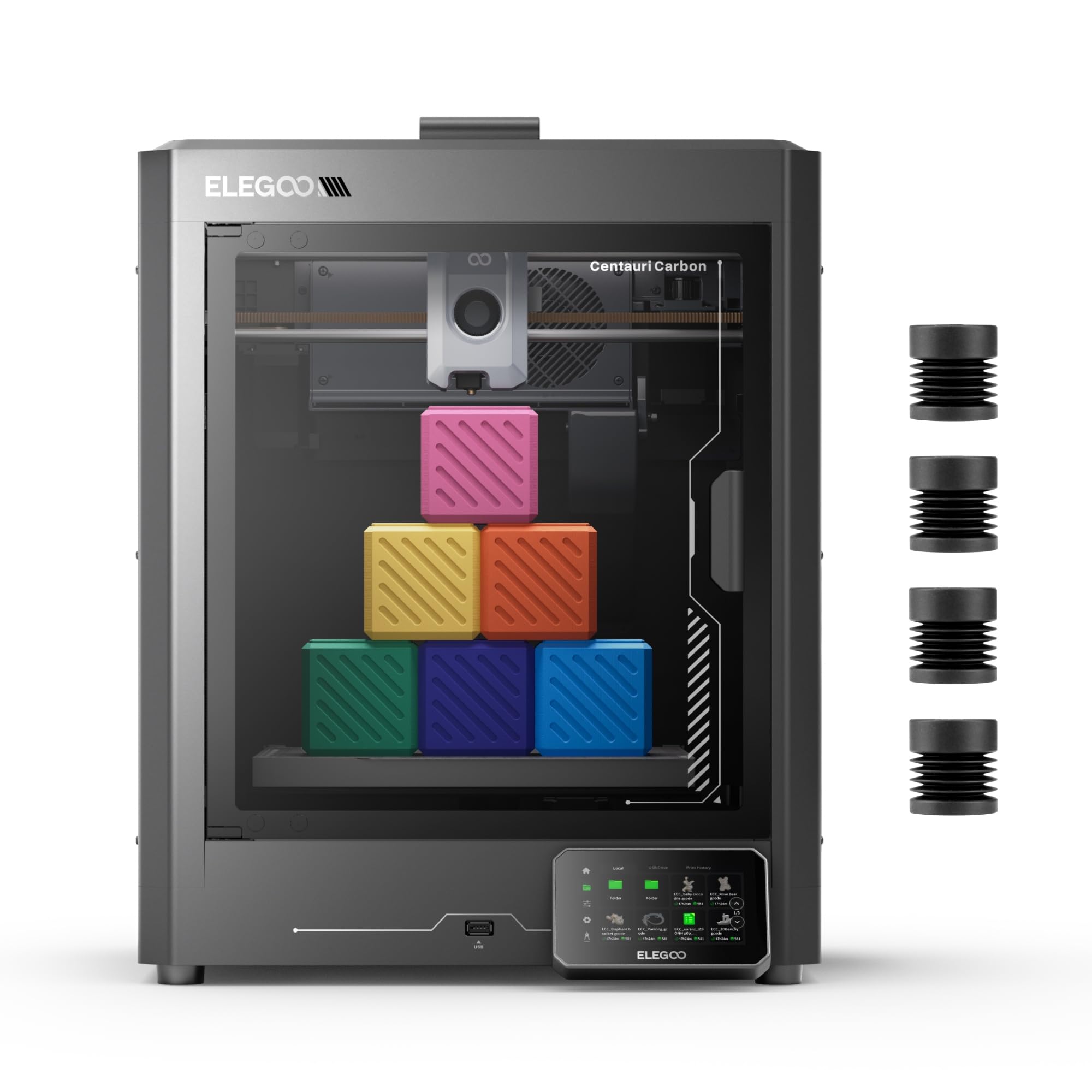
The Centauri Carbon arrives fully assembled and pre-calibrated, so you can unbox it and print a cookie cutter test file in under 30 minutes. The CoreXY structure allows 500 mm/s printing with 20,000 mm/s² acceleration, which means a single 60mm cutter finishes in about 12 minutes. The enclosed chamber helps maintain stable ambient temperatures, which is useful if your kitchen has drafts that can warp PLA.
The 320°C brass-hardened steel nozzle and dual-sided PEI plate give you flexibility with filaments. PLA adheres well at low bed temperatures, and PETG prints without delamination thanks to the vibration compensation system. The built-in chamber camera lets you monitor the first layer remotely — a feature that saves wasted material if a print starts to fail while you are across the house.
User reports note that the printer shakes noticeably at high speeds, but the die-cast aluminum frame and vibration compensation keep the actual print quality stable. A few early units had USB-C cable issues, but replacements have been reliable for hundreds of hours. The Centauri Carbon is a solid choice if you value speed and enclosure without jumping to the premium price bracket.
Why it’s great
- Fully enclosed design minimizes warping from kitchen drafts.
- Very fast print speeds reduce batch time for multiple cutters.
- 320°C hotend handles advanced filaments if you ever upgrade.
Good to know
- Initial batch had a USB-C cable design issue that required support.
- Shakes heavily at top speed; needs a sturdy surface.
3. FLASHFORGE AD5X Multi-Color 3D Printer
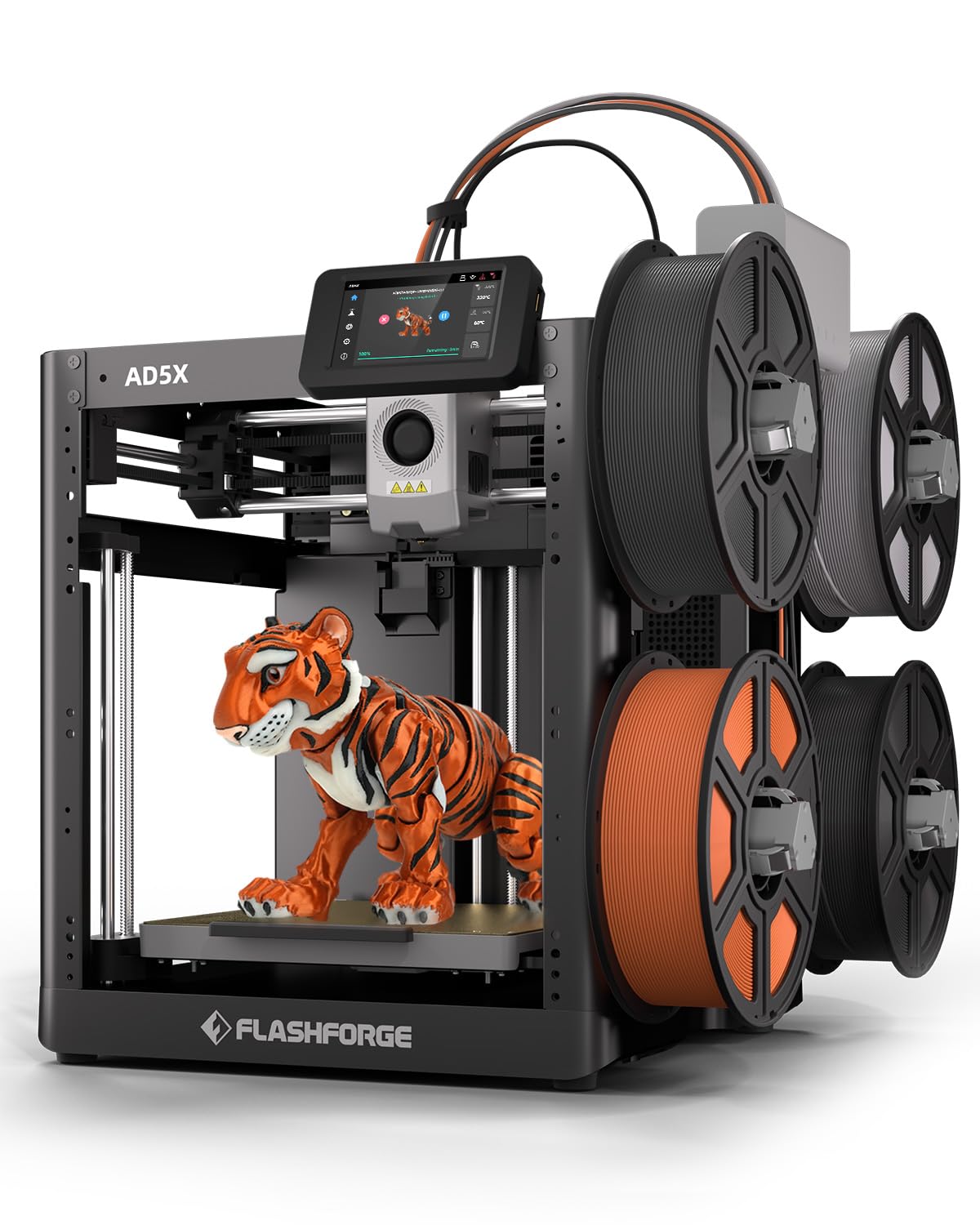
The AD5X brings multi-color printing to a more accessible price point, letting you print two-tone cookie cutters — like a ghost-shaped body with a white face — without painting afterward. The 1-Click Auto Leveling handles calibration automatically, and the 300°C direct-drive extruder gives reliable retraction control for different colors. The CoreXY kinematics achieve 600 mm/s with 20,000 mm/s² acceleration.
The 220x220x220mm build volume is slightly smaller than other entries on this list, but it is still large enough to print a set of six medium-sized cutters. The dual-channel cooling fan helps PLA bridges and overhangs stay clean, and the vibration compensation system ensures the small features of a cutter’s cutting edge are sharp. Users praise the print quality consistency, especially for the price.
The main trade-off is noise. The AD5X is noticeably louder than the Bambu A1, especially during filament purges between color changes. The included slicer is a fork of OrcaSlicer, but some users find the stock profiles need minor tweaking for perfectly smooth first layers. For a budget-friendly machine that can handle multi-color kitchen tools, the AD5X is a strong pick.
Why it’s great
- 4-color capability lets you print vibrant, detailed cookie cutters.
- 1-Click leveling and PEI plate give reliable first layer adhesion.
- Four nozzle sizes available for fine detail or faster bulk prints.
Good to know
- Noise level is higher than average; not ideal for quiet rooms.
- Smaller 220mm build volume limits very large batch prints.
4. Anycubic Kobra X Multicolor 3D Printer
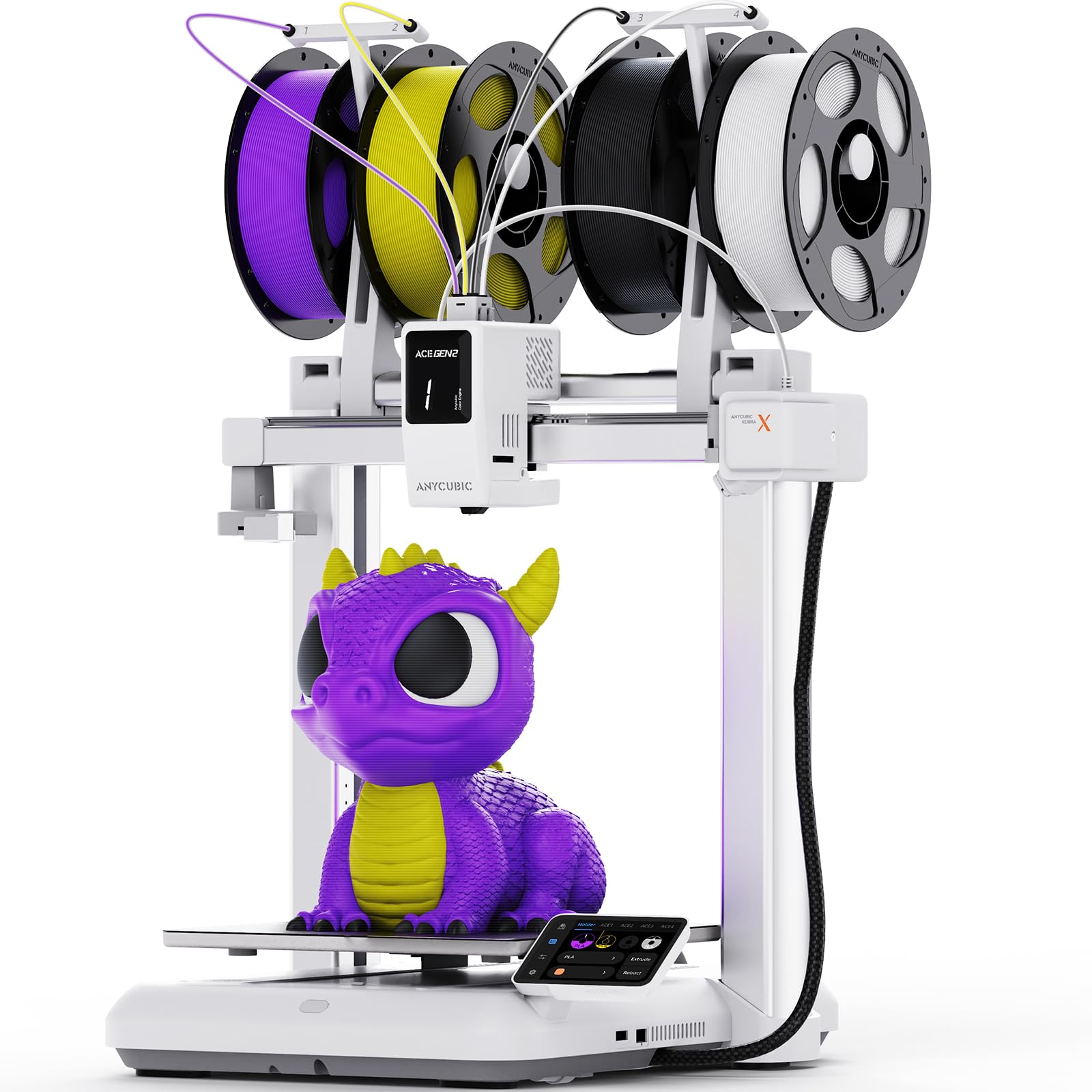
The Kobra X is designed for production, with a native 4-color capability that expands to 19 colors using multiple ACE GEN 2 units. For a baker who wants to sell custom-shaped, color-coded cookie cutters in bulk, this machine simplifies workflow. The vertical spool holder and top-mount architecture reduce the printer’s footprint, allowing more machines on a single workbench.
The 49-point LeviQ 3.0 auto-leveling mesh compensates for any bed variance, ensuring every cutter in a batch has an identical first layer. The AI-powered camera detects spaghetti failures and pauses the print automatically, which is a lifesaver for unattended overnight runs. Users report consistent quality across multiple units, making it a solid foundation for a small business.
One detail that matters for cutter printing is the 81.25% reduction in filament waste during color changes. This efficiency means you waste less material when printing a batch of two-tone cutter sets. The ACE GEN 2 system operates smoothly, though the single-extruder design still generates some purge waste. The Kobra X is the best choice if you are scaling up production of custom kitchen tools.
Why it’s great
- Excellent waste reduction for multi-color cutter production.
- AI print failure detection allows reliable unattended operation.
- Scalable to 19 colors for complex custom designs.
Good to know
- Expanding to 19 colors requires purchasing multiple ACE units.
- Single-extruder design still produces some purge waste between colors.
5. Bambu Lab P1S 3D Printer

The P1S is the enclosed sibling of the Bambu Lab ecosystem, adding a chamber that maintains consistent temperatures for advanced filaments. While PLA is the standard for cookie cutters, the ability to print PETG or even ABS in the same environment gives you more durable options for tools that will be washed and reused. The 500 mm/s speed with 20,000 mm/s² acceleration means a set of five cutters prints in less than 30 minutes.
Setup takes about 15 minutes, and the auto bed leveling is as reliable as the A1. The enclosed design also reduces noise, making the P1S suitable for a shared kitchen space. User reviews consistently mention the seamless experience moving from the A1 to the P1S, with the same Bambu Studio slicer and MakerWorld community for downloading ready-to-print cutter STL files.
The main upgrade here is material flexibility. If you ever want to print cutters in food-safe PETG or create heat-resistant stencils, the P1S handles those materials without issue. The printer supports up to 16 colors with the AMS unit, though that adds cost. For a premium, enclosed solution that produces flawless first layers every time, the P1S is a workhorse.
Why it’s great
- Enclosed chamber enables PETG and ABS printing for durable kitchen tools.
- Fast setup and reliable auto-leveling for consistent batch prints.
- Quieter than most open-frame printers in its speed class.
Good to know
- Higher entry price than the open-frame A1.
- Multi-color capability requires the separately sold AMS unit.
6. QIDI Q2C 3D Printer
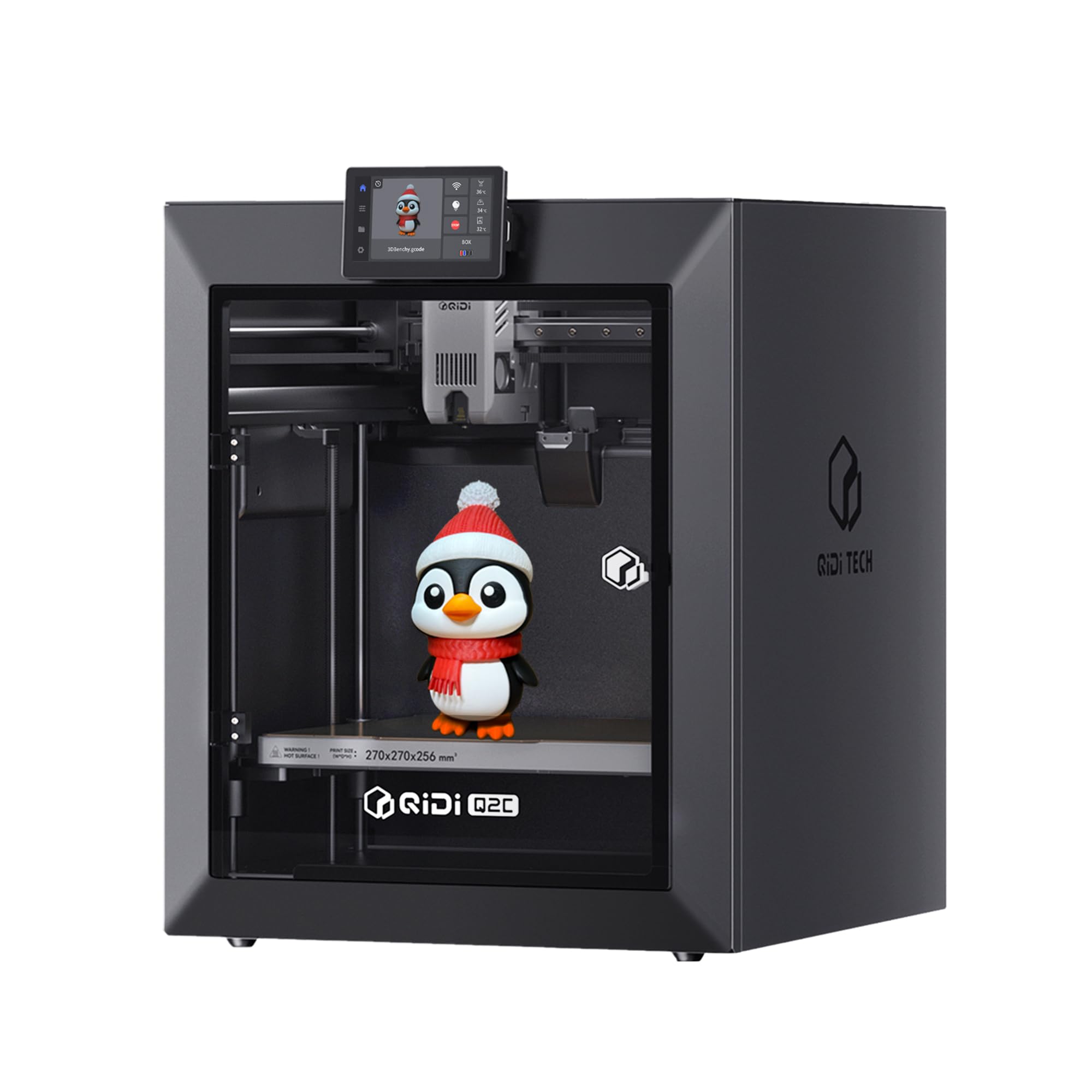
The QIDI Q2C is a fully enclosed CoreXY machine built on an open-source foundation, giving you full control over slicer settings and firmware. The 370°C bimetal hotend unlocks advanced composites like PPS-CF, but for cookie cutters, the real benefit is the ability to run high-temperature PETG or polycarbonate without worrying about nozzle degradation. The 270x270x256mm build volume is generous for batch prints.
The unique nozzle-integrated leveling sensor calibrates the first layer regardless of bed condition. This sensor is unaffected by slight debris or minor plate damage, which is a common issue when removing freshly printed cutters. The 1.5GT belt and full-metal CoreXY structure dampen vibrations, resulting in exceptionally smooth vertical walls on tall cutters. Users report that the first print out of the box is often flawless.
The Q2C does not include chamber heating — that is reserved for the Q2 model — but the enclosure is enough to maintain stable temperatures for PETG. The optional camera does not support AI detection, so you need to monitor prints manually. For makers who want the flexibility to experiment with materials and settings, the Q2C offers professional-grade results with remarkable reliability.
Why it’s great
- Open-source firmware allows deep customization of print profiles.
- 370°C hotend handles advanced and high-temperature filaments.
- Excellent vibration dampening produces smooth, layer-free walls.
Good to know
- No chamber heating; not ideal for ABS in cold environments.
- Camera is optional and lacks AI failure detection.
7. Sovol SV08 Core-XY 3D Printer

The Sovol SV08 is a Voron 2.4-based open-source printer with a massive 350x350x345mm build volume, capable of printing dozens of cookie cutters in a single batch. The CoreXY kinematics allow 700 mm/s printing with up to 40,000 mm/s² acceleration. If speed is your priority, this machine can produce a 60mm cutter in under 10 minutes.
The quad-gantry auto leveling system uses four independent Z motors to ensure the entire bed is perfectly level every time. This is critical when using the large build area, as any tilt would ruin the first layer of cutters placed at the corners. The Klipper firmware gives you advanced tuning options like input shaping and pressure advance, which can further refine the sharp edges of your cutter walls.
The SV08 is not a plug-and-play machine — assembly takes about an hour, and you need to be comfortable with open-source configuration. Some users have reported firmware instability and Z-offset drift, though updates have improved reliability. For experienced makers who want maximum speed and build volume without the premium price, the SV08 is a compelling choice.
Why it’s great
- Huge 350mm build volume for bulk cutter production.
- Quad-gantry auto leveling ensures first-layer accuracy at scale.
- Fully open-source with Klipper for advanced tuning.
Good to know
- Requires assembly and some technical know-how.
- Some users report firmware crashes and Z-offset drift.
8. Creality K2 Combo (A) 3D Printer
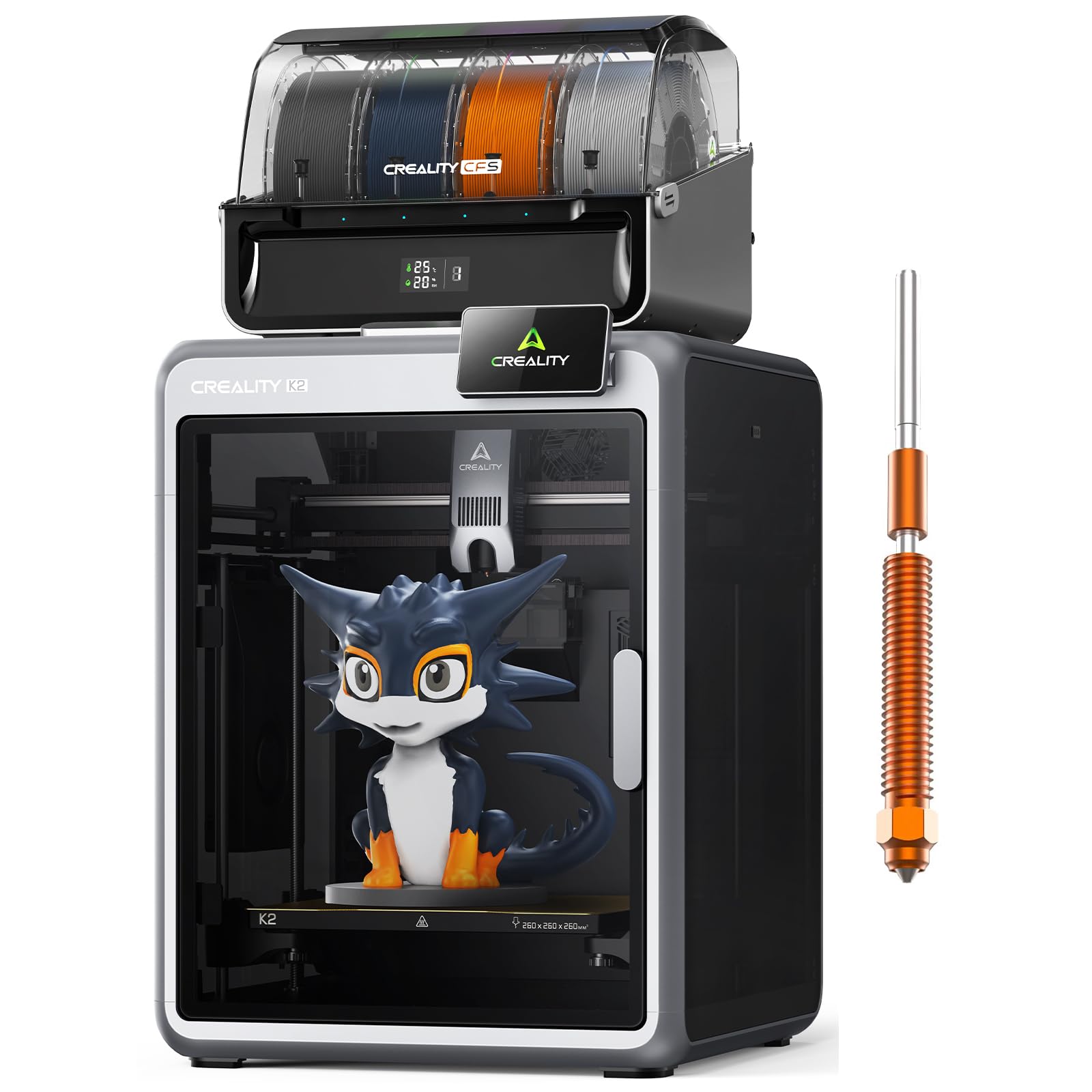
The K2 Combo integrates the CFS (Creality Filament System) for auto-switching between four colors, expandable to 16 with additional units. This is ideal for bakers who want to produce themed cutter sets — like a green Christmas tree, a red star, and a white snowflake — all from the same machine. The RFID system automatically reads Creality filament profiles, so you don’t need to manually configure temperature and retraction for each color.
The step-servo motors on the extruder and X/Y axes boost extrusion consistency, which translates to uniform wall thickness on every cutter. The chamber AI camera detects spaghetti failures and notifies you remotely. The printer is pre-assembled with only the screen needing installation, so you can be printing within 30 minutes of unboxing. Users praise the build quality and the quiet operation of the step-servo system.
The main concern is price — the K2 Combo sits at the upper end of the mid-range bracket. A few users have reported adhesion issues with the build plate, though these appear to be isolated cases. For a premium, multi-color printer that handles PLA, PETG, and carbon-filled filaments with equal ease, the K2 Combo is a top-tier option for kitchen customizers.
Why it’s great
- Integrated CFS for seamless multi-color cutter printing.
- RFID auto-detection simplifies filament management and profiles.
- Step-servo motors ensure consistent extrusion for sharp edges.
Good to know
- Premium price reflects the advanced multi-color features.
- Some users report adhesion issues requiring calibration tweaks.
9. Creality Ender 5 Max 3D Printer
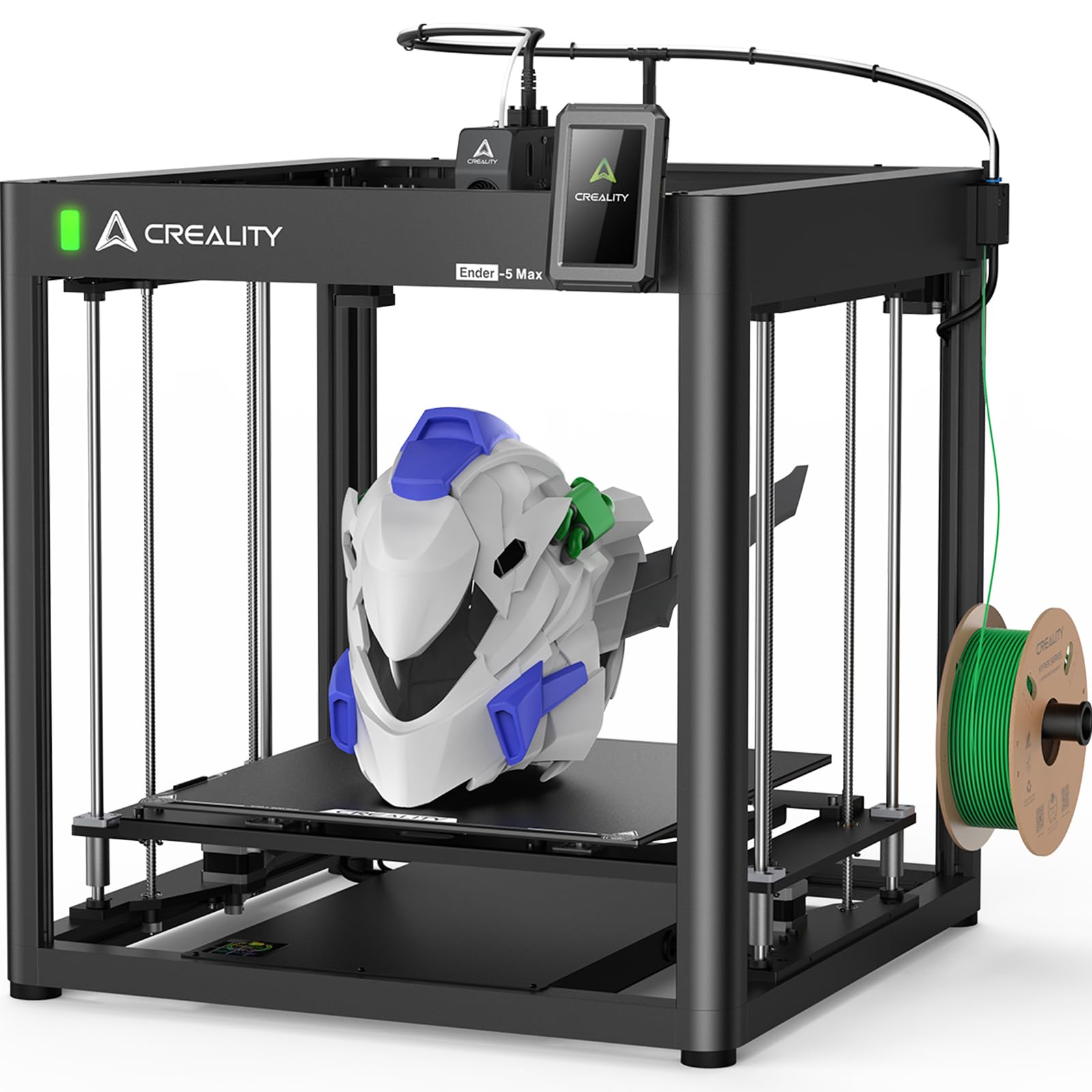
The Ender 5 Max is built for scale. The 400x400x400mm build volume is the largest on this list, letting you print a full 8-inch round cutter or a baker’s dozen of smaller shapes in a single run. The CoreXY structure reaches 700 mm/s, and the 64-point auto leveling system ensures the huge bed is calibrated across every corner.
The reinforced die-cast aluminum frame minimizes vibration even at high speeds, which is essential for maintaining crisp cutter edges across a large plate. The direct-drive dual-gear extruder provides reliable feeding for PLA and PETG, and the 1000W heated bed reaches printing temperature in minutes. The printer supports WLAN multi-printer control, allowing you to manage a farm of Ender 5 Max units from a single workstation.
Reports are mixed on reliability. Some users love the speed and build volume, while others have experienced severe bed adhesion problems and broken extruder casings. The AI failure detection system is considered unreliable by multiple reviewers. The Ender 5 Max is best suited for experienced users who can troubleshoot issues and want a large-format machine for production-scale cookie cutter printing.
Why it’s great
- Massive 400mm build volume for large batches of cutters.
- All-metal frame and linear rail minimize vibration for clean edges.
- 64-point auto leveling covers the entire large bed accurately.
Good to know
- Customer reviews cite significant reliability and adhesion issues.
- Not beginner-friendly; requires troubleshooting and setup tweaks.
FAQ
Is it safe to use PLA cookie cutters for food?
What layer height is best for sharp cookie cutters?
Can I print dishwasher-safe cookie cutters?
Final Thoughts: The Verdict
For most users, the 3d printer for cookie cutters winner is the Bambu Lab A1 because it delivers silent, reliable, and fully automatic printing that eliminates the learning curve. If you want an enclosed chamber for printing PETG cutters, grab the Bambu Lab P1S. And for mass-producing custom, multi-color cutters for a small business, nothing beats the Anycubic Kobra X with its ACE GEN 2 system and AI monitoring.

Mo Maruf
I created WellFizz to bridge the gap between vague wellness advice and actionable solutions. My mission is simple: to decode the research and give you practical tools you can actually use.
Beyond the data, I am a passionate traveler. I believe that stepping away from the screen to explore new environments is essential for mental clarity and physical vitality.