Our readers keep the lights on and my smoothie glass nicely filled. As an Amazon Associate, I earn from qualifying purchases.
Resin fumes, ABS vapors, and fine particle emissions turn a creative workspace into a health hazard within minutes. A dedicated enclosure with a proper ventilation system is the only way to reclaim your air quality without sacrificing print quality or convenience.
I’m Mohammad Maruf — the founder and writer behind WellFizz. I’ve spent hundreds of hours analyzing filtration CFM ratings, carbon weight capacities, seal integrity, and thermal retention data across dozens of 3D printer enclosures to separate real protection from wishful marketing.
Whether you’re running a resin rig in a studio apartment or pushing high-temp filaments in a garage, finding the right 3d printer enclosure with ventilation means balancing fume extraction power with size, insulation, and ease of setup.
How To Choose The Best 3D Printer Enclosure With Ventilation
Selecting an enclosure that actually protects your lungs comes down to three non-negotiable criteria: extraction throughput, seal quality, and thermal behavior. A tent that looks good but leaks fumes at every zipper is worse than no enclosure at all.
Ventilation Throughput & Filtration Type
The fan’s CFM (cubic feet per minute) rating tells you how many times the internal air volume gets replaced every minute — a 180 CFM fan refreshing a 15 cubic foot space clears the air 12 times per minute. For resin printers, you want active external venting through a duct to a window, not just a recirculating carbon pad that saturates within days. Look for enclosures with dual exhaust ports so you can run both a ducted fan and an internal carbon filter simultaneously.
Internal Dimensions & Printer Clearance
Measure your printer’s width, depth, and height — including any filament spool mounts on top or purge buckets on the side. An enclosure that’s 30 inches wide might still be too shallow for a printer with a 360mm Y-axis travel. Leave at least 2 inches of clearance on every side for airflow around the heatbed and electronics. If you run a wash-and-cure station alongside the printer, you need a double-space model with at least 19 inches of width per compartment.
Material Construction & Thermal Retention
For ABS, ASA, and Nylon, the enclosure must hold internal temperatures 5–15°C above ambient to prevent layer delamination. Oxford cloth tents with aluminum foil lining retain heat better than thin polyester shells. Rigid acrylic cabinets offer better visibility and insulation but lack the fold-flat portability of fabric tents. The material must also block UV light to prevent accidental resin curing inside the chamber — tinted windows are a must for resin setups.
Seal Integrity & Zipper Quality
Every zipper track, cable port, and seam is a potential leak path for VOCs. Enclosures that use EVA foam gaskets around the exhaust ports and double-stitched zipper flaps reduce fugitive emissions dramatically. If the enclosure relies on magnetic flaps for cable passthrough, expect measurable VOC escape — screw-secured ports with grommets are superior.
Quick Comparison
On smaller screens, swipe sideways to see the full table.
| Model | Category | Best For | Key Spec | Amazon |
|---|---|---|---|---|
| Crafit Cabinet | Premium Cabinet | Maximum storage & stability | 180 CFM fan, holds 48 spools | Amazon |
| TOPCUBE F2 | Premium Acrylic | 360° visibility & active cooling | Load-bearing base, 28.1 lbs | Amazon |
| Fungdo Smart Enclosure | Insulated Tent | High-temp FDM & cold rooms | 180 CFM fan, +15°C rise | Amazon |
| DELACK Kit | DIY Modular | IKEA LACK table integration | 120mm fan port, 4-inch duct | Amazon |
| YOOPAI Large Resin | Budget Resin Tent | Dual-printer resin setups | Carbon filter + exhaust fan | Amazon |
| SKOUPHY Double Space | Budget Resin Tent | Value dual-machine enclosure | 4500 RPM fan, carbon box | Amazon |
| Sumo Prusa XL Kit | Premium DIY Kit | Prusa XL specific enclosure | Removable upper chamber | Amazon |
In‑Depth Reviews
1. Crafit 3D Printer Cabinet
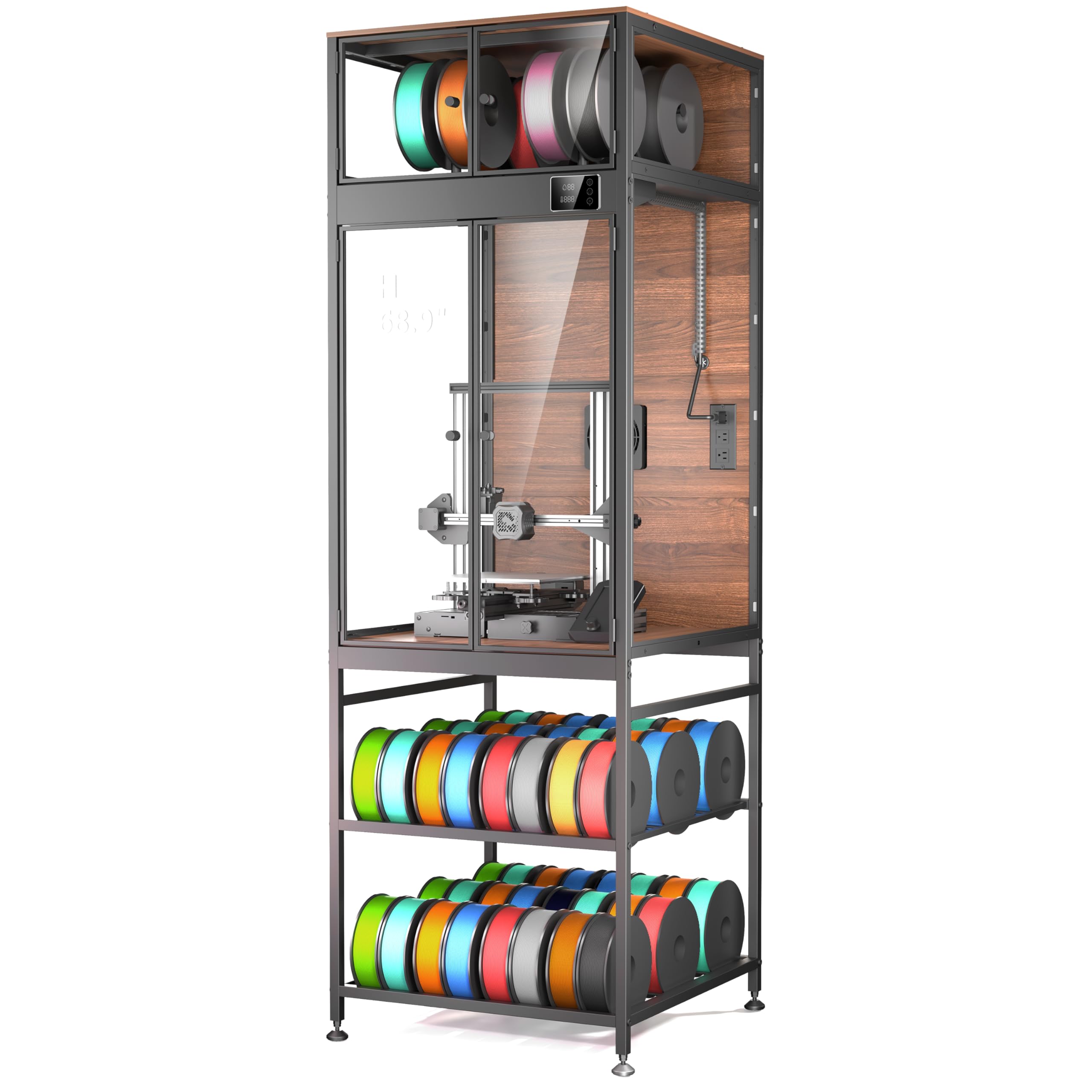
The Crafit cabinet is the only vertical solution on this list that combines a full-height print chamber with a dedicated 48-spool storage rack in the base, all built around a heavy-duty carbon steel frame. Its manual vent control fan runs at high flow to purge the chamber quickly after a print finishes, while the clear PET panels and interior LED spotlight let you monitor layer adhesion without opening the doors and losing thermal stability.
Internal dimensions of 21.6 x 22 x 28.7 inches fit large printers like the Bambu Lab P1S or Creality K1 Max with room to spare, and the integrated feed-through ports route up to four filaments directly from the top spool hub. The rigid composite walls and steel frame reduce operational noise by up to 40 percent compared to open-frame printing, which matters for shared living spaces.
The exhaust fan is powerful enough to create negative pressure inside the cabinet, but the doors are not fully airtight — some users added weather stripping to eliminate residual odor seepage. The LED light unit failed on a few units, though the manufacturer replaced the panel promptly under warranty. For anyone needing a permanent, furniture-grade enclosure that doubles as filament storage, this is the most complete package available.
Why it’s great
- Integrated high-flow fan with 5-inch vent port for serious fume extraction
- Massive 48-spool capacity keeps filament dry and organized
- Rigid steel frame dampens vibration better than fabric tents
Good to know
- Doors not fully sealed; may need added weather stripping for airtightness
- Assembly takes 2.5 hours and requires two people for the heavy top section
2. TOPCUBE F2 Acrylic Enclosure
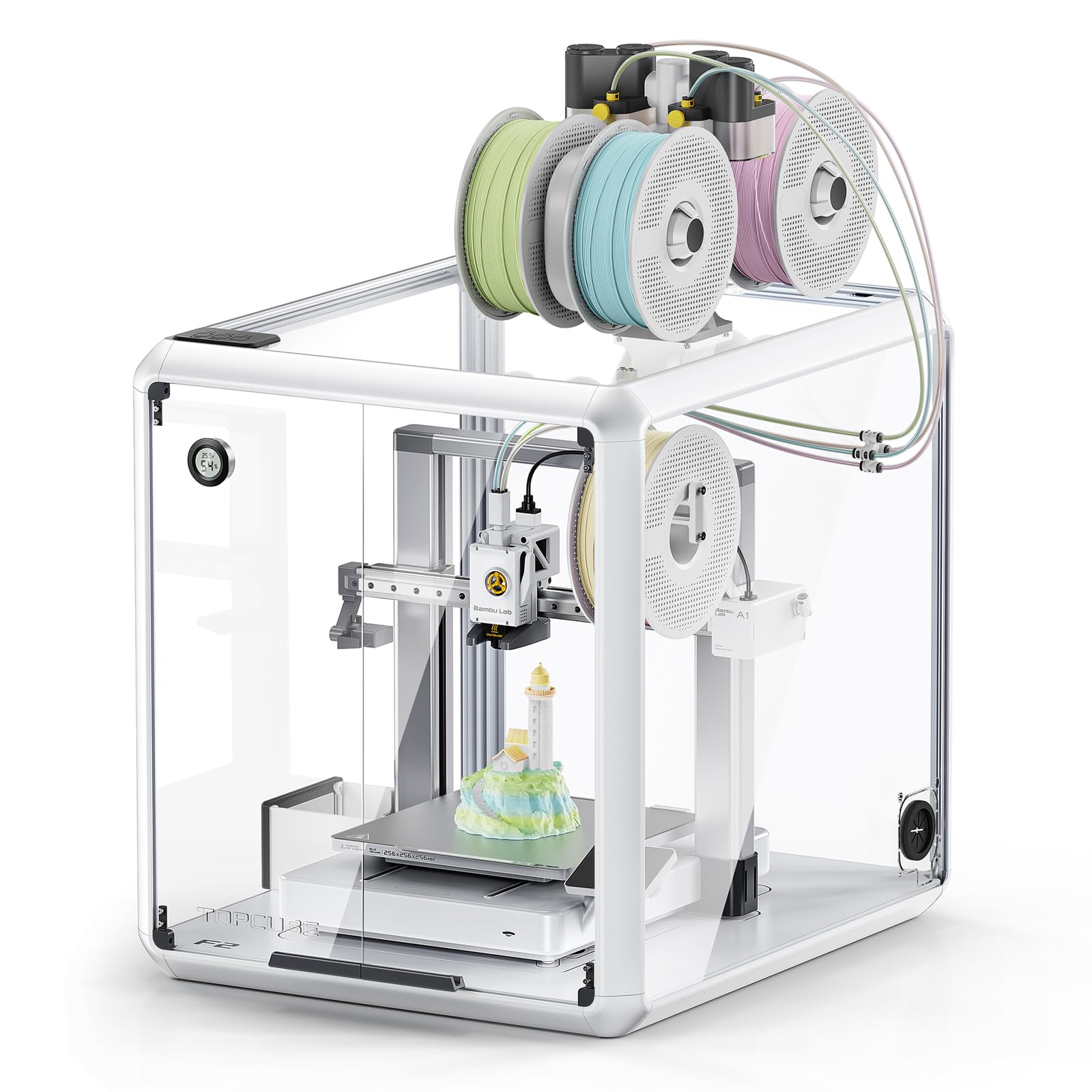
The TOPCUBE F2 is the only enclosure in this roundup that integrates an active cooling fan into the base itself, drawing heat away from the printer’s mainboard while the upper chamber maintains a stable temperature for warp-prone materials. The 360-degree transparent acrylic walls offer unmatched visibility of the print in progress, and the aluminum frame keeps the whole structure rigid at 28.1 pounds without flex during high-speed printing.
The internal dimensions of 21.5 x 25.5 x 24 inches are specifically tailored for the Bambu Lab A1 and A1 Mini, though the gap tolerance is tight — some users noted minor rattling from the thin plexiglass panels. Centralized controls on the top chassis let you toggle the LED light strip, base fan, and display screen from a single location, and an additional DIY switch is provided for adding a secondary exhaust fan if you want active ducted venting.
This enclosure excels at odor isolation because the fully enclosed acrylic structure prevents particle escape through fabric weave, but there are notable gaps around the door hinge area that compromise absolute seal integrity. The package requires a fair bit of DIY effort — you must print several parts like the waste drawer and top mount brackets yourself — making this a better fit for experienced makers who want a permanent, rigid display cabinet.
Why it’s great
- Integrated load-bearing base with active mainboard cooling fan
- Full 360° transparent acrylic for unobstructed print monitoring
- Aluminum frame provides solid rigidity at 28 pounds
Good to know
- Gaps around hinge area reduce fume seal effectiveness
- Requires self-printing of several accessory parts for full functionality
3. Fungdo Smart 3D Printer Enclosure

The Fungdo Smart enclosure delivers the highest thermal rise of any tent-style model on this list — its built-in insulation lining consistently raises internal chamber temperature by 5 to 15 degrees Celsius above ambient, which is critical for printing ABS, ASA, and PC without edge warping. The pre-tested 180 CFM exhaust fan refreshes the internal air volume 10 times per minute, and the 3-meter duct with backdraft valve ensures extracted fumes go straight outside rather than recirculating into the room.
Internal space measures 27.5 x 29.5 x 35.4 inches, accommodating some of the largest FDM printers on the market including the Bambu Lab X1C. The dark TPU observation window blocks UV light that would otherwise cure resin prints prematurely, and the dual exhaust ports (left or right routing) give you flexibility in room layout. Users report that the combination of the built-in insulation and the passive drying effect naturally lowers internal humidity to 20–35 percent RH without a separate dehumidifier.
Some units arrived with stitching tears around the zipper tracks, and the frame poles can be finicky to install — a few users had to cut inch off the top poles for a snug fit. The material is thick and heavy-duty once assembled, but the tent-like structure will never match the rigidity of a cabinet. For anyone printing engineering-grade filaments in a basement or garage where ambient temperature dips, the Fungdo’s thermal retention is unmatched among fabric enclosures.
Why it’s great
- +15°C maximum thermal rise enables reliable ABS/ASA printing in cold rooms
- 180 CFM fan with 3-meter duct and backdraft valve for genuine external venting
- Dual exhaust ports allow left or right duct routing
Good to know
- Some units arrive with stitching tears near zipper tracks
- Frame poles may require trimming for a tight fit
4. DELACK 3D Printer Enclosure Kit
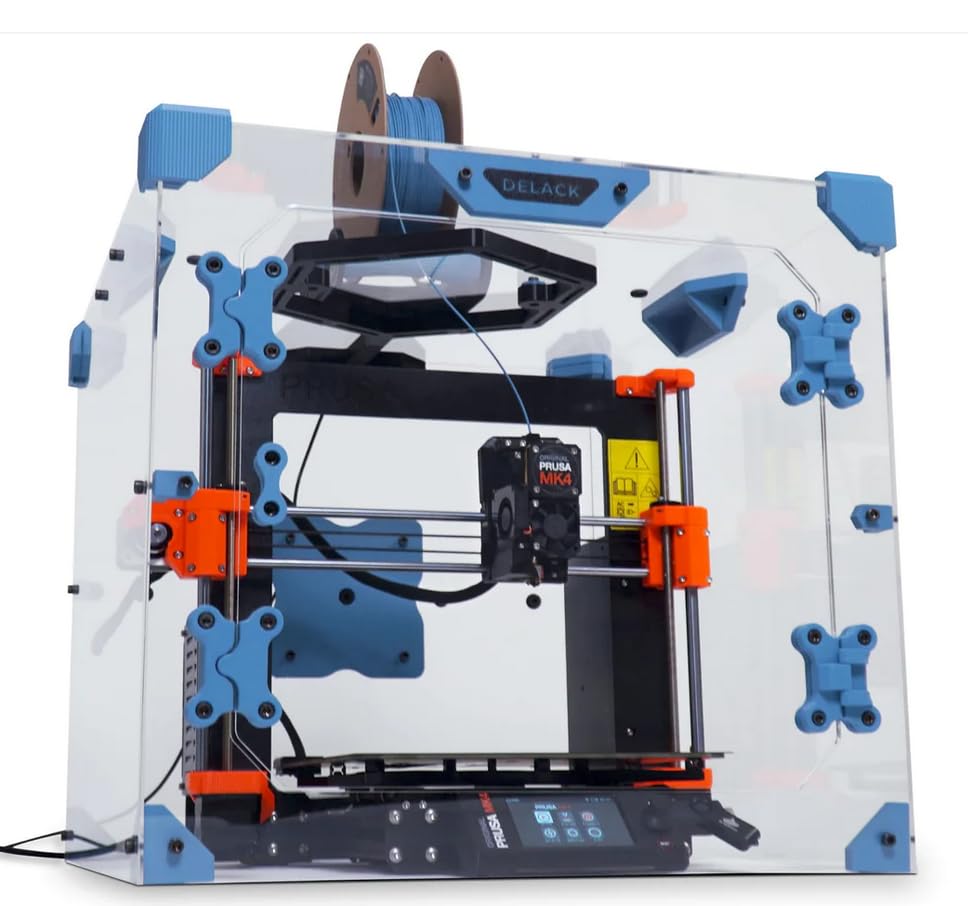
The DELACK kit is engineered specifically to transform an IKEA LACK table into a rigid, modular 3D printer enclosure — the acrylic panels, 120mm fan port, and 4-inch duct adapter all bolt directly onto the table frame. This is the most configurable option here, with over 20 printable accessories available for download including camera mounts, filament roller bearings, cable organizers, and custom nameplates that let you tailor the enclosure to your exact workflow.
The internal space of 21.7 x 19.1 x 17.7 inches is compact and works best with smaller footprint printers like the Prusa MK4, MK3, or Bambu Lab A1 Mini. The included LED light strip plugs into a 5V USB power adapter and provides bright illumination for webcam monitoring. The ventilation port supports optional HEPA filtration or direct external venting, and the removable top panel gives easy access for MMU3 maintenance or filament changes.
Be prepared for a significant DIY commitment — you need to 3D print all the brackets and accessories yourself, which takes 40-plus hours of print time. The provided Allen key was the wrong size on some kits, and the manual relies on low-resolution renders that make hinge placement confusing for first-timers. The final result, however, is a professional-grade enclosure at a fraction of the cost of pre-built cabinets, and the structural integrity handles high-speed printing vibrations without wobble.
Why it’s great
- Highly modular with 20+ printable accessories for custom configurations
- 4-inch duct adapter and 120mm fan port enable proper external venting
- Clear acrylic panels maintain printer visibility while reducing noise 10-15 dB
Good to know
- Requires 40+ hours of 3D printing for all bracket and accessory parts
- Vertical headspace is tight for printers with tall Z-axis height modifications
5. YOOPAI Large Resin Enclosure
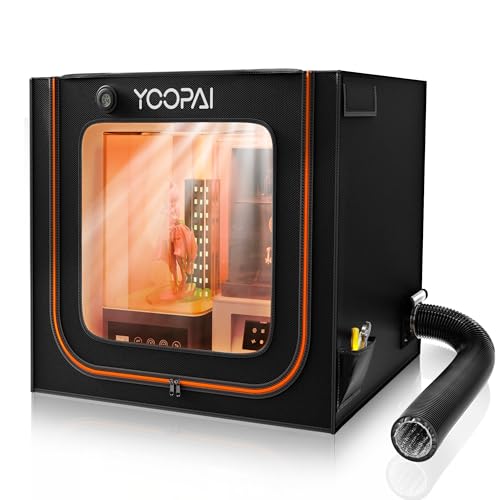
The YOOPAI enclosure offers the widest internal space at this price tier — 30 x 19.7 x 28.3 inches — which is enough to fit a resin printer and a separate curing station side by side without the two machines sharing the same air pocket. The built-in carbon filter sheet absorbs resin odors during printing, while the included exhaust fan and expandable pipe give you the option to duct fumes directly to a window instead of relying solely on passive carbon absorption.
The six-sided fully enclosed PVC construction provides basic dust and UV protection, and the high-transparency front window lets you observe print progress without unzipping the tent and releasing accumulated VOCs into the room. Users report that the enclosure effectively eliminates detectable resin smell from the workspace, and the internal heat insulation design helps maintain a stable temperature for consistent resin flow.
The carbon filter slows airflow noticeably when installed — the manufacturer recommends running the fan longer before opening the tent, or adding a second exhaust pipe on the opposite side to maintain throughput. The zippers are functional but not heavy-duty, and the fabric tends to wrinkle under its own weight over time. For the price, it’s a solid starter enclosure for resin users who need dual-machine capacity and don’t want to spend aggressively on a cabinet.
Why it’s great
- 30-inch width accommodates a resin printer and curing station side by side
- Combined carbon filter and active exhaust fan for dual-stage odor removal
- Transparent window allows print monitoring without opening the tent
Good to know
- Carbon filter restricts airflow; consider dual-pipe setup for adequate extraction
- Zippers and fabric are entry-level quality — may not withstand daily heavy use
6. SKOUPHY Double Space Enclosure
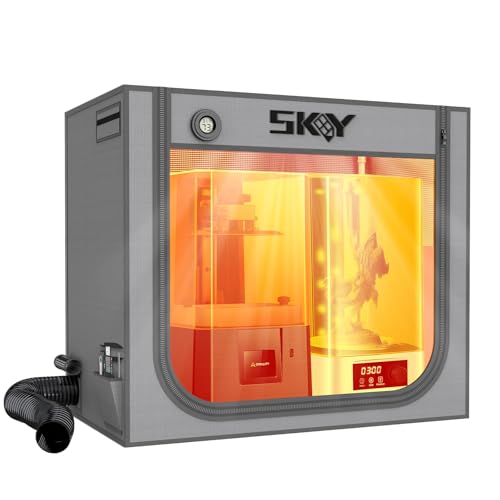
The SKOUPHY Double Space enclosure pairs a 4500 RPM exhaust fan with an inline activated carbon box to give resin printers a two-pass odor reduction system. The internal dimensions of 31.5 x 18.1 x 28.3 inches are slightly narrower than the YOOPAI but still wide enough to fit most mid-sized resin printers and their accompanying wash-and-cure stations without crowding. The double-layer aluminum mold Oxford cloth construction provides better waterproofing and noise damping than single-layer fabric tents.
An upgraded LED light bar and a thermo-hygrometer with Fahrenheit/Celsius switching are included, which helps you monitor chamber conditions for consistent resin viscosity. Users who own an Elegoo Saturn 4 Ultra 16K confirm that the enclosure fits both the printer and the Mercury Plus v3.0 wash station simultaneously, and the tinted window blocks UV light from curing prints through the transparent panel.
The included fan and carbon filter worked reasonably well for fume isolation, but several users noted that the tiny carbon element saturates quickly on heavy print schedules — adding a recirculating BentoBox-style filter significantly improved air quality. The kit only comes with a single hose connector for the enclosure side; you will need to purchase a separate adapter to attach the duct to a window vent. Assembly takes 10 to 15 minutes, making it the quickest setup among fabric tent options.
Why it’s great
- 4500 RPM fan with inline carbon box provides dual-stage odor control
- Double-layer Oxford cloth reduces noise and improves waterproofing
- Large tinted window blocks UV while maintaining print visibility
Good to know
- Carbon filter element is small and saturates quickly with heavy use
- Only one hose connector included; window adapter must be purchased separately
7. Sumo Prusa XL Enclosure Kit

The Sumo enclosure is purpose-built for the Prusa XL, with a custom frame geometry that mirrors the printer’s footprint to avoid wasted space. The upper chamber is fully removable for maintenance and troubleshooting, and the hollow ceiling cavity allows you to mount accessories like fire alarms, cameras, or spool holders from the top support beams. A hygrometer is included for monitoring internal humidity and temperature, and the kit provides all non-printable hardware such as hex rods, magnets, and fasteners.
The acrylic panels are tinted to reduce ambient UV exposure, and the 25.6 x 20.7 x 36.8 inch size encloses the full print area including the 5-tool head assembly. The removable upper chamber extends about 10 centimeters above the filament lines to give clearance for hanging accessories. Users report that the instruction manual is well-diagrammed, and the manufacturer actively updates the STL files when Prusa makes design changes to the XL control panel.
All printed parts must be fabricated from PETG filament, which takes multiple weekends of printing time. The acrylic panels are prone to developing stress cracks near the screw holes — some users recommend pre-drilling with a 5mm bit to relieve pressure. The shrapnel nuts included in the kit have a different thread pitch than the original Prusa hardware, which can cause frustration during assembly. For dedicated Prusa XL owners who want a fitted enclosure rather than a generic tent, the Sumo delivers a clean, space-efficient solution.
Why it’s great
- Custom-fitted for Prusa XL with zero wasted internal space
- Removable upper chamber simplifies maintenance and accessory mounting
- Active manufacturer support updates STL files when Prusa revises hardware
Good to know
- Requires multiple weekends of PETG printing for all bracket parts
- Acrylic panels can crack at screw holes; pre-drilling recommended
FAQ
Can I use a carbon filter instead of venting outside for a resin printer?
What size enclosure do I need for a Bambu Lab X1C or P1S?
How long should I run the exhaust fan after a print finishes?
Final Thoughts: The Verdict
For most users, the 3d printer enclosure with ventilation winner is the Crafit Cabinet because it combines a high-flow 180 CFM fan, heavy-duty steel frame, and integrated 48-spool filament storage into a single furniture-grade unit that handles both fume extraction and organization. If you want maximum thermal retention for printing ABS and engineering filaments in cold spaces, grab the Fungdo Smart enclosure with its +15°C insulation lining. And for a budget-friendly dual-printer resin setup that keeps odors isolated, the YOOPAI Large enclosure is the most cost-effective entry point.

Mo Maruf
I created WellFizz to bridge the gap between vague wellness advice and actionable solutions. My mission is simple: to decode the research and give you practical tools you can actually use.
Beyond the data, I am a passionate traveler. I believe that stepping away from the screen to explore new environments is essential for mental clarity and physical vitality.