Our readers keep the lights on and my smoothie glass nicely filled. As an Amazon Associate, I earn from qualifying purchases.
A cold shower midway through a morning routine isn’t just an inconvenience — it’s a symptom of a water heater that can’t keep up with demand. For households balancing dishwashing, laundry, and back-to-back showers, a 30-gallon gas water heater sits at the sweet spot between compact sizing and enough stored hot water to avoid that dreaded temperature drop. But choosing the right unit means understanding BTU output, recovery rate, and First Hour Rating — not just tank size.
I’m Mohammad Maruf — the founder and writer behind WellFizz. This guide is built on weeks of deep analysis comparing gas configurations, thermal efficiency specs, real-world customer feedback, and warranty terms across tank and tankless models that claim 30-gallon equivalent performance.
Whether you are replacing an old tank or upgrading from electric, finding the right 30 gallon gas water heater requires matching your household’s hot water draw to a unit’s recovery speed and heat exchanger quality.
How To Choose The Best 30 Gallon Gas Water Heater
Selecting a heater for the 30-gallon class involves more than picking a brand. You must consider how the unit generates heat (stored tank versus on-demand), the energy it consumes per hour, and the infrastructure your home can support. Three factors define the right pick for your household.
Match the First Hour Rating to Your Peak Demand
The First Hour Rating (FHR) tells you how many gallons of hot water the unit can deliver in an hour of peak use. For a family of three to four people, look for an FHR around 50 to 60 gallons. A 30-gallon tank with a high BTU burner and fast recovery can outperform a larger tank with a weak burner. Always check the yellow EnergyGuide label for FHR numbers.
Understand Venting and Clearance Requirements
Gas water heaters need proper exhaust venting — either through a vertical chimney, a side-wall direct vent, or a power vent system. Non-condensing units require stainless steel venting, while condensing models can use cheaper PVC pipes because they exhaust cooler air. If you are replacing a unit that previously vented through a masonry chimney, measure the flue diameter. A mismatch here means hiring a professional to refit the vent, which can cost hundreds.
Evaluate the Warranty on the Heat Exchanger and Tank
The heat exchanger or tank liner is the most expensive component to fail. A standard warranty runs 6 to 10 years for a tank and 10 to 15 years for a tankless heat exchanger. Some manufacturers offer extended labor coverage through registered installation. Be aware that sediment buildup from hard water can void warranty claims — a descaling valve kit pays for itself over time.
Quick Comparison
On smaller screens, swipe sideways to see the full table.
| Model | Category | Best For | Key Spec | Amazon |
|---|---|---|---|---|
| Rheem RTG-70DVLN-3 | Tankless | 2-3 bath homes | 160,000 BTU, 7.0 GPM | Amazon |
| Takagi T-H3S-DV-N | Condensing | Long-term reliability | 8 GPM, 0.93 UEF | Amazon |
| Rinnai CX199iN | Smart Condensing | Whole-home with app | 199,000 BTU, 11.1 GPM | Amazon |
| Westinghouse Smart Indoor | Smart Non-Condensing | WiFi monitoring | 180,000 BTU, 7.9 GPM | Amazon |
| Westinghouse Outdoor Propane | Outdoor Tankless | Propane hookups | 180,000 BTU, 8.1 GPM | Amazon |
| ThermoMate RTC68iN | Condensing | High efficiency | 0.91 UEF, 163,000 BTU | Amazon |
| FOGATTI 170,000 BTU | Non-Condensing | Large households | 7.5 GPM, 170,000 BTU | Amazon |
| FOGATTI 120,000 BTU | Non-Condensing | 2-4 fixture homes | 5.1 GPM, 120,000 BTU | Amazon |
| Rheem RTG-70XLN-3 | Outdoor Tankless | Outdoor install | 160,000 BTU, 7.0 GPM | Amazon |
| GE 30 Gallon Electric | Electric Tank | Budget replacement | 5500W, 53 Gal FHR | Amazon |
| VEVOR 30 Gallon | Electric Tank | Point-of-use | 5000W, 20mm foam | Amazon |
In‑Depth Reviews
1. Rheem RTG-70DVLN-3
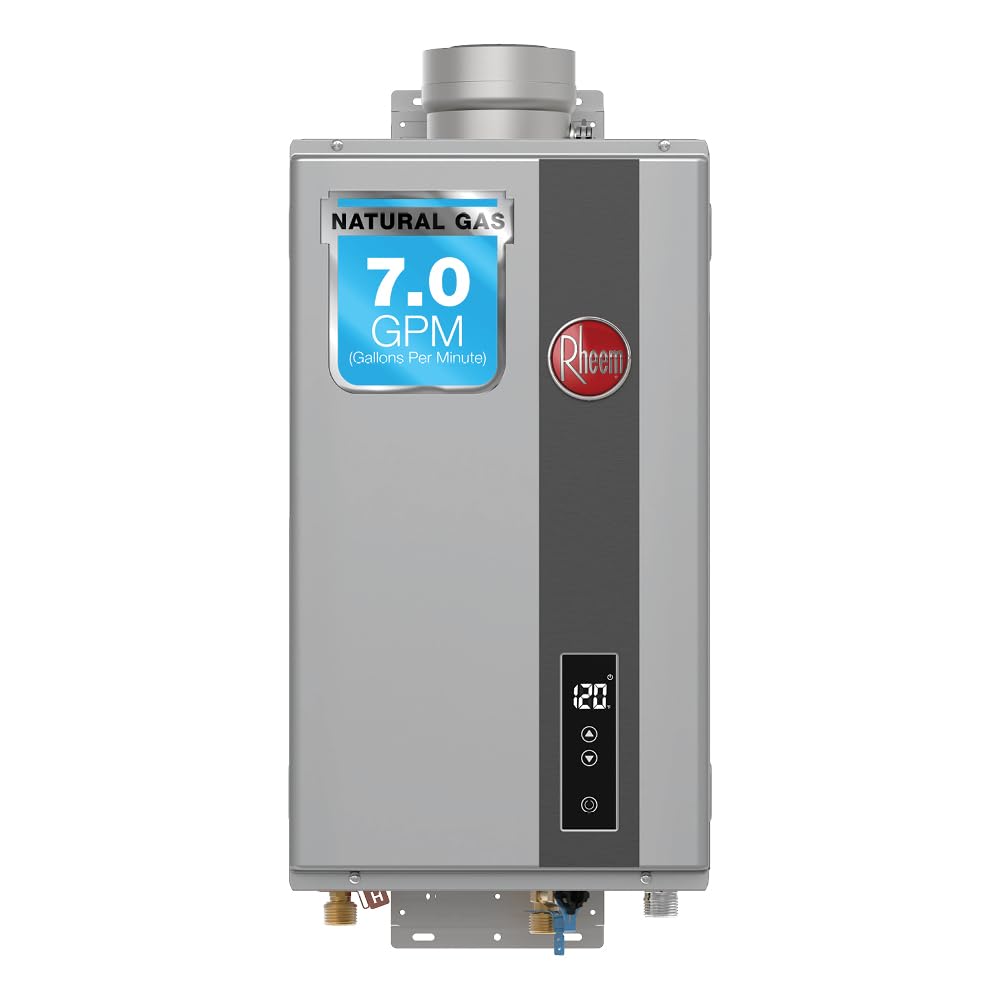
The Rheem RTG-70DVLN-3 delivers 160,000 BTUs and a 7.0 GPM flow rate, making it a prime candidate for 2 to 3-bathroom homes where simultaneous shower and laundry use is common. As a high-efficiency non-condensing unit, it uses a standard 3/4-inch gas line and requires Category III stainless steel venting, which most licensed installers can run through an existing wall or chimney.
Its Hot-Start programming eliminates the cold water sandwich effect between back-to-back showers — a common complaint with older tankless units. The 15-year heat exchanger warranty provides long-term peace of mind, and the compact 46.5-pound casing mounts easily on interior walls without floor reinforcement.
Customer reviews highlight reliable temperature stability during peak demand. Some buyers note that the recommended venting pipe is specialized and may not be available at big-box hardware stores, so ordering venting components ahead of installation saves time.
Why it’s great
- Hot-Start programming prevents cold bursts
- 15-year heat exchanger warranty
- Compact, lightweight wall-mount design
Good to know
- Requires Category III stainless steel venting
- Needs adequate gas line pressure for full output
2. Takagi T-H3S-DV-N

The Takagi T-H3S-DV-N is a condensing tankless unit that achieves an ultra-high efficiency rating while delivering up to 8 GPM. Its dual heat exchanger recycles exhaust heat, reducing gas consumption by roughly 17% compared to non-condensing models. The unit meets SCAQMD Rule 1146.2 for ultra-low NOx emissions, making it a compliant choice for environmentally regulated areas.
At 22.5 inches tall and 10.75 inches deep, it fits in tighter mechanical closets than many competitors. The built-in freeze protection allows installation in unconditioned indoor spaces, and the computerized safety suite includes flame-out and over-temperature safeguards.
Long-term owners report descaling every six months in hard water zones, and the internal condensate neutralizer can be fiddly to plumb. However, the brand’s track record for 15-plus-year service life makes the extra maintenance worthwhile for those who plan to stay put.
Why it’s great
- Ultra-low NOx compliance
- Condensing design saves fuel long-term
- Compact footprint for tight spaces
Good to know
- Requires biannual descaling in hard water
- Condensate drain line must be routed to a floor drain
3. Rinnai CX199iN

The Rinnai CX199iN pushes performance boundaries with 199,000 BTUs and an 11.1 GPM flow rate, capable of handling three simultaneous showers plus a dishwasher without any temperature drop. Its Smart Sense gas control auto-detects whether it’s connected to natural gas or propane, and the Versa Vent system allows indoor or outdoor installation using the same base unit — a unique flexibility in this category.
Bluetooth connectivity via the Rinnai Central App gives you real-time temperature monitoring, maintenance alerts, and diagnostic data. The 97% thermal efficiency rating places it among the most fuel-efficient tankless units available, which directly lowers monthly gas bills in colder climates.
Professional installation is strongly recommended due to the gas line sizing requirements. Some users note that the neutralizer kit for the condensate drain is sold separately. For large households wanting modern controls and utility savings, this unit justifies its investment.
Why it’s great
- 97% thermal efficiency
- Versa Vent for indoor/outdoor flexibility
- Smart Connect Bluetooth app control
Good to know
- Condensate neutralizer kit not included
- Requires 3/4-inch gas line for full flow
4. Westinghouse Smart Tankless Indoor
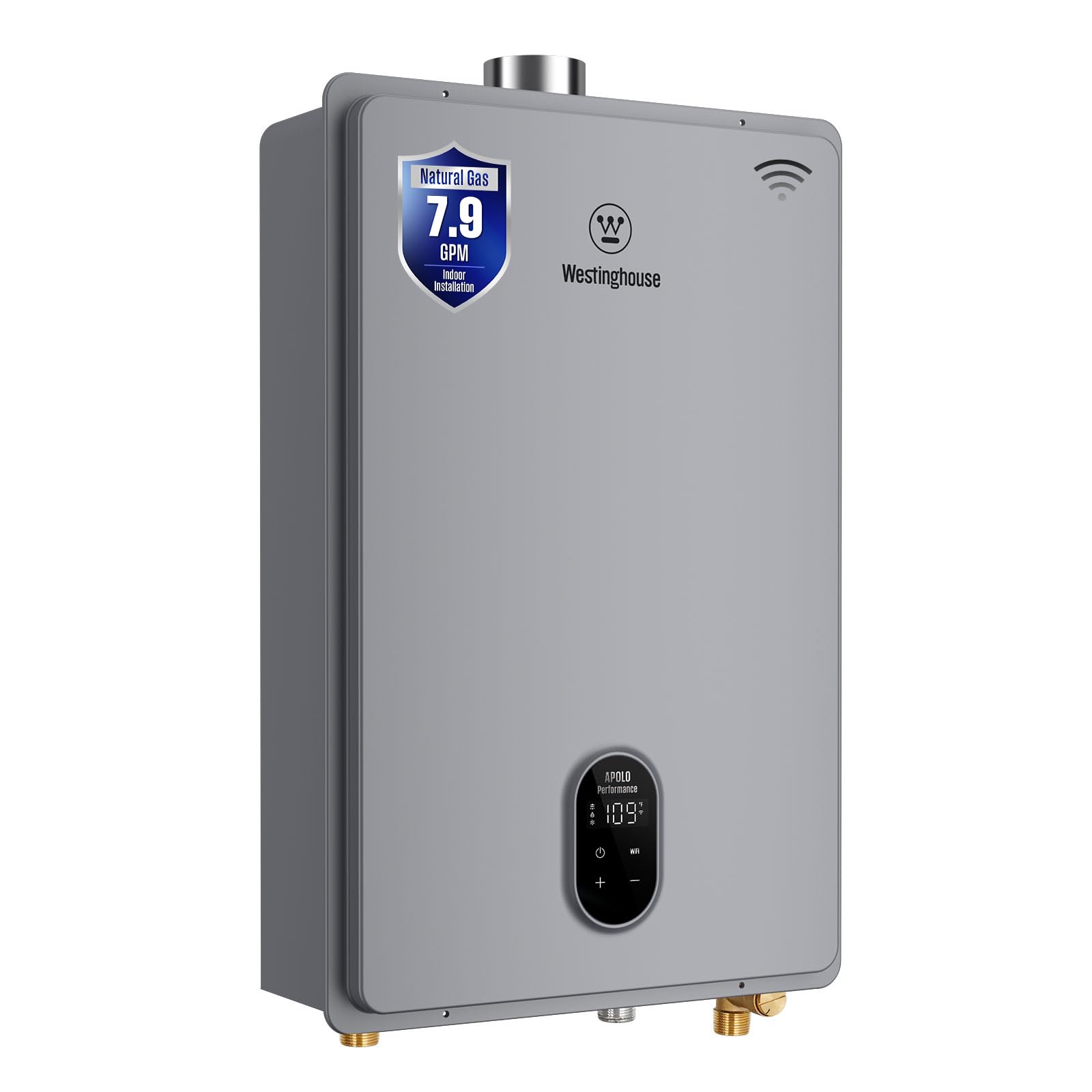
The Westinghouse Smart Indoor unit brings WiFi control to the 30-gallon equivalent category, letting you adjust water temperature and monitor energy usage from your smartphone. Its 180,000 BTU burner supports up to 7.9 GPM, which comfortably handles three to five fixtures simultaneously — enough for a family of four running laundry, dishes, and showers in overlapping windows.
The non-condensing design keeps installation simpler than a condensing unit, and the self-modulating gas valve maintains outlet temperature within ±1°F, effectively eliminating cold bursts. The durable copper heat exchanger and variable-speed combustion fan enhance reliability across seasonal temperature swings.
Setup involves standard 3/4-inch NPT water connections and a 120V outlet. Some users have noted that finding a contractor familiar with the WiFi setup added a small learning curve. Overall, this is the strongest smart-ready option at this tier.
Why it’s great
- WiFi app control for temperature and monitoring
- ±1°F temperature stability
- Copper heat exchanger for longevity
Good to know
- Requires 120V outlet near installation point
- Non-condensing limits venting to stainless steel
5. Westinghouse Outdoor Propane Tankless
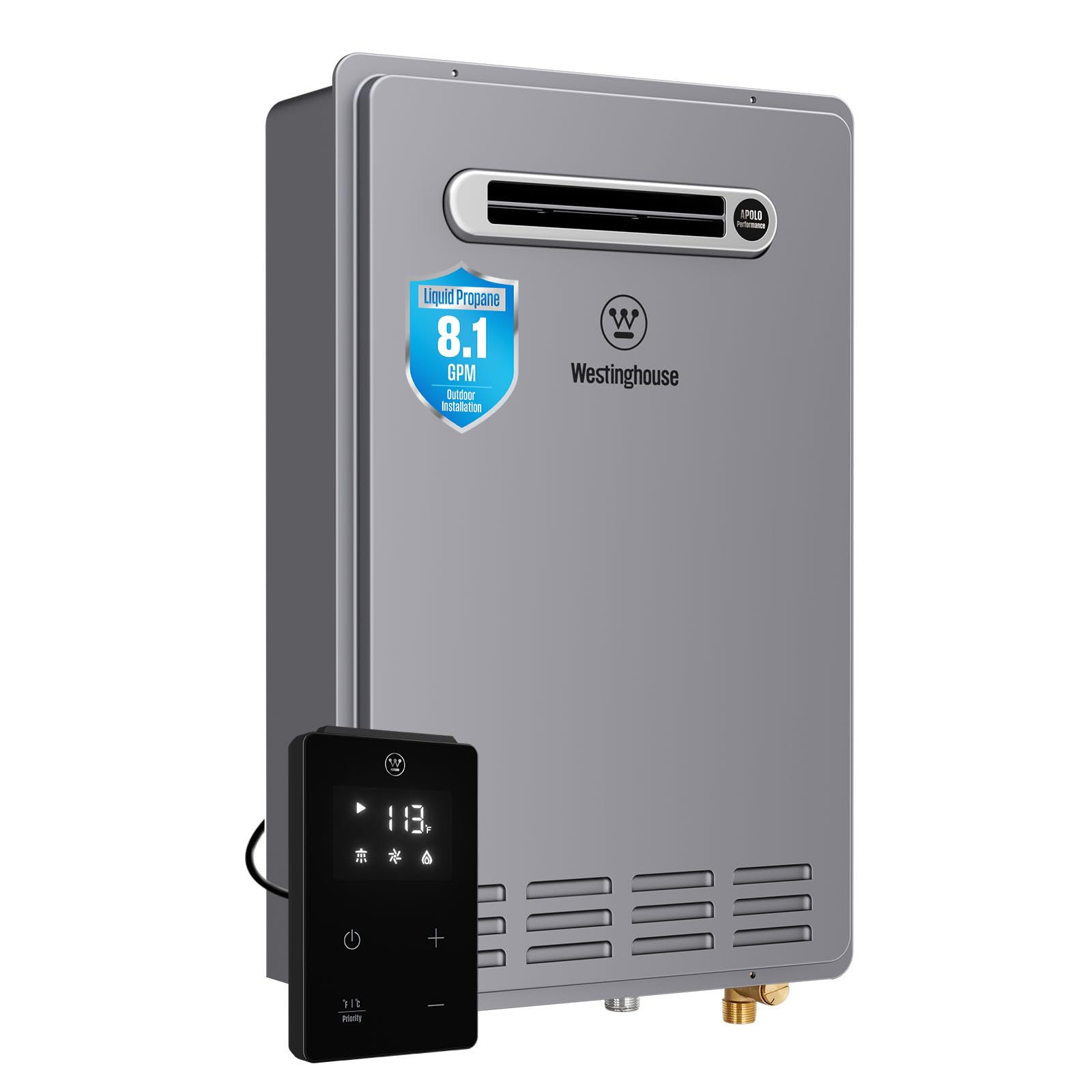
For homes without indoor gas venting or limited interior space, the Westinghouse Outdoor Propane unit eliminates the need for a vent stack altogether. Its 180,000 BTU burner pushes 8.1 GPM, and the outdoor-rated cabinet is built to withstand freezing temperatures with an integrated freeze protection system that activates when ambient temps drop below 5°F.
The included indoor remote control panel lets you adjust temperature without stepping outside, and the self-modulating technology holds the temperature within ±1°F. The unit supports up to five fixtures simultaneously, making it suitable for a 3-bathroom home on propane.
Installation requires a dedicated 120V outlet and a gas line sized for the flow rate. Some buyers found that the propane conversion kit is pre-installed, so ordering the natural gas version separately is unnecessary. This is a strong pick for rural properties and off-grid cabins.
Why it’s great
- No indoor venting required
- 8.1 GPM propane performance
- Includes indoor remote control panel
Good to know
- Requires 120V power at outdoor mount location
- Freeze protection needs electricity to function
6. ThermoMate RTC68iN
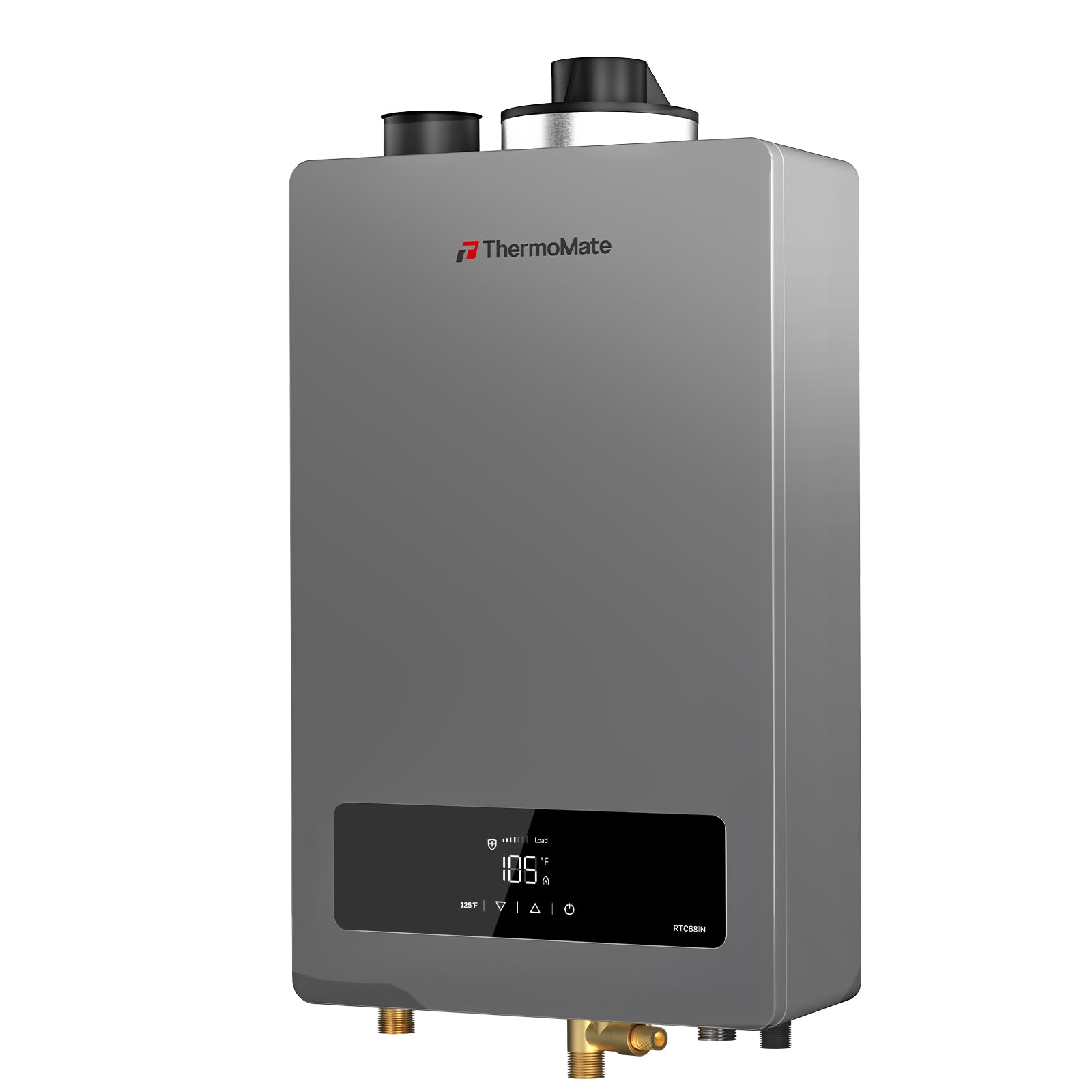
The ThermoMate RTC68iN is a condensing tankless heater with a 0.91 UEF rating, making it one of the most energy-efficient units in this lineup. It uses dual heat exchangers — a stainless steel condensing core and an oxygen-free copper secondary — to capture waste heat that traditional units vent outside. This design cuts gas consumption by approximately 17% compared to standard non-condensing models.
Despite its efficiency focus, it still delivers 163,000 BTUs and can supply three simultaneous showers at 105°F. The intelligent water mixing valve ensures stable output temperature even when multiple fixtures are open, and the sealed combustion chamber keeps operational noise low — a welcome feature for indoor installations near living spaces.
Because it is a condensing unit, you must route the condensate drain into a floor drain or sump pit and add a neutralizer kit to protect your plumbing from mildly acidic water. This extra step is a small trade-off for the significant energy savings over the unit’s lifespan.
Why it’s great
- 0.91 UEF — top-tier efficiency
- Sealed combustion for quiet operation
- Stainless steel and copper dual heat exchangers
Good to know
- Condensate neutralizer kit sold separately
- Requires PVC venting (included with the system)
7. FOGATTI 170,000 BTU Tankless

The FOGATTI 170,000 BTU model is built for households that need substantial flow without stepping up to commercial-grade pricing. Its 7.5 GPM rating supports three to five fixture outlets simultaneously, and the four-stage combustion system modulates flame intensity to match demand in real time. The water servo technology adjusts both gas and flow to keep temperature within ±1°F, even during winter ground water temperature dips.
The unit measures 25 by 16.3 by 7.3 inches and weighs under 40 pounds, making it one of the more compact high-BTU options for wall mounting in tight indoor spaces. It uses a standard 120V connection for electronics and supports operation at altitudes up to 2,000 feet without derating.
Customer feedback emphasizes how quickly the heater responds to faucet openings — hot water arrives in seconds rather than minutes. Some users mention that the gas line inlet must be sized to 3/4 inch for the unit to reach full capacity, which may require a plumbing upgrade in older homes.
Why it’s great
- 7.5 GPM handles 3-5 fixtures
- Water servo for ±1°F precision
- Compact, lightweight wall-mount frame
Good to know
- Requires 3/4-inch gas line for full output
- Altitude restriction of 2,000 feet
8. FOGATTI 120,000 BTU Tankless
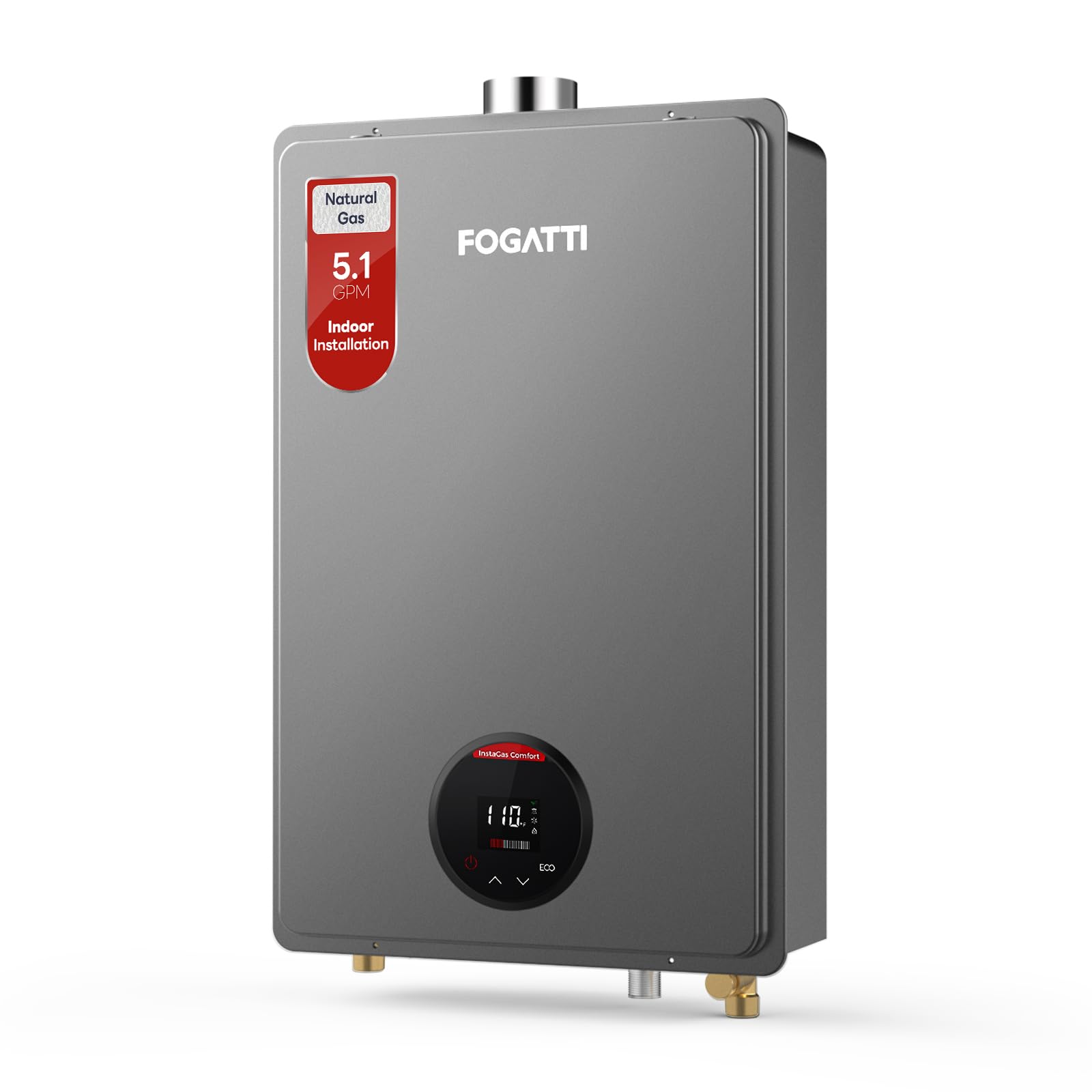
The FOGATTI 120,000 BTU unit is a more budget-friendly entry into the tankless gas category, offering 5.1 GPM — enough for two to four fixture outlets. This flow rate is well-suited for a couple or small family where simultaneous hot water demand rarely exceeds a shower and a sink. The 120,000 BTU burner fires up instantly and maintains temperature within ±1°F using the same water servo technology found in the higher-output sibling.
Its 304 stainless steel burner and high-efficiency copper heat exchanger provide solid build quality at a lower cost than premium Japanese or American brands. The unit operates at low water pressure (15 PSI minimum), making it viable for well-water homes without a booster pump.
Some customers have noted that the required venting components are not included in the box, so you will need to purchase the correct Category III vent pipe separately. For buyers on a tighter budget who still want tankless efficiency, this unit delivers dependable performance without unnecessary frills.
Why it’s great
- Works with low water pressure (15 PSI)
- Compact 15.5 x 23.9-inch footprint
- Copper heat exchanger and stainless steel burner
Good to know
- Venting components not included
- 5.1 GPM may struggle with 3+ simultaneous fixtures
9. Rheem RTG-70XLN-3 Outdoor
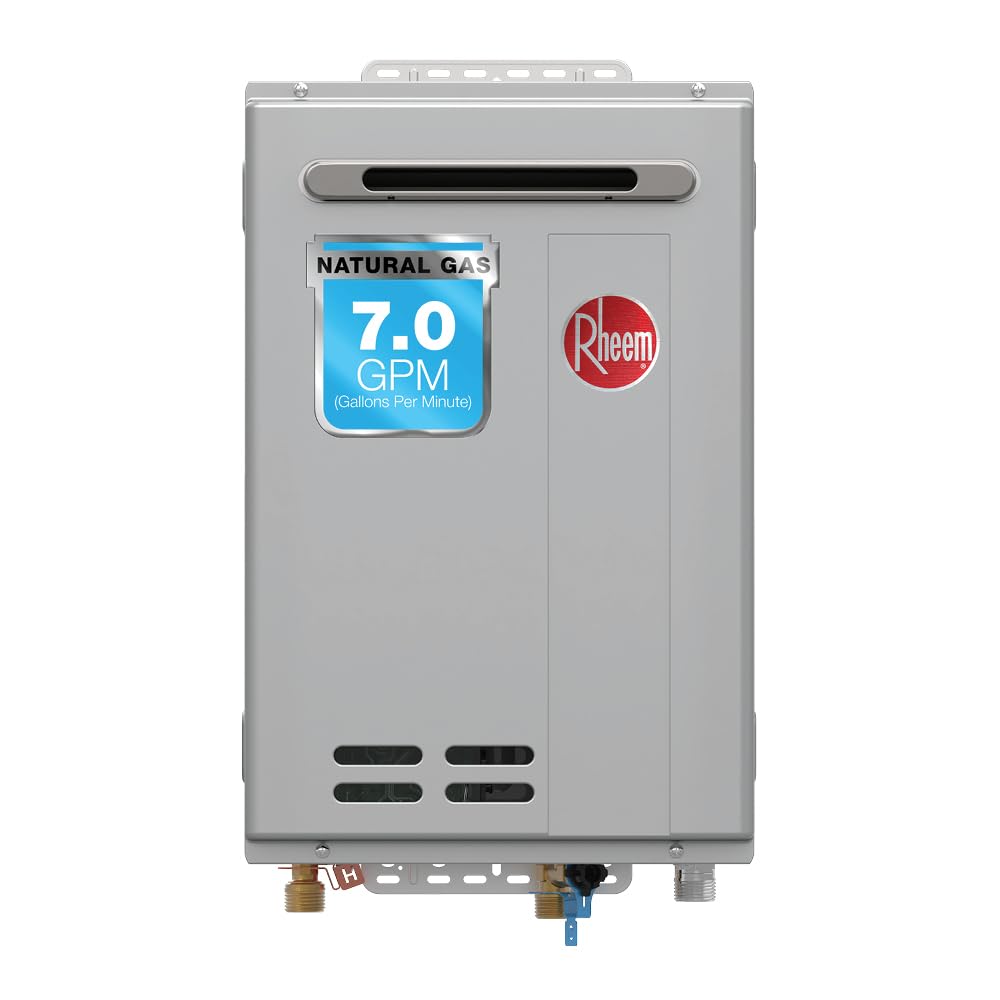
The Rheem RTG-70XLN-3 is the outdoor version of the well-regarded RTG-70 series, delivering identical 160,000 BTU and 7.0 GPM performance without requiring any indoor venting. Its weather-resistant metal cabinet is designed to mount directly to an exterior wall, and the Hot-Start programming still applies to prevent cold water bursts. This is a clean solution for homes where indoor gas venting is impractical or costs prohibitive.
At 39.3 pounds, it is lighter than its indoor counterpart because it omits the integrated vent motor assembly. Installation requires a gas line through the wall and a 120V outlet housed in an exterior-rated box. The outdoor placement also eliminates any risk of carbon monoxide accumulation inside the living space.
Users in moderate climates report consistent performance through all four seasons. In freezing conditions, the unit’s internal freeze protection relies on electricity, so a power outage during a cold snap requires draining the unit to prevent damage.
Why it’s great
- No indoor venting needed
- Hot-Start technology included
- Lightweight at 39.3 pounds
Good to know
- Freeze protection requires power
- Exterior 120V outlet must be installed
10. GE 30 Gallon Electric Water Heater

The GE 30 Gallon Electric model uses two 5500W heating elements to achieve a First Hour Rating of 53 gallons, which is competitive for a classic storage tank design. Though it is electric rather than gas, it remains a relevant alternative for homes where gas line installation would be cost-prohibitive. The adjustable thermostat and durable anode rod offer corrosion protection that extends tank life.
The 10-year tank and parts warranty provides confidence for long-term ownership, and the 101-pound weight requires either two people or a dolly for basement installation. The short profile — 22 inches in depth — fits under standard 24-inch countertops for point-of-use installations.
Some users have noted that the included clip-style wire connectors are not compatible with 10-gauge wire, requiring a separate purchase of wire nuts or lugs. For buyers on a tight budget who already have an electric setup, this unit is a reliable workhorse.
Why it’s great
- 53-gallon FHR for a true 30-gallon tank
- Short 22-inch depth for tight spaces
- 10-year tank and parts warranty
Good to know
- Clip connectors not suitable for 10-gauge wire
- Electric operation limits recovery speed vs gas
11. VEVOR 30 Gallon Electric Tank
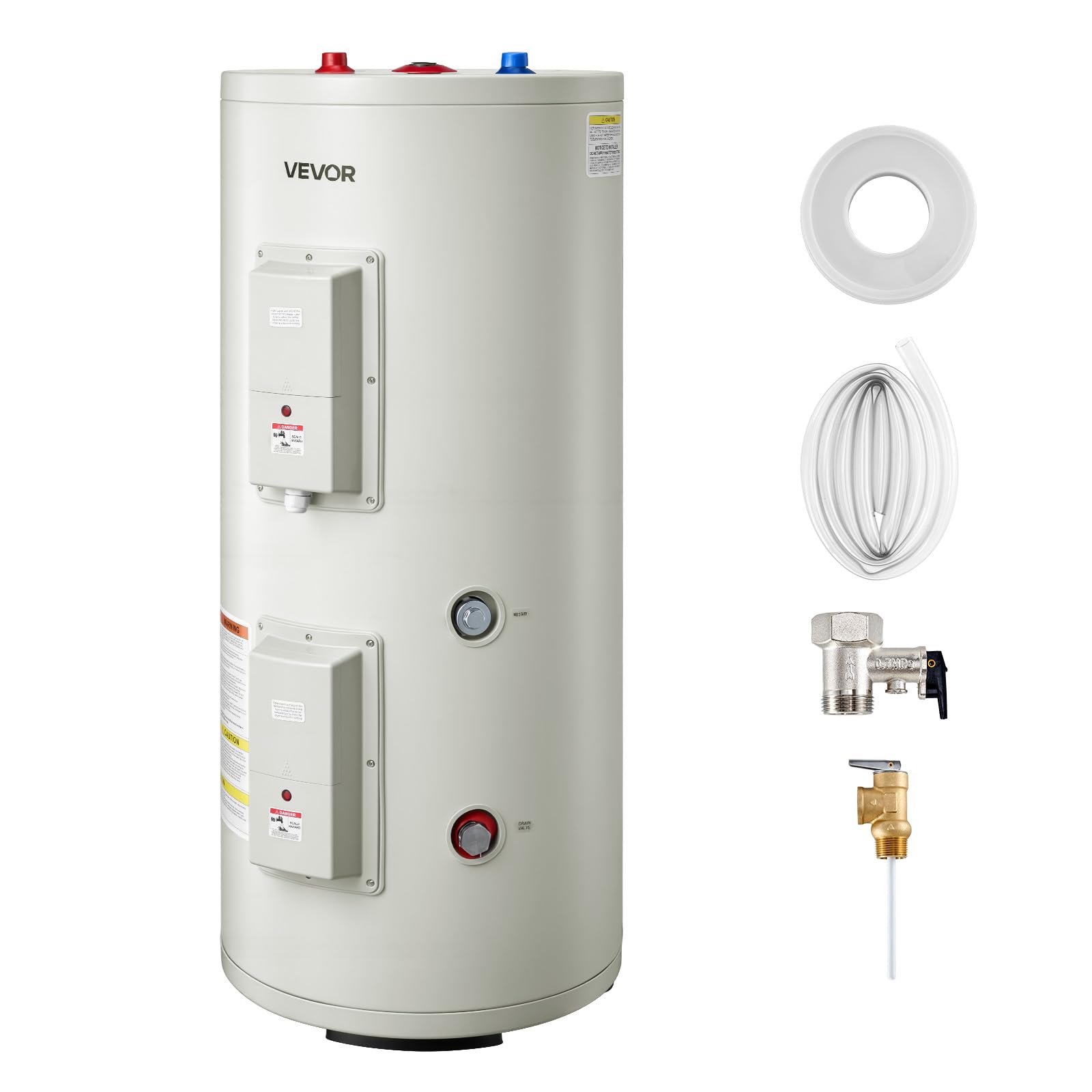
The VEVOR 30 Gallon Electric Tank is designed as a point-of-use solution for smaller households or commercial spaces like break rooms and small offices. It uses a 5000W extended immersion heating tube and a 20mm thick foam insulation layer to maintain water temperature with minimal standby heat loss. The LED display and rotary knob make temperature adjustment straightforward.
The enamel-lined tank resists corrosion, and the included T&P relief valve and IPX4 waterproof rating cover basic safety needs. At 74.5 pounds empty, it is lighter than many glass-lined steel tanks and can be wall-mounted in tight spaces like under sinks or in storage closets.
Customer feedback is generally positive, though one report noted a seam leak after installation. The 1-year warranty covers defects, but labor for removal and replacement is the owner’s responsibility. For buyers seeking the lowest upfront cost in the 30-gallon class, this unit delivers adequate performance with caveats on long-term seal integrity.
Why it’s great
- Lowest upfront cost in the 30-gallon class
- LED display and knob control
- 20mm foam insulation reduces standby loss
Good to know
- Seam durability report suggests quality variance
- 1-year warranty only
FAQ
Can a tankless water heater replace a 30-gallon gas tank?
What size gas line does a 30-gallon gas water heater need?
How often should I descale a gas tankless water heater?
Final Thoughts: The Verdict
For most users, the 30 gallon gas water heater winner is the Rheem RTG-70DVLN-3 because it balances 7.0 GPM flow, Hot-Start programming, and a 15-year heat exchanger warranty at a mid-range price point. If you want 97% thermal efficiency and smart app control, grab the Rinnai CX199iN. And for a budget-friendly outdoor propane setup, nothing beats the Westinghouse Outdoor Propane Tankless.

Mo Maruf
I created WellFizz to bridge the gap between vague wellness advice and actionable solutions. My mission is simple: to decode the research and give you practical tools you can actually use.
Beyond the data, I am a passionate traveler. I believe that stepping away from the screen to explore new environments is essential for mental clarity and physical vitality.