Our readers keep the lights on and my smoothie glass nicely filled. As an Amazon Associate, I earn from qualifying purchases.
A modem that drops your connection mid-meeting or stutters during a 4K stream isn’t a technical glitch—it’s a bottleneck you pay for monthly. If you’re still using that bulky ISP rental box, you’re surrendering control over your network’s core performance and bleeding cash simultaneously. The jump from DOCSIS 3.0 to 3.1 defines the difference between a congested, laggy connection and a clear, multi-gigabit pipe that future-proofs your home for the next five years.
I’m Mohammad Maruf — the founder and writer behind WellFizz. I specialize in deep-dive analysis of networking hardware, dissecting chipset choices, channel bonding configurations, and latency management features that actual broadband technicians look for but consumer lists gloss over.
After sifting through years of field data and real-world performance benchmarks, I’ve compiled the definitive guide to the best 3.1 docsis modem for every type of home, from latency-sensitive gamers to families on gigabit fiber-coax hybrids who just want their streaming to never buffer.
How To Choose The Best 3.1 DOCSIS Modem
Selecting a DOCSIS 3.1 modem is not about picking the cheapest box on the shelf. The wrong choice can throttle your gigabit plan, introduce random latency spikes, or force you into an incompatible corner when your ISP upgrades its network. These five factors separate a solid investment from a regret.
Ethernet Port Speed and Your Router’s WAN Port
A DOCSIS 3.1 modem supports up to 2.5 Gbps of raw download throughput, but that number is useless if the modem only has a 1 Gbps Ethernet port. Your modem’s Ethernet port must match or exceed the speed of your router’s WAN port. If you own a Wi-Fi 6 or 7 router with a 2.5 Gbps WAN port, pair it with a modem that has a 2.5 Gbps port—otherwise you cap your network at 1 Gbps regardless of your ISP plan.
Channel Bonding: OFDM vs. Legacy 32×8
DOCSIS 3.1 modems use OFDM (Orthogonal Frequency Division Multiplexing) channels to squeeze more data out of the existing coax cable. A modem with 2 downstream and 2 upstream OFDM channels can handle far more simultaneous traffic than a legacy 32×8 DOCSIS 3.0 modem. For gigabit or multi-gig plans, look for at least 2 OFDM downstream channels. For plans under 500 Mbps, a modem with good 32×8 bonding and one OFDM channel is sufficient.
Modem-Only vs. Combo Units
A modem-only unit gives you flexibility—you can upgrade your router separately as Wi-Fi standards evolve. A modem-router combo (gateway) saves shelf space and simplifies setup but locks you into that unit’s Wi-Fi capabilities. If you plan to keep a modem for five years but upgrade your router every two, the modem-only route is cheaper in the long run.
Mid/High-Split Readiness
Major cable ISPs like Xfinity and Cox are rolling out mid-split and high-split upgrades that dramatically increase upstream speeds (from 35 Mbps to 200 Mbps or more). A mid/high-split compatible modem can take advantage of this without requiring a hardware swap. If you upload large files or run a home security system, this feature justifies the premium.
ISP Approval and Thernal Management
Not every modem works with every provider. Always check your ISP’s official approved modem list before buying. Also consider thermal management: fanless modems that run hot can throttle performance or develop packet-loss issues. Models with vertical ventilation slots or larger chassis dissipate heat more effectively over years of 24/7 operation.
Quick Comparison
On smaller screens, swipe sideways to see the full table.
| Model | Category | Best For | Key Spec | Amazon |
|---|---|---|---|---|
| NETGEAR CM3000 | Modem Only | Multi-Gig & Mid-Split | 2.5G Ethernet, mid/high-split | Amazon |
| Motorola MG8725 | Modem + Router | All-in-One Wi-Fi 6 | AX6000, 2.5G port, LLD | Amazon |
| ARRIS S33 | Modem Only | Multi-Gig Dual LAN | 2.5G + 1G Ethernet ports | Amazon |
| NETGEAR CAX30 | Modem + Router | Wi-Fi 6 Coverage | AX2700, 2,500 sq ft | Amazon |
| Hitron CODA56 | Modem Only | Future-Proof 2.5G | 2.5 Gbps Ethernet port | Amazon |
| Motorola B12 | Modem Only | Compact Multi-Gig | 2.5G port, small footprint | Amazon |
| ARRIS SB8200 | Modem Only | Reliable Dual 1G Ports | 2x 1Gb Ethernet ports | Amazon |
| ARRIS SBG8300-RB | Modem + Router | Budget Combo | AC2350, 4 OFDM channels | Amazon |
| Hitron CODA | Modem Only | Entry-Level 3.1 | 1 Gbps Ethernet, 2×2 OFDM | Amazon |
In‑Depth Reviews
1. NETGEAR Nighthawk CM3000

The CM3000 is the most future-proof modem on this list thanks to its mid/high-split support, which unlocks upload speeds up to 1 Gbps when your ISP upgrades its infrastructure. With a 2.5 Gbps Ethernet port and compatibility with every major U.S. cable provider (including Xfinity’s fastest 2 Gbps tier), it handles simultaneous 4K streams, NAS file access, and video conferencing without a stutter. Users report rock-solid connections with zero daily drops, even on gigabit-plus plans.
Setup is straightforward via the Nighthawk app or ISP activation, but the real win is latency management—Active Queue Management keeps bufferbloat in check, a feature gamers will notice immediately. The chassis runs cooler than many competitors, and its compact vertical design fits neatly on a shelf or desk.
The price tag is higher than entry-level options, but for users on plans above 1 Gbps or those wanting symmetrical uploads in the near future, the CM3000 delivers a performance ceiling that cheaper modems simply cannot match. It is a “buy once, keep for five years” piece of hardware.
Why it’s great
- Mid/high-split support for future high-upload plans
- AQM reduces bufferbloat and latency spikes
- Certified for multi-gig Xfinity and Spectrum tiers
Good to know
- Premium price point compared to non-split modems
- Requires a separate router or mesh system
2. Motorola MG8725

The MG8725 combines a DOCSIS 3.1 modem with an AX6000 Wi-Fi 6 router, making it the highest-performance all-in-one gateway here. It was one of the first units to earn CableLabs Low Latency DOCSIS (LLD) certification, meaning when your ISP flips the switch, this modem will automatically reduce gaming lag and video call jitter. The 2.5 Gbps Ethernet port plus three additional 1 Gbps LAN ports offer wired flexibility for consoles and PCs.
Whole-home coverage is strong thanks to 4×4 internal antennas and beamforming, easily covering a 2,500 sq. ft. home while handling 20+ connected devices. Setup through the motosync app is intuitive, though some users report needing manual provisioning with Xfinity. The two-year warranty provides extra peace of mind for a combo unit.
The tradeoff: if the router half ever becomes outdated, you replace the entire unit rather than just the router. For users who want a single box and value LLD readiness, the MG8725 is a compelling, high-throughput choice.
Why it’s great
- LLD certified for ultra-low gaming latency
- AX6000 Wi-Fi 6 with 4×4 antenna array
- 2.5G port plus three 1G LAN ports
Good to know
- Router and modem are permanently paired
- Some units report intermittent connectivity issues
3. ARRIS SURFboard S33

The S33 is the go-to for multi-gig households that need two independent Ethernet networks. Its unique dual-port design—one 2.5 Gbps and one 1 Gbps—lets you plug a high-speed router into the 2.5G port and a separate device (like a gaming PC or NAS) into the 1G port, each with its own public IP if your ISP supports it. This is a rare feature that power users love.
Performance is excellent: the Broadcom chipset handles full 2.5 Gbps throughput without breaking a sweat, and the fanless design stays cool when placed in an open area. Setup is plug-and-play with Xfinity, Cox, and Spectrum, and the compact white chassis is the smallest full-featured multi-gig modem available.
The renewed units often arrive in pristine condition and save a significant amount over new retail. Just ensure you have proper ventilation—fanless modems need some airflow to maintain peak performance over years of use.
Why it’s great
- Dual Ethernet ports for separate networks
- Smallest multi-gig modem footprint
- Broadcom chipset handles full 2.5G throughput
Good to know
- Renewed units may have cosmetic imperfections
- Fanless design requires open placement
4. NETGEAR Nighthawk CAX30

The CAX30 is a solid mid-range combo that pairs a DOCSIS 3.1 modem with AX2700 Wi-Fi 6, delivering reliable coverage for up to 2,500 sq. ft. and 25 devices. It supports 32×8 channel bonding and 4 OFDM channels, which provides plenty of headroom for gigabit plans. The four 1 Gbps Ethernet ports include link aggregation, letting you combine two ports for up to 2 Gbps to a compatible router.
Setup is handled through the Nighthawk app, and users consistently note the connection is “rock-solid” with no daily freezes or drops—a clear upgrade from older DOCSIS 3.0 gateways. The internal antenna array keeps the device clutter-free, and WPA3 security support adds future-proofing for smart home networks.
The Wi-Fi 6 radio is AX2700 (2.7 Gbps aggregate), which is plenty for streaming and gaming but not the fastest Wi-Fi 6 available. If your home is larger than 2,500 sq. ft. or you have 50+ devices, consider a modem-only unit with a separate high-end router.
Why it’s great
- Link aggregation for up to 2 Gbps wired throughput
- WPA3 security out of the box
- Simple app-based setup and management
Good to know
- Wi-Fi 6 max speed is 2.7 Gbps aggregate
- Limited to 25 concurrent devices comfortably
5. Hitron CODA56

The CODA56 is the entry point for multi-gig DOCSIS 3.1, offering a 2.5 Gbps Ethernet port at a mid-range price that undercuts most competitors. It supports internet plans up to 2.5 Gbps and is certified for Xfinity (up to 2.33 Gbps), Spectrum (1 Gbps), and Cox (2 Gbps). Backward compatible with DOCSIS 3.0, it works seamlessly with older ISP infrastructure while you wait for faster tiers to roll out.
Setup is genuinely plug-and-play: connect coax, power, and Ethernet to your router, then call your ISP to activate. Users report consistent throughput matching their plan speeds, with low latency for gaming and streaming. The white, vertical chassis is unobtrusive and runs cool thanks to passive ventilation.
There is no built-in Wi-Fi, so you need a separate router. The admin interface is very basic—no advanced settings for tweaking signal parameters. For users who want a simple, reliable multi-gig modem without paying for features they won’t use, the CODA56 is the smart money pick.
Why it’s great
- Lowest price for a 2.5 Gbps DOCSIS 3.1 modem
- Certified for major ISPs with multi-gig tiers
- Passive cooling with no fan noise
Good to know
- Admin interface lacks detailed status logs
- Requires separate Wi-Fi router for wireless
6. Motorola B12
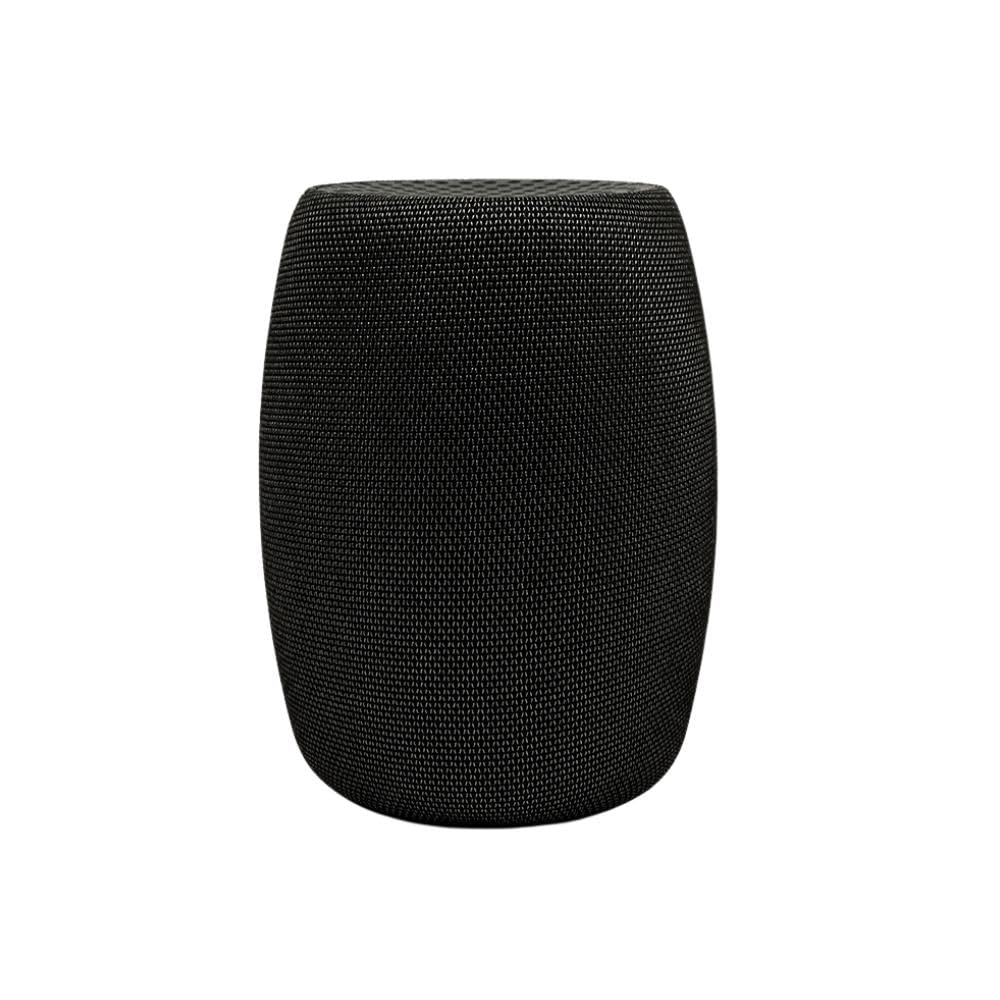
The B12 is a remarkably small DOCSIS 3.1 modem—just 3.5 inches tall—that crams in a 2.5 Gbps Ethernet port and Active Queue Management (AQM) for latency control. It is approved for Xfinity, Cox, Spectrum, RCN, and Astound, making it one of the most widely compatible compact modems on the market. The AQM feature is a standout for gamers and video callers, as it actively shapes traffic to prevent one device from hogging bandwidth and causing lag on others.
User reviews praise its straightforward setup (no app required) and reliable daily performance. The small footprint makes it ideal for wall-mounting or placing inside a media cabinet where space is tight. The 2-year warranty and U.S.-based technical support add confidence for a long-term purchase.
Some units ship with a fabric-like chassis cover that raises slight heat concerns, though most users report no thermal throttling in normal use. It is a modem-only device, so you need a separate router for Wi-Fi. The B12 is perfect for minimalists who want multi-gig speeds in a tiny package.
Why it’s great
- Smallest multi-gig modem at 3.5 inches tall
- AQM reduces bufferbloat for gaming
- Wide ISP compatibility list
Good to know
- Fabric chassis may retain heat in enclosed spaces
- Some units arrive as used despite new boxes
7. ARRIS SURFboard SB8200
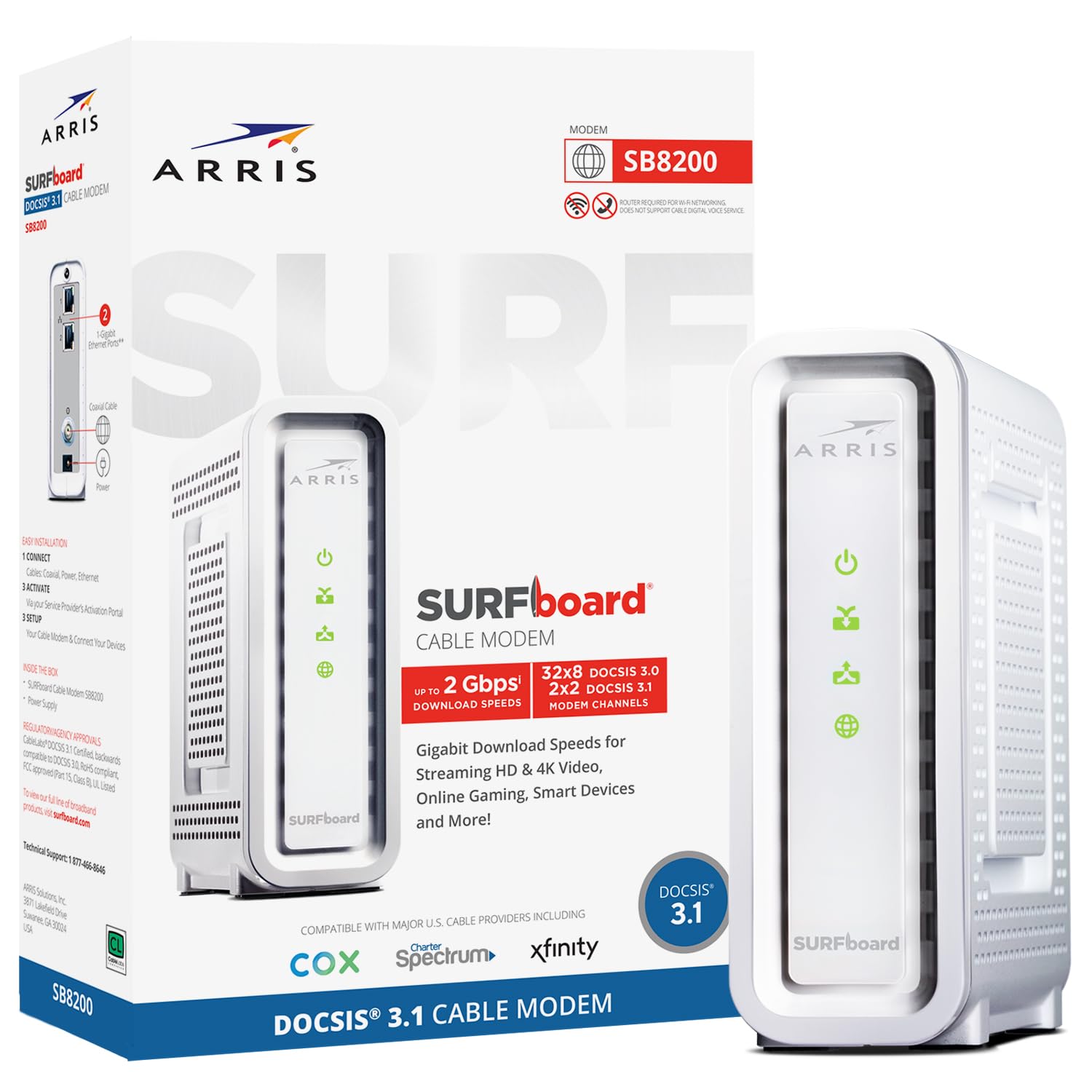
The SB8200 is a long-established standard in the DOCSIS 3.1 world, using a Broadcom chipset with 3 GB of RAM to handle 2 Gbps aggregate throughput (1 Gbps per Ethernet port). It has two 1 Gbps Ethernet ports, which can be used for link aggregation to achieve up to 2 Gbps total to a compatible router, or as separate single connections for different subnets.
This modem is widely approved by Xfinity, Cox, and Spectrum for plans up to 2 Gbps. The build quality is excellent—it is one of the most reliable modems in the ARRIS lineup, with thousands of reviews citing years of trouble-free service. The compact white chassis and simple LED indicators make it a set-and-forget device for most homes.
The main limitation: no single port exceeds 1 Gbps, so if you have a multi-gig plan (over 1 Gbps), you must use link aggregation with a compatible router or you cap your speeds. For users on 1 Gbps or slower plans, the SB8200 is a proven workhorse that just works.
Why it’s great
- Broadcom chipset with 3 GB RAM for stability
- Link aggregation capable up to 2 Gbps
- Years of positive field reliability data
Good to know
- No single Gigabit Ethernet port exceeds 1 Gbps
- White plastic chassis feels less premium
8. ARRIS SBG8300-RB

The SBG8300 is a DOCSIS 3.1 modem-router combo that packs AC2350 dual-band Wi-Fi 5 and 4 OFDM channels into a single box at a very attractive price point. It is approved for Xfinity, Cox, and Spectrum, and delivers up to 1 Gbps internet speeds. For users on gigabit plans who want to eliminate both modem and router rental fees with one purchase, this is the most cost-effective path.
Setup involves the Arris app, though some users report needing to pair it manually via the IP address. The Wi-Fi 5 radio (AC2350) is sufficient for most homes under 1,500 sq. ft. with 10-15 devices, but don’t expect bleeding-edge throughput or range. The renewed units often arrive looking like new and save significantly over retail.
The Wi-Fi 5 standard is the main compromise here. If you have many Wi-Fi 6 devices or a larger home, you’ll outgrow this combo’s wireless capabilities. Consider it a transitional solution that saves you money now while you decide on a dedicated router upgrade later.
Why it’s great
- Lowest cost entry to DOCSIS 3.1 with Wi-Fi built-in
- 4 OFDM channels for gigabit plans
- Eliminates both modem and router rental fees
Good to know
- Wi-Fi 5 is outdated for modern device loads
- Some units lack physical WPS button
9. Hitron CODA

The Hitron CODA is the most affordable entry point into DOCSIS 3.1, offering 2 downstream and 2 upstream OFDM channels with a 1 Gbps Ethernet port. It supports plans up to 1 Gbps and is certified for Comcast Xfinity, Charter Spectrum, Cox, and several smaller ISPs. For users on 500 Mbps to 1 Gbps plans who want the stability of DOCSIS 3.1 without paying for multi-gig features they cannot use, this is a practical choice.
Setup is genuinely three steps: plug in coax, power on, connect Ethernet to your router. Users report speeds matching their plan limits and cool operation. The renewed units (this specific listing) offer significant savings and typically arrive in like-new condition with full functionality.
The tradeoff: the 1 Gbps Ethernet port caps you at gigabit speeds, and there is no 2.5 Gbps port for future upgrades. The admin interface is minimal and requires a static IP (192.168.100.x) to access. If your plan is 1 Gbps or slower and you want to stop renting immediately, the CODA gets the job done without waste.
Why it’s great
- Most affordable DOCSIS 3.1 modem available
- Runs cool and consistently delivers ISP speeds
- Broad ISP compatibility list
Good to know
- 1 Gbps Ethernet port limits future multi-gig plans
- Admin UI requires static IP and lacks error logs
FAQ
Will any DOCSIS 3.1 modem work with my Xfinity or Spectrum plan?
Can I use a DOCSIS 3.1 modem on a slower plan?
Why does my modem have two Ethernet ports?
Is a modem-router combo better than separate units?
What is mid/high-split and do I need it?
Final Thoughts: The Verdict
For most users, the best 3.1 docsis modem winner is the NETGEAR Nighthawk CM3000 because it supports mid/high-split for future upload upgrades while delivering rock-solid multi-gig performance with AQM today. If you want an all-in-one gateway with Low Latency DOCSIS and Wi-Fi 6, grab the Motorola MG8725. And for the best value on a pure multi-gig modem with a 2.5 Gbps port, nothing beats the Hitron CODA56.

Mo Maruf
I created WellFizz to bridge the gap between vague wellness advice and actionable solutions. My mission is simple: to decode the research and give you practical tools you can actually use.
Beyond the data, I am a passionate traveler. I believe that stepping away from the screen to explore new environments is essential for mental clarity and physical vitality.