Our readers keep the lights on and my smoothie glass nicely filled. As an Amazon Associate, I earn from qualifying purchases.
A pixel-dense 27-inch 4K monitor is the sweet spot for anyone who spends hours staring at spreadsheets, code, or creative timelines. Bumping from 1440p to 3840×2160 at this size dramatically sharpens text and reveals detail you didn’t know your work was missing. The real challenge isn’t finding one — it’s picking the right panel tech, refresh rate, and connectivity for your specific desk.
I’m Mohammad Maruf — the founder and writer behind WellFizz. I’ve spent months analyzing factory spec sheets, color gamut reports, and hundreds of verified buyer reviews to separate the monitors that actually deliver on their 4K promise from those that fall short on real-world use.
Whether you need color-critical accuracy for photo editing, a blistering 240Hz refresh for competitive gaming, or a simple USB-C hub that charges your laptop, this guide covers the full spectrum of the best 27 inch 4k monitor across different budgets and priorities.
How To Choose The Best 27 Inch 4K Monitor
Finding the right 27-inch 4K monitor means balancing three key factors: panel technology (which dictates color and contrast), refresh rate (which determines smoothness), and connectivity (how it fits your desk setup). Ignoring any one of these can leave you with a display that looks sharp but frustrates you daily.
Panel Tech: IPS vs. QD-OLED
IPS panels dominate the productivity space thanks to wide viewing angles and consistent color. They typically hit 350-400 nits brightness and offer sRGB or DCI-P3 coverage up to 99%. QD-OLED panels, on the other hand, deliver near-infinite contrast ratios (1,000,000:1) and perfect blacks, but come with a higher price and potential text fringing due to triangular subpixel layouts. For creative professionals working in Adobe RGB or DCI-P3, either can work — but OLED wins for HDR content and deep shadow detail.
Refresh Rate: Beyond 60Hz
Standard office monitors top out at 60Hz, which is fine for static work but feels sluggish when scrolling or navigating UI. Mid-range models now offer 120Hz to 180Hz, making everyday desktop use noticeably smoother. Gaming-focused monitors push to 240Hz or even 360Hz using Dual Mode technology, which drops to 1080p at the higher refresh rate. If you split time between work and gaming, a 120Hz or 180Hz 4K panel gives you the best of both worlds without the premium OLED price.
Connectivity and USB-C Power Delivery
Modern laptops rely on a single USB-C cable for video, data, and charging. Look for monitors with at least 90W Power Delivery if you own a MacBook Pro or high-end Windows ultrabook. Monitors like the LG 27UP850K-W and ASUS ProArt PA279CRV deliver 90W and 96W respectively, which is sufficient for most 14- and 16-inch laptops. Also check for USB hub ports (USB-A) and DisplayPort daisy-chaining if you plan a multi-monitor setup.
Quick Comparison
On smaller screens, swipe sideways to see the full table.
| Model | Category | Best For | Key Spec | Amazon |
|---|---|---|---|---|
| ASUS ROG Swift PG27UCDM | Premium OLED | Elite gaming & content creation | 240Hz, 0.03ms, DP 2.1 | Amazon |
| Samsung Odyssey G8 G81SF | Premium QD-OLED | High-refresh gaming & HDR | 240Hz, 0.03ms, QD-OLED | Amazon |
| MSI PRO MAX 271UPXW12G | QD-OLED Hub | Mac-focused productivity | 98W PD, 120Hz, QD-OLED | Amazon |
| BenQ MA270UP | Mac-Matched IPS | MacBook color matching | 90W PD, P3 gamut, 2000:1 | Amazon |
| LG UltraGear 27G810A-B | Dual Mode Gaming | Hybrid work/gaming | 180Hz 4K / 360Hz FHD | Amazon |
| ASUS ProArt PA279CRV | Pro Color IPS | Photo/video editing | ΔE<2, 99% Adobe RGB | Amazon |
| Samsung ViewFinity S8 S80D | Office Pro IPS | Ergonomic office work | HDR10, USB hub, NO speakers | Amazon |
| LG 27UP850K-W | USB-C Hub IPS | One-cable Mac setup | 90W PD, 95% DCI-P3 | Amazon |
| Dell 27 Plus S2725QS | Value All-Rounder | Mainstream productivity & light gaming | 120Hz, FreeSync Premium | Amazon |
| KOORUI G2741L | Dual Mode Entry | Budget dual-mode gaming | 160Hz 4K / 320Hz FHD | Amazon |
| Dell UltraSharp U4025QW | Ultrawide Pro | Command-center productivity | 40″ 5K2K, 120Hz, IPS Black | Amazon |
In‑Depth Reviews
1. ASUS ROG Swift PG27UCDM

The PG27UCDM represents the peak of what a 27-inch 4K monitor can deliver in 2025. Its fourth-gen QD-OLED panel produces a dynamic contrast ratio of 1,500,000:1 and covers 99% of DCI-P3, making HDR content in Dolby Vision and DisplayHDR 400 True Black look absolutely stunning. The 240Hz refresh rate combined with a 0.03ms GtG response ensures motion clarity that IPS panels simply cannot match, with no visible ghosting during fast transitions.
Connectivity is equally forward-looking: DisplayPort 2.1a UHBR20 supports 80Gbps bandwidth, and USB-C delivers 90W of power delivery to charge a laptop. The included Neo Proximity Sensor intelligently blanks the screen when you step away, reducing burn-in risk. Build quality is excellent, with full ergonomic adjustment including height, tilt, swivel, and pivot. The triangular QD-OLED subpixel layout can make Windows fonts appear slightly less crisp than on IPS, but this is a minor trade-off for the incredible contrast.
This monitor demands a high-end GPU — expect to pair it with an RTX 4090 or 5090 to fully utilize 240Hz at 4K. The price is steep, but the PG27UCDM justifies every dollar with its combination of speed, color accuracy, and future-proof ports. For serious gamers and creative professionals who want the best single display, this is the benchmark.
Why it’s great
- Extraordinary QD-OLED contrast and HDR performance
- 240Hz refresh with instantaneous response time
- DP 2.1 UHBR20 and 90W USB-C for future-proof connectivity
Good to know
- Very high price point requires top-tier GPU investment
- Triangular pixel layout may slightly reduce text sharpness for some users
- No built-in speakers
2. Samsung Odyssey G8 G81SF
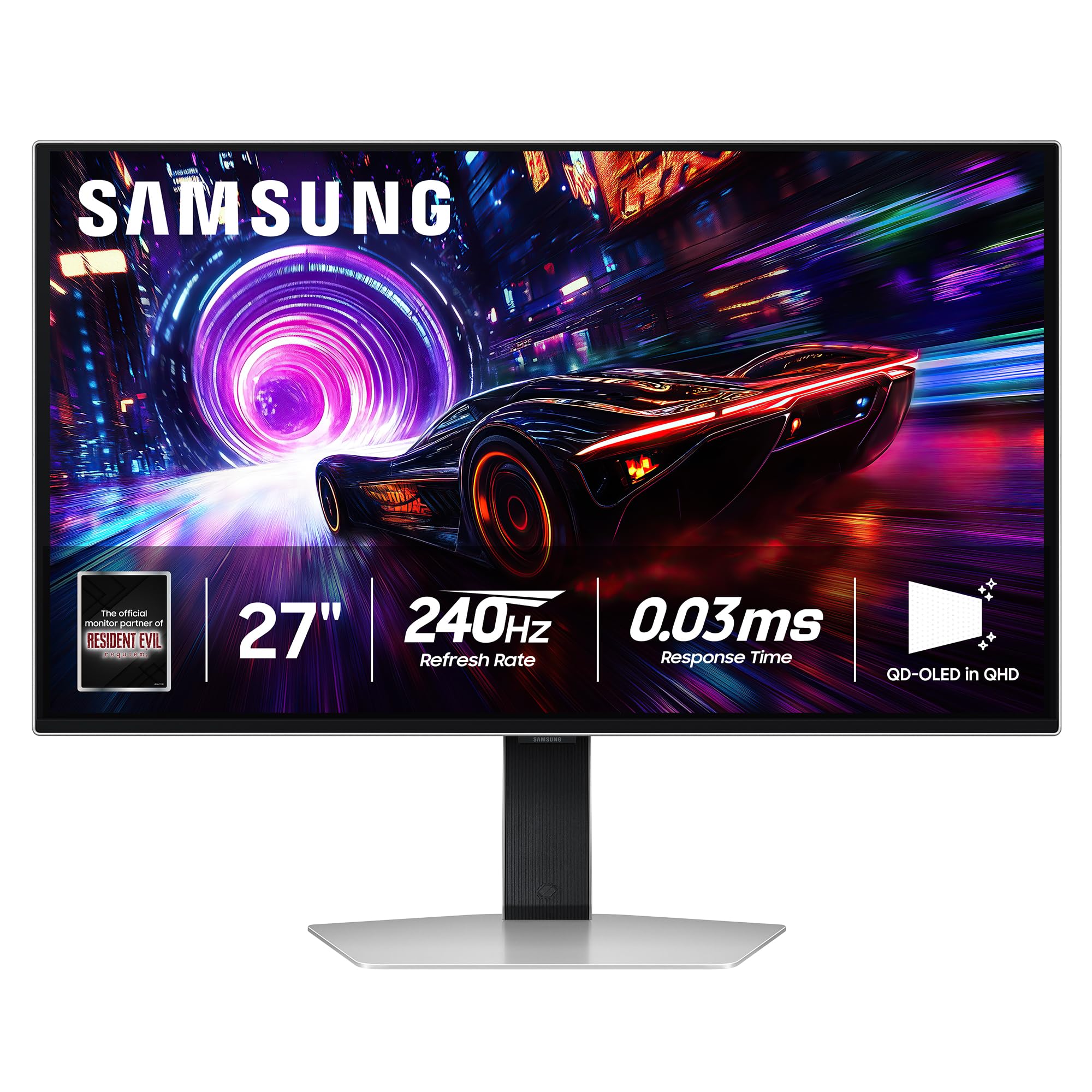
Samsung’s Odyssey G8 brings QD-OLED technology to a 27-inch 4K package with a 240Hz refresh rate and 0.03ms response time. The 1,000,000:1 contrast ratio produces pure blacks with zero light bleed — a significant step up from any IPS panel. Glare Free technology reduces reflections by 54% compared to standard anti-reflection coatings, making it more usable in bright rooms than many OLED monitors.
The ergonomic stand offers full height, tilt, pivot, and swivel adjustments. Built-in CoreSync lighting adds ambient color projection. The Pulsating Heat Pipe cooling system is a unique feature that helps prevent burn-in by diffusing heat five times faster than traditional graphite sheets. Color gamut reaches 99% DCI-P3, and the panel handles 4K video editing and RAW photo work exceptionally well, based on user feedback from photographers.
At 250 nits typical brightness, it is dimmer than high-end IPS monitors in SDR mode, though HDR content benefits from the OLED’s per-pixel luminance control. Some users report dead pixel issues within the first few months, so check the warranty coverage carefully. For pure gaming immersion and deep contrast, the G8 is a top-tier choice that competes directly with ASUS and MSI offerings.
Why it’s great
- Infinite contrast ratio provides perfect blacks
- 240Hz gaming with ultra-low response time
- Excellent anti-glare coating for bright rooms
Good to know
- Lower typical brightness than IPS competitors
- Warranty paperwork inconsistencies reported
- Requires powerful GPU for 4K gaming at 240Hz
3. MSI PRO MAX 271UPXW12G
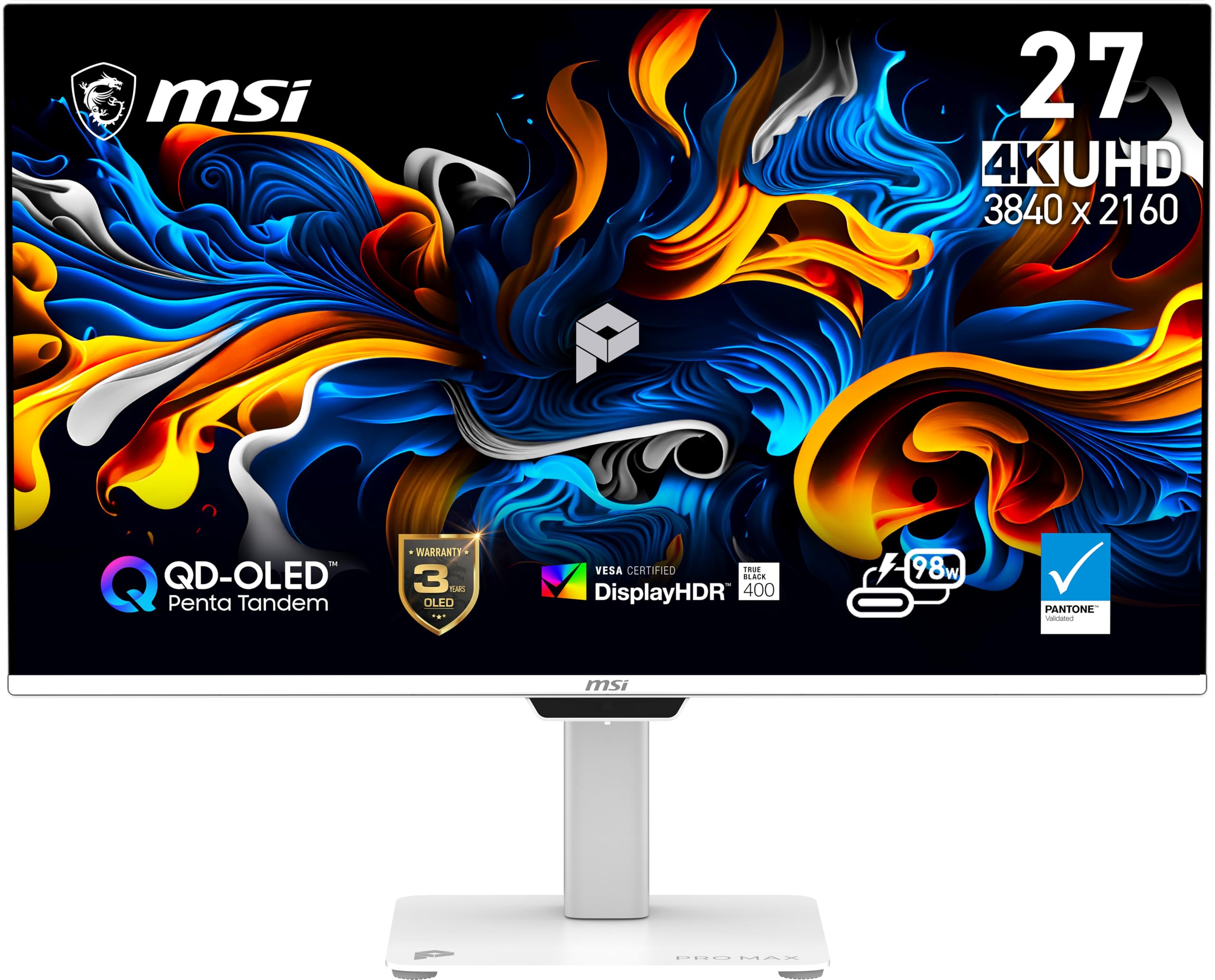
The MSI PRO MAX 271UPXW12G combines QD-OLED technology with Mac-specific optimization, including macOS color synchronization and shortcut key support. The 27-inch 4K panel delivers ΔE<2 color accuracy and DisplayHDR True Black 400 certification, giving creative professionals a monitor that matches Apple’s color science closely. The 120Hz refresh rate is a meaningful upgrade from standard 60Hz for smooth scrolling and UI navigation.
Dual USB-C ports provide up to 98W and 15W power delivery, allowing a one-cable solution for charging a MacBook Pro while driving the display and connected peripherals. The hub functionality includes HDMI and DisplayPort inputs, making it versatile for multi-device setups. Built-in speakers are included, though they sound mediocre and are best reserved for system audio rather than critical monitoring.
Some Mac users report needing to disable DSC and lock the DP input to 120Hz to avoid flicker in dual-monitor setups — a known quirk with QD-OLED panels on Apple Silicon. The stand offers height adjustment but feels less premium than the BenQ MA270UP. If you want OLED contrast with Mac-friendly integration, this is a strong mid-premium contender.
Why it’s great
- QD-OLED contrast with Mac color sync software
- 98W USB-C power delivery charges large laptops
- 120Hz refresh smooths everyday work
Good to know
- Dual-monitor Mac setup may need manual config
- Stand build quality is average for the price
- Built-in speakers are underwhelming
4. BenQ MA270UP
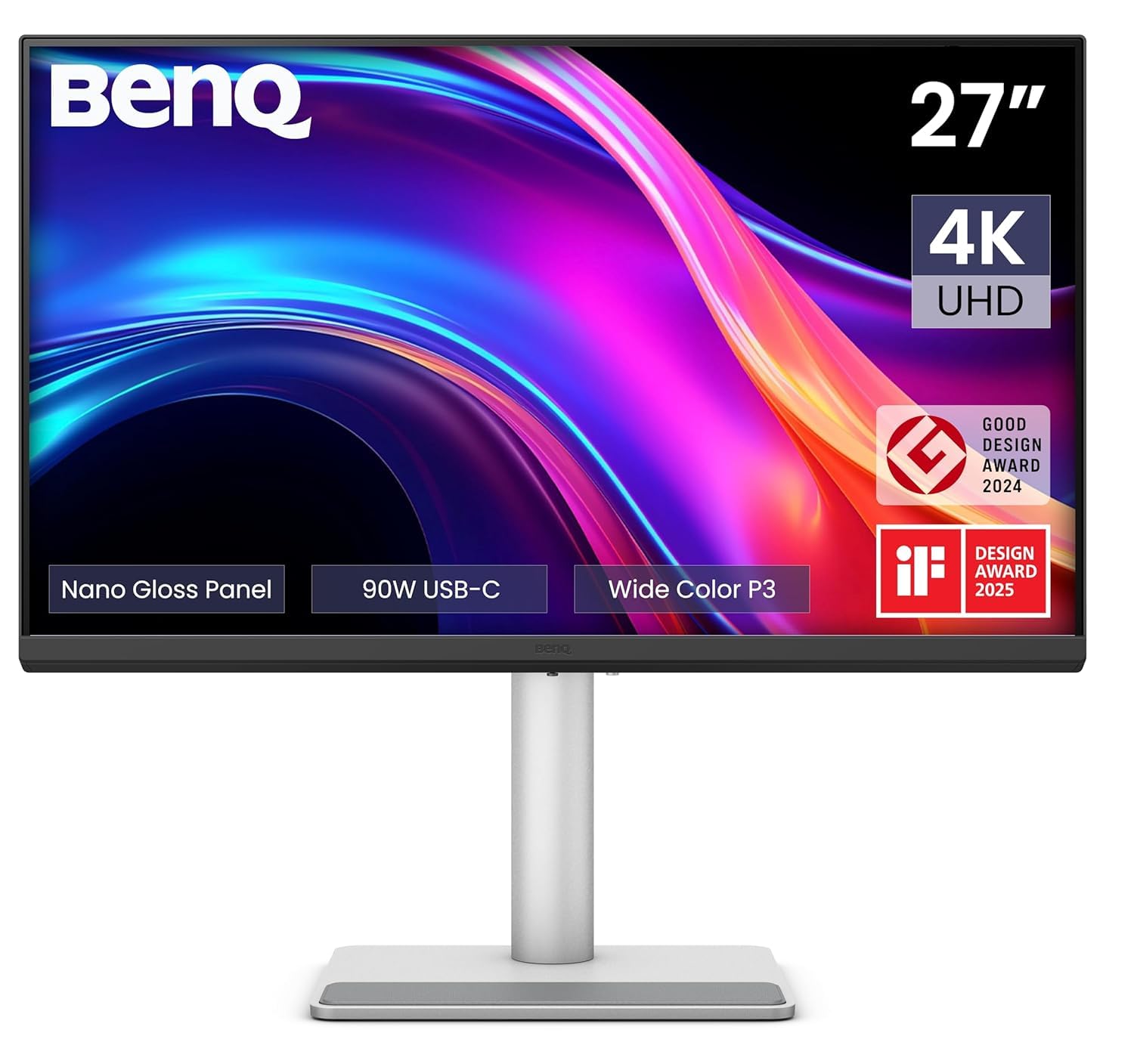
The BenQ MA270UP is purpose-built for MacBook users who want Apple Studio Display quality without the Studio Display price. It uses an IPS panel with a P3 wide color gamut and a contrast ratio of 2000:1 — higher than typical IPS panels — helping it achieve deeper blacks. The monitor is factory-calibrated to match MacBook Pro and MacBook Air color profiles, and it supports brightness and volume control directly from the Mac keyboard.
Two USB-C ports deliver 90W for the MacBook and 15W for charging an iPhone or iPad. The ergonomic stand offers height, tilt, swivel, and pivot adjustments. The glossy screen finish improves perceived sharpness and contrast compared to matte coatings, though it does introduce reflections in bright rooms. Users coming from the Apple Studio Display report that the MA270UP looks marginally less refined but costs significantly less.
The stand has a slightly plasticky feel compared to premium competitors, and a VESA mount screw has been reported to fall loose inside the monitor housing — a design annoyance rather than a performance issue. Speakers are mediocre. For anyone with a MacBook needing a near-color-matched 4K display with single-cable convenience, this is the best mid-range option.
Why it’s great
- Excellent Mac color matching out of the box
- 90W USB-C powers and charges a MacBook over one cable
- 2000:1 contrast ratio exceeds standard IPS
Good to know
- Glossy finish can cause reflections
- Stand materials feel budget for the price
- Built-in speakers are just passable
5. LG UltraGear 27G810A-B
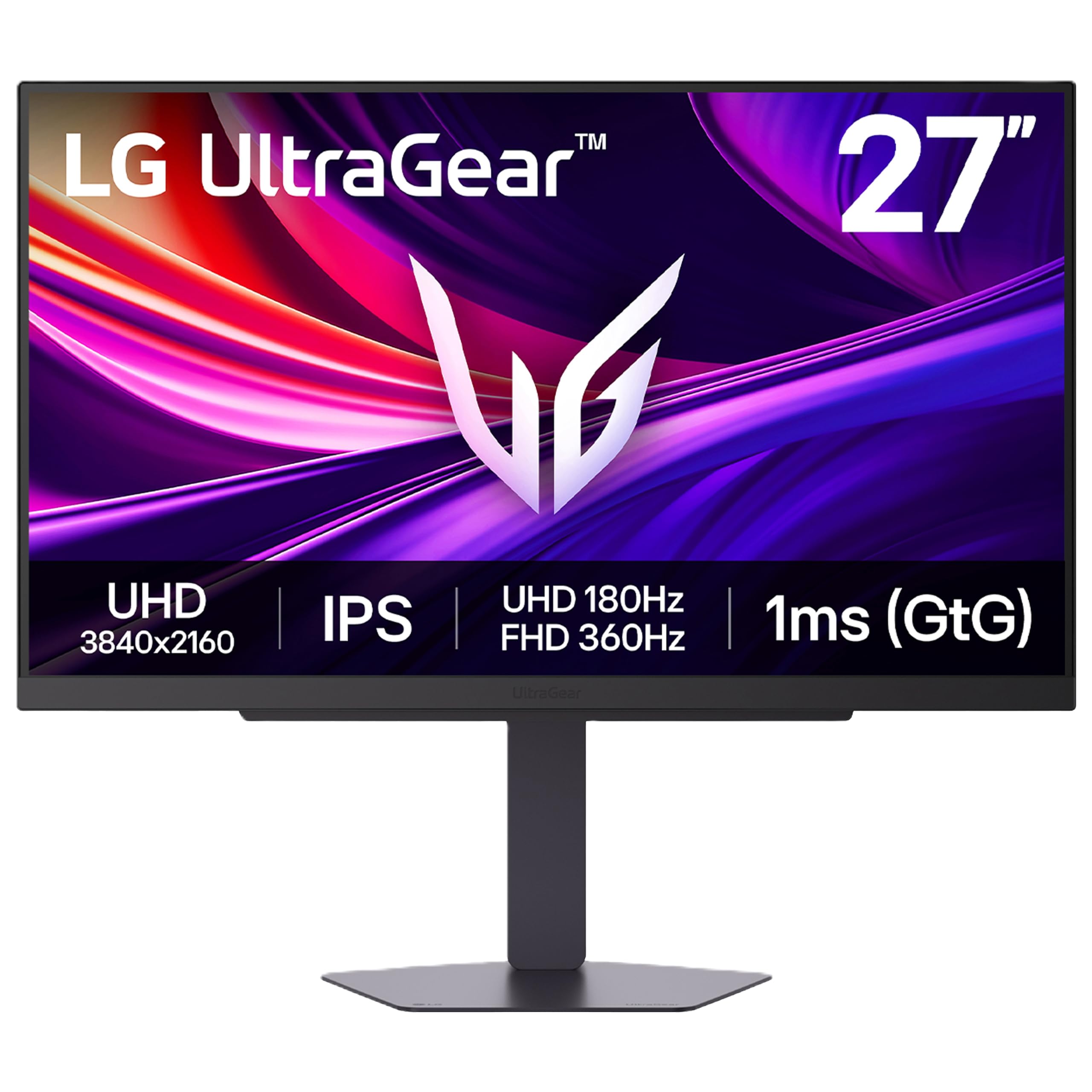
LG’s 27G810A-B introduces Dual Mode technology, allowing you to switch between 4K UHD at 180Hz and Full HD at 360Hz with a hotkey press. The IPS panel delivers 95% DCI-P3 color coverage with DisplayHDR 400 certification, providing vibrant colors and decent HDR highlights for an LCD. The 1ms GtG response time keeps fast motion blur-free, and both FreeSync Premium and G-Sync compatibility ensure tear-free gaming on PC and console.
The stand supports height, tilt, swivel, and pivot adjustments with a narrow bezel design that works well in multi-monitor arrays. Dynamic Action Sync reduces input lag, and Black Stabilizer highlights dark areas without washing out the entire image. The 4-pole headphone jack with DTS HP:X provides spatial audio for immersive gaming without extra hardware.
Some users note that the fan inside the monitor produces noticeable noise in quiet rooms, which could be distracting during late-night sessions or silent work. The height range of the stand is also somewhat limited for taller users. At its price point, however, this monitor offers the most versatile refresh rate flexibility of any IPS display in the 27-inch 4K category.
Why it’s great
- Dual Mode offers both high-res and high-refresh options
- Excellent color saturation for an IPS panel
- G-Sync and FreeSync Premium support
Good to know
- Internal fan may produce audible noise
- Stand height adjustment range is limited
- Not as contrast-rich as OLED alternatives
6. ASUS ProArt PA279CRV

The ProArt PA279CRV is built for creators who need precise color reproduction. It covers 99% of both DCI-P3 and Adobe RGB color spaces, with factory calibration verified to Delta E < 2. The IPS LED panel includes a 3000:1 contrast ratio that is unusually high for IPS, helping shadow detail pop more than typical 1000:1 panels. Calman verification adds an extra layer of trust for professional workflows.
Connectivity is a highlight: USB-C with 96W Power Delivery drives a laptop and acts as a hub with USB-A ports, plus DisplayPort In and Out for daisy-chaining a second monitor. The stand is fully ergonomic with height, tilt, swivel, and pivot adjustments, plus built-in cable management. Users report excellent uniformity with minimal backlight bleed, and the matte finish avoids distracting reflections during long editing sessions.
At 60Hz, this is not a gaming monitor — motion will feel slower compared to 120Hz+ panels. The on-screen menu buttons are positioned on the front edge rather than the back, which some users find less intuitive. For photo and video editors demanding industry-standard color accuracy, the PA279CRV delivers performance comparable to monitors costing twice as much.
Why it’s great
- 99% Adobe RGB and DCI-P3 coverage for color-critical work
- 96W USB-C power delivery with daisy-chain support
- Excellent factory calibration verified by Calman
Good to know
- 60Hz refresh limits gaming use
- Menu buttons on front edge are less ergonomic
- Heavy monitor requires sturdy desk or arm
7. Samsung ViewFinity S8 S80D
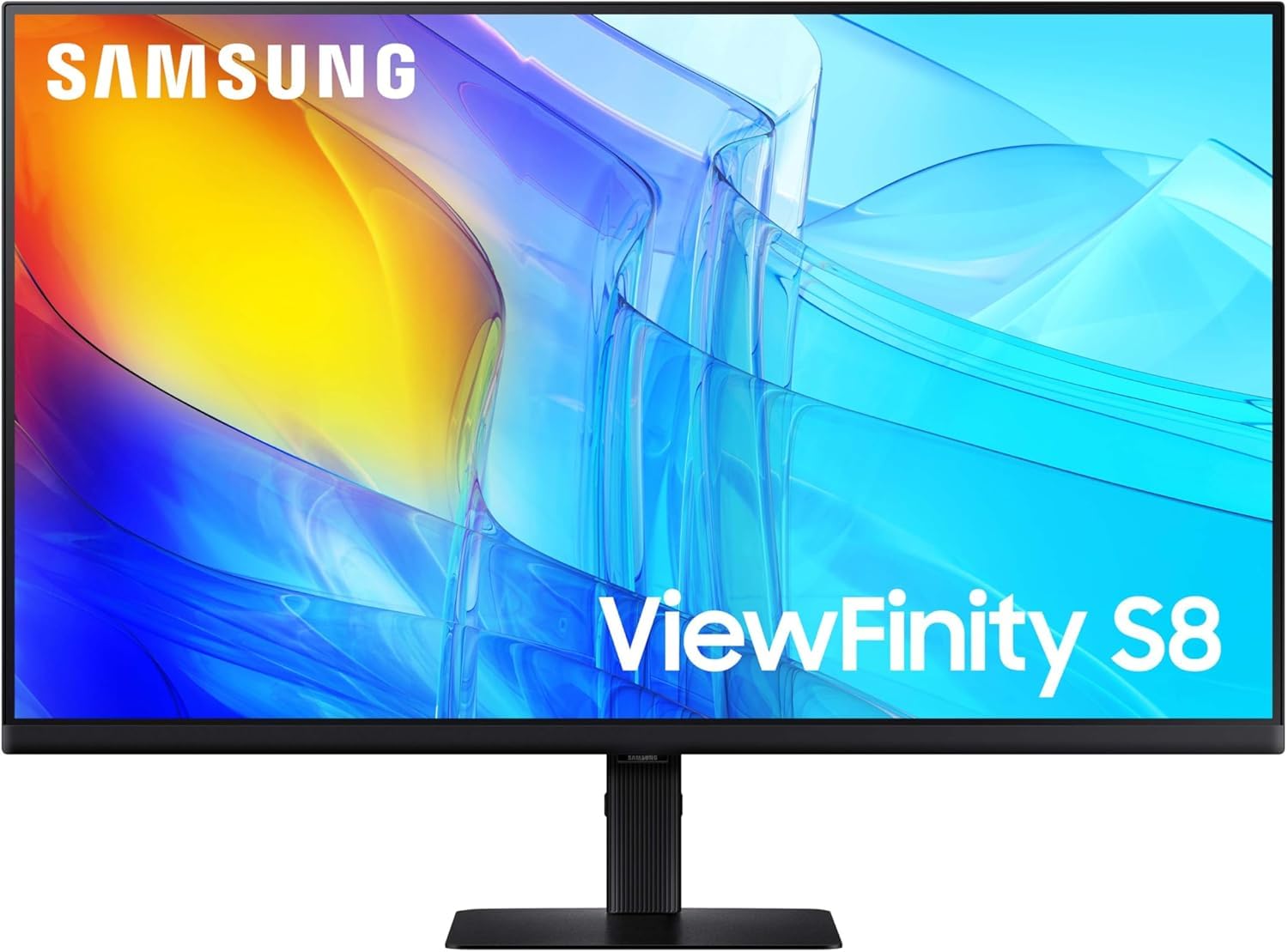
The ViewFinity S8 S80D is a no-nonsense 4K productivity monitor that prioritizes ergonomics and connectivity. It includes HDMI, DisplayPort, and USB-A ports along with a USB-B upstream connection for hub functionality. HDR10 support adds dynamic range for video content, though the 350-nit brightness and 1000:1 contrast ratio are standard for an IPS panel. The matte screen effectively reduces glare in bright environments.
The Easy Setup Stand requires no tools — simply snap the neck into the base and push a button to lock. Height, tilt, swivel, and pivot adjustments are all smooth and positive. The TÜV-certified Eye Saver Mode reduces blue light and flicker for comfortable long sessions. Users consistently praise the sharp text rendering and lack of dead pixels, making it a reliable choice for office and coding workflows.
There are no built-in speakers, only a headphone jack. The single-button joystick menu system is confusing at first, with backwards scrolling that requires adjustment. Some users also note that the lowest height setting is still relatively high on the desk. For budget-conscious professionals who prioritize ergonomic flexibility and a crisp 4K image for daily work, this monitor is a solid value.
Why it’s great
- Tool-free stand assembly with full ergonomic range
- Sharp text rendering and consistent color for office work
- TÜV-certified eye care with flicker-free operation
Good to know
- No built-in speakers
- Menu button interface is unintuitive
- Monitor sits high even at lowest setting
8. LG 27UP850K-W
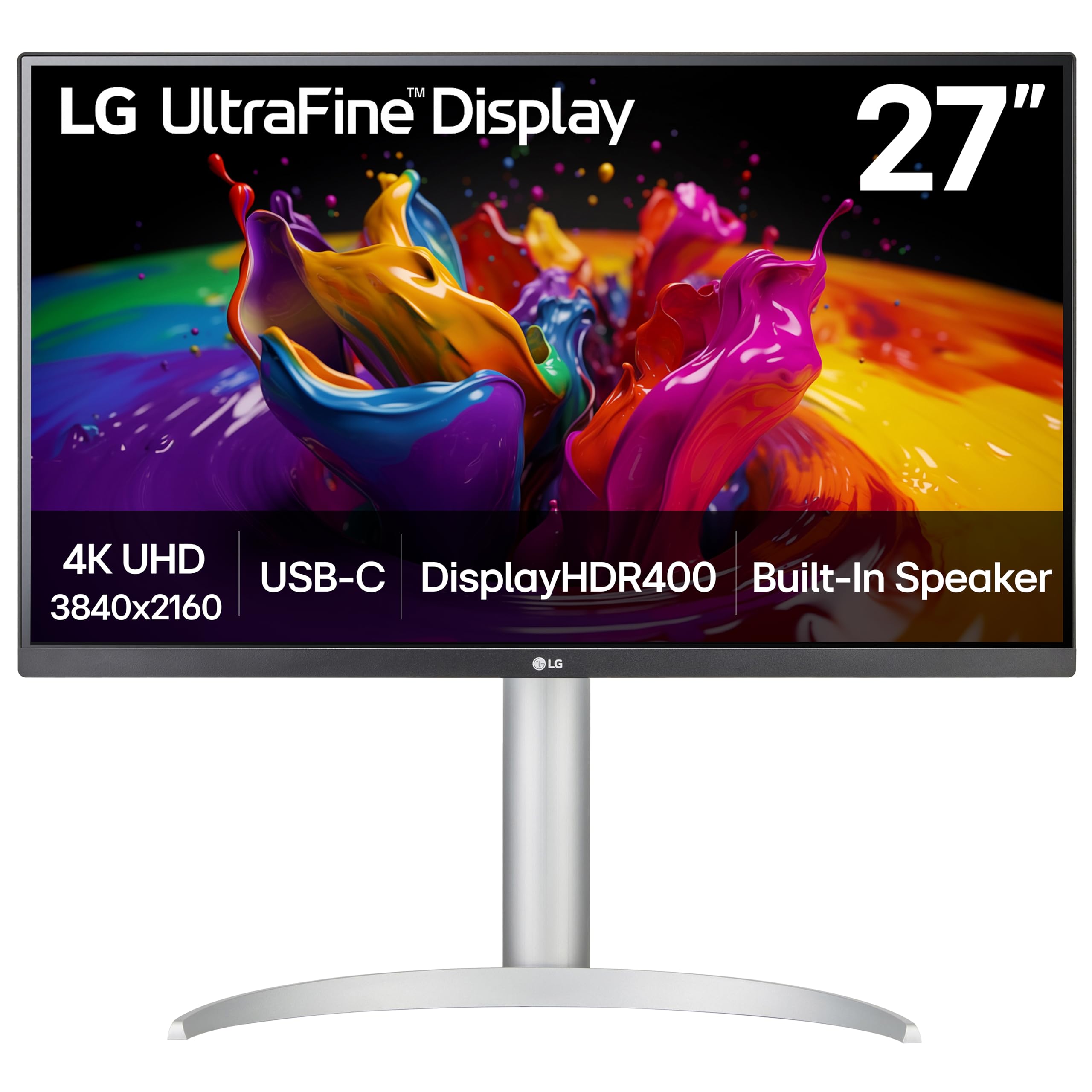
The LG 27UP850K-W is a refined 4K IPS monitor that excels as a one-cable docking solution for laptops. The USB-C port delivers 90W of power delivery and supports data transfer, while additional USB 3.0 ports turn the monitor into a functional hub. The 95% DCI-P3 color gamut and DisplayHDR 400 certification provide vibrant, accurate colors suitable for photo editing and media consumption.
The stand offers height, tilt, and pivot adjustments, and the white color option blends well with modern home offices. Built-in stereo speakers with Waves MaxxAudio produce surprisingly decent sound for a monitor — usable for video calls and casual listening. Black Stabilizer and Dynamic Action Sync features are included for light gaming, though the 60Hz refresh rate means it is not a competitive gaming display.
Some users note minor quirks when pairing with MacBook, such as occasional sleep-wake inconsistencies. The IPS glow is typical for the technology, but not excessive. For Mac users who want a single USB-C cable to handle display, charging, and peripherals, this LG delivers strong image quality in a clean, functional package at a reasonable mid-range price.
Why it’s great
- 90W USB-C with hub functionality for clean desk setup
- Good color accuracy with 95% DCI-P3 coverage
- Decent built-in speakers with Waves MaxxAudio
Good to know
- 60Hz refresh not suitable for gaming
- Minor MacBook compatibility quirks reported
- IPS glow is present on dark scenes
9. Dell 27 Plus S2725QS

The Dell S2725QS delivers the most compelling value proposition in the 27-inch 4K category. It combines a 120Hz refresh rate with FreeSync Premium support on an IPS panel with 99% sRGB and 1500:1 contrast ratio — numbers that beat many monitors at twice the price. The ComfortView Plus technology reduces blue light emissions to ≤35% without washing out colors, making it excellent for all-day use.
The ash white finish and ultra-thin bezels give it a modern aesthetic that stands apart from the sea of black monitors. The stand offers height, tilt, swivel, and pivot adjustments. Integrated speakers with improved frequency response and decibel range produce better audio than the previous generation, suitable for YouTube and video calls. Includes HDMI 2.1 cable for full compatibility.
Some users report a slight vignetting effect on the right edge and minor grain in dark areas. Ghosting is noticeable in fast-paced games, so competitive players should look elsewhere. For productivity users who want a smooth 120Hz desktop experience with excellent eye comfort, the S2725QS is the smartest budget-conscious pick.
Why it’s great
- 120Hz and FreeSync Premium at a very competitive price
- ComfortView Plus reduces eye strain without yellow tint
- Fully adjustable ergonomic stand with sleek design
Good to know
- Noticeable ghosting in competitive gaming titles
- Minor vignetting on some units reported
- Color gamut limited to sRGB, not DCI-P3
10. KOORUI G2741L
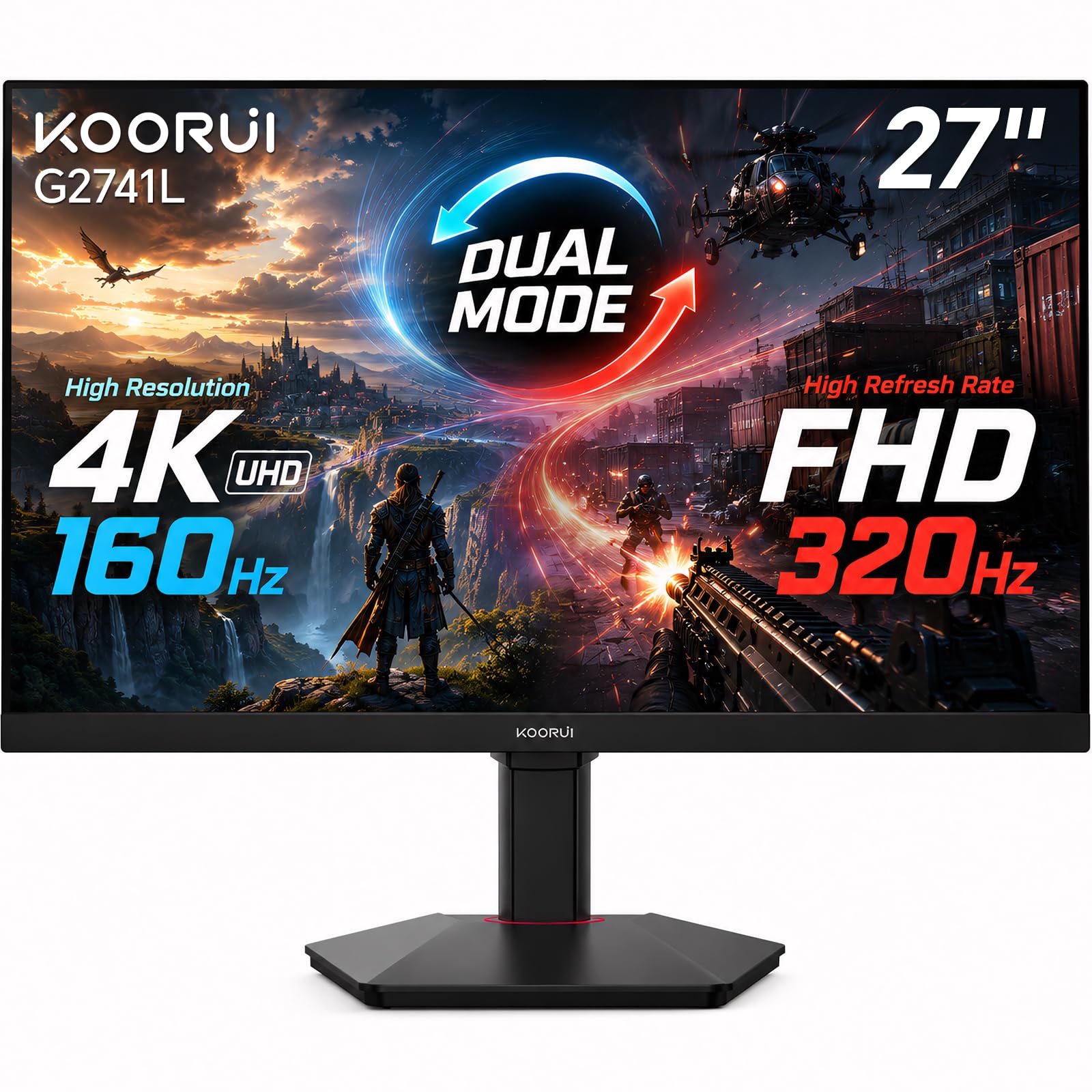
The KOORUI G2741L brings Dual Mode technology to an entry-level price point. It switches between 4K UHD at 160Hz for immersive gaming and FHD at 320Hz for esports titles, all on a Fast IPS panel with 1ms response time. The 95% DCI-P3 color coverage and HDR400 support are respectable for the price tier, producing vibrant colors that punch above the monitor’s weight class.
The ergonomic stand includes height, tilt, and pivot adjustments — a rarity at this budget level. Connectivity covers HDMI 2.1 and DisplayPort 1.4, making it console-ready for PS5 and Xbox Series X. The build quality is solid, with reliable performance reported by users after a year of use. No dead pixels or flickering issues were noted in long-term feedback.
There are no built-in speakers and no VESA mounting holes in some units, so check the specific version you receive. The menu navigation button is a single joystick that feels fiddly. For budget gamers who want the flexibility of Dual Mode without breaking the bank, the G2741L offers outstanding performance-to-price ratio.
Why it’s great
- Dual Mode gaming at an entry-level price
- Good DCI-P3 color coverage for the cost
- Fully ergonomic stand with height adjustment
Good to know
- No built-in speakers
- May lack VESA mounting holes depending on batch
- Menu joystick is small and imprecise
11. Dell UltraSharp U4025QW

The Dell UltraSharp U4025QW is a 40-inch 5K2K (5120×2160) ultrawide curved monitor that serves as a command center for professionals who need maximum screen real estate. Its IPS Black technology delivers a 2000:1 contrast ratio — double that of standard IPS — providing deeper blacks and better shadow detail. The 120Hz refresh rate and 600-nit peak brightness make it fluid and bright enough for both productivity and casual media consumption.
Connectivity is comprehensive: Thunderbolt, HDMI, DisplayPort, Ethernet, and a built-in KVM switch that supports two computers. The 5K2K resolution effectively replaces a dual-monitor setup with a single seamless workspace, especially useful for video editing timelines, large spreadsheets, and code editors. Users report excellent color accuracy out of the box and a significant productivity boost.
The price is very high, and the plastic build quality on the housing does not feel premium for this price tier. The default color modes are subpar, requiring calibration or switching to Movie mode for acceptable image quality. It is not suited for competitive gaming due to input lag. For professionals who value screen real estate and workflow efficiency above everything else, the U4025QW is unmatched.
Why it’s great
- 5K2K resolution replaces dual monitors seamlessly
- IPS Black 2000:1 contrast for deep blacks
- Built-in KVM and Thunderbolt connectivity
Good to know
- Very high price point
- Plastic housing feels cheap for premium tier
- Default color modes require calibration
FAQ
Is a 27-inch 4K monitor too small to see the difference compared to 1440p?
Can my laptop drive a 4K monitor at 120Hz or 240Hz?
What is DisplayHDR and how much do I need for 4K?
Should I get an IPS or OLED 27-inch 4K monitor for work?
Final Thoughts: The Verdict
For most users, the best 27 inch 4k monitor winner is the ASUS ROG Swift PG27UCDM because it combines QD-OLED contrast, 240Hz speed, and future-proof DisplayPort 2.1 into a single premium package. If you want Mac-friendly color matching and a more accessible price, grab the BenQ MA270UP. And for value-driven productivity users who want smooth 120Hz movement without spending a fortune, nothing beats the Dell 27 Plus S2725QS.

Mo Maruf
I created WellFizz to bridge the gap between vague wellness advice and actionable solutions. My mission is simple: to decode the research and give you practical tools you can actually use.
Beyond the data, I am a passionate traveler. I believe that stepping away from the screen to explore new environments is essential for mental clarity and physical vitality.