Our readers keep the lights on and my smoothie glass nicely filled. As an Amazon Associate, I earn from qualifying purchases.
If your legs feel heavy, achy, or swollen after a long day, the right pair of compression socks can make all the difference. The 20-30 mmHg range is the sweet spot for therapeutic support, but with so many options, finding one that’s both effective and comfortable requires a careful look at the details.
I’m Mohammad Maruf — the founder and writer behind WellFizz. For over a decade, I’ve specialized in dissecting product specifications and analyzing thousands of consumer experiences to separate marketing hype from genuine performance in wellness gear.
This guide is the result of deep-diving into technical data, material composition, and real-user feedback to find socks that deliver on their promise. After thorough analysis, I recommend the top-rated options for genuine graduated compression that you can trust as the best 20-30 mmhg compression socks.
How To Choose The Best 20-30 Mmhg Compression Socks
Selecting the right compression sock isn’t just about size; it’s about matching the construction to your specific needs. The 20-30 mmHg class offers firm, medical-grade support ideal for managing swelling, improving circulation during travel, or recovering from strenuous activity. Here’s what to prioritize.
Focus on Graduated Compression
Authentic therapeutic socks feature graduated compression, meaning the tightest squeeze is at the ankle, gradually easing up the calf. This design assists your veins in pumping blood back toward the heartand prevents fluid from pooling in the lower legs. When researching, look for brands that explicitly mention this gradient design, as some budget options may offer uniform pressure which is less effective.
Material and Breathability
The fabric blend determines comfort and durability. Look for a mix of nylon and spandex; nylon provides structure and resilience, while spandex (typically 15-20%) delivers the necessary stretch. Avoid socks that feel overly thick or non-breathable, especially if you plan to wear them all day or during activity.
Toe and Calf Fit
Two common pain points are the toe box and the calf. A roomy, non-constricting toe area prevents discomfort and allows for natural movement. For the calf, accurate measurement is non-negotiable—use a tape measure at the widest part. A proper fit should feel supportive, not painfully tight, and the top band should stay put without digging in.
Quick Comparison
On smaller screens, swipe sideways to see the full table.
| Model | Type | Best For | Key Feature | Amazon |
|---|---|---|---|---|
| SB SOX Compression Socks | Knee High | Daily wear & medical support | True 20-30mmHg, durable build | Amazon |
| NEWZILL Medical Compression Socks | Knee High | All-day comfort & style | Seamless stripes, breathable fabric | Amazon |
| Physix Gear Compression Socks | Athletic | Running, sports, long shifts | Strong compression, cushioned foot | Amazon |
| LEVSOX Compression Socks | Knee High | Nurses & 12+ hour days | True compression, fun patterns | Amazon |
| Truform Compression Stockings | Medical | Edema & venous insufficiency | Roomy toe, soft top band | Amazon |
| JOBST Relief Compression Stockings | Medical-Grade | Doctor-recommended therapy | Heel pocket, durable knit | Amazon |
| FITRELL Compression Socks | Knee High | Neuropathy & diabetic comfort | Soft, doesn’t squeeze toes | Amazon |
| Double Couple Copper Socks | Knee High | Value multi-pack | Copper-infused, 7 pairs | Amazon |
| fenglaoda 8 Pairs | Knee High | Budget multi-pack | 8 pairs, assorted colors | Amazon |
| Doc Miller Open Toe | Open Toe | Summer wear & sandals | Toeless design, snug fit | Amazon |
| Compression Socks 20-30 mmHg | Knee High | Entry-level trial | Very affordable 3-pack | Amazon |
In‑Depth Reviews
1. SB SOX Compression Socks

After analyzing long-term user reports, SB SOX consistently emerges as a top performer for delivering authentic, lasting 20-30 mmHg pressure. These are not lightweight support socks; they are built with a thicker, robust knit that maintains its graduated compression through hundreds of wears and washes. Users with medical conditions like DVT and chronic venous insufficiency report significant, reliable relief.
The construction features a defined heel pocket and cushioned footbed, which provides exceptional comfort for all-day wear, whether you’re on a factory floor or in an office. The top band is designed to stay secure without creating a painful ridge under the knee—a common complaint with lesser brands.
While they require a bit more effort to put on (a hallmark of true compression), the payoff is a consistent, therapeutic squeeze that doesn’t fade. The brand’s detailed sizing guide, which prioritizes calf measurement over shoe size, is crucial for getting the correct therapeutic fit. For those who need dependable, medical-level support without a prescription, these are a standout choice.
Why it’s great
- Authentic, long-lasting 20-30 mmHg graduated compression.
- Durable construction holds up well to frequent washing.
- Secure fit with a comfortable, non-digging top band.
- Detailed sizing guide ensures proper therapeutic pressure.
Good to know
- Can be challenging to put on for those new to compression wear.
- The fabric may pill slightly over time, though functionality remains.
2. NEWZILL Medical Compression Socks

NEWZILL strikes a rare balance between medical efficacy and aesthetic appeal. These are a premium favorite among users who refuse to sacrifice style for function. The key innovation is in the knitting: patterned and striped designs are created without internal seams, eliminating the uncomfortable ridges and pressure points common in decorative compression socks.
The material is soft, relatively thin, and highly breathable, making them ideal for all-day wear in warmer climates or under fitted clothing. Users report excellent edema control and relief from neuropathy pain, attributing it to the consistent, graduated pressure that doesn’t feel overly bulky.
They are easier to don than some firmer medical socks but still provide a true 20-30 mmHg feel. The toe box is generously roomy, a feature repeatedly praised by those with wider feet or sensitive toes. If you need therapeutic compression but want socks that look and feel like high-quality casual wear, NEWZILL is a compelling, research-backed option.
Why it’s great
- Patterns are knitted seamlessly, preventing discomfort.
- Breathable, soft fabric perfect for all-day, everyday wear.
- Provides effective swelling and pain relief.
- Roomy toe box enhances comfort.
Good to know
- A premium option in the category.
- Some users with very large calves may find the length excessive.
3. Physix Gear Compression Socks

Designed with the active user in mind, Physix Gear socks deliver firm, sports-oriented compression. The construction features a more pronounced cushion in the footbed and arch, providing shock absorption for runners, court athletes, or anyone spending 12+ hours on their feet. The compression is notably strong and graduated, effectively combating shin splints and post-activity swelling.
The fabric is moisture-wicking and maintains its integrity, resisting pilling even after repeated washes. The colored ankle section isn’t just for style; it serves as a visual guide to ensure the sock is oriented and pulled on correctly for optimal gradient pressure.
These socks are a favorite among nurses, flight attendants, and endurance athletes who need leg support that can keep up with high-demand schedules. They run true to size based on the brand’s calf measurement chart, but note that the length is designed for average-to-tall individuals.
Why it’s great
- Excellent for sports recovery and preventing shin splints.
- Durable, non-pilling fabric holds up to intense use.
- Enhanced cushioning in the foot for all-day comfort.
- Strong, reliable compression that users can feel working.
Good to know
- Can be too long for shorter individuals, causing bunching.
- The toe box may feel snug for those with very wide feet.
4. LEVSOX Compression Socks

LEVSOX has cultivated a loyal following among healthcare professionals for delivering what many describe as “true” compression in a comfortable, colorful package. These socks provide a firm, noticeable squeeze that meets the 20-30 mmHg standard without causing discomfort or sensory overload during marathon shifts.
The material is thin yet strong, allowing them to fit discreetly under scrubs or pants without adding bulk. The wide array of vibrant patterns is a significant morale booster, making a necessary medical device feel like a personal style choice. Users report that the compression is uniform and effective, reducing leg fatigue and cramping significantly.
They strike a balance between being tight enough to be therapeutic and easy enough to put on daily. For nurses, teachers, or retail workers who are constantly on the move and need reliable support that also lifts their spirits, LEVSOX is a top-tier mid-range contender.
Why it’s great
- Provides firm, medical-grade compression in stylish designs.
- Thin, breathable fabric ideal for wearing under uniforms.
- Helps dramatically with leg cramps and all-day fatigue.
- Stays in place without rolling down.
Good to know
- The toe area can run slightly long on some foot shapes.
- As with all true compression socks, there’s a learning curve to putting them on.
5. Truform Compression Stockings
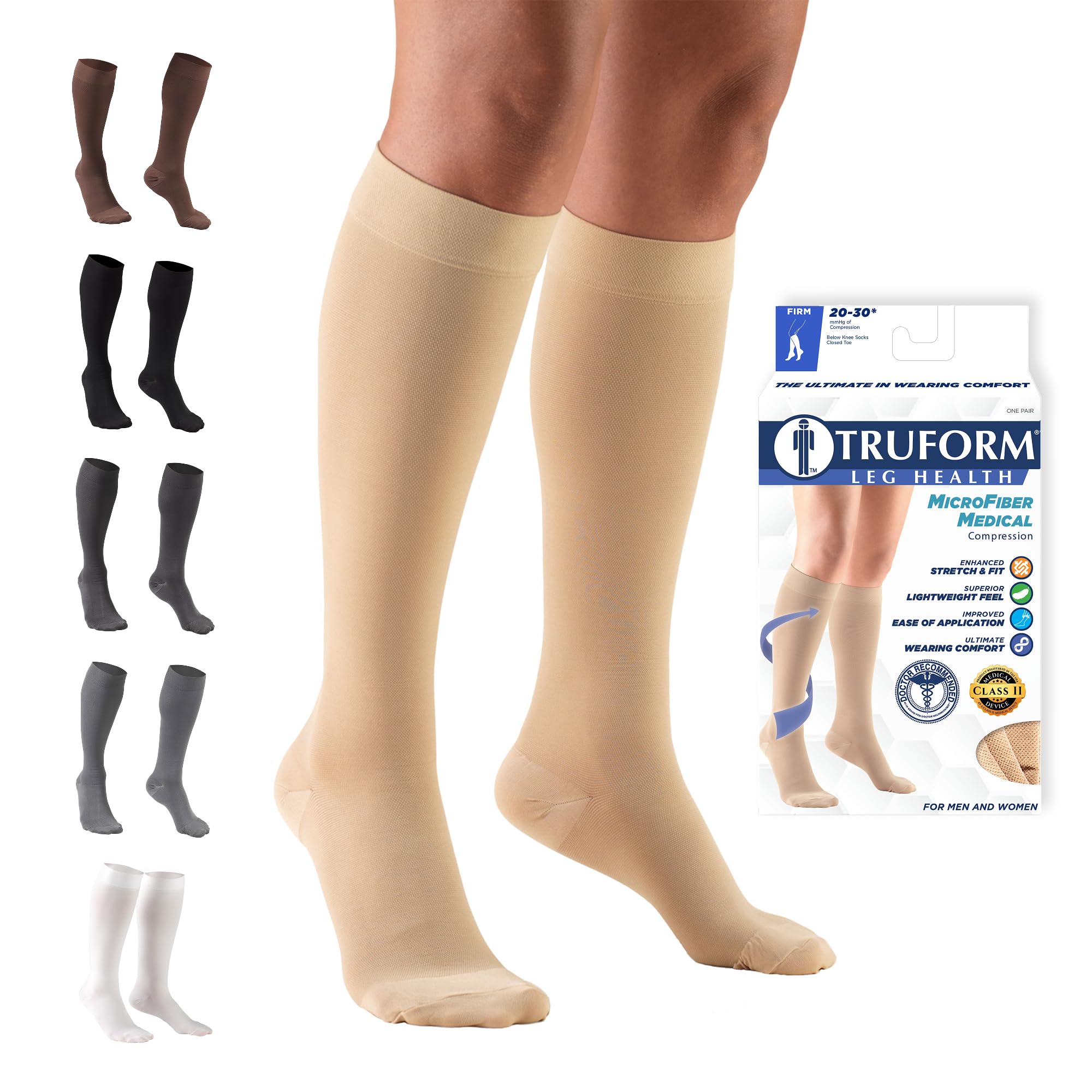
Truform is a legacy brand in the medical compression space, and their design reflects a deep understanding of patient needs. The standout feature is the intentionally roomy “comfort toe,” which eliminates pressure on sensitive toes and nails—a critical detail for those with diabetes, arthritis, or post-surgical sensitivity.
The knit is durable and the graduated compression is consistent. The top band is famously soft and non-constricting, designed to stay up without cutting into the calf, which is a major advantage for extended wear. These are often recommended by medical supply stores as a reliable, over-the-counter option for managing edema and venous insufficiency.
They are made in the USA and have a more traditional medical aesthetic, but the comfort and functional design are top-notch. For those whose primary concern is therapeutic efficacy and toe comfort, with less emphasis on trendy patterns, Truform is an excellent, trustworthy choice.
Why it’s great
- Specially designed roomy toe box prevents discomfort.
- Soft top band will not dig into the calf during all-day wear.
- Consistent, reliable graduated compression.
- Durable construction made in the USA.
Good to know
- Classic medical appearance, not as stylish as other options.
- Can run long for shorter individuals; consider the “short” size if available.
6. JOBST Relief Compression Stockings

JOBST is a heavyweight name in medical compression therapy, and their Relief line brings prescription-grade engineering to the retail market. These stockings feature a precise heel pocket that ensures proper alignment, which is critical for the graduated compression to work as intended—tightest at the ankle, easing up the calf.
The material is a high-quality, latex-free knit that is both breathable and robust, holding its compression over many months of daily use. They are specifically designed to reduce swelling and aching in tired legs, and user feedback from those with doctor recommendations confirms their effectiveness.
While they are among the more premium-priced options and can be challenging to put on, the therapeutic payoff is significant. For individuals managing lymphedema, post-thrombotic syndrome, or severe varicose veins, these offer a level of engineered performance that justifies the investment.
Why it’s great
- Medical-grade engineering from a trusted brand.
- Defined heel pocket ensures correct placement for therapeutic effect.
- Effective at reducing significant swelling and discomfort.
- Durable material maintains compression over time.
Good to know
- A premium investment in the category.
- Can be difficult to don; a stocking donner may be helpful.
- Sizing must be exact for proper therapeutic benefit.
7. FITRELL Compression Socks

FITRELL receives exceptional feedback from users with neuropathy, diabetes, and sensitive skin. The key is in the soft, almost plush fabric that provides firm 20-30 mmHg compression without creating painful pressure points, especially in the toe area. Many reviewers note these are the first compression socks that don’t squeeze their toes unmercifully.
The compression is even and comforting, helping to reduce the symptoms of restless legs and edema. The sizing tends to be generous, making them a good option for those with wider calves who have struggled with other brands. They are also easier to put on than some firmer medical socks, reducing frustration for those with limited dexterity.
While the fabric may show some pilling with wear, the compression benefits remain solid. For anyone who has found standard compression socks too abrasive or constricting, FITRELL offers a comfortable, effective alternative that doesn’t compromise on therapeutic pressure.
Why it’s great
- Exceptionally soft material that doesn’t irritate sensitive skin.
- Generous toe box prevents painful squeezing.
- Even, firm compression ideal for neuropathy and diabetic comfort.
- Easier to don than many comparable compression socks.
Good to know
- Material may pill with frequent use.
- May be too long for very short individuals.
8. Double Couple Copper Socks

This 7-pair set represents a strong value proposition for someone wanting to integrate compression wear into their daily routine without a major upfront investment. The socks are copper-infused, a feature touted for its antimicrobial properties, which can help reduce odor—a benefit for active users.
The compression is graduated and provides legitimate 20-30 mmHg support, effectively reducing swelling and leg fatigue according to user reports. The fabric is comfortable and machine-washable, making care simple. The pack includes basic colors, offering versatility for wearing with different outfits.
It’s worth noting that the fit, particularly in the foot, may run slightly small compared to other brands, so those with larger feet should consider sizing up. For nurses, travelers, or anyone new to compression who wants a cost-effective way to own a full week’s rotation, this pack delivers solid performance.
Why it’s great
- Excellent value with seven pairs in one pack.
- Copper infusion helps minimize odors.
- Provides true graduated compression for swelling relief.
- Comfortable and easy to care for.
Good to know
- Foot area may feel snug; consider sizing up if between sizes.
- Compression may feel less intense than top-tier medical brands.
9. fenglaoda 8 Pairs

For the budget-conscious buyer who needs a large volume of socks for daily rotation, the fenglaoda 8-pack is a practical entry point. These socks provide noticeable support and compression that can help with general leg fatigue and mild swelling associated with prolonged sitting or standing.
The material has a good amount of stretch, making them relatively easy to put on. They come in a variety of solid colors, allowing for some personal expression. Users find them comfortable for all-day wear under pants and appreciate not having to wash them constantly due to the high pair count.
It’s important to manage expectations: while they offer support, the compression may not be as precisely graduated or as durable as more expensive, medically-focused brands. They serve well as an introductory option or for situations where moderate support is sufficient.
Why it’s great
- Extremely cost-effective way to own many pairs.
- Comfortable with a stretchy, easy-to-don fit.
- Good for general leg fatigue and mild support needs.
- Multiple color options in one pack.
Good to know
- Compression may not be as firm or therapeutic as higher-end options.
- May not be suitable for significant medical edema or venous conditions.
10. Doc Miller Open Toe

The Doc Miller open-toe design solves a specific set of problems: wearing compression with sandals, dealing with toe sensitivity, or managing heat. By leaving the toes free, these sleeves provide calf and ankle compression while allowing for toe splay and ventilation, making them ideal for summer travel or wearing with open-toed shoes.
They deliver firm 20-30 mmHg graduated compression and are constructed from a durable nylon-spandex blend. Users report excellent relief from swelling during flights and long periods of sitting. The key to comfort is precise sizing based on calf measurement, not shoe size.
A potential drawback noted by some is that if not sized perfectly, the compression gradient can be off, potentially being tighter at the calf than the ankle. However, for those who need compression but must have their toes free, these are a well-regarded and functional solution.
Why it’s great
- Allows toe freedom and works with sandals.
- Provides full calf and ankle compression.
- Excellent for travel and warm weather.
- Helps reduce swelling effectively.
Good to know
- Must be sized exactly per calf measurement for proper gradient.
- Not suitable if you need compression across the entire foot.
11. Compression Socks 20-30 mmHg

This no-frills 3-pack is the most budget-friendly way to experiment with 20-30 mmHg compression. They offer surprising quality for the cost, with a comfortable fit and decent graduated pressure that helps with fluid retention and leg fatigue. Many users, including students and those with conditions like POTS, find them to be a lifesaver for daily wear.
The socks come in various colors and patterns, and the material is comfortable enough for all-day use. They hold up reasonably well to washing, though some stretching may occur over time. The sizing tends to run a bit large, so consulting the size chart is advised.
While they may not have the durability or precise medical engineering of more expensive brands, they perform admirably for their class. For someone unsure about compression therapy or needing an economical option for occasional use, this pack provides a very low-risk starting point.
Why it’s great
- Extremely affordable way to try compression therapy.
- Provides legitimate support for edema and fatigue.
- Comfortable with fun pattern options.
- Good for occasional wearers or those on a tight budget.
Good to know
- Long-term durability may not match premium socks.
- Sizing can be inconsistent; may run large.
Understanding the Specs
What 20-30 mmHg Really Means
This measurement refers to millimeters of mercury, a unit of pressure. In this range, the sock exerts a firm, medical-grade compression. It’s tightest at the ankle (around 30 mmHg) and gradually decreases up the calf (toward 20 mmHg). This gradient is clinically proven to assist venous return, reducing swelling and the risk of blood clots. It’s the standard for managing moderate edema, varicose veins, and post-surgical recovery.
Material Breakdown: Nylon vs. Spandex
The performance hinges on the fabric blend. Nylon (typically 75-85%) provides the durable structure and shape retention. Spandex (or Lycra, 15-25%) supplies the essential elasticity to create consistent compression. A higher spandex percentage often indicates a snugger, more compressive fit. Copper or silver fibers are sometimes added for antimicrobial properties, but the core compression comes from the nylon-spandex matrix.
FAQ
How tight should 20-30 mmHg socks feel?
Can I wear compression socks to sleep?
How do I wash and care for compression socks?
Final Thoughts: The Verdict
For most people, the best 20-30 mmhg compression socks winner is the SB SOX because they deliver authentic, durable compression that holds up to daily medical and active use. If you want style without sacrificing function, grab the NEWZILL. And for doctor-recommended, therapeutic-grade management of swelling, nothing beats the JOBST Relief.

Mo Maruf
I created WellFizz to bridge the gap between vague wellness advice and actionable solutions. My mission is simple: to decode the research and give you practical tools you can actually use.
Beyond the data, I am a passionate traveler. I believe that stepping away from the screen to explore new environments is essential for mental clarity and physical vitality.