Our readers keep the lights on and my smoothie glass nicely filled. As an Amazon Associate, I earn from qualifying purchases.
Houseplants crave a steady diet, but picking the wrong soluble powder can turn leaves yellow or burn tender roots. The sweet spot for foliage, roots, and blooms is a balanced 20-20-20 NPK ratio that delivers consistent nutrition without guesswork. This guide filters out the marketing noise so you can feed your plants with precision.
I’m Mohammad Maruf — the founder and writer behind WellFizz. I’ve spent years analyzing consumer-grade fertilizer formulations, comparing solubility rates, micronutrient profiles, and real-world customer feedback to find the products that actually deliver measurable results indoors.
Whether you are nurturing a fiddle-leaf fig or coaxing blooms from an African violet, finding the best 20-20-20 fertilizer for indoor plants means balancing fast absorption with a formula that won’t accumulate salts in your potting mix over time.
How To Choose The Best 20-20-20 Fertilizer For Indoor Plants
Not all 20-20-20 powders are created equal. The NPK numbers tell only part of the story — how the formula dissolves, the purity of the salts, and the presence of secondary nutrients determine whether your plant thrives or struggles.
Solubility and Particle Size
A fine, consistent grind dissolves completely in lukewarm water without leaving sediment. Chalky or clumpy powders indicate poor processing and can clog sprayers or leave undissolved salts that burn roots. Look for a formulation described as “water-soluble” or “instant” — this guarantees rapid uptake through the root system.
Micronutrient Profile
While 20-20-20 covers the big three macronutrients, indoor plants also need trace elements like iron, manganese, zinc, and boron. These prevent interveinal chlorosis (yellowing between veins) and support enzyme function. A fertilizer that lists micronutrients on the label is a better long-term choice for container plants that cannot draw these from garden soil.
Mixing Ratio and Concentration
Indoor plants generally need a weaker mix than outdoor gardens. A standard indoor dose is ½ to 1 teaspoon per gallon of water. Formulas that recommend 1 tablespoon per gallon for outdoor use are too strong for houseplants unless diluted. Always check the label for specific indoor dilution instructions to avoid salt buildup.
Quick Comparison
On smaller screens, swipe sideways to see the full table.
| Model | Category | Best For | Key Spec | Amazon |
|---|---|---|---|---|
| Gardenwise | Mid-Range | Balanced indoor feeding | ½ tsp per gallon mix | Amazon |
| Peter’s Professional 1 lb | Mid-Range | Versatile formula | Includes micronutrients | Amazon |
| Peter’s Professional 2 lb | Mid-Range | Long-term value | 32 oz powder | Amazon |
| Schultz SPF70690 | Premium | Rapid growth boost | 5 lb bulk bag | Amazon |
| Fertilome 11722 | Premium | Blooming plants | 3 lb; foliar spray ok | Amazon |
In‑Depth Reviews
1. Gardenwise 20-20-20 Water-Soluble Fertilizer
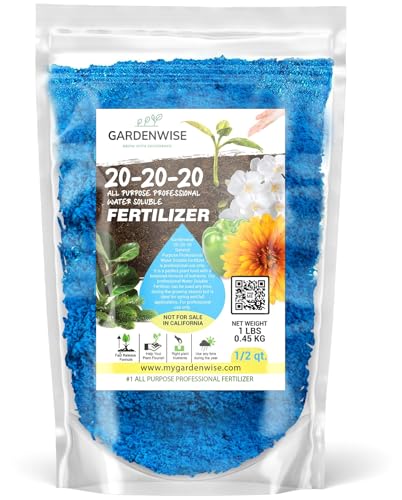
Gardenwise hits the sweet spot between cost and performance. The fine powder dissolves almost instantly in water with no grittiness, which makes it ideal for weekly indoor feeding schedules. Users report visible new leaf growth and unfurling within days of first application, especially on philodendrons and pothos. The ½ teaspoon per gallon recommendation is perfect for container plants — strong enough to push growth but gentle enough to avoid root burn even when applied every three weeks.
The 1-pound bag covers roughly 64 gallons of mixed solution, making it a solid entry point for anyone managing a dozen or more houseplants. Customer feedback consistently notes that it outperforms generic grocery-store brands, with some calling it “better than viral TikTok plant food.” The versatility extends to orchids and vegetables, but it truly shines on standard indoor foliage.
One detail that stands out is the safety window: the label states the area is safe for kids and pets once dry. This matters for households where plants sit on low tables or floors. The granules are fine enough to be worked into the top layer of soil if you prefer dry application, though water solubility is the intended method.
Why it’s great
- Instant dissolution with zero sediment
- Low indoor dose (½ tsp/gal) prevents salt buildup
- Visible growth response within one week
Good to know
- 1 lb bag may need restocking sooner for large collections
- Does not list full micronutrient breakdown on label
2. Peter’s Professional 20-20-20 1 Pound
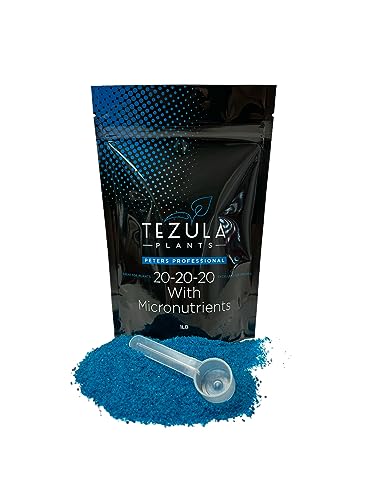
Peter’s Professional has been a staple in greenhouse feeding for decades, and the 1-pound bag brings that reliability to the home grower. The powder includes a full suite of micronutrients — iron, manganese, zinc, copper, boron, and molybdenum — which makes it a smarter choice for plants showing subtle deficiency signs like pale new leaves or stunted tips. The waterproof packaging with a built-in measuring scoop eliminates the need for a separate teaspoon, cutting down on mess.
Users consistently report faster growth in caladiums, alocasias, and bulbs. The 1 tablespoon per gallon outdoor mix is standard, but for indoor use, half that strength works beautifully. One long-term reviewer mentioned using it for years on vegetables and ornamentals alike, noting that plants look “so much healthier” within weeks. The powder dissolves cleanly with a quick stir, leaving no residue at the bottom of the watering can.
The bag’s airtight seal is a practical advantage — humidity won’t turn the powder into a solid brick over time, which is common with cardboard-box packaging. At 1 pound, it is compact enough to store next to your watering supplies without taking up cabinet space. Some users note that a few sensitive orchids did not respond as dramatically, but the majority of houseplants thrive.
Why it’s great
- Includes comprehensive micronutrient blend
- Waterproof resealable bag with scoop
- Proven formula used in professional horticulture
Good to know
- Some specialty orchids may prefer a bloom-specific ratio
- Indoor dose is not printed on the label — adjust manually
3. Peter’s Professional 20-20-20 2 Pounds

Doubling the package size without changing the formula makes this 2-pound version the smart play for anyone with a substantial indoor garden. Peter’s 20-20-20 in this volume is a favorite among cannabis growers during the vegetative stage, where a weekly dose of 1 tablespoon per gallon produces dense, healthy foliage. For standard houseplants, cutting the dose to ½ tablespoon per gallon every four to six weeks keeps African violets blooming continuously and succulents compact.
The powder dissolves with the same reliability as the 1-pound version — no clumps, no grit. The 2-pound bag covers roughly 128 gallons at the indoor rate, which translates to a year of feeding for a medium-sized collection. Long-term users praise the consistency batch to batch, with some reporting decades of use without switching brands. The formula contains the same micronutrient package that prevents common trace-element deficiencies.
One reviewer pointed out that it works “much better than Miracle-Gro at a lesser rate,” which speaks to the concentration efficiency. The bag does not include a scoop at this size, so you will need your own measuring spoon. However, the cost per dose drops significantly compared to the 1-pound version, making this the most economical per-feed option in the lineup.
Why it’s great
- Best cost per dose in this roundup
- Consistent professional-grade formula
- Ideal for both houseplants and vegetative-stage crops
Good to know
- No measuring scoop included
- Large bag may be bulky for small storage spaces
4. Schultz SPF70690 5 Lb All Purpose Plant Food 20-20-20

Schultz’s 5-pound bag is the heavy lifter of this category — a bulk purchase for dedicated indoor gardeners who do not want to reorder every few months. The fine grind results in high solubility, and users describe it as “rocket fuel” for plants. Outdoor container vegetables and indoor foliage alike show visible improvement within days, with accelerated growth that does not produce the leggy stretching associated with high-nitrogen feeds. The balanced 20-20-20 ratio keeps leaf production and root development in sync.
The value here is not just in volume but in performance under stress. Reviewers note that plants in high-heat or high-UV environments bounced back faster with Schultz compared to budget alternatives. The powder dissolves with a quick stir, though a few users mention that it does not dissolve quite as completely as Peter’s, leaving slight residue in the bottom of the watering can if not fully agitated. The 5-pound bag requires storage space and a dry, sealed container to prevent clumping over time.
One recurring comment is that Schultz acts as a supplement rather than a replacement for organic soil amendments — it pairs well with compost or worm castings. The bag does not come with a scoop, so invest in a dedicated measuring spoon. For anyone managing a large indoor jungle or a serious container vegetable setup, this bag delivers the lowest per-feed cost in the premium tier.
Why it’s great
- Massive 5 lb bag for high-volume feeding
- Rapid greening and growth acceleration
- Works well under high-stress conditions
Good to know
- Needs thorough stirring to avoid residue
- No measuring scoop included
5. Fertilome 11722 All Purpose Water Soluble Plant Food 20-20-20

Fertilome differentiates itself by offering two application methods: traditional soil drench and foliar spray. The foliar feed mix (¼ to 1 teaspoon per gallon) allows leaves to absorb nutrients directly, which is particularly useful for plants with compromised root systems or for quick correction of yellowing foliage. This dual-use capability makes it a versatile tool for indoor gardeners who want to maximize nutrient uptake during active growing periods.
The formula prioritizes flower production — reviewers report that hibiscus, geraniums, and petunias produce larger blooms with richer color intensity after switching to Fertilome. The 3-pound bag is a manageable size that fits neatly on a shelf, and the granules mix easily with warm water. Users note the product is “potent stuff,” so sticking to the recommended indoor dose of 1 teaspoon per gallon is critical — overdosing can lead to leaf tip burn.
One minor downside is that the bag uses a simple paper construction without a resealable zipper, so you will need a clip or a transfer container to keep moisture out. The formula is broadly safe for all listed species, including annuals and perennials, but the strongest feedback comes from flowering plant owners. If your indoor garden leans toward blooms rather than foliage, this is the specialist in the list.
Why it’s great
- Effective as both soil drench and foliar spray
- Enhances bloom size and color vibrancy
- Potent formula requires small doses
Good to know
- Paper bag lacks resealable closure
- Easy to over-fertilize if dose is not measured precisely
FAQ
Can I use 20-20-20 fertilizer on succulents and cacti?
How often should I feed my indoor plants with 20-20-20?
Is 20-20-20 safe for use in self-watering pots?
Final Thoughts: The Verdict
For most users, the best 20-20-20 fertilizer for indoor plants winner is the Gardenwise because it combines instant solubility, a safe indoor dose, and fast visible results at a budget-friendly entry point. If you want a complete micronutrient package for plants showing subtle deficiencies, grab the Peter’s Professional 1 lb. And for a bulk option that covers a large collection or doubles as a foliar spray for blooming plants, nothing beats the Fertilome 11722.

Mo Maruf
I created WellFizz to bridge the gap between vague wellness advice and actionable solutions. My mission is simple: to decode the research and give you practical tools you can actually use.
Beyond the data, I am a passionate traveler. I believe that stepping away from the screen to explore new environments is essential for mental clarity and physical vitality.