Our readers keep the lights on and my smoothie glass nicely filled. As an Amazon Associate, I earn from qualifying purchases.
The second birthday marks a huge cognitive leap — your child is moving from simple exploration to purposeful problem-solving, which means the right toy needs to match that rapidly developing brain. A gift that sits there and makes noise no longer cuts it; what they need is something that responds to their actions, teaches a cause-and-effect loop, and builds the fine motor skills they are literally wiring into their nervous system right now.
I’m Mohammad Maruf — the founder and writer behind WellFizz. I’ve spent years analyzing the developmental science behind early childhood toys, breaking down which specs actually matter for sensory, motor, and language growth at this exact age.
Whether you are a parent, grandparent, or family friend looking for the perfect present, this guide will help you navigate the top choices for 2 year old birthday gifts by focusing on the educational value, durability, and real-world play patterns that matter most.
How To Choose The Best 2 Year Old Birthday Gifts
At age two, a child’s brain is forming more than a million neural connections every second. The best gifts aren’t just distractions — they are tools for wiring those connections. You want a toy that challenges a toddler just enough to keep them engaged without causing frustration, and one that grows with them over the next year.
Prioritize Cause and Effect
A two-year-old is a budding scientist. They need toys that react to their input — a card that makes a sound, a fish that lights up when placed correctly, or a hammer that makes a block click into place. This feedback loop teaches them that their actions have consequences, which is the foundation of logical thinking.
Look for Fine Motor Challenges
Fine motor control is exploding at this age. Look for toys that require pincer grips (picking up small objects), twisting motions (screwing and unscrewing), or precise placement (putting a card in a slot). These actions strengthen the small muscles in the hands that will later be used for writing, buttoning, and tying shoes.
Safety and Durability Are Non-Negotiable
Two-year-olds put everything in their mouths, throw things across the room, and drop toys from the high chair. You need a toy made from non-toxic materials (solid wood or BPA-free plastic) with no small parts that can become choking hazards. The construction must survive daily impact without breaking into sharp pieces.
Consider Open-Ended Play Potential
A toy that only does one thing (like a simple light-up button) will be abandoned after a week. Look for toys with multiple modes, adjustable difficulty, or the ability to be used in different ways — like a tool set that can build a helicopter one day and a windmill the next. Open-ended play extends the gift’s life and deepens the child’s creativity.
Quick Comparison
On smaller screens, swipe sideways to see the full table.
| Model | Category | Best For | Key Spec | Amazon |
|---|---|---|---|---|
| Alotwan Talking Flash Cards | Educational | Language & Vocabulary Building | 510 Sight Words / 255 Cards | Amazon |
| Learning Resources Treehouse | Interactive | Number & Color Sorting | 5 Apples + Animal Doors | Amazon |
| The Learning Journey Fish Bowl | Color Learning | Color Recognition & Listening | 2 Play Modes + 10 Fish | Amazon |
| Hieoby Wooden Tool Set | STEM | Imaginative Construction Play | 29 Pieces / Solid Wood | Amazon |
| Mgtfbg Tool Set | Montessori | Fine Motor & Problem-Solving | 29 Pieces / Rounded Edges | Amazon |
In‑Depth Reviews
1. Alotwan Talking Flash Cards
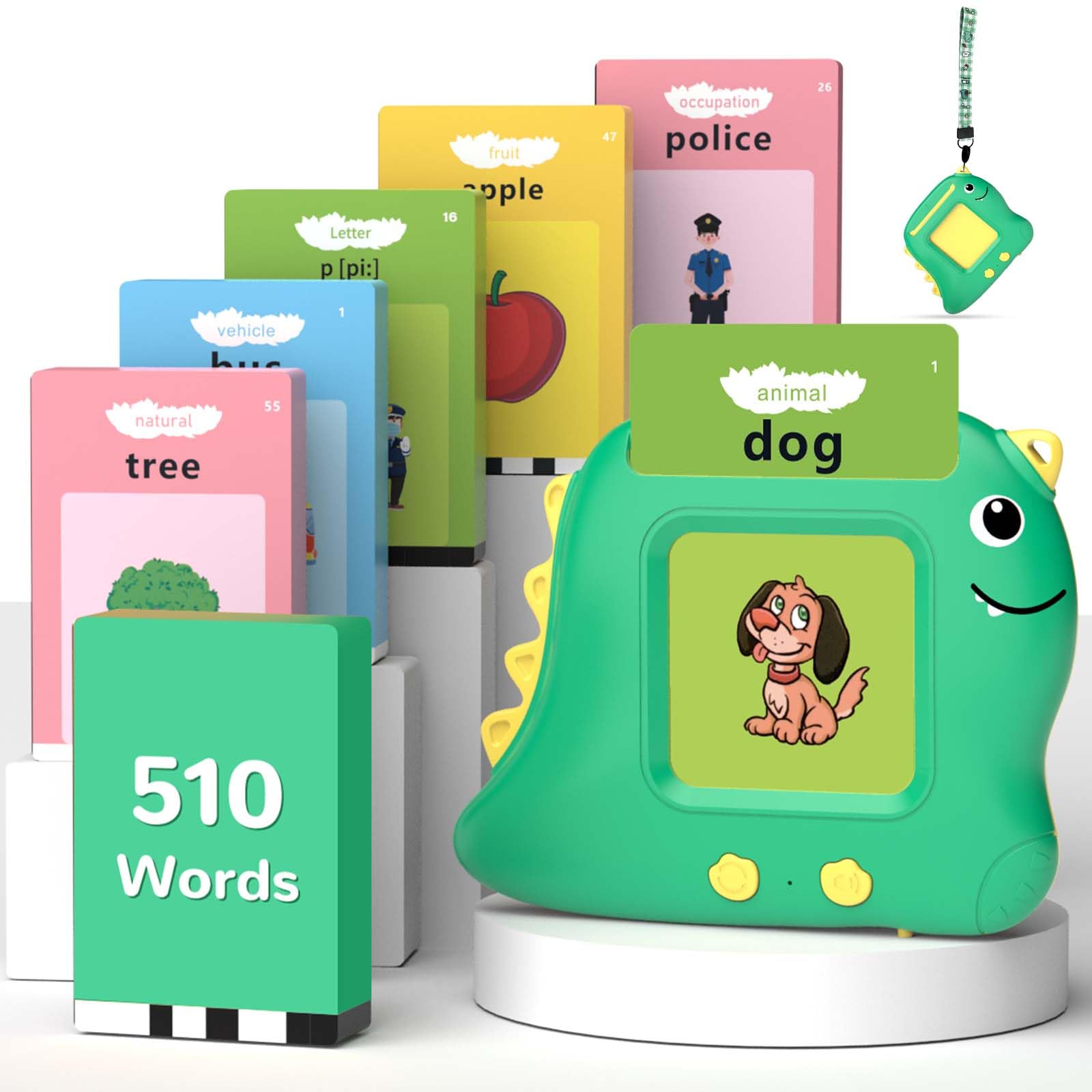
The Alotwan Talking Flash Cards set is the single most effective vocabulary-building tool in this lineup, packing 255 double-sided cards into a compact dinosaur-shaped reader. Each card is thick, laminated, and designed to survive the aggressive bending of a two-year-old’s exploratory hands — a critical upgrade over cheaper paper alternatives that tear within days.
The dual-sensor barcode recognition is smart enough to ensure the audio matches the card every time, eliminating the frustrating mismatch problem that plagues lesser flash card readers. With 31 themed categories covering everything from animals to everyday objects, this toy essentially functions as a portable speech therapy session that kids can self-administer once they learn the slot-in motion.
Real-world feedback from parents shows that children as young as 18 months can master the hand-eye coordination required to insert the cards independently, often sitting for extended periods of focused play. The included storage bag and wrist strap make it a travel-friendly option that works in the car or on a plane, effectively reducing screen time by offering an equally engaging alternative.
Why it’s great
- Double-sided cards provide 510 words, offering more variety than most flash card sets
- Thick, laminated card stock resists bending and tearing during toddler play
- Cute dinosaur design and realistic sound effects increase engagement and curiosity
Good to know
- Some batches were labeled incorrectly by Amazon; check the box for the correct language version
- A few parents noted the pronunciation could be slightly clearer for certain words
2. Learning Resources Hide & Seek Treehouse
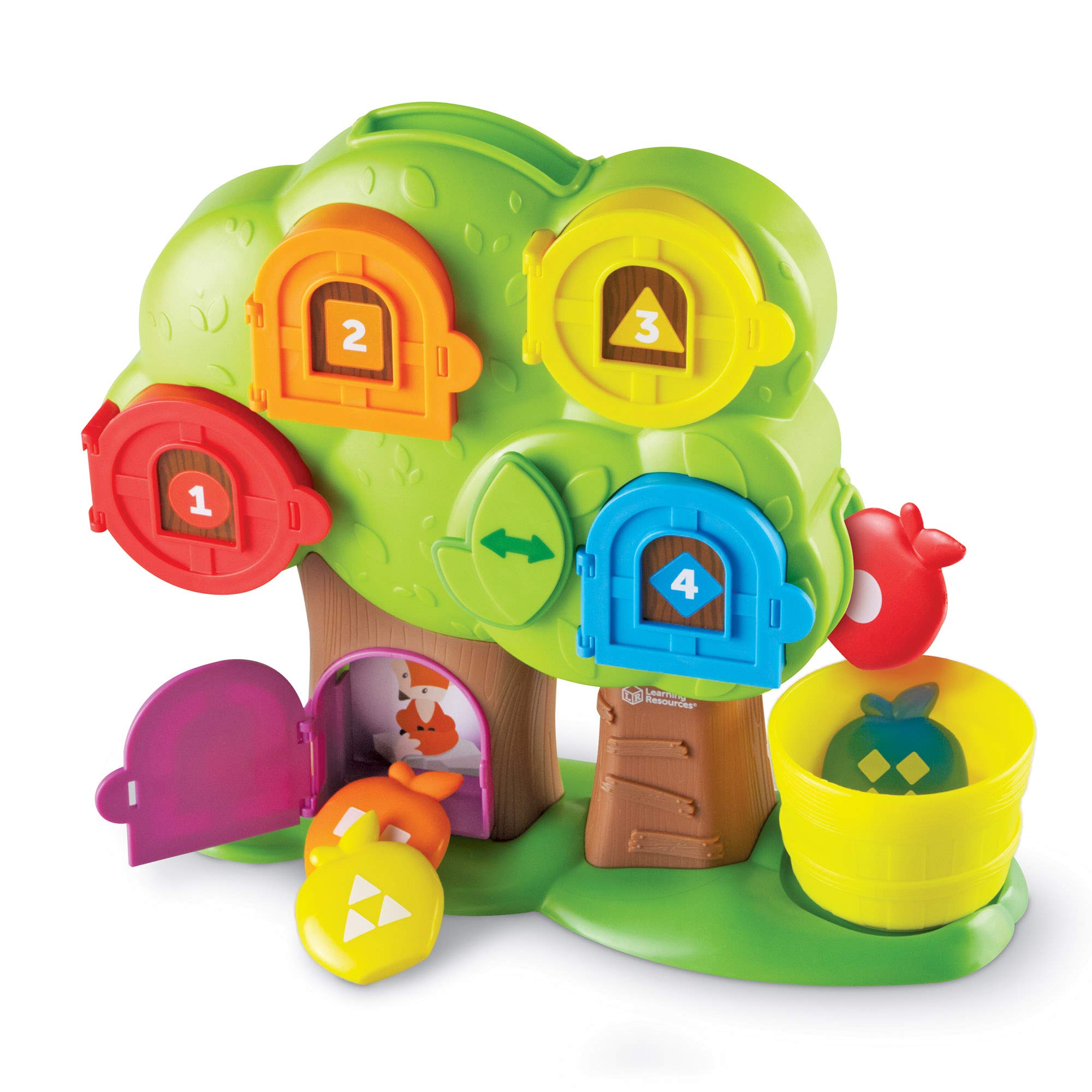
The Learning Resources Hide & Seek Treehouse is a beautifully engineered piece of toddler education that masquerades as pure fun. This big leafy tree structure comes with five multi-color apples, each printed with a distinct shape, and a set of swinging doors that hide adorable animal friends behind them — creating a multi-layered play experience that builds matching, sorting, and number recognition simultaneously.
The genius of this toy lies in its built-in chute mechanism: when a child drops an apple through the tree, it tumbles down and exits through one of two hidden holes, introducing an element of surprise that keeps toddlers coming back for more. This cause-and-effect feedback is exactly what a two-year-old’s developing brain craves, and it teaches spatial awareness far more effectively than a static puzzle board.
At just over two pounds, the treehouse has enough weight to stay put during aggressive play, and the doors are intentionally hinged to survive repeated opening and closing. Parents report that children as young as 18 months are captivated by the hide-and-seek aspect, and the toy remains relevant past age three as kids begin to identify numbers and shapes with increasing accuracy.
Why it’s great
- Multi-sensory play teaches color, shape, and number concepts in a single activity
- Chute mechanism creates a surprise element that drives repeat play and exploration
- Durable construction with sturdy hinges that withstand toddler handling
Good to know
- The swinging doors can pop off if the toy is dropped from a height; the red door is most commonly lost
- Assembly is required, and some parents found the initial setup slightly tricky
3. The Learning Journey Color Fun Fish Bowl

The Color Fun Fish Bowl from The Learning Journey is a deceptively simple toy that delivers a surprisingly deep educational experience. It consists of a bright plastic fishbowl and ten colorful fish, and it operates in two distinct modes: a “Let’s Learn Colors” teaching mode and a “Find It” quiz mode that challenges the child to select the correct fish. This dual-mode design allows the toy to function as both a teacher and an assessment tool.
The fish themselves are perfectly sized for a two-year-old’s hand — chunky enough to grip easily but small enough to require a deliberate pincer motion when inserting them into the slot. The auditory feedback is immediate and clear: a correct fish insertion triggers positive reinforcement, while an incorrect one prompts the child to try again, building both color recognition and listening comprehension without any screen involvement.
This toy has earned multiple industry awards, including The Toy Insider Top Holiday Toy and Dr. Toy’s Best Picks, which speaks to its thoughtful design and longevity. The fish all store neatly inside the bowl, eliminating the problem of lost pieces, and the two AA batteries are included so the gift is playable straight out of the box. It is one of the few toys on this list that a toddler can enjoy completely independently after a single demonstration.
Why it’s great
- Two distinct play modes teach and test color recognition without screen time
- Fish are chunky and easy for small hands to manipulate, building fine motor skills
- All pieces store inside the bowl, preventing loss and encouraging cleanup habits
Good to know
- The bowl is lightweight and may slide around on a hard floor during active play
- Some parents wished for more than ten colors to extend the learning curve further
4. Hieoby Wooden Tool Set

The Hieoby Wooden Tool Set is a heavy-duty 29-piece construction kit that turns any floor into a toddler workshop. Unlike cheap plastic tool sets that crack and splinter, this set is crafted from solid wood with smooth, burr-free surfaces and rounded edges that are safe for even the most enthusiastic banging. The pieces include a hammer, saw, wrench, screwdriver, gears, screws, nails, and nuts — everything a mini builder needs to imitate the adults in their life.
The 3-in-1 wooden toolbox is the standout feature: flip it upside down and it becomes a workbench, attach the handle and it transforms into a portable carrying case. This design encourages kids to engage in cleanup and organization, which is a rarely-discussed but highly valuable life skill for this age group. The tools are sized precisely for small hands, with a weight that feels substantial enough to be realistic but light enough to control.
Parents consistently report that this toy holds a toddler’s attention for 15 to 20 minutes per session, which is a significant duration for a two-year-old. The set also promotes open-ended construction play — children can assemble the pieces into flowers, windmills, or abstract sculptures, making it a STEM toy that exercises creativity as much as fine motor control. It is worth noting that the set is smaller than some photos suggest, so check the dimensions if you are expecting life-size tools.
Why it’s great
- Solid wood construction with smooth edges is safer and more durable than plastic alternatives
- 3-in-1 toolbox functions as a workbench, storage box, and carrying case for portability
- Open-ended design allows for multiple builds, encouraging creativity and problem-solving
Good to know
- The set is smaller than the product photos may suggest; tools are scaled for toddler hands
- Some of the smaller pieces like nuts and nails could be lost easily without the storage box
5. Mgtfbg Kid Tool Set

The Mgtfbg Kids Tool Set is nearly identical in concept to the Hieoby set, offering 29 pieces of solid wooden tools in a multifunctional box, but it distinguishes itself with a slightly different screw set and a focus on building specific models like helicopters and airplanes. The pieces include a swivel handle, gears, and a variety of assembly components that allow for a greater range of constructed figures, which is excellent for expanding a toddler’s spatial reasoning and problem-solving skills.
The wooden box follows the same clever design: flip it to create a workbench, add the handle to carry it around, and use it as a storage unit to encourage cleanup. The edges are rounded and the surfaces are sanded smooth, meeting the safety standards expected of a Montessori-aligned toy. Real parent reviews highlight that children as young as 19 months enjoy the set, though the wrench and screwdriver require more advanced fine motor control that may not fully click until closer to age three.
The two-year-old granddaughter of one reviewer “loves working with it” and plays with it during every visit, which is strong evidence of the toy’s holding power. The main difference from the Hieoby set is that the Mgtfbg tools are slightly more realistic in their screw-and-nut mechanism, which some toddlers find more challenging but also more rewarding once mastered.
Why it’s great
- All wooden pieces have smooth rounded edges, safe for toddlers who still mouth objects
- Encourages building specific models (helicopters, cars) which adds a goal-oriented element to play
- Multifunctional box serves as workbench, storage, and carry case for organization
Good to know
- The tool set is compact and smaller than some buyers expected based on product images
- Wrench and screwdriver require more advanced fine motor skills; may be frustrating for younger two-year-olds
FAQ
Are wooden tool sets safe for a two-year-old who still mouths objects?
How many words should a two-year-old learn from a flash card set?
What does “open-ended play” mean for a two-year-old’s development?
Why do some toddlers lose interest in flash card readers after a few days?
Final Thoughts: The Verdict
For most users, the 2 year old birthday gifts winner is the Alotwan Talking Flash Cards because it offers the highest ratio of educational content to play effort — toddlers can self-administer the learning once they master the slot-in motion, and the 510-word vocabulary bank provides months of expanding challenge. If you want a toy that builds fine motor skills through physical construction, grab the Hieoby Wooden Tool Set. And for a quiet, screen-free color-recognition activity that toddlers can enjoy independently, nothing beats the Learning Journey Color Fun Fish Bowl.

Mo Maruf
I created WellFizz to bridge the gap between vague wellness advice and actionable solutions. My mission is simple: to decode the research and give you practical tools you can actually use.
Beyond the data, I am a passionate traveler. I believe that stepping away from the screen to explore new environments is essential for mental clarity and physical vitality.