Our readers keep the lights on and my smoothie glass nicely filled. As an Amazon Associate, I earn from qualifying purchases.
Finding a board game that works for exactly two players—and still delivers the tension, strategy, and replay value of a full table game—is surprisingly difficult. Many so-called two-player games are just stripped-down versions of larger games, offering fewer choices and shorter sessions that end before the fun really starts.
I’m Mohammad Maruf — the founder and writer behind WellFizz. I’ve spent hundreds of hours researching the mechanics, component quality, and true replayability of dozens of dueling and cooperative games to find the pairs that actually deliver a complete experience for two.
This guide breaks down five exceptional titles that were designed specifically for head-to-head play. Whether you prefer competitive tile-laying or cooperative cockpit coordination, these picks represent the very best 2-player board games available right now for couples, friends, and family game nights.
How To Choose The Best 2-Player Board Games
Picking the right two-player board game starts with deciding what kind of experience you want. Are you looking for a competitive duel where every move directly attacks your opponent’s strategy, or a cooperative challenge where you and your partner must work in silence or through coded signals to win? The best titles in this category are built from the ground up for exactly two players—not downgraded from a larger count—and they reward repeated plays with hidden depth.
Competitive vs. Cooperative Format
The single biggest decision point is whether you want a game where you play against each other or one where you play together against the game itself. Competitive duels like Azul Duel and Splendor Duel use direct conflict mechanics—stealing resources, blocking paths, and racing to victory conditions. Cooperative games like Sky Team force you to communicate without words, placing dice on a shared dashboard to land a plane. Both formats are excellent, but they serve very different moods and player personalities.
Playing Time and Replayability
Effective two-player games typically run between 20 and 45 minutes per session. This sweet spot keeps the tension high without dragging. Replayability depends on variable setups—different starting boards, randomized card or tile pools, and multiple win conditions. Games that offer a campaign mode or multiple scenarios, like Sky Team’s 20 airports, dramatically extend their lifespan. Avoid titles where every game feels identical after three plays.
Component Quality and Portability
Good components improve both the tactile experience and the game’s longevity. Look for thick card stock, sturdy tokens, and boards that lie flat. For frequent travelers, box size matters—Splendor Duel and Azul Duel have compact boxes that slip into a backpack, while larger games like The Lord of the Rings: Duel for Middle-Earth require more shelf space. The weight and finish of wooden pieces or acrylic tiles also affect how satisfying each turn feels.
Quick Comparison
On smaller screens, swipe sideways to see the full table.
| Model | Category | Best For | Key Spec | Amazon |
|---|---|---|---|---|
| Sky Team | Cooperative | Intense teamwork and silent coordination | 20 min playtime, 20 scenarios | Amazon |
| Splendor Duel | Competitive | Gem-collecting battles with deep strategy | 30 min playtime, 67 jewel cards | Amazon |
| Azul Duel | Competitive | Tile-placement with stunning mosaic visuals | 30–45 min playtime, 75 acrylic tiles | Amazon |
| The Lord of the Rings: Duel for Middle-Earth | Competitive | Thematic area control and ring-quest tension | 30 min playtime, 69 cards | Amazon |
| BOOP | Competitive | Lightweight abstract strategy with cat theme | 20 min playtime, 32 wooden pieces | Amazon |
In‑Depth Reviews
1. Scorpion Masqué Sky Team

Sky Team redefines two-player cooperative gaming by centering on silent dice placement. You and your partner must land a plane by positioning dice on a shared cockpit dashboard without speaking during the action phase. The core mechanic—placing dice that represent throttles, flaps, and landing gear—creates a tense puzzle where miscommunication is literally impossible because talking isn’t allowed. Each of the 20 airport scenarios introduces unique challenges like ice on the runway or a fuel leak, rewarding repeated plays with escalating complexity.
With an estimated playing time of just 20 minutes, Sky Team fits neatly into a weeknight routine. The campaign structure and optional modules, including a new intern who adds chaos, ensure that the game stays fresh after dozens of landings. The control panel, dice, and airplane axis disc are all high-quality and thematically immersive, making you feel genuinely responsible for a safe descent.
The sealed cockpit design also solves one of cooperative gaming’s biggest pitfalls: the alpha player problem. Because you place dice silently, neither partner can dominate the decision-making process. This forces true collaboration and trust, making every successful landing feel earned by both players equally.
Why it’s great
- Silent dice placement eliminates quarterbacking and forces real teamwork
- 20 unique airport scenarios offer deep replayability without feeling repetitive
- Quick 20-minute sessions are perfect for busy schedules
Good to know
- Communication restrictions may frustrate players who prefer open discussion
- Learning curve increases significantly with advanced airport scenarios
2. Splendor Duel
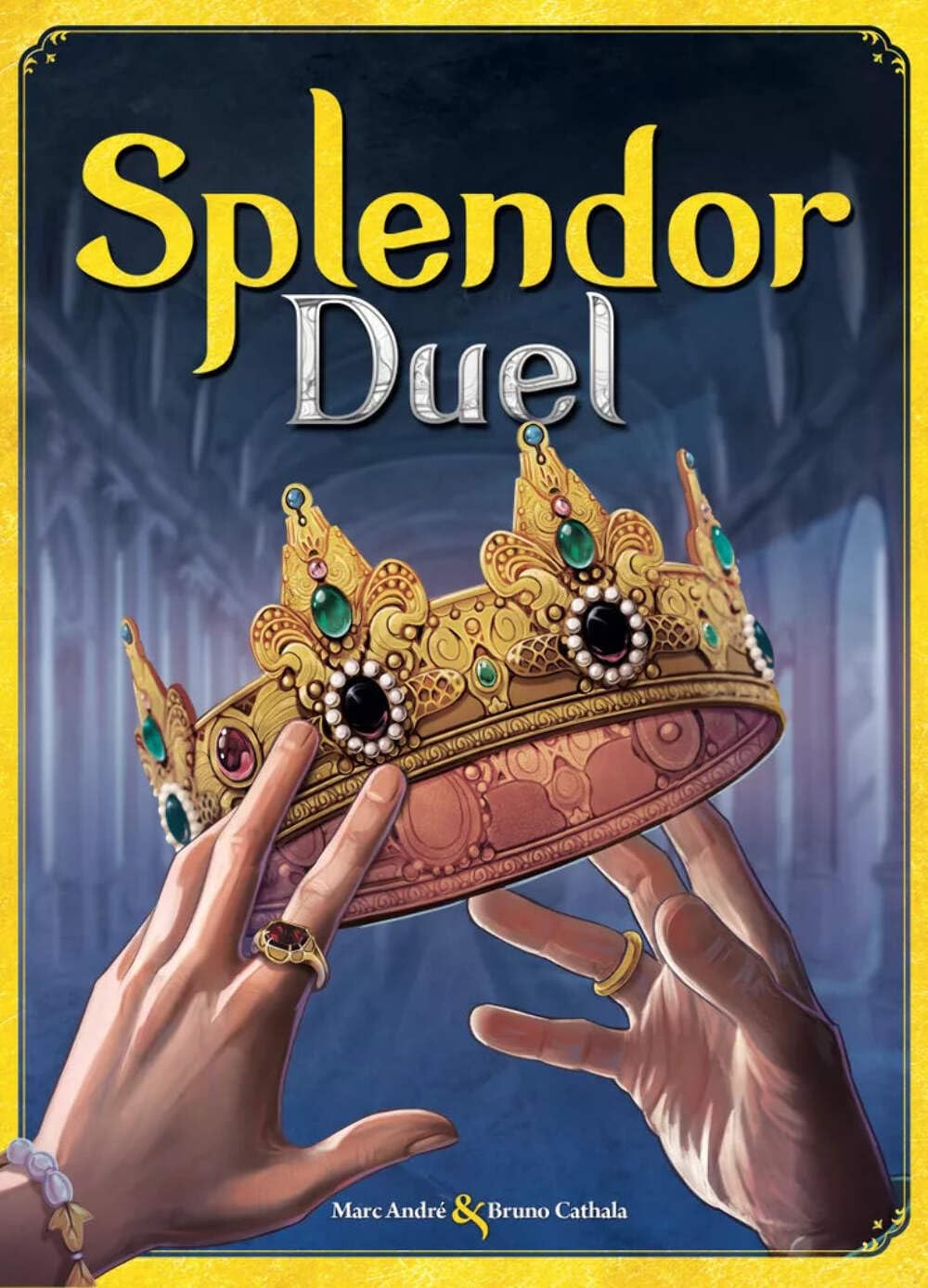
Splendor Duel takes the beloved gem-drafting engine of its predecessor and rebuilds it exclusively for two players. The shared board features a central grid of gem tokens that you and your opponent draft from, but with a critical twist: the tokens you claim are permanently removed, shrinking the available pool and intensifying competition. New mechanics like privilege scrolls and special powers add layers of tactical depth that the original four-player version simply can’t match in a head-to-head format.
The 67 jewel cards and 25 plastic gem tokens are tactile and vibrant, with thick card stock that feels durable after repeated shuffles. A typical game runs about 30 minutes, but the asymmetric starting setups and multiple victory conditions (prestige points, royal tiles, or mastery of specific gem types) mean no two sessions play out identically. The compact box, measuring just a few inches thick, makes it an excellent travel companion.
What elevates Splendor Duel is the way it forces you to adapt on the fly. Because the token grid is finite and the development cards are randomized, you must constantly pivot between rushing a prestige-point strategy and blocking your opponent’s combo paths. The game rewards both short-term tactical grabs and long-term engine building.
Why it’s great
- Dynamic gem drafting creates intense, head-to-head resource competition
- Multiple victory conditions and special powers increase strategic variety
- Compact, high-quality components are perfect for travel
Good to know
- Privilege scrolls and new rules require a read-through for seasoned Splendor fans
- Some players may miss the original’s larger player count flexibility
3. Asmodee Azul Duel

Azul Duel adapts the celebrated tile-laying system into a streamlined two-player-only experience. Instead of the multicolored mosaic boards of earlier versions, this duel uses artwork inspired by traditional Chinese shadow theatre, giving the game a distinctive visual identity. The 75 acrylic tiles are thick and satisfying to handle, and the five factory displays and dome-plates create a tightly constrained drafting space where every tile choice has ripple effects.
Playing time ranges from 30 to 45 minutes, which gives the game enough room to build meaningful scoring combos without becoming a slog. The variable setup ensures that the pattern you aim for changes each time, because the order of factory tiles and the available scoring opportunities are randomized. The two-player boards are clearly laid out, though some players note that the cardboard components feel slightly less premium than the acrylic tiles.
The core tension in Azul Duel lies in balancing immediate tile placement against future scoring potential. Taking tiles that complete a row today might hand your opponent the perfect factory for their layout tomorrow. This push-and-pull keeps both players engaged every single turn, and the game’s visual appeal at the table is undeniable.
Why it’s great
- Stunning tile artwork inspired by shadow theatre adds unique table presence
- Streamlined mechanics maintain the strategic depth of classic Azul for two
- Variable factory setups create high replayability
Good to know
- Player boards may feel flimsy compared to the premium acrylic tiles
- Large box size makes it less portable than competitive two-player titles
4. The Lord of the Rings: Duel for Middle-Earth

Built on the acclaimed 7 Wonders Duel engine, The Lord of the Rings: Duel for Middle-Earth layers asymmetric goals and area control onto a card-drafting core. One player controls the Fellowship aiming to destroy the One Ring, while the other commands Sauron’s forces seeking to conquer Middle-earth. The game plays out over three chapters, using a shared central structure of cards and High Places that both players pull from, creating a tug-of-war dynamic.
With 69 cards, 44 pawns, and 30 coins packed into the box, the component quality is strong across the board. The dual-sided player boards and transparent elements for tracking progress are cleverly designed. A typical game runs about 30 minutes, but the three win conditions—quest completion, alliance with six Peoples, or military dominance—ensure that every session offers a distinct path to victory. The asymmetrical leader cards, including characters like Aragorn and the Witch-king, further differentiate each playthrough.
What makes this game stand out is how it weaves theme into mechanics. The Nazgûl track and the Hobbit track both tie directly to the narrative, making resource management feel like a story beat rather than an abstract economic calculation. The balance between the two sides is finely tuned, so neither player ever feels overpowered.
Why it’s great
- Three distinct win conditions create varied, replayable sessions
- Asymmetric sides offer deep thematic immersion and strategic variety
- Quick 30-minute games with high tactical density
Good to know
- Familiarity with 7 Wonders Duel helps, but newcomers can learn
- Box is larger than many two-player-specific titles
5. BOOP by Smirk and Dagger

BOOP delivers a charming twist on the classic 3-in-a-row formula. Players place wooden kittens on a soft quilted board, but each placement pushes adjacent pieces one space—hence the name “boop.” This pushing mechanic turns a straightforward alignment game into a chaotic, evolving puzzle where your carefully planned three-in-a-row can be disrupted by a single kitten placement that shifts the entire board. The goal is to line up three kittens to graduate them into cats, then line up three cats for victory.
The 32 beautifully crafted wooden kitten and cat pieces are irresistible to touch, and the fabric board adds a tactile warmth that most cardboard tiles lack. A full game lasts under 20 minutes, making it ideal for quick warm-ups or rounds between heavier games. The rules can be learned in a single playthrough, yet the boop mechanic creates enough unpredictability to keep experienced players engaged. Even a four-year-old can grasp the basics, although the recommended age is 10-plus.
What separates BOOP from most entry-level abstract games is the physicality of the pushing action. Every move has a cascading effect—you’re not just placing a piece, you’re repositioning half the board. This creates a dynamic that feels almost like a living game, where positions shift in unexpected ways.
Why it’s great
- Unique boop mechanic creates unpredictable, dynamic board states every turn
- High-quality wooden pieces and soft board offer a tactile experience
- Extremely quick to learn with charming cat theme appealing to all ages
Good to know
- Pushing mechanic can frustrate players who prefer pure alignment strategy
- Limited depth compared to dedicated strategy duels
FAQ
What is the best cooperative two-player board game?
Are competitive dueling games better for two players than cooperative ones?
How long should a two-player board game session last?
Are any of these games suitable for beginners?
Final Thoughts: The Verdict
For most users, the 2-player board games winner is the Sky Team because it combines cooperative tension, quick sessions, and near-infinite replayability through its 20-scenario campaign and silent dice mechanic. If you want a competitive gem-collecting duel with deep strategy, grab the Splendor Duel. And for a light, tactile abstract game that plays in 20 minutes with undeniable charm, nothing beats the BOOP.

Mo Maruf
I created WellFizz to bridge the gap between vague wellness advice and actionable solutions. My mission is simple: to decode the research and give you practical tools you can actually use.
Beyond the data, I am a passionate traveler. I believe that stepping away from the screen to explore new environments is essential for mental clarity and physical vitality.