Our readers keep the lights on and my smoothie glass nicely filled. As an Amazon Associate, I earn from qualifying purchases.
Finding a router that truly masters the 2.4 GHz band is a specific challenge. While dual-band and tri-band routers dominate the market, the 2.4 GHz frequency remains the backbone for smart home devices, long-range coverage, and penetrating walls in older homes. A router that prioritizes this band isn’t just about raw speed; it’s about reliable connectivity for everything from security cameras to smart bulbs.
I’m Mohammad Maruf — the founder and writer behind WellFizz. I’ve spent years analyzing router specifications, customer feedback, and real-world performance data to separate marketing claims from actual networking value.
My research has identified the top performers that deliver both range and stability, culminating in this definitive guide to the best 2.4 ghz wifi router for your specific networking needs.
How To Choose The Best 2.4 GHz WiFi Router
Selecting the right router for the 2.4 GHz band means prioritizing range and penetration over pure speed. The metrics that matter most are antenna design, wireless protocol (802.11n vs. 802.11ax), and MIMO (Multiple-Input Multiple-Output) stream count. A 2×2 MIMO configuration on 2.4 GHz is the minimum for decent performance; higher-end models may offer 4×4 for better multi-device handling.
Assessing Router Hardware and CPU Power
The router’s processor and memory dictate how many devices it can handle smoothly, especially on a busy 2.4 GHz network. A single-core CPU with 32 MB of RAM is entry-level, suitable for a handful of IoT devices. For a house with multiple smart home hubs, cameras, and general browsing, look for dual-core or triple-core processors with at least 128 MB of RAM to prevent bottlenecks and ensure stable data flow.
Understanding Wireless Protocol: WiFi 4 vs. WiFi 6
While most budget-friendly routers use the older 802.11n (WiFi 4) standard on the 2.4 GHz band, premium models now support 802.11ax (WiFi 6). WiFi 6 on 2.4 GHz offers dramatic improvements in handling many simultaneous connections through OFDMA and MU-MIMO, reducing latency for each device. If you have many 2.4 GHz devices, a WiFi 6 router is a significant upgrade.
Evaluating Software and Security Features
The router’s operating system is just as important as its hardware. A robust firmware, like RouterOS, OpenWrt, or a refined proprietary platform, offers advanced features such as VPN support, VLAN, bandwidth shaping, and guest networks. For 2.4 GHz networks that often host security cameras, having reliable firmware with regular security updates is crucial for protecting your home network.
Quick Comparison
On smaller screens, swipe sideways to see the full table.
| Model | Category | Best For | Key Spec | Amazon |
|---|---|---|---|---|
| GL.iNet GL-MT6000 | Gaming/Premium | High-performance VPN & Gaming | 6 Gbps (Dual-Band) | Amazon |
| NETGEAR R6700AX | Premium/Value | Everyday streaming & gaming | 1.8 Gbps (Dual-Band) | Amazon |
| TP-Link Archer A7 | Mid-Range | Best overall value & range | 1.75 Gbps (Dual-Band) | Amazon |
| NETGEAR RAX30 | Mid-Range | Renewed premium WiFi 6 | 2.4 Gbps (Dual-Band) | Amazon |
| Cudy WR1300 | Budget-Friendly | OpenWrt-like firmware | 1.2 Gbps (Dual-Band) | Amazon |
| TP-Link Archer AX10 | Entry-Level WiFi 6 | Budget WiFi 6 upgrade | 1.5 Gbps (Dual-Band) | Amazon |
| MikroTik RB941-2nD | Pro/Enthusiast | Enterprise-grade software | 300 Mbps (Single-Band) | Amazon |
In‑Depth Reviews
1. GL.iNet GL-MT6000 (Flint 2)

The GL.iNet Flint 2 sits at the top of the premium tier for a reason. It’s equipped with a powerful MediaTek Filogic 830 chipset and dual 2.5G Ethernet ports, making it one of the most future-proof routers on the market. The 2.4 GHz band performance is exceptional, easily covering a large home with strong signal penetration.
This router runs a fully customizable OpenWrt-based firmware, giving networking enthusiasts complete control over VLANs, QoS, and advanced routing. It also supports blazing-fast WireGuard VPN speeds up to 900 Mbps, making it an excellent choice for securing your entire network without sacrificing bandwidth.
With 1 GB of DDR4 RAM and 8 GB of eMMC storage, the Flint 2 can handle over a hundred devices without breaking a sweat. Its robust cooling design ensures stable performance during intense gaming sessions or 4K streaming. It’s a heavy-duty workhorse for users who demand the absolute best.
Why it’s great
- Exceptional WiFi 6 range and throughput on 2.4 GHz.
- Two 2.5G Ethernet ports for multi-gigabit wired connections.
- Powerful OpenWrt firmware with advanced VPN capabilities.
Good to know
- Requires a separate modem; not a combo unit.
- Setup and configuration may be complex for beginners.
2. NETGEAR WiFi 6 Router (R6700AX)
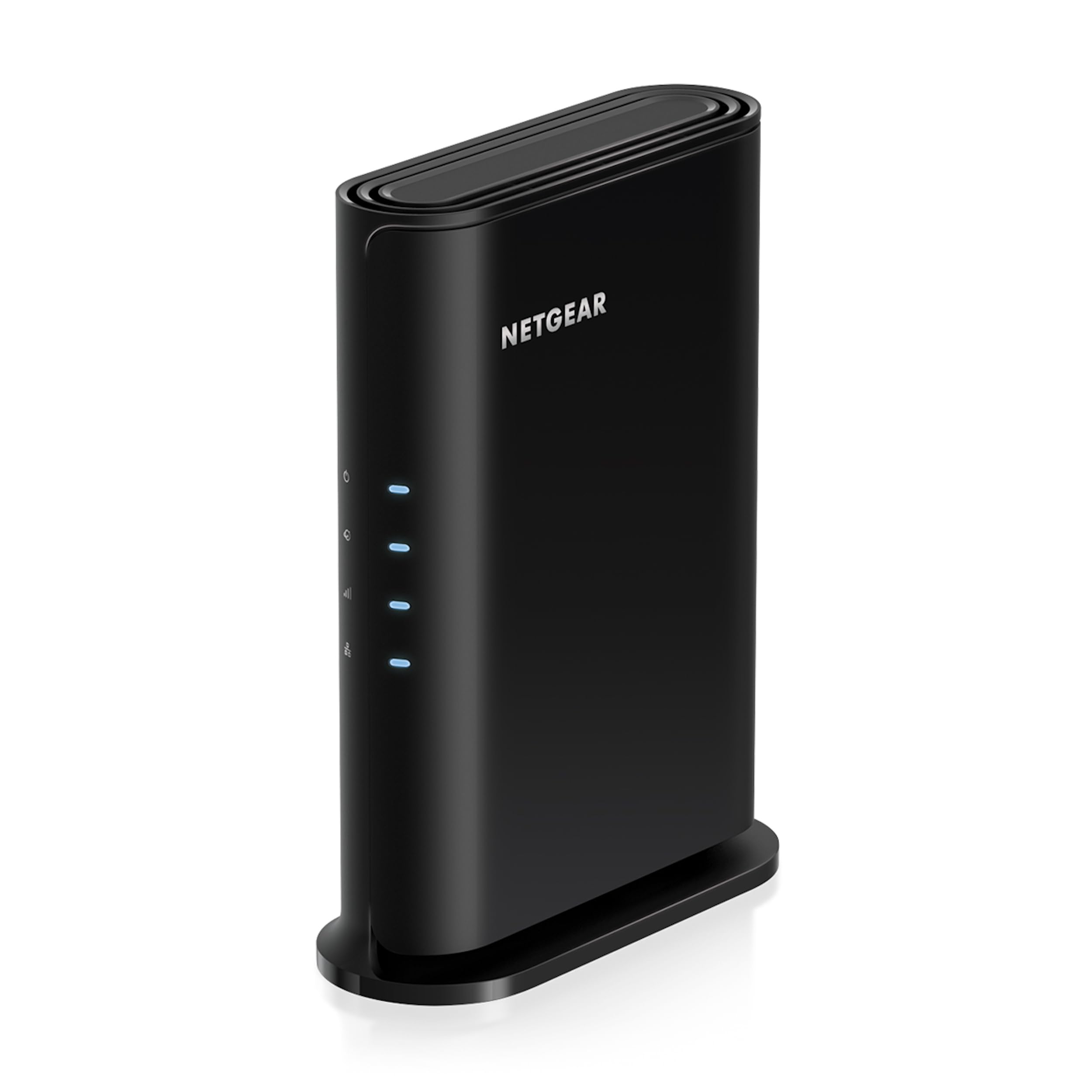
The NETGEAR R6700AX is a fantastic entry into the premium WiFi 6 space for users who need strong 2.4 GHz performance without the high price tag. It offers AX1800 speeds, which means a solid 600 Mbps on the 2.4 GHz band and up to 1.2 Gbps on 5 GHz, making it perfect for mixed-device households.
Its coverage is rated for up to 1,500 square feet, and in practice, it handles multi-story homes and standard construction walls without issue. The Nighthawk app provides a simple, guided setup that most users can complete in under 10 minutes, and features like WPA3 security are built-in for peace of mind.
This router supports up to 20 devices, making it ideal for small to medium homes with a mix of smart home gadgets, streaming sticks, and gaming consoles. It’s a reliable, drop-in replacement for an ISP rental that delivers immediate speed and range improvements.
Why it’s great
- Excellent WiFi 6 value with strong 2.4 GHz range.
- Very easy to set up with the Nighthawk app.
- Compact and quiet design.
Good to know
- No multi-gig ports; only 1 Gbps Ethernet.
- Some users report internal antennas can be weak in very large homes.
3. TP-Link Archer AC1750 (A7)

The TP-Link Archer A7 remains a benchmark in the mid-range category for its balance of price, performance, and ease of use. Its dual-band design delivers up to 450 Mbps on 2.4 GHz and 1300 Mbps on 5 GHz, which is more than enough for a family of heavy streamers and gamers. It consistently covers up to 2,500 square feet with a strong, stable signal.
Setup is a breeze using the Tether app, and the router includes robust parental controls and QoS features. The Qualcomm CPU keeps everything running smoothly, even when multiple 4K streams are active. Users have reported rock-solid reliability for years on end.
It also works with Amazon Alexa, allowing for voice control of your network. For a mid-range router, the Archer A7 offers a surprising level of customization for the price, making it a safe and highly recommended pick for almost any household.
Why it’s great
- Exceptional range and reliability for the price point.
- Simple and intuitive Tether app for management.
- Proven track record of longevity (5+ years in some cases).
Good to know
- Only WiFi 5 (802.11ac); no WiFi 6 features.
- Limited to 1 Gbps Ethernet ports.
4. NETGEAR Nighthawk WiFi 6 Router (RAX30)

The NETGEAR Nighthawk RAX30 is a compact WiFi 6 router designed for smaller homes where space is at a premium but performance cannot be compromised. It delivers AX2400 speeds, ensuring the 2.4 GHz band provides solid throughput for IoT devices and general browsing, while the 5 GHz band handles high-bandwidth tasks.
Covering up to 2,000 square feet, the RAX30 uses beamforming technology to focus the signal toward your devices. The renewed model often arrives in like-new condition, making it an affordable way to access advanced WiFi 6 features like OFDMA and MU-MIMO for smoother multi-device performance.
It’s a simple, reliable unit that works well with any ISP modem. The Nighthawk app makes management easy, and its smaller footprint is a welcome change for users with crowded entertainment centers.
Why it’s great
- Compact form factor saves space while delivering strong WiFi 6.
- Renewed option provides great value.
- Easy setup and stable connection.
Good to know
- Limited to 1 Gbps Ethernet ports.
- Renewed units may come in a generic box without documentation.
5. Cudy AC1200 Gigabit WiFi Router (WR1300)

The Cudy WR1300 is a budget-friendly dual-band router that punches above its weight class in the software department. It runs an OpenWrt-based firmware that provides a surprisingly feature-rich web GUI, giving users granular control over their network without the premium price tag. The 2.4 GHz band offers solid coverage for a typical home.
It features four full Gigabit Ethernet ports and four external antennas for better signal focus. Users report strong 2.4 GHz range, often exceeding 200 feet in open areas, and good penetration through cinder block walls. It’s an excellent option for those who want to experiment with advanced routing features like VLANs and segmented networks.
While it runs hot, its performance is generally stable for home use, handling multiple streams and smart home devices without major issues. For the price, it offers a level of customization usually only found in routers costing three times as much.
Why it’s great
- Full Gigabit Ethernet ports on a budget-friendly device.
- OpenWrt-based firmware offers extensive customization.
- Good signal range and wall penetration.
Good to know
- Runs noticeably hot during operation.
- Default settings may not deliver the highest speeds out of the box.
6. TP-Link WiFi 6 AX1500 (Archer AX10)

The TP-Link Archer AX10 is the most affordable way to get WiFi 6 technology into your home. It features a 1.5 GHz tri-core processor, which is surprisingly powerful for an entry-level unit, ensuring smooth communications even with multiple devices connected. The 2.4 GHz band runs at 300 Mbps, which is adequate for basic smart home tasks.
It’s a dual-band router (300 Mbps on 2.4 GHz + 1201 Mbps on 5 GHz) with beamforming technology to focus signals toward your devices. The renewed model is a fantastic value, often performing like new after a simple firmware update. Users have seen massive speed increases upgrading from older WiFi 4 routers.
Setup is straightforward via the Tether app, and it’s fully backward compatible with all previous WiFi standards. For a budget-conscious buyer looking to future-proof their network, the AX10 is a compelling starting point.
Why it’s great
- Incredibly affordable entry point into WiFi 6 technology.
- Tri-core processor provides smooth handling of multiple devices.
- Renewed models offer excellent value.
Good to know
- Limited to 300 Mbps on the 2.4 GHz band (802.11n).
- Renewed units may need a factory reset and firmware update first.
7. MikroTik RB941-2nD (hAP lite)

The MikroTik hAP lite is not for the average consumer; it’s a budget-friendly powerhouse for networking professionals and enthusiasts. This small device runs RouterOS, a full-fledged enterprise-level operating system that supports BGP, OSPF, RIP, advanced firewall rules, and bandwidth shaping. It is a single-band 2.4 GHz router with a 650 MHz CPU and 32 MB of RAM.
Its strength lies entirely in its software. You can set it up as a home access point, a VPN gateway, or a CAPsMAN managed node. The 2.4 GHz radio is intentionally weaker than consumer routers, which some users find beneficial for reducing radiation or creating a constrained environment for specific IoT devices.
It’s powered via USB, making it incredibly portable. While the learning curve is steep, the payoff is immense for anyone wanting to learn networking or needing a highly configurable, low-cost router for testing and labs.
Why it’s great
- Full RouterOS license (Level 4) with enterprise features.
- USB-powered for easy portability and placement.
- Excellent for learning advanced networking concepts.
Good to know
- Not user-friendly; requires networking knowledge to configure.
- Slow web interface; WiFi speed is limited to under 200 Mbps.
FAQ
Why is my 2.4 GHz band slower than 5 GHz?
What is the best 2.4 GHz channel to use?
Final Thoughts: The Verdict
For most users, the best 2.4 ghz wifi router winner is the GL.iNet GL-MT6000 because it combines top-tier hardware with unmatched software customization through OpenWrt. If you want a simpler, more affordable solution with excellent range, grab the TP-Link Archer A7. And for a pro-level learning tool that runs enterprise-grade software on a budget, nothing beats the MikroTik hAP lite.

Mo Maruf
I created WellFizz to bridge the gap between vague wellness advice and actionable solutions. My mission is simple: to decode the research and give you practical tools you can actually use.
Beyond the data, I am a passionate traveler. I believe that stepping away from the screen to explore new environments is essential for mental clarity and physical vitality.