Our readers keep the lights on and my smoothie glass nicely filled. As an Amazon Associate, I earn from qualifying purchases.
Specs are compiled from manufacturer listings and verified buyer reviews and can change over time — please confirm the key details on the product page before buying.
You need a 1TB external hard drive, but the real question is not storage — it is whether you can tolerate waiting. A cheap HDD (hard disk drive, a mechanical drive with spinning platters) moves files at a crawl, while a good SSD (solid-state drive, using flash memory with no moving parts) shaves entire minutes off your daily backups. The price gap is there for a reason, and this guide cuts through the noise.
I’m Mohammad Maruf — the founder and writer behind WellFizz. This guide is built by comparing the manufacturers’ published specifications and the patterns across verified customer reviews, so you get each pick’s real strengths and trade-offs instead of marketing spin.
Every drive here hits 1TB, but they split sharply on speed (HDD vs SSD), durability (drop-proof vs desk-bound), and intended use (backup vs active editing). Here is how to pick the right 1tb external hard drive for your workflow without overpaying for performance you will not use.
Our Picks at a Glance


How To Choose The Best 1TB External Hard Drive
Choosing a 1TB external drive depends on one fork in the road: do you need raw speed for active work, or is this a deep archive you plug in once a month? The technology inside — a solid-state drive (SSD) vs a mechanical hard disk drive (HDD) — determines everything else.
SSD vs HDD: Speed vs Value
A solid-state drive (SSD) uses flash memory with no moving parts, so it reads and writes files at speeds above 1,000 MB/s — that is opening a 20 GB video file in seconds. SSDs cost more per terabyte, but if you edit video, run games, or move large files daily, you feel the difference in real time. HDDs still make sense for photo archives, backups you rarely access, or budget builds where every dollar counts.
Build and Durability: Where You Take It Matters
An SSD has no spinning parts and can handle a drop from a desk without flinching — the best rated ones survive falls up to 6 feet. A spinning HDD is far more fragile; even a modest 18-inch tumble can corrupt the read head. Many rugged HDDs add a thick rubber bumper and an IP68 rating (meaning they are sealed against dust and submersion in water), but the internal platter is still vulnerable to the sudden stop at the end of a fall. If you toss a drive into a backpack every morning, an SSD is the safer long-term bet.
Quick Comparison
| Model | Best For | Technology | Max Transfer Rate | Drop Protection | Amazon |
|---|---|---|---|---|---|
| Samsung T7 Portable SSD★ Best Overall | Active editing & gaming | SSD (NVMe) | 1,050 MB/s | 6 feet | Amazon |
| HWAYO 2.5″ 1TBBest Value HDD | Budget bulk storage | Mechanical HDD | 6,000 Mb/s (~750 MB/s)* | None | Amazon |
| Maxone Ultra SlimSlim Aluminum Design | Slim desk backup | Mechanical HDD | 5,000 Mb/s (~625 MB/s)* | None | Amazon |
| ADATA HD710 Pro | Rugged field storage | Mechanical HDD | 5,000 Mb/s (~625 MB/s)* | Military-grade (MIL-STD-810G) | Amazon |
| Toshiba Canvio Basics | Simple plug-and-play PC backup | Mechanical HDD | 5 Gb/s (~625 MB/s)* | None | Amazon |
| Seagate Portable Drive | Console & general backup | Mechanical HDD | — | None | Amazon |
| WD Elements Portable | Long-term archival | Mechanical HDD | 1 Gb/s (~125 MB/s)* | None | Amazon |
| SanDisk Extreme SSD | Rugged on-the-go speed | SSD (NVMe) | 1,050 MB/s | 3 meters | Amazon |
| Amazon Basics External SSD | Fast budget SSD | SSD (NVMe) | 2,000 MB/s | IP65 dust & water resistance | Amazon |
In‑Depth Reviews
1. Samsung T7 Portable SSD
Our pick — over 4.5★ from 21,000+ verified ratings; the strongest balance of quality and price.
The SSD that feels as fast as an internal drive but fits inside a pocket.
The T7 uses PCIe NVMe technology (a high-speed data protocol designed for flash storage) to deliver read and write speeds up to 1,050 MB/s and 1,000 MB/s respectively For a music producer saving Logic Pro projects on an M1 MacBook Pro, the experience is near-internal, with just a 0.5-second lag on saves. That is a real improvement over the Maxone HDD, which writes at 5,000 megabits per second while the Samsung T7 writes up to 1,000 MB/s.
The aluminum unibody shell is shock-resistant against falls up to 6 feet, and the drive measures smaller than a credit card. It includes both USB-C and USB-A cables from the start, works with PC, Mac, gaming consoles, and even iPhones for 4K 60fps video recording. What everyone raves about is the consistent speed — 598 owners single that out — followed closely by reliability at 594 mentions. The one trade-off: it gets warm to the touch during extended writes, though never hot, and the price sits above every HDD in this lineup. That is the premium you pay for not waiting.
fast USB-C
- Blazing read/write speeds (1,050/1,000 MB/s) for editing and gaming
- Credit-card size and 6-foot drop-rated aluminum shell
- Two cables in the box (USB-C and USB-A); works with PC, Mac, consoles, and iPhone
pricier per GB
- Runs warm during heavy sustained transfers
- Costs significantly more than a 1TB HDD
- The optional AES software is basic
speed priority: you move large files daily — video editors, photographers, musicians, and anyone who hates waiting for progress bars.
budget pick: your drive sits on a shelf as a monthly backup; a quiet HDD will save you money with no practical speed penalty.
2. HWAYO 2.5″ 1TB Ultra Slim Portable External Hard Drive
A slim, no-nonsense drive that clears out cloud clutter without cleaning out your wallet.
The HWAYO is more portable than its price suggests — the 2.5-inch plastic enclosure is genuinely slim and light enough for a messy desk or a laptop bag. It advertises data transfer rates up to 6,000 megabits per second (roughly 750 MB/s in ideal conditions), while the Maxone’s ceiling is 5,000 Mb/s. In real use, owners find the speed good for moving thousands of photos and downloaded video files, with no software setup required — it is plug-and-play on PC, Mac, Chromebook, and Xbox.
There is one quirk that surfaces in the reviews: a random disconnection every few days for some users. It is not widespread enough to call a pattern, but note if the drive needs to stay constantly connected. The plastic build also lacks the drop protection of the ADATA HD710 Pro or the aluminum toughness of the Samsung T7, so it is best suited for a stationary desktop or a gently handled bag. For the money, it is a solid bulk-storage play.
ultra slim
- True plug-and-play across PC, Mac, Chromebook, and Xbox
- Ultra-slim 2.5-inch form factor fits in a laptop sleeve
- 6,000 Mb/s transfer ceiling — 20% faster than the Maxone
slow transfer
- Occasional random disconnection reported
- Plastic enclosure offers no drop or water protection
- A mechanical HDD — not for active video editing
bulk storage: you need a cheap, no-fuss overflow for photos, movies, and Word docs that rarely moves beyond your desk.
speed needed: the drive will travel daily in a backpack or plug into a mission-critical workflow where an unexpected disconnect would be a problem.
3. Maxone 1TB Ultra Slim Portable External Hard Drive
An aluminum-sheathed HDD that looks premium on a desk despite being a mechanical drive inside.
The Maxone is only 0.4 inches thick with a full-aluminum anti-scratch housing that keeps it running cool and quiet — a nice upgrade from the all-plastic chassis of the HWAYO. It uses USB 3.0 to deliver transfers up to 5 Gbit/s (roughly 625 MB/s), which is about 10 times faster than a USB 2.0 connection if your PC still has one. The drive works with Windows from the start (no software to install) and has compatibility with PlayStation 4 and Xbox One consoles, making it a decent game-expansion drive for last-gen systems.
The catch is fragility. Several buyers report that a single drop can cause the USB port to fail or the drive to stop being recognized — the light dims and the connection goes dead. The 2.5-inch mechanical platter inside simply does not like sudden impacts. Maxone backs the drive with a 3-year warranty and free technical support, which is better-than-average coverage for this price tier. If you treat it as a desk-bound archive rather than a pack-it-everywhere companion, it is a reliable value play with a very slim profile.
tight wallet: a clean desk setup where you need extra storage that looks sharp and stays put — no tools, no power brick.
durable case: rough travel, daily bag carry, or anyone who has ever dropped a phone; the aluminum shell cannot protect a spinning platter.
4. ADATA HD710 Pro 1TB External Hard Drive
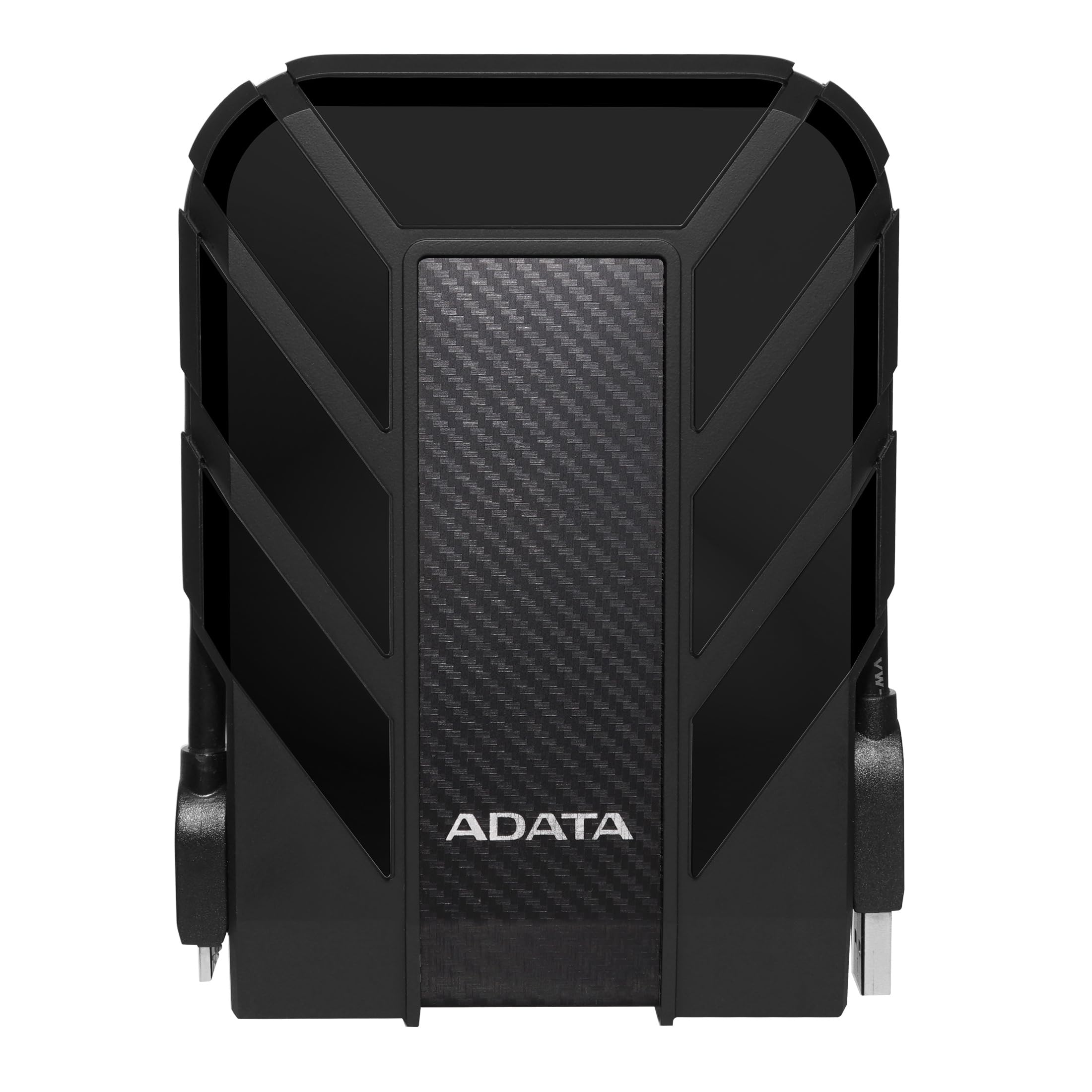
The only HDD in this list that actually wants to be dropped, splashed, and trekked through a dusty jobsite.
While most portable HDDs are one drop away from a funeral, the ADATA HD710 Pro is built with a triple-layered construction that meets IP68 waterproof/dustproof standards (meaning it survives full submersion in water and is sealed against dust ingress) and the MIL-STD-810G 516.6 shock-resistance military test — a drop from 1.2 meters onto concrete. The rubberized case also has a neat cable-management loop on the back, so you never lose the USB cable. Inside is a standard mechanical HDD with a USB 3.1 interface and data transfer rates up to 5,000 megabits per second. It works with PC, Mac, and Linux without any formatting gymnastics.
The durability is the hero here — 155 owners specifically praise that aspect — but it comes with a real speed penalty compared to any SSD. The same shock-resistant chassis that keeps the drive alive also means transfers feel slow compared to the Samsung T7 or the SanDisk Extreme; owners describe it as “good enough” for backups but not for frequent large file moves. A recurring nuance: the USB connector is wide and fits very firmly, which some love for its security and others find awkward with tight ports. If your drive has to survive rain, dust, and the occasional tumble, this is the safe bet.
outdoor use: you work outdoors, in a shop, or anywhere a standard drive would die from a splash or a 3-foot drop.
desktop only: you demand modern transfer speeds; this is an HDD under all that armor, not an SSD.
5. Toshiba Canvio Basics 1TB Portable External Hard Drive

A plain-black workhorse that does nothing fancy except work every time you plug it in.
The Canvio Basics is as straightforward as external storage gets: a matte, smudge-resistant polycarbonate shell, USB 3.0 connectivity (backward compatible with USB 2.0), and no software to install. It comes pre-formatted as NTFS for Windows PCs, so it is ready the second you plug it into the USB port. The cable length is decent — owners mention appreciating the reach — and the drive itself runs cool even during extended use, which is not always the case with aluminum-cased HDDs. The transfer speed peaks at 5 Gb/s, which is standard for a modern mechanical drive and noticeably slower than any SSD in this lineup.
What wins people over is the lack of fuss. Owners consistently call it “easy to use” and note that it is quiet and small enough to slip into a pocket. The one limitation is Mac compatibility: because it ships formatted as NTFS, you must reformat it for Mac use (a quick Disk Utility step), and the drive does not include a Mac-formatted out-of-box option. Toshiba includes a one-year standard limited warranty, which is shorter than the three-year coverage on the Maxone. For a secondary backup that lives plugged into a Windows desktop, it is a near-perfect set-and-forget device.
simple backup: Windows users who want a no-brainer backup — plug it in, drag files, and forget it exists until you need it.
fancy features: you primarily use a Mac (adds a reformatting step) or need rugged protection for field use.
6. Seagate Portable 1TB External Hard Drive
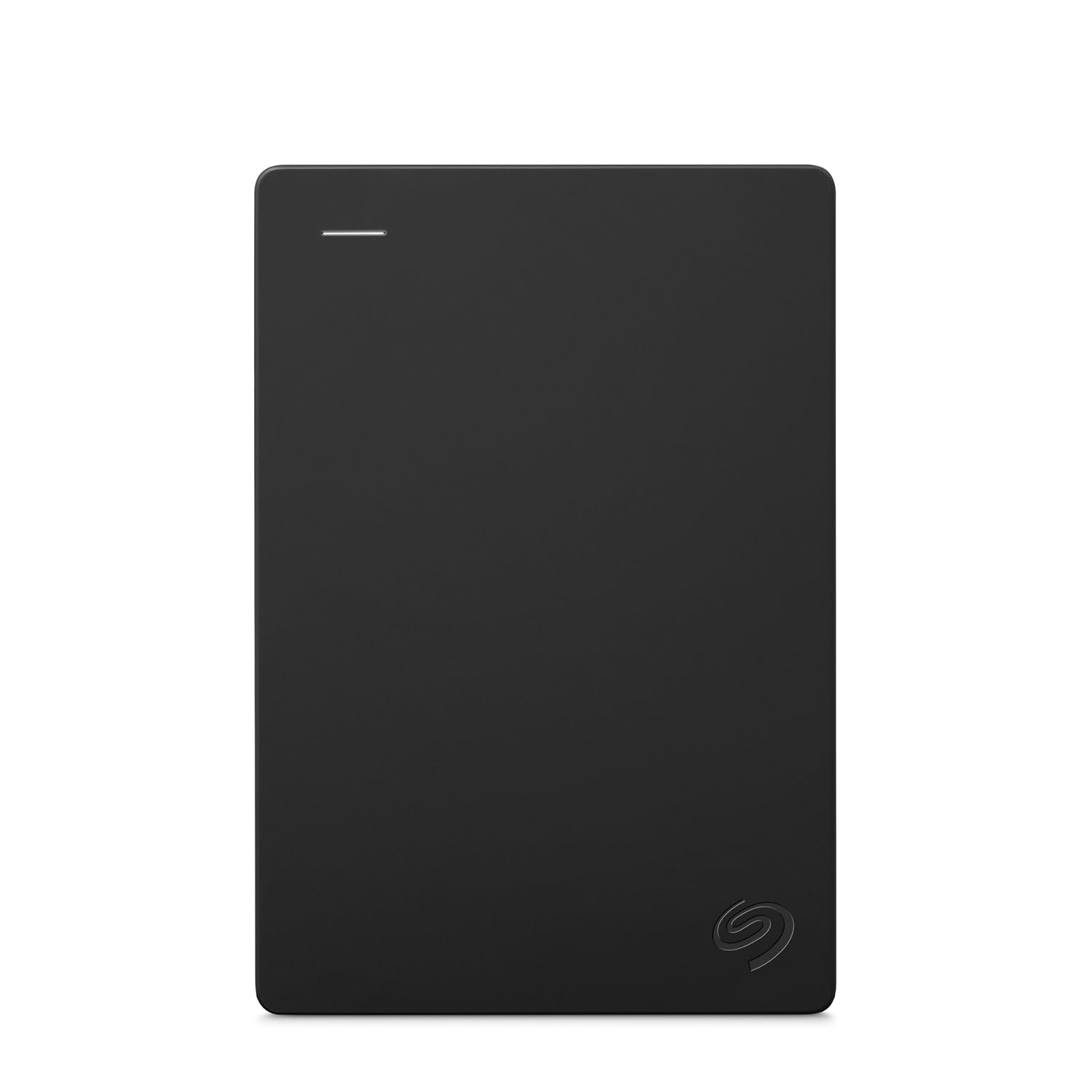
The recognizable name that pairs console compatibility with a year of data-recovery confidence.
Seagate’s portable drive is among the most-reviewed storage devices on the planet, and it earns that visibility with broad compatibility that covers PC, Mac, PlayStation 4, PlayStation 5, Xbox Series X, and Xbox Series S. The 18-inch USB 3.0 cable is short — a common owner complaint — but it makes the drive easier to tuck behind a console without cable tangles. Inside is a mechanical HDD with a 1TB capacity, so it is not fast enough for running modern games directly, but it works as a cold-storage dump for game libraries and media files.
The standout feature is Seagate’s 1-Year Rescue Service, which covers data recovery if the drive fails — a safety net that no other HDD in this list matches at this price. Music producers and general users alike find it reliable for storing plugins, samples, and photo libraries after a quick reformat to ExFAT for Mac. The plastic casing feels basic, and there is no password protection or hardware encryption, so it is more of a bulk storage vessel than a security device. For a straightforward, well-known brand with a data-recovery safety net, this is a solid default choice.
casual use: you want a brand with massive support and a built-in data-recovery plan — especially if the drive will shuttle between a PC and a console.
fast workflow: the short cable is a dealbreaker or you need metal construction for daily bag carry.
7. WD 1TB Elements Portable External Hard Drive

The drive that lives behind a million desks — Western Digital’s no-frills archive that just works.
The WD Elements is the desktop companion that proves a simple formula still sells: a quiet, portable 1TB HDD with USB 3.0 and USB 2.0 compatibility, formatted for Windows from the start. It is not the fastest drive on this list — the data transfer rate is 1 Gb/s, which is genuinely slower than the 5 Gb/s of the Toshiba or Maxone — but for photo archives, document backups, and music libraries, the speed difference is invisible in daily use. It works with PC, Mac (after reformatting), and gaming consoles without fuss.
What improve the Elements above other basic HDDs is trust: Western Digital has been making these drives for years, and owners across multiple capacities (1TB, 2TB, 14TB, 20TB) consistently describe them as quiet, reliable, and trouble-free. A few report that the drive can take 1-2 minutes to appear when first connected to a Mac, and it arrives formatted as NTFS, so Mac users must reformat to ExFAT for full read-write access. There is no drop protection or water resistance — this is a pure desk drive, not a trail companion. For a set-and-forget backup that runs cool and quiet, it is a proven choice.
brand loyalty: you want the most mainstream, well-supported HDD on the market and the slow transfer speed does not affect your use case.
security need: you need fast transfers or a USB-C native connection; the Elements uses traditional USB Type-A and peaks at 1 Gb/s.
8. SanDisk 1TB Extreme Portable SSD (Old Model)

The SSD that is as tough as a field tool and fast enough to edit video directly off the drive.
The SanDisk Extreme does everything the Samsung T7 does — NVMe solid-state performance, read/write speeds up to 1,050/1,000 MB/s, USB-C connectivity — and then adds a thicker armor: drop protection up to 3 meters (compared to the T7’s 6-foot rating) and an IP65 rating for water and dust resistance, meaning it handles rain, splashes, and dusty job sites. It also includes a built-in carabiner loop so you can clip it to a backpack or belt loop. For video editors and photographers who work in the field, that ruggedness is a real advantage.
Performance is identical on paper to the T7, but the practical difference is the casing and the ecosystem. SanDisk includes the Memory Zone app for file management, and the 256-bit AES hardware encryption (a built-in chip that scrambles your data so only your password can unscramble it) keeps sensitive files private without slowing down transfers. Owners note it gets warm during long transfers — the same thermal behavior as all compact NVMe drives. The included cable is short, and open up peak speeds requires a USB 3.1 Gen 2 or USB 3.2 Gen 2 port. For the combination of speed and outdoor-ready durability, it edges ahead of the T7 for adventurers.
portable tough: you edit video or photograph on location and need a drive that can survive a 10-foot drop from a backpack pocket.
latest tech: you want a slightly smaller form factor, prefer the aluminum unibody feel, or will never use the carabiner loop.
9. Amazon Basics Portable External SSD
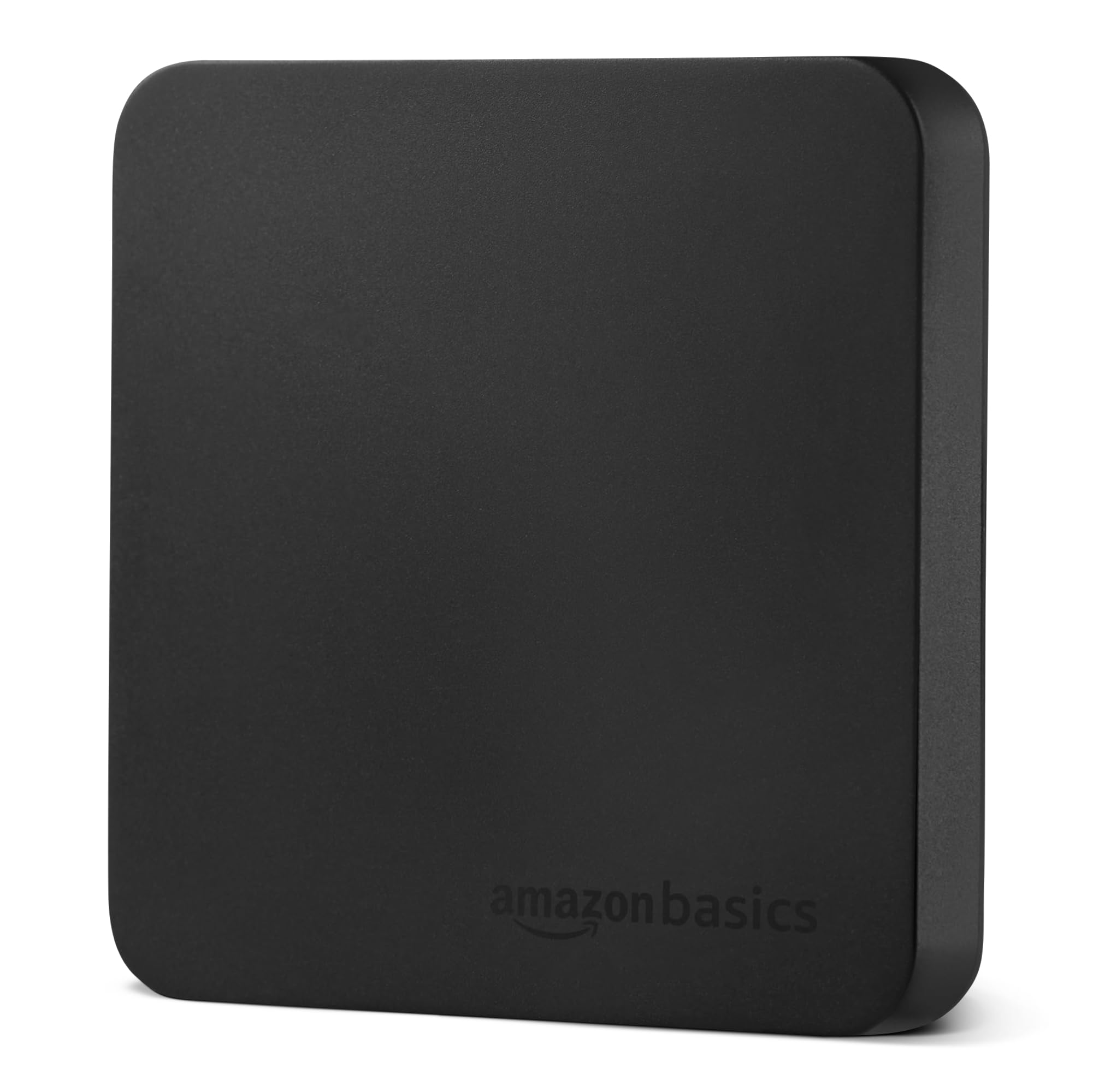
The speed champion in raw read/write — and it costs less than you would expect for a 2,000 MB/s SSD.
On paper, the Amazon Basics External SSD is the fastest drive in this entire lineup, with read and write speeds up to 2,000 MB/s , compared to the Samsung T7’s 1,050 MB/s and the SanDisk Extreme’s 1,050 MB/s. That speed comes from the USB 3.2 Gen 2×2 interface (a two-lane version of USB that doubles the bandwidth), so you need a computer with a USB 3.2 Gen 2×2 port to see those full speeds. The drive measures just 2.33 inches square, weighs a featherlight 51.8 grams, and features a premium metal casing with a scratch-resistant polymer bottom. The IP65 water and dust rating means it survives splashes and dust without issue.
The reviews are uniformly positive: owners call it “fast,” “reliable,” and “excellent value.” The advanced thermal solution keeps the SSD below 50°C even during heavy use, so it does not throttle down like some compact drives. It ships formatted as exFAT, meaning it works with both PC and Mac right from the start with no reformatting. The one catch is that to hit that 2,000 MB/s figure, you need a USB 3.2 Gen 2×2 port — if you plug it into a standard USB 3.0 or USB-C 3.1 Gen 2 port, it will run at roughly half that speed. For buyers with compatible hardware, this is the best performance-per-dollar ratio in the list.
budget SSD: professionals with a modern PC that has a USB 3.2 Gen 2×2 port — editors, developers, and power users who want the fastest transfers possible.
high performance: your laptop is older than 2023 or lacks a Gen 2×2 port; you will pay the SSD premium but only see HDD-level speeds.
Understanding the Specs
USB 3.0, 3.1, 3.2 Gen 2, and Gen 2×2
The USB standard on a drive sets the maximum speed your computer can talk to it. USB 3.0 (now officially called USB 3.2 Gen 1) tops out at 5 Gb/s — plenty for a mechanical HDD. USB 3.1 Gen 2 (now USB 3.2 Gen 2) goes up to 10 Gb/s, which is what the Samsung T7 and SanDisk Extreme use to hit 1,050 MB/s. USB 3.2 Gen 2×2 doubles the bandwidth to 20 Gb/s, open up the 2,000 MB/s speeds of the Amazon Basics SSD. If your computer has an older port, the drive will still work — it will just be slower than its label promises.
NVMe vs SATA vs Mechanical
The drive’s internal technology matters more than the enclosure. NVMe (Non-Volatile Memory Express) is the fastest consumer storage protocol — it connects directly to the PC’s high-speed PCIe lanes, enabling the 1,000+ MB/s speeds in the T7, SanDisk, and Amazon Basics drives. SATA is the older standard that limits SSDs to about 550 MB/s. Mechanical HDDs use a spinning platter (usually 5400 or 7200 RPM) and a moving read head For editing large files, games, or operating system backups, an NVMe SSD is the only choice that will not leave you waiting.
FAQ
Can I use a 1TB external hard drive with a PlayStation 5 or Xbox Series X?
What is the real-world speed difference between an SSD and an HDD in daily use?
Does a 1TB external hard drive need its own power source?
Can I use a 1TB external hard drive to run programs or operating systems?
What does IP65 mean for a portable SSD?
How long does a 1TB external hard drive typically last?
Can I connect a USB 3.0 drive to a USB-C port?
What is the difference between NTFS and exFAT formatting?
Is a 1TB external hard drive enough for backing up a whole computer?
How do I keep my external hard drive from failing?
Final Thoughts: The Verdict
For most people, the winner in the 1tb external hard drive category is the Samsung T7 Portable SSD because it marries blistering 1,050 MB/s speeds with a truly pocketable, drop-rated aluminum body that works with everything from a MacBook to a PS5. If you want the raw speed crown and your hardware supports USB 3.2 Gen 2×2, the Amazon Basics External SSD delivers 2,000 MB/s transfers at a price that rivals slower SSDs. And for those who need a drive that shrugs off dust and splashes without the premium, the ADATA HD710 Pro is the rugged HDD that actually lives up to its IP68 and military-grade claims.
How We Picked
We do not accept paid placement. Every pick is matched to a real buyer and a real use-case; we do not hands-on test units.
Sources & Methodology
Specifications: manufacturer listings and product documentation. Review insights: verified customer reviews, as of July 2026. Pricing: not shown on this page (it changes often); check the current price via the retailer link.
As an Amazon Associate, WellFizz earns from qualifying purchases. This does not affect which products we feature.
Related Guides

Mo Maruf
I created WellFizz to bridge the gap between vague wellness advice and actionable solutions. My mission is simple: to decode the research and give you practical tools you can actually use.
Beyond the data, I am a passionate traveler. I believe that stepping away from the screen to explore new environments is essential for mental clarity and physical vitality.