Our readers keep the lights on and my smoothie glass nicely filled. As an Amazon Associate, I earn from qualifying purchases.
The moment the grid goes dark, the real test begins—not just for your appliances, but for the generator that’s supposed to run them. A 12000 watt generator sits at a unique threshold: enough to run a full home including a central air conditioner or a well pump, yet still portable enough to roll out of the garage when needed. The challenge is finding one that delivers its rated power without surging, stalling, or flooding your sensitive electronics with dirty electricity.
I’m Mohammad Maruf — the founder and writer behind WellFizz. My research focuses on breaking down the real-world wattage, fuel efficiency, and build quality of heavy-duty portable generators, separating marketing claims from the specs that actually matter during a multi-day outage.
After analyzing over a dozen models across dual-fuel, tri-fuel, and inverter platforms, this guide delivers a clear head-to-head comparison so you can confidently choose the 12000 watt generator that matches your home’s demands and your budget.
How To Choose The Best 12000 Watt Generator
Buying a generator in this power class is a long-term investment in your home’s resilience. The wrong choice can mean tripped breakers, fried electronics, or a generator that won’t start when you need it most. Focus on these three factors to narrow the field.
Peak vs. Running Wattage — The Real Number That Matters
Every generator lists two wattage numbers: starting (peak) and running (rated). A 12000 watt generator typically offers 9000 to 10000 running watts. That running figure is what your appliances actually consume continuously. Peak wattage covers the momentary surge when a motor like a well pump or AC compressor kicks on. If your home’s total running load is 7500 watts, a generator rated at 9000 running watts gives you headroom for surges, but one rated at 9500 running watts is safer. Always size your purchase based on running watts, not the peak number.
Fuel Source and Runtime — Gasoline, Propane, or Natural Gas
Fuel availability during an emergency can make or break your backup plan. Dual-fuel generators run on both gasoline and propane; tri-fuel units add natural gas. Propane stores indefinitely without gumming up the carburetor, and natural gas offers unlimited runtime as long as the utility line is intact. Gasoline is the most energy-dense option per gallon but degrades over time. Look at the tank capacity and half-load runtime—a 6.6-gallon tank that lasts 10 hours at half load is very different from an 8-gallon tank that runs 12 hours. Longer intervals mean fewer midnight refueling trips in a storm.
Power Quality — Inverter vs. Conventional Alternator
Conventional generators produce power with a total harmonic distortion (THD) of 10–20%, which is acceptable for resistive loads like lights and heaters but risky for sensitive electronics such as computers, modern refrigerators with inverter compressors, or variable-speed HVAC controls. Inverter generators use an electronic module to produce clean sine wave power with THD below 3%, making them safe for any device. Inverter models also adjust engine speed to match load, burning less fuel under light demand and running quieter. The tradeoff is higher upfront cost and typically slightly lower peak wattage for the same engine displacement.
Quick Comparison
On smaller screens, swipe sideways to see the full table.
| Model | Category | Best For | Key Spec | Amazon |
|---|---|---|---|---|
| Champion 201161 | Tri-Fuel | Whole home, high running watts | 717cc V-Twin, 12000 running watts | Amazon |
| Westinghouse iGen12000TFc | Tri-Fuel Inverter | Clean power, low THD, long runtime | ≤3% THD, 64 dBA, 19h runtime | Amazon |
| GENMAX GM10500iETC | Tri-Fuel Inverter | Quiet tri-fuel, ATS ready | ≤3% THD, remote start, 458cc | Amazon |
| Champion 201407 | Inverter | Quiet inverter, cold weather starts | 64 dBA, 459cc, remote start | Amazon |
| DuroMax XP12000HX | Dual-Fuel | Heavy duty, all copper windings | 457cc, 50A outlet, CO Alert | Amazon |
| Generac GP12000E | Tri-Fuel | Tri-fuel flexibility, brand trust | 457cc, COsense, 12500 starting watts | Amazon |
| Westinghouse WGen12500DF | Dual-Fuel | Remote start, high peak watts | 457cc, 12500 peak, remote fob | Amazon |
| Pulsar G12KBN-SG | Dual-Fuel | Long runtime, 8-gallon tank | 12h runtime, 457cc, 50A outlet | Amazon |
| WEN DF1100X | Dual-Fuel | Value dual-fuel, 50A RV outlet | 457cc, 11000 surge, CO sensor | Amazon |
| EcoFlow Delta Pro | Power Station | Zero-fume indoor backup, fast recharge | 3600Wh, 3600W, expandable to 25kWh | Amazon |
| BLUETTI Apex 300 | Power Station | Modular 120/240V, off-grid expansion | 2764Wh, 3840W, 7680W surge | Amazon |
| Jackery Explorer 2000 v2 | Power Station | Lightweight, quiet, solar portable | 2042Wh, 39.5 lbs, LiFePO4 | Amazon |
| WEN DF8000X | Dual-Fuel | Entry-level dual-fuel, budget-friendly | 340cc, 8000 surge, CO Watchdog | Amazon |
In‑Depth Reviews
1. Champion Power Equipment 201161

The Champion 201161 is the brute-force option for homeowners who need true whole-house power without compromise. Its 717cc V-Twin engine delivers 12,000 running watts on gasoline—more than almost any competitor in its class—and it runs on natural gas, propane, or gasoline right out of the box with both hoses included.
During Hurricane Beryl, users reported running their entire home including a 3.5-ton central air conditioner on natural gas for 90 hours straight. The electric start with a simple toggle switch is reliable, and the Intelligauge display keeps you informed of voltage, hertz, and runtime hours for maintenance tracking at a glance.
The main trade-off is its size and weight: at 331 pounds and measuring over 33 inches in each dimension, it demands a dedicated spot and a sturdy hand truck or dolly for positioning. The CO Shield sensor is sensitive enough that some owners experienced auto-shutdown outdoors after a couple of hours, which is a safety asset but requires deliberate placement away from doors and windows.
Why it’s great
- 12,000 running watts from a 717cc V-Twin, highest in its class
- Tri-fuel ready with natural gas and propane hoses included
- Engine break-in and oil change straightforward with good access
- 3-year warranty with lifetime technical support
Good to know
- Extremely heavy (331 lbs) and large, not for casual transport
- CO sensor may trigger shutdown in partially enclosed areas
- Initial break-in requires 5 hours before full-load use
2. Westinghouse iGen12000TFc
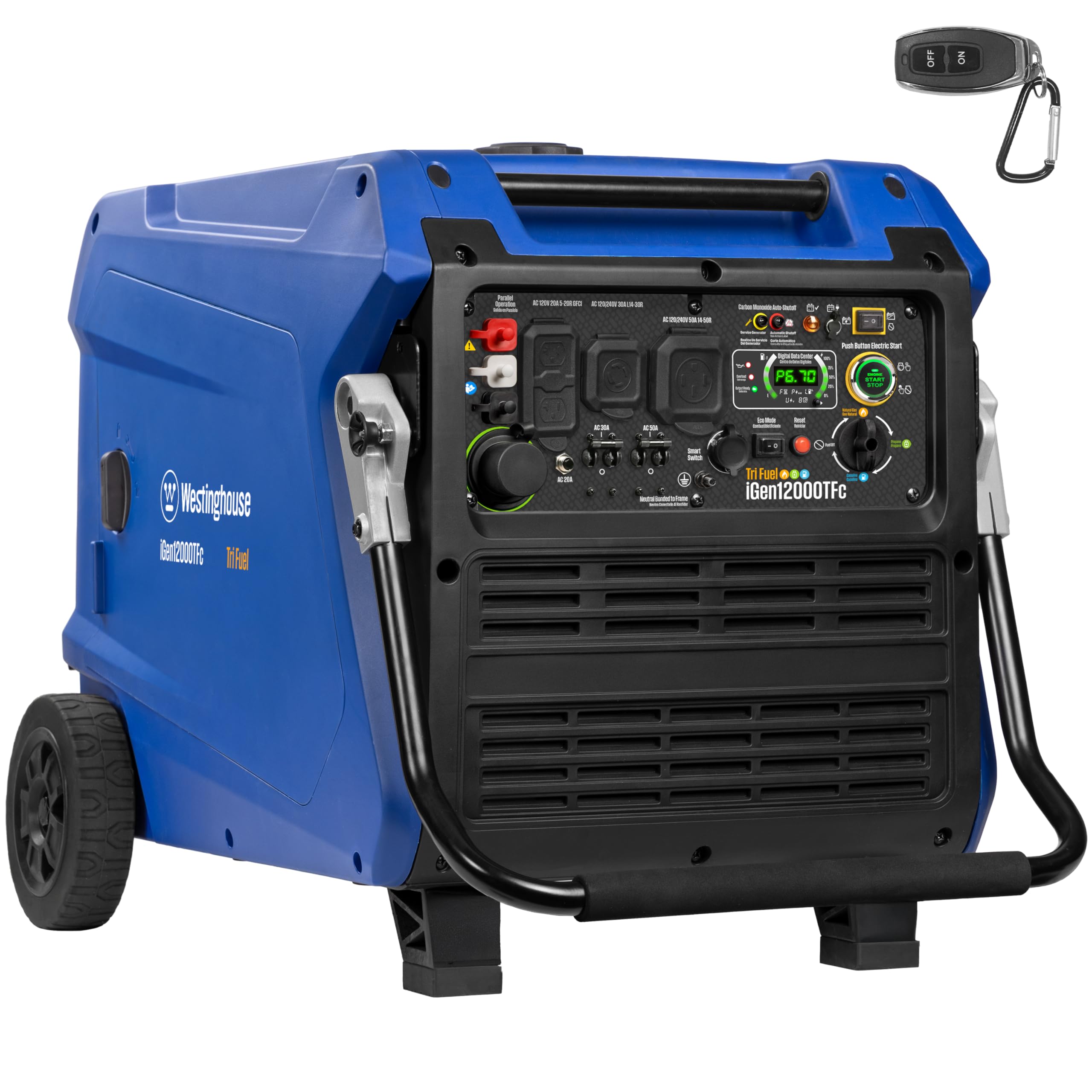
The Westinghouse iGen12000TFc represents a new breed: a tri-fuel inverter generator that combines the fuel flexibility of three sources with the clean power and efficiency of inverter technology. It produces power with less than 3% THD, making it safe for modern refrigerators, computers, and variable-speed HVAC systems that conventional generators can damage.
Owners report exceptionally quiet operation—around 64 dBA—which is nearly conversation-level. The 7.9-gallon fuel tank delivers up to 19 hours of runtime at 25% load, cutting refueling frequency in half compared to traditional models. The remote start key fob, electric push-button, and recoil backup give you three ways to fire up the 457cc engine. A 50A 14-50R outlet makes it transfer-switch and interlock-kit ready for home integration.
The unit is heavy at 191 pounds but slightly lighter than many tri-fuel conventional generators, and the fully enclosed design reduces noise effectively. Some users noted minor cosmetic shipping damage to the side panel, and the included funnel is too small for the oil plug threads—small gripes that don’t affect performance.
Why it’s great
- Inverter technology with ≤3% THD, safe for all electronics
- Tri-fuel: gasoline, propane, or natural gas
- 64 dBA quiet operation, neighborhood-friendly
- Remote start key fob plus push-button and recoil backup
Good to know
- Premium pricing relative to conventional dual-fuel models
- Shipping packaging can result in minor cosmetic scuffs
- Supplied oil funnel is too small for the threads
3. GENMAX GM10500iETC

The GENMAX GM10500iETC packs inverter-grade power into a tri-fuel platform with a 458cc engine that produces 10,500 peak watts on gasoline and 8,500 running watts—enough to handle a 3-ton central air conditioner and a well pump simultaneously, according to real-world user reports. Its THD stays under 3%, ensuring clean power for sensitive electronics.
What sets this model apart is its comprehensive feature set: remote start via key fob, electric start, ATS (automatic transfer switch) control capability, and a voltage transfer switch that enables simultaneous 120V/240V output. The 50A 14-50R outlet and L14-30R twist-lock give you flexible home connection options. Owners frequently praise its quiet inverter operation and fuel efficiency on ECO mode, with one user powering their entire home for over 6 hours on just a few pounds of propane.
The unit is heavy at roughly 200 pounds, and some units ship without a printed manual (digital can be emailed on request). A small number of users reported surging under specific loads, but the majority find it reliable for home backup, especially when paired with natural gas for indefinite runtime.
Why it’s great
- Tri-fuel inverter with ≤3% THD for electronics safety
- Remote start, ATS capable, and voltage transfer switch built in
- Quiet ECO mode reduces fuel consumption
- Includes rain cover, bonding plug, and both NG/LPG hoses
Good to know
- No printed manual in the box; digital copy only
- Inconsistent warranty support reports for defective units
- Requires careful load management to avoid overload light
4. Champion Power Equipment 201407

The Champion 201407 delivers 11,000 starting watts and 9,000 running watts from a 459cc engine, all wrapped in an inverter package that produces clean power for sensitive electronics. Owners report running mini-split systems that previously threw communication errors with conventional generators, thanks to the stable sine wave output. At 64 dBA from 23 feet, it’s quiet enough for use in residential neighborhoods.
The wireless remote start key fob works up to 80 feet away, and the unit also includes electric and recoil start for backup. The 5.5-gallon fuel tank provides up to 15 hours of runtime at quarter load, which is excellent for an inverter in this class. Cold Start Technology helps the engine fire reliably in freezing conditions, a feature that matters for northern homeowners facing winter outages.
A known pain point is the CO Shield sensor, which some users found too sensitive—it can shut the generator down even when placed outdoors with good ventilation. The fuel gauge is recessed and difficult to read in dim light. The unit weighs 200 pounds, so the included wheel kit is essential for positioning.
Why it’s great
- Inverter technology produces clean power for sensitive electronics
- 64 dBA noise level is quiet for a generator of this output
- Wireless remote start with 80-foot range is highly convenient
- Cold Start Technology for reliable winter starts
Good to know
- CO sensor may trip too easily, even in open-air setups
- Fuel gauge is hard to read in low light
- No included battery pigtail for extended standby charging
5. DuroMax XP12000HX

The DuroMax XP12000HX is built around a 457cc engine with all-copper windings—a detail that matters for longevity because copper handles heat better than aluminum and resists corrosion over years of intermittent use. It produces 12,000 peak watts and 9,500 running watts on gasoline, with dual-fuel capability for LPG operation.
Users consistently note that the push-button electric start works perfectly, and the front-facing interface makes it easy to switch between fuel types in seconds. The power panel includes a 50A outlet for transfer-switch connection, plus four 120V GFCI household outlets. The CO Alert system provides an extra layer of safety by shutting down the generator if carbon monoxide builds up.
The XP12000HX is loud—some owners describe it as comparable to a lawnmower—and it requires a ground rod for safe operation, which some first-time generator buyers overlook. A few units shipped with a dead battery or minor frame dings from shipping, but DuroMax’s customer service generally handles replacements without hassle. Keep a spare NGK BPR6RES spark plug on hand, as the factory plug can foul under certain conditions.
Why it’s great
- All-copper windings for better heat dissipation and longevity
- Front-facing fuel selector for quick switching between gas and LPG
- 50A outlet makes transfer-switch connection simple
- CO Alert safety shutdown protects against CO buildup
Good to know
- Loud operation, comparable to a lawnmower
- Requires an earth ground rod for safe operation
- Factory spark plug may foul; keep a spare NGK on hand
6. Generac GP12000E
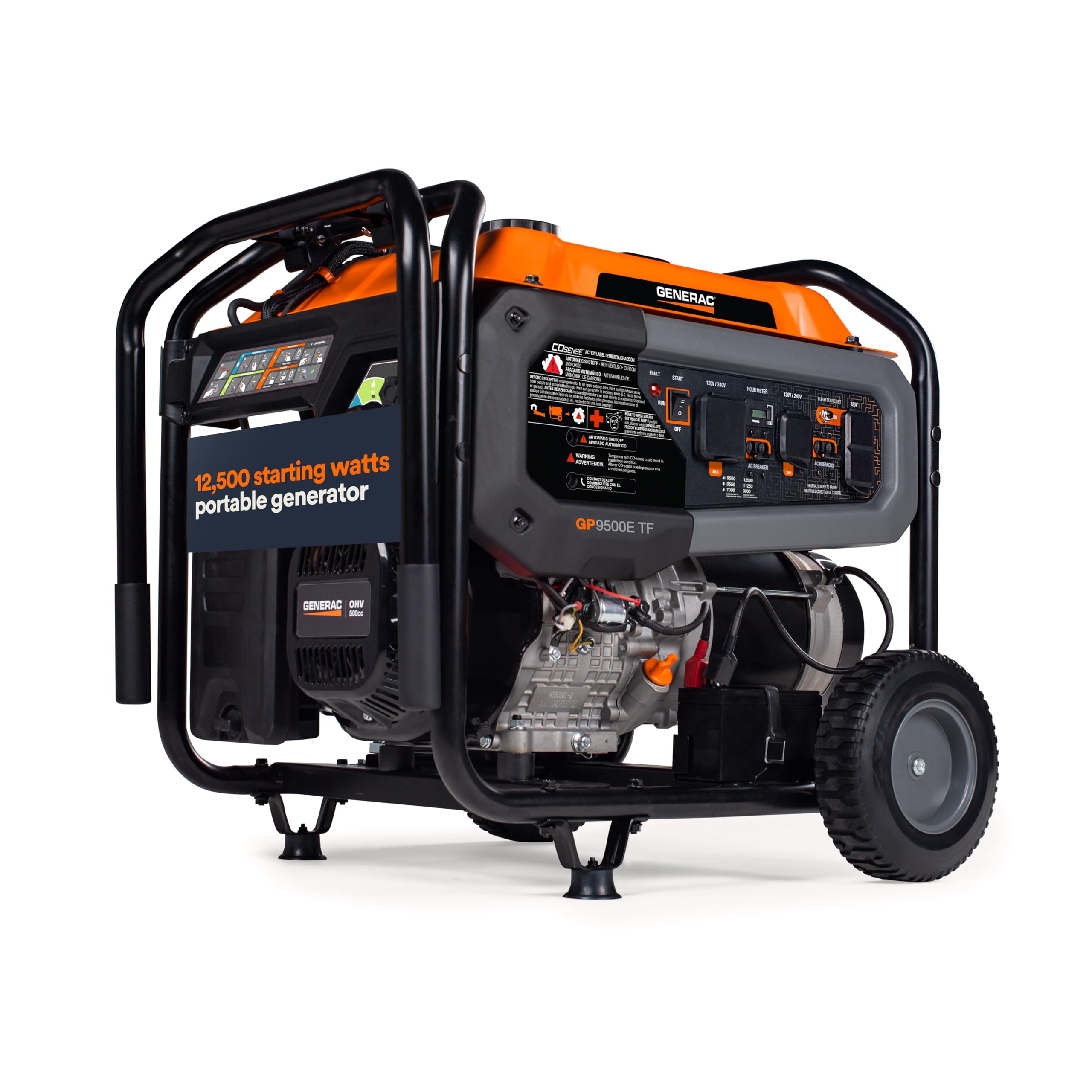
Generac brings its well-known brand reputation and a tri-fuel design to the 12,000-watt class with the GP12000E, which runs on gasoline, propane, or natural gas. The COsense technology automatically shuts the engine down and alerts you if dangerous CO is detected, a feature that adds confidence for home backup scenarios.
The unit features a heavy-duty steel cradle frame and never-flat wheels for rough terrain, and the electric start with included battery makes startup simple. At 227 pounds, it’s one of the heavier tri-fuel options, but the durable construction and covered outlets protect it in harsh jobsite conditions. Owners who ran it through multi-day outages reported it met their power needs reliably, with the ability to run a 3-ton AC with a soft start.
The key drawback is that the advertised 12,500 starting watts and 9,500 running watts are split across two 120V 40A plugs rather than available from a single 50A outlet, which means feeding a full 50A panel requires an additional cable or interlock configuration. Some owners also note that the engine is not as refined as premium inverter models and runs louder than expected.
Why it’s great
- Tri-fuel capability: gasoline, propane, and natural gas
- COsense auto-shutdown adds a critical safety layer
- Rugged steel cradle and never-flat wheels for tough use
- Electric start with included battery is hassle-free
Good to know
- Full running watts split across two 40A plugs, not one 50A
- Noisier than inverter-class generators
- Heavy at 227 pounds; positioning requires effort
7. Westinghouse WGen12500DF

The Westinghouse WGen12500DF offers 12,500 peak watts on gasoline (9,500 running) with the convenience of remote start via a key fob—a rare feature at this price tier. The 457cc cast-iron sleeved engine is known for durability, and the automatic low-oil and CO shutdown systems protect both the engine and your household.
Real-world users report powering an entire home including a well pump and water heater simultaneously, with the 6.6-gallon tank running about 12 hours at half load. Assembly is minimal: attach the wheel kit, add oil, connect the battery, and the generator is ready. The fuel gauge and digital hour meter help track runtime and maintenance intervals.
The WGen12500DF is heavy at 212 pounds and loud—a common trade-off for its class. The manual is dense and can be tricky to navigate for first-time generator owners. Some users noted that the spark plug wrench in the tool kit is unlabeled, and the wheels are shipped loosely, requiring complete destruction of the box during unboxing.
Why it’s great
- Remote start key fob is a premium convenience at a mid-range price
- Cast-iron sleeved engine for long-term durability
- Dual fuel: gasoline and propane with included hose
- Rated best by Consumer Reports and Popular Mechanics
Good to know
- Loud operation; ear protection recommended
- Heavy (212 lbs); wheel kit requires some assembly
- Loser efficiency above 2,000 feet without high-altitude kit
8. Pulsar G12KBN-SG

The Pulsar G12KBN-SG takes a straightforward approach: a big 8-gallon gas tank and a 457cc engine that delivers 12,000 peak watts on gasoline and 10,800 on LPG. The 12-hour runtime at half load means you can sleep through the night without refueling, a critical advantage during multi-day outages.
Owners report it powers an entire 2,600-square-foot home including central AC, refrigerator, freezer, TV, and microwave on a 50A hookup, with some running 16 hours before needing fuel. The electric start fires reliably, though some users prefer the manual choke when starting on propane. The all-metal fuel tank with a built-in gauge is a nice upgrade over cheaper plastic tanks.
The Pulsar is large at 214 pounds and requires a solid 15-minute assembly of the wheel kit and battery. Shipping can be slow—some deliveries took nearly a month—and the carrier (R.L. Carriers) may not provide real-time tracking. A few units arrived with a dead battery or shipping damage, though Pulsar’s customer service generally addresses replacement requests.
Why it’s great
- 8-gallon tank provides 12+ hours at half load on gasoline
- Dual fuel (gas and LPG) with included propane hose
- 50A outlet is transfer-switch and RV ready
- All-metal fuel tank with visible gauge is durable
Good to know
- Shipping can take weeks with minimal tracking updates
- Heavy (214 lbs); assembly requires 10mm wrench and effort
- Some units require break-in with three oil changes initially
9. WEN DF1100X

The WEN DF1100X uses the same 457cc engine as many premium models but comes at a noticeably lower cost, making it a compelling entry point for dual-fuel backup power. It delivers 11,000 surge watts and 8,300 running watts on gasoline, with propane numbers at 9,500 surge and 7,500 running. The selection dial makes switching between fuels simple without tools.
Owners frequently report that the generator powered their entire house during hurricanes, running refrigerators, lights, and even a 3-ton AC unit with a soft start installed. The electric start with a key turn is easier than rocker-switch alternatives. The included wheel and handle kit gets you moving the 213-pound unit without a separate purchase. A CO Watchdog sensor automatically shuts the generator down if CO reaches dangerous levels inside or near living spaces.
The main complaint is that the initial assembly instructions miss a crucial step: the red engine mounts must be removed before first use, which is easy to miss and can cause vibration issues. The carburetor can gum up if the generator sits unused for long periods—using ethanol-free fuel and running it monthly under load is essential. Delivery can also be slow, with some units left without notification.
Why it’s great
- 457cc engine delivers solid power at a competitive price point
- Dual-fuel dial makes switching between gas and LPG tool-free
- Includes 50A outlet for transfer-switch or RV connection
- CO Watchdog sensor adds critical safety
Good to know
- Red engine mounts must be removed before startup; easy to overlook
- Carburetor prone to gumming from ethanol fuel if left unused
- Slow shipping and delivery communication issues reported
10. EcoFlow Delta Pro
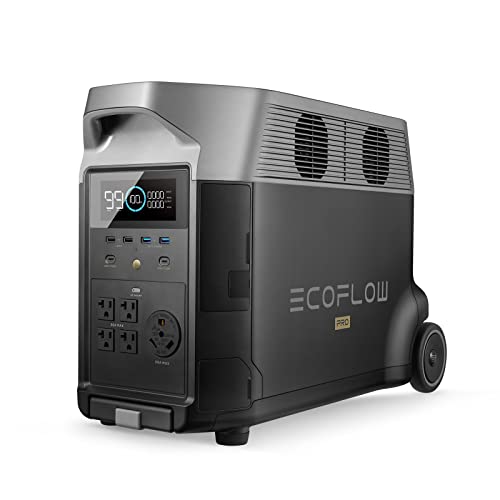
The EcoFlow Delta Pro is not a traditional generator—it’s a battery power station with 3,600Wh of LiFePO4 capacity and a 3,600W AC output (expandable to 4,500W with X-Boost). This means zero emissions, zero noise, and the ability to run indoors or in an apartment balcony. It powers refrigerators, CPAP machines, sump pumps, and even small appliances for a full day on a single charge.
Fast charging is a standout feature: the Delta Pro can recharge from 0 to 80% in 66 minutes via a standard AC wall outlet, or fully in about 2.7 hours. Solar charging with up to 1,600W of panels takes 2.8 hours in good sun. The UPS mode switches in 20ms during a power outage, keeping connected devices running without interruption. The smart app control lets you monitor energy usage, charge levels, and adjust settings from your phone.
The trade-off is that 3,600W peak output is lower than a typical 12,000-watt generator, meaning it won’t run a central AC or a well pump without X-Boost or a soft start. It also weighs 99 pounds, and at 99 pounds, it’s not as portable as smaller power stations. Tthe Delta Pro is best suited as a quiet, clean indoor backup for essential circuits rather than whole-house replacement.
Why it’s great
- Zero fumes, zero noise, safe for indoor use
- Fast recharge: 0–80% in 66 minutes from wall outlet
- Expandable up to 25kWh with extra batteries or smart generator
- 20ms UPS switch keeps devices running during outages
Good to know
- 3,600W output won’t run central AC or well pump without X-Boost
- Heavy (99 lbs) despite battery-only design
- Requires solar panels or dedicated charging setup for long-term autonomy
11. BLUETTI Apex 300
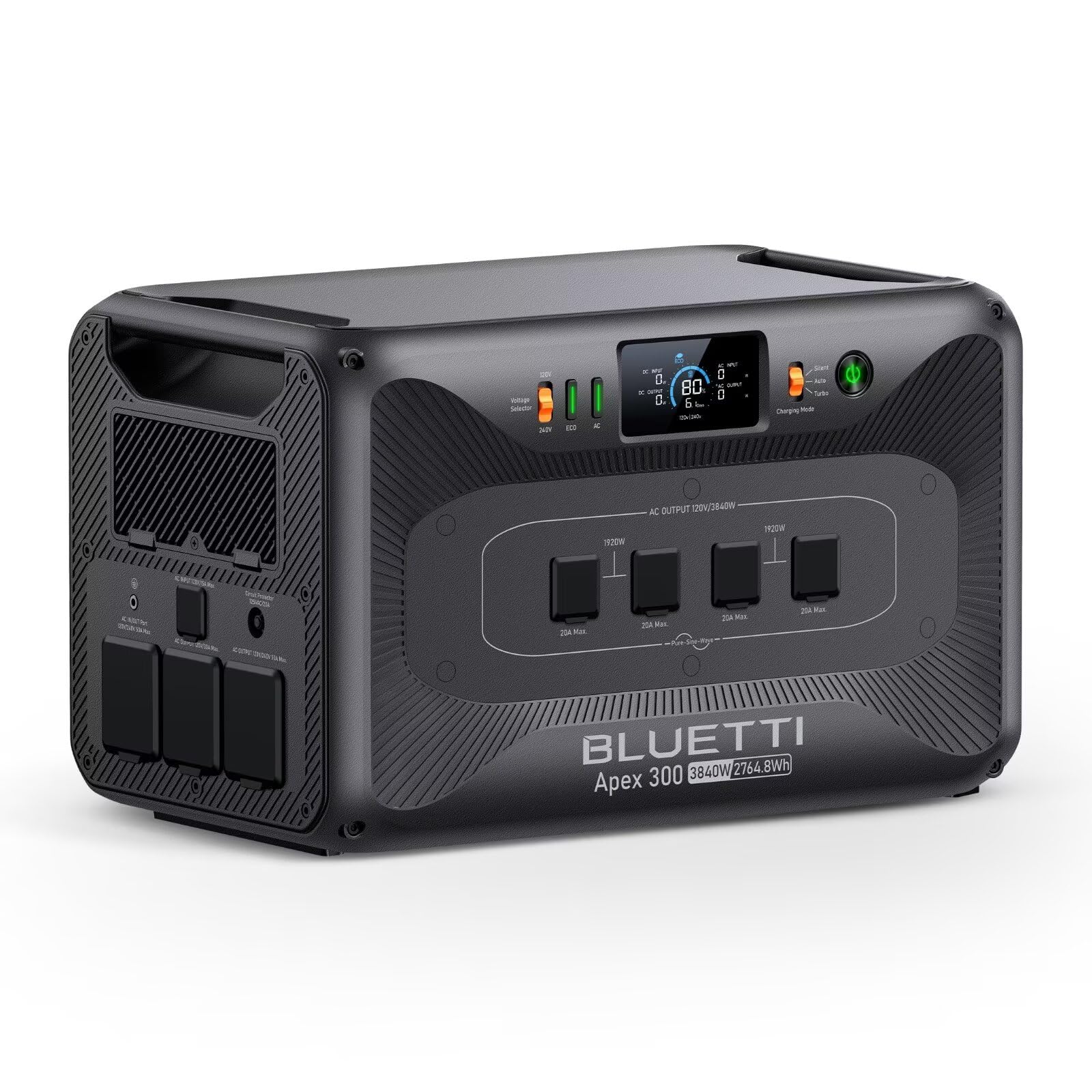
The BLUETTI Apex 300 is a modular power station that delivers 3,840W continuous AC output (7,680W surge) from a 2,764.8Wh LFP battery. Its unique advantage is the ability to output both 120V and 240V simultaneously, which traditional battery stations rarely offer—this allows it to power a well pump or a clothes dryer alongside standard household circuits.
The system is expandable: start with one Apex 300 and add B300K or B500K extra batteries as your needs grow, scaling up capacity without paying for everything upfront. The 0ms UPS keeps critical loads powered through grid blips, and the smart app gives you real-time monitoring and control. Noise level is under 22dB, so it’s virtually silent during operation. The EV-grade LiFePO4 cells are rated for 6,000+ cycles.
The 60V PV input limit is a significant limitation for high-voltage solar arrays—a 110V solar setup cannot charge directly, requiring a workaround using another station. At 66 pounds, it’s lighter than most power stations in its class, but it lacks DC ports to keep cost down, so 12V devices need an adapter. BLUETTI’s ecosystem of add-ons (Hub D1, Charger 1) adds flexibility but also complexity.
Why it’s great
- Simultaneous 120V/240V output powers heavy loads like well pumps
- Modular capacity: start small, expand with extra batteries
- 0ms UPS switch for seamless outage protection
- Silent operation at under 22dB
Good to know
- 60V PV input limit prevents direct charging from 110V solar arrays
- No DC ports; 12V devices require an external adapter
- Expanding capacity and accessories adds significant cost
12. Jackery Explorer 2000 v2

The Jackery Explorer 2000 v2 is a compact, lightweight power station that weighs just 39.5 pounds—far less than any fuel-burning generator—while offering 2,042Wh of LiFePO4 battery capacity and 2,200W of AC output. Its CTB (Cell-to-Body) technology, borrowed from electric vehicles, integrates the battery cells directly into the chassis, making it 41% lighter than typical 2kWh stations.
Users praise its silent operation; at under 30dB in quiet charge mode, it won’t disturb sleep or conversation. The fast AC charging fills the unit from 0 to 80% in 66 minutes, and a full charge takes 102 minutes in emergency mode via the app. The UPS function switches in under 20ms, keeping CPAP machines, refrigerators, and sensitive electronics running through grid flickers. Multiple ports including a USB-C PD 100W port allow charging laptops and phones directly.
The 2,200W output is modest compared to a 12,000-watt generator—it won’t run a central AC, a well pump, or a 240V appliance. Solar charging at 400W takes 6 hours for a full charge, which is acceptable for sunny days but slow in overcast conditions. At 40 pounds, it’s the most portable option for powering a refrigerator and essential electronics during short outages or camping trips.
Why it’s great
- Ultra-lightweight at 39.5 lbs; easy to carry anywhere
- Silent operation under 30dB, safe for indoor use
- Fast charging: 0–80% in 66 minutes from wall outlet
- LiFePO4 battery lasts 10 years with 4,000+ cycles
Good to know
- 2,200W output can’t run central AC, well pump, or 240V appliances
- Solar charging at 400W is slow; full charge takes 6 hours
- Not expandable; 2,042Wh is a fixed capacity
13. WEN DF8000X
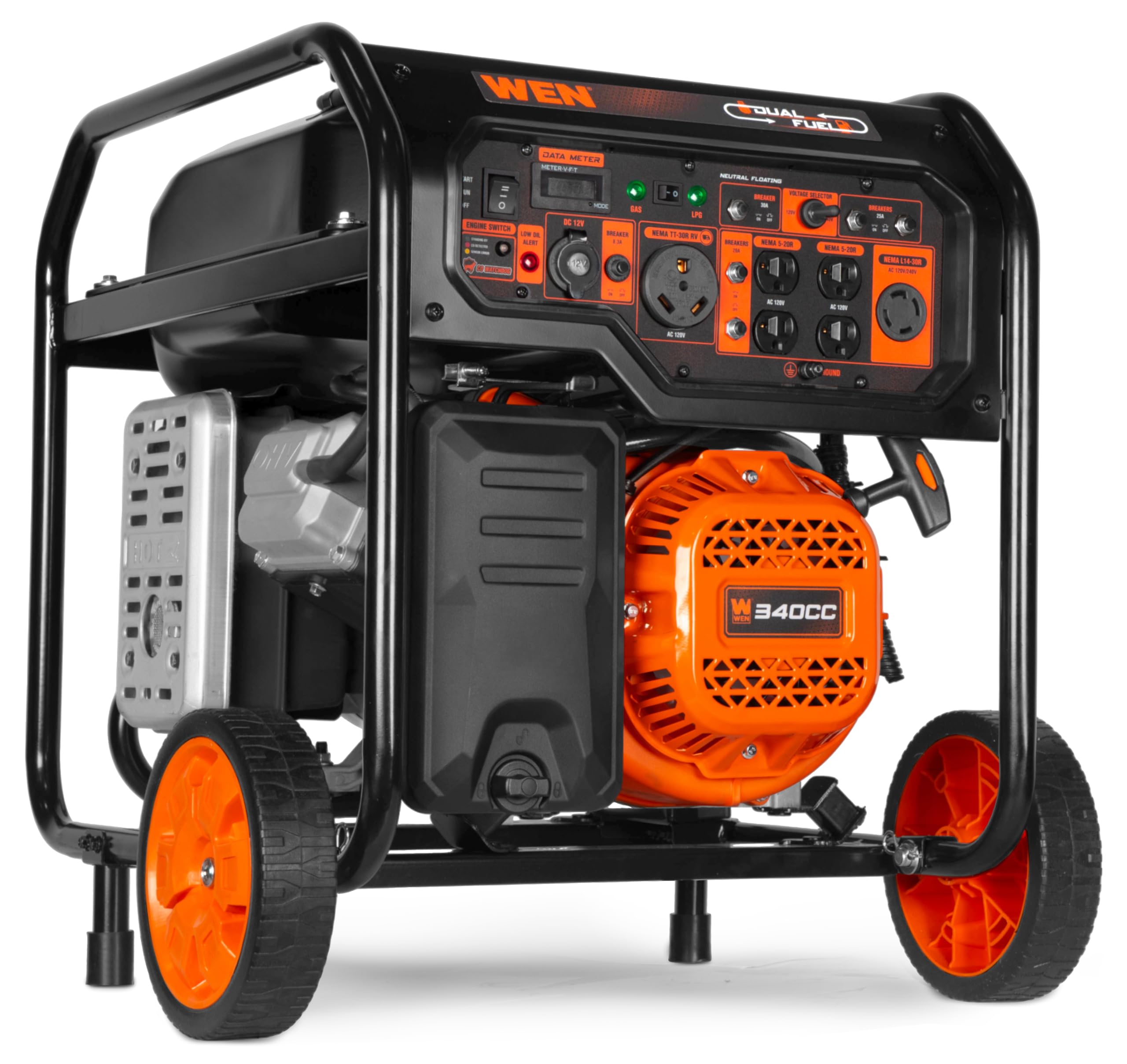
The WEN DF8000X is the smallest-capacity model in this roundup, but it’s also the most accessible entry point into dual-fuel backup power. With 8,000 surge watts and 6,500 running watts on gasoline (7,200/5,850 on propane), it’s best suited for powering essential circuits rather than a whole home. The 340cc engine is less powerful than the 457cc units above, but the electric start and included wheel kit make it easy to deploy quickly.
Real-world owners report running two heaters or an air conditioner plus standard essentials simultaneously during power outages. At roughly 50 dB at 25 feet, it’s noticeably quieter than many competitors. The WEN Watchdog CO Shutdown Sensor automatically kills the engine if dangerous CO levels are detected. The 6.7-gallon tank provides up to 10.5 hours of half-load runtime, which is reasonable for its displacement.
The DF8000X is an open-frame design, which makes carburetor maintenance easier than enclosed models—just drain the carb bowl for long-term storage. However, at 8,000 surge watts, it won’t handle large 240V loads like a central AC or a well pump without careful load management. Some owners report the oil dipstick has fine threads prone to cross-threading if not aligned carefully, and the rocker switch “off” position does not stop the engine completely; you must use the fuel shutoff valve.
Why it’s great
- Affordable dual-fuel entry point with electric start
- CO Watchdog sensor for automatic safety shutdown
- Open-frame design simplifies carburetor draining for storage
- Relatively quiet for a conventional generator
Good to know
- 8,000 surge watts is below true 12kW class, no 50A outlet
- Oil dipstick threads are fine and easy to cross-thread
- Rocker switch does not kill engine; must use fuel shutoff
FAQ
How do I safely connect a 12000 watt generator to my home panel?
Can a 12000 watt generator run a central air conditioner?
What is the difference between peak watts and running watts?
Final Thoughts: The Verdict
For most users, the 12000 watt generator winner is the Westinghouse iGen12000TFc because it combines tri-fuel flexibility with inverter-grade clean power and quiet operation, making it the most versatile home backup solution available. If you need maximum raw running wattage for a large home, grab the Champion 201161 with its 717cc V-Twin engine that runs everything including central AC on natural gas. And for a zero-fume, silent indoor backup that protects sensitive electronics, nothing beats the EcoFlow Delta Pro power station.

Mo Maruf
I created WellFizz to bridge the gap between vague wellness advice and actionable solutions. My mission is simple: to decode the research and give you practical tools you can actually use.
Beyond the data, I am a passionate traveler. I believe that stepping away from the screen to explore new environments is essential for mental clarity and physical vitality.