Our readers keep the lights on and my smoothie glass nicely filled. As an Amazon Associate, I earn from qualifying purchases.
Dropping the high-voltage rewiring bill is the single most liberating moment for any homeowner adding zone-specific climate control. A standard 230V mini split often demands a dedicated circuit and an electrician, adding hundreds to the initial outlay. The 110-volt mini split sidesteps that entire headache, plugging directly into the outlets already on your wall, making it the definitive smart-money move for garages, finished basements, home offices, and room additions.
I’m Mohammad Maruf — the founder and writer behind WellFizz. I’ve spent the past five years running comparative teardowns on ductless heat pumps, analyzing compressor types, SEER2 ratings, refrigerant choices, and real-world failure modes to separate legitimate value from marketing hype.
This guide is built for the time-rich buyer who treats a mini split as a multi-year investment and needs to understand inverter sweep, low-temperature heating limits, and line-set quality before signing off on a purchase. After pouring through technical specs, customer field reports, and certified efficiency data, I’ve narrowed the field to the best 110 volt mini split systems that balance installation ease, long-term reliability, and real-season performance.
How To Choose The Best 110 Volt Mini Split
Selecting a 110V mini split is a different exercise than picking a traditional 230V unit. You are trading raw peak heating output for drop-in electrical convenience, so every spec must be weighed against the specific demands of your space. The key is not to overpay for capacity you cannot use or under-spec for winter performance.
Match BTU Capacity to Square Footage and Insulation
A 9,000 BTU unit handles up to roughly 450 square feet, while a 12,000 BTU system covers up to 750 square feet. If your space has poor insulation, large windows, or high ceilings, lean toward the larger capacity even if your square footage is lower. Oversizing in a 110V system is less forgiving than with 230V because the compressor has a narrower electrical headroom to cycle efficiently.
Understand the Real-World SEER2 Impact
SEER2 is the modernized efficiency metric that accounts for the static pressure of a typical installation. A 22 SEER2 unit will use roughly 25% less electricity than an 18 SEER2 unit under identical conditions. In a 110V system where the compressor is already operating at a tighter power envelope, a higher SEER2 rating translates directly into lower monthly bills and less stress on your home’s breaker.
Check Low-Temperature Heating Capability
Not all 110V units maintain full heating output when the outdoor temperature drops. Look for a published minimum operating temperature — ideally -13°F for reliable winter performance in colder climates. Systems that only guarantee heat down to 5°F are fine for mild winters but will struggle in a deep freeze, forcing you to rely on backup heat.
Evaluate the Installation Kit Completeness
A pre-charged system should include flare-ready copper line sets (typically 16 feet), a condensate drain hose, communication and power cables, mounting plate, and insulation wrap. Missing components like a wall bracket or the correct line-set length can turn a straightforward install into a parts scavenger hunt. Also confirm whether the included copper lines are fully copper or copper-clad aluminum — the latter is less durable over the long term.
Quick Comparison
On smaller screens, swipe sideways to see the full table.
| Model | Category | Best For | Key Spec | Amazon |
|---|---|---|---|---|
| Temprium 12,000 BTU | Premium | Ultra-quiet, smart control suite | 22 SEER2 / 23 dB noise floor | Amazon |
| DELLA Vario 12,000 BTU | Premium | Proven reliability, low-temp heat | 20.5 SEER2 / Heats to -4°F | Amazon |
| Garvee 12,000 BTU | Mid-Range | AI-driven precision temp control | 22 SEER2 / ±0.1°C accuracy | Amazon |
| Albott 12,000 BTU | Mid-Range | Self-cleaning, extreme temp range | 18 SEER2 / 29 dB noise floor | Amazon |
| Upstreman 12,000 BTU | Mid-Range | Outstanding cold-weather heat | 20 SEER2 / Heats to -4°F | Amazon |
| Manastin 12,000 BTU | Mid-Range | Rapid 30-second cooling | 19 SEER2 / Rotary compressor | Amazon |
| Mountman 12,000 BTU | Mid-Range | Self-cleaning & auto-defrost | 19 SEER2 / 26 dB sleep mode | Amazon |
| Confortotal 12,000 BTU | Value | Cabin/cottage plug-and-play | 110V plug / 750 sq ft capacity | Amazon |
| ROVSUN 9,000 BTU | Value | Budget-friendly small room cooling | 19 SEER2 / 28 dB noise floor | Amazon |
| Rellytech 12,000 BTU | Budget | High SEER2 on a budget | 20 SEER2 / R454B refrigerant | Amazon |
| Rellytech 9,000 BTU | Budget | Entry-level 110V experience | 19 SEER2 / Covers 550 sq ft | Amazon |
In‑Depth Reviews
1. Temprium 12,000 BTU 22 SEER2 Mini Split
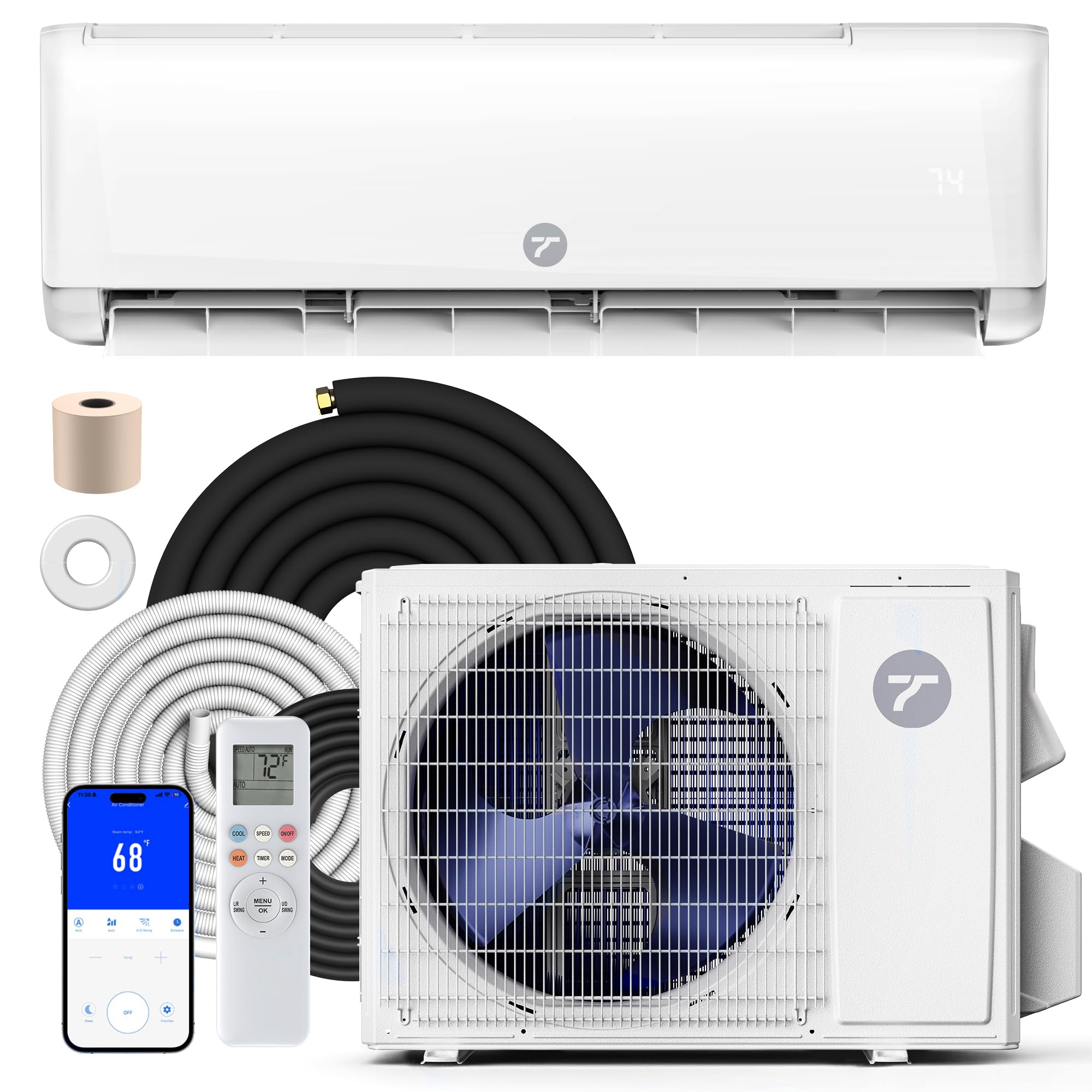
The Temprium is the quietest 110V unit in this roundup, with a published noise floor of 23 dB in Sleep Mode — quieter than a whisper in a library. That spec alone makes it the default choice for nurseries, home offices, and master bedrooms where mechanical hum destroys concentration or sleep quality. The 22 SEER2 rating is the highest in the comparison, meaning it will drive the lowest monthly electric bills among this group, and the R32 refrigerant (GWP 675) is significantly more environmentally friendly than legacy R410A.
Under the hood, the DC Inverter compressor adapts in 1 Hz increments, holding the setpoint at ±0.1°C. That level of precision prevents the temperature swings common in simpler on-off compressors. The unit delivers 12,000 BTU of cooling and 12,300 BTU of heating, covering spaces up to 750 square feet, with reliable heating maintained down to 5°F. The included installation kit features fully copper line sets, which is a durability differentiator versus aluminum-clad alternatives that can develop pinhole leaks over time.
Wi-Fi control via the SmartLife app integrates with Alexa and Google Assistant, and the 4D auto-swing louvers distribute air evenly across the room. The self-cleaning function runs the coil at 133°F to prevent mold buildup — particularly relevant in humid climates. Several users noted that the Wi-Fi pairing requires a brief remote-control sequence (hold COOL and +/- buttons for 3 seconds), so keep the manual handy. Overall, this is the most refined 115V package for buyers prioritizing silence and efficiency above all else.
Why it’s great
- Industry-leading 22 SEER2 efficiency for the lowest operating cost in the category.
- True library-quiet 23 dB Sleep Mode, confirmed by multiple user reports.
- Fully copper line set in the installation kit for long-term leak resistance.
Good to know
- Wi-Fi app setup requires a specific remote code; not immediately obvious out of the box.
- Heating performance drops significantly below 5°F; not ideal for extreme northern climates.
2. DELLA Vario 12,000 BTU 20.5 SEER2 Mini Split

The DELLA Vario has been on the market long enough to accumulate a substantial track record, including multiple user reports of reliable operation beyond three years. It carries a 20.5 SEER2 efficiency rating and, crucially, is rated for heating operation down to -4°F, giving it a meaningful winter-performance advantage over units that only guarantee heating to 5°F. The 12,000 BTU output covers up to 550 square feet, which is slightly more conservative than the 750 sq ft claims of some competitors, but that honest rating gives buyers a more realistic expectation of performance.
The system uses a DC Inverter compressor and includes 4D air flow with horizontal and vertical swing — unusual in this price tier. The I Feel mode shifts the temperature sensor to the remote control, so the unit conditions the air near where you actually sit, not at the wall-mounted return. The included line set uses standard 1/4-inch and 3/8-inch copper piping, and the drain pipe extends 78.7 inches. Buyers consistently note that the installation instructions are lackluster, but the build quality of the indoor and outdoor units draws high praise.
Noise output is rated at 28 dBa, which is quiet enough for a bedroom but slightly louder than the Temprium. The Wi-Fi and Alexa integration works reliably after initial setup, though early firmware versions on the app had some rough edges. The ETL and AHRI certifications confirm the unit meets safety and performance standards. For a buyer who values proven long-term ownership and genuine low-temperature heating capability, the DELLA Vario is the conservative, trustworthy choice.
Why it’s great
- Proven 3+ year reliability with multiple verified long-term user reports.
- Low-temperature heating operational down to -4°F for real winter performance.
- I Feel mode provides personalized comfort by sensing temperature at the remote location.
Good to know
- Installation manual is poor; owners recommend watching third-party DIY videos.
- Line set length is relatively short; long runs may require extension and additional refrigerant.
3. Garvee 12,000 BTU 22 SEER2 Mini Split
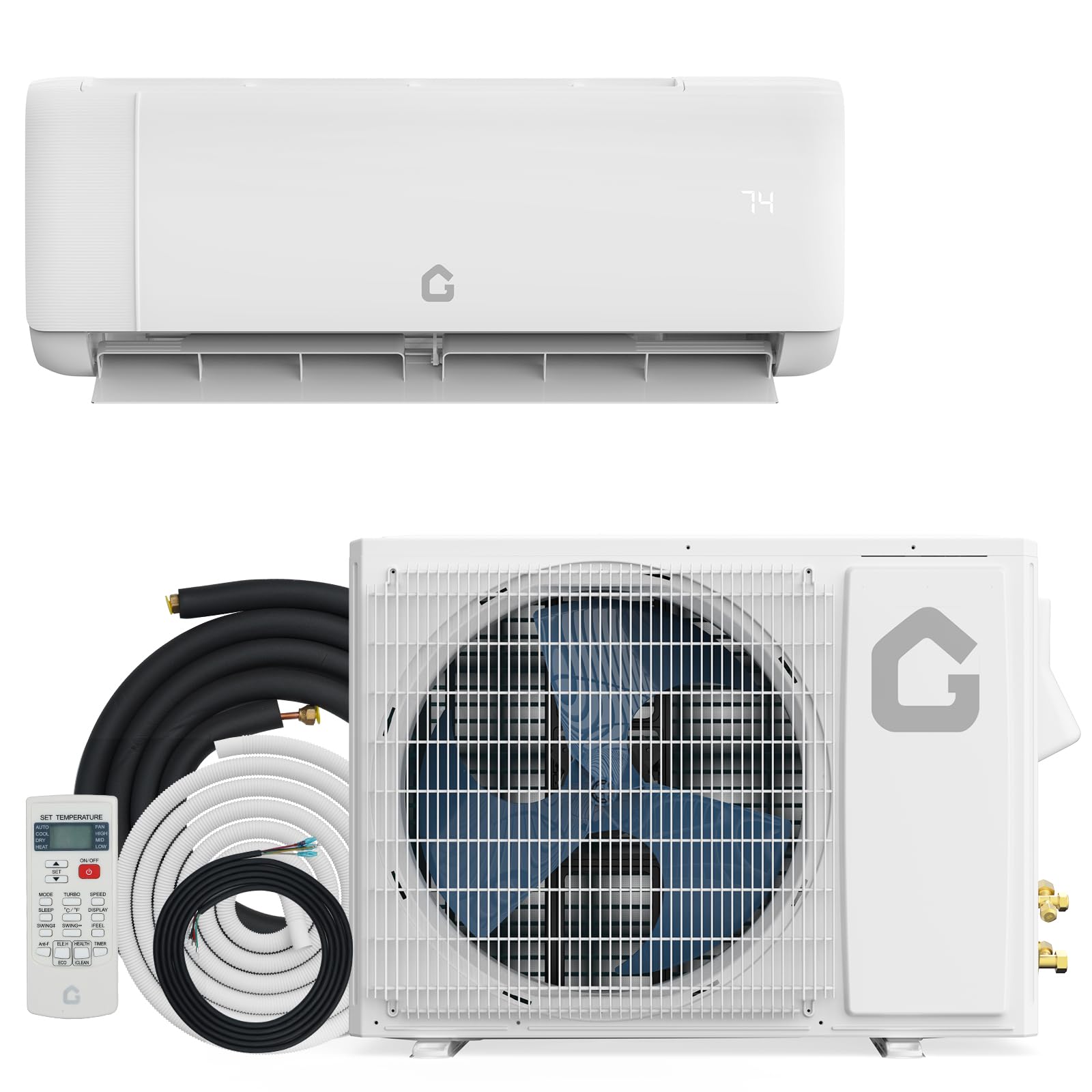
Garvee pairs a 22 SEER2 rating with an AI-driven vector inverter that holds the room temperature to ±0.1°C at a 1 Hz operating frequency. That degree of precision is rare in the 110V segment and means the compressor never slams on and off — it glides, using minimal energy to stay within a hair of the thermostat setting. The unit produces 12,000 BTU of cooling and 12,300 BTU of heating, covering up to 750 square feet, with noise levels ranging from 41 dB in Turbo mode down to 23 dB in Sleep mode.
The outdoor unit is 23% smaller than typical 12,000 BTU condensers, which is a genuine advantage for tight balcony installations or rooftop placements where physical footprint matters. The system uses R32 refrigerant, which is both more efficient and has a lower global warming potential than R410A. Wi-Fi control and Alexa compatibility come standard, and users report the app is straightforward. The 5-year warranty covers parts and functional defects, which is standard for the mid-range tier.
Some users flagged that professional installation is required to maintain the warranty, and the unit ships in two separate boxes that may arrive on different days. The line set is included, but installation brackets are not, so budget for those separately. Several early reviewers praised the system’s ability to cool a west-facing living room where central AC always struggled, with no noticeable jump in the electric bill after a month. The Garvee is the best pick for DIY-minded owners who want maximum efficiency and a compact outdoor footprint.
Why it’s great
- Industry-competitive 22 SEER2 combined with ±0.1°C temperature precision.
- Compact 23% smaller outdoor unit fits tight spaces where standard condensers won’t.
- Whisper-quiet 23 dB Sleep Mode, among the lowest in the category.
Good to know
- Installation bracket is not included; must be purchased separately.
- Ships in two boxes that may arrive on different days, causing installation delays.
4. Albott 12,000 BTU 18 SEER2 Mini Split
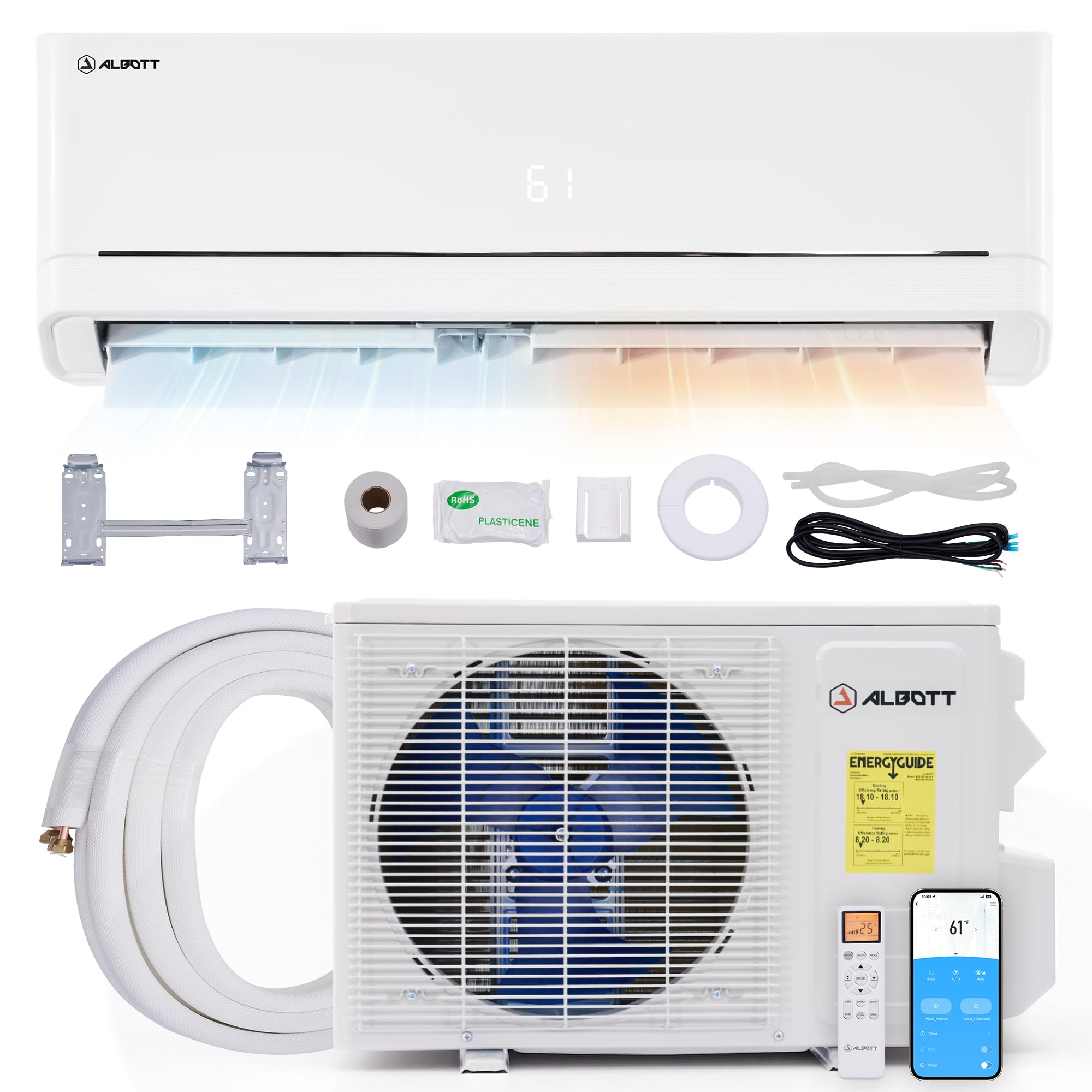
Albott’s 12,000 BTU unit operates down to 5°F for heating and up to 122°F for cooling, a wider operational envelope than many comparably priced competitors. The 18 SEER2 rating is slightly lower than the top-tier options, but the system compensates with a self-cleaning function that runs the indoor coil at high temperature to prevent mold and bacteria growth — a genuinely useful feature for humid climates where musty-smelling AC is a common complaint. The removable filters and air blades make cleaning simple, extending the time between professional service calls.
Noise is rated at 29 dB, which is still remarkably quiet — inaudible over normal conversation. The unit includes cooling, heating, dehumidifying, and fan modes, with a 24-hour timer and Sleep Mode. Wi-Fi control is built in, and the app allows remote adjustments and scheduling. The coverage area is listed at 750 square feet, matching the size of most two-car garages or open-plan living spaces. Several users who installed this as their first mini split praised the included instructions for being clear enough for a DIY install with a vacuum pump.
The 5-year compressor warranty and 7-year parts warranty provide above-average coverage for the mid-range tier. A handful of users noted that the Wi-Fi only operates on 2.4 GHz and that the app needs a firmware update, but after initial setup, the system performed without issue. For buyers who prioritize hygiene features and a wide operating temperature range over the absolute highest SEER2, the Albott presents a well-rounded package.
Why it’s great
- Self-cleaning function prevents mold and bacteria buildup in humid climates.
- Wide operating range from 5°F to 122°F for reliable year-round usability.
- 7-year parts warranty provides above-average long-term protection.
Good to know
- Limited 18 SEER2 efficiency results in slightly higher operating costs than top-tier models.
- Wi-Fi connectivity limited to 2.4 GHz networks only; no 5 GHz support.
5. Upstreman 12,000 BTU 20 SEER2 Mini Split
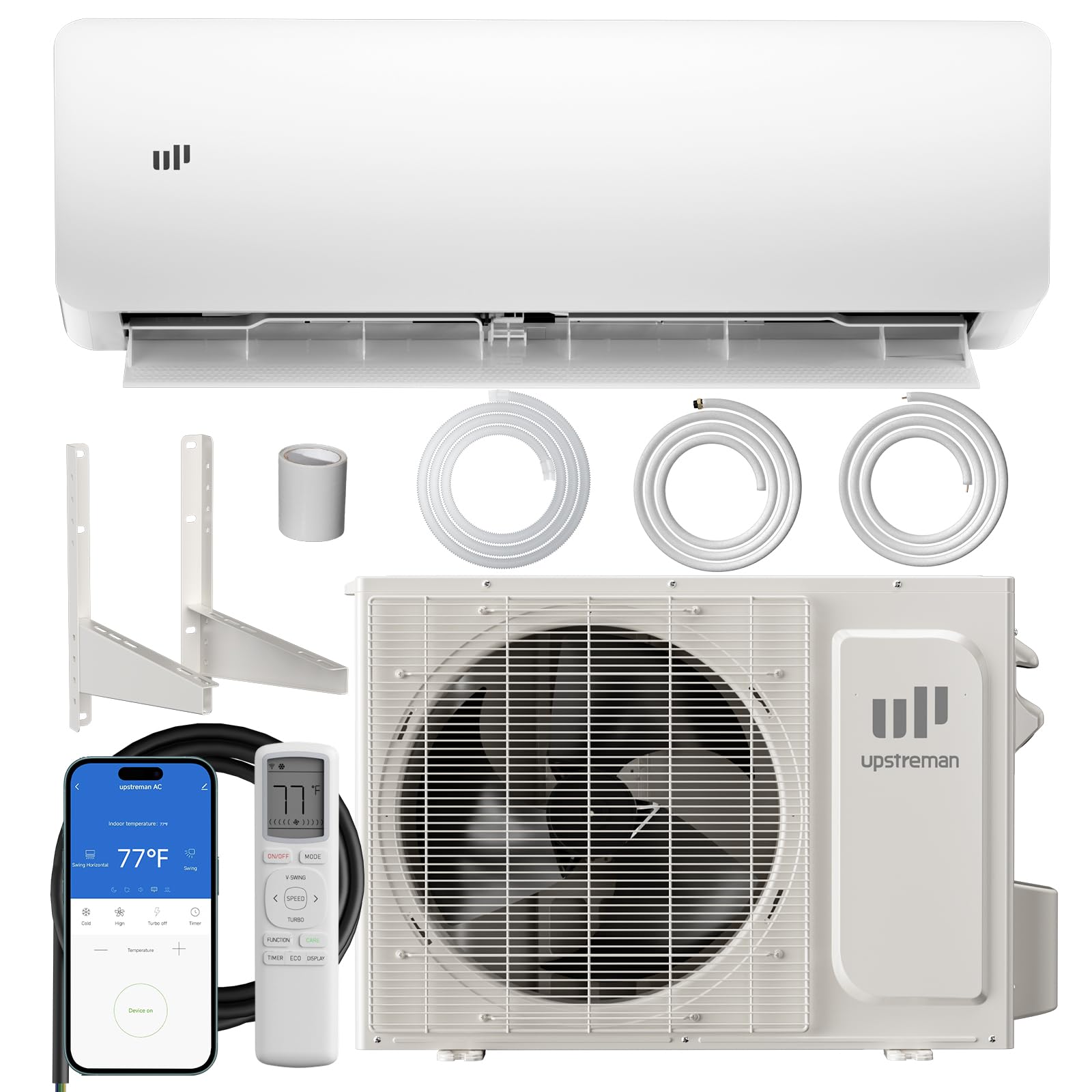
The Upstreman distinguishes itself with a published heating capability down to -4°F at a 20 SEER2 efficiency, making it one of the strongest cold-weather performers in the 115V category without stepping up to premium pricing. That spec is backed by multiple user reports confirming the unit maintained heat during single-digit temperatures, which is rare for a split operating on a standard household outlet. The 12,000 BTU capacity handles spaces up to 750 square feet, and the rotary compressor with inverter technology ensures the fan speed adjusts smoothly rather than cycling on and off.
The unit comes with a full installation kit including a wall mount bracket, which many competitors charge extra for. The included line set is copper, and the remote control provides access to cooling, heating, dehumidifying, and fan modes. Wi-Fi and Alexa integration work through an app that supports scheduling, and one user reported successful integration with IFTTT for custom automations. The display shows temperature in Celsius only, which is a minor but consistent complaint among US buyers.
Users who installed the unit in guest houses and detached garages praised the straightforward process, noting that the pre-charged system held vacuum well when a proper pump and gauge set were used. The instructions are notoriously poor — one user described them as “comically bad” — but the included installation video on the product page compensates. Overall, the Upstreman is the go-to choice for buyers in northern climates who need reliable heat in a standard-voltage package without stepping up to the top-tier price bracket.
Why it’s great
- Proven low-temperature heating operation down to -4°F, rare for the 115V price tier.
- 20 SEER2 rating delivers strong energy efficiency without the premium price premium.
- Includes wall mount bracket in the box, saving a separate purchase.
Good to know
- Indoor display only reads Celsius; not intuitive for US users accustomed to Fahrenheit.
- Printed instruction manual is poor; rely on the online installation video instead.
6. Manastin 12,000 BTU 19 SEER2 Mini Split

Manastin claims a 30-second cool-down from startup and a 60-second heat-up, powered by a high-efficiency rotary compressor. While the exact speed depends on the temperature delta, multiple user reviews confirm that the unit produces noticeably cold air within the first minute of operation — faster than the typical inverter ramp. The 19 SEER2 rating is solid for the mid-range tier, and the use of R32 refrigerant (as opposed to R410A) provides a meaningful environmental advantage with a lower GWP.
The system offers five modes — Cool, Heat, Auto, Fan, and Dry — along with four fan speeds, a 24-hour timer, Sleep Mode, Eco Mode, and a Turbo Boost function. The automatic defrost function prevents ice buildup during winter operation, and the anti-mildew coating on the indoor coil helps maintain air quality. Coverage is rated at 750 square feet, and the complete package ships in two boxes that may arrive at different times. The remote control uses icons that some users found confusing (a flame symbol for heat, a sun symbol for the fan), but functionality is not impacted.
Installation feedback is generally positive, with experienced DIYers completing the job in four hours. The included template for the wall mounting plate had a minor error on one batch — the drain orientation mark was misaligned — so buyers should verify orientation against the physical unit rather than trusting the paper template. For buyers who want near-instant temperature change in a garage or workshop, the Manastin’s rapid recovery speed is a genuine differentiator.
Why it’s great
- Remarkably fast 30-second cooling start-up, verified by multiple user reports.
- Uses R32 refrigerant for lower environmental impact than older R410A units.
- Auto-defrost and anti-mildew features reduce maintenance in humid or cold conditions.
Good to know
- Remote control icons are not intuitive; may require a brief learning period.
- Installation template had a noted drain-side orientation error in some units.
7. Mountman 12,000 BTU 19 SEER2 Mini Split
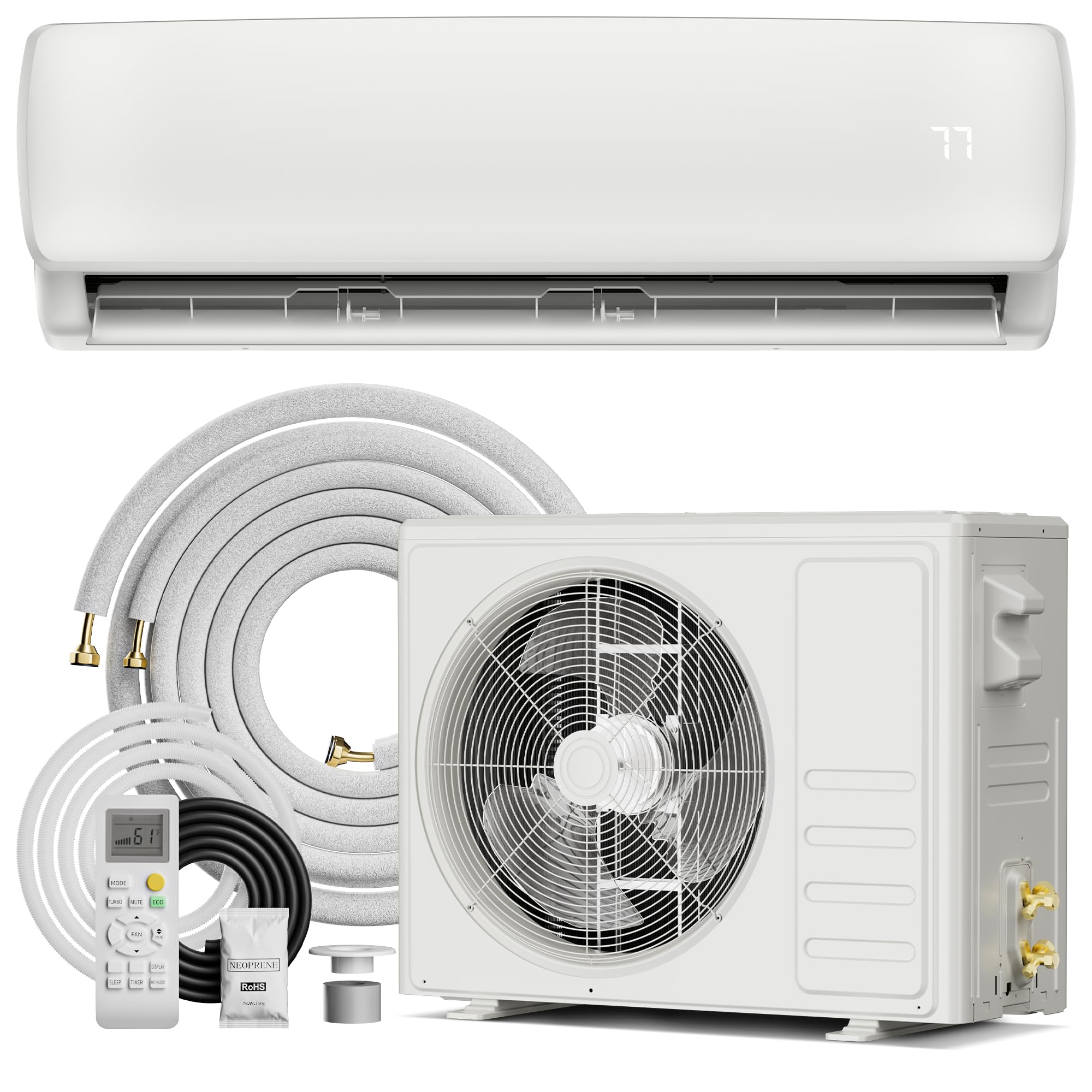
Mountman’s unit focuses on reducing the owner’s long-term maintenance burden with a high-temperature self-cleaning cycle that dries the indoor coil, plus an automatic defrost function that activates before ice can build up on the outdoor coil. The 19 SEER2 rating matches the efficiency of several competitors, but the maintenance-light approach is rare at this price point. The system operates at a 26 dB noise floor in Sleep Mode, making it one of the quieter options when you need undisturbed rest.
The 12,000 BTU unit covers up to 750 square feet and uses a rotary compressor with inverter technology. The remote control offers five modes: Cool, Heat, Dry, Fan, and Auto, plus 4 fan speeds and Turbo Boost for rapid temperature changes. The included pre-charged system comes with R32 refrigerant, installation kit, and a detailed manual — though several users described the manual as incomplete regarding charging information and wiring diagrams. The wall plate uses 12-inch center spacing, which is standard but worth verifying against your mounting surface.
Users who installed the unit themselves reported that the included line set is short but perfectly adequate for a direct through-wall installation, and the max current draw of approximately 12 amps confirms it can run on a standard 15-amp breaker without tripping. The system has been praised for its build quality, with one user noting it was about cheaper than a comparable unit from a local HVAC supplier. For owners who want a reliable 110V split with features that reduce the frequency of maintenance, the Mountman is a solid mid-range pick.
Why it’s great
- Self-cleaning and auto-defrost functions significantly reduce required maintenance.
- Very quiet 26 dB Sleep Mode, suitable for bedrooms and nurseries.
- Low current draw (~12A) allows use on standard household 15A circuits without issue.
Good to know
- Installation manual lacks detailed charging and wiring information, especially for DIY users.
- Customer service responsiveness has been inconsistent, per some user reports.
8. Confortotal 12,000 BTU 110V Mini Split

The Confortotal stands out because it ships as a true plug-in 110V model, meaning no hardwiring is required — just a standard NEMA 5-15 outlet. That makes it the default choice for cabins, sheds, and workshops where running a dedicated circuit would be impractical. The unit delivers 12,000 BTU of cooling and heating, covering up to 750 square feet, with a pre-charged compressor that simplifies installation for anyone comfortable with basic tools and a vacuum pump.
Wi-Fi and Alexa compatibility are built in, though the app setup has been described as finicky — some users needed a few attempts to pair the unit with their home network. The noise level is approximately 40 dB in normal operation, which is acceptable but not as quiet as the Temprium or Garvee. The rotary compressor is standard for this tier, and the included line set uses 1/4-inch and 3/8-inch copper lines. Several users reported successfully powering the unit with an 8500-watt generator during off-grid stays, giving it a backup-power advantage over hardwired systems.
The most common negative feedback concerns inconsistent heating performance — one user reported the unit failed to heat their garage at all, while others praised the heating as effective. This inconsistency suggests that unit-to-unit quality control may vary, and buyers should verify the system’s heat output early in the first cold spell. For a weekend cabin or a workshop where budget is the primary concern and the heating requirement is modest, the Confortotal represents the lowest barrier to entry in the plug-in category.
Why it’s great
- True plug-in 110V design eliminates the need for hardwiring or a dedicated circuit.
- Generator-compatible, making it ideal for off-grid cabins and backup scenarios.
- Low entry price point for a 12,000 BTU system with Wi-Fi and Alexa support.
Good to know
- Heating performance is inconsistent between units — some users report poor winter output.
- Wi-Fi app pairing can be finicky; may require multiple attempts during setup.
9. ROVSUN 9,000 BTU 19 SEER2 Mini Split

The ROVSUN 9,000 BTU unit is the smallest capacity model in this guide, but that compact size brings advantages: lower purchase cost, reduced current draw (under 7.5 amps), and a smaller outdoor condenser that fits on tight balconies or narrow side yards. The 19 SEER2 rating is strong for a 9,000 BTU unit, and the coverage area of 450 square feet makes it perfect for a single bedroom, a home office, or a small garage workshop. The unit uses a rotary inverter compressor with R32 refrigerant.
Noise is rated between 28 and 42 dBa, and users consistently describe the system as “very quiet” — the indoor unit is nearly silent at lower fan speeds. The remote control offers four fan speeds, Sleep Mode, a 24-hour timer, ECO Mode, Turbo Mode, and a Mute function for the indoor unit display. The 4-way swing louvers distribute air evenly, and the pre-charged system holds a charge well when installed correctly. A professional HVAC technician who reviewed the unit noted that it required a proper vacuum and subcooling check, so this is not a true plug-and-play appliance for a complete novice.
One user reported a coil leak after the first year and received a warranty replacement, but the second unit performed well. The customer service experience has been polarizing — some users describe it as responsive, while others report unreturned calls after a failure. Overall, the ROVSUN is a solid choice for small, low-amp applications where a 12,000 BTU unit would be oversized, but buyers should verify warranty support before purchasing.
Why it’s great
- Low current draw under 7.5A is ideal for small circuits or generator power.
- 19 SEER2 efficiency in a small package keeps operating costs low for compact spaces.
- Truly whisper-quiet indoor unit, especially at low fan speeds.
Good to know
- Smaller capacity (9,000 BTU) limits use to rooms under 450 sq ft only.
- Customer service response times have been inconsistent in some user experiences.
10. Rellytech 12,000 BTU 20 SEER2 Mini Split
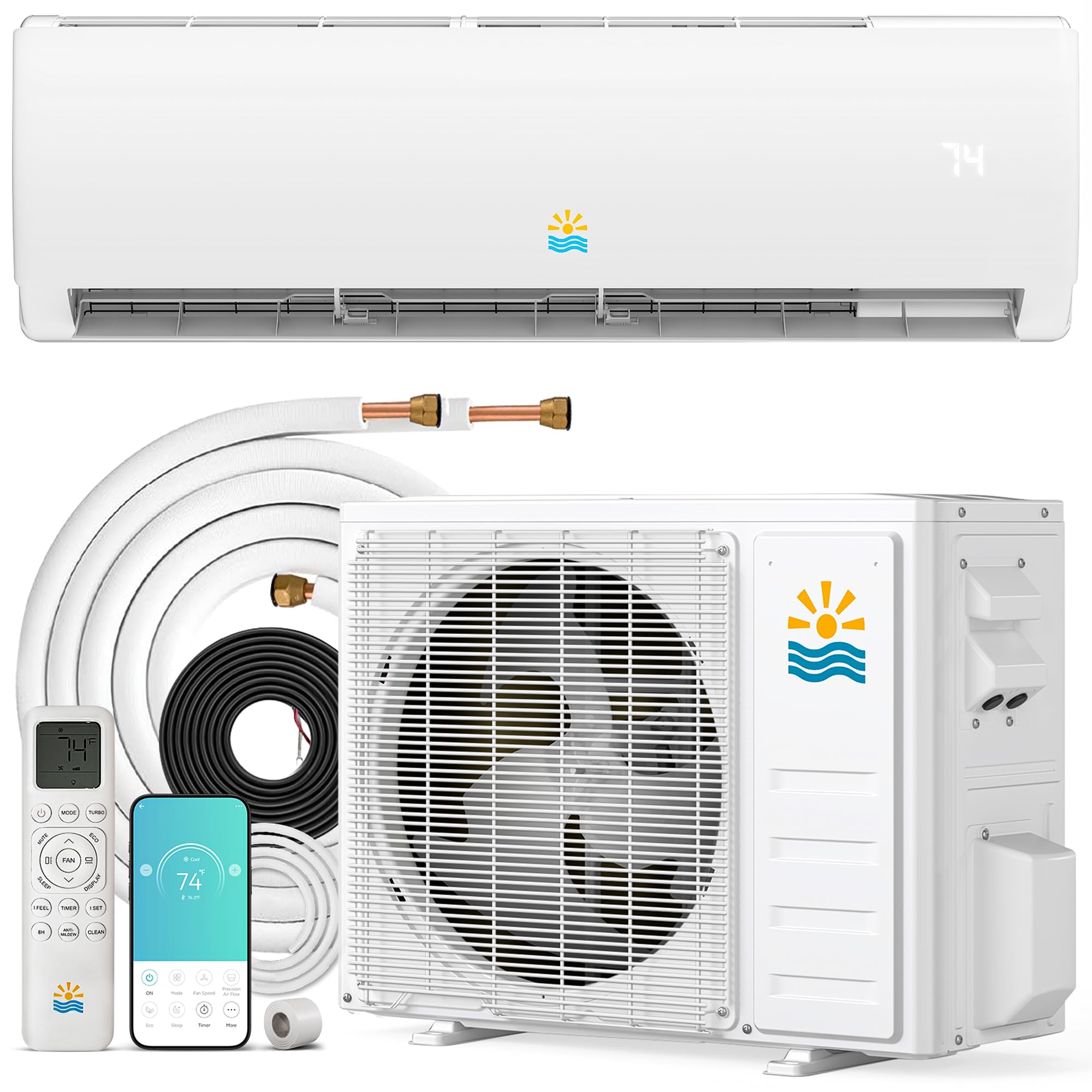
The Rellytech 12,000 BTU model achieves a 20 SEER2 rating at an entry-level price point, making it one of the highest-efficiency budget options in the 115V segment. It uses R454B refrigerant, which has a lower global warming potential than R410A and is closer to R32 in environmental impact. The inverter compressor operates down to -13°F for heating and up to 122°F for cooling, giving it the widest published operating range in this review. Coverage is rated at 750 square feet, and the system includes Wi-Fi control, a 24-hour timer, Turbo Mode, and an I Feel function.
The installation kit is comprehensive, including 16-foot copper line sets, drain pipe, insulation tape, and a wall mounting template. The unit ships in two boxes, and the power cord is notably not included, so buyers need to supply a fused disconnect or plug kit. The 8-year warranty is one of the longest offered on a budget-tier unit, but reading the fine print on what qualifies as a “functional defect” versus shipping damage is worth doing before purchase.
The customer review profile is concerning. Multiple buyers reported units arriving with bent condenser fins, visible internal damage, and insufficient factory refrigerant charge — all symptoms of rough handling during shipping or inconsistent quality control. Several units failed within 24 hours. While the warranty is long, the need to file a claim on day one is a frustrating experience. The Rellytech is a tempting value on paper, but the risk of receiving a damaged or defective unit is higher than average, and buyers should factor in potential return headaches.
Why it’s great
- Impressive 20 SEER2 rating and low-temperature heat down to -13°F for a budget price.
- Uses R454B refrigerant, a more environmentally friendly option than R410A.
- 8-year warranty is the longest in the budget tier, offering extended coverage.
Good to know
- Multiple reports of units arriving with bent fins, insufficient refrigerant, or internal damage.
- Power cord is not included; must be purchased separately for installation.
11. Rellytech 9,000 BTU 19 SEER2 Mini Split
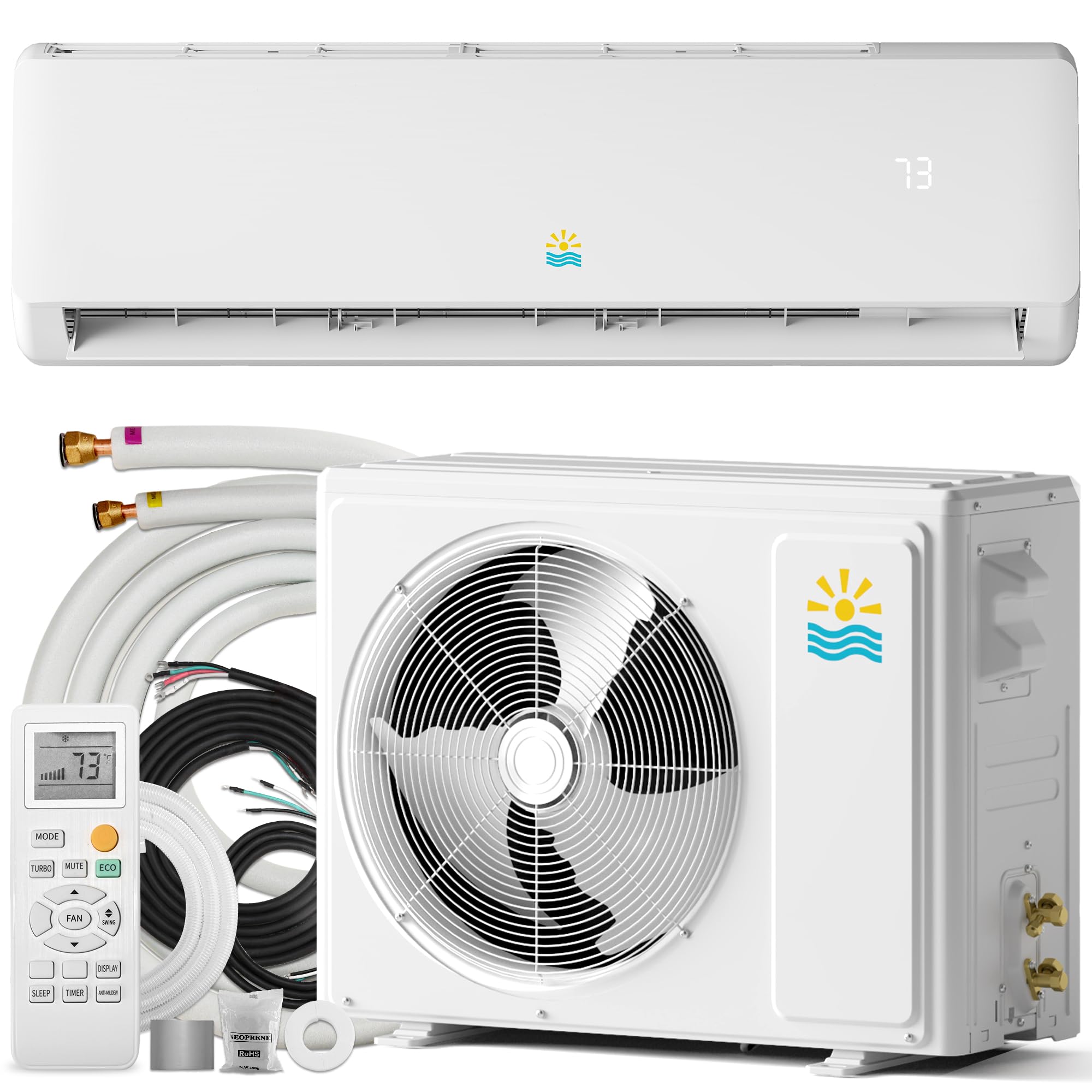
This smaller Rellytech unit delivers 9,000 BTU of cooling and heating, covering up to 550 square feet, at a 19 SEER2 efficiency rating. It uses the same R454B refrigerant as its larger sibling and operates at a 42 dB noise floor — slightly louder than the premium options but still quieter than a window AC unit. The system is ETL and AHRI certified, and the 8-year warranty matches the larger Rellytech model. The pre-charged compressor and included installation kit make this an accessible entry point for buyers looking to dip their toes into the 110V mini split category without a large upfront commitment.
The same quality control concerns that plague the 12,000 BTU Rellytech apply here. Multiple user reports describe units arriving with bent condenser fins, insufficient factory refrigerant charge, and outright failure within the first day of operation. One buyer noted that the unit would not cool at all, and a professional HVAC technician confirmed the system was undercharged from the factory. Another buyer reported that the heat pump function stopped working entirely after a few weeks. The advertised 24-hour customer service number was reported as non-functional by one user who needed warranty support.
For the price, the features are attractive: ECO mode, Sleep Mode, a 24-hour timer, and the ability to run on a standard 115V outlet without an electrician. But the high rate of reported defects suggests that Rellytech has not yet dialed in its quality control. This unit is a calculated gamble — if you receive a properly charged, undamaged unit, the performance-to-price ratio is excellent. If you receive a defective one, the return process may be more painful than the savings justify.
Why it’s great
- Lowest entry price in the 9,000 BTU 115V category, lowering the barrier to zone cooling.
- 19 SEER2 efficiency and R454B refrigerant offer decent specs for the cost.
- Full installation kit included, reducing the number of extra parts needed.
Good to know
- High rate of reported defects: bent coils, insufficient refrigerant, and early failure are common.
- Customer service responsiveness is inconsistent, with some users unable to reach support.
FAQ
Can a 110V mini split really heat a room when it’s below freezing outside?
What is the difference between 110V and 115V for mini split systems?
Do I need a professional HVAC technician to install a 110V mini split?
How do I size a 110V mini split for my room?
Why do some 110V mini splits ship in two boxes while others don’t?
Final Thoughts: The Verdict
For most users, the best 110 volt mini split winner is the Temprium 12,000 BTU because it combines the highest SEER2 rating (22) and lowest noise floor (23 dB) in a well-built package with R32 refrigerant and reliable Wi-Fi control — a combination that delivers the lowest operating cost and the highest comfort level in the 115V category. If you prioritize proven long-term reliability and genuine low-temperature heating, grab the DELLA Vario 12,000 BTU. And for small spaces (under 450 sq ft) where every amp counts, nothing beats the efficiency and compact footprint of the ROVSUN 9,000 BTU.

Mo Maruf
I created WellFizz to bridge the gap between vague wellness advice and actionable solutions. My mission is simple: to decode the research and give you practical tools you can actually use.
Beyond the data, I am a passionate traveler. I believe that stepping away from the screen to explore new environments is essential for mental clarity and physical vitality.