Our readers keep the lights on and my smoothie glass nicely filled. As an Amazon Associate, I earn from qualifying purchases.
Choosing a 100Ah lithium battery can feel like navigating a sea of technical jargon and conflicting claims. Your power source is the heart of your RV, boat, or off-grid system, and a poor choice can lead to unreliable performance, safety concerns, and premature failure. The transition from lead-acid to LiFePO4 technology brings immense benefits, but only if you know which specifications truly matter for your specific application.
I’m Mohammad Maruf — the founder and writer behind WellFizz. My focus for the last decade has been dissecting market data and technical specifications to understand how wellness and lifestyle products perform in real-world conditions, moving beyond marketing hype to deliver actionable analysis.
Through extensive research of user feedback, technical tear-downs, and warranty data, I’ve identified the key factors that separate a reliable long-term investment from a disappointing power source. My goal is to give you the clarity needed to invest in a system that provides peace of mind and consistent energy. To make a confident decision, you need to understand the critical differences between a budget-friendly best 100ah lithium battery and a premium model beyond just the initial cost.
How To Choose The Best 100Ah Lithium Battery
Selecting the right battery involves more than just matching amp-hour ratings. It’s about ensuring the battery’s design philosophy aligns with your environmental conditions, power demands, and long-term expectations. A mismatch can lead to reduced lifespan or even a complete system failure when you need it most.
Prioritize the Battery Management System (BMS)
The BMS is the brain of your battery. A 100A BMS is standard, but its quality and feature set vary widely. Look for explicit protection against over-charge, over-discharge, over-current, short-circuit, and overheating. Crucially, for users in variable climates, low-temperature charging protection is non-negotiable. Charging a LiFePO4 battery below freezing (32°F/0°C) can permanently damage the cells; a quality BMS will physically disconnect the charger to prevent this.
Decode Cycle Life and Depth of Discharge (DoD)
Manufacturers often advertise a high number of cycles (e.g., 4,000 to 15,000). Always check the associated Depth of Discharge. A battery may promise 15,000 cycles at only 60% DoD, meaning you should only use 60% of its capacity for that longevity. For true deep-cycle use where you might regularly use 80-100% of the capacity, the cycle life will be lower. Understanding this relationship helps you gauge the true long-term value.
Evaluate Physical Size and Weight
LiFePO4 batteries are significantly lighter than lead-acid, but weights still range from about 20 to 25 pounds for a 100Ah unit. “Mini” versions offer substantial space savings, which is ideal for cramped RV compartments or portable applications. However, ensure the terminal types (usually M8 studs) and placement are compatible with your existing wiring and that the compact size doesn’t compromise heat dissipation during high-current draws.
Quick Comparison
On smaller screens, swipe sideways to see the full table.
| Model | Type | Best For | Key Feature | Amazon |
|---|---|---|---|---|
| LiTime Trolling Motor | LiFePO4 | Marine & Cold Weather | ABYC E-13 & Low-Temp Protection | Amazon |
| Timeusb 12V 100Ah | LiFePO4 | RV & Solar Systems | IP65 Case, Group 31 Size | Amazon |
| ECO-WORTHY 12V 100AH | LiFePO4 | Tech-Savvy Users | Bluetooth App & SOC Display | Amazon |
| Redodo 12V 100Ah | LiFePO4 | General Deep Cycle Use | Long-Standing Brand Reputation | Amazon |
| Power Queen 12V 100Ah | LiFePO4 | Value-Conscious Expansion | Lightweight, Scalable Design | Amazon |
| Wattcycle Group 24 | LiFePO4 | Space-Constrained Installations | Compact Group 24 Footprint | Amazon |
| LiTime Standard Group 31 | LiFePO4 | Reliable RV & Off-Grid Power | UL 1973 Safety Certification | Amazon |
| LiTime TM (B0C8T1FD7M) | LiFePO4 | Trolling Motors & Boats | Marine-Optimized BMS | Amazon |
| CYCLENBATT Mini | LiFePO4 | Portability & Tight Spaces | 45% Smaller Volume | Amazon |
| DUNFUME 12V 100Ah | LiFePO4 | Entry-Level Power Storage | Budget-Friendly Group 31 | Amazon |
| Weize AGM 12V 100Ah | AGM Lead-Acid | Traditional System Replacement | Proven Lead-Acid Technology | Amazon |
In‑Depth Reviews
1. LiTime 12V 100Ah Trolling Motor Battery

For users who demand robustness, especially in marine environments or colder climates, this LiTime Trolling Motor variant stands out. It’s engineered beyond the basics with a BMS that offers triple protection against dust, water, and salt spray, aligning with the rigorous ABYC E-13 marine standard. The smart low-temperature protection is a critical feature, actively halting charging below 32°F to prevent cell damage, a safeguard many budget batteries lack.
In application, this battery delivers the reliable, stable power that trolling motors and sensitive marine electronics require. The built-in Transient Voltage Suppression (TVS) diode shields connected equipment from voltage spikes common in rough waters. Users report exceptional all-day runtime, with many noting minimal voltage drop even after hours of continuous use, a testament to its high-quality Grade A cells and efficient BMS management.
While positioned at a premium level, the investment is justified by its specialized protections and peace of mind. The 5-year warranty and noted responsiveness of LiTime’s customer service further reinforce its status as a top-tier choice. It’s not just a battery; it’s a dedicated marine power component designed for longevity and safety in demanding conditions.
Why it’s great
- Comprehensive marine-grade protection (ABYC E-13).
- Reliable low-temperature charge/discharge cutoff.
- Excellent real-world capacity and runtime reports.
- Strong brand reputation with responsive support.
Good to know
- Premium price point compared to standard models.
- As with all lithium, requires a compatible charger.
2. Timeusb 12V 100Ah LiFePO4 Battery

The Timeusb battery strikes a remarkable balance between robust features and a mid-range position, making it a compelling choice for serious RV and solar users. Its IP65-rated dustproof and water-resistant casing provides a tangible durability advantage for installations that might face humidity, condensation, or outdoor elements. This physical resilience, combined with automotive-grade LiFePO4 cells, suggests a build focused on long-term reliability.
Performance feedback from the field is overwhelmingly positive, with users in demanding applications like expedition marine systems reporting that these batteries handle high charge and discharge rates without issue. The 100A BMS offers standard protections, and the battery maintains the familiar Group 31 footprint for easy replacement of old lead-acid banks. The energy density is excellent, offering full 1280Wh capacity in a relatively lightweight package.
Where this model particularly shines is in perceived customer care. Numerous reviews highlight exceptional, knowledgeable support from the Timeusb team, which adds significant value. For users building a system where future support might be needed, this proactive service, paired with a 5-year warranty, elevates the product beyond its physical specs alone.
Why it’s great
- IP65 enclosure for environmental durability.
- Consistently praised customer service and support.
- Handles high-current applications reliably.
- Strong performance relative to its cost.
Good to know
- Lacks low-temperature charging protection.
- Group 31 size may not fit ultra-compact spaces.
3. ECO-WORTHY 12V 100AH with Bluetooth
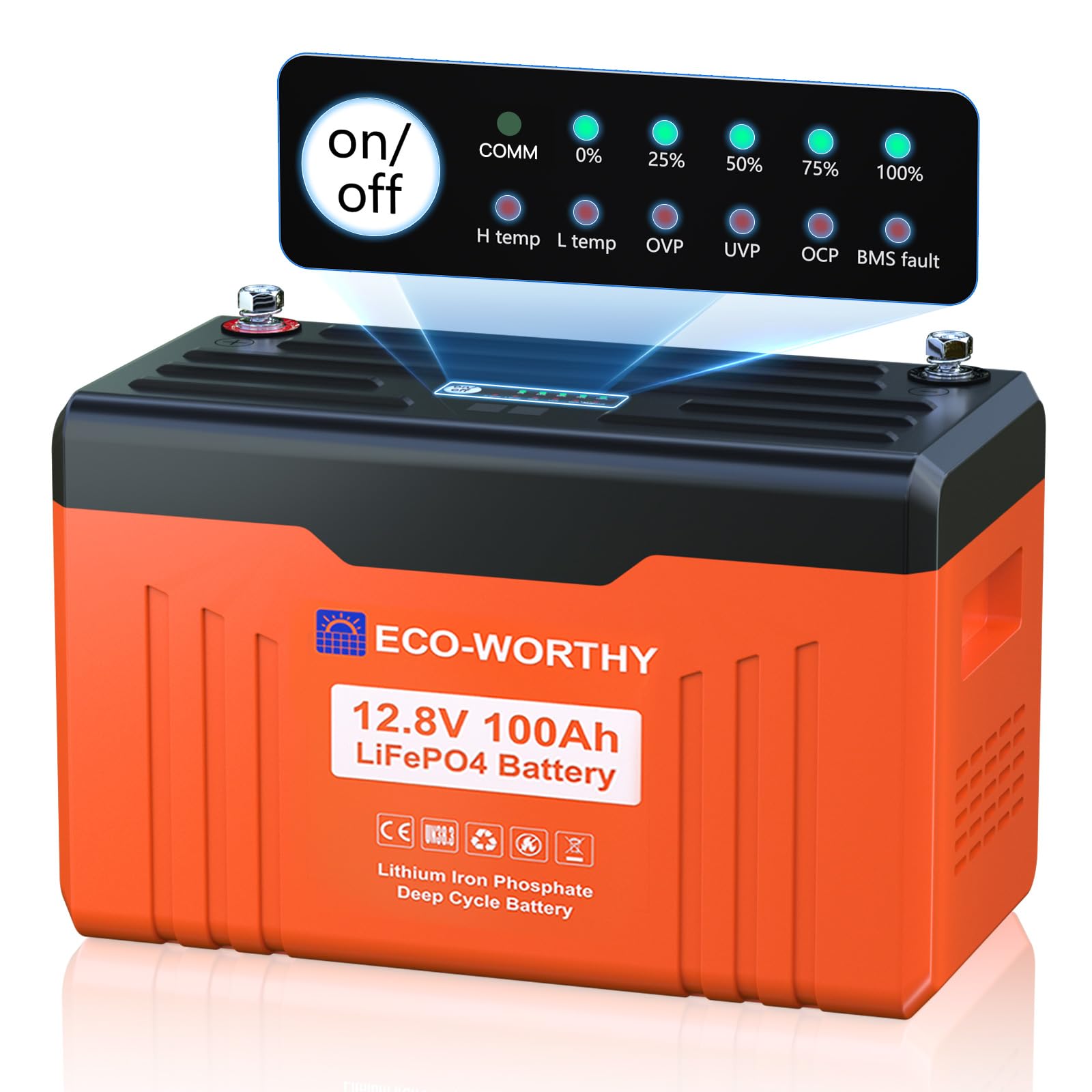
For the user who wants maximum visibility into their power system, the ECO-WORTHY upgraded model delivers with integrated Bluetooth and a clear State-of-Charge (SOC) display. The companion app allows you to monitor voltage, current, cell balance, and remaining runtime from your phone within a 98-foot range, eliminating the guesswork and need for external shunt monitors. The physical LED panel provides a quick, at-a-glance check without any tools.
Functionally, it’s a capable battery with a 100A BMS that includes low-temperature protection. The internal construction uses a metal fixture to secure the cells, which the manufacturer states prevents swelling and enhances safety. Users find it works very well for powering coolers, diesel heaters, and as a general 12V source, appreciating the convenience of wireless monitoring for off-grid or RV setups.
It’s important to note that early production runs had some firmware quirks with the Bluetooth module, particularly regarding charging cutoffs. The company has been responsive to these issues, indicating fixes in future revisions. This battery is ideal for tech-oriented users who value data and are comfortable with potential early-adapter nuances in exchange for its innovative features.
Why it’s great
- Convenient Bluetooth monitoring via smartphone app.
- Helpful built-in LED display for quick SOC check.
- Includes low-temperature charging protection.
- Solid general performance for typical loads.
Good to know
- Some reported firmware/software glitches in early units.
- Bluetooth functionality adds a small constant drain.
- App and documentation can feel less polished.
4. Redodo 12V 100Ah LiFePO4 Battery

Redodo has established itself as a reliable name in the value segment of the LiFePO4 market, and this 100Ah model embodies that reputation. It’s a straightforward, no-frills battery that focuses on delivering the core benefits of lithium technology: long cycle life, light weight, and stable voltage. Its design is a direct drop-in replacement for Group 31 lead-acid batteries, making the upgrade process simple for most users.
The battery uses automotive-grade cells and is backed by a clear cycle life expectancy: 4,000 cycles at 100% depth of discharge, scaling up to 15,000 cycles at 60% DoD. Real-world users, from RV owners to commercial operators, report excellent results, with many noting it outperforms and outlasts the lead-acid batteries it replaced. The weight savings—around 60% lighter than equivalent lead-acid—is frequently highlighted as a major practical benefit.
While it may lack some of the premium features like Bluetooth or an ultra-rugged case, its strength is in doing the fundamentals very well at a competitive price point. For someone looking for a dependable workhorse battery from a known brand without extra cost for features they may not need, the Redodo is a consistently safe bet.
Why it’s great
- Strong track record and positive long-term user reports.
- Excellent weight savings and direct drop-in form factor.
- Clear, honest cycle life specifications.
- Good balance of quality and affordability.
Good to know
- No advanced features like Bluetooth or low-temp protection.
- Aesthetic and feel may be more utilitarian than some.
5. Power Queen 12V 100Ah LiFePO4 Battery
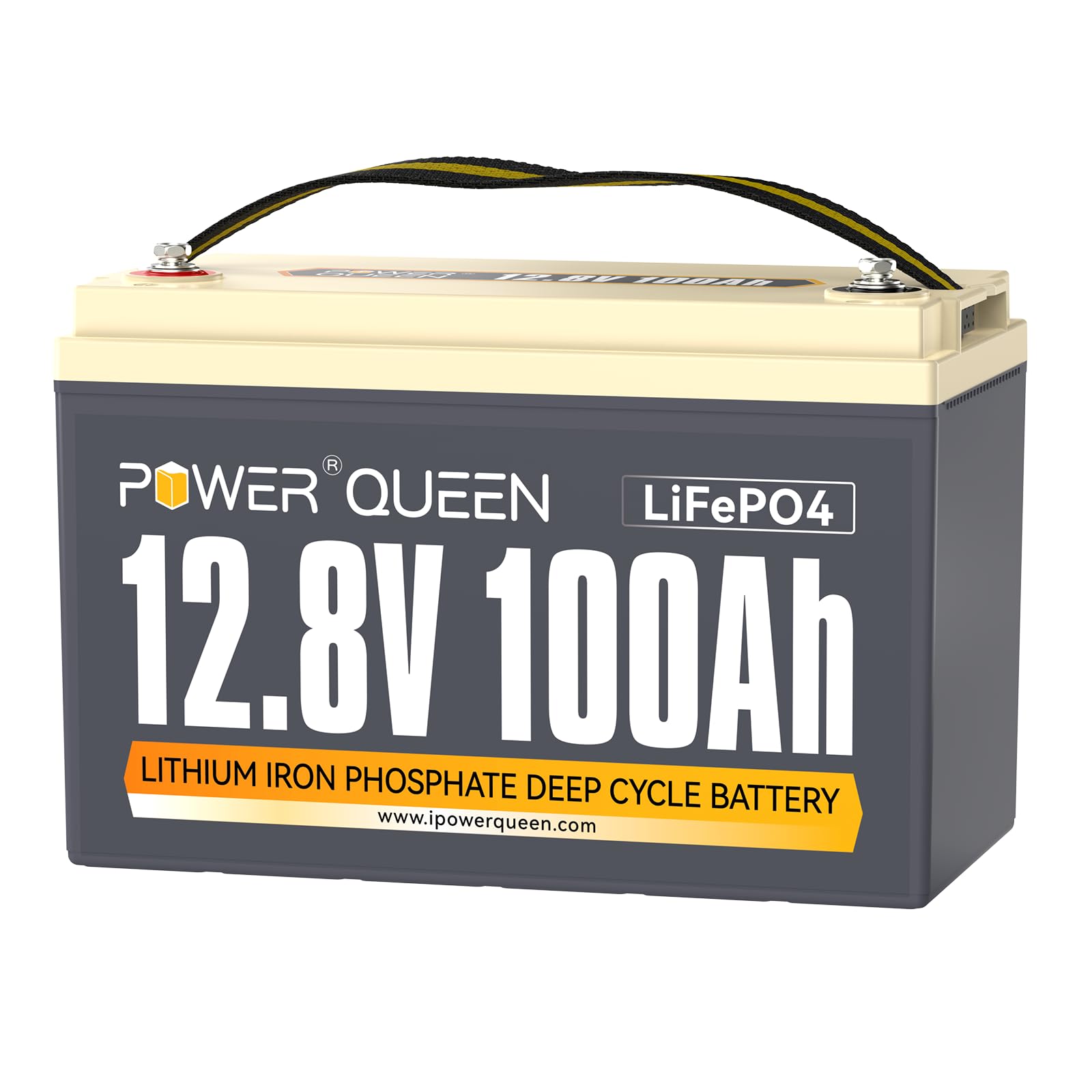
Power Queen offers another solid contender in the popular Group 31 size, emphasizing the use of Grade-A cells and a high cycle life. Weighing only about 24 pounds, it provides the significant portability advantage common to LiFePO4, making installation and maintenance far easier. The build quality is generally reported as solid, and it supports series and parallel connections for system expansion up to a 48V 400Ah bank.
Users across various applications—from RV house power to trolling motors and home backup—find it delivers on its capacity promises. Many note it holds voltage well under load and provides ample runtime. The company has also garnered attention for proactive customer engagement, with some buyers reporting direct follow-up calls to check on satisfaction, which is a valuable touch in a crowded online market.
This battery sits in the upper-mid range, offering a slight step up in perceived quality from entry-level options. It’s a versatile choice for someone planning to potentially expand their system in the future, as its consistent performance and design make it a good candidate for building larger battery banks.
Why it’s great
- Reliable performance from Grade-A cells.
- Very lightweight for easy handling.
- Suitable for scalable series/parallel setups.
- Proactive customer service outreach reported.
Good to know
- Terminal bolts are noted by some as being short.
- Brand has several similar models; ensure you select the correct one.
6. Wattcycle 12V 100Ah BCI Group 24
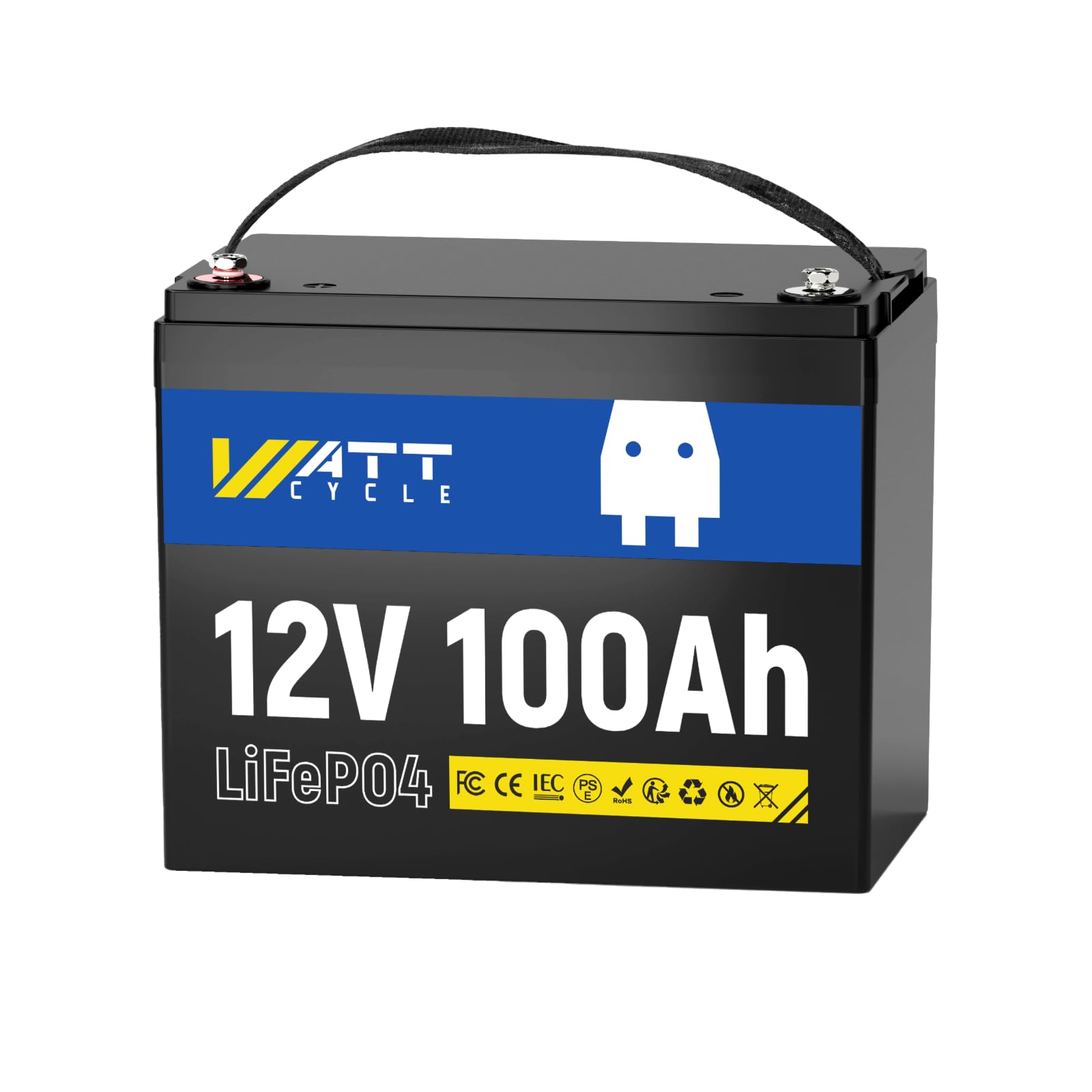
The Wattcycle stands out by targeting the BCI Group 24 form factor, which is notably more compact than the standard Group 31. This makes it an excellent solution for installations where space is at a premium, such as smaller RV battery compartments, customized camper vans, or specific marine applications. Despite its smaller size, it doesn’t sacrifice capacity, still delivering a full 100Ah.
It incorporates important features like a 100A BMS with low-temperature protection, allowing charging down to -4°F and operation in even colder conditions. User reviews from trolling motor and RV applications are positive, noting its ability to power high-wattage inverters and provide solid all-day performance. The lighter weight associated with its smaller frame is another added benefit.
If your primary constraint is physical space, this battery is a top contender. It successfully packs standard lithium performance into a smaller package. Just verify that the Group 24 dimensions align with your battery box or tray, as it will be considerably smaller than a typical Group 31 footprint you might be used to.
Why it’s great
- Perfect for space-constrained Group 24 battery boxes.
- Includes functional low-temperature protection.
- Full 100Ah capacity in a smaller package.
- Well-regarded for trolling motor use.
Good to know
- Compact size means less surface area for heat dissipation.
- May require different hold-down hardware than Group 31.
7. LiTime 12V 100Ah RV Lithium Battery
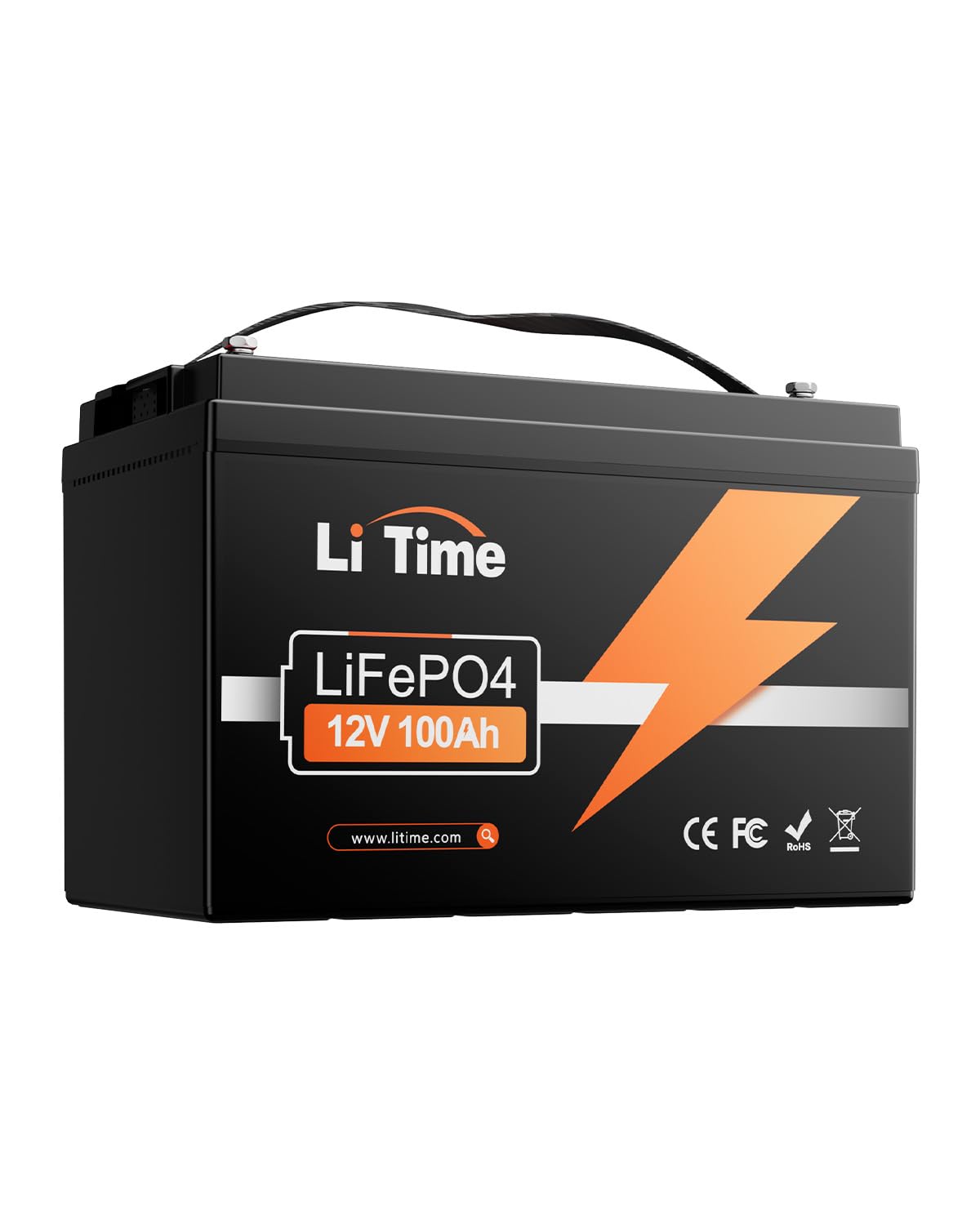
This is the model that helped cement LiTime’s (formerly Ampere Time) reputation in the market. It’s a premium-standard Group 31 battery known for its reliability, safety certifications, and excellent customer support. The mention of UL 1973 compliance is significant, as it indicates independent testing for safety, minimizing risks associated with overheating—a key concern for many users.
Performance reviews are consistently strong, with users highlighting its true capacity delivery and longevity. The lightweight design (around 22 lbs) is always appreciated during installation. Perhaps just as important is the well-documented history of LiTime’s customer service, which is frequently cited as responsive and helpful, including honoring warranties effectively. This creates a strong sense of security with the purchase.
While this standard model may not have the marine-specific low-temperature charging protection of its “Trolling Motor” sibling, it remains a top recommendation for general RV, solar, and off-grid use where extreme cold charging isn’t a factor. It represents the benchmark for what a reliable, well-supported lithium battery should be.
Why it’s great
- UL 1973 safety certification for added peace of mind.
- Extensive positive history and proven reliability.
- Legendary customer service and warranty support.
- Excellent energy density and real-world performance.
Good to know
- Lacks low-temperature charging protection.
- Premium brand positioning.
8. LiTime 12V 100Ah Group 31 (TM Version)
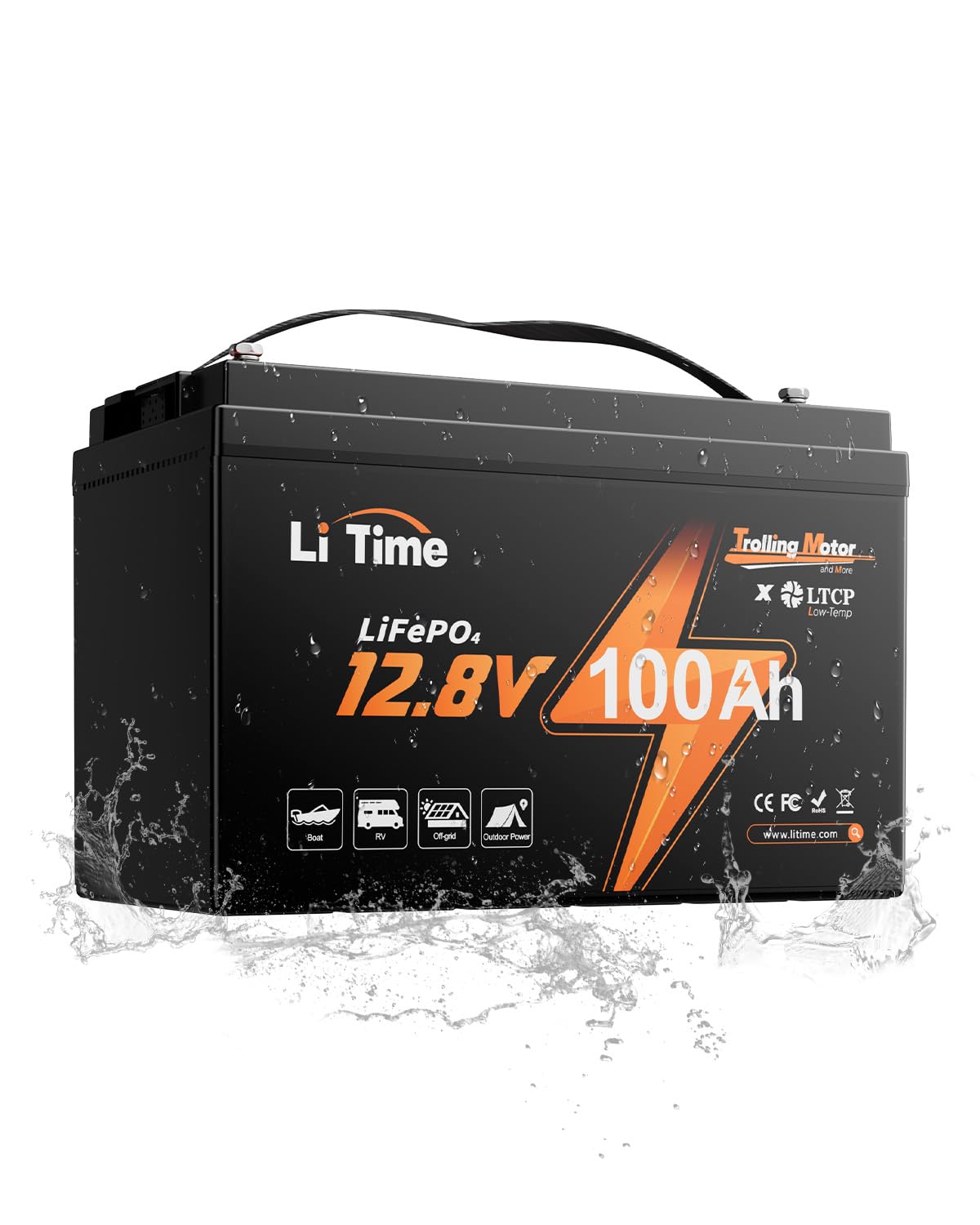
This specific LiTime model is another iteration of their trolling motor-focused line, sharing many core attributes with the top-pick variant. It features the same marine-oriented BMS with low-temperature cutoffs and Transient Voltage Suppression (TVS) for protecting sensitive electronics from voltage spikes—a common issue on boats. The focus is squarely on durability and stability in the harsh marine environment.
User experiences echo this, with boaters reporting exceptional all-day performance, minimal voltage sag, and a transformative weight reduction compared to lead-acid. Some users have even reported survival after accidental submersion, a testament to its robust sealing (though not advertised as waterproof). The battery’s ability to maintain a stable voltage under the variable load of a trolling motor is a key strength.
It’s important to distinguish this from LiTime’s standard RV model. If you are a boater or plan to use the battery in a damp, variable-temperature environment, this is the version to choose. The specialized protections justify its positioning for this use case, making it a preferred component for marine electrical systems.
Why it’s great
- Specifically designed for marine vibration and spikes.
- Effective low-temperature protection.
- Extremely light and easy to install on boats.
- Consistent high-performance reports from anglers.
Good to know
- As a premium marine product, it commands a higher cost.
- Some users note the BMS can behave differently during bench charging.
9. CYCLENBATT 12V 100Ah Mini LiFePO4

The CYCLENBATT Mini lives up to its name, offering a dramatic 45% reduction in volume compared to a standard Group 31 battery. This is the definitive choice for maximizing space or for applications where the battery will be regularly moved. It includes a built-in handle and weighs just over 20 pounds, making it exceptionally portable for its capacity.
Despite its small size, it doesn’t cut corners on features, boasting a 100A BMS with low-temperature charging protection. Users have successfully deployed it in diverse setups, from UPS backups and home energy storage to portable solar generators and trolling motors. The ability to fit into tight spaces, like small sailboat battery compartments, is its primary superpower.
Consider this battery if portability and space savings are your top priorities. It delivers the full 100Ah capacity in a package that feels and handles like a much smaller battery. Just ensure the unique terminal placement and smaller case will fit your intended wiring and mounting setup.
Why it’s great
- Remarkable space savings and portability.
- Includes handle and low-temperature protection.
- Full capacity in a mini footprint.
- Versatile for portable and space-limited applications.
Good to know
- Very small size may limit heat dissipation during very high sustained draws.
- May require adapter cables due to compact terminal layout.
10. DUNFUME 12V 100Ah LiFePO4 Battery
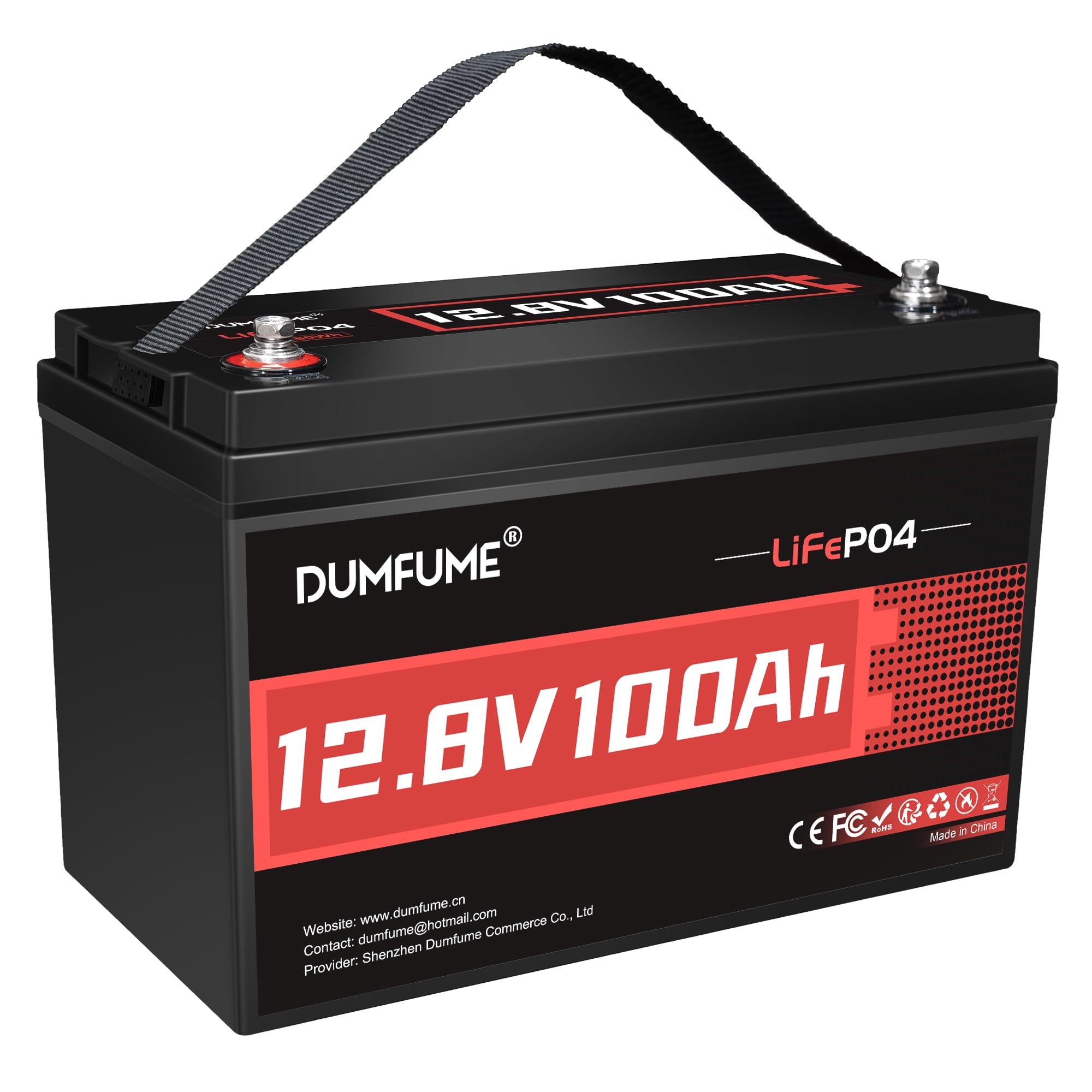
Positioned as an entry-level option, the DUNFUME battery brings core LiFePO4 benefits to a very accessible price point. It offers the standard 100Ah capacity in a Group 31 form factor with a 100A BMS and claims up to 6000 cycles. For users making their first foray into lithium or needing basic energy storage for solar or backup applications, it presents a low barrier to entry.
User experiences are generally positive regarding its performance when it works, with many noting it runs appliances and tools as expected. However, a notable pattern in reviews mentions some units arriving with a low state of charge that requires a “jump” from another battery to initiate the first charge cycle. This suggests potential quality control variability in BMS settings or cell storage.
This battery is a classic case of getting what you pay for. It can be an excellent value if you receive a good unit and are comfortable with potential variability. It’s best suited for non-critical applications where its budget-friendly nature is the primary driver, and where you have the means to troubleshoot a finicky initial charge if necessary.
Why it’s great
- Extremely competitive entry-level pricing.
- Provides core lithium benefits (weight, cycles).
- Standard Group 31 drop-in size.
- Good performance reports for standard loads.
Good to know
- Higher incidence of reported initial charging quirks.
- Lacks low-temperature charging protection.
- Brand has less established long-term track record.
11. Weize Deep Cycle AGM 12V 100Ah Battery

Included for perspective, the Weize AGM represents the traditional lead-acid technology that lithium is replacing. It’s a sealed, maintenance-free AGM battery that is a proven, reliable choice for users who are not ready to switch to lithium due to budget constraints, charger compatibility, or system simplicity. It’s significantly heavier (around 58 lbs) and offers a much shorter cycle life (200-500 cycles) but at a lower initial investment.
For applications where the battery is rarely cycled deeply, stays in a moderate climate, and weight is not a concern, an AGM like this can still be a sensible choice. Users report it works well as an RV house battery or for solar setups with conservative depth of discharge management. Its performance curve is familiar, and it works with most existing lead-acid chargers.
This battery serves as a benchmark. When you compare its weight, lifespan, usable capacity (typically only 50% of its rating for regular use), and long-term cost per cycle, the value proposition of lithium becomes starkly clear. It’s a competent battery, but its inclusion here highlights why the industry is shifting.
Why it’s great
- Lower upfront cost than lithium.
- Compatible with standard lead-acid chargers and systems.
- No management system compatibility concerns.
- Familiar, well-understood technology.
Good to know
- Very heavy (over twice the weight of lithium).
- Short cycle life compared to LiFePO4.
- Only about 50Ah is usable for long life.
- Higher self-discharge rate.
Understanding the Specs
BMS Amp Rating vs. Continuous Discharge
The 100A BMS rating is often misunderstood. This number typically represents the continuous safe discharge current. A 100A BMS on a 12.8V battery can support a continuous load of about 1280W (12.8V * 100A). Many BMS units also allow a higher peak current (e.g., 200A for 3 seconds) for starting motors or surge loads. Ensure your inverter’s or motor’s maximum continuous draw does not exceed this rating.
Cycle Life & Depth of Discharge (DoD)
Cycle life is inseparably linked to Depth of Discharge. A claim of “15000 cycles” is meaningless without the associated DoD. Batteries last dramatically longer if cycled shallowly. For example, 4000 cycles at 100% DoD might become 8000 cycles at 80% DoD and 15000 cycles at 60% DoD. For long-term value, match your typical daily usage pattern to the cycle life at that specific DoD.
FAQ
Can I use my existing lead-acid battery charger with a LiFePO4 battery?
Do I need a low-temperature protection feature?
Final Thoughts: The Verdict
For most people, the best 100ah lithium battery winner is the LiTime Trolling Motor Battery because it combines critical safety features like low-temperature protection with marine-grade durability, making it a reliable choice for the widest range of demanding applications. If you want the best balance of robust features, environmental protection, and exceptional customer support at a mid-range point, grab the Timeusb 12V 100Ah. And for maximizing portability and fitting power into the tightest spaces, nothing beats the CYCLENBATT Mini.

Mo Maruf
I created WellFizz to bridge the gap between vague wellness advice and actionable solutions. My mission is simple: to decode the research and give you practical tools you can actually use.
Beyond the data, I am a passionate traveler. I believe that stepping away from the screen to explore new environments is essential for mental clarity and physical vitality.