Our readers keep the lights on and my smoothie glass nicely filled. As an Amazon Associate, I earn from qualifying purchases.
Choosing the wrong tankless water heater means dealing with lukewarm showers, frustrating delays, and the hidden costs of undersized gas lines or inadequate venting. A true 10 GPM heater isn’t just a number; it’s a system designed to deliver consistent, on-demand hot water for simultaneous use across your home, from filling a tub while the dishwasher runs to handling back-to-back showers without a flinch.
I’m Mohammad Maruf — the founder and writer behind WellFizz. For years, I’ve analyzed thousands of product specifications and installation data points to demystify the technical requirements behind high-performance home systems. My focus is on translating complex specs like BTU modulation, venting types, and flow rate calculations into clear, actionable advice.
This guide will walk you through the critical differences between condensing and non-condensing units, gas types, and installation locations to help you make a confident, long-term investment. Getting the right model for your specific home layout and water usage ensures you’ll never second-guess your hot water again with the best 10 gpm tankless water heater.
How To Choose The Best 10 Gpm Tankless Water Heater
Selecting a tankless water heater with a 10 GPM capacity is about more than just peak flow. You’re investing in a system that must integrate with your home’s plumbing, gas supply, and climate. The wrong choice leads to performance gaps and unexpected installation hurdles.
Flow Rate & Groundwater Temperature
The advertised GPM (gallons per minute) is measured at a specific temperature rise, usually from 40°F to 120°F. If your incoming groundwater is colder, the actual flow of hot water you get will be lower. For homes in northern climates, a higher BTU rating is crucial to maintain that 10 GPM output. Always cross-reference the unit’s performance chart with your local average groundwater temperature.
Indoor vs. Outdoor Installation
Outdoor models simplify installation by eliminating complex venting runs, but they require a climate-appropriate location and built-in freeze protection. Indoor units save exterior wall space and are protected from the elements, but mandate dedicated, sealed venting (like concentric PVC for condensing models) which adds to the project’s complexity and cost. Your choice here dictates your installer’s scope of work.
Condensing vs. Non-Condensing Efficiency
Condensing units capture extra heat from exhaust gases, achieving efficiency ratings above 0.90 UEF. They use cooler PVC venting materials, which are often easier and cheaper to route. Non-condensing models are less efficient (typically 0.82-0.85 UEF) and require expensive, heat-resistant stainless steel venting. The higher upfront cost of a condensing heater is frequently offset by energy savings and lower installation material costs over time.
Fuel Type & Flexibility
Natural gas is the most common and cost-effective fuel, but requires an existing gas line of sufficient capacity. Propane is an excellent alternative for rural homes. Some advanced models are “dual-fuel,” meaning a single unit can be configured for either gas type, offering incredible flexibility if you ever switch fuel sources or buy the wrong model by accident.
Quick Comparison
On smaller screens, swipe sideways to see the full table.
| Model | Type | Best For | Key Feature | Amazon |
|---|---|---|---|---|
| Rinnai RX180iN | Condensing | Whole-home, dual-fuel flexibility | 0.98 UEF, Indoor/Outdoor | Amazon |
| Rheem RTGH-90DVLN-3 | Condensing | High efficiency, indoor install | 0.93 UEF, 9 GPM | Amazon |
| MIZUDO 199k BTU | Non-Condensing | Tech-savvy large families | WiFi/App, 10.3 GPM | Amazon |
| Rinnai RX130iN | Condensing | Mid-sized homes, versatile install | Dual-Fuel, Versa Vent | Amazon |
| Rheem RTG-95DVLN-3 | Non-Condensing | High-flow indoor natural gas | 9.5 GPM, Hot-start | Amazon |
| Rheem RTG-95DVLP-3 | Non-Condensing | High-flow indoor propane | 9.5 GPM for LP | Amazon |
| Rinnai RX199iN | Condensing | Maximum flow & future-proofing | 11.1 GPM, 0.98 UEF | Amazon |
| Rheem RTG-95XLN-3 | Non-Condensing | Outdoor high-flow natural gas | Outdoor install, 9.5 GPM | Amazon |
| Rinnai RE199eN | Non-Condensing | Outdoor simplicity | Outdoor, 9.8 GPM | Amazon |
| Rheem RTG-84XLN-3 | Non-Condensing | Outdoor value | 8.4 GPM, outdoor | Amazon |
| Rheem RTG-70DVLN-3 | Non-Condensing | Smaller homes, budget entry | 7 GPM, indoor | Amazon |
In‑Depth Reviews
1. Rinnai RX180iN Condensing Smart Sense

The Rinnai RX180iN stands out as our top recommendation because it masterfully combines peak performance, exceptional efficiency, and remarkable installation flexibility. With a true 10 GPM flow rate powered by 180,000 BTUs, it’s built to handle the demands of a large household running multiple fixtures. Its crown jewel is the “Smart Sense” dual-fuel system, allowing it to be configured for either natural gas or propane with a simple menu change—a feature that prevents costly mistakes and offers future-proofing.
As a condensing unit, it achieves a stellar 0.98 Uniform Energy Factor (UEF), meaning it captures wasted heat for superior efficiency. This also allows for easier, more affordable PVC venting. The “Versa Vent” design means it can be installed indoors or outdoors (with an optional cap), giving you and your installer placement options to minimize vent runs and save on labor. The interface is user-friendly, and it includes a Quick Flush feature to simplify essential maintenance.
Feedback from users who have installed this model is overwhelmingly positive, praising its reliability, quiet operation, and the consistent delivery of endless hot water. While it’s a premium-tier model, its combination of fuel flexibility, high efficiency, and versatile placement makes it the most adaptable and intelligent high-flow choice for the long term.
Why it’s great
- Unmatched dual-fuel flexibility prevents installation errors.
- Super-high 0.98 UEF rating for significant energy savings.
- Versatile indoor/outdoor installation expands placement options.
- Consistent 10 GPM flow suitable for large, simultaneous demands.
Good to know
- Premium positioning reflects its advanced feature set.
- Wi-Fi control requires a separate module purchase.
- Professional installation is strongly recommended to optimize venting.
2. Rheem RTGH-90DVLN-3 Condensing
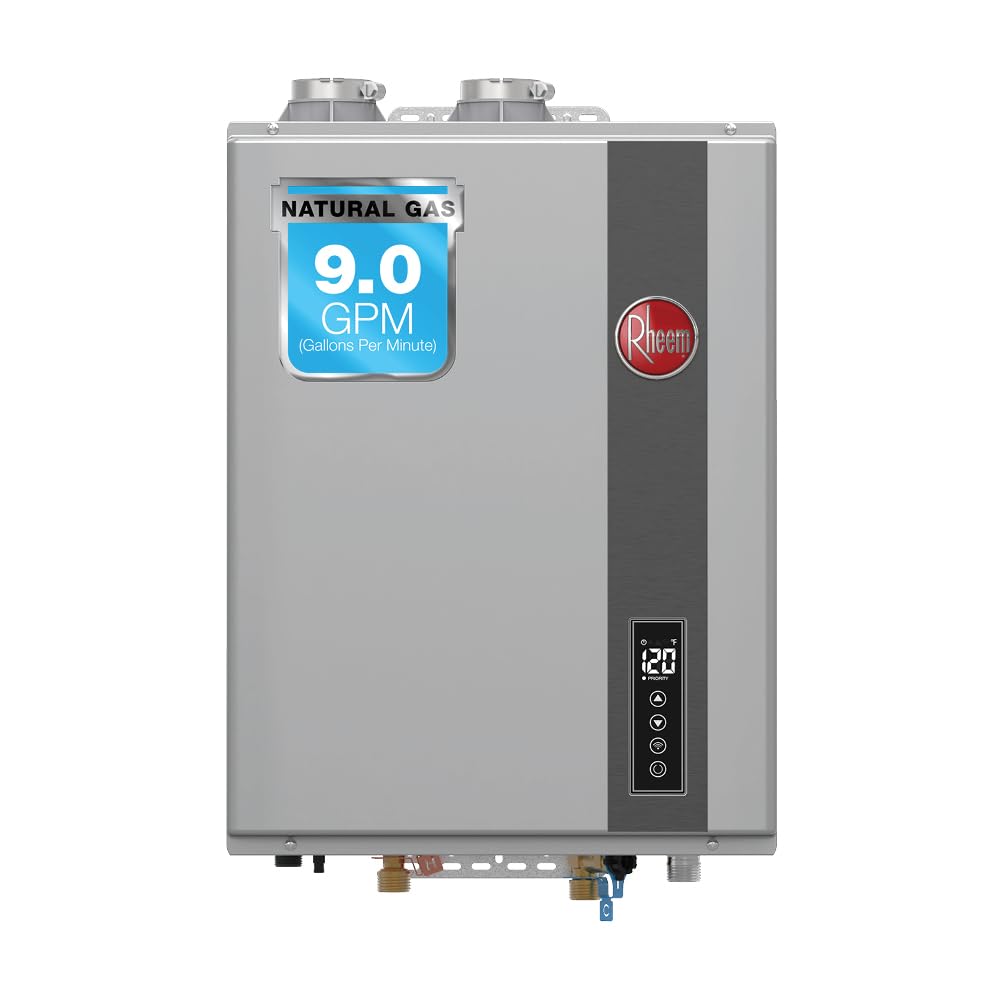
For homeowners prioritizing energy savings without stepping into the absolute premium tier, the Rheem RTGH-90DVLN-3 is a compelling mid-range condensing model. It delivers up to 9 GPM with a 180,000 BTU input and an impressive 0.93 UEF efficiency rating. This high efficiency translates to lower gas bills and permits the use of standard PVC for direct venting, which can simplify and reduce the cost of indoor installation.
This unit is designed for indoor use with a sealed combustion system that draws outside air, protecting your indoor air quality. It features a clear LED display, hot-start programming to prevent cold water bursts, and comprehensive safety films. In practice, users report it runs quietly and provides swift, reliable hot water even to distant taps, making it an excellent whole-house solution for 2-3 bathroom homes.
While its flow rate is slightly under the 10 GPM mark, for many homes in moderate climates, 9 GPM is more than sufficient. The combination of Rheem’s robust warranty support—including a 15-year heat exchanger warranty—and the tangible savings from its condensing technology makes this a smart, value-conscious choice for efficient performance.
Why it’s great
- Excellent 0.93 UEF efficiency for lower operating costs.
- Sealed combustion design is safer for indoor air.
- PVC venting is cheaper and easier to install than metal.
- Strong warranty backing from a trusted brand.
Good to know
- Flow rate is 9 GPM, not the full 10 GPM target.
- Designed for indoor installation only.
- Some users have reported variability in technical support experiences.
3. MIZUDO 199k BTU Natural Gas
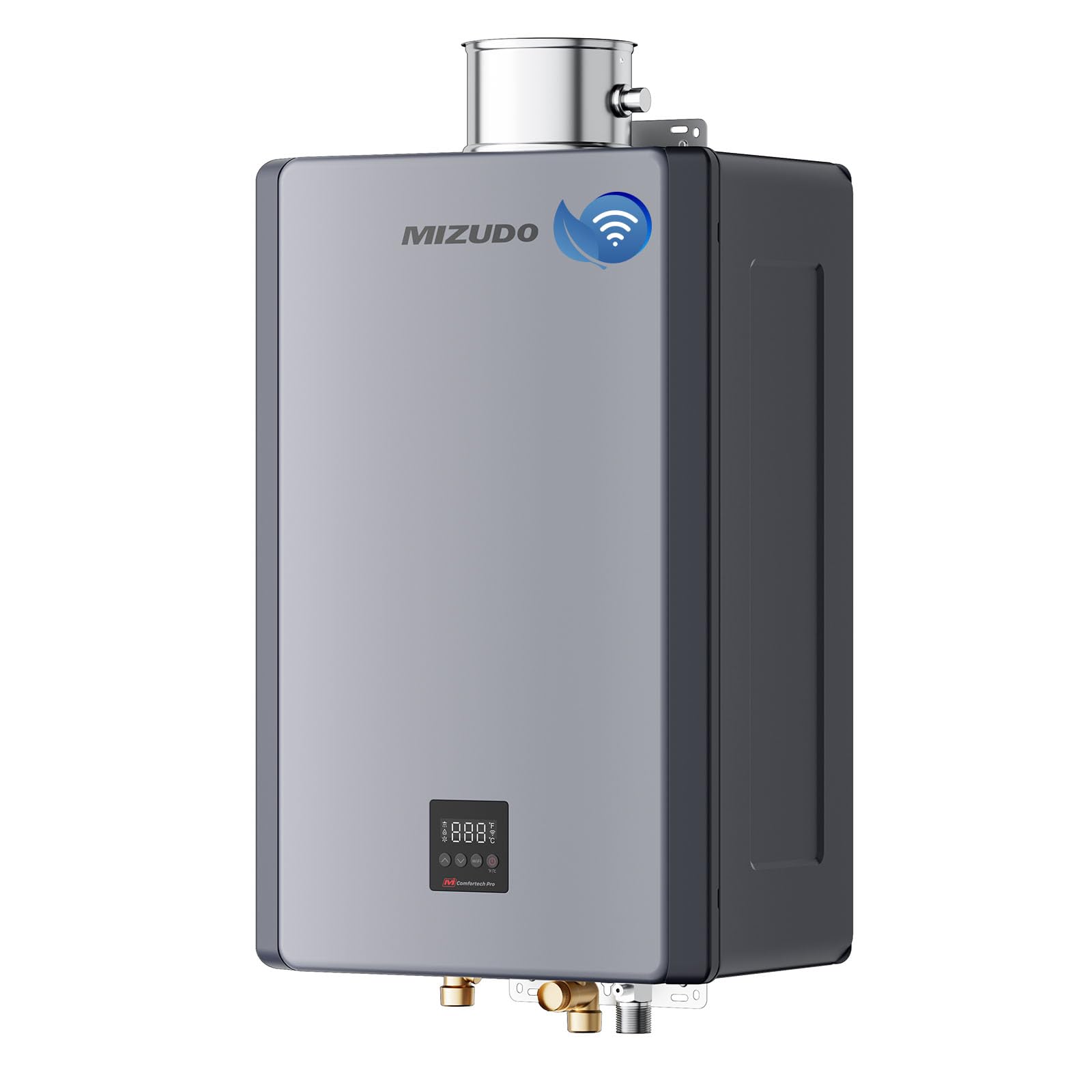
The MIZUDO model brings a high-tech, feature-rich experience to the high-flow category at a competitive mid-range point. It boasts a robust 199,000 BTU heater capable of delivering up to 10.3 GPM, targeting large families that want to run 5-7 fixtures at once. Its standout feature is the integrated smart WiFi and app control, allowing you to adjust temperature, set schedules, and receive maintenance alerts directly from your phone—a level of convenience typically found in more premium brands.
This is a non-condensing, indoor unit with a sealed direct vent system that uses 100% external air. It incorporates advanced 6-stage gas modulation for precise temperature control (±1°F) and packs over 16 safety mechanisms, including automatic freeze protection. Users who have successfully installed it praise its fast heat-up times, compact footprint, and the utility of the app for monitoring and control.
As a newer brand on the scene, MIZUDO offers a strong warranty (2-year full unit, 5-year heat exchanger) to back its claims. It represents a great option for the tech-savvy user who wants smart home integration and high flow without the premium brand price tag, provided they are comfortable with a brand that is still building its long-term service network.
Why it’s great
- Built-in WiFi and app control for remote management.
- True 10.3 GPM flow rate for the largest households.
- Precise 6-stage modulation for stable water temperature.
- Comprehensive safety and freeze protection features.
Good to know
- Non-condensing design requires more expensive venting.
- Brand has a shorter track record compared to Rheem/Rinnai.
- Installation instructions can be challenging for some.
4. Rinnai RX130iN Condensing Smart Sense

The Rinnai RX130iN is the smaller sibling in the Smart Sense line but carries the same groundbreaking versatility that makes Rinnai a leader. With up to 7.1 GPM from 130,000 BTUs, it’s ideally sized for smaller to mid-sized homes or as a point-of-use solution. Its defining characteristic is the same “one model, anywhere” design: it’s configurable for natural gas or propane and can be installed indoors or outdoors, offering incredible flexibility to overcome installation challenges.
It shares the condensing technology of its bigger brothers, achieving a 0.97 UEF for high efficiency and enabling easier PVC venting. The user interface is straightforward, and it includes the helpful Quick Flush feature. For DIY-inclined homeowners or professionals, the ability to switch fuel types in the field is a massive advantage, as highlighted in user reviews where this feature saved an entire installation.
While its flow rate doesn’t hit the 10 GPM benchmark, it’s included here because its core technology represents the future of adaptable tankless systems. If your home’s demand is slightly lower but you want top-tier efficiency, Rinnai reliability, and maximum installation flexibility, the RX130iN is a brilliant and future-proof choice.
Why it’s great
- Dual-fuel and indoor/outdoor install options offer ultimate flexibility.
- High 0.97 UEF condensing efficiency.
- Compact, suitcase-sized design saves significant space.
- Prevents costly wrong-fuel-type installation errors.
Good to know
- 7.1 GPM flow is for mid-sized, not large, home demands.
- Accessories like vent cap and valves are sold separately.
- Wi-Fi connectivity requires an additional module.
5. Rheem RTG-95DVLN-3
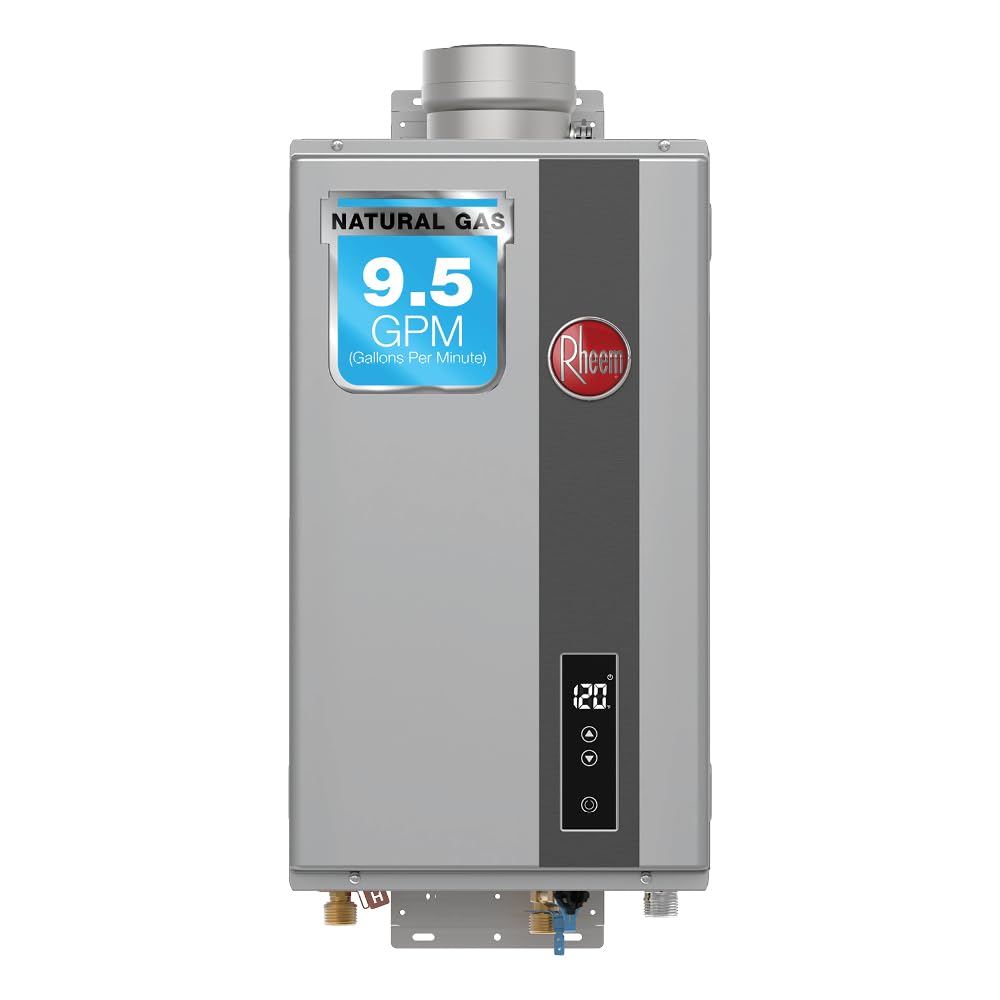
The Rheem RTG-95DVLN-3 is a workhorse non-condensing model that delivers a substantial 9.5 GPM from a powerful 199,900 BTU input, making it a strong candidate for larger homes with 2-3 bathrooms. Designed for indoor installation, it features a compact cabinet, an integrated digital display, and Rheem’s hot-start programming to minimize cold water sandwiches between uses.
This unit represents a balanced mid-range option where you get high flow and reliable performance from an established brand. Users report that it’s a straightforward replacement for older tankless units and performs well even with older piping systems. The installation process is familiar to most qualified technicians, and its universal venting compatibility provides some flexibility.
As a non-condensing model, its efficiency (0.82 UEF) is lower, and it requires Category III stainless steel venting, which is more costly than PVC. However, for homeowners with an existing compatible vent system or who prioritize a lower upfront cost for high flow, this Rheem model offers dependable, high-capacity hot water.
Why it’s great
- High 9.5 GPM flow rate suits demanding households.
- Hot-start feature improves comfort during intermittent use.
- Proven, reliable design from a major manufacturer.
- Often compatible with existing vent setups during replacements.
Good to know
- Non-condensing design means lower efficiency and pricier venting.
- Some users note the unit can be noisy during operation.
- Regular maintenance (descaling) is crucial for longevity.
6. Rheem RTG-95DVLP-3
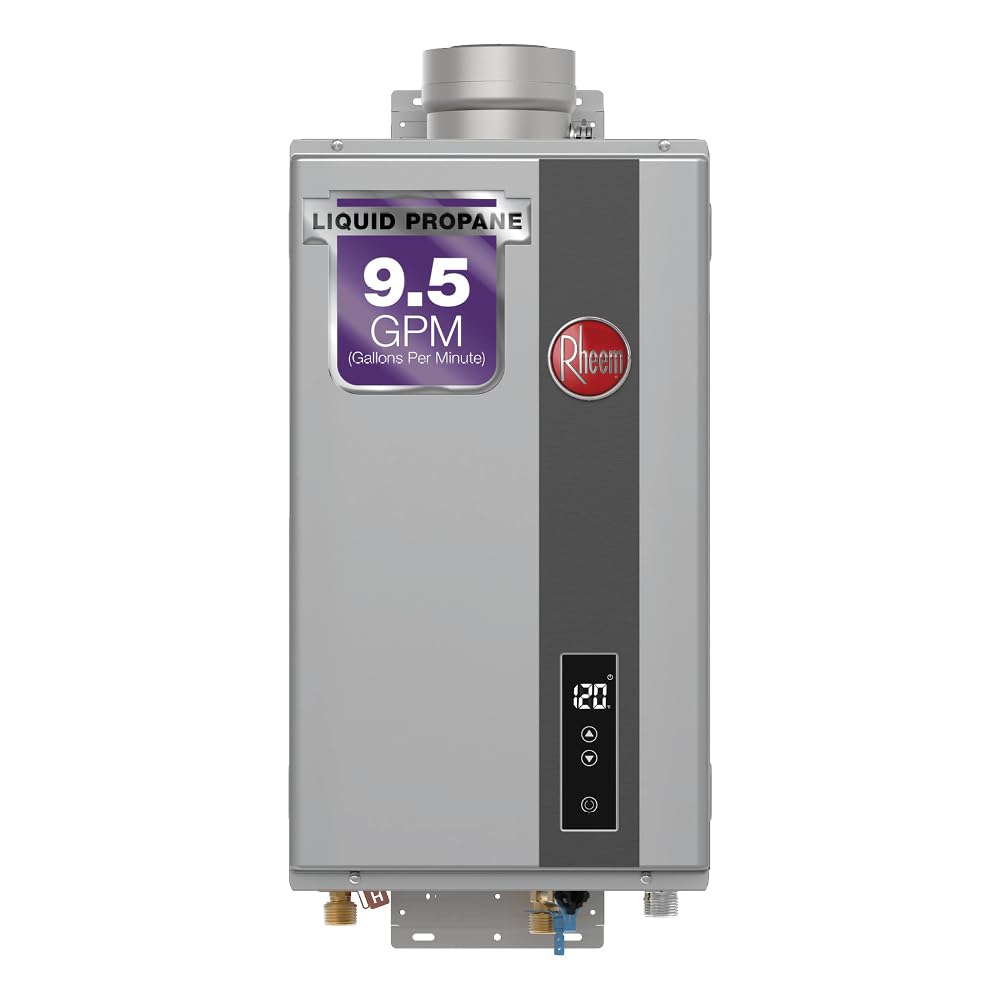
This model is essentially the liquid propane (LP) counterpart to the RTG-95DVLN-3, offering the same high 9.5 GPM flow and 199,900 BTU performance for homes fueled by propane. It’s designed for indoor installation and shares the same feature set: compact metal cabinet, digital display, and hot-start programming. For rural homeowners or those without access to a natural gas line, this provides a powerful whole-house tankless solution.
User feedback from propane users is positive, with reports of easy installation and reliable performance even at high elevations—a critical factor for propane systems. The unit delivers consistent hot water for back-to-back showers and simultaneous appliance use, effectively replacing a large propane tank heater.
The same considerations for non-condensing units apply: expect lower efficiency and the need for specialized venting. However, in the propane tankless market, finding a model with this high a flow rate from a reputable brand like Rheem is valuable, making it a go-to choice for propane households with significant hot water needs.
Why it’s great
- High-capacity propane solution for homes without natural gas.
- Consistent performance reported at various altitudes.
- Same reliable Rheem build quality as the natural gas version.
- Frees up floor space compared to a bulky propane tank heater.
Good to know
- Non-condensing efficiency and venting requirements.
- Can be loud during operation, as noted by some users.
- Must be specifically configured for propane (not convertible from NG).
7. Rinnai RX199iN Condensing Smart Sense
For the ultimate in tankless water heating performance, the Rinnai RX199iN is the apex model. It pushes the flow rate to an impressive 11.1 GPM from a 199,000 BTU input, capable of supplying up to 7 fixtures simultaneously. It incorporates all the premium features of the RX series: dual-fuel Smart Sense technology, indoor/outdoor Versa Vent installation, condensing efficiency (0.98 UEF), and a user-friendly interface.
This is the heater for the largest homes, multi-family units, or situations with exceptionally high simultaneous demand (think multiple showers, a tub, and appliances all at once). Users replacing older units note its lighter weight, quieter operation, and flawless performance. The high efficiency means lower operating costs despite its massive output, a significant engineering achievement.
As the top-tier option, it commands a premium investment. However, for those whose need for abundant, endless hot water is non-negotiable, and who also value the flexibility and efficiency of the Rinnai Smart Sense platform, the RX199iN is the definitive, no-compromise solution.
Why it’s great
- Maximum 11.1 GPM flow for the highest-demand scenarios.
- Top-tier 0.98 UEF efficiency even at max output.
- All the dual-fuel and placement flexibility of the RX series.
- Future-proofs your home for increased demand or added fixtures.
Good to know
- Positioned at the premium end of the market.
- Overkill for smaller homes, leading to unnecessary cost.
- Requires proper gas line sizing to realize its full potential.
8. Rheem RTG-95XLN-3 Outdoor
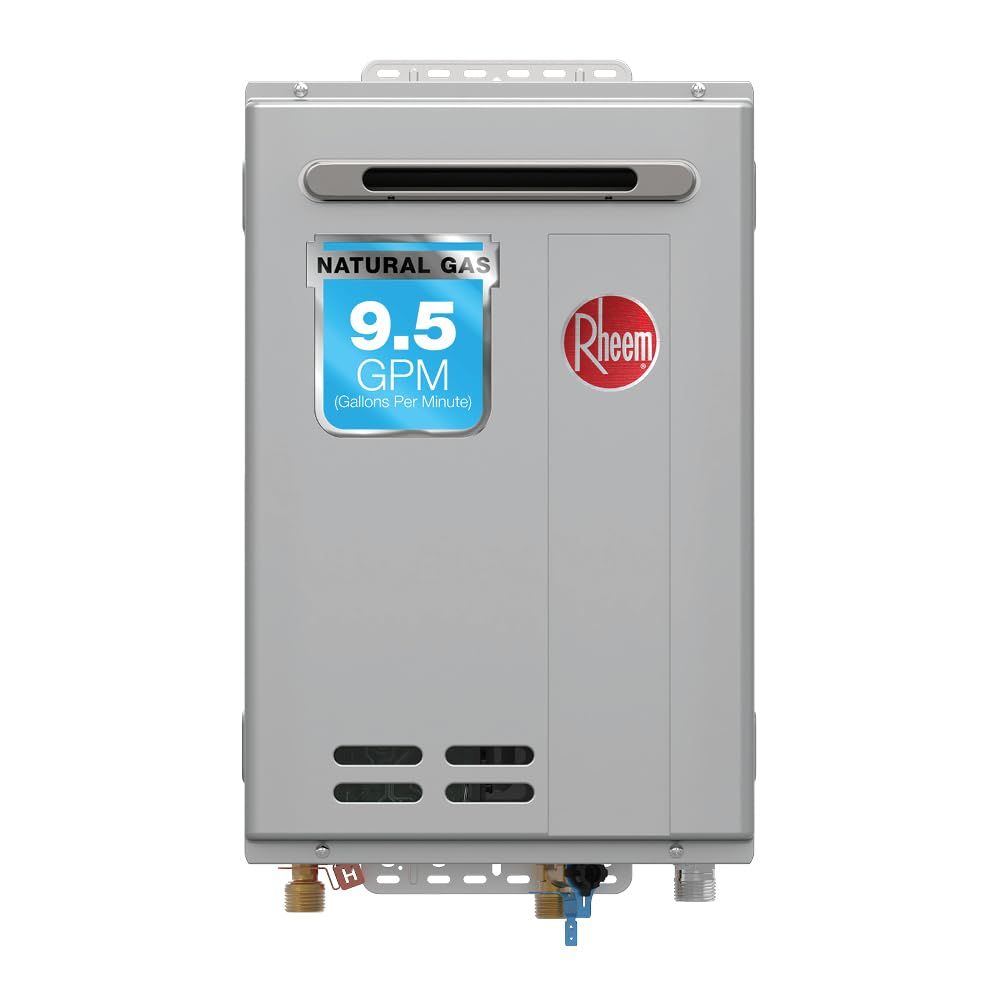
The Rheem RTG-95XLN-3 takes the high 9.5 GPM, 199,900 BTU performance and packages it for outdoor installation. This eliminates the need for complex venting runs through your walls and roof, significantly simplifying installation and reducing associated costs. The unit is housed in a durable metal cabinet designed to withstand the elements.
Outdoor installation is ideal for homes in mild to moderate climates where freeze protection is sufficient, or for garages and covered patios. Users appreciate the space saved indoors and the straightforward installation process. It functions as a direct, high-capacity replacement for older outdoor tankless units, providing reliable hot water for the whole house.
As a non-condensing model, its efficiency is standard, but the major savings come from the simplified installation. It’s crucial to ensure the chosen outdoor location is protected from direct heavy rainfall and prevailing winds, and that local codes permit outdoor gas appliance installation.
Why it’s great
- Outdoor install eliminates costly and complex venting.
- High 9.5 GPM flow suitable for larger households.
- Saves valuable indoor utility space.
- Often an easier DIY project for those with plumbing/gas skills.
Good to know
- Must be installed in a weather-appropriate location.
- Non-condensing efficiency.
- Relies on built-in freeze protection; not suitable for extreme cold without precautions.
9. Rinnai RE199eN Outdoor

The Rinnai RE199eN is a non-condensing, outdoor-specific model offering a strong 9.8 GPM flow from 199,000 BTUs. It represents a more traditional Rinnai design focused on reliable outdoor performance with a sleek, compact profile. The LED display provides clear status and error code information, and its layout is designed for easier serviceability.
This model is a solid choicefor homeowners who prefer the simplicity of an outdoor mount and trust the Rinnai name. Its design prioritizes durability and serviceability, with a cleaner internal layout that technicians appreciate.
User experiences with this model are mixed, with many praising its powerful performance and sleek look, while others have reported issues related to freeze protection in climates where temperatures dip below its rated specifications. It’s crucial to review the manufacturer’s freeze protection warranty details carefully and ensure the unit is appropriate for your specific regional climate.
As a non-condensing model, it doesn’t offer the ultra-high efficiency of the RX series, but it provides robust, high-flow performance in a dedicated outdoor package. It’s a good fit for those in milder climates seeking a reputable brand’s outdoor solution.
Why it’s great
- Dedicated outdoor design from a leading brand.
- Strong 9.8 GPM flow rate for whole-house use.
- Compact, sleek profile and service-friendly layout.
- Eliminates indoor venting complexities.
Good to know
- Non-condensing efficiency and outdoor-only.
- Freeze protection claims have been disputed by some users in cold snaps.
- Warranty process for certain issues can be cumbersome.
10. Rheem RTG-84XLN-3 Outdoor
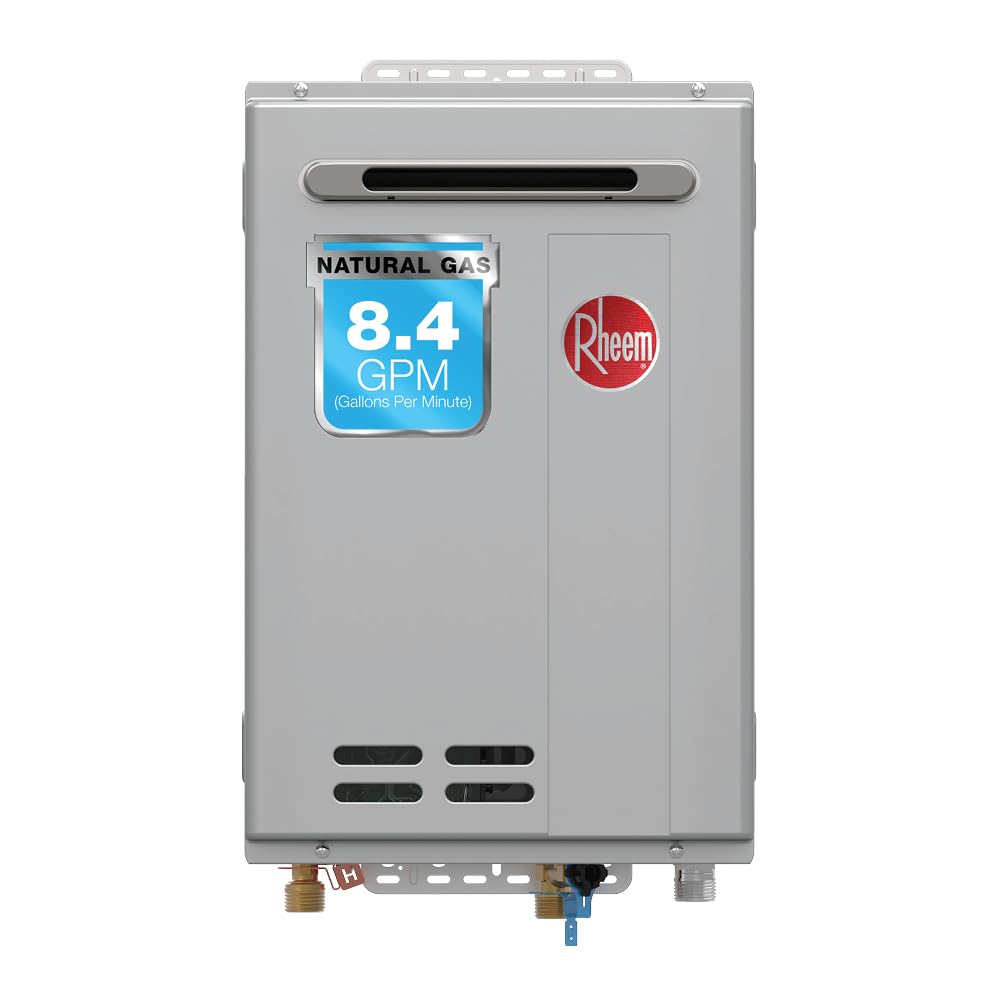
Positioned as a more budget-friendly outdoor option, the Rheem RTG-84XLN-3 delivers a solid 8.4 GPM from 180,000 BTUs. It’s designed for households that want the installation simplicity of an outdoor unit but may not need the absolute highest flow rate. This model shares the durable outdoor cabinet and hot-start programming found in Rheem’s other RTG outdoor units.
For smaller families or homes with 2-3 bathrooms that aren’t typically used simultaneously, 8.4 GPM can be perfectly adequate. Users report easy installation and reliable operation, with the unit saving space and eliminating indoor venting concerns. It provides the core benefit of tankless technology—endless hot water—in a straightforward, outdoor package.
This is a non-condensing unit, so efficiency is standard and it requires no special venting beyond proper clearances. It represents an entry point into outdoor tankless technology from a major brand, offering a balance of performance and value for the right-sized home.
Why it’s great
- Cost-effective entry to outdoor tankless from a known brand.
- Simplifies installation by avoiding indoor venting.
- 8.4 GPM is sufficient for many average-sized households.
- Hot-start programming improves user comfort.
Good to know
- Flow rate is below the 10 GPM target for large families.
- Non-condensing design with standard efficiency.
- As with all outdoor units, placement for weather protection is key.
11. Rheem RTG-70DVLN-3
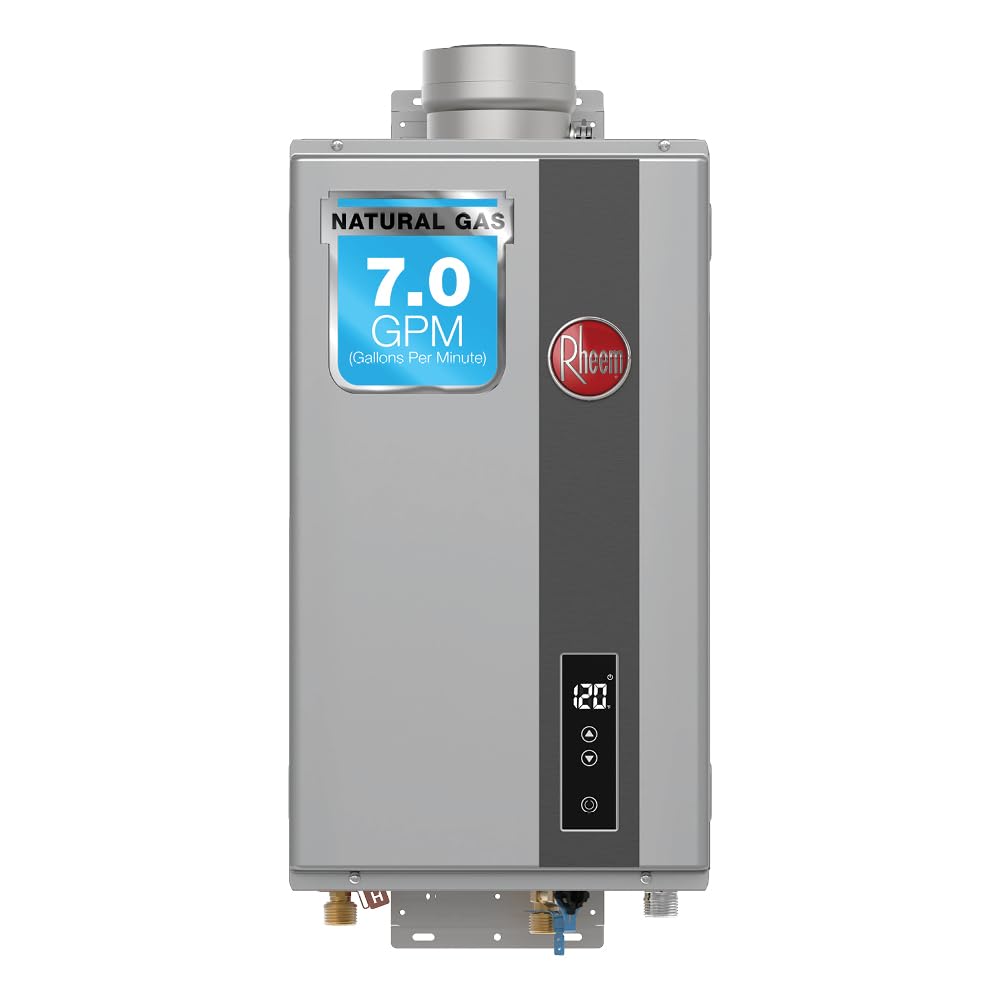
The Rheem RTG-70DVLN-3 is included as the most budget-conscious indoor model in this lineup, offering 7 GPM from 160,000 BTUs. It’s designed for smaller homes, condos, or as a point-of-use application where the full 10 GPM capability is unnecessary. It features the same non-condensing technology, digital display, and hot-start programming as its larger siblings in a compact package.
This unit serves as a reliable introduction to tankless water heating for those looking to upgrade from a small tank heater or to gain space in a utility closet. User reviews indicate it works well for its intended capacity, providing consistent hot water for 1-2 simultaneous uses. It’s a common choice for straightforward replacement installations where the existing gas and venting are compatible.
While its flow rate is the lowest on this list and not suitable for large, simultaneous demands, it demonstrates that a trustworthy tankless system from a major manufacturer is accessible at an entry-level point. It’s a reminder that sizing correctly for your actual needs is more important than chasing the highest GPM number.
Why it’s great
- Most accessible price point from a reputable brand.
- Adequate 7 GPM flow for smaller homes or apartments.
- Compact size saves significant floor space.
- Familiar design for technicians, easing installation.
Good to know
- 7 GPM is not suitable for high-demand, large households.
- Non-condensing efficiency and venting requirements apply.
- Some users report noise during operation.
Understanding the Specs
GPM & BTU: The Power Couple
Gallons Per Minute (GPM) tells you how much hot water the heater can deliver at once. British Thermal Units (BTU) measure its heating power. A high GPM with insufficient BTUs is useless in cold climates—the heater can’t heat the water fast enough. For a true 10 GPM output with a standard 70°F temperature rise, you typically need at least 180,000-199,000 BTUs. Always match the BTU rating to your desired GPM based on your groundwater temperature.
Condensing vs. Non-Condensing
This is the primary efficiency differentiator. Condensing units have a secondary heat exchanger that captures latent heat from exhaust gases, boosting efficiency to 0.90 UEF or higher. They exhaust cooler fumes, allowing for cheaper, plastic PVC venting. Non-condensing units exhaust much hotter gases, requiring expensive, sealed stainless steel (Category III) venting and operate at lower efficiency (0.82-0.85 UEF). The higher upfront cost of a condensing model often pays back via lower fuel bills and venting costs.
FAQ
Is a 10 GPM tankless heater overkill for my home?
Can I install a tankless water heater myself?
Why does hot water take longer to reach the faucet with tankless?
What maintenance does a tankless water heater require?
Final Thoughts: The Verdict
For most people, the best 10 gpm tankless water heater winner is the Rinnai RX180iN because it delivers the target flow rate with unparalleled dual-fuel flexibility, top-tier efficiency, and versatile indoor/outdoor installation. If you want smart home integration and high flow at a mid-range point, grab the MIZUDO 199k BTU. And for maximum future-proofing and the absolute highest flow available, nothing beats the Rinnai RX199iN.

Mo Maruf
I created WellFizz to bridge the gap between vague wellness advice and actionable solutions. My mission is simple: to decode the research and give you practical tools you can actually use.
Beyond the data, I am a passionate traveler. I believe that stepping away from the screen to explore new environments is essential for mental clarity and physical vitality.