Choosing a tent for just yourself is a unique challenge. It’s not about downsizing a group shelter; it’s about finding a specialized piece of gear that balances minimalism with livability, and featherweight portability with storm-ready security. The wrong choice can turn a peaceful night under the stars into a cramped, damp ordeal.
I’m Mohammad Maruf — the founder and writer behind WellFizz. My work involves deep market research, analyzing thousands of specifications and user data points to decode what truly makes a piece of outdoor gear reliable, functional, and a good value. I compare construction, materials, and real-world performance to cut through the marketing.
After evaluating the current market, I’ve analyzed the leading models to help you find a shelter that fits your body, your pack, and your adventures, ensuring you invest in a best 1 person tent that won’t let you down when it matters most.
How To Choose The Best 1 Person Tent
Selecting a solo tent isn’t just about the smallest or lightest option. It’s a personal equation balancing shelter, space, and the weight you’re willing to carry. Getting it right means more comfortable nights and happier mornings on the trail.
Primary Use Case
Your intended adventure dictates everything. A tent for backpacking must prioritize low weight and a compact packed size. For motorcycle or car camping, you can afford a bit more comfort and durability without worrying about ounces. Ultralight backpackers might consider minimalist shelters or bivy tents, while those camping in shoulder seasons or exposed areas need to prioritize wind and weather resistance.
Season Rating & Weather Protection
Most solo tents are “3-season,” designed for spring, summer, and fall. They feature ample mesh for ventilation. “4-season” models use less mesh, have stronger pole structures, and often include features like snow skirts to handle winter conditions and high winds. Also, check the waterproof hydrostatic head rating (e.g., PU2000mm, PU3000mm); a higher number indicates better resistance to prolonged rain.
Weight, Packed Size & Materials
Every gram counts on your back. Pay attention to both the “trail weight” (tent body, rainfly, poles) and “packed weight” (includes everything). Aluminum poles are lighter and more durable than fiberglass. The denier (D) of the fabric hints at durability—a higher number is generally tougher but heavier. The packed dimensions determine how it will fit in or on your backpack.
Interior Space & Livability
Don’t just go by “1-person.” Check the floor length and peak height. If you’re tall, ensure you have room to stretch without touching the walls, which can transfer condensation. A vestibule is invaluable for storing dirty boots and a pack outside the sleeping area. Interior pockets and a gear loft help keep small items organized.
Setup Style and Ease
Freestanding tents with clip or sleeve attachments are standard and easiest to pitch. Pop-up tents offer incredible speed but can be tricky to repack. Consider how easy the tent is to set up alone, possibly in wind or rain, after a long, tiring day.
Quick Comparison
On smaller screens, swipe sideways to see the full table.
| Model | Type | Best For | Key Feature | Amazon |
|---|---|---|---|---|
| ALPS Mountaineering Lynx 1 | Freestanding | Overall Value & Reliability | Factory-sealed seams, full rainfly | Amazon |
| Naturehike Cloud Up 1 Person | Freestanding | Lightweight Backpacking | Includes footprint, aluminum poles | Amazon |
| OneTigris Stella 4 Season | Freestanding | Winter & Harsh Conditions | Silicone-coated nylon, 4-season design | Amazon |
| GEERTOP Ultralight Bivy Tent | Freestanding | Stealth Camping & Hunting | Camouflage design, dual doors | Amazon |
| MC TOMOUNT Backpacking Tent | Double Layer | Budget 4-Season Option | Aluminum poles, double-layer warmth | Amazon |
| Underwood Aggregator 4-Season | Freestanding | Cold Weather on a Budget | PU5000mm coating, snow skirt | Amazon |
| camppal 1 Person Tent | Tunnel | Minimalist & Ultralight Focus | Extremely compact, single-pole setup | Amazon |
| Coleman Sundome 2-Person | Dome | Car Camping Comfort | Spacious for one, WeatherTec system | Amazon |
| Night Cat Pop-up Tent | Pop-Up | Instant Setup & Convenience | Sets up in 3 seconds, porch option | Amazon |
| Night Cat Upgraded Backpacking | Clip Dome | Entry-Level Backpacking | Fast clip setup, PU3000mm waterproof | Amazon |
| Night Cat Single Layer | Sleeve Dome | Basic Fair-Weather Shelter | Protected pole sleeves, compact pack | Amazon |
In‑Depth Reviews
1. ALPS Mountaineering Lynx 1

The ALPS Mountaineering Lynx 1 strikes a nearly perfect balance for the solo adventurer who values reliability above all. It’s a thoughtfully designed, no-nonsense shelter from a brand with a solid outdoor heritage. What sets it apart is its out-of-the-box readiness—the factory-sealed seams and a robust 75D polyester rainfly with a 1500mm coating mean you’re protected from your first pitch without needing extra sealant.
This is a true freestanding tent with a straightforward two-pole aluminum clip design. The half-mesh walls provide excellent ventilation to minimize condensation on warm nights, while the full-coverage fly ensures you stay dry during storms. It includes thoughtful touches like a vestibule for gear storage, internal mesh pockets, and a gear loft, which are often omitted in budget-focused solo tents. The packed size is reasonable for backpacking, making it versatile for both trail and car camping.
While not the absolute lightest option, the weight is a fair trade for the durability and feature set you receive. The floor is a burly 2000mm coated poly taffeta, instilling confidence on rough ground. Users consistently praise its simplicity, sturdiness in wind, and ability to keep them dry, noting it punches well above its category in terms of perceived quality and long-term dependability.
Why it’s great
- Exceptionally reliable weather protection with taped seams.
- Freestanding and very easy to set up alone.
- Good ventilation from half-mesh walls.
- Includes useful vestibule and interior organization.
- Backed by a trusted brand with good durability.
Good to know
- Weight is on the higher side for ultralight backpackers.
- The vestibule space is somewhat limited.
- Stock stakes are basic; an upgrade is recommended.
2. Naturehike Cloud Up 1 Person
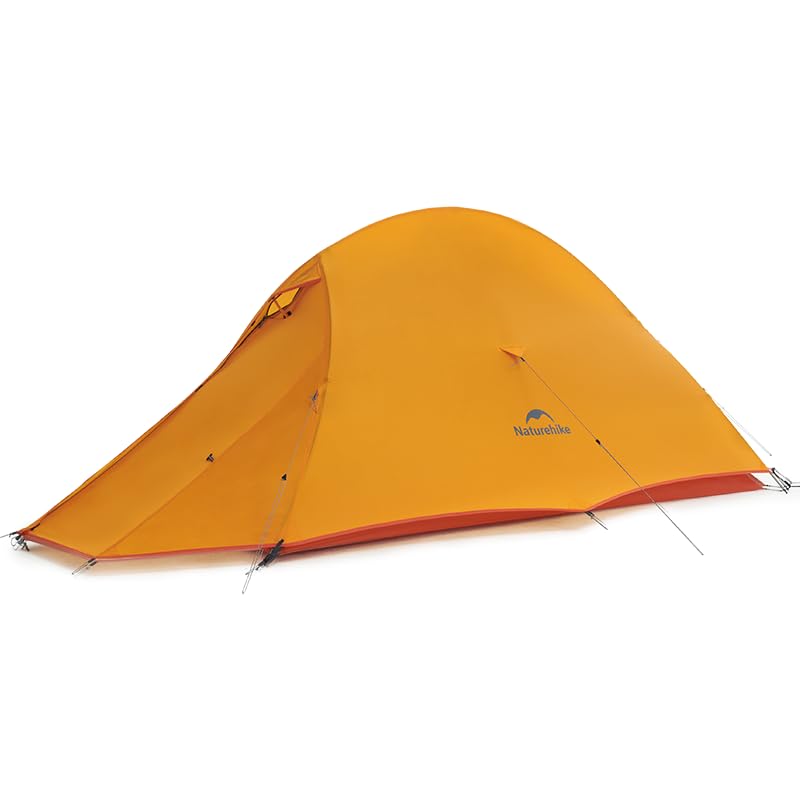
The Naturehike Cloud Up represents the sweet spot for weight-conscious backpackers who don’t want to sacrifice crucial features. This tent is a standout in the competitive mid-range market because it includes a high-quality, fitted footprint—a vital accessory for protecting the tent floor that usually costs extra. Its use of strong 7075 aluminum alloy poles keeps the weight down while improving durability over common fiberglass.
Setup is intuitive with a classic clip-and-pole freestanding design. The double-layer construction features a high-density mesh inner for solid ventilation and a PU3000mm+ rated rainfly. An upgraded ventilation window above the door helps actively reduce condensation, a common issue in small tents. The packed size is remarkably compact, and the bright orange color is a smart safety feature for visibility in the backcountry.
Users who have tested this tent in diverse conditions report impressive performance. It has weathered strong winds and heavy downpours, keeping occupants completely dry. The interior space is efficiently designed, offering enough room to sit up and organize gear without feeling claustrophobic. For its category, it delivers a premium feel and performance that rivals much more expensive brands.
Why it’s great
- Excellent value with included footprint and quality poles.
- Very good weight-to-feature ratio for backpacking.
- Effective ventilation design minimizes condensation.
- Proven waterproof performance in serious rain.
- Packs down extremely small.
Good to know
- The front-entry design can feel less spacious than side-entry models.
- The vestibule area is quite small.
- Color options are limited.
3. OneTigris Stella 4 Season
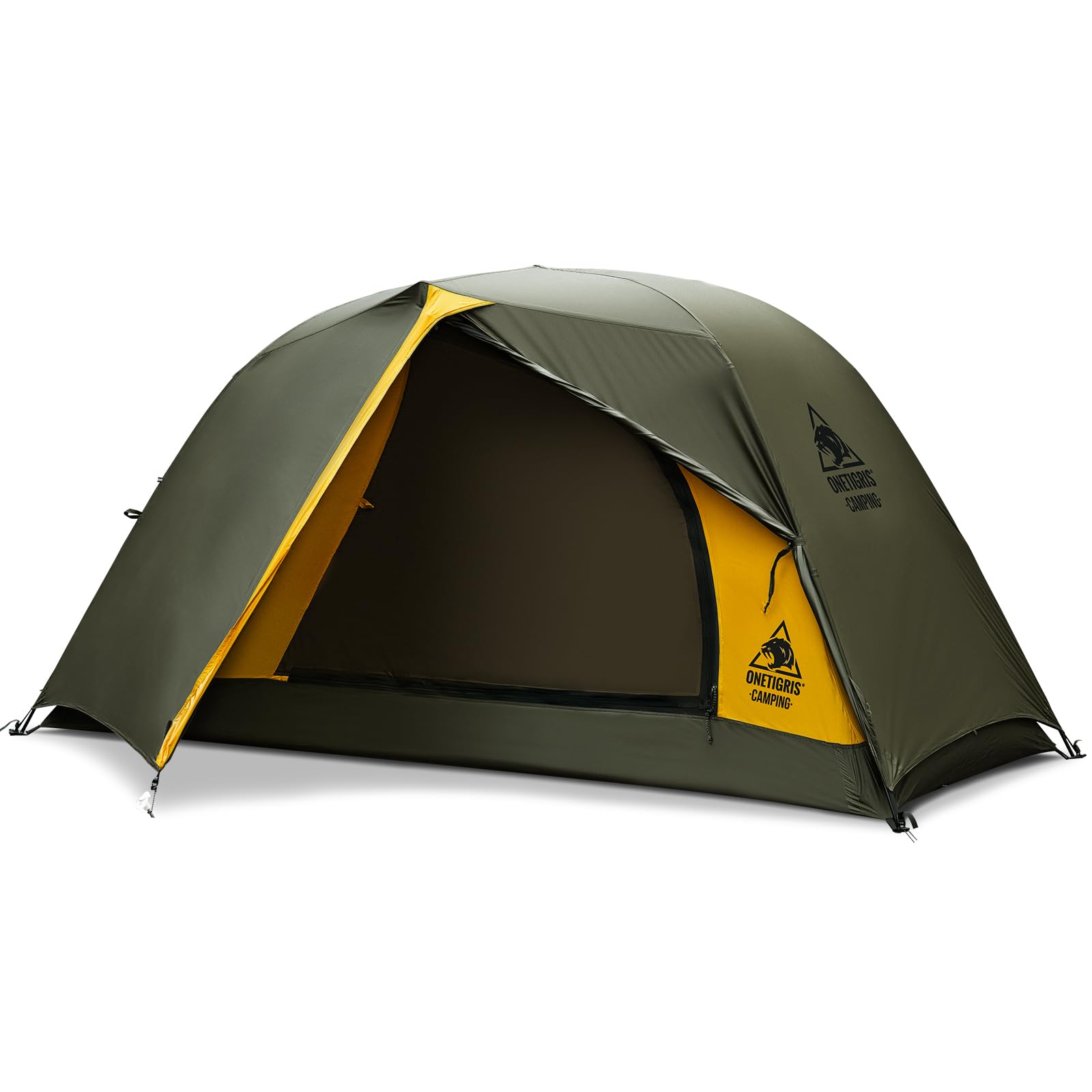
The OneTigris Stella is a serious shelter for soloists who venture out in demanding conditions, from alpine environments to windy coastal bluffs. Its defining feature is the silicone coating on the 20D nylon outer fabric, a treatment often reserved for premium tents. Sil-nylon is highly waterproof, more tear-resistant, and has better UV durability than standard polyurethane coatings, all while remaining impressively lightweight.
This is a true four-season design with a focus on storm protection. The removable outer tent reduces mesh for warmth and wind block, while the inner mesh tent can be used alone for warmer, buggy nights. The structure is robust, and users report it stands firm in high winds and driving rain. Despite its rugged intent, the setup remains straightforward with a crossing pole design and color-coded clips.
While it’s labeled a 1-person tent, it offers generous floor space for one person plus gear, making it a comfortable fortress in bad weather. The dual doors are a luxury in a solo tent, offering flexible entry/exit and ventilation options. For winter camping, late-season hunts, or trips where weather is a major concern, the Stella provides high-end materials and construction at a mid-range point.
Why it’s great
- Premium silicone-coated nylon for superior weather resistance.
- Versatile 4-season design with removable outer layer.
- Exceptionally sturdy in high winds and heavy precipitation.
- Spacious for one person with dual-door convenience.
- Outstanding performance for its category.
Good to know
- Ventilation can be a challenge in warm weather with the outer on.
- A dedicated footprint is recommended but sold separately.
- Packed size is slightly larger due to robust materials.
4. GEERTOP Ultralight Bivy Tent

The GEERTOP Ultralight Bivy Tent blurs the line between a traditional tent and a bivy sack, offering a low-profile, highly packable shelter ideal for hunters, bikepackers, or anyone prioritizing stealth and minimal footprint. Its realistic camouflage pattern is highly effective for blending into natural environments. The design is more livable than a standard bivy, providing enough headroom to sit up and change clothes.
This double-layer tent uses aluminum poles for a quick freestanding setup. A key feature is the dual-side doors with zippered mesh panels, allowing flexible entry, exit, and cross-ventilation—a significant advantage over single-entry bivies. The PU2500mm rated fly and taped seams provide reliable weather protection, while the two small vestibules offer just enough space to stash boots or a small pack.
Users appreciate its fast pitch and the psychological comfort of the more enclosed, secure feeling compared to a minimalist tarp. It’s a favorite for solo missions where discretion or a small campsite is important. While not designed for extreme winter conditions, it handles three-season weather capably and packs into an exceptionally small, cylindrical stuff sack.
Why it’s great
- Effective camouflage for hunting and stealth camping.
- More livable than a bivy with dual-door access.
- Very lightweight and packs down extremely small.
- Fast and simple freestanding setup.
- Good balance of protection and ventilation.
Good to know
- Internal space is snug; best for solo use with minimal gear inside.
- Vestibule storage space is very limited.
- Taller users (over 6’2″) may find length restrictive.
5. MC TOMOUNT Backpacking Tent

The MC TOMOUNT tent delivers notable upgrades at an entry-level point, most significantly by using 7001 aluminum alloy poles instead of the heavier, less durable fiberglass found in many budget tents. This immediately improves the tent’s pack weight, strength, and wind resistance. The double-layer design provides genuine versatility, adding warmth and wind protection when needed.
This tent is marketed as a 4-season option, and while it’s robust, it’s best considered a 3+ season shelter for milder winter conditions. The PU3000mm waterproof rating on the fly and floor is commendable for this category. It features a rear window to aid ventilation and reduce condensation, a thoughtful addition often missing in basic models. Setup is reported to be quick and intuitive, even for beginners.
For the solo backpacker or camper wanting a step up in material quality from the most budget options, the MC TOMOUNT is a compelling choice. It offers a more durable pole system and better overall construction, providing peace of mind without a significant jump in cost. It’s a tent that feels like it will last for many seasons of use.
Why it’s great
- Aluminum poles offer better performance than fiberglass at this price.
- Solid waterproof rating and double-layer design.
- Good ventilation with mesh inner and rear window.
- Spacious for one person with room for gear.
- Sturdy construction inspires confidence.
Good to know
- Heavier than dedicated ultralight models.
- True 4-season capability is limited compared to specialized tents.
- The floor fabric could benefit from a footprint for extra protection.
6. Underwood Aggregator 4-Season

The Underwood Aggregator is built for those who face cold, wet, and snowy conditions without a premium budget. Its standout specification is a high PU5000mm waterproof coating, one of the highest ratings in this review, aimed at ensuring dryness during prolonged exposure. The inclusion of a roll-up snow skirt is a clear indicator of its winter intentions, helping to seal out drifting snow and wind.
This freestanding tent uses aluminum poles and a double-layer door system to manage ventilation and insulation. The interior includes practical touches like a gear pocket and a hook for a light. Users who have taken it into near-freezing and snowy environments report that it holds up well, maintaining a stable internal environment and effective moisture barrier.
It’s important to note that while it’s a competent cold-weather shelter, it is still a budget-friendly model. The materials are good but not expedition-grade. For the winter camper, hunter, or backpacker who encounters occasional snow and needs reliable moisture protection above all else, this tent offers specialized features that are rare to find without a much higher investment.
Why it’s great
- Exceptional PU5000mm waterproof rating for maximum rain/snow shed.
- Legitimate cold-weather features like a snow skirt.
- Aluminum pole construction for strength.
- Performs reliably in freezing temperatures and storms.
- Excellent value for a dedicated winter-capable tent.
Good to know
- Ventilation must be managed carefully to minimize condensation.
- Can be too warm for summer use.
- Internal dimensions are cozy; best for solo use only.
7. camppal 1 Person Tent

The camppal tent is for the gram-counting minimalist who wants a dedicated, no-frills shelter. Weighing in at just over 3.5 pounds, it achieves its light weight through a simple, single aluminum ridge pole tunnel design and lightweight fabrics. It’s not freestanding, requiring stakes for structure, which is a common trade-off in the ultralight world.
Setup is very quick—often under three minutes—once you’re familiar with the process. The extended length of over 8 feet is a major benefit for taller campers, providing rare footroom. The double-wall design with a 3500-4000mm rated fly offers serious weather protection for its weight. The small vestibule provides a bit of covered storage, and the tent packs down to an impressively small volume.
This tent excels on long-distance trails where every ounce matters and you’re confident in your site selection and pitching skills. It’s less about livability and more about providing a reliable, weather-blocking envelope for sleep. Users praise its stormworthiness and packed size, accepting the tight quarters as part of the ultralight pact.
Why it’s great
- Extremely lightweight and compact for backpacking.
- Long floor design accommodates taller individuals.
- High waterproof rating for dependable protection.
- Very fast to pitch once practiced.
- True minimalist design philosophy.
Good to know
- Not freestanding; requires staking and guylines.
- Very narrow interior; changing clothes is a maneuver.
- Limited headroom and living space.
8. Coleman Sundome 2-Person

For the solo car camper who prioritizes comfort and space over packability, the 2-person Coleman Sundome is a classic and brilliant choice. Using a two-person tent for one person transforms the experience—you have room for a wider sleeping pad, can keep your full pack inside, and have space to sit up and move around comfortably. Coleman’s WeatherTec system with welded floors and inverted seams provides proven, reliable weather protection.
Setup is famously easy with continuous pole sleeves, often taking less than ten minutes. The large mesh windows and ground vent offer excellent airflow to reduce condensation. The durable 75D polyester fabric and sturdy frame are built to last through countless family camping trips, making it exceptionally robust for a single user.
This is not a backpacking tent—it’s heavier and bulkier. But for drive-in campsites, festivals, or backyard use, it offers unbeatable value and livability. You get a trustworthy, spacious shelter from the most recognizable name in camping, allowing you to enjoy the outdoors without feeling cramped.
Why it’s great
- Luxuriously spacious for one person with full gear inside.
- Proven, reliable weather protection from a trusted brand.
- Excellent ventilation with large windows.
- Very easy and quick to set up.
- Extremely durable for long-term use.
Good to know
- Too heavy and bulky for backpacking.
- Pack size is large for storage.
- Basic included stakes; an upgrade is recommended.
9. Night Cat Pop-up Camping Tent

The Night Cat Pop-up is the ultimate solution when speed and convenience areparamount. This tent literally springs to life in under three seconds, making it ideal for quick stops, fast-changing weather, or situations where you just don’t want the hassle of a traditional setup. Its innovative folding method (folding in a figure-8 pattern) also makes it easier to repack than many pop-up tents, addressing a common frustration.
Beyond speed, it offers thoughtful features like two side windows and a door that can be propped up with trekking poles to create a small porch awning. The PU2000mm waterproof rating and taped seams provide solid protection against rain. Weighing just over 3 pounds, it’s surprisingly portable for a pop-up, and the compact package includes carrying straps for easy transport.
This tent is best for casual camping, beach trips, festivals, or as an emergency shelter. It’s a single-layer design, so condensation management is key, but the multiple mesh panels help. Users love the incredible speed and the sense of fun it brings to setting up camp, noting it’s perfect when you want to spend less time pitching and more time relaxing.
Why it’s great
- Unbeatable setup speed, literally in seconds.
- Easier to fold than traditional pop-up tents.
- Lightweight and includes carrying straps.
- Versatile with window ventilation and porch option.
- Good weather protection for fair-weather camping.
Good to know
- Single-wall design can lead to condensation in humid conditions.
- Durability may not match traditional pole tents over the long term.
- Best for one person and minimal gear.
10. Night Cat Upgraded Backpacking Tent

This Night Cat model is a standout in the budget category because of its upgraded clip-style attachment system, which is significantly faster and easier than threading poles through sleeves. You can have it pitched in about a minute, a major advantage when tired or in poor weather. The PU3000mm waterproof rating and fully taped seams provide a level of rain protection that belies its low cost.
The tent is spacious for one person, with enough room to store a backpack at your side. The included small vestibule over the door is perfect for keeping shoes out of the elements. The mesh door and roof window ensure good airflow, and the fiberglass poles, while heavier than aluminum, provide a stable dome structure. It packs down reasonably small, making it a viable option for short backpacking trips.
For the beginner backpacker or occasional camper, this tent offers a fantastic introduction to reliable, functional gear without a major investment. Users consistently express surprise at its quality, reporting it stays dry in heavy rain and stands up to wind when properly staked. It’s a testament to how far budget gear has come in delivering core performance.
Why it’s great
- Exceptionally fast and easy clip-on setup.
- Strong waterproof performance for the price.
- Spacious interior for a solo shelter.
- Includes a small vestibule for gear.
- Great value for entry-level backpackers.
Good to know
- Fiberglass poles are heavier and less durable than aluminum.
- Pack size is larger than premium ultralight tents.
- Best for 3-season use; not a winter tent.
11. Night Cat Single Layer Tent

This earlier Night Cat model represents the most budget-friendly entry point into a dedicated solo shelter. It uses a traditional pole-sleeve setup, but with a thoughtful upgrade: the fiberglass poles are fully covered with a protective sleeve to prevent splinters during assembly. It’s a simple, no-frills dome that gets the job done for fair-weather camping and short hikes.
The tent provides adequate space for one person and their essentials, with a PU3000mm waterproof rating on the rainfly. The big mesh door and roof window offer ventilation. It packs down into a very compact cylinder, making it easy to strap to a backpack. For backyard adventures, scouting trips, or as a loaner tent, it fulfills the basic need for shelter reliably.
It’s important to have realistic expectations: the materials are basic, and the pole system isn’t as robust as more expensive options. However, for its intended use as an occasional shelter in mild conditions, it has proven to be a surprisingly durable and effective option. Many users report years of service from this simple design, making it a testament to functional, straightforward gear.
Why it’s great
- Extremely budget-friendly entry point.
- Packs down very small and light.
- Protected pole sleeves for safer handling.
- Adequate waterproofing for light to moderate rain.
- Simple and straightforward design.
Good to know
- Pole-sleeve setup is slower than clip designs.
- Materials and construction are basic.
- Best suited for calm, dry conditions.
Understanding the Specs
Waterproof Rating (e.g., PU3000mm)
This measures the water column pressure the fabric can withstand before leaking. A rating of 1500mm is adequate for light rain, 3000mm is good for heavy rain, and 5000mm+ is excellent for prolonged downpours. Remember, taped seams are equally important—a high rating means little if water seeps through the stitches.
Season Rating (3-Season vs. 4-Season)
3-Season tents are optimized for spring, summer, and fall. They prioritize ventilation with mesh panels. 4-Season tents are built for winter and harsh conditions, with stronger poles, less mesh, and features like snow skirts. Most solo campers will find a robust 3-season tent perfectly sufficient for year-round use except in true alpine or winter environments.
Pole Material: Aluminum vs. Fiberglass
Aluminum poles (especially alloys like 7001 or 7075) are lighter, stronger, and more durable than fiberglass. They resist snapping in high winds and cold temperatures. Fiberglass poles are more budget-friendly and flexible but are heavier and can splinter over time. This is one of the clearest indicators of a tent’s intended quality and performance tier.
Freestanding vs. Non-Freestanding
A freestanding tent can hold its shape with just its poles, making it easy to move around to find the perfect spot and simple to set up. Non-freestanding tents require stakes and guylines to achieve their structure, which saves weight but makes pitching more dependent on ground conditions and skill. Most solo tents are freestanding for convenience.
FAQ
Is a one person tent worth it over a two person tent?
How do I prevent condensation in a small tent?
Do I need a footprint with my tent?
Can a 4 season tent be used in summer?
Final Thoughts: The Verdict
For most people, the best 1 person tent winner is the ALPS Mountaineering Lynx 1 because it delivers unmatched reliability, weather-ready features, and easy setup at a reasonable weight. If you want the best balance of weight, features, and value for backpacking, grab the Naturehike Cloud Up 1 Person. And for facing genuine winter conditions and storms, nothing beats the weatherproof confidence of the OneTigris Stella 4 Season. Your perfect solo sanctuary is out there—choose the one that aligns with where your adventures take you.

Mo Maruf
I created WellFizz to bridge the gap between vague wellness advice and actionable solutions. My mission is simple: to decode the research and give you practical tools you can actually use.
Beyond the data, I am a passionate traveler. I believe that stepping away from the screen to explore new environments is essential for mental clarity and physical vitality.