Our readers keep the lights on and my smoothie glass nicely filled. As an Amazon Associate, I earn from qualifying purchases.
Specs are compiled from manufacturer listings and verified buyer reviews and can change over time — please confirm the key details on the product page before buying.
Paver edging is the unsung hero of a tidy yard — it is the only thing standing between your carefully laid bricks and a slow crawl of grass, mulch, and mud. The real question buyers wrestle with is material: do you want the instant realism of resin stone-look sections, the raw permanence of steel, or the wallet-friendly flexibility of coiled plastic? This guide compares the leading options on the market so you can match the right edging to your paver project and your patience level.
I’m Mohammad Maruf — the founder and writer behind WellFizz. This guide is built by comparing the manufacturers’ published specifications and the patterns across verified customer reviews, so you get each pick’s real strengths and trade-offs instead of marketing spin.
If you are laying bricks or flagstone and want a border that actually holds its line, the best edging for pavers balances material thickness, stake count, and installation effort for your specific yard.
Our Picks at a Glance


How To Choose The Best Edging For Pavers
Paver edging does one critical job: it locks the outermost bricks in place so they don’t shift, creep, or get swallowed by the lawn. The right choice depends on three things — the material’s stiffness, how much of it you get, and how much digging you are willing to do.
Match the material to the job.
Steel edging, especially galvanized or COR-TEN, is the permanent solution — it shrugs off weed eaters and holds a razor-straight line for years, but it costs more and takes muscle to install. Plastic and resin options are lighter and far easier to bend into curves, making them ideal for organic, flowing bed shapes. The trade-off is that thinner plastics can wave or snap under pressure, so check the gauge before you buy.
Count your stakes before you count your feet.
A long roll of edging is only as good as the stakes holding it down. Many coiled options arrive with 10 or 12 stakes for 40 or 100 feet, which reviewers consistently flag as not enough for a stable line. Look for kits that include a stake every 2 to 3 feet, or budget for buying extra stakes separately.
Check the visible height against your paver depth.
The part of the edging that stays above ground is what creates that crisp separation between brick and lawn. A 2-inch visible height suits shallow decorative borders, while a 4- to 6-inch strip gives you room to bury it deeper for a more secure hold. Measure your paver’s edge profile first — the edging should sit flush or slightly below the brick surface for a professional finish.
Quick Comparison
| Model | Best For | Material | Length | Height | Amazon |
|---|---|---|---|---|---|
| Beuta Polyrock Bricks★ Best Overall | Realistic stone look | Resin | 4 x 48″ sections | 2.25″ | Amazon |
| Master Mark Terrace BoardBest Value | Budget coiled flexibility | HDPE Plastic | 40 ft | 5″ | Amazon |
| Focefec 33FT EdgingMost Versatile | No-dig tree rings | Polyethylene | 33 ft | 4″ | Amazon |
| LAVEVE Galvanized Steel | Sharp metal corners | Alloy Steel | 13 ft (4 x 40″) | 5″ | Amazon |
| ZXZYHFTY Corrugated Metal | Long run value | Galvanized Steel | 100 ft | 3″ | Amazon |
| 2″ x 100FT Plastic Kit | Shallow flexible borders | Plastic | 100 ft | 2″ | Amazon |
| Emsco 60′ Choppers | Modular curves | Recycled Polyethylene | 60 ft | 6″ | Amazon |
| Worth Garden Galvanized | Bronze patina look | 1.5mm Galvanized Steel | 33 ft (10 x 40″) | 4.5″ | Amazon |
| Edge Right COR-TEN Steel | Permanent heavy-duty | 16-gauge COR-TEN Steel | 20 ft (5 x 48″) | 6″ | Amazon |
In‑Depth Reviews
1. Beuta Polyrock Bricks Landscape Edging
Our pick — over 4.5★ from 900+ verified ratings; the strongest balance of quality and price.
The resin brick-look sections that make a paver patio look like it was edged with real stone.
Appearance is what wins people over here — the thing everyone raves about is how genuinely the granite-textured resin passes for quarried stone from a few feet away. Buyers report it “looks better than photos” and complements raised beds and paver patios so convincingly that neighbors assume it cost thousands in masonry. Each of the 4 packs contains 6 bricks in a 47.5″ section, and the interlocking design with 12 securing spikes snaps together in minutes without any digging.
Installation is genuinely easy: the sections interlock and the lightweight resin bends into soft curves once you remove the zip-tied alignment pins. Several buyers describe transforming their landscaping “in a matter of minutes” and one even ordered 56 more feet after the first run. At 2.25″ high, it sits low and tidy — perfect for shallow beds where a taller barrier would look out of place.
The honest catch is value for money, which gets the most mixed feedback of any trait. It is priced at a noticeable premium over coiled plastic, and the included 12 spikes means you will want to plan your layout carefully before committing. Buyers consistently advise measuring your bed first — many needed an extra pack — but the same buyers call the durability “thick” and praise how it has held up through rain and yard work across all seasons.
Why it earns the crown
- Realistic stone texture that fools the eye at a distance
- Tool-free interlocking install — no digging required
- Made in the USA with all-season integrity
Who should think twice
- Premium price per foot versus coiled plastic
- 12 spikes across 4 sections means extra stakes for long runs
Reach for it if: you want the visual payoff of stone edging without the cost or labor of real masonry work.
Look elsewhere if: you are covering a very long border on a strict budget — the cost per foot adds up fast.
2. Master Mark Terrace Board Coiled Edging
A 40-foot coiled roll of wood-grain HDPE that flexes into any shape while staying affordable.
This is the coiled classic — a 5″ tall, 40-foot roll of high-density polyethylene (HDPE, a tough weather-resistant plastic) with a textured wood-grain face that gives planting beds a bit of depth. What buyers praise most is the quality for the money, with many noting it cuts cleanly with a box knife, unrolls easily, and stays put once the stakes are in. It has been a repeat purchase for several owners who have used it across many different flower beds.
The 5-inch height is the real selling point for paver work: it gives you enough depth to bury 1.5 inches below grade and still leave a visible barrier that blocks grass and weeds creeping in. The flexibility draws mixed feedback — some find it wonderfully easy to shape around corners, while others say it can sit wavy if you do not stake it carefully. The maker recommends warming it in the sun before install, which owners confirm makes straightening noticeably easier.
The recurring gripe here is the stakes — owners mention “10 stakes is nowhere near enough stakes for 40 feet,” and the recommendation is to expect to buy a second box of stakes for a stable line. There is also a note from long-time buyers that the material has gotten thinner than the original 7+ year-old version. For the price, though, it remains the sensible entry point for large borders where budget matters more than show.
Smart money move: you get a full 40 feet of flexible, weed-blocking border for a fraction of the steel options — just budget for extra stakes.
The trade-off: thinner than it used to be, so treat it gently on hard ground and stake it at 2-foot intervals.
3. Focefec 33FT Garden Edging Border
A 33-foot straight-top border that comes loaded with 50 stakes so it actually holds its line.
The standout feature here is the stake count — 50 spikes for a 33-foot roll means you can place one every few holes, which customers note holds “perfectly” even on soft ground. The straight-top polyethylene profile gives a clean, modern line that works for paver edges, sidewalks, and tree rings, and the 4-inch height is tall enough to corral mulch without towering over shallow beds. Several owners use it specifically to protect tree trunks from weed whackers.
What makes it versatile is how it handles shapes — the bottom edge is solid while the top flexes, letting you bend it around corners and cut lengths with scissors to fit any layout. It is notably stiffer than cheap coiled options, which owners see as a plus for longevity even if it makes cutting a little tougher. The included 20cm (about 8-inch) stakes pound in easily and the design holds up against foot traffic and small animals.
The honest limitation is that keeping a dead-straight line takes care — reviewers point out the stake spacing and depth are critical, and on rocky soil the stakes can bend. One owner found the edging measures slightly shorter than advertised at 2 7/8″ tall. It is not the showpiece that resin stone-look edging is, but for functional, easy DIY borders it delivers exactly what it promises.
What it does best
- 50 stakes included — enough for a stable, straight run
- No-dig install suitable for all soil types
- Stiff PE holds its shape in all seasons
Keep in mind
- Firm plastic takes effort to cut neatly
- Straight lines demand careful, even stake spacing
Best for: the DIYer covering tree rings and paver edges who wants a no-dig border that comes with enough hardware to finish the job.
Consider the alternative if: you need a dramatic stone aesthetic — this is clean and simple, not decorative.
4. LAVEVE Galvanized Steel Landscape Edging
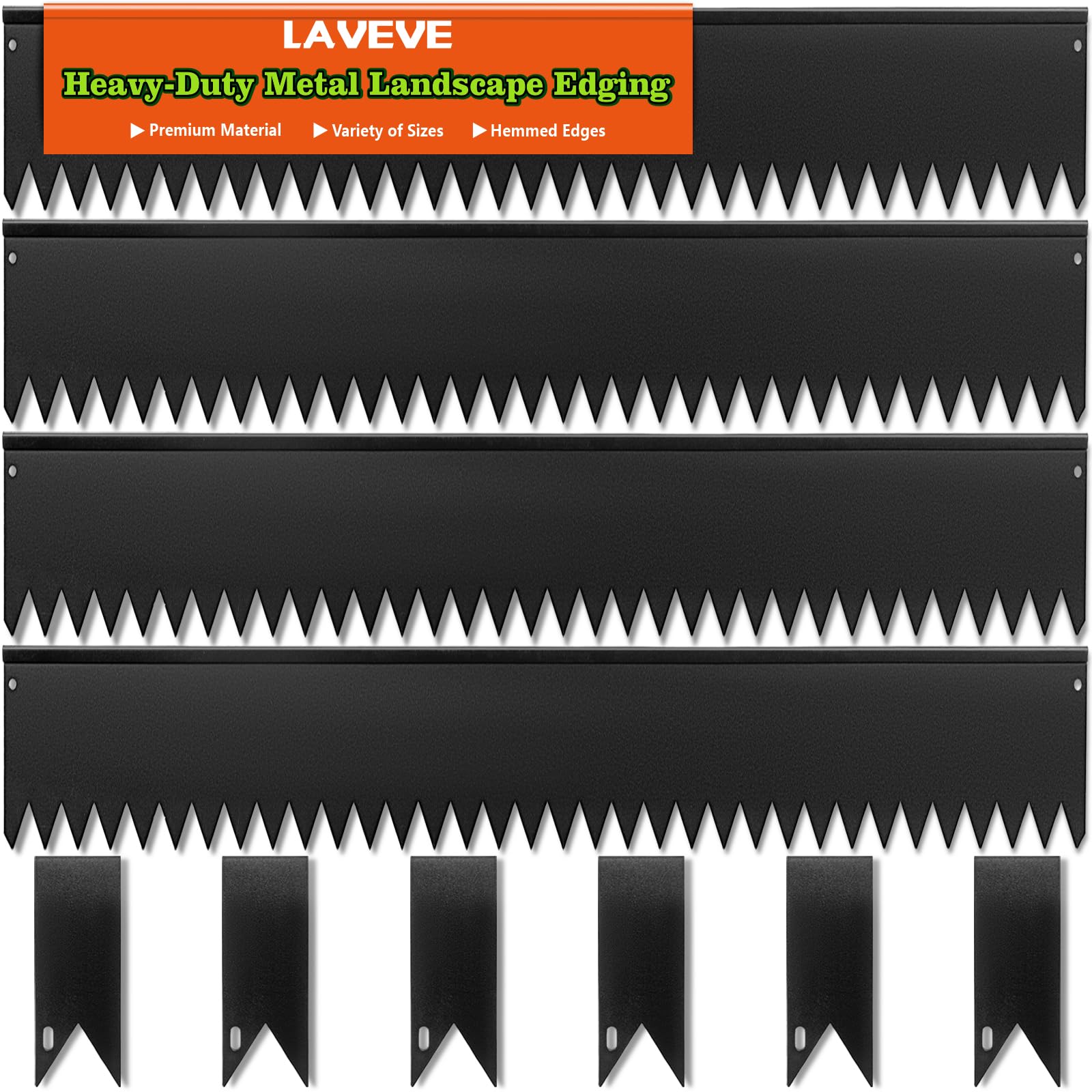
A 5-inch galvanized steel strip that bends into crisp 90-degree corners without flinching.
If the resin and plastic options feel too delicate, this is the hammer-in metal answer. Each pack holds four 40-inch strips of black alloy steel standing 5 inches tall, designed with sharp-toothed stakes that bite into the ground. What buyers praise most is the build — several call it “superior to plastic alternatives” and note it is taller and thicker than most metal edging they have handled, holding up against rain and sun alike.
The flexibility is the party piece: it bends easily into curves and tight 90-degree angles for paver corners and garden paths, yet stays rigid enough to keep a straight line. Owners recommend starting with a shallow trench, then pounding the strips in with a rubber mallet on a wood block — a method that delivers a clean, professional depth. The clips that join sections get specific praise for working well and keeping panels from overlapping.
The trade-off is the install muscle — forceful pounding is required, and buyers suggest wetting the ground and removing rocks first to make the job easier. A few note the jagged teeth need a firm start, and one owner paid for professional installation due to physical difficulty. At 13 feet per pack, it covers less ground than the coiled rolls, but the durability justifies the shorter reach for high-traffic paver borders.
Why it wins for paver corners: steel this thick holds a sharp line — something flimsy coiled plastic simply cannot do at a 90-degree turn.
The cost of that strength: expect a real workout pounding it in; pre-dig a trench and wet the soil to save your arms.
5. ZXZYHFTY Corrugated Metal Garden Edging
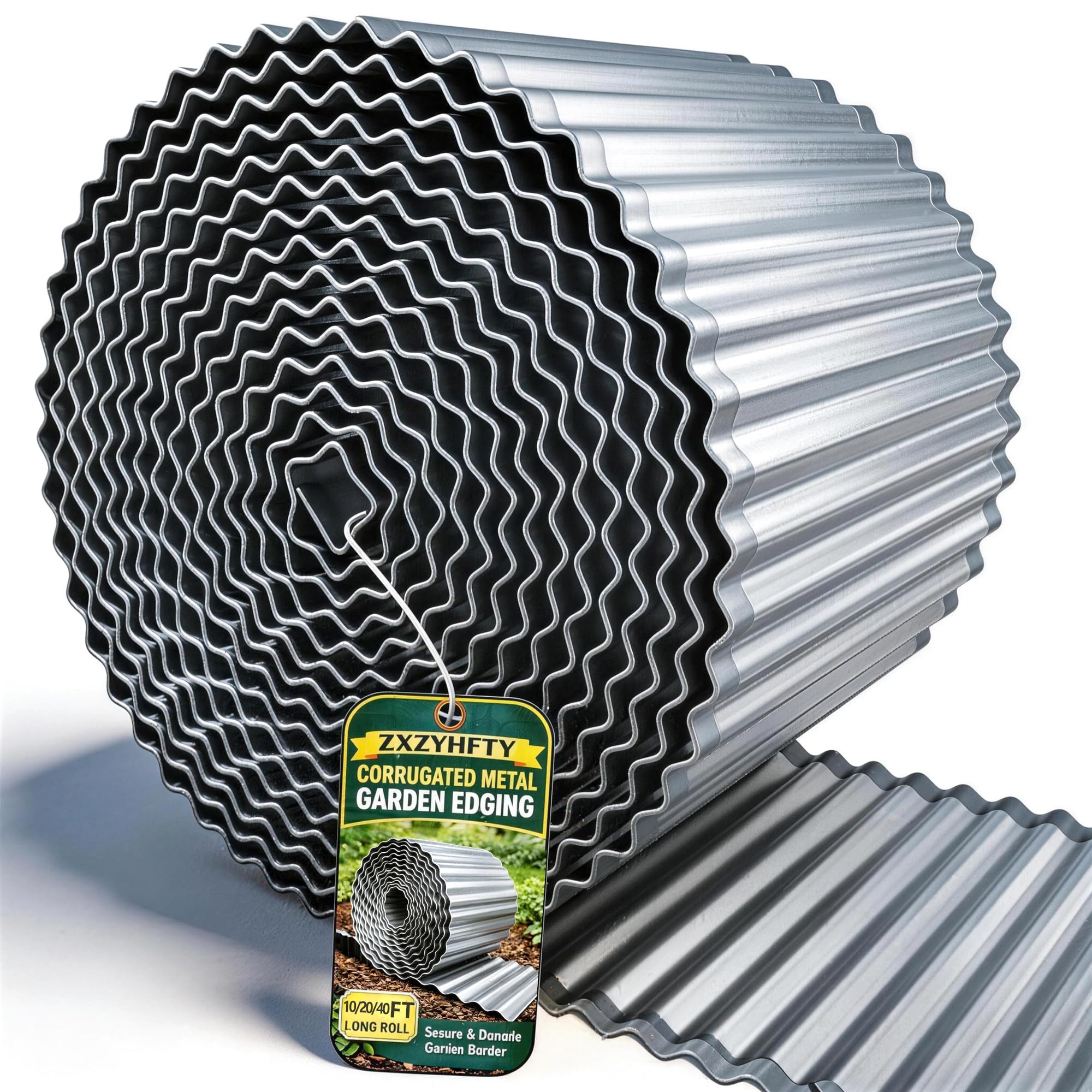
A 100-foot corrugated steel roll that delivers long durable borders at a rock-bottom per-foot cost.
This is the long-haul value pick — a single 100-foot roll of 3-inch corrugated galvanized steel with rolled edges that you shape, cut with tin snips, and hammer into place. For covering a big perimeter around a paver patio or a long driveway border, the sheer footage for the money beats every other option here. The rustic farmhouse silver look earns the most praise, with owners noting it works well both as a neat border and a functional barrier.
You get a sturdy barrier that stays put in the ground without sagging, thanks to its 3D corrugated structure (a series of ridges that add rigidity). The rolled U-shaped edges on top and bottom mean no sharp blades to worry about around kids and pets. Buyers have used it for jobs like blocking mud on a sloped yard or keeping animals out from under a shed, and it bends into curves and circles with patient effort.
Be honest about its limits though — “pretty good but flimsy” is a recurring theme, and durability gets mixed feedback. The 3-inch height is shorter than most, so it is best as a visual separator rather than a deep weed barrier, and some shoppers say rust forming over time, with paint scratching off on the coated versions. For a clean, long, budget-friendly line around pavers, it does the job; just do not expect heavy-gauge permanence.
The upside
- 100 feet of steel for less than most 33-foot kits
- Rolled edges keep handling safe around kids and pets
- Corrugated ridges resist sagging in soft soil
The downside
- Thin gauge can feel flimsy and bend at corners
- Rust and paint-scratch reports on coated versions
Choose this when: you need to edge a very long run on a tight budget and want real metal, not plastic.
skip it if: your border sits in heavy foot traffic or you expect it to double as a deep grass barrier.
6. 2 Inch Tall 100 FT Garden Edging Kit
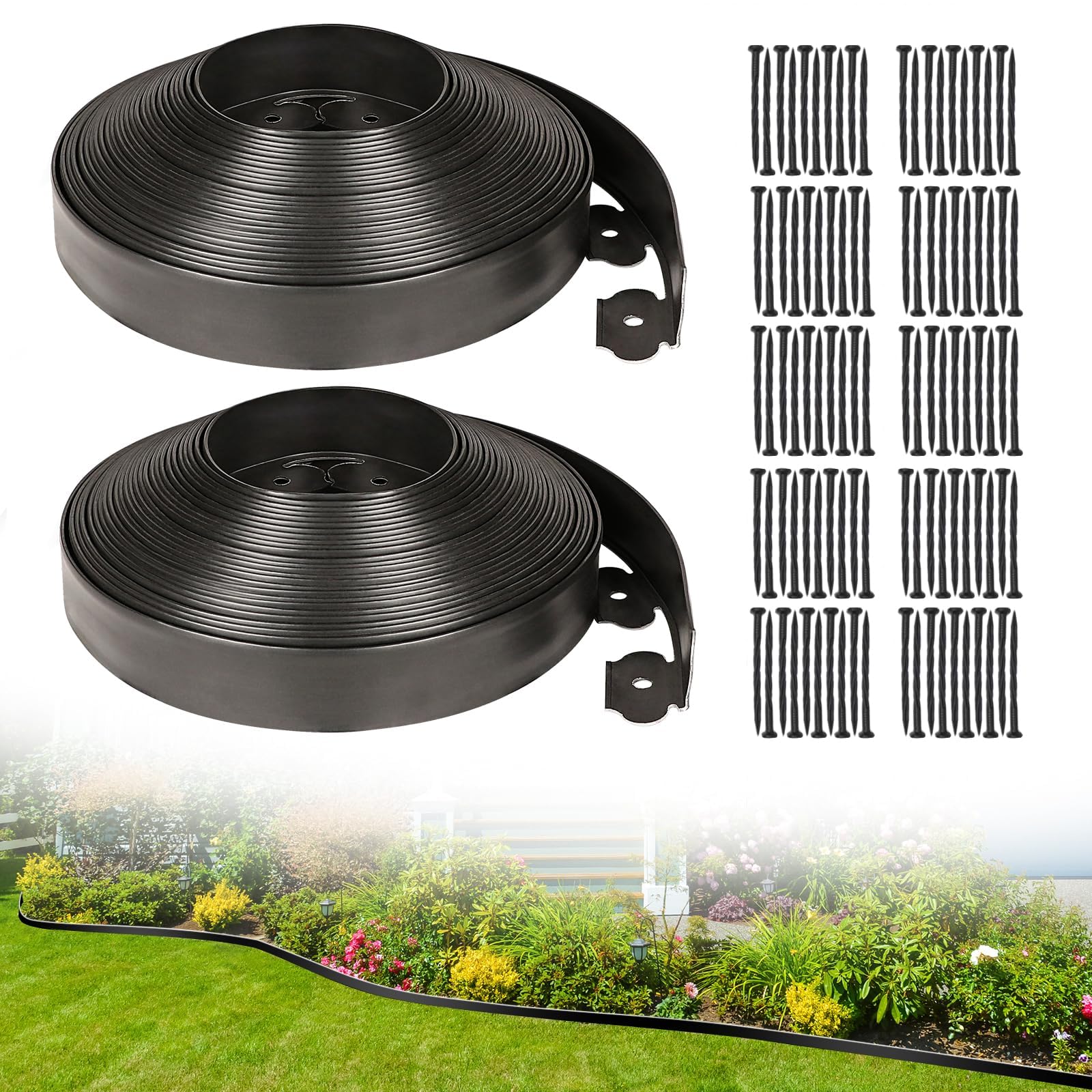
A 100-foot, 2-inch-tall plastic border that disappears into the lawn while holding paver edges discreetly.
Sometimes you want the edging to be seen as little as possible — that is exactly what this kit delivers. At just 2 inches tall with a full 100 feet of length and 120 spikes included, it is designed for shallow, low-profile separation around patios and pathways where you want a clean line without a visual fence. The spike count is the headline: 120 pieces means you have one every 10 inches, which buyers report drives into even hard clay soil with satisfying ease.
Buyers consistently call it “the best garden edging ever” for flexibility — it bends into circles, squares, hearts, and arcs without cracking. One owner notes it “sprang back when accidentally stepped on,” showing the material’s spring. You can cut it to size with scissors, and the included spikes penetrate hard ground far better than the flimsier stakes most kits bundle.
The honest caveat is the included posts — while the edging itself earns high marks, some owners found the stakes bend or break easily and swapped in sturdier third-party pins. A few also note the 2-inch height is too low to stop determined weeds or hold back thick mulch. But for a subtle, affordable way to keep pavers and lawn separated across a huge area, the per-foot value here is tough to beat.
The quiet achiever: 120 stakes and 100 feet of pliable edging make this the easiest large-area install in the lineup.
Know the limit: at 2 inches tall it separates rather than contains — deep mulch and aggressive grass will test it.
7. Emsco Group 60′ Choppers Hammer-in Edging
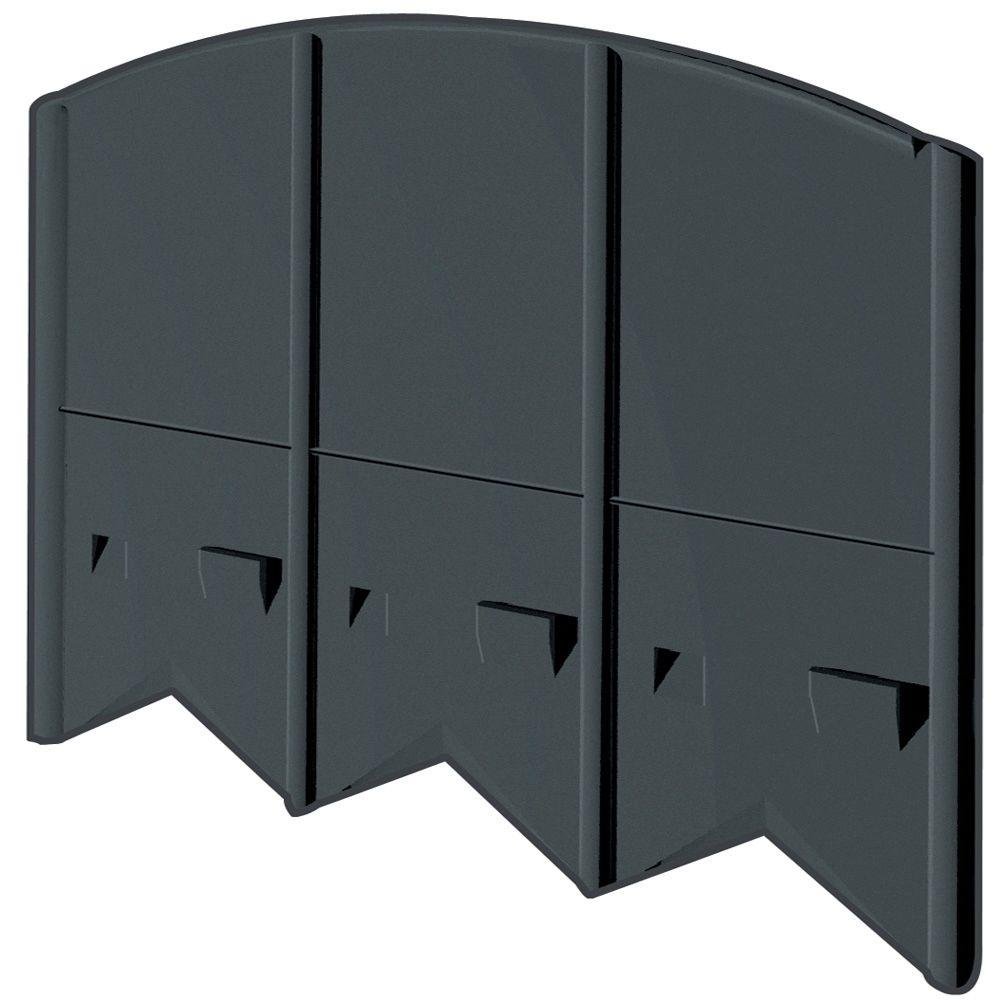
A modular 60-foot system of 6-inch pieces that locks together for curves no single roll can manage.
For complicated borders, this system uses 6-inch interlocking chopper sections that slide together with patented alignment lines, so you can thread around paver patios, tree rings, and garden beds in virtually any shape. The corner and T-connectors are included, which buyers use to cut clean 90-degree corners and even branch the border in two directions. Each piece hammers in with a rubber mallet, and the chopper teeth cut through soil to seat firmly.
The recycled polyethylene build is BPA-free and built to take weather, UV, and moderate impacts — what owners praise most is how easily it installs and how well it contains mulch and ground cover. The modular design is the real draw: if a tractor or dog knocks a section apart, you simply reconnect it, and if one piece breaks, you replace just that 6-inch segment instead of a whole roll. Several owners note it handles winter heaving well, with pieces easy to pound back down in spring.
Durability is the honest mixed note — the section joints are the weak point, and there are reports of pieces breaking under real impact, including a deer stepping on one and a truck backing over another. Hard, rocky soil makes install noticeably harder, and reviewers recommend pre-digging a trench with a spade to avoid cracking the teeth. For intricate paver layouts where flexibility matters more than brute strength, this is the most adaptable system here.
What stands out
- 6-inch pieces plus corner and T-connectors for any layout
- Modular design means easy single-piece replacement
- BPA-free recycled material safe for gardens
The reality check
- Joints can break under heavy impact — treat them gently
- Hard ground demands a pre-dug trench
Perfect for: intricate paver layouts and curved beds where no straight roll can follow the line you need.
Not the pick if: your border takes regular abuse from vehicles or large animals — the sections will eventually give way.
8. Worth Garden Galvanized Steel Landscape Edging
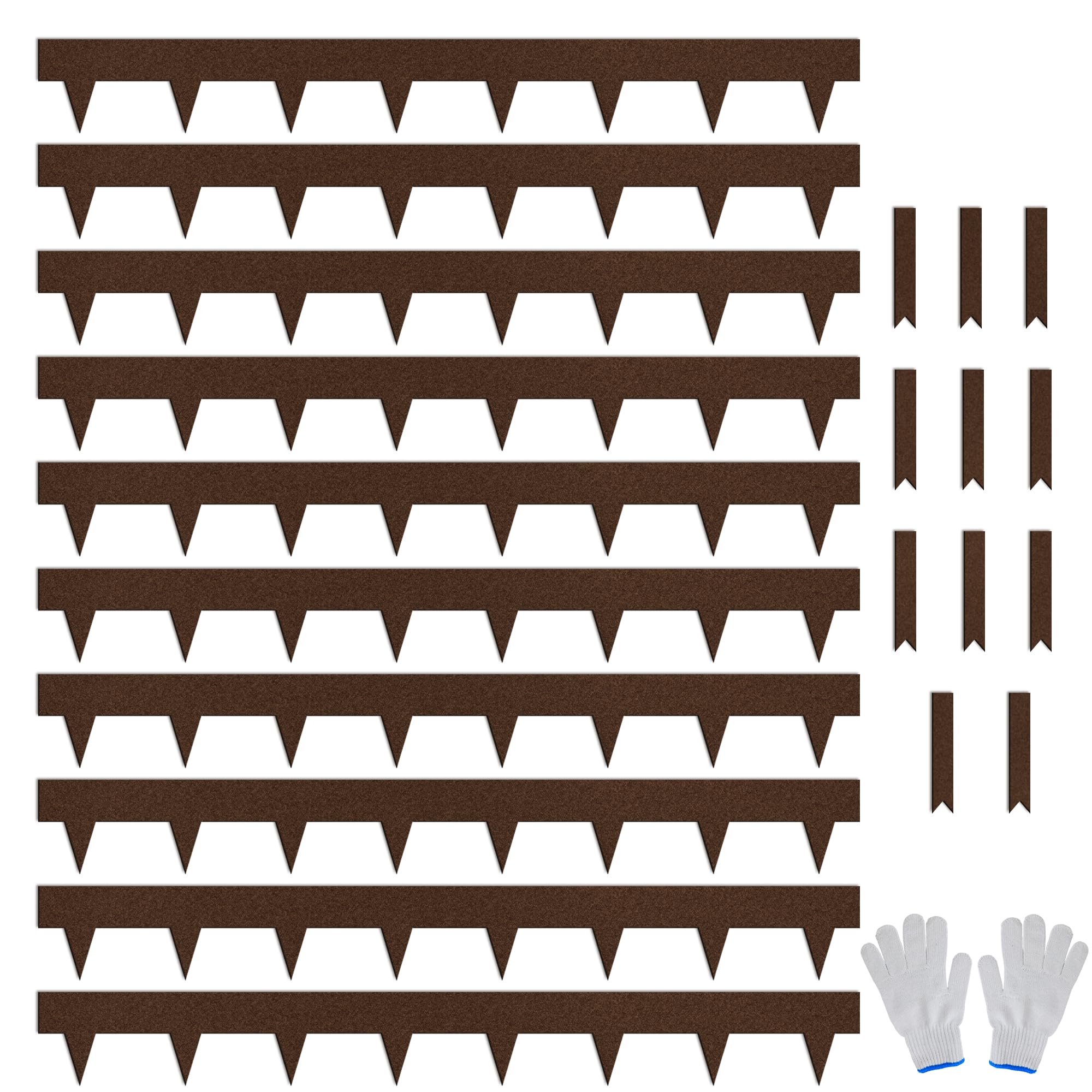
A bronze powder-coated steel border that delivers the rust-rustic look without the actual staining.
If you love the weathered Corten look but don’t want rust particles bleeding onto your paver stones, this is the edging for you. Each pack holds ten 40-inch strips of 1.5mm galvanized steel standing 4.5 inches tall, finished in a rust-toned bronze powder coating that offers “the charm of natural rust without shedding particles or staining the ground.” Buyers who have wasted time on plastic edging describe switching to this as the fix — “after years of wasting money on plastic edging” appears more than once.
The geometry is smart: 2.5 inches of each strip’s 4.5-inch height buries underground as a stake, leaving a clean 2 inches visible above the soil line. That visible height is ideal for flagstone patios and paver borders, and the 1.5mm steel is thick enough to resist bending and warping while still flexing “around corners very easily” per owner reports. Aluminum-stake style install with a rubber mallet means no digging — just connect, align, and hammer.
The one genuine disagreement in the reviews is the color itself — some owners love the bronze rust tone, while others find it unappealing next to certain stone colors. A few also note it is a thinner gauge than premium options, so very tight curves need patient bending. At 33 feet with 11 stakes, it covers a paver patio perimeter neatly, and buyers across the board call it great quality for the money.
The smart compromise: all the weathered-steel charm with none of the rust staining that ruins light-colored pavers.
Check the color fit: the bronze tone is love-it-or-leave-it, so test it against your specific paver shade before committing.
9. Edge Right Hammer-in COR-TEN Steel Edging

The 16-gauge COR-TEN steel that shrugs off weed eaters and develops a handsome rust patina for decades.
This is the do-it-once solution for paver borders that demands permanence. Each of the five 48-inch strips is made from heavy 16-gauge COR-TEN weathering steel, standing 6 inches tall with a 1/4-inch rounded top that is safe to hammer and safe to brush against. The maker’s claim is aggressive — COR-TEN weathering steel is engineered to develop a protective patina that can last well over 100 years. — and owners back it up, describing 200 feet installed and stable through multiple seasons of rain and weather.
what separates it from galvanized options is the patina. Rather than staying silver, COR-TEN develops a protective rust-colored coating over time that owners consistently call “attractive” and “bronzy,” giving paver borders a modern, high-end landscape look. The steel is thick enough to take “unlimited abuse” from weed eaters, per the brand, and the rolled top edge means no sharp metal to worry about. Owners mention it installs with a sledgehammer, cuts cleanly with a hacksaw, and the saw-like bottom edge penetrates soil readily.
The honest trade-off is price — this is the most expensive pick per foot here, and value for money gets genuinely mixed feedback even from owners who love it. Bending it into tight curves is not easy compared to thinner metals, one owner’s 4-foot section eroded from heavy rain runoff, and the rust patina is a deliberate aesthetic choice that not everyone wants. If you want a paver border you will never touch again, this is the one — just measure twice, because it is costly to extend later.
The heavyweight advantage
- 16-gauge COR-TEN steel takes weed eater abuse without damage
- Self-protecting rust patina needs no paint or maintenance
- Rolled top edge is safe underfoot and under the mallet
The premium cost
- Most expensive per foot of any pick here
- Deliberate rust look is not for every landscape
- Tight curves demand real effort to bend
Choose it for: paver borders you want to install once and never think about again, where the rust patina fits the design.
Steer clear if: you are covering a huge area on a budget — the per-foot cost multiplies fast.
Understanding the Specs
Material Thickness and Type
The single biggest predictor of whether edging lasts is what it is made of and how thick that material is. Thin coiled plastic (polyethylene or HDPE, a tough weather-resistant plastic) is cheap and flexible but can wave, crack, or get chewed by a weed eater. Galvanized steel resists rust and takes abuse, while 16-gauge COR-TEN steel is the heavyweight — it develops a protective patina and holds a razor line for decades. Resin sections offer a stone-like appearance with easy handling.
Height and Visible Profile
Height determines what the edging can do. A 2-inch profile is a discreet separator that keeps lawn and paver apart without being seen. A 4- to 5-inch height gives you room to bury part of it below grade for stability while leaving a visible barrier that blocks grass and corrals mulch. Measure your paver’s edge height first — the visible portion should sit flush or slightly below the brick surface for a clean, professional finish.
Stake Count and Spacing
Stakes are what actually hold your edging in place, and kits vary wildly in how many they include. A 40-foot roll with 10 stakes means one every 4 feet — usually not enough for a stable line. A kit with 50 stakes for 33 feet lets you place one every couple of feet for a rock-solid hold. If a kit skimps on stakes, expect to buy extras; the included stake count is often the difference between a straight border and a wavy one.
Installation Method
Think about how much physical work you want to do. Hammer-in steel strips require a mallet and some muscle, plus a pre-dug trench for best results on hard soil. Stake-in plastic and resin sections are tool-free but demand careful, even spacing. Coiled rolls need to be unrolled, warmed in the sun, and staked — and they handle curves far more easily than rigid steel sections. Match the install effort to your soil type and your patience.
FAQ
How do I stop paver edging from moving or shifting?
What is the best height of edging for paver borders?
How long does paver edging last?
Can I bend steel edging around curves and corners?
Will edging stop grass and weeds from growing into my pavers?
How many stakes do I really need for a 40-foot run?
Is rubber or plastic edging better for paver patios?
Do I need to dig a trench before installing paver edging?
Does steel paver edging rust?
Final Thoughts: The Verdict
For most paver projects, the edging for pavers winner is the Beuta Polyrock Bricks because it delivers the stone-real look buyers crave with a tool-free install and all-season durability — the crowd favorite at 4.6 stars across 900+ owners.. If you need to bend around a complex paver patio with sharp corners, the Emsco 60′ Choppers modular system with corner and T-connectors is the one to reach for. And if you want a border to install once and never touch again, the Edge Right COR-TEN Steel is the heavy-duty pick that shrugs off weed eaters for the long haul.
How We Picked
We do not accept paid placement. Every pick is matched to a real buyer and a real use-case; we do not hands-on test units.
Sources & Methodology
Specifications: manufacturer listings and product documentation. Review insights: verified customer reviews, as of August 2026. Pricing: not shown on this page (it changes often); check the current price via the retailer link.
As an Amazon Associate, WellFizz earns from qualifying purchases. This does not affect which products we feature.
Related Guides

Mo Maruf
I created WellFizz to bridge the gap between vague wellness advice and actionable solutions. My mission is simple: to decode the research and give you practical tools you can actually use.
Beyond the data, I am a passionate traveler. I believe that stepping away from the screen to explore new environments is essential for mental clarity and physical vitality.