Our readers keep the lights on and my smoothie glass nicely filled. As an Amazon Associate, I earn from qualifying purchases.
Specs are compiled from manufacturer listings and verified buyer reviews and can change over time — please confirm the key details on the product page before buying.
Finding a game that genuinely entertains a 4-year-old, a teenager, and the grandparents at the same time feels nearly impossible — most games either bore the little ones or feel too babyish for everyone else. The secret is choosing games with simple, universal mechanics—matching, guessing, racing, or light strategy—that everyone can grasp in minutes. This guide highlights the strongest options for real family game nights.
I’m Mohammad Maruf — the founder and writer behind WellFizz. This guide is built by comparing the manufacturers’ published specifications and the patterns across verified customer reviews, so you get each pick’s real strengths and trade-offs instead of marketing spin.
From toddler-friendly snail races to a cross-country train adventure, these family games for all ages turn any evening into one full of laughter, teamwork, and friendly competition.
Our Picks at a Glance


How To Choose The Best Family Games For All Ages
Match the game’s age range and complexity to the youngest player at the table. A reading-heavy game frustrates preschoolers, while a no-strategy game bores adults.
Match the Age Range to Your Youngest Player
Games clearly state an age range like “3 & Up” or “8 & Up.” If your youngest child is 4, a game designed for 8-year-olds will likely be too complex. Look for games with adjustable difficulty or team-play options to bridge the gap between a 6-year-old and a 14-year-old.
Consider the Playtime and Player Count
Short 15-minute games suit younger children’s attention spans, while 30-60 minute games offer more depth for older kids and adults. Check the player count—some games support only 4 players, while party games handle 10 or more, essential for large gatherings.
Quick Comparison
| Model | Best For | Age Range | Players | Playtime | Amazon |
|---|---|---|---|---|---|
| ThinkFun Zingo★ Best Overall | Preschool Learning | 4 & Up | Up to 7 | Fast-Paced | Amazon |
| Unstable UnicornsTop Performer | Family Strategy | 8 & Up | 2-8 | 30-60 min | Amazon |
| Ravensburger Snail’s PaceBest First Game | First Board Game | 3 & Up | 2-6 | 15 min | Amazon |
| Smug Owls | Creative Riddles | 8 & Up | 3-15 | 15-20 min | Amazon |
| Hot Seat | Getting to Know You | 10+ | 3-10+ | Varies | Amazon |
| Peaceable Kingdom Space Escape | Co-op Teamwork | 7 & Up | 2-4 | Varies | Amazon |
| Runs in The Family | Conversation Starter | 8 & Up | 2-5 | 15 min | Amazon |
| Who Knows More? Kids or Adults | Trivia Battle | 8+ | Teams | Varies | Amazon |
| Ticket to Ride | Classic Strategy | 8+ | 2-5 | 30-60 min | Amazon |
In‑Depth Reviews
1. ThinkFun Zingo Bingo
Our pick — over 4.5★ from 17,000+ verified ratings; the strongest balance of quality and price.
The lightning-fast matching game that turns pre-reading skills into family fun.
Zingo takes the classic thrill of bingo and makes it instantly accessible for the youngest players, using picture matching instead of reading. The unique Zinger device dispenses tiles with a satisfying slide, keeping kids engaged while they build vocabulary and matching skills. With 6 double-sided cards, it offers two levels of play that grow with your child.
You get a game that teaches while it entertains — buyers report it “helps his hand coordination, focus, and getting him to recognize the pieces.” Teachers use it in classrooms, and families play it at home, a dual endorsement that shows its quality. The box includes an extra card, so up to 7 players can join, which is surprisingly inclusive for a preschool game.
The 16-ounce box holds sturdy components that parents say last for years without bending cards or breaking parts. The main tip from experienced players is to set aside unused plastic tiles near the tray to avoid the hassle of opening the holder mid-game.
Why Parents Love It
- Builds language and matching skills through fast-paced play
- Easy to learn with clear, high-quality instructions
- Durable enough to be passed down or used in a classroom
The Only Quirk
- The tile holder can be slightly awkward to open mid-game
Our Take: The most reliable bridge between “I can’t read yet” and “Let’s play a real game,” making it the ideal first choice for families with preschoolers.
Who Might Skip: Families with only older kids (8+) may find it too simple and should look toward strategy games.
2. Unstable Unicorns Card Game
Adorable unicorns hide a surprisingly cutthroat strategy game that teens and adults love.
Don’t let the pastel colors fool you — this is a strategy game where you build a “unicorn army” and use Neigh cards to block your opponents’ moves. The goal is simple: collect 7 unicorns first, but the path is full of upgrades, downgrades, and magical chaos. It supports 2-8 players, making it a flexible choice for both small family nights and larger gatherings.
The cards are colorful and hilariously written, sparking “memorable social moments” and counter-wars that keep everyone laughing. It’s easy to learn but has a real learning curve, with players noting basic unicorns can feel weaker than magical ones. The magnetic closure box keeps the 135 cards organized and portable.
Owners mention that a full 8-player game can stretch beyond the stated 60 minutes, so it’s best reserved for when you have plenty of time. It’s also a fantastic gift, with expansions available like Rainbow Apocalypse and Unicorns of Legend to keep the game fresh for years.
balance: Best with 3-5 players, where the chaos stays manageable and the strategy shines.
Heads Up: The rules have a learning curve — expect a first game where everyone is still figuring out the card combos.
Reach for it: Families with kids 8 and up who enjoy “take-that” mechanics and playful rivalry.
Look elsewhere: If you want a purely cooperative game with no conflict, this isn’t it.
3. Ravensburger Snail’s Pace Race
A gentle, wooden snail race where everyone cheers and no one loses.
For the youngest gamers, this is the perfect introduction to board games. Players roll two colored dice and move the matching wooden snails forward, racing to see which snail crosses the finish line first. Since you’re racing snails, not each other, there’s no winner or loser — just the joy of seeing whose snail wins the race. It’s a non-competitive design that teaches turn-taking, patience, and color recognition.
This is the game that parents say their children “grew up in Germany playing,” proof of its enduring design. It received the Parent’s Choice Gold Seal Award and is a favorite in preschool classrooms for teaching teamwork. The game lasts about 15 minutes, which is the perfect length for a toddler’s attention span, and it fits 2-6 players.
One small complaint is that shipping labels can be stuck directly on the box, leaving residue. The game itself is “very well constructed,” with high-quality wooden snails and a sturdy box that kids can pack away themselves.
Standout Feature: The cooperative, everyone-wins format removes the tears from game night.
Minor Gripes: The box can arrive with sticker residue from shipping; a minor cosmetic issue.
Perfect for: Toddlers and preschoolers (3+) taking their very first steps into board gaming, and grandparents who want a sweet, low-pressure activity.
Not for: Older kids or adults seeking a strategic challenge — it’s purely for the little ones.
4. Smug Owls Card Game

Flip cards to create a hilarious riddle and let your family’s creativity run wild.
Smug Owls hands you a “magic deck” that generates over 130,000 possible riddles, and your job is to come up with the best answer. There’s no single “right” answer — you win by impressing the Smug Owl with your creativity when the group votes on the best response. It takes 30 seconds to learn and each game lasts 15-20 minutes, making it an easy go-to for any game night.
It’s a hit across three generations, as evidenced by a family playing it with a 45-year-old son, daughter-in-law, and 13-year-old grandson. The game shines with larger groups since it supports up to 15 players, making it perfect for birthday parties, holidays, and big family gatherings. The hand-drawn, retro-style owl illustrations are charming and add to the game’s appeal.
While it’s a crowd-pleaser, it’s “definitely not for everyone” — it requires a willingness to be creative and a bit silly. The compact box is easy to bring anywhere, and the included owl standee is a nice touch.
Great For: Large multigenerational groups that enjoy thinking on their feet and laughing at each other’s answers.
Keep In Mind: It’s a creative game, not a trivia game; shy players might find it challenging.
Grab This: If you want a fast, hilarious game that sparks creative conversations and works for huge groups.
Skip It: If your family prefers structured trivia over open-ended creativity.
5. Hot Seat Party Game

The “all about you” game that reveals hilarious secrets about your family members.
In Hot Seat, one player sits in the hot seat and draws a question like “If I purchased my own island, what would I name it?” Everyone else writes down an anonymous answer pretending to be that player, and then the group guesses which response is real. It’s a clever, thought-provoking format that has families “laughing” as they discover how well they really know each other.
This game works especially well for the holiday gatherings — “It gets as crazy as you want it to, or as tame as you’d like,” making it adaptable to different family personalities. It’s family-friendly for ages 10 and up, and with 300 questions and an expansion set included, it has plenty of replay value. The 3-10+ player count covers everything from small families to big Thanksgiving dinners.
The game is a great alternative for families who enjoy Cards Against Humanity’s format but want something appropriate for younger teens. It’s a go-to gift for White Elephant exchanges and stocking stuffers, and its simple mechanics mean you can start playing right from the start.
Why It Works: It sparks laughter and connection by revealing funny and surprising things about each other.
Note: Some questions can get a little personal, so it’s best for families who are comfortable joking around.
Ideal For: Large, boisterous family gatherings where the goal is to get everyone talking and laughing.
Consider Skipping: If your family prefers playing games over talking about themselves.
6. Peaceable Kingdom Space Escape

A cooperative space adventure where the whole family wins or loses together.
For families who want to avoid the tears of elimination-style games, Space Escape is a breath of fresh air. It’s a cooperative game where you and your team of Mole Rats work together to gather equipment and escape a space station before time runs out — and before the snakes get you. There are no individual winners; instead, everyone on the team wins or loses together.
Designed by the inventor of the hit game Pandemic, this kid-friendly version requires real communication and shared decision-making. Players draw cards with two actions — one for them and one for the snakes — and must decide as a team which Mole Rats to move and where to send the sneaky snakes. It teaches strategy and teamwork in a way even younger kids can grasp.
It’s a huge hit with kids aged 4-11, and even older elementary students enjoy the challenge. It’s “easy to learn,” with no reading required, making it accessible to a wide range of ages. The included 51 cards, 20 tokens, and 4 plastic mole rat movers are high quality, and the challenge game instructions add replay value.
The Payoff
- Builds teamwork, communication, and strategic planning
- High-quality components that are durable for classroom use
- Winning as a team feels amazing and teaches collective problem-solving
The Trade-off
- Like many co-op games, it can be challenging to win, which might frustrate some younger kids
Best For: Parents who want to encourage teamwork and families with kids who are tender losers.
Who It’s Not For: Families looking for a quick, casual game without much thought required.
7. Runs in The Family

A laughter-filled game of syncing minds and guessing how your family thinks.
Runs in The Family is a lighthearted game where you draw a topic card and score points by matching answers with the other players. It tests how well you know your family — can you guess what your mom would say is her favorite movie snack? It’s a conversation starter that has families bonding over “old stories” and laughing at how predictable (or surprising) everyone is.
With over 200 topics and 15-minute games, it’s perfect for a quick after-dinner activity. It’s lightweight and travel-sized, weighing just 8.8 ounces, so it’s great for taking on trips. The flexible player count of 2-5 makes it easy to pull out on a quiet evening or during the holidays, with one family enjoying it with ages 69 down to 9.
Most families find it “so much fun,” playing it every night after dinner. However, some questions might not fit every family dynamic, and opinions on its value can vary.
Why It’s a Hit
- Encourages funny conversations and shared memories
- Portable and lightweight, perfect for travel or restaurants
- extremely fast to learn and quick to play
Worth Considering
- A few topic cards may not resonate with every unique family dynamic
Reach for This: When you want a low-pressure way to spark interesting family conversations and learn something new about each other.
Choose Something Else: If you’re after a game with deep strategy or heavy competition.
8. Who Knows More? Kids or Adults

The ultimate battle of the brains where kids and adults go head-to-head.
This trivia game splits your family into two teams — kids versus adults — for a fun and simple quiz showdown. The categories span everything from history to pop culture, science, and random facts, ensuring there’s something for everyone. The first team to collect 20 points wins, making it a quick and notable race to the finish.
It’s a “great family activity” that has families playing “for hours” and laughing at the silly answers. The difficulty is part of the fun, with kids often delighting in how hard the adult questions are. It’s a stellar choice for family game nights where a little friendly rivalry is welcome.
There are mixed feelings on the difficulty level, with some finding the adult questions too challenging and others saying they’re too easy for preteens. Some players also note that the game can be “played through” in two sittings, so its long-term replay value might be slightly lower than other options.
The Fun: Kids love beating the adults at their own game, and the age-appropriate questions level the playing field.
The Catch: For some, the challenge level feels unbalanced, and the question deck may run out of surprises after a few playthroughs.
Choose This: If your family loves trivia nights and wants a game designed specifically for kid-vs-adult competition.
Think Twice: If you’re looking for a strategy game that plays differently every time.
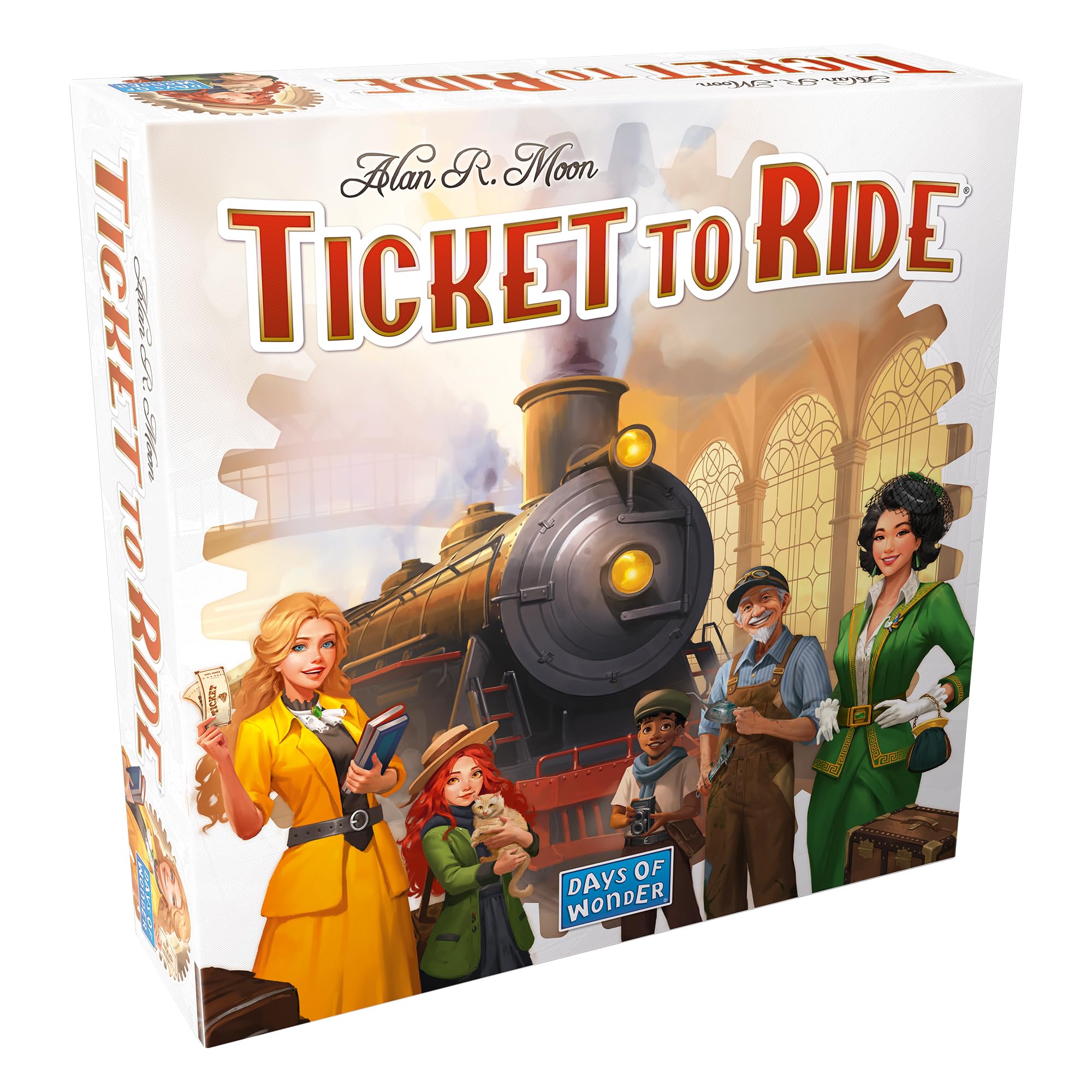
9. Asmodee Ticket to Ride Board Game
The award-winning train adventure that’s easy to learn but hard to master.
Ticket to Ride is a modern classic for very good reason. It’s a cross-country train adventure across North America, where players collect train cards to claim railway routes and connect cities. The goal is simple — build the longest routes and complete your destination tickets — but the strategy of blocking opponents and optimizing your network becomes clearer the more you play.
It’s the perfect step up for families ready to move beyond party games into something with real strategic depth, but it’s still accessible for kids 8 and up. It’s “easy to learn” but offers deep strategy that keeps both casual and competitive gamers engaged. The game components are beautiful, including a giant map, 225 plastic trains in 5 colors, and 110 train cards, all of which enhance the experience.
Games run 30-60 minutes, offering a satisfying amount of depth without dragging on. It’s a game that families play “three times weekly” and recommend to friends, and the 2025 Refresh edition brings updated artwork and components to a timeless favorite.
What You Get
- Deep strategy that unfolds over multiple plays, offering endless replayability
- Beautiful, high-quality components including a giant map and miniature trains
- Simple rules that can be explained in a few minutes
What to Keep in Mind
- The 30-60 minute playtime is longer than other options on this list
- Younger children (under 8) may find the strategic planning a bit complex
The Verdict: The benchmark for family strategy games — an investment in quality family time that pays off for years.
A Word of Caution: For a quick 15-minute game, this is not the choice; it’s a commitment to a full hour of play.
Understanding the Specs
Cooperative vs. Competitive
In a cooperative game, all players work together against the game’s mechanics to achieve a shared goal — you all win or lose as a team. This is ideal for younger children who get upset when they lose individually. A competitive game has one winner, which can be notable for older kids and adults but might require a thicker skin. Consider your family’s dynamic when choosing which style will create the most fun.
Player Count and Playtime
Always check the number of players a game supports to ensure it fits your family. A game that supports 2-5 players is perfect for a nuclear family, while a party game supporting 10+ is better for large gatherings. Playtime is equally important: 15-minute games are great for young kids or a quick after-dinner activity, while 30-60 minute games offer a more rich and strategic experience for older children and adults.
FAQ
What is the best first board game for a 3-year-old?
Which family game supports the most players?
What is the difference between a cooperative game and a competitive game?
Are there any family games that don’t require reading?
How long does a typical game of Ticket to Ride last?
What age is appropriate for the Unstable Unicorns card game?
What does “cooperative game” mean for family game night?
Which game is better for a large family reunion, Smug Owls or Hot Seat?
Final Thoughts: The Verdict
For the majority of shoppers, the undisputed family games for all ages winner is the ThinkFun Zingo because it perfectly bridges the gap between pre-readers and adults, making it a crowd-pleaser with near-perfect ratings. If you want more strategic depth for older kids and adults, grab the Ticket to Ride. And for a massive, creative gathering, the Smug Owls is the one to reach for.
How We Picked
We do not accept paid placement. Every pick is matched to a real buyer and a real use-case; we do not hands-on test units.
Sources & Methodology
Specifications: manufacturer listings and product documentation. Review insights: verified customer reviews, as of August 2026. Pricing: not shown on this page (it changes often); check the current price via the retailer link.
As an Amazon Associate, WellFizz earns from qualifying purchases. This does not affect which products we feature.
Related Guides

Mo Maruf
I created WellFizz to bridge the gap between vague wellness advice and actionable solutions. My mission is simple: to decode the research and give you practical tools you can actually use.
Beyond the data, I am a passionate traveler. I believe that stepping away from the screen to explore new environments is essential for mental clarity and physical vitality.