Our readers keep the lights on and my smoothie glass nicely filled. As an Amazon Associate, I earn from qualifying purchases.
Specs are compiled from manufacturer listings and verified buyer reviews and can change over time — please confirm the key details on the product page before buying.
Your French drain stops working the moment silt and soil sneak into the gravel and clog the pipe. The fabric wrapped around that gravel is the only barrier keeping that mess out, so choosing the right one is the biggest decision in the whole project. Here is how to match a roll to your yard’s size and demands, with the exact numbers that matter underground.
I’m Mohammad Maruf — the founder and writer behind WellFizz. This guide is built by comparing the manufacturers’ published specifications and the patterns across verified customer reviews, so you get each pick’s real strengths and trade-offs instead of marketing spin.
You will learn which permeable, non-woven fabrics (felt-like sheets that let water pass but block soil) survive buried use, how weight and tensile strength (the force a fabric can handle before tearing) change what you can build, and how to pick the best fabric for french drain that keeps your trench flowing clear for years.
Our Picks at a Glance


How To Choose The Best Fabric For French Drain
The right fabric acts as a filter: it lets water pass through freely while blocking the fine soil particles that would otherwise clog your drain pipe and gravel over time. Get the weight and strength wrong, and you either end up with a fabric that tears during installation or one that is so thin it lets silt straight through.
Weight and density — the ounces that decide toughness
Fabric weight is measured in ounces per square yard, and it directly controls how well the material resists punctures from sharp gravel and roots. A 6 oz fabric handles most residential French drains and walkways, while an 8 oz fabric is the go-to for heavier stone, retaining walls, and areas with lots of foot or vehicle traffic. Heavier fabric also tends to hold its shape better when you wrap it around a perforated pipe before backfilling with gravel.
Tensile strength — how much pulling it survives
Tensile strength is the force the fabric can take before it tears or stretches, measured in Newtons (N) or pounds. When you are pulling a roll tight across a trench and dumping rocks on top, higher tensile strength means fewer surprises. A 350N rating is the common benchmark for serious drainage and construction fabric, giving you solid reassurance that the sheet will not rip while you are wrestling it into place.
Permeability and flow rate — the part that keeps water moving
A fabric that filters soil but blocks water is useless for a drain. Look for materials that advertise high flow rates, often given in gallons per minute (GPM) per square foot, so rain can pass through quickly and reach the pipe below. This is what separates true geotextile filter fabric from solid plastic weed barriers, which keep weeds out but also trap water.
Quick Comparison
| Model | Best For | Density | Tensile Strength | Roll Size | Amazon |
|---|---|---|---|---|---|
| VEVOR Geotextile 8 oz★ Best Overall | Heavy residential drains & walls | 8 oz | 350N | 3ft x 100ft | Amazon |
| PioneerWorks 6 ozConstruction Grade | Construction-grade drainage | 6 oz | 350N | 4ft x 50ft | Amazon |
| Towallmark 6 ozLong-Run Value | Long runs & large pavers | 6 oz | 350N | 4ft x 100ft | Amazon |
| REKVEN 4.5 oz + Stakes | DIY kits with anchors included | 4.5 oz | — | 3ft x 50ft | Amazon |
| forimo Driveway Fabric | Large-area commercial ground cover | 3.5 oz | — | 6ft x 300ft | Amazon |
| Sandbaggy 8 oz (3×25) | High-flow premium drainage | 8 oz | 205 lb | 3ft x 25ft | Amazon |
| DWALE Driveway Fabric | Heavy gravel pads & driveways | 3.5 oz | 800 lb | 6.5ft x 330ft | Amazon |
| Sandbaggy 8 oz (3×300) | Massive commercial projects | 8 oz | 205 lb | 3ft x 300ft | Amazon |
In‑Depth Reviews
1. VEVOR Geotextile Landscape, 3ft x 100ft 8 oz
Our pick — over 4.5★ from 700+ verified ratings; the strongest balance of quality and price.
The heavy 8 oz roll that shrugs off sharp gravel and wraps clean around drain pipe
You get the confidence of a thick, heavy-duty membrane without paying a premium with this VEVOR roll. Its 8 oz density (ounces per square yard) is noticeably tougher than the 6 oz options in this list, and the non-woven needle-punched build (a felt-like fabric made by punching fibers together) stays soft and flexible enough to mold around a perforated drain pipe and trench curves. That flexibility is exactly what you want when you are lining a trench before the gravel goes in.
The 350N tensile strength means the sheet resists tearing while you pull it tight and dump stones on top. It weighs 8.37 pounds for the whole 3ft x 100ft roll, which is light enough for two people to carry and unroll across a long run. The 3ft width is perfect for standard French drain trenches because it gives you enough material to line the bottom and lap up both sides of the gravel.
Buyers report using it for drainage ditches before larger stone placements, retaining wall drainage areas, and even artificial turf bases — and the consistent verdict is that it is easy to cut with sharp scissors and stays put while you staple it down. With a 4.6-star average across 700+ owners, it is the most-proven choice in this lineup.
Why owners lean on it
- At 8 oz, it is the thickest, most puncture-resistant option for the money
- Flexible non-woven build wraps tight around drain pipe and trench curves
- Light, easy-to-cut roll that two people can handle on a long run
Where it asks a little of you
- At 3ft wide, you will need multiple parallel strips for very wide trenches
- The roll is 100ft long, which is more than a small weekend project needs
The straightforward winner: If you want one fabric that does French drains, retaining walls, and driveways without a second thought, this is it.
Who should size down: A small single trench might find a 100ft roll wasteful — the 4ft x 50ft PioneerWorks below covers less ground.
2. PioneerWorks Geotextile Landscape, 4ft x 50ft & 6oz
A 6 oz workhorse built for heavy loads, not for blocking weeds
Read the product description carefully here, because this PioneerWorks roll is blunt about its job: it is for major construction erosion control, used under concrete or pavement, not a weed-stop. That honesty is refreshing, and it means buyers who grab this for a French drain get a fabric engineered for the exact separation and filtration work drains demand. The 4ft x 50ft coverage is a more approachable size than a 100ft roll for a single project.
The material is rated at 350N tensile strength and 440N load capacity (the force it can bear before failing), and owners describe it as tough to puncture even with nails. One buyer wrapped it around 3/4-inch stones and pipe for a French drain that fixed shed water pooling, reporting no water issues after heavy rain. It is a 6 oz fabric, so it is a step lighter than the VEVOR 8 oz above, but the trade-off is a wider 4ft sheet.
One thing to note: some buyers point out the 4ft version has a woven side and a non-woven side, which is unusual. That makes it worth a quick visual check when it arrives to confirm the side you expect is facing the right way for your trench. The roll weighs 8.43 pounds, and for anyone refreshing a failing drain, owners say it performs like a fabric that will match the lifespan of old cloth they replaced.
Built different: This is the pick for a drain under a driveway or heavy traffic area where the fabric does structural work, not just filtration.
Know before you buy: It is not a weed barrier, and the dual-sided weave is worth confirming before you lay it down.
3. Towallmark Geotextile Landscape, 4ft x 100ft Non-Woven Fabric
A massive 100ft roll of 6 oz non-woven that handles large pavers and long trench runs
When your project is measured in dozens of feet rather than a small garden bed, this Towallmark roll earns its keep. The 4ft x 100ft size covers serious ground, and at 21.6 pounds it is the heaviest roll in this lineup — you will want a second set of hands to move it, but that weight reflects the density packed into a long run. It is a true non-woven geotextile (a fabric that filters soil while letting water pass).
The 6 oz density sits right in the residential balance, and the 350N tensile strength (the force it can handle before tearing) matches the VEVOR and PioneerWorks above. Owners mention using it to lay 18-inch by 24-inch large pavers on clay soil to prevent the ground from shifting and ruining the project within a few years. That is the classic job for this fabric: separating clean stone from reactive soil.
The maker claims a 30-year service life with proper use, as long as you avoid direct sun and bury it under mulch or gravel. The main caution from buyers is consistency: a few report that separate orders of the same roll arrived as different material, so it is worth unrolling and checking your specific batch matches what you expect before installation. Feedback otherwise is strong — one delighted owner called it “landscaping armor” for an out-of-control flower bed.
Best for big layouts: If you are laying pavers, a long driveway, or a long trench, the per-foot coverage here is the value play.
The consistency caveat: Because a couple of owners received mismatched rolls in separate orders, inspect your roll when it lands.
4. REKVEN Non-Woven 4.5 oz Fabric with 30 U-Pin Stakes
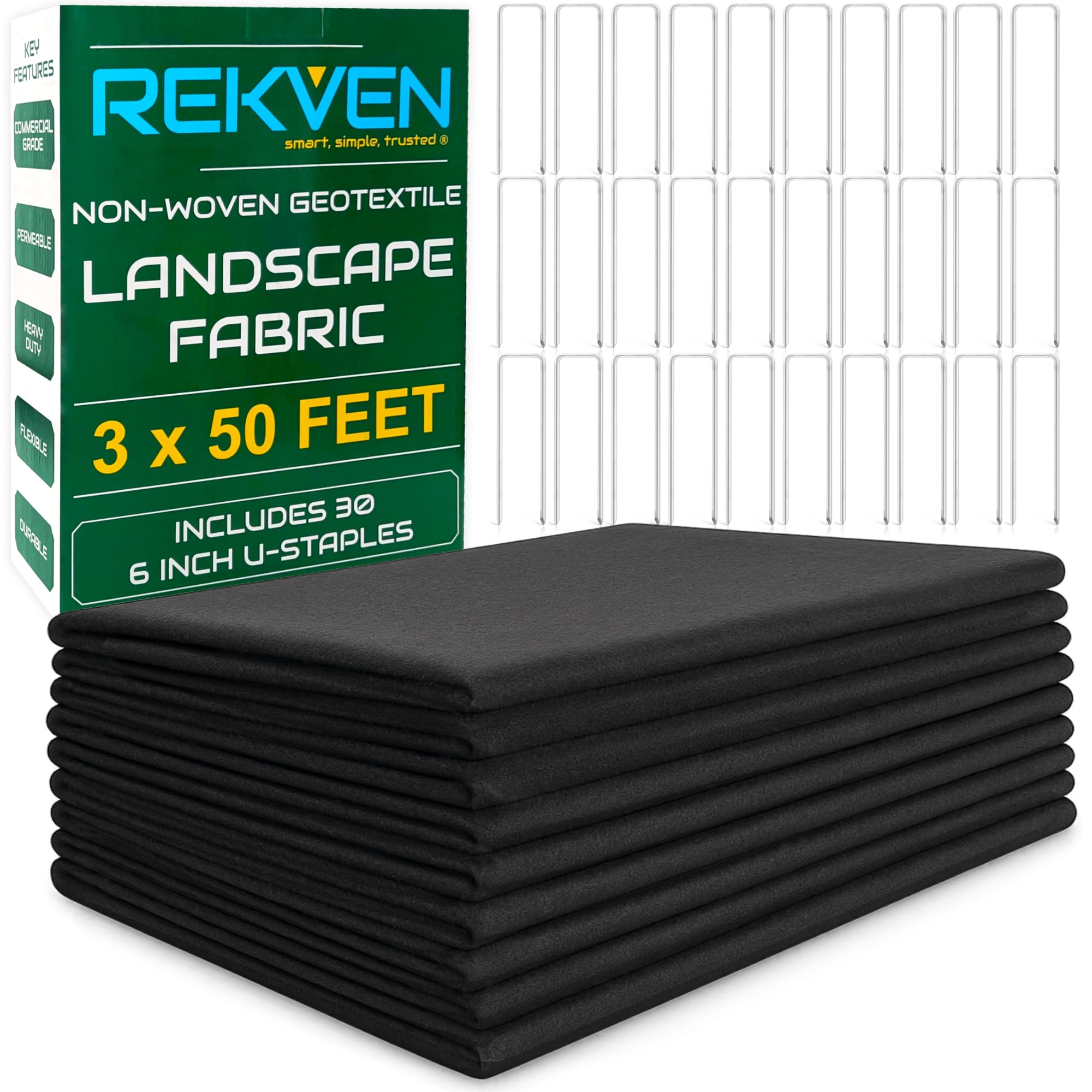
A true filter fabric that arrives with 30 stakes so you finish the job the same day
This is the kit that saves you a second trip to the hardware store. The 3ft x 50ft roll covers 150 square feet and ships with 30 six-inch U-pin garden stakes, so you can roll it out, pin it down, and backfill with gravel without buying anchors separately. It is marketed squarely at French drains and dry wells — wrap a perforated pipe, and water flows through while silt is filtered out.
At 4.5 oz per square yard, this is the lightest fabric in the mid-range group, but the polypropylene build is made to shrug off rocks and roots. Owners used it under pavers and shell in their yard, and one called it heavyweight enough to stop oak sprouts from pushing through. It cuts easily with ordinary scissors, which makes fitting it around a drain pipe far less tedious.
The trade-off is straightforward: 4.5 oz is plenty for a residential drain and weed barrier, but the 8 oz VEVOR and Sandbaggy options above will out-tough it under heavy stone or vehicle traffic. For a standard yard drain, a dry well, or a flower bed, owners find it thick, durable, and easy to size. It also pulls double duty as a weed barrier that still lets water and air reach the soil, unlike solid plastic sheeting.
What makes it easy
- 30 six-inch U-pin stakes arrive in the box, saving a separate purchase
- Ships in sections, so laying it out under pavers is simple
- Permeable build blocks weeds but lets water and air through
The honest limit
- At 4.5 oz, it is lighter than the 6 oz and 8 oz rolls in this guide
- 50ft length means large driveways need multiple rolls
Grab it if: You want a single box with fabric and stakes for a weekend French drain or paver project.
Look elsewhere if: You are building a driveway base or lining riprap where heavy 8 oz toughness matters more.
5. forimo Driveway Fabric, 6×300 ft Commercial Weed Barrier

A 300ft woven roll that swallows entire driveways and garden plots in one pass
When your project covers serious square footage, this forimo roll is the coverage champion. The 6ft x 300ft size is built for commercial greenhouses, yards, and long driveway runs, and the woven texture (a crisscross plastic weave) lets air, nutrients, and water pass through while blocking weeds. The roll arrives folded to 3ft width even though it is a 6ft sheet, so give it room to open up.
At 3.5 oz, this is a lighter woven fabric rather than a heavy non-woven — which makes it a different tool than the 8 oz rolls above. Customers note excellent weed suppression, with one noting only a couple of weeds came through more than two years after installation on a gravel pad. The woven build is strong and tear-resistant for its weight, and the grid lines help you cut straight rows for vegetable gardens.
The honest catch is that this is a thin fabric, and some owners find the cut edges unravel, needing duct tape or garden staples to hold them down. It is a commercial weed barrier first and a drain fabric second, so for a French drain you would be layering it rather than relying on it as a filter membrane. For large-area ground cover and erosion control, the value per foot is tough to top.
Made for scale: This is the roll for a big driveway, a large garden plot, or a commercial yard where a 50ft roll would leave seams everywhere.
Not the drain specialist: The thin woven build means it is ground cover, not the filter fabric you want wrapping a perforated pipe.
6. Sandbaggy 8 oz Non Woven Geotextile Fabric, 3 ft x 25 ft Roll
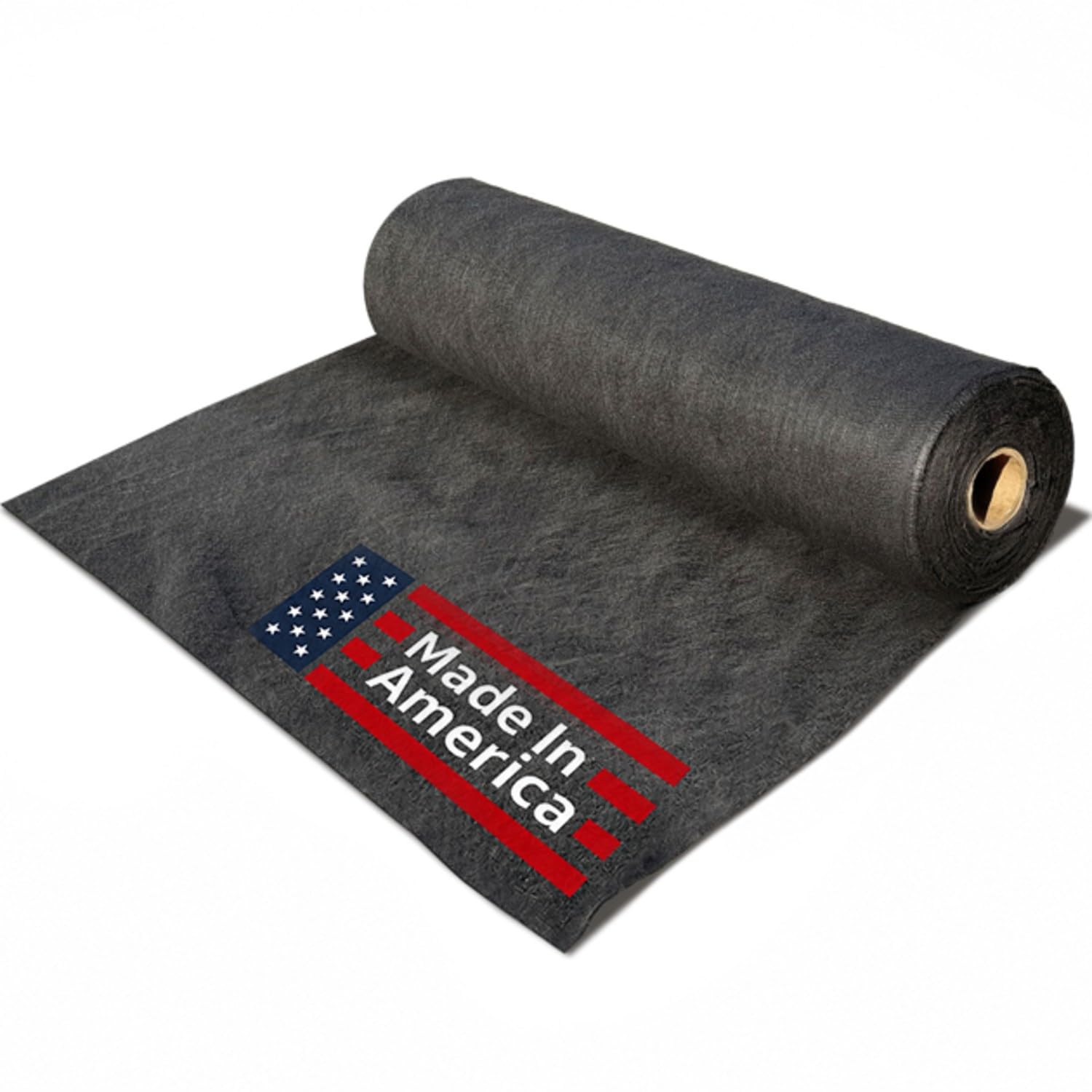
The premium 8 oz filter with a 140 GPM flow rate that moves water fast
This is the fabric you choose when the drain absolutely cannot afford to clog. The Sandbaggy 8 oz non-woven polypropylene is engineered for French drains, retaining walls, and road stabilization, and its standout number is the 140 GPM per square foot flow rate (gallons per minute that pass through each square foot) — water passes through quickly while the fabric filters out soil. That high flow keeps your trench working even during heavy rain.
It is rated for 205 lb tensile strength and built in the USA, which buyers consistently flag as a reason to pay a little more. Owners describe it as thick, tough, and nearly bulletproof — hard to puncture even under sharp rock — while staying flexible enough to conform to uneven trench floors and slopes. One owner praised it for holding up through prolonged outdoor exposure before burial.
The watch-outs are minor but real: the roll is a compact 3ft x 25ft, so it covers less ground than the 100ft rolls for a higher per-foot cost, and packaging occasionally has the fabric folded in a way that tangles on unrolling. The manufacturer rates it for 50+ years of service when buried under at least 3 inches of gravel or soil, making it a buy-it-once solution for a critical drain line.
Why it earns the premium
- 140 GPM flow rate moves water faster than most fabrics in this guide
- 205 lb tensile strength and 8 oz density resist puncture from sharp stone
- Made in USA quality that owners say is worth the extra cost
What to weigh
- The 3ft x 25ft roll covers far less than the 100ft options
- Folded packaging can tangle on unrolling — unroll it carefully
Reach for it when: The drain is critical, buried deep, and you want maximum flow and puncture resistance.
skip it if: You are covering a large area on a budget — the longer rolls give you more square footage per dollar.
7. DWALE Driveway Fabric, 6.5×330 ft Commercial Weed Barrier

An 800 lb tensile monster for gravel pads that take real vehicle abuse
Driveways crush weaker fabrics, and this DWALE roll is designed specifically for that punishment. The standout number is the 800 lb tensile strength — far beyond the 350N rating of the drainage fabrics above — which means it stretches and holds under the weight of gravel, stones, and vehicle traffic without tearing. It is a woven geotextile made from polyethylene, built for road stabilization and riprap.
The sheer size is the other story: 6.5ft x 330ft of coverage, arriving folded to a 3ft width before you open it up. Reviewers point out using it as a barrier for gravel pads and under greenhouse foundations, with one noting an 8-month update that no weeds pushed through. The woven threads do shed at cut edges — an expected quirk of the weave — but it is easy to cut and work with.
Since this is a woven sheet rather than a non-woven filter, it is better suited to ground cover and road base than to wrapping a French drain pipe. At 3.5 oz it is lighter than the heavy 8 oz rolls, but the 800 lb rating makes it the strongest pure tensile performer here. For a commercial driveway or a large gravel pad, this is the fabric that takes the abuse and keeps the stone from sinking into mud.
The heavy lifter: This is for driveways, gravel pads, and any surface where vehicles or big stones will bear down on the fabric.
Not a filter fabric: The woven build is ground stabilization, so keep it away from the pipe-wrapping job in a French drain.
8. Sandbaggy Non Woven 8 oz Geotextile Fabric, 3 ft x 300 ft Roll

A 300ft industrial 8 oz roll that covers a whole property with premium filter fabric
This is the big brother of the Sandbaggy roll above, built for large-scale drainage and landscaping jobs. The 3ft x 300ft roll of 8 oz non-woven polypropylene is rated for 205 lb tensile strength, and the maker claims it is twice as thick as standard fabrics. Owners describe it as the “good stuff” that holds up while cheaper weed barriers deteriorate and let crabgrass multiply underneath.
The flow rate here is 110 GPM per square foot, slightly below the 140 GPM of the shorter Sandbaggy roll but still well above what most residential fabrics manage. It is designed for farming, road stabilization, riprap, and retaining walls, and the flexible non-woven build conforms to uneven surfaces where stiff woven fabric would bridge and gap. It scissors-cuts cleanly, which owners appreciate for fitting around pavers.
The honest mixed note from buyers is weed control: some report weeds never grow through, while others see weeds push through over time. That inconsistency is common with any geotextile, since success depends on burial depth and mulch coverage. The manufacturer rates it for 50+ years underground under at least 3 inches of cover. This is the roll for a contractor or a large property owner who measures the job in hundreds of feet.
Built for scale: A 300ft roll means fewer seams across a large property, which keeps your drainage line continuous.
Reality check: Weed suppression varies by site, so pair it with proper mulch or gravel depth for best results.
Understanding the Specs
Ounces per square yard (oz)
This is the weight-density of the fabric, and it is the first number to check. A heavier 8 oz fabric resists punctures from sharp gravel and roots better than a lighter 4.5 oz sheet. Heavier also means a thicker, more durable barrier that survives being buried and walked on, but it costs more per foot and can be stiffer to work with.
Tensile strength (N or lb)
Tensile strength tells you how much pulling force the fabric survives before tearing or stretching. A 350N rating (roughly 79 lb) is the common benchmark for serious drainage fabric, while heavy driveway fabrics can reach 800 lb. Higher numbers mean the sheet will not rip while you pull it tight across a trench and dump stones on it.
Flow rate (GPM per square foot)
This measures how fast water passes through the fabric. A true filter fabric like the Sandbaggy at 140 GPM moves water quickly while trapping soil, which keeps your drain running clear. Low-flow or solid plastic barriers block water and defeat the entire purpose of a French drain.
Non-woven vs woven
Non-woven fabric is made by bonding fibers together into a felt-like sheet, making it soft and flexible — ideal for wrapping drain pipe and conforming to trench curves. Woven fabric is a crisscross plastic weave that is stiffer and stronger in tensile, better for driveway ground cover and road base than for filter duty.
FAQ
How much fabric do I need for a French drain?
Is 6 oz fabric enough for a French drain?
Can I use regular weed barrier fabric for a French drain?
Does the fabric go above or below the gravel?
How long does geotextile fabric last underground?
What is the difference between non-woven and woven geotextile?
Do I need landscape staples to hold the fabric down?
Which side of the fabric faces up?
Can I use one roll for both a French drain and weed control?
What does 350N tensile strength actually mean for my project?
Final Thoughts: The Verdict
For the majority of shoppers, the fabric for french drain winner is the VEVOR 8 oz 3ft x 100ft because it delivers heavy-duty puncture resistance and a proven track record across hundreds of owners at a reasonable mid-range price. If you want a construction-grade 6 oz sheet for a driveway or heavy-traffic area, grab the PioneerWorks 4ft x 50ft. And for maximum water flow on a critical drain, the Sandbaggy 8 oz with its 140 GPM rate is the premium pick that keeps your trench running clear for decades.
How We Picked
We do not accept paid placement. Every pick is matched to a real buyer and a real use-case; we do not hands-on test units.
Sources & Methodology
Specifications: manufacturer listings and product documentation. Review insights: verified customer reviews, as of August 2026. Pricing: not shown on this page (it changes often); check the current price via the retailer link.
As an Amazon Associate, WellFizz earns from qualifying purchases. This does not affect which products we feature.
Related Guides

Mo Maruf
I created WellFizz to bridge the gap between vague wellness advice and actionable solutions. My mission is simple: to decode the research and give you practical tools you can actually use.
Beyond the data, I am a passionate traveler. I believe that stepping away from the screen to explore new environments is essential for mental clarity and physical vitality.