Our readers keep the lights on and my smoothie glass nicely filled. As an Amazon Associate, I earn from qualifying purchases.
Specs are compiled from manufacturer listings and verified buyer reviews and can change over time — please confirm the key details on the product page before buying.
You cannot be everywhere at once, and that is exactly why you are here. The right device pinpoints your parent’s location, detects falls, and summons help instantly — no smartphone skills required. This guide cuts through subscription jargon and feature bloat to reveal which Elderly GPS Tracker truly delivers daily confidence.
I’m Mohammad Maruf — the founder and writer behind WellFizz. This guide is built by comparing the manufacturers’ published specifications and the patterns across verified customer reviews, so you get each pick’s real strengths and trade-offs instead of marketing spin.
Find the safest, simplest way to track a senior loved one with the elderly gps tracker that fits your family’s real needs and budget.
Our Picks at a Glance

How To Choose The Best Elderly GPS Tracker
Every tracker on this list does the same core job: it pinpoints a location and lets your loved one call for help. What matters most is daily usability: charging frequency, monthly service cost, and fall-alert reliability. Here is what to weigh before you commit.
Subscription cost is the real price tag
The device itself is often the cheapest part of the deal. Most cellular trackers need a monthly plan for the GPS and calling features to work. Plans here range from around up to per month, and some require activation calls or come with contracts. Add that monthly fee over a year and it will dwarf the upfront device cost, so check the fine print before falling for a low sticker price. Look for plans that let you cancel anytime without penalties.
Battery life decides whether it gets worn
A tracker with a 24-hour battery becomes a chore. If your parent has to charge it every single night, they may forget, and an uncharged alert device is just a bracelet. Devices on this list range from 24 hours up to a full 7 days per charge. For seniors who live alone or wander, a longer battery life means the device stays on their wrist or around their neck where it belongs, not sitting on a nightstand.
Fall detection needs a reality check
Automatic fall detection sounds perfect, but the technology is not flawless. Some sensors are too sensitive and trigger false alarms, while others miss real falls entirely. Several models on this list have reviews noting this exact trade-off. If reliable fall alerts are your top priority, weigh the sensor quality and user feedback heavily, and remember that a simple SOS button your parent can press is always the most dependable backup.
Quick Comparison
| Model | Best For | Battery Life | Form Factor | Monthly Fee | Amazon |
|---|---|---|---|---|---|
| Family First Alert Medical Alert System★ Best Overall | 24/7 professional monitoring | 5 days | Pendant | From | Amazon |
| FONIE GPS Medical Alert SystemTop Performer | Real-time location tracking | 7 days | Mini Phone | From | Amazon |
| Bay Alarm Medical SOS Mobile GPSBest Value | One-button operator access | 144 hours | Pendant | Subscription | Amazon |
| Home & WELLNESS Stride Medical Alert Watch | A watch that looks normal | 24 hours | Watch | Amazon | |
| Fajocru Fall Detection Watch | No monthly fee tracking | 600 mAh | Watch | Amazon | |
| Seculife Medical Alert Smartband | Direct alerts to family | 1 day | Smartband | From | Amazon |
| Seculife Cellular Medical Alert Smartwatch | All-in-one health and safety | 12 hours | Smartwatch | From | Amazon |
| Seculife SOS Wristband | Screen-free simplicity | 1 day | Wristband | From | Amazon |
| Audar E2 Senior Smartwatch | No smartphone required at all | 10 days | Smartwatch | /year | Amazon |
In-Depth Reviews
1. Family First Alert Medical Alert System
The pendant that puts a live human on the line in seconds, day or night.
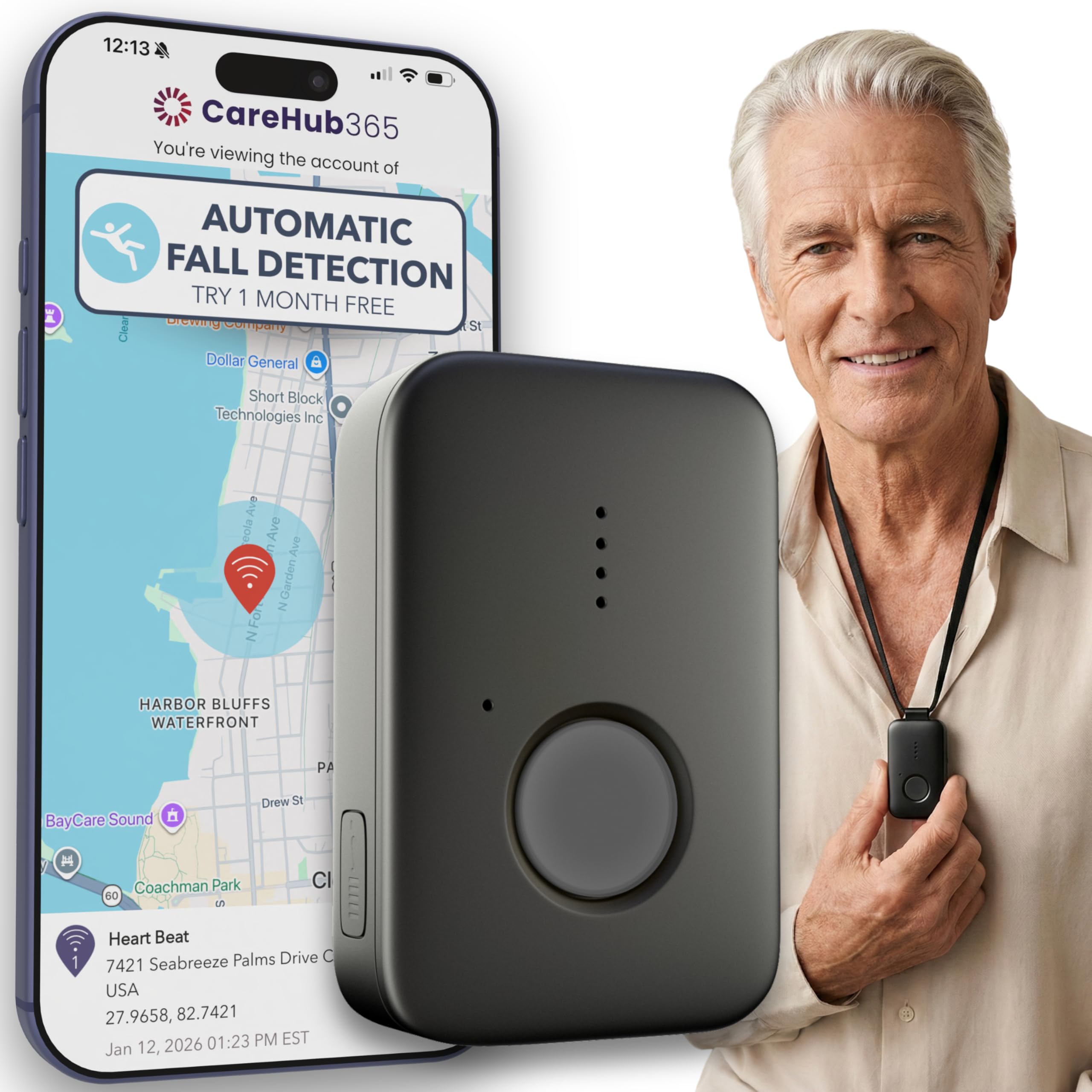
This is the pick for families who want a trained operator, not just a text alert, when the button gets pressed. The 24/7 emergency monitoring service connects you to a live dispatcher within seconds, and the device runs on AT&T and Verizon networks with 4G LTE for nationwide coverage. At just 1.3 x 0.5 x 2.3 inches, it is small enough to wear comfortably as a necklace, and it is water-resistant so your parent can keep it on in the shower.
The battery is the standout practical detail here — a single charge lasts up to 5 days, which means it is not a nightly chore to keep it powered. Fall detection is available as an optional add-on for per month, and the base monitoring service runs monthly with no long-term contract. Buyers report the setup is refreshingly simple, and the direct, human customer support has won repeated praise.
The trade-off for that 24/7 professional monitoring is the highest monthly fee on this list. If you are comfortable being the first line of response yourself, a family-direct alert system costs less per month, but you lose the trained dispatcher who can coordinate emergency services. For a solo-living parent, that professional safety net justifies the premium.
What Wins Families Over
- Live trained operators answer in seconds with 24/7 monitoring
- Up to 5 days of battery life on a single charge
- Nationwide coverage on both AT&T and Verizon 4G LTE
- No long-term contract, cancel anytime
What to Weigh First
- Highest monthly service fee on this list at
- Fall detection costs an extra per month
- Requires activation by contacting the company
Ideal for: A senior living alone who needs a professional voice answering the call, with a simple necklace-worn button.
Think twice if: You want to keep recurring costs minimal — the monitoring fee adds up quickly over a year.
2. FONIE GPS Medical Alert System
A real phone and a life alert in one tiny waterproof device.
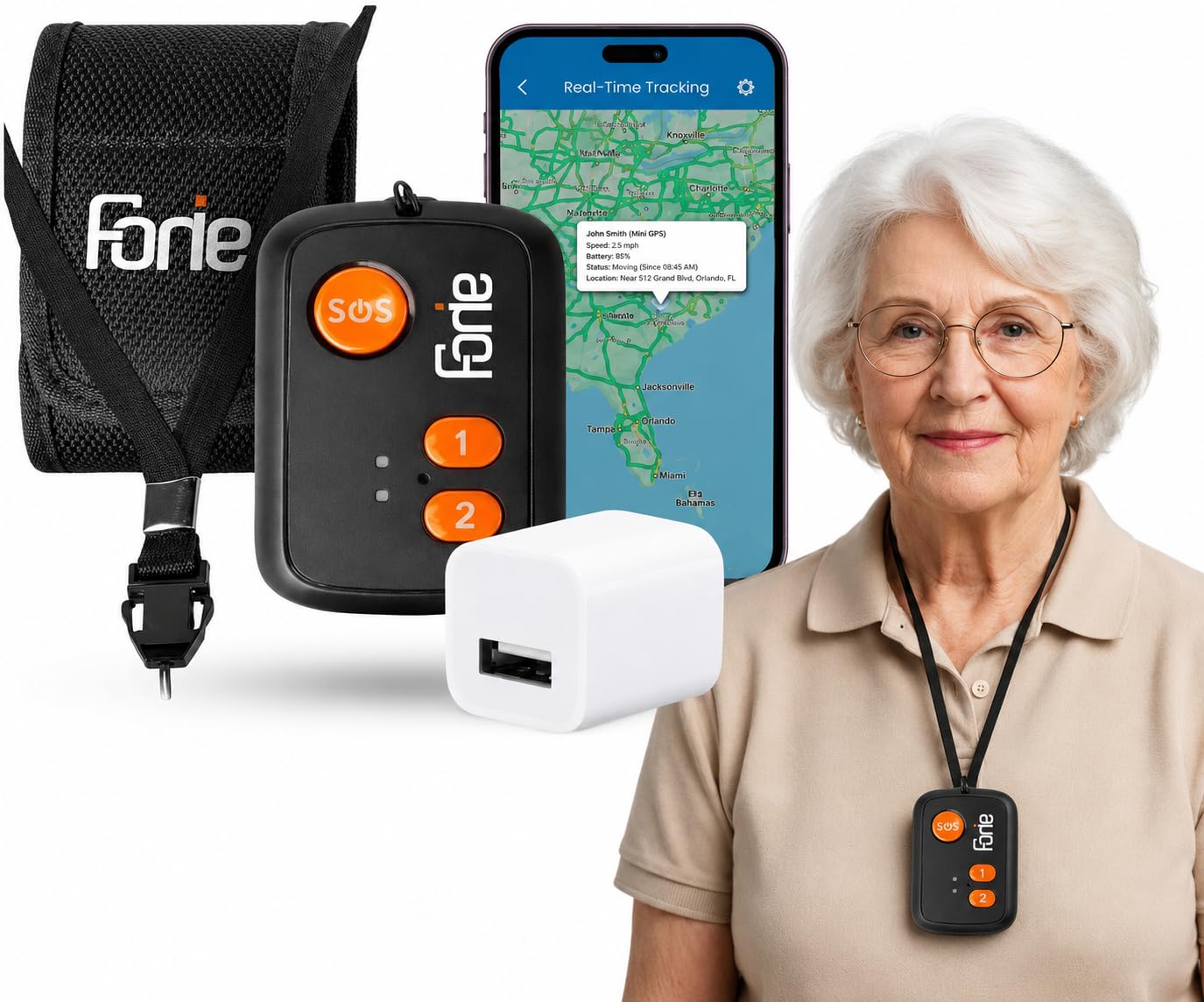
FONIE is the most feature-dense tracker here, and it doubles as an actual telephone. It has three speed-dial lines — two for caregivers or family and one for 911 — plus support for up to 10 pre-set contacts. The real-time GPS uses 4G and Wi-Fi to update location every 10 seconds, and you can set geo-fencing safe zones that trigger instant alerts when your parent enters or leaves an area. Location history is stored for up to a full year in the caregiver app.
Its battery is the longest on this list at a full 7 days per charge, and the IPX67 waterproof rating means showers and rain are never an issue. It is also a genuine health companion, tracking steps, distance, and calories with a built-in health tracker, plus pill reminders and a talking clock. At just 3 ounces and 2.26 x 1.57 x 0.65 inches, it is far more compact than a typical phone. Owners mention the tracking is remarkably precise, and the two-way calling sound is crisp.
The catch is that FONIE needs a strong cellular signal to do its job — one owner returned it because their home had no cell connection despite working phones. The service starts at a very reasonable per month with 3 months free and no contract, and customer support has earned consistent praise for its responsiveness. This is the best pick if your parent spends time both at home and out and about.
Why It Stands Out
- 3 speed-dial lines including 911, plus 10 pre-set contacts
- Real-time GPS updates every 10 seconds with 1-year history
- 7-day battery life, the longest on this list
- Service starts at just per month with 3 months free
Know Before You Buy
- Requires a strong cellular signal to function reliably
- Setup involves a quick start guide with small text
- Subscription required for full functionality
Pick this if: You want the lowest monthly fee combined with real-time GPS and true phone calling in one device.
skip it if: Your parent lives in a remote area with weak cellular coverage — this device leans heavily on signal strength.
3. Bay Alarm Medical SOS Mobile GPS
Featherlight one-button help that connects you to a trained operator instantly.
This pendant is built around a single idea: one button, immediate contact with a live operator. It weighs under 2 ounces, so it is easy to forget you are wearing it, and it comes with both a lanyard with a magnetic clasp and a belt clip for different preferences. The 4G LTE cellular connection runs on Verizon’s network for reliable nationwide coverage, and the companion app lets you check device status and battery level remotely.
The battery is a genuine standout at 144 hours on a single charge — that is six full days, which puts it right up there with the best on this list. It is water-resistant and standalone, meaning it works independently without needing a smartphone nearby. Buyers consistently praise how simple it is for elderly users, and the semi-automated system connects accidental alarms to operators immediately. The what-wins-people-over factor is the reliability — that is the thing owners mention most, followed closely by how easy it is to set up.
The honest downside is battery longevity in practice: several customers note the device shows a low battery warning after about 2 days, not the full 144 hours. Basic caregivers may also find the notification system limited — it lacks advanced customization like emergency contacts or door codes. For a straightforward, no-frills safety pendant with an excellent battery rating on paper, this remains a strong value pick.
What Owners Rely On
- Weighs under 2 oz with lanyard and belt clip options
- 144-hour rated battery life on a single charge
- One-button connection to a trained operator
- Free caregiver app for status and battery monitoring
The Fine Print
- Several owners see low battery after ~2 days in practice
- Caregiver notifications lack advanced settings
- Subscription required for full functionality
The right fit: A senior who needs the simplest possible one-button device and does not want advanced features to manage.
Look elsewhere if: You need customizable emergency contacts or an elaborate notification system — this one plays it basic.
4. Home & WELLNESS Stride Medical Alert Watch

A medical alert that actually looks like a normal watch on the wrist.
Pride is a real barrier with medical alert devices, and this one is designed to sidestep it. The Stride watch is styled to resemble a regular timepiece, so a senior can wear it comfortably and confidently in public without drawing attention. Under the hood it pairs a medical alert button with GPS tracking on the 4G cellular network, all managed by a live support representative you reach with a single press — day or night.
It runs on a 580 milliamp_hours battery that lasts about 24 hours per charge and takes just 1 hour to recharge, which makes nightly charging a habit rather than a burden. The service is per month with no long-term contract and the first month included, so you can try it before committing. For a husband with dementia, one owner notes the watch creates a safer daily life, and the medical alert feature has proven its worth when accidental button presses trigger a human voice check-in.
The battery life is the real compromise here — 24 hours is the shortest on this list, so this is not the device for a senior who will forget to charge it. The fall alert sensor can also be overly sensitive; one owner simply disabled it. But the core GPS tracking and emergency call function are what win people over, especially for a parent with memory issues who may wander.
What Makes It Different
- Looks like a regular watch, reducing stigma
- Live support representative via single button press
- No long-term contract, cancel anytime
- First month of service included
Where It Compromises
- 24-hour battery requires daily charging
- Fall alert sensor can be too sensitive for some
- Designed for shower use, not full submersion
Reach for this if: Your parent refuses bulky pendants and needs a discreet watch with a live operator on call.
Pass if: You cannot rely on a daily charging routine — the 24-hour battery demands it.
5. Fajocru Fall Detection Watch
The rare tracker that works with zero monthly subscription at all.
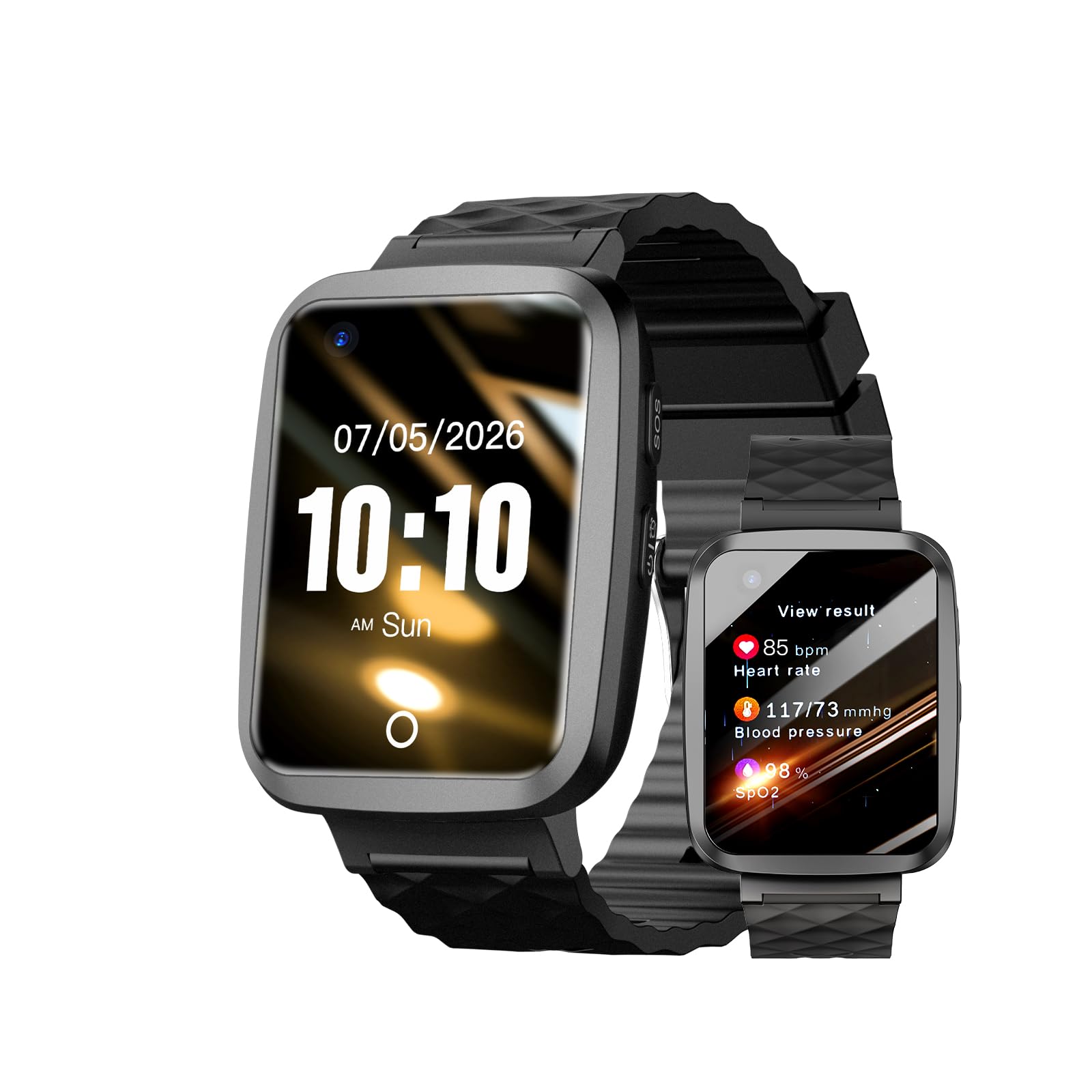
This is the pick for families who want GPS tracking and SOS calls without adding a recurring bill. The Fajocru watch uses a 4G cellular connection with no monthly fee, which makes it the budget-friendly long-term option on this list. It packs a 600 milliamp_hours battery that charges fully in about 2 hours, plus real-time GPS tracking and geo-fencing so you can set safe zones and get alerts if your loved one wanders outside them.
The health features go beyond basic safety — it includes heart rate monitoring, blood pressure reference, blood oxygen monitoring, a pedometer, and a sedentary reminder. The IP67 waterproof rating means it survives hand washing and rain, and the magnetic charging cable makes powering up easy for hands with limited dexterity. Owners praise how comfortable and lightweight it is for daily wear, and the SOS alert gives seniors more confidence when they are out and about.
Setup is the real hurdle here. One owner found the instructions difficult, and another could not get it activated at all — though the company provided a full refund in that case. The bigger draw is the value: for a parent who is fairly independent and just needs a safety net, skipping a monthly subscription saves a significant amount over a year. The trade-off is that the no-fee model means less hand-holding on activation.
The Big Win
- No monthly fee for GPS tracking and SOS calls
- Heart rate, blood pressure, and blood oxygen monitoring
- IP67 waterproof for daily wear and rain
- Magnetic charging cable for easy power-ups
The Catch
- Setup can be complicated for some users
- Activation issues reported by a small number of owners
- Video instructions not in English for some
Best for: A budget-conscious family that wants solid GPS and SOS without a recurring monthly plan.
Not for: Anyone who wants a plug-and-play setup — this one can demand patience to get running.
6. Seculife Medical Alert Smartband
Alerts go straight to family, not a call center — no middleman needed.
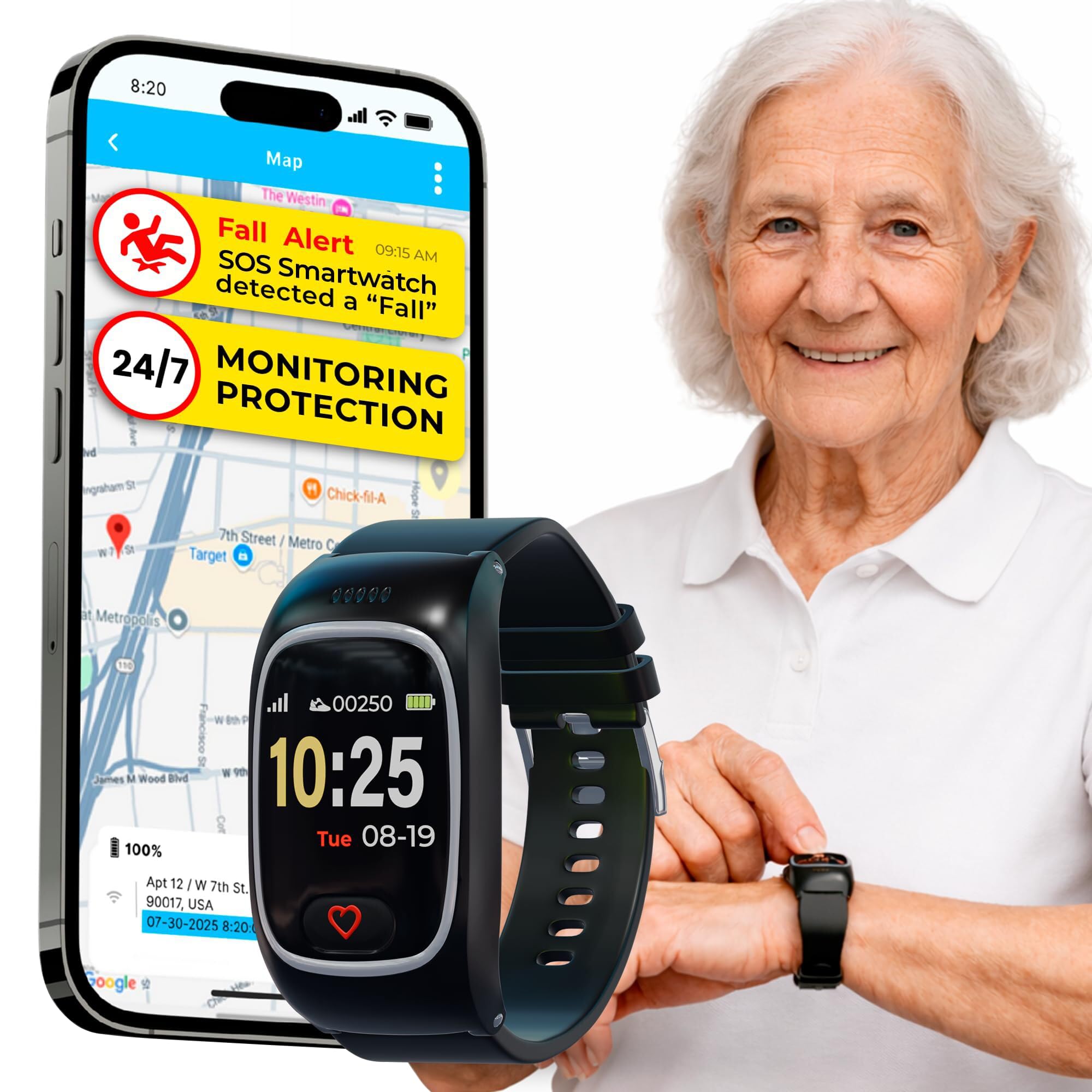
This is the pick for families who want to be the first responders themselves. Instead of routing alerts through a monitoring center, the Seculife smartband calls your pre-selected emergency contacts directly when a fall is detected or the SOS button is held for 3 seconds. The 2-way calling works hands-free, and incoming calls from pre-approved contacts auto-answer so a senior never has to fumble with buttons to talk.
Setup is the thing every owner talks about — it takes about 20 minutes, and the quality is considered a perfect fit for seniors. The GPS tracking and geofencing let you set safe zones and get notified via app or SMS when your loved one leaves or enters an area, with a full 1 year of location history. The 680 milliamp_hours battery gives roughly a day of use, and the IP67 water-resistant design handles rain and handwashing. The per month plan includes unlimited fall alerts, live tracking, and unlimited voice minutes.
The battery is the recurring complaint — several reviewers point out needing to charge daily or every 1.5 days, and geofencing drains it faster. Fall detection reliability also gets mixed feedback, with some finding it too sensitive and others saying it misses events. For families that check their phones often and want alerts without a call-center subscription model, the direct-to-family approach is the defining advantage here.
What Owners Appreciate
- Alerts go directly to family, no call center
- Auto-answer hands-free calling for easy talks
- Roughly 20-minute setup that earns consistent praise
- 1 year of location history in the app
What To Watch
- Battery lasts about a day, less with geofencing on
- Fall detection reliability gets mixed feedback
- Call volume can be too low for some elderly users
Choose this if: You want to be the one who gets the alert and calls back — no monitoring service in between.
Think again if: Your parent needs a device that lasts multiple days per charge; a day is all you get here.
7. Seculife Cellular Medical Alert Smartwatch
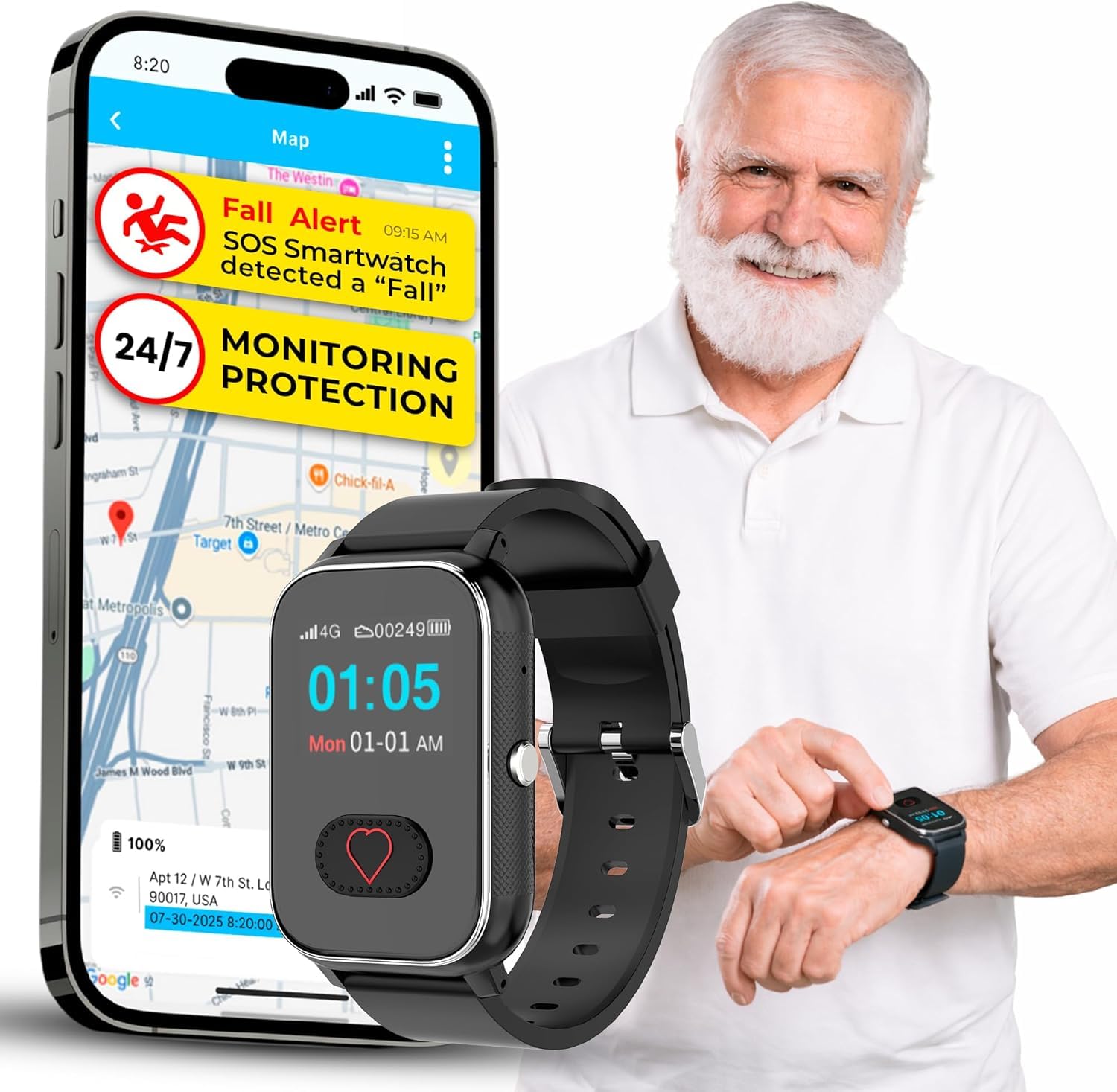
A full health watch that also happens to be a life alert.
This is the all-in-one option for a senior who wants health tracking alongside safety. Beyond the GPS tracking, fall detection, and SOS button, it monitors heart rate and blood pressure, includes a pedometer, and can set medication reminders that appear on the large, clear screen. The 2-way calling works like a simple cellphone — press and hold the heart button for 3 seconds to make an emergency call, and incoming calls from approved contacts auto-answer.
Ease of use is the thing that wins people over here, with owners consistently praising how simple it is for seniors to operate. It works standalone without needing a phone nearby, and the IP67 waterproof design (meaning it survives rain and handwashing) handles everyday wear. The battery is rated at just 12 hours, so plan on charging it daily, and the per month subscription covers unlimited fall alerts and live tracking. For a family member living alone, the confidence is the constant refrain in reviews.
The battery is genuinely the weak spot — at 12 hours, it is the shortest on this list and demands a nightly charge. One owner also notes the panic button and other functions share the same physical button, which can lead to false alerts. If your parent is good about charging, the combination of vital sign monitoring and emergency response in a single durable watch is a compelling package.
The Appeal
- Heart rate, blood pressure, and pedometer built in
- Medication reminders on a large, clear screen
- Works standalone without a nearby phone
- IP67 waterproof for all-day wear
The Trade-Offs
- 12-hour battery requires daily charging
- Panic and other functions share one button
- Some shoppers say offline connection issues
Ideal for: A senior who wants vital sign monitoring and emergency help in one simple, durable watch.
Skip if: A forgetful charger is your parent — the 12-hour battery will leave them unprotected.
8. Seculife SOS Wristband
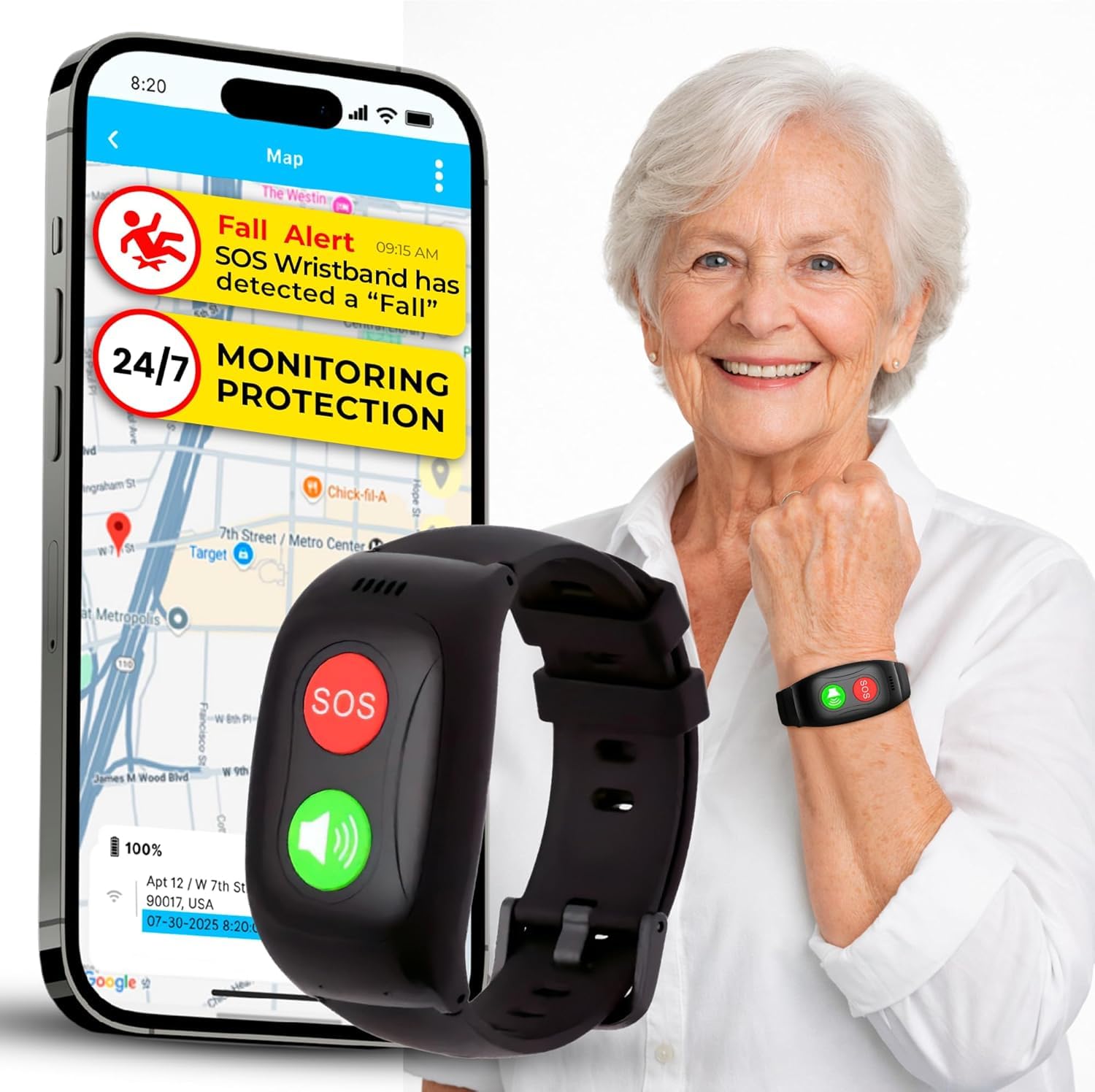
No screen, no menu, no confusion — just a button and a strap.
For a senior who finds any technology overwhelming, this screen-free wristband strips everything down to the essentials. A simple press of the SOS button calls your pre-set emergency contacts, or automatic fall detection triggers the alert on its own. The 2-way voice calling works hands-free with auto-answer, and unwanted callers are blocked automatically. There is no screen to navigate and no menu to get lost in.
The lightweight design is comfortable enough for all-day wear, and the IP67 waterproof rating means rain, splashes, and handwashing are never a concern. GPS tracking and geofencing work through the mobile app, so you can set safe zones and get instant alerts when your loved one enters or exits them, with 1 year of location history. The per month plan mirrors the other Seculife devices with unlimited fall alerts and live tracking. Owners find it easy for even an 89-year-old to use, and the call button reliably reaches family in a couple of seconds.
The mixed feedback here centers on billing and subscription management rather than the device itself — a few buyers report difficulty canceling and unexpected charges. Functionality also gets mixed reviews from owners, so it is worth tempering expectations on advanced features. For pure one-button simplicity, though, this is the most approachable device on the entire list.
Why It Works
- No screen at all — one button does everything
- Auto-answer 2-way calling for easy family contact
- Lightweight, comfortable, and IP67 waterproof
- 1 year of GPS location history via the app
Read This First
- Functionality gets mixed reviews from owners
- Some report difficulty canceling subscriptions
- Battery lasts about a day per charge
Best for: A senior who will never touch a screen — this is a pure panic-button bracelet.
Caution: Read the subscription fine print carefully, as billing is the most common owner complaint.
9. Audar E2 Senior Smartwatch
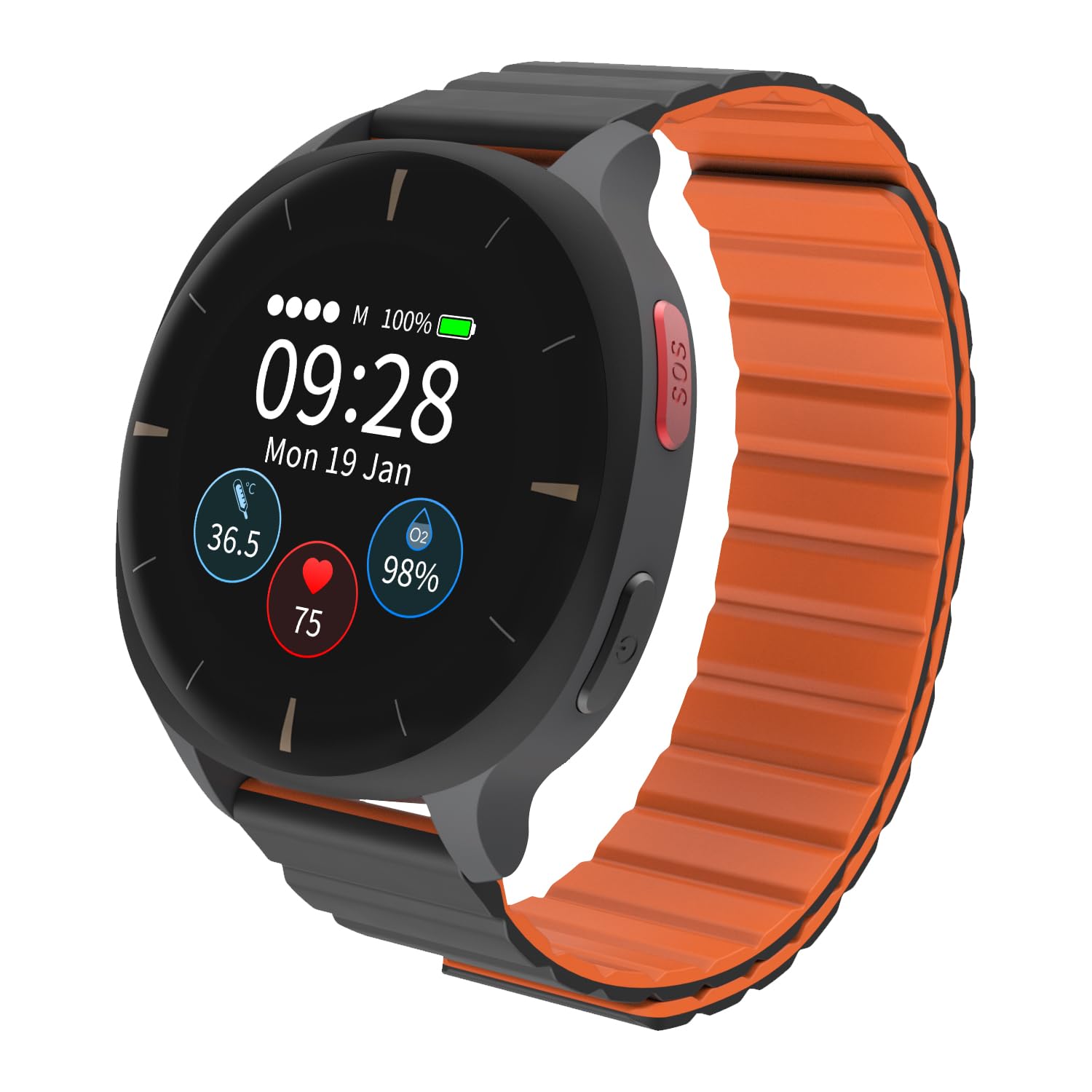
A full telehealth watch that needs no phone, no app, and no Wi-Fi at all.
This is the most technically advanced and expensive tracker on the list, built for families who want deep health data without any smartphone complexity. The Audar E2 has a built-in cellular eSIM that connects directly to low-cost IoT networks in 20+ countries, which means the wearer does not need a phone, app, Wi-Fi, or Bluetooth for it to work. It automatically monitors heart rate, blood pressure, blood oxygen (SpO₂), and body temperature at intervals you choose — 30 minutes, 1 hour, 2 hours, or 4 hours.
The battery is exceptional at up to 10 days with hourly measurements and up to 30 days of standby time — the best on this list by a wide margin. Connectivity is included for the first year, then just per year after that, which is dramatically cheaper than the monthly plans elsewhere. The IP67-rated design is lightweight and slim, with adjustable magnetic straps fitting wrists from 135–238 mm. Weekly AI wellbeing reports summarize trends, and you can view daily, monthly, and yearly charts on the cloud dashboard.
The fall detection is the sore spot here, with one owner reporting it missed real falls and triggered false alerts. It also cannot call 911 directly — alerts only go to designated contacts, which was a deal-breaker for one buyer. And while connectivity is cheap, some landlines may not support SMS reception. For a family that values health monitoring and low long-term cost over perfect fall detection, this is a unique and powerful option.
The Differentiator
- Up to 10-day battery with hourly measurements
- No phone, app, Wi-Fi, or Bluetooth required
- 24/7 heart rate, BP, SpO₂, and temperature tracking
- Only per year after the first year included
The Honest Limits
- Fall detection reliability has drawn complaints
- Cannot call 911, only designated contacts
- Instructions manual is notoriously hard to read
Choose this if: You want hands-off health monitoring with the lowest long-term cost and longest battery on this list.
Pass if: Reliable automatic fall detection is your top priority — this one has not proven itself there.
Understanding the Specs
Battery Life — Days vs. Hours
Battery life is the top predictor of whether a tracker gets worn daily. A device rated in days (5 days, 7 days, 10 days) can go most of a week between charges, which means it stays on your parent’s wrist or neck. A device rated in hours (12 hours, 24 hours) demands a daily charging habit — and a missed charge means zero protection. For a senior who forgets things, always favor the longer battery.
Form Factor — Watch, Pendant, or Band
Comfort is critical — an awkward device ends up in a drawer. Pendants are easy to wear around the neck but some seniors dislike the visibility. Watches look normal and are less stigmatizing but require the person to keep it on a wrist. Screen-free bands are the simplest but offer the fewest features. Match the form to your parent’s personality and daily routine, not just to the spec sheet.
Fall Detection — The Caveat
Automatic fall detection remains imperfect in real-world use. Sensors can be too sensitive, triggering false alarms that exhaust caregivers, or they can miss genuine falls entirely. Several devices on this list have reviews documenting both extremes. Treat fall detection as a bonus, never a substitute for a dependable SOS button. If falls are a real risk, the button is the dependable layer of defense.
The Subscription Reality
Almost every cellular GPS tracker needs a monthly plan to function. Fees on this list range from about per month up to per month, and one device charges a flat per year. Over a single year, that monthly fee can add up to far more than the device itself cost you. Always check for contracts, activation fees, and cancellation terms before you buy.
FAQ
Do I really need a monthly subscription for an elderly GPS tracker?
Can an elderly GPS tracker call 911 automatically?
How long does the battery actually last on these trackers?
Is fall detection reliable enough to rely on?
What is the difference between a pendant and a watch GPS tracker?
Can I track my parent’s location in real time?
What if my parent refuses to wear a medical alert device?
Are these devices waterproof for shower use?
Can a caregiver see health data like heart rate and blood pressure?
Which tracker is best for a senior with dementia or Alzheimer’s?
Final Thoughts: The Verdict
For most families, the elderly gps tracker winner is the Family First Alert because it pairs a small, shower-safe pendant with true 24/7 professional monitoring — a live operator answers within seconds, which is the highest level of protection a senior living alone can get. If you want real-time GPS with the lowest monthly fee, grab the FONIE at per month with 7-day battery life. And if you want zero recurring costs, the Fajocru watch delivers GPS and SOS with no subscription at all. The crowd favorite for pure professional monitoring is the Family First Alert — 4.5 stars from nearly 20 owners, with the easy setup and direct customer support earning the bulk of the praise.
How We Picked
We do not accept paid placement. Every pick is matched to a real buyer and a real use-case; we do not hands-on test units.
Sources & Methodology
Specifications: manufacturer listings and product documentation. Review insights: verified customer reviews, as of August 2026. Pricing: not shown on this page (it changes often); check the current price via the retailer link.
As an Amazon Associate, WellFizz earns from qualifying purchases. This does not affect which products we feature.
Related Guides

Mo Maruf
I created WellFizz to bridge the gap between vague wellness advice and actionable solutions. My mission is simple: to decode the research and give you practical tools you can actually use.
Beyond the data, I am a passionate traveler. I believe that stepping away from the screen to explore new environments is essential for mental clarity and physical vitality.