Our readers keep the lights on and my smoothie glass nicely filled. As an Amazon Associate, I earn from qualifying purchases.
Specs are compiled from manufacturer listings and verified buyer reviews and can change over time — please confirm the key details on the product page before buying.
You want one alarm that catches both a fast, flaming fire and a slow, smoky one before they turn into a tragedy—that is exactly what a dual-sensor design does for you. This guide breaks down the three most practical dual-sensor smoke alarms on the market, comparing how they install, their power sources, and their real-world quirks so you can pick the right one without the jargon.
I’m Mohammad Maruf — the founder and writer behind WellFizz. This guide is built by comparing the manufacturers’ published specifications and the patterns across verified customer reviews, so you get each pick’s real strengths and trade-offs instead of marketing spin.
You need a smoke alarm that catches both fast flaming fires and slow smoldering ones—that’s what a dual sensor smoke alarm does. This guide covers three picks: the hardwired Kidde for interconnected homes, the battery-only Kidde for simplicity, and the sealed 10-year First Alert.
Our Picks at a Glance
How To Choose The Best Dual Sensor Smoke Alarm
Every dual-sensor alarm uses two detection methods: ionization (which reacts faster to flaming fires) and photoelectric (which reacts faster to smoldering fires). Your real choice is about power source, home wiring, and how much maintenance you’re willing to handle.
Power Source: Hardwired, 9V, or Sealed 10-Year?
Hardwired alarms connect to your home’s electrical system, so they always have power and typically include a 9V battery backup for outages. Battery-only models are simpler to install anywhere but rely solely on their battery, which you must replace. The newest option is a sealed 10-year battery—you install it once and replace the whole unit when it beeps at end-of-life.
Interconnection: One Alarm, Whole Home
If your home already has interconnected wiring, choosing an alarm that links up to 24 devices means when one detects smoke, they all sound. This is a huge safety boost for multi-level homes, but it only works with hardwired models.
Nuisance Alarm Control
False alarms from cooking are the top reason people disable alarms. Look for a Hush button that temporarily silences a nuisance alarm, and consider newer sensing tech designed to reduce cooking-related false triggers.
Quick Comparison
| Model | Best For | Power Source | Sensors | Key Feature | Amazon |
|---|---|---|---|---|---|
| Kidde I12040★ Best Overall | Whole-home hardwired systems | Hardwired + 9V Backup | Ionization + Photoelectric | Interconnects up to 24 devices | Amazon |
| First Alert SM310 | Zero-maintenance, 10-year confidence | Sealed 10-Year Battery | Photoelectric + Ionization | Precision Detection reduces false alarms | Amazon |
| Kidde Pi9010 | Simple, budget-friendly battery install | 9V Battery | Ionization + Photoelectric | Fits older Kidde base brackets | Amazon |
In‑Depth Reviews
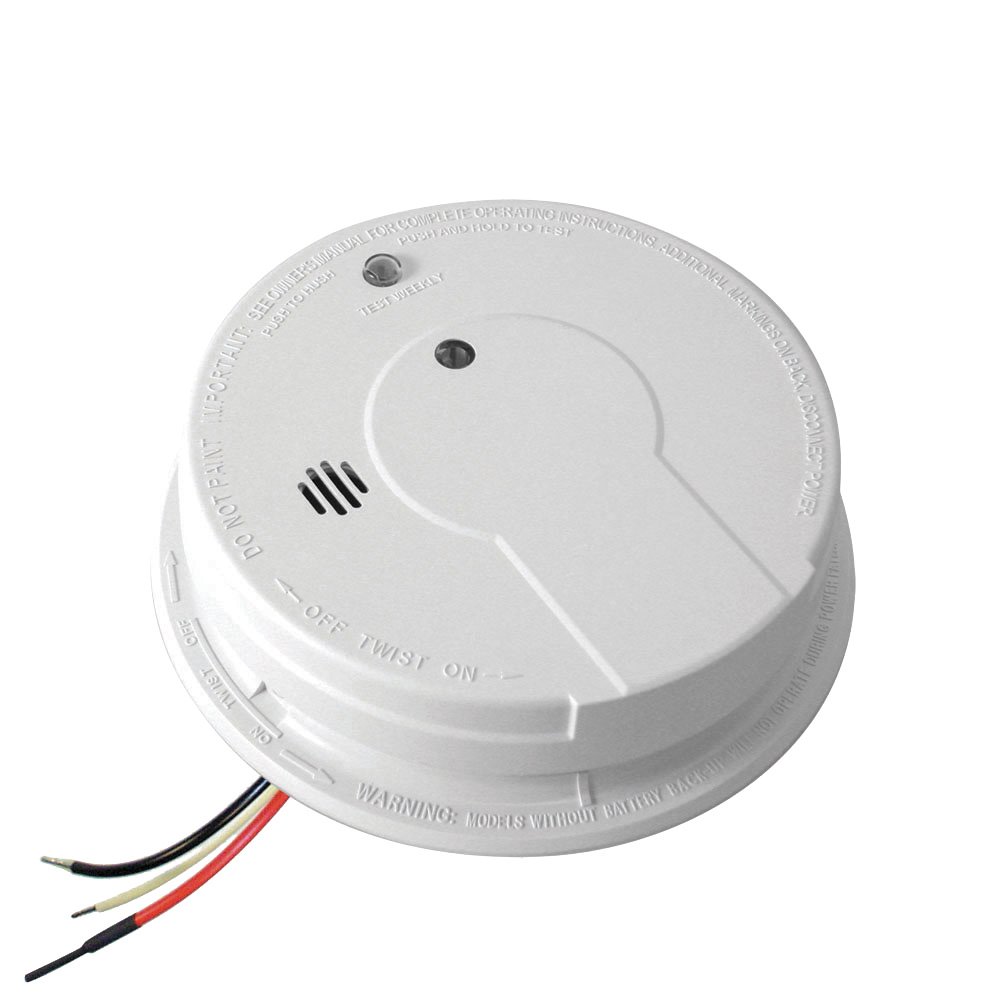
1. Kidde AC Hardwired Interconnect Smoke Detector Alarm with Hush
Our pick — 4.5★ from 800+ verified ratings; the strongest balance of quality and price.
The hardwired workhorse that plugs into your existing wiring and wakes up the whole house at once.
If your ceilings already run interconnected wiring, this Kidde is the upgrade that slots straight in. It connects up to 24 devices (18 can be the initiating alarm), so a fire in the basement sounds the alarm on every floor—the kind of whole-home warning that battery-only units simply cannot give you.
Installation is where this one wins people over, drawing the most owner praise of any feature. A front battery pull tab lets you activate the included 9V backup without removing the alarm from its bracket, the wires come pre-stripped, and the large base covers up old paint marks. Buyers report swapping out six 15-year-old units in about an hour with zero wiring changes, and the alarm memory flashes a red LED to show which unit started the alert.
The dual ionization and photoelectric sensors cover both fast-flaming and slow-smoldering fires, and a dust cover protects the sensors during construction to cut down on false alarms. The one honest trade-off is service life: a few owners have seen nuisance alarms start after a few years, and regular vacuum cleaning is the recommended upkeep to keep it reliable.
What Wins Owners Over
- Direct 3-prong plug replacement for older Kidde units
- Interconnects up to 24 alarms for whole-home coverage
- Pre-stripped wires mean no tools needed for hookup
- One-button design handles both test and Hush
The Fair Caveats
- Heavier than battery-only rivals at 13.6 ounces
- Service life can fall short of the 10-year ideal with heavy use
- Requires an AC hardwired system to use interconnect
Pick this if: you have a hardwired, interconnected home and want one alarm to trigger them all.
Think twice if: you rent or have no existing wiring—the battery models below are simpler for that.
2. First Alert 10-Year Battery Smoke Alarm, Dual Sensor | SM310
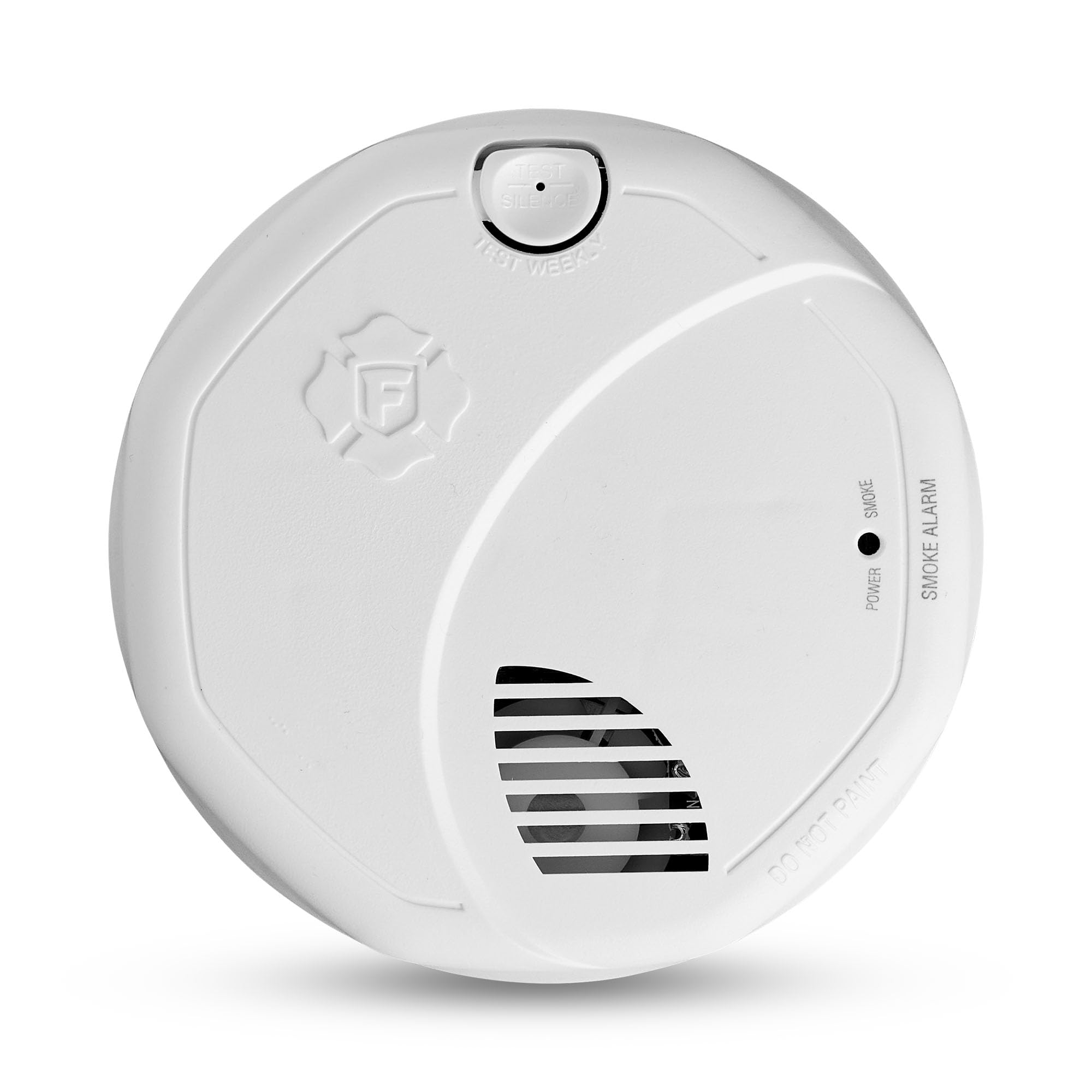
The forget-it-and-forget-it alarm with a sealed 10-year battery and fewer kitchen false alarms.
No battery swaps, no low-battery chirps at 2 a.m., no second-guessing—the First Alert SM310 packs a sealed 10-year battery that powers the alarm for its entire life. When it finally beeps its end-of-life warning, you replace the whole unit rather than the battery, which is why it is a favorite for anyone tired of annual maintenance.
At just 8.64 ounces, it is noticeably lighter than the hardwired Kidde above, and its compact 5-inch footprint fits standard bases easily. The dual photoelectric and ionization sensors plus First Alert’s Precision Detection technology are designed to cut down on cooking nuisance alarms, a common reason alarms get disabled in the first place.
Owners praise it for being small, effective, and dead simple to install—several swapped out older models and had it working in minutes. It is a great pick if you value total hands-off operation over the interconnect feature of a hardwired system.
The Core Appeal: The sealed battery is the headline—install once, replace the unit a decade later, and never touch a 9V again.
The One Thing to Know: When this unit reaches end-of-life, you buy a new alarm; you cannot just pop in a fresh battery.
3. Kidde Battery Dual Photoelectric and Ionization Sensor Smoke Detector Alarm

The dependable battery-only dual sensor that drops right onto your existing Kidde bracket.
If your ceiling already has the mounting bracket, this Kidde Pi9010 is your easiest install—owners mention it fits the older base bracket perfectly, so you just pop in the battery and mount it. It runs on a single 9V battery (included) and needs no wiring, making it the most flexible pick for apartments or rentals where you can’t hardwire.
The dual ionization and photoelectric sensors deliver the complete protection that customers note is the only kind they trust. The Hush feature temporarily silences nuisance alarms, handy when cooking smoke sets it off. It meets Underwriters Laboratories (UL) standards, an independent safety testing organization.
The catch is battery life and sensitivity—a few owners have hit false alarms or premature battery drain, and one warned about recurring issues across multiple units. For a budget-friendly way to get dual-sensor coverage in a room without hardwiring, though, this is the entry point that gets the job done.
Bottom Line: A no-wiring dual-sensor alarm that is a natural fit for anyone replacing an existing Kidde unit or adding coverage to a rental.
Reality Check: Keep a spare 9V on hand—the battery-only design means its lifespan is in your control, and sensitivity can trigger the Hush button more often than some expect.
Understanding the Specs
Ionization vs. Photoelectric Sensing
Ionization sensors respond fastest to fast-flaming fires (think grease fires or paper). Photoelectric sensors respond fastest to slow, smoldering fires (like a cigarette in a couch). A dual-sensor alarm combines both, giving you earlier warning for either fire type—which is why it is the recommended setup for homes.
Hush Feature & Alarm Memory
The Hush button temporarily silences a nuisance alarm from cooking or steam so you are not climbing a ladder to disconnect it. Alarm memory flashes an LED on the initiating unit in an interconnected system, so after a multi-alarm event, you can see which room actually detected the smoke.
FAQ
What is the difference between ionization and photoelectric smoke sensors?
Can I replace my existing hardwired Kidde alarm with the I12040?
How many Kidde I12040 alarms can I interconnect?
Does the First Alert SM310 need its battery replaced?
How do I stop a nuisance alarm from cooking smoke?
What does the red LED flashing on my Kidde alarm mean?
Which alarm is best for an apartment without hardwiring?
How is the Kidde Pi9010 powered and what is its battery life?
Will the First Alert SM310 fit my existing ceiling bracket?
Do these dual-sensor alarms detect carbon monoxide?
Final Thoughts: The Verdict
For most people, the best dual sensor smoke alarm is the Kidde I12040 because it turns a single detector into a whole-home warning network—connect up to 24 devices and know a fire on any floor will wake everyone. If you want to never think about batteries again, grab the First Alert SM310 with its sealed 10-year power source. And for a simple, wiring-free install on a budget, the Kidde Pi9010 is the entry-level pick that fits your existing bracket.
How We Picked
We do not accept paid placement. Every pick is matched to a real buyer and a real use-case; we do not hands-on test units.
Sources & Methodology
Specifications: manufacturer listings and product documentation. Review insights: verified customer reviews, as of August 2026. Pricing: not shown on this page (it changes often); check the current price via the retailer link.
As an Amazon Associate, WellFizz earns from qualifying purchases. This does not affect which products we feature.
Related Guides

Mo Maruf
I created WellFizz to bridge the gap between vague wellness advice and actionable solutions. My mission is simple: to decode the research and give you practical tools you can actually use.
Beyond the data, I am a passionate traveler. I believe that stepping away from the screen to explore new environments is essential for mental clarity and physical vitality.