Our readers keep the lights on and my smoothie glass nicely filled. As an Amazon Associate, I earn from qualifying purchases.
Specs are compiled from manufacturer listings and verified buyer reviews and can change over time — please confirm the key details on the product page before buying.
If your baby swallows air, gets gassy, or refuses the nipple, every feeding becomes a battle that leaves you both frustrated. The best feeding bottles for your family are the ones that match your baby’s flow preference and your cleaning tolerance, not the trendiest name. This guide breaks down nine top contenders by what actually matters: nipple shape, material, anti-colic design, and how much time each demands from you.
I’m Mohammad Maruf — the founder and writer behind WellFizz. This guide is built by comparing the manufacturers’ published specifications and the patterns across verified customer reviews, so you get each pick’s real strengths and trade-offs instead of marketing spin.
From anti-colic glass to breast-like silicone, here is the honest breakdown of the best feeding bottles for your baby’s needs and your daily routine.
Our Picks at a Glance

How To Choose The Best Feeding Bottles
Every baby is different, so the perfect bottle hinges on a few key decisions you can make in advance. Once you pick a material, a nipple flow, and an anti-colic system, you can narrow your choices dramatically without second-guessing yourself.
Nipple Flow Speed and Age
The nipple’s flow rate controls how much milk your baby gets with each suck. Newborns need a slow or extra-slow flow to match their immature swallowing skills, while older babies prefer a faster flow to finish a bottle sooner. A flow that’s too fast for a newborn can cause gulping, coughing, and excess gas — among the most common reasons a bottle fails.
Material Matters: Glass, Plastic, and PPSU
Glass bottles feel clean and stay stain-free, but they’re heavier and can break. Traditional plastic bottles are lighter and shatterproof, yet some parents worry about chemicals. PPSU (a heat-resistant, BPA-free plastic that looks like amber glass) splits the difference — it has the break resistance of plastic with the high-heat tolerance for sterilizing.
Anti-Colic Systems and Baby-Led Flow
Anti-colic bottles use vents or valves to keep air out of your baby’s tummy during feeding, which tends to reduce gas, spit-up, and fussiness. A growing category is “baby-led flow” — a nipple that releases milk only when your baby actively sucks, pausing when they swallow or breathe, just like a real breast.
Quick Comparison
| Model | Best For | Capacity | Material | Nipple Flow | Amazon |
|---|---|---|---|---|---|
| Philips Avent Natural PPSU★ Best Overall | Glass-like Durability, Light Feel | 9 oz | PPSU | Medium (Flow 3) | Amazon |
| Evenflo Feeding Classic GlassBest Value | Budget-Friendly Glass | 4 oz | Glass | Slow | Amazon |
| Tommee Tippee Natural Start GlassVersatile Pick | Feeding to Weaning Transition | 9 oz | Glass | Slow | Amazon |
| Philips Avent Natural | Newborns & Breastfed Babies | 4 oz | Plastic | Slow (Flow 2) | Amazon |
| Avima 4 oz Anti Colic | Multi-Pack Newborn Set | 4 oz | Plastic | Slow (Stage 1) | Amazon |
| Comotomo Silicone Baby Bottle Gen 2 | Bottle-Refusing Babies | 8 oz | Silicone | Medium | Amazon |
| Lansinoh Anti-Colic Baby Bottles | Breastfed Newborns | 5 oz | Plastic | Extra Slow (XS) | Amazon |
| Dr. Brown’s Options+ Narrow Glass | Serious Colic Relief | 4 oz/120mL | Glass | Level 1 Slow | Amazon |
| Pigeon PPSU Wide Neck Anti-Colic | High-Quality PPSU Choice | 5.4 oz (160 ml) | PPSU | Extra Slow (SS) | Amazon |
In‑Depth Reviews
1. Philips Avent Natural PPSU Baby Bottles
Our pick — over 4.5★ from 450+ verified ratings; the strongest balance of quality and price.
The amber-golden bottle that looks like glass but survives the nursery like plastic.
The 9 oz Philips Avent Natural PPSU earns the top spot because it ends the glass-versus-plastic trade-off. Its PPSU (a heat-resistant, BPA-free plastic that looks like amber glass) withstands heat up to 180°C/356°F, so you can sterilize it in boiling water without warping or leaching while it stays light enough for a daycare bag. It resists scratches and stains, so it keeps looking clean even after weeks of dishwasher cycles.
The defining feature is the Natural Response nipple, which lets your baby control the pace of the milk flow just like breastfeeding — milk only releases when they actively suck. The wide, breast-shaped nipple mimics the feel of a breast, helping babies switch between breast and bottle, while the anti-colic valve keeps air away from their tummy. The no-drip design means no lost milk from the tip, which makes middle-of-the-night feeds less messy. Parents report the cute print doesn’t fade or warp in the dishwasher, and the bottle stays leak-free.
Compared to the heavier glass options in this guide, this PPSU bottle is the safer all-arounder if you want one bottle that does everything without special care. The trade-off is the medium flow nipple (Flow 3), which may be too fast for a brand-new newborn — you’ll want to check your baby’s age before committing.
What wins parents over
- Feels like glass but won’t shatter on a tile floor
- Baby-led flow nipple eases the breast-to-bottle switch
- Survives high-heat sterilizing without damage
Know before you buy
- Medium flow may be too fast for tiny newborns
- Pricier than basic plastic or glass options
Best foundation: A top-tier daily bottle for parents who want heat-safe durability without glass weight.
Match check: If you need a slow flow for a 0-3 month old, a dedicated newborn bottle might suit better.
2. Evenflo Feeding Classic Glass Twist Bottles
A six-pack of tempered glass that survives table-height drops without cracking.
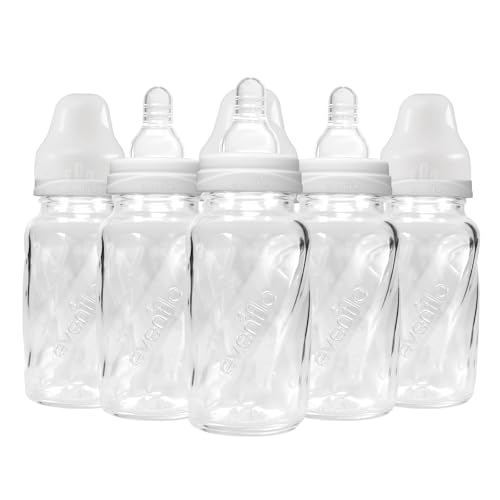
Six bottles of 4 oz tempered glass for about what a two-pack of premium plastic costs — that’s the Evenflo value pitch. Buyers report these bottles “held up through drops from table height onto LVP” flooring without a scratch, so your baby’s milk touches only recyclable glass that’s free of BPA, polycarbonates, PVC, and phthalates. The ergonomic twist shape makes the bottle easy to grip during feeding.
The 3-piece design (bottle, nipple, ring) makes cleaning genuinely fast, and they’re dishwasher safe on the top rack. A real bonus: the bottles fit onto most standard neck breast pumps, so you can pump directly into them and skip a transfer step. The anti-colic valve is visible and works well, and many breastfed babies accept the nipple easily, though the flow speed gets mixed feedback — some find it slow, others say it’s too fast.
At 4 oz each, this is a newborn-and-early-months set rather than a long-term bottle, and the measurement markings are hard to read according to several owners. Buy this if you value simplicity, glass safety, and getting six bottles at once.
Why it’s a steal
- Six glass bottles for less than most two-packs
- Only 3 parts makes cleaning a snap
- Pumps fit directly onto the bottle
Worth flagging
- Markings are tough to read, especially at night
- Nipple flow speed gets mixed reviews
Grab this if: You’re building a newborn stash and want durable glass without a premium price tag.
Think twice if: Night feeds with dim lighting will frustrate you — those faint markings are a common complaint.
3. Tommee Tippee Natural Start Glass Baby Bottles
Glass bottles that grow with your baby from bottle feeding to open-cup drinking.
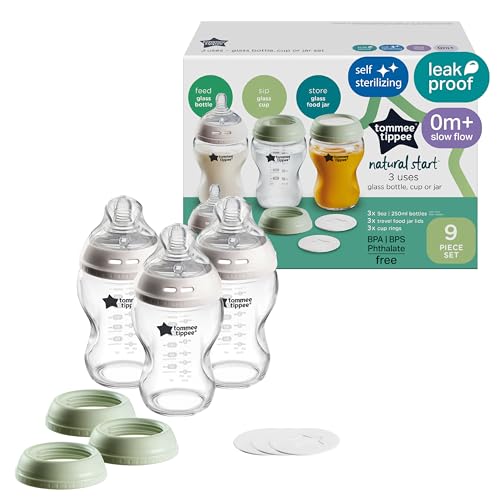
This three-bottle set stands out because it includes travel food jar lids and cup rings, giving it a lifespan beyond the bottle-feeding stage. Once your baby weans, you can use the glass jar for snacks and the ring to turn it into a sippy cup. The medical-grade glass is durable — owners mention it “survived multiple drops, no cracks” — and it’s free of BPA, phthalates, and toxins.
The nipple is shaped to encourage a natural latch, which helps reduce air intake and prevents nipple confusion when switching between breast and bottle. A standout feature is the self-sterilizing design: you can sterilize the bottle in just three minutes in the microwave, and it’s heat and shock thermal resistant. The bottle is 100% leakproof when fully assembled, even upside down. Owners who breastfeed particularly appreciate that it avoids nipple confusion and that the large 9 oz size stores and feeds well.
Compared to the heavier 4 oz Evenflo set, this is a bigger bottle and the glass does feel heavier than plastic — most babies handle it fine, but a few owners find it heavy. The leakproof claim is strong, but some customers note leakage if parts aren’t perfectly aligned, so it pays to assemble carefully.
The smart extras
- Jar lids and cup rings extend the kit’s life
- Self-sterilizes in just 3 minutes
- Natural latch nipple reduces air intake
- Compatible with Nuk Perfect Match nipples
Fair warning
- Glass is noticeably heavier than plastic bottles
- Leak-free only when every part is secured just right
For the long view: The best choice for parents who want one product that carries from newborn feeding to toddler cups.
Keep in mind: If you’re exclusively bottle-feeding a wiggly baby, the heavier glass might tire little arms.
4. Philips Avent Natural Baby Bottles, Slow Flow

The bottle designed so milk flows only when your newborn actively drinks.
This 4 oz plastic bottle is the one to start with if you have a newborn, especially one who breastfeeds. It won the Best of The Bump Award 2024. and features a unique opening and tip that release milk only when your baby actively drinks — when they pause to swallow and breathe, no milk flows. This baby-led flow mimics breastfeeding closely, and parents report babies switch back and forth from breast to bottle easily.
The wide, breast-shaped nipple mimics the shape and feel of a breast, and the soft silicone is gentle on gums. The anti-colic valve keeps air away from the tummy, which translates to less gas and fussiness after feeds. The 4 oz size is right for a newborn’s appetite, and the wider mouth makes cleaning easier than narrow bottles. The slow flow nipples (Flow 2) are matched perfectly to a newborn’s pace, though older babies will eventually need an upgrade.
Compared to the PPSU version above, this is the lighter, more affordable plastic sibling — great for the first few months, though you’ll want to move up in capacity as your baby grows. It’s leak-proof, easy to wash, and the clear design shows the milk level clearly.
Built for newborns
- Slow flow matches a newborn’s pace
- Breast-shaped nipple eases the switch
- Anti-colic valve reduces gas and fussiness
Plan ahead
- 4 oz capacity is short-lived as appetite grows
- Will need faster flow nipples later
Start here: The most dependable first bottle for a breastfed newborn making the transition.
Timeline check: Expect to size up to 9 oz bottles within a couple of months as feeding amounts grow.
5. Avima 4 oz Anti Colic Baby Bottles

An eight-bottle set with patented duo-flow nipples designed to end colic struggles.
Parents who’ve battled colic swear by this set’s patented Duo-Flo nipples, which use two valves that flex and adjust the milk flow to your baby’s feeding pace — reducing colic, gas, and spit-up without nipple collapse or interruptions. Many report switching from Dr. Brown’s (which has too many parts and still caused gas) and seeing the gas problems disappear. It’s a strong recommendation for a fussy, gassy newborn.
The set of 8 bottles comes with slow flow nipples, typically for newborns 0-3+ months, but the nipples are interchangeable — you can buy medium flow (3-9+ months) and fast flow (9-12+ months) separately as your baby grows. The breast-like soft silicone nipples promote a natural latch, and the standard narrow neck is compatible with many breast pumps for direct pumping and storage. Cleaning is simple with just 4 pieces, and the bottles are dishwasher safe on the top rack.
Compared to the premium single-packs in this guide, this set gives you the most bottles for your money, making it a great starter stash for a colicky newborn. The main caveat: while many find it leak-proof, some report milk spilling if the nipple isn’t seated perfectly, and a few find the flow too fast for a newborn.
The colic fix
- Duo-Flo valves flex to your baby’s pace
- Eight bottles to last through late-night feeds
- Nipples swap out as baby grows to 12 months
Watch for
- Leak-proof only when parts are aligned perfectly
- Some find the flow fast for true newborns
Best for gassy babies: A comprehensive solution for reflux and colic that doesn’t break the bank.
Double-check: If your newborn is under 1 month, the flow rate may be quicker than ideal.
6. Comotomo Silicone Baby Bottle Gen 2
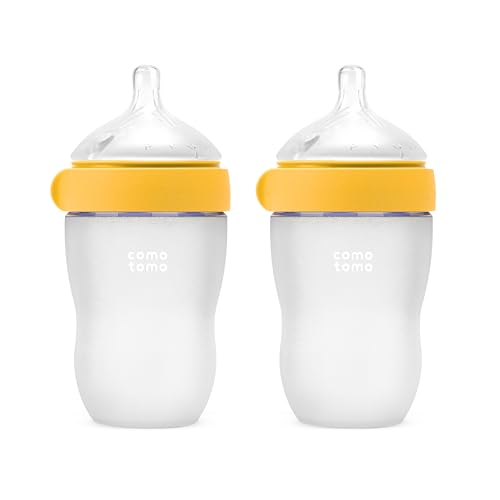
The squishy silicone bottle that wins over babies who refuse everything else.
If your baby rejects every bottle you’ve tried, this Gen 2 update is the one parents consistently report as the last bottle standing. The body is made of soft, food-contact-grade silicone — milk touches only silicone and nothing else — which feels more like a breast than hard plastic or glass. The naturally tapered nipple supports a comfortable latch, and the reinforced structure prevents the collapsing that plagued earlier versions.
Parents of twins and bottle-refusing babies report immediate acceptance after failures with glass and multi-part bottles. The wide neck design means cleaning is fast with no special brushes required, and the bottles are essentially “indestructible” by hand or in the dishwasher. The redesigned outer ring makes assembly simpler and helps prevent leaks, and the wider base — 40% wider than version 1 — reduces accidental tip-overs. Flow levels are easy to read right on the nipple, and the volume markings use safe silicone ink that stays visible.
Compared to the glass bottles above, this is far more forgiving — it flexes, bounces, and survives drops that would worry a glass fan. The medium flow included works for most babies, though the lid functionality receives mixed feedback.
The refuser’s savior
- Milk touches only soft, premium silicone
- Will not collapse during feeding
- Truly wide neck needs no special cleaning brush
- Wider base resists tipping over
Minor gripes
- Lid functionality gets mixed reviews
- Colors are described as “eh” by one owner
For the stubborn feeder: The best fallback when your baby has said no to glass, plastic, and everything in between.
Fair trade: You pay more for the premium silicone feel, and the lids aren’t as loved as the bottles themselves.
7. Lansinoh Anti-Colic Baby Bottles
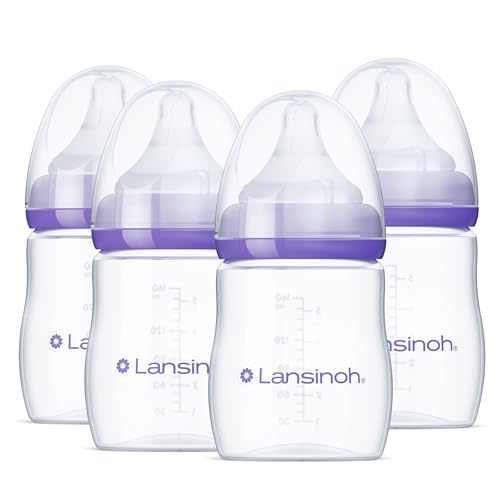
The lactation-consultant favorite for breastfed babies needing a bottle now and then.
This is the bottle that lactation professionals often point to when a breastfed baby refuses all others. The ultra-soft but strong silicone nipple has a wide, gentle slope that molds to your baby’s mouth, securing a latch that supports a smooth breast-to-bottle transition. One owner summed it up: “lactation recommended lansinoh nipples… really helped my baby’s latch.” For combo feeding — nursing plus the occasional bottle from dad — this delivers a smooth switch.
The anti-colic system uses an air ventilation design that limits air intake during feeding, supporting less gas, fussiness, and spit-up. The nipple tip is strong yet flexible, stretching with your baby’s sucking motion to deliver milk at their own comfortable pace. The 5 oz capacity with extra-slow flow nipples (Size XS, 0-1 month) is perfectly calibrated for newborns starting their feeding journey. Cleaning is easy with just three pieces (excluding the cap), and the bottles are freezer- and dishwasher-safe.
Compared to the 4 oz Philips Avent, this offers a slightly bigger capacity and an even slower extra-slow flow, making it ideal for the earliest weeks. The main consideration: these are plastic, so if you’re strictly glass-only, this isn’t the pick.
Loved by lactation pros
- Extra-slow flow suits brand-new newborns
- Nipple shape promotes a secure latch
- Three pieces for quick washing
- Freezer-safe for pumped milk storage
Consider this
- Plastic material, not glass or PPSU
- 5 oz may be small for older, hungrier babies
For nursing duos: The smoothest transition bottle for a breastfed newborn getting occasional bottles.
Not if: You’re committed to glass or need a bottle that carries a 6+ month old through full feeds.
8. Dr. Brown’s Options+ Narrow Glass Baby Bottle
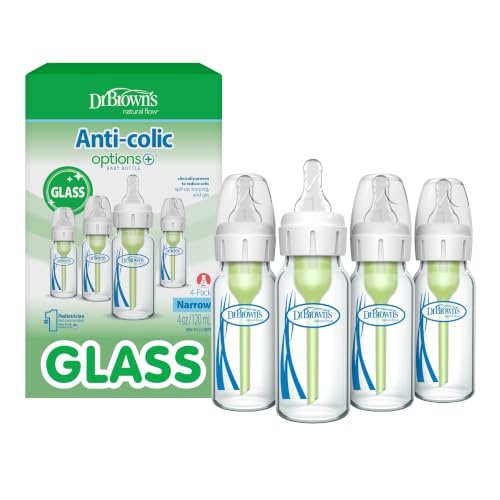
The durable borosilicate glass is heat and thermal shock-resistant, so it withstands hot and cold temperatures and gradual changes without cracking. Reviewers point out it “didn’t break” even after a couple of drops, though one noted it shattered on a tile drop. The vent system also preserves milk nutrients — the vacuum-free feeding is closest to breastfeeding. The bottle grows with your baby: you can remove the internal vent as their feeding develops without buying a new bottle. It’s dishwasher safe (top rack only), and safe in electric and microwave sterilizers or boiling water.
Compared to the simpler Evenflo glass bottles, this one has more parts — the vent system adds extra pieces to wash, and owners describe the cleaning as “annoying” at times. The Level 1 slow flow nipple may even be fast for a newborn; slower options are available. It’s also heavier than plastic, but parents agree the colic relief is worth the heft.
The heavy lifter
- Durable borosilicate glass resists thermal shock
- Vent system can be removed as baby grows
- Preserves milk nutrients during feeding
The cost of efficacy
- Extra parts make washing more tedious
- Heavier than plastic rivals
- Level 1 flow can be fast for a newborn
When nothing else works: The most effective colic relief in this lineup, backed by clinical evidence and specialist recommendations.
Fair warning: Be ready for the extra cleaning time — the vent system that cures the gas is also the part that makes washing fiddly.
9. Pigeon PPSU Wide Neck Anti-Colic Nursing Baby Bottle
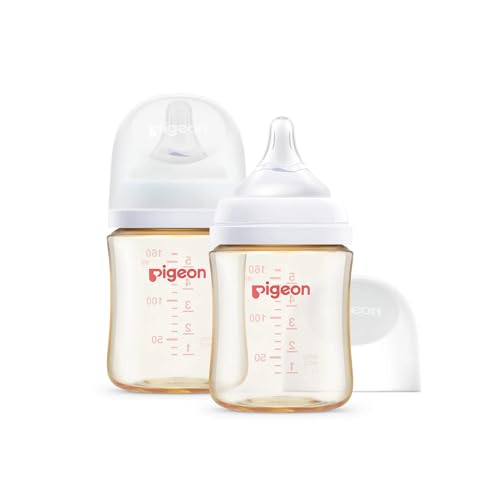
The research-backed nipple that cuts feeding time from 10 minutes per ounce.
This Japanese brand built its nipple design on research into the three natural movements a baby makes while feeding — and the result is a latch that works. The soft, flexible silicone nipple allows for natural, smooth tongue movement, and the Latch-on Line guides your baby’s mouth for effective adsorption. Parents report feeding time dropping dramatically, with one noting it cut from 10 minutes per ounce, because the baby latches properly and feeds efficiently.
The wide neck and streamlined body make the bottle easy to clean and hold, and the PPSU material (a heat-resistant, BPA-free plastic) is a lightweight alternative to glass that withstands frequent sterilizing. Owners praise how it “stays cleaner post-sterilization” compared to plastic and how it survives the dishwasher cycle. The included SS nipples (0m+) are hard to find elsewhere, making this set registry-worthy for newborns. The nipple sizes run from SS to 3L, each with specific hole size, shape, thickness, and softness for every age.
Compared to the Philips PPSU bottle, this one comes with an extra-slow SS nipple rather than medium flow, making it a better fit straight out of the hospital. It’s pricey — the most expensive pick here — and the 5.4 oz size means you’ll size up eventually. One owner notes the 8 oz version can’t mix 4 scoops of formula at once.
The precision pick
- Research-based nipple design improves latch speed
- Comes with hard-to-find SS (0m+) nipples
- Lightweight PPSU withstands heavy sterilizing
- Wide neck is easy to clean by hand
Price check
- Most expensive pick in this lineup
- 5.4 oz capacity means sizing up soon
For the meticulous parent: A premium, research-backed bottle that nails the latch from day one — worth it if feeding efficiency is your priority.
Look elsewhere if: You want a bigger capacity for an older baby without paying a second time.
Understanding the Specs
Nipple Flow Rate
The flow rate controls how much milk comes out with each suck, and it’s the most important spec to match to your baby’s age. Extra-slow (XS, SS) suits newborns 0-1 months, slow flow fits 0-3 months, medium flow works for 3-9 months, and fast flow handles older babies. A nipple that’s too fast for your baby can cause gulping and excess gas.
PPSU vs Glass vs Plastic
PPSU is a heat-resistant, BPA-free plastic that looks amber-golden, feels like glass, and tolerates sterilizing up to 180°C/356°F without leaching. Glass is stain-free and clean-feeling but heavier and breakable. Standard plastic is lightest and cheapest but may carry the plastic concern. Your choice balances weight, durability, and confidence.
FAQ
How many bottles do I actually need for a newborn?
What is the difference between slow flow and medium flow nipples?
Are PPSU bottles really safer than plastic?
Can I pump breast milk directly into any bottle?
How does an anti-colic valve actually work?
What is baby-led flow and why does it matter?
Are glass bottles really more durable than they used to be?
Which bottle is best for a baby who refuses to take a bottle?
Final Thoughts: The Verdict
How We Picked
We do not accept paid placement. Every pick is matched to a real buyer and a real use-case; we do not hands-on test units.
Sources & Methodology
Specifications: manufacturer listings and product documentation. Review insights: verified customer reviews, as of August 2026. Pricing: not shown on this page (it changes often); check the current price via the retailer link.
As an Amazon Associate, WellFizz earns from qualifying purchases. This does not affect which products we feature.
Related Guides

Mo Maruf
I created WellFizz to bridge the gap between vague wellness advice and actionable solutions. My mission is simple: to decode the research and give you practical tools you can actually use.
Beyond the data, I am a passionate traveler. I believe that stepping away from the screen to explore new environments is essential for mental clarity and physical vitality.