Our readers keep the lights on and my smoothie glass nicely filled. As an Amazon Associate, I earn from qualifying purchases.
Specs are compiled from manufacturer listings and verified buyer reviews and can change over time — please confirm the key details on the product page before buying.
Picking exterior lumber for a bench, planter, or window sill usually ends with a trip to the home center, where boards are twisted, wet, and full of surprises. The smarter route is buying hardwood that arrives already milled, sanded, and straight so you can skip the planing and get straight to the build. This guide compares four kiln-dried hardwood options by thickness, grain, and real owner feedback to help you match the right wood to your project.
I’m Mohammad Maruf — the founder and writer behind WellFizz. This guide is built by comparing the manufacturers’ published specifications and the patterns across verified customer reviews, so you get each pick’s real strengths and trade-offs instead of marketing spin.
You need exterior lumber that survives weather and saves you work, so focus on grain, thickness, and how much cleanup you can handle before you buy.
Our Picks at a Glance

How To Choose The Best Exterior Lumber
Exterior projects punish sloppy wood. Rain, sun, and temperature swings will find any hidden defect, so the starting point is always a board that is stable and dry before you ever cut it.
Kiln Drying Is Non-Negotiable
Kiln drying pulls moisture out of the wood in a controlled chamber, which shrinks it evenly and locks the grain in place. That process is what keeps a board from twisting into a propeller a week after you build with it, so look for “kiln dried” or “perfectly kiln dried” in the listing before anything else.
Read the Thickness Before You Plane
A board labeled 3/4-inch thick that arrives “surfaced” on two sides is ready to assemble immediately. If you buy rough lumber, plan on losing material to your own jointing and planing, which changes the final dimensions of your project.
Match the Wood to the Weather
Hardwoods like cherry, maple, and oak each handle moisture differently, and exotic options like black limba bring striking grain patterns that stand out in outdoor furniture. The right choice balances how the piece will look against how much abuse it will take from the elements.
Quick Comparison
| Model | Best For | Thickness | Wood Type | Pieces | Amazon |
|---|---|---|---|---|---|
| Cherry Lumber★ Best Overall | Furniture accents & cutting boards | 0.75 inches | Cherry | 4 | Amazon |
| Red Oak Lumber | Window sills & model building | 0.75 inches | Red Oak | 4 | Amazon |
| Black Limba Turning Blanks | Lathe turning & guitar work | 1.75 inches | Black Limba | 4 | Amazon |
| Maple Lumber Boards | Knife scales & small projects | 0.75 inches | Hard Maple | 2 | Amazon |
In‑Depth Reviews
1. Cherry Lumber – 3/4 in x 2 in (4 Pcs)
Our pick — over 4.5★ from 350+ verified ratings; the strongest balance of quality and price.
The furniture-grade cherry that turns an old bench into a family heirloom piece.
This set of four cherry boards arrives “perfectly kiln dried” with two sides already sanded to a true 0.75-inch thickness, so you are working with stable, ready-to-finish stock instead of rough lumber. The 48-inch length gives you real room for bench slats, cutting boards, or trim pieces, and the sanded faces mean you can move straight to glue-up or stain without jointing.
What wins people over here is the quality — owners consistently describe the boards as straight, even, and free of blemishes, with a grain that stains well and adds warmth to projects. The review pages sum it up with one owner planning to “make 14inx3/4in wood stirrers for Christmas for my family, like my grandfather did back in the day,” which captures the sentimental value this wood can carry. The recurring gripes are minor: some received boards ran lighter in color than expected for cherry, and a few noted slight warping, so check for flatness before you cut.
At 5 pounds for the set, this is a mid-weight option that balances generous length with easy handling in a small shop. Compared to the shorter 24-inch maple boards below, the 48-inch cherry gives you 48 inches per piece versus 24 inches for longer runs.
What Owners Love
- Sanded on two sides to 3/4-inch thickness — ready to finish immediately
- 48-inch length suits benches, trim, and long slats
- Beautiful grain that takes stain well, per owner reports
Keep In Mind
- Color can run lighter than expected for cherry
- An occasional board shows slight warping
- Only two sides are sanded; edges may need work
Reach for it if: you want a proven, versatile cherry for furniture accents or gifts that need a clean, sanded face.
Look elsewhere if: you need exact color matching or plan to work the edges heavily, since only two faces are pre-finished.
2. Red Oak Lumber Board – 3/4 in x 2 in (4 Pcs)
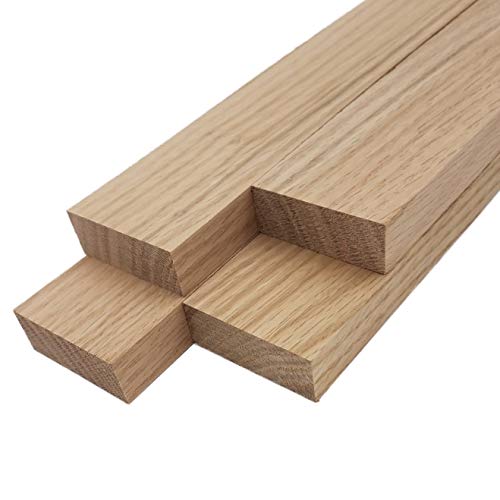
The crowd favorite for exact dimensions and a splinter-free surface straight from the start.
Red oak is a classic exterior hardwood, and this set of four 48-inch boards arrives “perfectly kiln dried” with two sides sanded to 3/4-inch thickness and a smooth finish that owners call “smooth no splinters.” That last detail matters more than it sounds — it means you can handle the boards bare-handed and skip sanding before assembly, which is why one owner used them on a window sill for air conditioners with a “perfect fit.”
The thing everyone raves about is the combination of quality and accurate dimensions. Owners specifically praise the “perfect length and width,” with the 3/4″ x 2″ profile coming through true to spec, and the 5-pound weight per set keeps them manageable while still feeling substantial in hand. The smooth finish and straight grain make this a go-to for both structural fixes and finer builds like HO scale model train layouts.
This is the higher-rated pick of the two 48-inch options here, and it leads on dimension accuracy while the cherry above leads on furniture-grade warmth. The trade-off is that oak’s open grain is more textured, so it can drink stain unevenly compared to cherry — plan your finish accordingly.
Why it wins: The quality and dimensional accuracy get the most praise, and the 3/4-inch sanded thickness means zero setup time before you start building.
Best for: anyone who needs straight, splinter-free oak in exact 48-inch lengths for window sills, shelving, or model work.
Note: its open grain texture can make staining uneven, so a wood conditioner is a smart step.
3. Black Limba Lumber Square Turning Blanks – 2″ x 2″

The exotic turning stock that arrives milled far better than the price suggests.
Black limba is an exotic African hardwood prized for its striking grain variation, and this premium-grade set of four 2″ x 2″ turning blanks is aimed at lathe work. What surprises owners most is the milling — one buyer was “expecting rough wood, inconsistent measure, and blemishes” but received “S4S milled, perfectly measured wood as advertised,” calling it “FAR above and beyond my expectations.”
The specs back that up: the blanks are surfaced at 1-15/16″ and guaranteed to clean up 100% at 1-3/4″ thickness, so you know exactly how much material you keep after truing them on the lathe. That is a noticeably thicker starting point than the 0.75-inch boards above — at 1.75 inches versus 0.75 inches — which is exactly what you want for bowls, spindles, and guitar bridge work where the piece needs real depth.
The honest caveats: a few pieces arrived with minor shipping damage, and the blue-gray heartwood varies significantly between pieces, so you are not getting a uniform block. Owners who want grain variation love that — “beautiful variation in the pieces” is a recurring theme — but if you need consistent color, this is not the pick.
The standout: S4S milling means the corners are already dressed, so you spend less time truing and more time turning.
The trade-off: grain color varies piece to piece, and shipping can dent the edges without bubble wrap.
Grab this if: you turn bowls or instruments and want thick, exotic blanks that are milled closer to final size than typical rough stock.
skip it if: you need perfectly uniform color across all four pieces.
4. Maple Lumber Boards – 3/4″ x 4″ (2 Pieces)
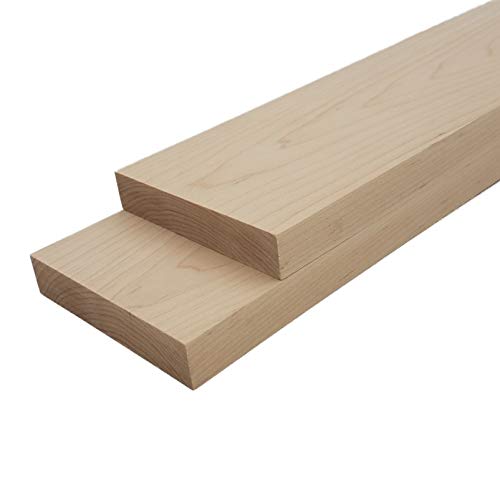
The budget-friendly hard maple pair that is clean enough for knife scales on day one.
This is the entry point for hard maple — a 2-piece set of 24-inch boards in a wider 4-inch profile, kiln dried and sanded on two sides to 3/4-inch thickness. The shorter length makes it ideal for smaller, precision projects like knife scales, small boxes, and patchwork pieces where you do not want to waste a long board. Owners describe it as “good solid wood, good price,” and the 4-pound weight per set keeps it easy to handle on a benchtop.
What wins people over is the absence of flaws — “no blemishes or knots” is the most common praise, and the material quality gets nearly as much love. That matters for knife handles and other pieces where a single knot can ruin the work. Being hard maple, this is a dense, tight-grained wood that stands up to wear far better than softwood alternatives in exterior use.
The trade-off here is value-versus-length: you get only two boards at 24 inches each, which is versus the 48-inch cherry and red oak options above. If your project runs longer than a foot or two, buy the 48-inch sets instead — this is a filler for small jobs, not a framing lumber replacement.
What Makes It a Value
- Clean, knot-free hard maple praised by owners
- 4-inch width suits knife scales and small panels
- Kiln dried and sanded on two sides to 3/4-inch
The Catch
- Only 2 pieces at 24 inches each — short runs only
- Heavier per set than the oak at 4 pounds for less total length
Choose it for: small, detail-oriented projects where a clean, blemish-free maple surface saves you real prep time.
Think twice if: you need long continuous runs — the 24-inch length will force a splice.
Understanding the Specs
Kiln Drying
Kiln drying pulls moisture out of the wood in a controlled chamber, which shrinks it evenly and locks the grain in place. For exterior use, this is what stops a board from twisting, cupping, or cracking after you build with it, because the wood is already at a stable moisture level. Look for “kiln dried” or “perfectly kiln dried” in the listing before anything else.
Sanded Thickness
A board labeled with a sanded thickness like 3/4-inch has already been surfaced on two sides to that exact measurement. That means you can skip jointing and planing and go straight to assembly, which saves setup time and keeps your final dimensions predictable. Rough lumber, by contrast, loses material to your own flattening work before the build even starts.
FAQ
What is the difference between kiln dried and air dried lumber?
Can I use cherry, maple, or oak boards outdoors?
What does “two sides sanded to 3/4 inch” actually mean for my project?
How do I know if a board is straight before I cut it?
What is the difference between turning blanks and regular lumber boards?
What does S4S milled mean for a turning blank?
Why does grain variation matter in exterior wood?
How should I finish exterior hardwood for weather protection?
Final Thoughts: The Verdict
If you want one dependable pick, the exterior lumber winner is the Cherry Lumber because it balances 48-inch length, a sanded 0.75-inch thickness, and furniture-grade grain that stains beautifully. If you want the highest-rated pick with exact dimensions, grab the Red Oak Lumber. And for lathe projects or guitar work, the Black Limba turning blanks deliver exotic grain in a thick, milled profile.
How We Picked
We do not accept paid placement. Every pick is matched to a real buyer and a real use-case; we do not hands-on test units.
Sources & Methodology
Specifications: manufacturer listings and product documentation. Review insights: verified customer reviews, as of August 2026. Pricing: not shown on this page (it changes often); check the current price via the retailer link.
As an Amazon Associate, WellFizz earns from qualifying purchases. This does not affect which products we feature.
Related Guides

Mo Maruf
I created WellFizz to bridge the gap between vague wellness advice and actionable solutions. My mission is simple: to decode the research and give you practical tools you can actually use.
Beyond the data, I am a passionate traveler. I believe that stepping away from the screen to explore new environments is essential for mental clarity and physical vitality.