Our readers keep the lights on and my smoothie glass nicely filled. As an Amazon Associate, I earn from qualifying purchases.
Specs are compiled from manufacturer listings and verified buyer reviews and can change over time — please confirm the key details on the product page before buying.
The real fork in the road is amperage: a 100 Amp main gets most homes through the day, while a 200 Amp main gives a growing family room to add big loads without a rewire. Beyond that, you are balancing the number of breaker spaces against how neat you want the wiring to look when an inspector opens the door.
I’m Mohammad Maruf — the founder and writer behind WellFizz. This guide is built by comparing the manufacturers’ published specifications and the patterns across verified customer reviews, so you get each pick’s real strengths and trade-offs instead of marketing spin.
Inside, you’ll find the best electric panels for everything from a simple basement rewire to a whole-house upgrade, ranked by real owner feedback and hard specs. We break down amperage, circuit counts, and plug-on neutral tech so you can order the right box the first time.
Our Picks at a Glance


How To Choose The Best Electric Panels
An electric panel is the heart of your home’s wiring — it takes power from the utility and sends it out to every circuit in the house. Picking the wrong one means either wasted money on capacity you’ll never use or a major upgrade project down the road when you run out of space.
Start with the amperage: 100A vs 200A
Amperage tells you how much electricity your panel can handle at once. A 100 Amp panel is the standard for most existing homes and smaller shops — it runs lights, outlets, and typical appliances without breaking a sweat. A 200 Amp panel is the modern choice for larger homes or anyone planning big additions like an EV charger, a hot tub, or a heat pump, because it gives you two times the headroom (200 A vs 100 A) for future loads. If your current panel is maxed out, moving to 200A solves that at the source.
Count your circuits before you count your spaces
The number of “spaces” is how many physical breaker slots the panel has, while “circuits” counts both single-pole (120V) and double-pole (240V) breakers that can fit. A 20-Space 40-Circuit panel (like the SN Series) holds double the breakers of an 8-Space 16-Circuit unit because each space accepts a tandem or quad breaker. For a garage or small shop, 16 circuits is plenty; for a whole house with a sub-panel, 40 circuits gives you room to grow for years.
Plug-on neutral makes modern wiring simpler
A plug-on neutral (PoN) panel has a fully distributed neutral bar built in, which means combination arc-fault breakers (the ones that protect against electrical fires from arc faults) snap directly onto the bus — no separate pigtail wire to connect. It also keeps the wiring tidy because the neutral lands right beside the hot wire for each circuit. If you’re installing in a new build or a major reno, a PoN-ready panel saves your electrician time and keeps the box looking clean.
Quick Comparison
| Model | Best For | Amperage | Circuits | Main Breaker | Amazon |
|---|---|---|---|---|---|
| Square D Homeline 200A | Whole-home upgrades | 200 A | 40 | Yes | Amazon |
| Siemens SN Series 100A | Sub-panels & rewires | 100 A | 40 | Yes | Amazon |
| Square D Homeline 100A 12-Space | Mid-size homes | 100 A | 24 | Yes | Amazon |
| ABB 100A 20-Space | Garage & pole barn sub-panels | 100 A | 20 | Yes | Amazon |
| Leviton 200A 30-Space | Smart-home setups | 200 A | 30 | Yes | Amazon |
In‑Depth Reviews
1. Square D Homeline 200-Amp 20-Space 40-Circuit Load Center
The whole-home workhorse that gives you twice the headroom of a standard 100A panel.
This Square D panel is built for homes that are growing — a 200 A main breaker and 40 circuits of capacity mean you can add an EV charger, a heat pump, or a hot tub without planning a rewire a few years from now. It is the pre-computed winner here because it holds the highest rating in this list at 4.7 out of 5, backed by hundreds of owner experiences that consistently call out the build quality and the included breakers as the standout reasons to buy.
The kit arrives with five breakers already in the box — three HOM120 single-pole and two HOM230 double-pole — so you can energize several circuits the moment the power is connected. The fully distributed neutral bar means Homeline plug-on neutral arc-fault breakers snap onto any space without a pigtail, and because each pole space accepts full-size, tandem, or quad breakers, 40 circuits fit into just 20 spaces.
Buyers report it is “IMO best value for money,” even when noting the grounding bar is sold separately as a Square D part. A contractor’s spouse summed up the appeal plainly: easy to install and the best value for the money, with the electrician recommending this over a big-box store purchase.
What owners rave about
- Top-tier build quality — the most-praised aspect in owner feedback
- Breakers included for instant hookup
- Huge 40-circuit capacity in a compact footprint
The honest caveats
- Grounding bar sold separately — plan the extra part
- No pass-through lugs if you wanted to feed a sub-panel from this box
The bottom line: Reach for this if you want one panel that handles a full house today and your future big loads tomorrow.
Think twice if: You only need to power a small garage — a 100A panel saves money and space.
2. Siemens SN Series 100-Amp 20-Space 40-Circuit Load Center
A spacious 100A sub-panel that electricians quietly approve of on every install.
This Siemens panel gives you 40 circuits in a 100 A main breaker box, and it is the one homeowners keep buying as a sub-panel for a basement rewire or a shop. The selling point is the room to work: over 4 inches of wire bending space means your electrician is not fighting tight corners, and the plug-on neutral design makes installing the breakers a quick snap-in job.
Build quality earns the most owner praise here, ahead of functionality, and the reviews reflect real confidence in the brand. Owners mention their installer “was constantly commenting on how much he likes Siemens components,” and the panel arrives with one factory-installed ground bar to get you started. The 22,000 AIC interrupt rating means it can safely clear a high-fault short circuit, which is reassuring for households with growing electrical demands.
The catch for sub-panel use: if you are branching off a 200A main, you will need a separate bus bar for grounding to satisfy NEC code — a standard step for this setup. One owner noted the box shipped in its plain cardboard panel box and picked up a few scuffs in transit, though the panel itself was good quality and worked perfectly for a basement rewire.
Why it earns its spot
- Generous 40-circuit count at a value price
- Superior wire bending space for easier installs
- 22,000 AIC short-circuit protection
What to plan for
- Sub-panel grounding needs an extra bus bar per code
- Cardboard-only shipping can leave cosmetic scuffs
Who it fits: The budget-savvy owner adding a sub-panel or rewiring a basement with room to spare.
Not ideal for: A whole-home main where a 200A panel like the Square D above gives more headroom.
3. Square D Homeline 100-Amp 8-Space 16-Circuit Load Center

A mid-size 100A panel that handles a normal home’s circuits with room left for tomorrow.
For the typical three-bedroom house, a 100 Amps with 24 circuits is often the balance — enough for every room plus a few extras, without paying for 200A capacity you may never touch. This Square D Homeline unit is UL Listed and built with a tin-plated aluminum bus bar and a welded sheet steel enclosure finished in baked enamel gray, so it shrugs off the wear of a busy household. At 18.3 pounds, it is a solid mid-weight box that mounts flush or on the surface with the included combination cover.
The plug-on neutral design keeps wiring tidy, and the electrical connections accept 6 AWG to 2/0 AWG copper or aluminum wire, giving your electrician flexibility on feed size. Owners consistently rate the quality and value highly, with installation ease as the third most-praised aspect — the kind of feedback that tells you this panel is forgiving for a pro and straightforward for a confident DIYer.
The balanced verdict: this is a solid, dependable choice for a mid-size home. One owner had a door that would not latch on arrival and fixed it with about 30 minutes of filing — an occasional quality hiccup, not a pattern, and the panel worked well afterward. If your house is larger or you are planning big electric loads, the 200A model in this guide is the stronger buy.
Owner consensus: High-quality build and easy installation are what buyers remember most about this panel.
A fair trade-off: An occasional door latch needs a little reshaping — check yours before mounting.
4. ABB 100-Amp 20-Space 20-Circuit Load Center
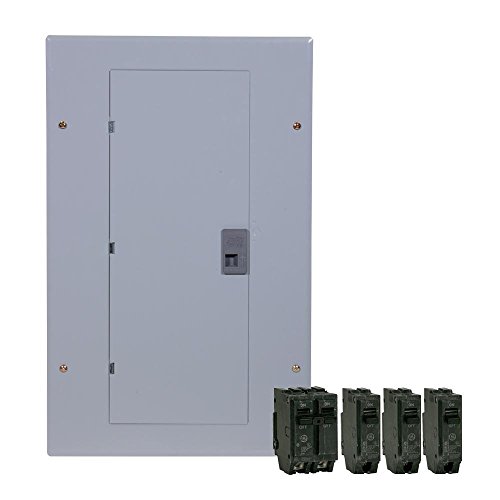
A ready-to-wire ABB kit that ships with its first breaker complement already inside.
This ABB panel is the one that saves you a second shopping trip: it arrives with a 100 Amp main breaker plus three 20A single-pole and one 30A double-pole breakers installed, so you can start landing circuits right away. The NEMA 1 rated galvanized steel enclosure resists rust, and the tin-plated copper bus bar boost conductivity for stable power distribution over the long haul.
The 20-space, 20-circuit layout is sized for a residence or a small shop, and the split neutral holes are rated for 14–4 wire, which covers the vast majority of branch circuits you will run. It is compatible with THQP, GFCI, AFCI, and Dual Function breakers, and the 22 kAIC interrupt rating gives dependable protection against high fault currents. Owners call it “perfect for my electrical project” and note that being an ABB/GE brand panel means extra breakers are easy to find at big-box stores.
The recurring theme in feedback is value — customers note it beats locally available breaker boxes on price while including the starter pack of breakers. The panel can be fed from the top or the bottom, which gives your installer flexibility on orientation. A note for planning: owners recommend a pro for the main power line connection, even though the box itself is straightforward to install.
What makes it a value
- Main breaker plus 4 branch breakers included
- Rust-resistant galvanized steel enclosure
- Top or bottom feed flexibility
Keep in mind
- 20 circuits is modest for a full house
- Main line hookup is best left to a licensed pro
Best for: A garage, pole barn, or small shop sub-panel where you want breakers included and easy to expand.
Not for: Whole-home service with many circuits — the 40-circuit Siemens covers more ground for similar money.
5. Leviton 30-Space 30-Circuit 200-Amp Load Center
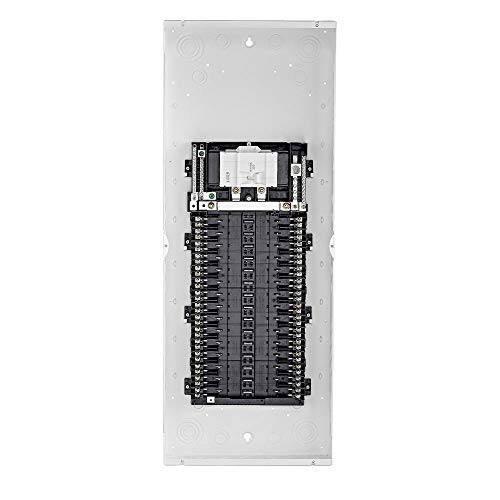
The 200A panel that makes breaker swaps tool-free and wires itself in record time.
Leviton rethinks the panel layout here: circuits land on the panel bus itself rather than on the breakers, so a bad breaker swaps out in seconds with no tools. That design, plus tin-plated copper bussing for superior conductivity, makes this a favorite among owners who have installed traditional panels before and know how much easier this one feels. The white, powder-coated finish gives it a clean modern look that shows up well in a finished utility room.
At 200 Amps and 30 circuits, it pairs whole-home capacity with a design that is genuinely different. Owners praise the “no wiring to breakers” layout, the neutrals that sit right beside the hots for a tidy panel, and the easy soft toggle on the breakers. For all-electric homes, the smart breaker ecosystem enables real-time power tracking, control, and peak-hour management — a genuine step forward if you want visibility into your energy use.
The honest catch: the door is sold separately, and the enclosure plus interior is what ships in the box. One owner noted the see-through cover costs extra and that they would buy a panel with a cover included next time. The 10-year limited warranty and the overall build quality keep this on the shortlist for homeowners who want the most modern panel available.
The breakthrough features
- Tool-free breaker swaps in seconds
- Smart breakers track power in real time
- Tidy wiring with neutrals beside hots
Before you buy
- Door and cover sold separately
- 30 circuits vs 40 on the Square D — check your needs
Choose this if: You want a modern 200A panel with smart-breaker capability and the cleanest wiring layout on the market.
Pass if: You want a complete kit with a door in the box — budget for the extra cover here.
6. Square D Homeline 125-Amp 30-Space 60-Circuit Main Lugs Load Center
Spaces vs Circuits
A “space” is a physical breaker slot; “circuits” counts how many breakers can fit overall because each space can take a tandem or quad breaker. An 8-Space 16-Circuit panel is compact for a garage, while a 20-Space 40-Circuit panel holds double the breakers in the same wall footprint. Count your existing breakers plus a few spares for growth before you choose — running out of slots means a costly panel swap later.
Plug-On Neutral Ready
This means the panel has a fully distributed neutral bar built in, so combination arc-fault breakers (AFCI) snap directly onto the bus without a separate pigtail wire. It saves install time, reduces wiring errors, and keeps the panel interior tidy. If you are doing a new build or a major renovation where modern codes require AFCI protection, a plug-on neutral panel makes that job measurably easier.
Main Breaker vs Main Lugs
A main breaker panel includes the big shutoff switch that disconnects the whole house — the standard for service entrances. A main lugs panel has no main breaker and instead feeds from a breaker upstream, making it the right choice for a sub-panel fed from a 200A main. If you are not sure which you need, a main breaker panel is the safer default for a home’s primary service.
FAQ
What size electric panel do I need for a typical home?
What is the difference between 100 amp and 200 amp electric panels?
How many circuits do I need in my breaker panel?
What does plug-on neutral mean on a load center?
Can I install an electric panel myself?
What is the difference between a main breaker panel and a main lugs panel?
How long does an electric panel last?
Can a 100 amp sub-panel be fed from a 200 amp main panel?
Final Thoughts: The Verdict
For most people, the electric panels winner is the Square D Homeline 200A because it pairs the highest owner rating in this list with 40 circuits and a 200 A main — room for your whole home today and your future EV charger tomorrow. If you want a smart, modern layout with tool-free breaker swaps, grab the Leviton 200A. And for a budget-friendly sub-panel or basement rewire, the Siemens 100A is the one to reach for. The crowd favorite across the board is Square D — the 200A model holds a 4.7 rating backed by 300+ owners, which is why it leads this list.
How We Picked
We do not accept paid placement. Every pick is matched to a real buyer and a real use-case; we do not hands-on test units.
Sources & Methodology
Specifications: manufacturer listings and product documentation. Review insights: verified customer reviews, as of August 2026. Pricing: not shown on this page (it changes often); check the current price via the retailer link.
As an Amazon Associate, WellFizz earns from qualifying purchases. This does not affect which products we feature.
Related Guides

Mo Maruf
I created WellFizz to bridge the gap between vague wellness advice and actionable solutions. My mission is simple: to decode the research and give you practical tools you can actually use.
Beyond the data, I am a passionate traveler. I believe that stepping away from the screen to explore new environments is essential for mental clarity and physical vitality.