Our readers keep the lights on and my smoothie glass nicely filled. As an Amazon Associate, I earn from qualifying purchases.
Specs are compiled from manufacturer listings and verified buyer reviews and can change over time — please confirm the key details on the product page before buying.
Building costume armor is a battle against two enemies: foam that shreds under the blade, and sheets that are too small to cut a chest plate from. The right EVA foam fixes both, delivering smooth edges, clean heat-shaping, and enough surface area to lay out a full pauldron without piecing scraps together. This guide breaks down six packs that actually hold up to a heat gun and contact cement, ranked by density, thickness, and real owner experience.
I’m Mohammad Maruf — the founder and writer behind WellFizz. This guide is built by comparing the manufacturers’ published specifications and the patterns across verified customer reviews, so you get each pick’s real strengths and trade-offs instead of marketing spin.
You want a foam that holds its shape through a full convention weekend, and the best eva foam for cosplay balances density, thickness, and workability to get you there. Whether you’re cutting a massive roll for full-scale armor or small sheets for detailed cuffs, The right foam makes the difference between a prop that survives a convention and one that flops.
Our Picks at a Glance

How To Choose The Best EVA Foam For Cosplay
Every armor build starts with one decision: what thickness and density of foam you need. Get this wrong and you will either wrestle a sheet that is too stiff to bend, or watch a thin piece collapse under the weight of paint and sealant.
Match the foam thickness to the armor piece you are building.
Thin foam around 4-5mm is ideal for small details like cuffs, gauntlets, and layered trim that needs to flex around your wrist. Thicker 10mm foam carries the structural load of chest plates, pauldrons, and helmet bases that must hold a curved shape on their own. A 5mm sheet sits in the middle — sturdy enough for medium accessories yet flexible enough for gentle curves.
Density, measured in kg/m³, is the backbone of durability.
Density, measured in kg/m³, tells you how tightly packed the foam’s cells are. Higher density foam resists denting, keeps crisp edges after sanding, and holds a heat-formed curve much longer. Budget foam with low density crumbles at the cut line and leaves fuzzy edges that ruin the look of sealed armor.
Heat-shaping separates a professional prop from a hobby-grade one.
Heat reshapes EVA foam permanently, letting you bend a flat sheet into a domed bicep piece. A heat gun warms the cells so you can bend a flat sheet into a domed bicep piece or a curved shin guard. You want foam that responds smoothly under heat without bubbling or blistering — how it reacts to the gun is often what decides whether your prop looks professional or hobby-grade.
Quick Comparison
| Model | Best For | Thickness | Density | Sheet Size | Amazon |
|---|---|---|---|---|---|
| MEARCOOH 5mm★ Best Overall | Medium-sized props and details | 5mm | 86 kg/m³ | 35.5″ x 59″ | Amazon |
| Do²ping 10mm RollBudget Champion | Budget structural armor | 10mm | 86 kg/m³ | 13.9″ x 39″ | Amazon |
| CALPALMY 24-Pack | Small details and layered pieces | 4mm | 85 kg/m³ | 9″ x 12″ | Amazon |
| VEIOPGAB 5mm 2-Pack | Heat-gun friendly builds | 5mm | 90 kg/m³ | 16″ x 59″ each | Amazon |
| Acrux7 10mm Roll | Long strips and helmets | 10mm | — | 13″ x 78″ | Amazon |
| Patelai 6mm Roll | Oversized full-scale builds | 6mm | 85 kg/m³ | 39″ x 78″ | Amazon |
In‑Depth Reviews
1. MEARCOOH EVA Foam Cosplay Black 5mm Thick
Our pick — over 4.5★ from 700+ verified ratings; the strongest balance of quality and price.
The crowd-pleasing 5mm sheet that wins over 700+ owners with quality foam and real versatility.
At 5mm thick, this foam hits the balance for medium-sized accessories — the 35.5 x 59 inch sheet is large enough to lay out whole pieces, yet thin enough for fine detail work. The quality wins people over: it paints easily and stays sturdy enough to support itself, so your prop holds its shape without internal bracing.
Buyers report “Good quality foam, really thin, good for small details, not larger projects” — so treat it as a precision sheet, not a structural one. It cuts well and accepts paint without fighting you, and the elastic material folds and shapes without cracking.
At 1.28 pounds this sheet is the lightest full-size option here, and the 86 kg/m³ density keeps edges cleanly cut. Beginners should brace for a learning curve with any blade work, but the foam itself works like a charm once you find your cutting rhythm.
What Owners Praise
- High quality that holds up across repeated handling
- Versatile for props, costumes, and even camera case padding
- Paints easily and accepts finishes well
- Large surface for medium-size projects
Keep In Mind
- 5mm is thin — not built for load-bearing armor
- Clean cuts take practice for first-time users
Best for: crafters building medium props, costume details, or lining projects that need a flexible, paint-ready 5mm sheet.
Think twice if: you need thick structural armor — this foam is about detail, not load-bearing bulk.
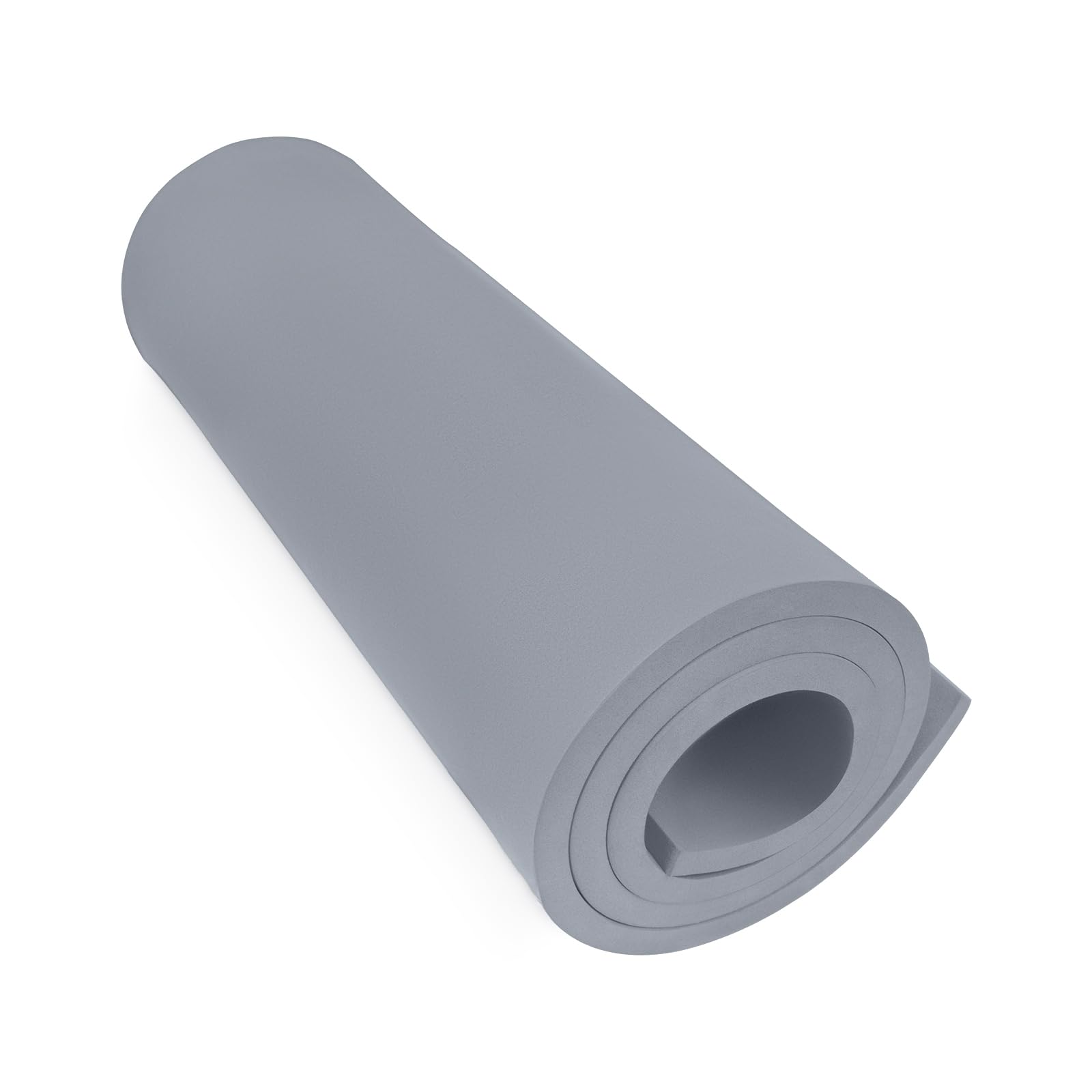
2. Do²ping Gray Eva Foam Sheets Roll, 10mm
A 10mm gray roll that delivers structural thickness at a budget-friendly price point.
At 10mm thick and 13.9 x 39 inches, this gray roll brings real heft to armor builds without the premium price tag. The high-density 86 kg/m³ construction means it holds heat-formed curves well, and owners find it long enough to complete bigger projects in one continuous strip.
Owners mention “Just what I needed to finish a costume for a spring concert! It wasn’t too thin and it held up great!” — exactly the verdict you want from a structural sheet. The thickness draws mixed feedback though: some find 10mm on point, others find it too thick to cut smoothly, so plan for a sharp blade and some elbow grease.
Compared to the 5mm MEARCOOH above, this is more than twice as thick — a 2.5x gap that matters for armor pieces needing self-supporting structure. At 9.5 ounces it’s featherlight for its size, making it easy to handle during long build sessions.
Where It Shines
- Genuine 10mm thickness for structural pieces
- Long enough for bigger continuous projects
- Strong value for the material you receive
- Holds up through use without fading or breaking
The Trade-Off
- Thickness makes cutting more effort-intensive
- Narrow 13.9″ width limits large chest pieces
Reach for this if: you want thick, structural foam without spending premium money.
Look elsewhere if: you need wide sheets for broad chest plates — the narrow width forces piecing.
3. CALPALMY 24-Pack Black EVA Foam Sheets 9″x12″ 4mm
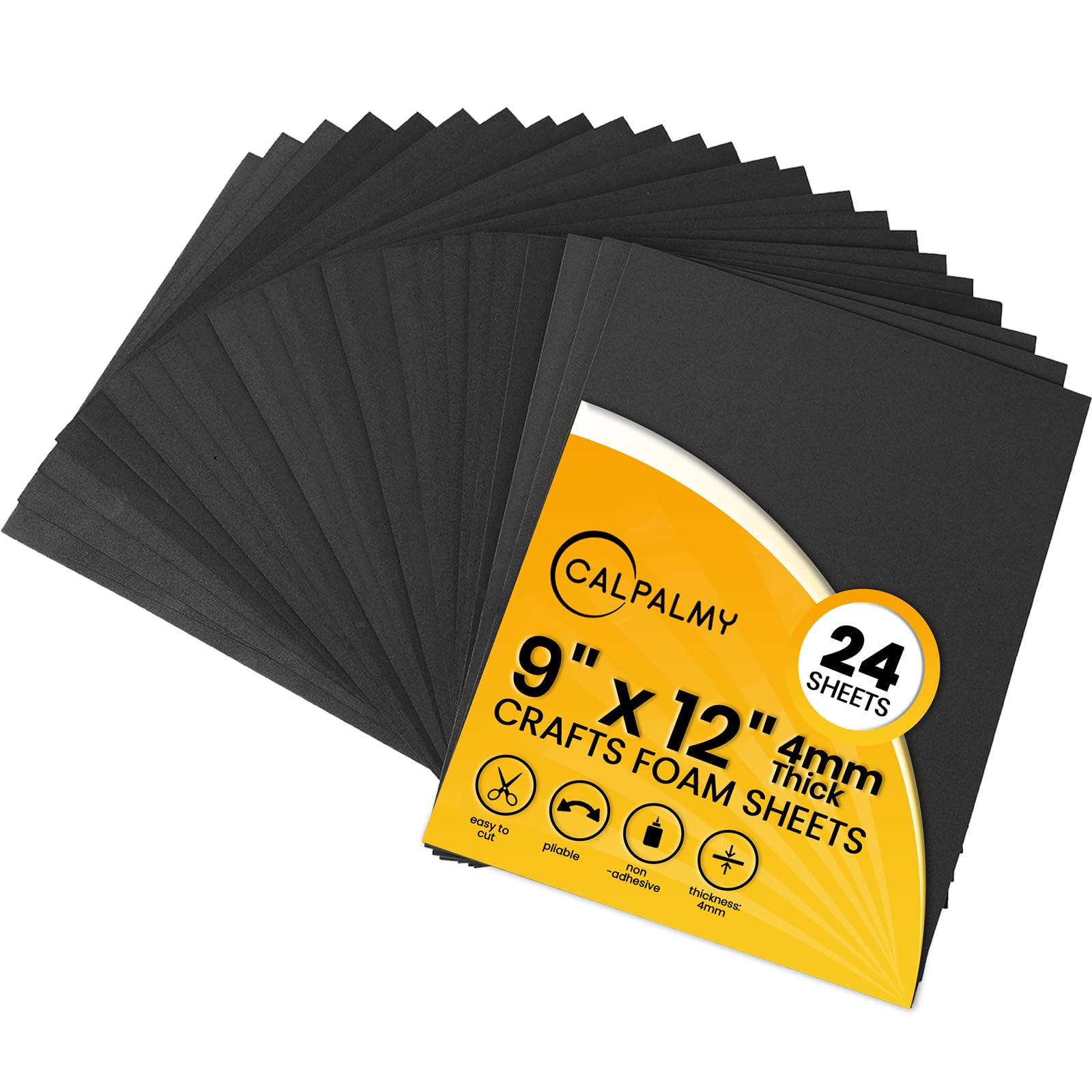
A 24-pack of 4mm sheets built for layered details, small cuffs, and mask work.
This bulk pack gives you 24 sheets at 9 x 12 inches each, a 4mm thickness tuned for flexible details rather than structural armor. Customers note “Used for making thin cuffs alongside worble with help of a heatgun for my chain chomp cosplay. worked well and contact cement melded the pieces together perfectly.” That is the recipe — thin foam, heat shaping, and contact cement working in harmony.
At 85 kg/m³ density, the foam is dense enough to cut cleanly without crumbling — one owner noted it works great with a paper cutter and doesn’t crumble at the edges. The durability earns strong praise, holding up through repeated handling and layering.
One honest note: opening the pack hits you with a strong chemical smell that dissipates after airing out for a few days. And compared to the 5mm MEARCOOH’s 86 kg/m³, this 4mm sheet at 85 kg/m³ is just a touch lighter in density — a small gap that won’t matter for detail work. Weighing 1.32 pounds total, the whole pack is easy to store flat.
Why It Works
- 24 sheets give you plenty of practice material
- Heat-shapes smoothly for curved contours
- Cuts clean without crumbling edges
- Perfect for masks, cuffs, and layered trims
What To Expect
- Strong chemical smell until the pack airs out
- 4mm is too thin for load-bearing armor
Grab this for: detail-heavy builds where you need many small, flexible pieces and don’t mind airing out the pack first.
Skip it for: full armor panels that need thick, self-supporting structure.
4. VEIOPGAB 5mm EVA Foam 2 Pcs, 16 x 59 in
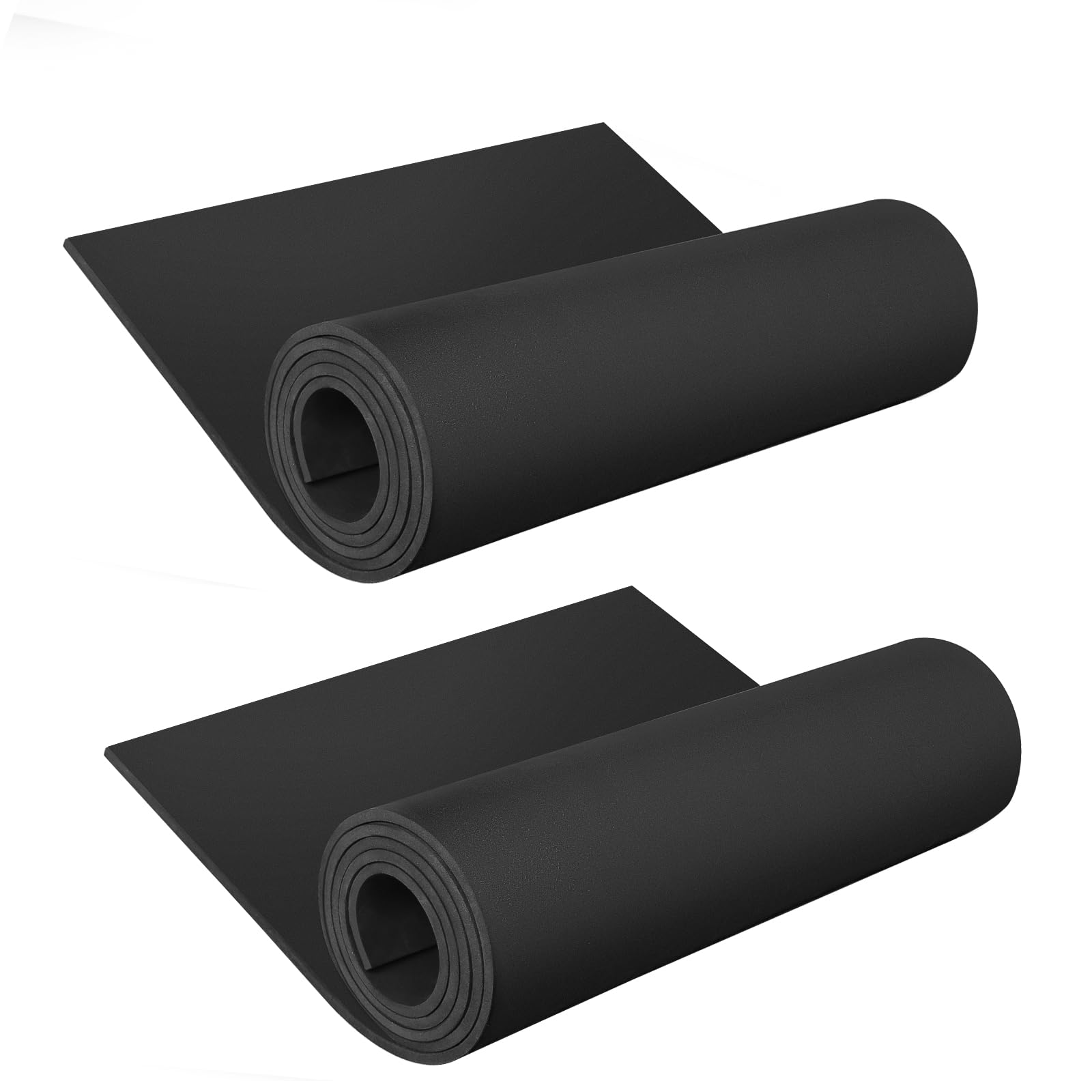
The highest-density 5mm sheet here, built for builders who live by the heat gun.
This two-pack gives you two 16 x 59 inch sheets at 5mm thick, and the 90 kg/m³ density is the standout — the densest option in this lineup. Reviewers point out it cuts easy and doesn’t bubble under the heat gun, which is the single biggest frustration with lower-grade foam.
One builder used it to pad a 3D printed Deadpool helmet, noting it cut easily and felt comfortable, though finding the right adhesive to bond it to PLA took some trial. That is the honest reality of mixing EVA with printed parts — the foam itself performs, but you need the right glue for the pairing.
Against the 5mm MEARCOOH above, this beats it on density by a small margin while holding 86 vs 90 kg/m³. The trade-off is a thinner 16-inch width versus the MEARCOOH’s 35.5-inch span, so you will piece together wider armor panels instead of cutting them in one go.
The Strengths
- Highest density on this list at 90 kg/m³
- Heat gun friendly — no bubbling during shaping
- Two large sheets for full-scale builds
- Comfortable and easy to work with
Before You Buy
- 16″ width means more seams on broad pieces
- Bonding to 3D printed parts needs specific adhesives
Made for: heat-gun veterans who shape a lot of curved armor and want foam that won’t blister.
Not ideal if: you want to cut wide chest panels in a single unseamed sheet.
5. Acrux7 10mm EVA Foam Sheets, 13″ x 78″
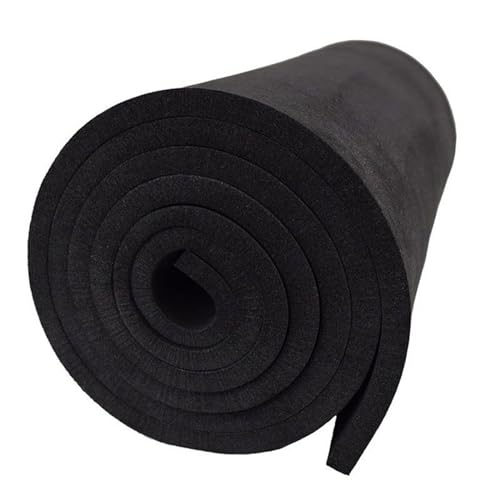
A 78-inch long 10mm roll that gives you continuous foam for helmets and sweeping pieces.
This black roll stretches a full 78 inches at 10mm thick and 13 inches wide, with a closed bubble structure that keeps the surface flat and free of big bubble holes. That smooth face means your paint and sealant go on evenly instead of chasing air pockets — a real advantage for props that need a clean finish.
Shoppers say it cut easily with scissors and a utility knife, and bonded well with rubber cement. One owner built an entire crow head for a costume, fixing the seams with air foam clay — a workable combo for complex organic shapes. The 10mm thickness mirrors the Do²ping above, but the extra length is what sets this apart for long continuous armor strips.
Since this data doesn’t list a density figure, judge it on the surface quality instead — the flat, bubble-free texture is what owners keep coming back to. It’s also water resistant and moisture-proof, which keeps it from degrading if you store it in a damp garage or basement workspace.
What Stands Out
- 78″ continuous length for unseamed long pieces
- Flat, bubble-free surface for clean painting
- Strong flexibility and tear resistance
- Cuts easily with scissors or utility knife
The Limitation
- 13″ width is narrow for wide panels
- Unspecified density makes structural claims hard to verify
Choose this when: you need long, continuous strips of 10mm foam for armor edges or helmet bases.
Broad panels are better served by: a wider sheet — this roll’s 13-inch width forces seams on chest-scale builds.
6. Patelai 6mm Thick Black EVA Foam Roll 39″x78″

The biggest sheet in this lineup — a 39 by 78 inch roll for full-scale costume pieces.
When you need one massive continuous sheet, this 6mm roll delivers — roughly 2 x 1 meter of black foam at 85 kg/m³ density. The smooth, even surface lets you draw or paint directly onto it, and the stable compact structure takes scissors or a pen knife without much effort.
The 39 x 78 inch scale is the whole story here. Compared to the 35.5 x 59 inch MEARCOOH above, this sheet spans a 52% larger footprint, which means you can cut a full chest plate or a long thigh guard as a single piece. Owners used it for everything from craft foam costumes to blacking out a bedroom window — a measure of how versatile a huge sheet becomes.
Two honest caveats: there’s a very strong chemical smell straight from the start, and one buyer found the art knife cut rough edges that needed grinding. The majority verdict is solid quality with a grade-A feel, but know that this foam rewards a sharp blade and some patience.
The Big Wins
- Massive 39″ x 78″ sheet cuts whole pieces in one pass
- Smooth surface takes paint and drawing cleanly
- High density holds shape during use
- Easy cutting with scissors or knife
Be Ready For
- Strong chemical odor until it airs out
- Rough cut edges if your blade isn’t razor sharp
This is your sheet if: the build is full-scale and you refuse to piece together a chest plate from strips.
Consider something else if: you only need small details — a 39 x 78 inch roll is more surface than a cuff or mask requires.
Understanding the Specs
Density (kg/m³)
Density tells you how tightly packed the foam cells are — and it decides how well your armor survives a convention floor. Higher numbers like 90 kg/m³ mean the foam resists denting, holds heat-formed curves, and keeps a crisp sanded edge. Lower density foam crumbles at the cut line and sags under the weight of paint and sealant. For structural armor, aim high; for flexible details, a mid-range density works fine.
Thickness (mm)
Thickness determines what a sheet can do. Thin 4mm foam bends easily around wrists and small curves, perfect for cuffs and layered trims. A 5mm middle ground balances flexibility with enough body for medium accessories. Thick 10mm foam carries structural load — chest plates, pauldrons, and helmet bases that must hold a curved shape on their own. Match the thickness to the piece you are building, not to the biggest number you can find.
Sheet Size and Layout
Your sheet dimensions decide how many seams your armor will have. A wide sheet like 39 x 78 inches lets you cut a full chest plate in one pass, giving a cleaner look with fewer glue lines. Narrow rolls around 13-16 inches wide force you to piece panels together, which adds weight and weakens the build at the seams. Buy the largest sheet your budget and workspace allow for big builds.
Heat-Shaping and Adhesion
EVA foam transforms under heat — a heat gun warms the cells so you can bend a flat sheet into a domed bicep or curved shin guard. Foam that bubbles under heat is frustrating and ruins the surface finish. Likewise, the right adhesive matters: contact cement bonds foam-to-foam cleanly, while cyanoacrylate-based glues like E5000 work for specific pairings including 3D printed parts. Match the glue to the materials you are joining.
FAQ
What thickness EVA foam is best for cosplay armor?
What does kg/m³ density actually mean for my build?
Can I heat-shape this foam with a regular hair dryer?
What glue works best for joining EVA foam pieces?
My foam smells strongly of chemicals — is that normal?
How do I get clean cuts without rough, fuzzy edges?
Is 4mm foam too thin for a full cosplay build?
What is the difference between 5mm and 10mm foam for a beginner?
Does EVA foam hold paint well for a professional finish?
Is EVA foam reusable for multiple projects?
Final Thoughts: The Verdict
The best eva foam for cosplay for most builders is the MEARCOOH 5mm sheet, because its proven quality, paint-ready surface, and large 35.5 x 59 inch footprint cover the widest range of projects at a fair price. If you want thick structural armor without the premium cost, grab the Do²ping 10mm roll — just plan for a sharper blade. And when the build is truly full-scale, the Patelai 39 x 78 inch roll is the one to reach for, letting you cut a whole chest plate in a single clean pass.
How We Picked
We do not accept paid placement. Every pick is matched to a real buyer and a real use-case; we do not hands-on test units.
Sources & Methodology
Specifications: manufacturer listings and product documentation. Review insights: verified customer reviews, as of July 2026. Pricing: not shown on this page (it changes often); check the current price via the retailer link.
As an Amazon Associate, WellFizz earns from qualifying purchases. This does not affect which products we feature.
Related Guides

Mo Maruf
I created WellFizz to bridge the gap between vague wellness advice and actionable solutions. My mission is simple: to decode the research and give you practical tools you can actually use.
Beyond the data, I am a passionate traveler. I believe that stepping away from the screen to explore new environments is essential for mental clarity and physical vitality.