Our readers keep the lights on and my smoothie glass nicely filled. As an Amazon Associate, I earn from qualifying purchases.
Specs are compiled from manufacturer listings and verified buyer reviews and can change over time — please confirm the key details on the product page before buying.
Your back has taken enough abuse from the maul and wedge. An electric wood splitter changes your entire relationship with firewood. No more fighting a gas engine’s pull cord, no more exhaust fumes in the garage, and none of the heavy lifting you remember from last season. The machines here deliver between 6.5 and 7 tons of splitting force — enough to turn a knotty 20-inch oak round into perfect quartered pieces in a single push.
I’m Mohammad Maruf — the founder and writer behind WellFizz. This guide is built by comparing the manufacturers’ published specifications and the patterns across verified customer reviews, so you get each pick’s real strengths and trade-offs instead of marketing spin.
To narrow the field, I focused on corded electric models with a 15-amp motor (the standard high-power household circuit), a hydraulic ram (a metal piston that pushes through the log using oil pressure), and a proven track record among homeowners. The result is a tight collection of nine machines that deliver genuine relief for your shoulders and spine — your definitive resource for finding the best electric wood splitter for your property.
Our Picks at a Glance


How To Choose The Best Electric Wood Splitter
An electric wood splitter is a straightforward machine: a motor drives a hydraulic pump that pushes a ram through a log. But the specs on the box — tonnage, cycle time, motor amperage — each tell you something different about how fast and comfortably you’ll work. Here is what to look for so you end up with the right machine for your woodpile.
Match the Splitting Force to Your Wood
Splitting force (measured in tons) is the ram’s pushing power. A 6.5-ton machine handles most standard hardwoods like oak and ash up to 10 inches in diameter. A 7-ton model gives you a small cushion for gnarly elm or the occasional bigger round you dragged out of the woods. If your wood is mostly soft pine or you rarely split logs thicker than 8 inches, a 6.5-ton unit is plenty.
Log Length and Diameter Are Hard Limits
Every splitter has a maximum log length (usually 20 to 21 inches) and a maximum diameter (typically 10 inches). These are physical limits of the beam and ram stroke. Measure your biggest logs before you buy — a machine that accepts 9.8 inches diameter will struggle with a 12-inch round. The log length is especially important for firewood destined for a standard 24-inch stove.
Cycle Time Determines Your Pace
Cycle time is the seconds it takes for the ram to push through the log and retract. A 14-second cycle means you can split roughly four logs per minute. A 20-second cycle drops that to three per minute. Over a full cord of wood (roughly 128 cubic feet, a standard measure for firewood), those seconds add up to real time. Some manufacturers list this spec; for the ones that do not, the motor speed (RPM) and hydraulic system efficiency are good proxies.
Quick Comparison
| Model | Best For | Splitting Force | Max Log Length | Weight | Amazon |
|---|---|---|---|---|---|
| WEN 56208★ Best Overall | Best Overall Value | 6.5 Tons | 20.5 in | 118.7 lb | Amazon |
| PROYAMA 7TTop Performer | Best Splitting Force | 7 Tons | 20.5 in | 110 lb | Amazon |
| YARDMAX YS0650Best Value | Best Quiet Operator | 6.5 Tons | 20.5 in | 104.7 lb | Amazon |
| VEVOR 6.5 Ton | Best Budget Entry | 6.5 Tons | 20 in | 99.2 lb | Amazon |
| PowerSmart DB6407 | Best Light Duty | 7 Tons | 20 in | 101 lb | Amazon |
| BILT HARD 6.5 Ton | Best Splitting Performance | 6.5 Tons | 20.5 in | 114.6 lb | Amazon |
| PPOLB 7 Ton | Best Heavy Steel Build | 7 Tons | 21.2 in | 108 lb | Amazon |
| Scheppach HL460 | Best Compact Footprint | 4 Tonnes | 14.6 in | 107.8 lb | Amazon |
| Boss Industrial ES7T20 | Best Proven Longevity | 7 Tons | 20.5 in | 117 lb | Amazon |
In‑Depth Reviews
1. WEN Electric Log Splitter, 6.5-Ton Capacity with Portable Stand (56208)
Our pick — over 4.5★ from 650+ verified ratings; the strongest balance of quality and price.
The midweight slugger that clears a full cord without the gas-rig hassle.
This 118.7-pound machine packs a 15-amp motor that produces 6.5 tons of splitting force, and it is the one owners keep coming back to. Over a hundred buyers single out its functionality — the reason is simple: the WEN handles the full range of home firewood, from dry ash to knotty apple wood, without stalling. It accepts logs up to 10 inches in diameter and 20.5 inches long, which covers the vast majority of what comes out of a typical woodpile. The 34-inch stand and 5.5-inch never-flat wheels (solid rubber that cannot go flat) let you roll it to the work site and operate at a comfortable height without bending.
The honest trade-off here is durability. While many buyers report years of trouble-free splitting, a notable slice of reviews describe units that arrived with a failed hydraulic seal or broke within the first session. That makes it a machine where you want to test it thoroughly inside the return window. Owners describe it with striking consistency: “the grace of a ballerina and the power of a wrestler.” Set aside about 30 minutes for assembly, and keep the retaining stop tightened between sessions — it has a habit of loosening.
What Owners Rave About
- Punches well above its weight class on knotty 10-inch hardwood.
- Portable stand and never-flat wheels make yard-to-yard trips painless.
- Electric means zero gas, zero fumes, and minimal maintenance chores.
What You Should Know
- A small number of units arrive with hydraulic or mechanical defects — test on day one.
- The rear lever plate feels flimsy given the rest of the build.
Reach for it if: you need a proven, crowd-tested 6.5-ton splitter that handles standard 20-inch logs and rolls easily between jobs.
Think twice if: reliability variance bothers you — the yard-long warranty period is your safety net here.
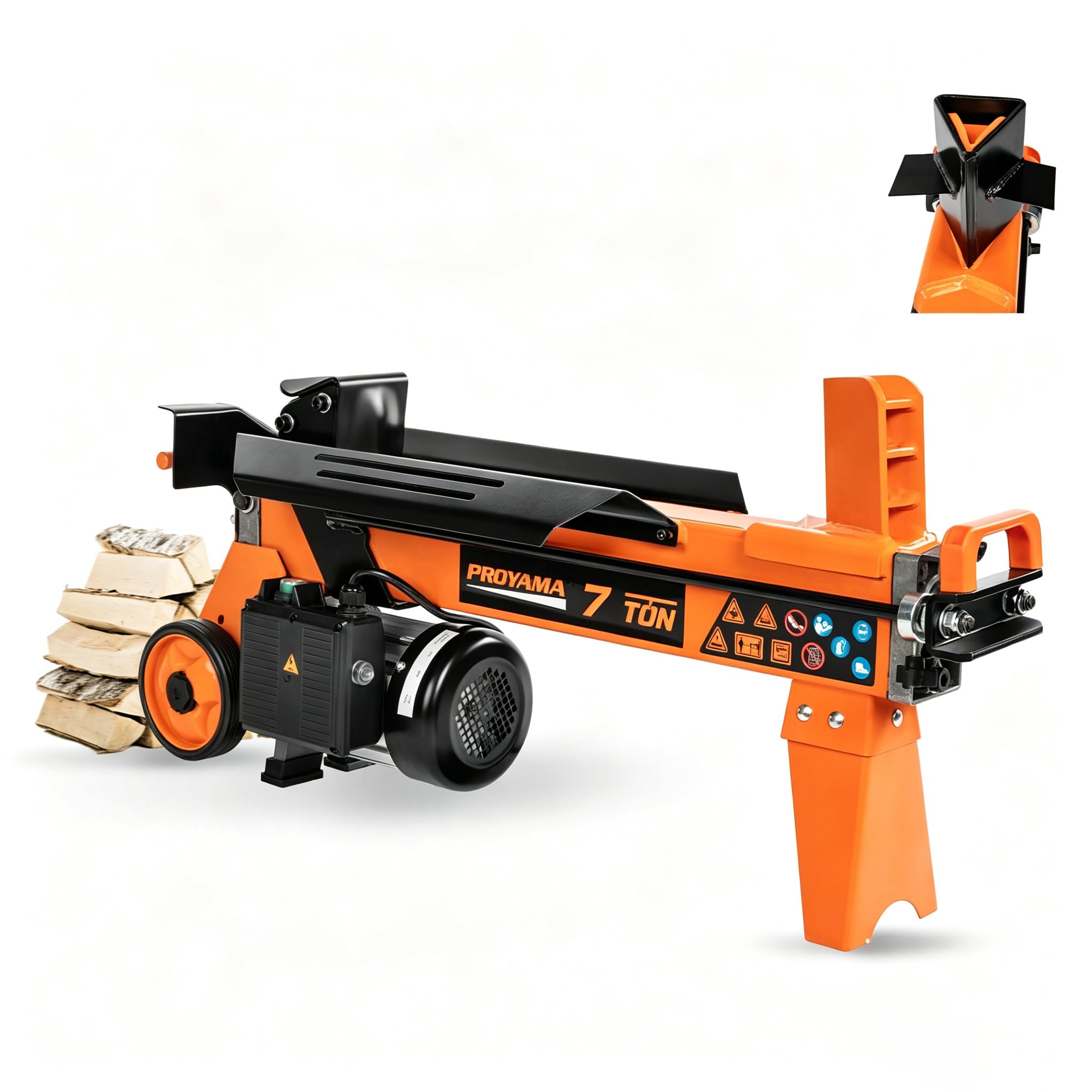
2. PROYAMA 7T Electric Log Splitter, 15A Motor Wood Splitter with Cross Wedge
The 7-ton workhorse that quarters 12-inch logs in a minute.
Owners mention “12 inch logs quartered in a minute,” which matches the fast cycle time you get from a beefier hydraulic system. The cross wedge (a wedge shaped like a plus sign that splits logs into four pieces at once) is the standout feature: it splits the log into four pieces in one pass instead of two, effectively doubling your output without any extra effort from you. And it weighs 110 pounds; the WEN weighs 118.7 pounds, so it is actually easier to move despite delivering more force.
The catch is stability. Several owners note the narrow wheel base makes the unit feel tippy on uneven ground; they recommend planting it on a level spot or adding stabilizer legs. The two-hand safety controls are reassuring — no accidental starts — and the electric motor means zero fumes. As buyers sum it up: “logs I could hardly dent with my axe and this splitter goes through them like butter.”
Why it wins: the cross wedge gives you four pieces per stroke instead of two, and the 7-ton ram slices through oak and maple without the gas engine drama.
Its limit: the narrow chassis can feel tippy on uneven terrain — keep it on level ground or add stabilizers.
Buy it for: the fastest splitting of medium logs — the cross wedge alone saves hundreds of strokes per cord.
Pass if: your woodpile lives on a slope or rocky surface where stability matters more than raw force.
3. YARDMAX YS0650 6.5 Ton Electric Log Splitter
The deceptively powerful little beast for the homeowner who wants one-handed operation.
At 104.7 pounds, the YARDMAX is the lightest 6.5-ton machine in this lineup — nearly 14 pounds lighter than the WEN. That makes a real difference when you are dragging it from the garage to the woodpile. It accepts logs up to 10 inches in diameter and 20.5 inches long, and the 18-second cycle time means you can work at a steady, comfortable clip. One owner summed it up: “split half a cord of wood” in a single afternoon with no back soreness. The 15-amp motor is the same class as the others, but the YARDMAX achieves one-handed operation, which lets you hold a log steady with your free hand.
The main caveat is the short 6-foot power cord. You will almost certainly need a 20- to 30-foot 12 AWG extension cord (a thick outdoor-rated cord) to reach the far side of a typical yard. Some owners also find the hydraulic oil dipstick hard to read, and the machine is slightly slower than a flywheel model — but quieter than any gas splitter. A few owners solved the awkwardness by mounting a cheap foot switch for hands-free retraction.
Best fit: the lightest 6.5-ton machine with a fast cycle, perfect for the homeowner who wants to work at a comfortable pace without a workout.
Know this: the short cord demands a long extension, and one-handed operation is a genuine convenience for steady positioning.
Grab it for: the lightest carry weight (104.7 pounds) and the most comfortable one-handed cycling in the mid-range class.
skip it if: you need a longer built-in cord or you prefer the raw speed of a flywheel model (a type that uses a spinning flywheel to store energy for fast splits).
4. VEVOR Electric Log Splitter, 6.5 Tons Electric Wood Splitter, 1500W 15 Amp Motor
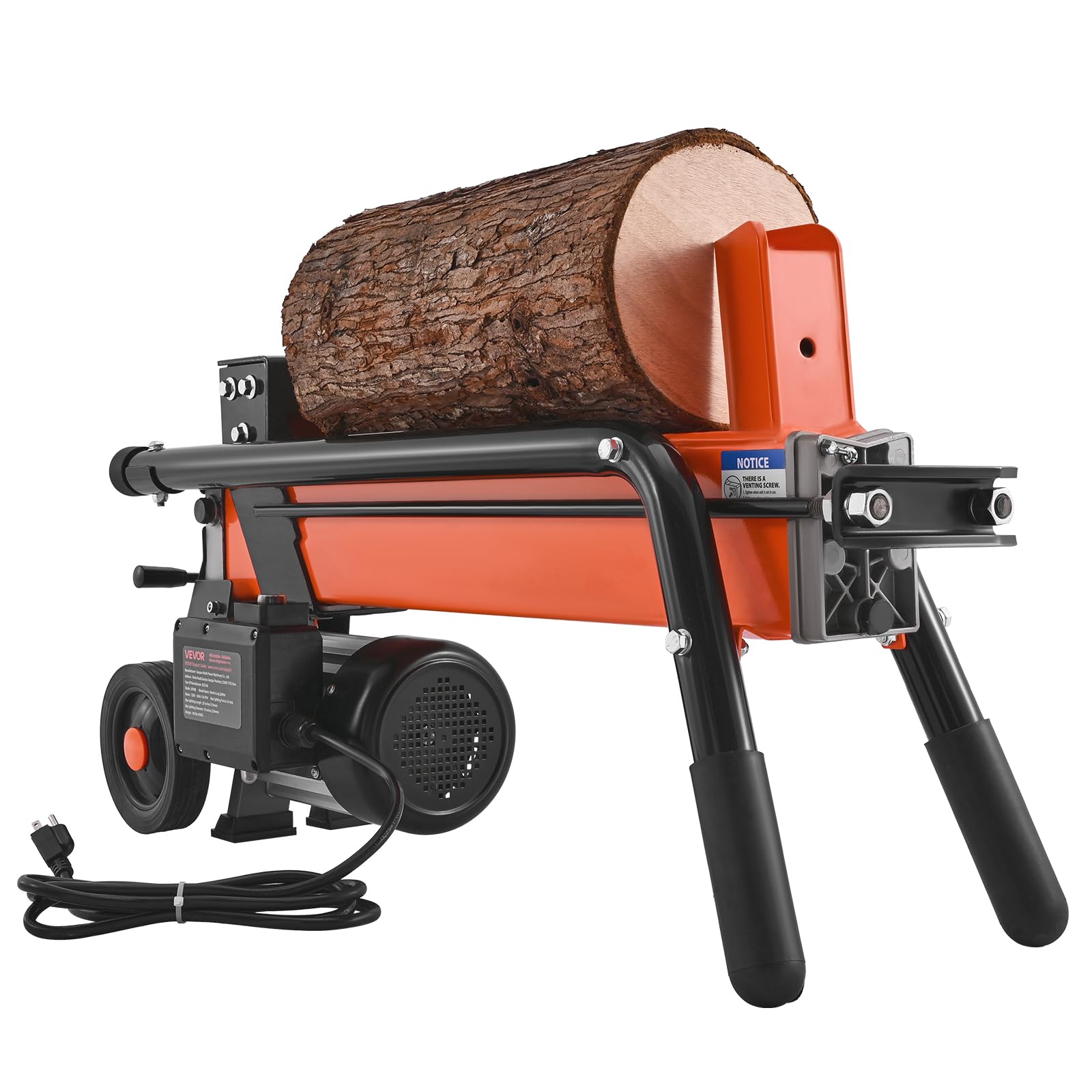
The smallest-footprint entry that is tough enough for its size.
Weighing just 99.2 pounds, the VEVOR is the lightest machine on this list. It uses a 15-amp motor delivering 6.5 tons of splitting force at 3,400 RPM, handling logs up to 9.8 inches in diameter and 20 inches long. The 6-inch rubber wheels are compact for tight storage, and the horizontal beam keeps the center of gravity low. First-time owners are genuinely surprised: “this thing is tough and I really enjoy it — it might be small but it can cut very well for its size.” That makes it a solid budget-friendly entry for someone with a small woodpile or limited garage space.
The honest limit is thermal performance. One owner reported overheating after 20 minutes of use in a partially shaded area, so this machine needs a break between batches if you are pushing it hard in direct sun. The two-hand safety controls are standard, and it is quiet enough for use near the house. For light-to-moderate home duty, it gets the job done.
Where it fits: the tightest budget and the tightest footprint — 99.2 pounds that rolls into a corner and comes out for a few hours at a time.
Watch for: heat buildup on sunny days; plan for 20-minute work blocks with a cool-down break.
Choose it for: the lowest weight (99.2 pounds) and compact storage, perfect for the occasional splitter who works in short sessions.
Pass if: you need to run through a full cord in one afternoon without stopping.
5. PowerSmart Electric Log Splitter 7-Ton, Wood Splitter with 3500 Motor Speed
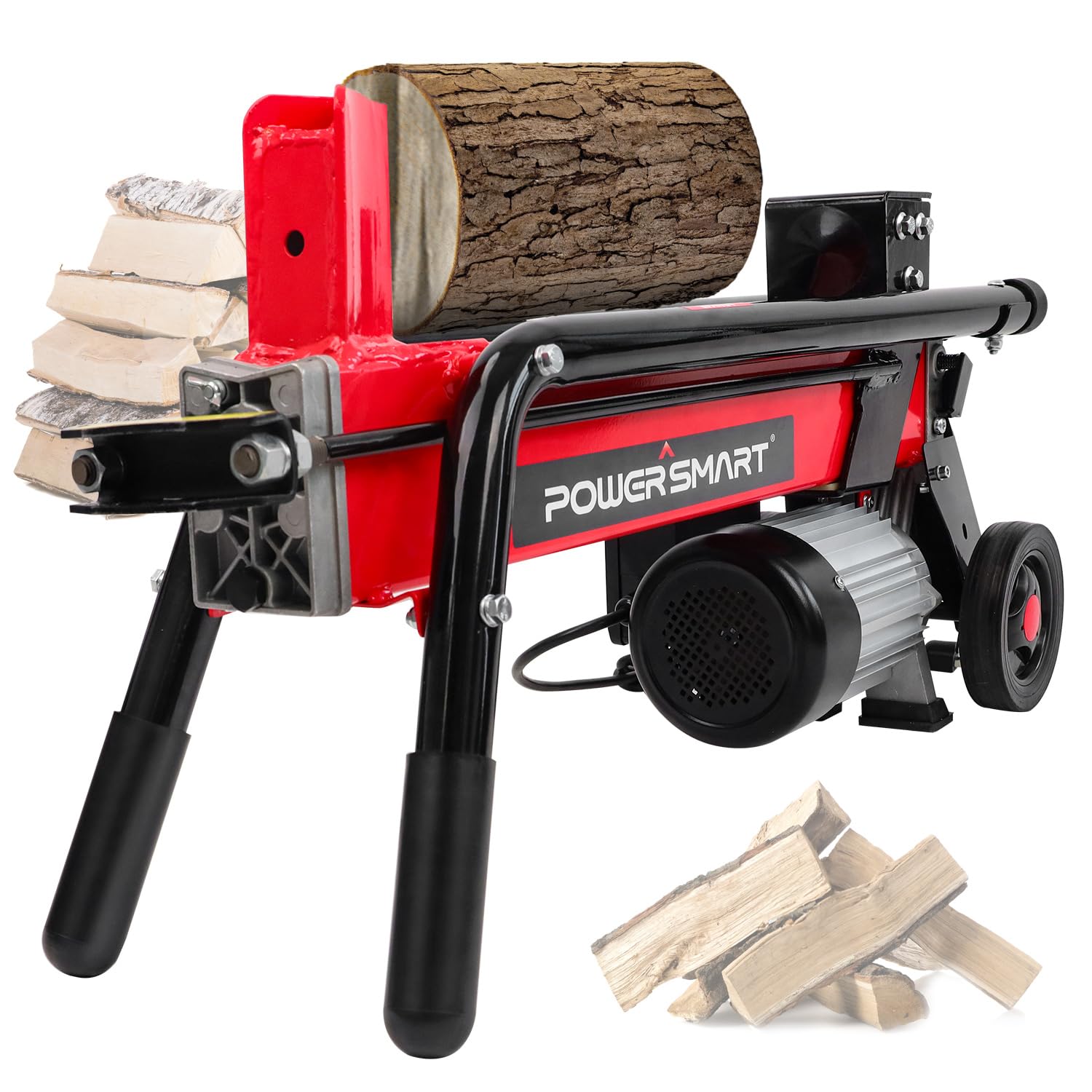
The 7-ton machine designed for the homeowner who only needs light duty.
The PowerSmart hits a 7-ton hydraulic system with a 3,500 RPM motor, which is a higher motor speed than most in this class. It handles logs up to 20 inches long and 10 inches in diameter, and the cycle time is a brisk 20 seconds. The manufacturer explicitly labels it for light-duty or home use, and owners confirm: “great even for bigger pieces — very strong” and “so much easier than an ax and wedge.” The wide rear wheels and compact 37.4 x 10.6 x 18.5-inch frame make it easy to roll over sand, mud, or uneven ground.
The big caveat here is reliability. The 12-ratings count with a “mixed” verdict on reliability is the highest single aspect — a handful of customers note the bleeder screw (a small screw that releases air from the hydraulic system) stripped on delivery or the machine stopped working early. The two-year warranty from PowerSmart is the backstop, but it means this pick is best for someone who uses it sparingly. On the positive side, the quiet, fume-free operation and the 7-ton punch make short work of medium hardwood.
Its strength: genuine 7-ton splitting force in a compact, quiet platform that is easy on the shoulders.
Its risk: reliability is the top-cited aspect — test immediately and lean on the two-year warranty.
Ideal for: the DIY homeowner splitting a few cords per season who wants 7 tons without the cost of a premium unit.
Not for: heavy weekly use — the mixed reliability reports suggest this is a seasonal tool, not a full-time worker.
6. BILT HARD 6.5 Ton Electric Log Splitter with Stand

The beastly performer that runs six hours a day for multiple weekends.
With a 6.5-ton ram, a 15-amp motor, and a 33-inch stand height, the BILT HARD is built for sustained marathons. Splitting performance is the most-cited positive attribute — 64 owners single it out — and the numbers back it up. It handles logs up to 9.8 inches in diameter and 20.5 inches long, and the fast-cycling hydraulic ram resets quickly between strokes. One owner ran it six hours a day for four weekends straight splitting 12- to 14-inch cedar, reporting it only needed a hydraulic oil check and a vent valve adjustment. The 5.7-inch never-flat wheels and included stand make it easy to move and set up anywhere.
The recurring complaint is stability. Several owners note the included stand feels unstable on uneven ground, especially when splitting large or knotty logs that cause the frame to rock. The build quality is otherwise impressive — one owner described it as “heavy built” and noted it paid for itself after splitting a full face cord (a stack 4 feet high and 8 feet long, about 1/3 of a full cord) from each of two trees. Assembly takes about an hour and requires basic tools.
What Owners Love
- Sustained marathon performance — 6 hours a day for 4 weekends without mechanical issues.
- Splits 95% of typical logs, including maple and white oak, with the 6.5-ton ram.
- Included stand improve work to 33 inches, sparing your lower back.
What Could Improve
- The stand feels unstable on uneven ground — some owners brace it with pavers.
- Vent valve (a small valve that lets air in and out of the hydraulic system) needs occasional attention during long sessions.
Reach for it if: you split wood in large batches — this is the endurance machine for weekend-long sessions.
Think twice if: your only work surface is rocky or sloped, where the stand’s stability becomes a liability.
7. PPOLB 7 Ton Electric Wood Splitter, 15Amp Hydraulic Log Splitter
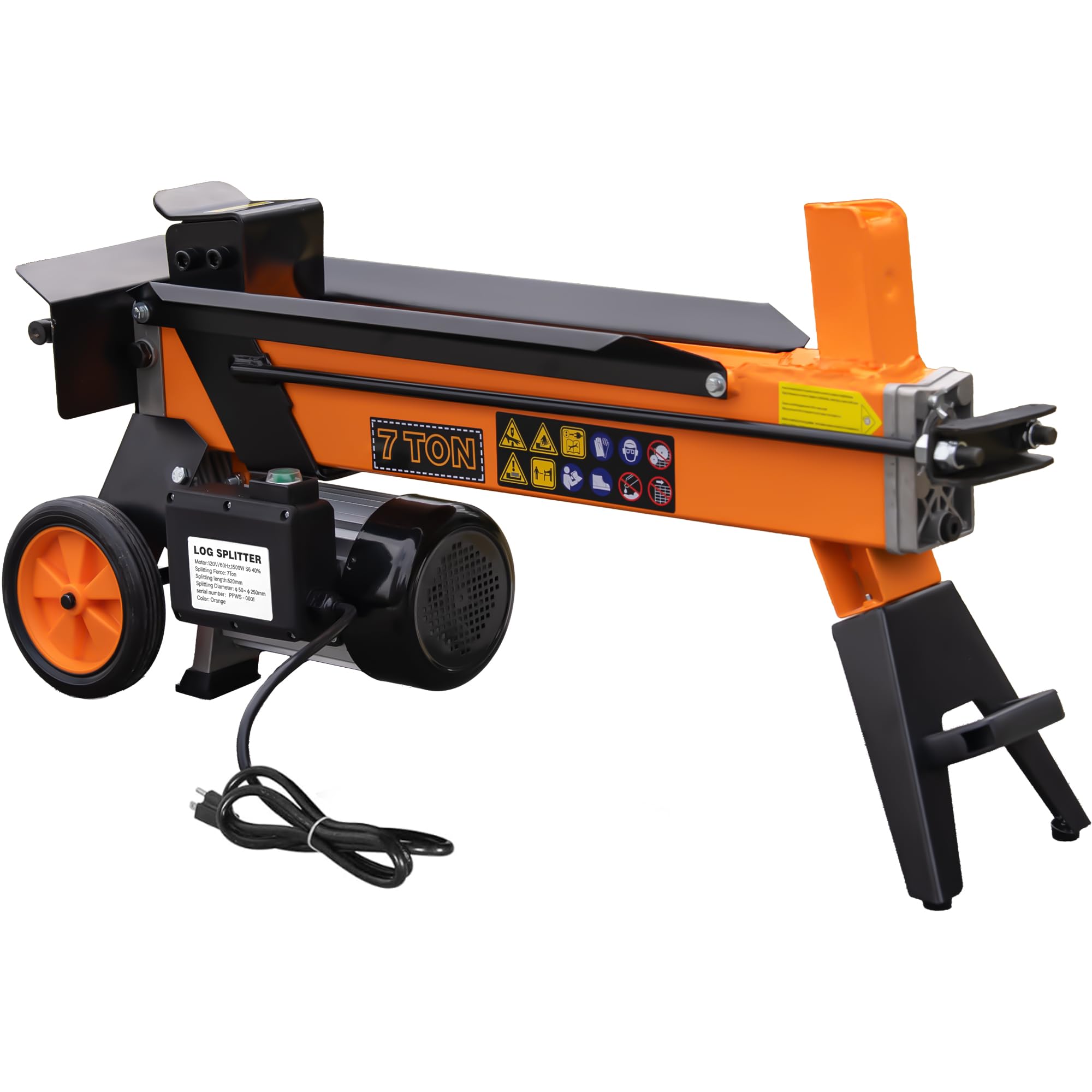
The heavy-duty steel build that takes logs up to 21.2 inches long.
The PPOLB captures attention with a maximum log length of 21.2 inches, the longest in this guide. That extra 0.7 inches over the standard 20.5 inches matters if you cut your firewood on the generous side. The 7-ton ram and 15-amp copper motor deliver steady torque, and the reinforced steel frame provides a solid foundation for tough hardwoods like oak and maple. One 75-year-old female owner said it simply: “it works great, easy to set up and use, beats using an axe.” The two-hand safety control and overload protection are reassuring safety features.
The main practical issue is the wheels. The included wheel clips are difficult to install without a special tool, and some reviewers point out the wheels falling off during transport because of missing external snap rings. A quick trip to the hardware store for standard spring clips solves it permanently. The machine weighs 108 pounds and rolls well on its sturdy transport wheels once properly fitted.
Why it stands out: the longest log capacity (21.2 inches) and a reinforced steel frame that feels built to last.
The fix needed: replace the factory wheel clips with standard spring clips before first use — a 5-minute upgrade for confidence.
Buy it for: the extra log length and heavy-duty frame that handles the biggest rounds in this class.
Pass if: you want low-maintenance assembly — the wheel issue requires a small DIY fix on day one.
8. Scheppach Log Splitter Lying HL460 Firewood Splitter Hydraulic Splitter Electric 230 V

The small-footprint specialist designed for 100 logs per hour.
At 4 tonnes of splitting force, the Scheppach HL460 is the lowest-force machine in this guide — but it is engineered for a different job. It handles logs up to 14.6 inches long and 9.8 inches in diameter, making it ideal for the hobbyist or the homeowner who only processes kindling and small stove wood. The 1,500-watt motor and automatic hydraulic return achieve a remarkable pace: up to 100 splits per hour. The built-in storage table is a thoughtful touch, letting you drop split pieces directly onto a shelf instead of the ground.
This is a European-designed machine, and it shows in both positives and negatives. The build is torsion-resistant (designed to resist twisting under load) and powder-coated, and it needs minimal maintenance. But the available documentation is limited. Multiple shoppers say the assembly instructions are unclear and that the safety cover in the gap area requires trial-and-error setup. The machine is quiet enough for residential areas and can be used indoors (with ventilation) because it produces zero emissions.
Who it fits: the light-duty user who splits small logs for a fireplace insert or patio fire pit — fast, quiet, and compact.
The learning curve: assembly instructions are sparse; you will need mechanical intuition to fit the table and guard correctly.
Choose it for: the fastest small-log throughput (100 logs per hour) and the most compact footprint in the list.
Pass if: you routinely split 20-inch logs for a standard wood stove — this machine maxes out at 14.6 inches.
9. Boss Industrial ES7T20 7 Ton Lightweight Portable High Powered Hydraulic Electric Firewood Log Splitter

The 7-ton veteran that is still running strong after eight years of heavy service.
The Boss Industrial ES7T20 is the time-tested king of this category. It delivers 7 tons of splitting force with a 2-horsepower motor and a 14-second cycle time — one of the fastest in the guide. It handles logs up to 20.5 inches long and 10 inches in diameter, and the built-in side rails keep logs stable during the split. The most impressive statistic comes from the crowd: the top-mentioned aspect is functionality, with over 230 owners praising it, and quality is a close second with 195 mentions. Long-term durability is proven — one owner reports eight years of heavy use with large green logs, the only issue being a bearing starting to make noise.
The machine ships with hydraulic fluid already in the system and requires zero assembly from the start. The 14-second cycle keeps your pace fast, but owners note two minor annoyances: the handle must be removed for upright storage, and the vent cap needs to be manually opened and closed each session. The 7-ton force handles gnarly hardwoods without stalling, and the 3,700 PSI hydraulic pressure gives it headroom for the toughest knots. It weighs 117 pounds; the YARDMAX weighs 104.7 pounds and the WEN weighs 118.7 pounds, and the rubber wheels make it easy to roll.
Why It Is The Crowd Favorite
- Proven eight-year lifespan under heavy use — a durability record among electric splitters.
- 14-second cycle time keeps you moving fast through big piles.
- Ships full of hydraulic fluid and needs zero assembly — plug it in and go.
Small Quirks
- Handle must be removed for upright storage, adding a step to put-away.
- Vent cap requires manual opening/closing each session — easy to forget.
Reach for it if: you want the long-term durability champion with the fastest cycle (14 seconds) and the highest owner satisfaction in this class.
Think twice if: the minor storage quirks — removing the handle and manually venting — feel like too much hassle for your workflow.
Understanding the Specs
Why Splitting Force (Tons) Matters
Think of the ton rating as the crushing power of the hydraulic ram. A 6.5-ton machine will push through most standard hardwoods you find in a typical yard — ash, oak, maple — as long as the log is not oversized. A 7-ton machine gives you a small cushion for denser woods like hickory or for logs with big knots that tend to stall a weaker ram. If your woodpile is mostly softwoods like pine or fir, even a 5-ton machine can handle the job. But for the average homeowner splitting a mixed pile, 6.5 to 7 tons is the balance that handles almost everything without making you wait.
Log Length and Diameter Are Hard Limits
Every splitter has a maximum log length (usually 20 to 21 inches) and a maximum diameter (usually 10 inches). These are physical limits of the beam and ram stroke — you cannot squeeze in a longer log, and a wider log will get stuck before it touches the wedge. Measure your biggest logs before you shop. If you cut your firewood for a standard 24-inch stove, a 20.5-inch capacity gives you room to trim. The diameter matters more for knotty logs: a 10-inch knot can stop a 6.5-ton ram cold if the wedge does not have enough force.
FAQ
How many amps does an electric log splitter need?
Can I use an electric log splitter in the rain or snow?
How long does a typical electric log splitter last?
Is an electric log splitter quieter than a gas one?
Can an electric log splitter handle knotty wood?
Does a 6.5-ton or 7-ton electric splitter use different hydraulic oil?
What size extension cord do I need for an electric log splitter?
How heavy is a typical electric log splitter?
Can I use an electric log splitter for kindling production?
Is assembling an electric log splitter difficult?
Final Thoughts: The Verdict
For most people, the best electric wood splitter winner is the Boss Industrial ES7T20 because it combines a proven eight-year lifespan, a fast 14-second cycle
Related Guides

Mo Maruf
I created WellFizz to bridge the gap between vague wellness advice and actionable solutions. My mission is simple: to decode the research and give you practical tools you can actually use.
Beyond the data, I am a passionate traveler. I believe that stepping away from the screen to explore new environments is essential for mental clarity and physical vitality.