Our readers keep the lights on and my smoothie glass nicely filled. As an Amazon Associate, I earn from qualifying purchases.
Specs are compiled from manufacturer listings and verified buyer reviews and can change over time — please confirm the key details on the product page before buying.
You want rich, syrupy espresso at home without dropping four figures on a machine. The catch is that, in the sub- range, you trade high-end fit and finish for features like real pump pressure, decent steam wands, and — if you choose well — reliable daily operation. This guide cuts through the marketing to spotlight nine machines that deliver real espresso, not just hot water through grounds.
I’m Mohammad Maruf — the founder and writer behind WellFizz. This guide is built by comparing the manufacturers’ published specifications and the patterns across verified customer reviews, so you get each pick’s real strengths and trade-offs instead of marketing spin.
Below, you will find nine machines vetted for pump pressure, temperature control, and milk-steaming ability, each earning a place in the espresso machine under 150 shortlist. Whether you are a weekend latte artist or a weekday double-shot commuter, one of these machines fits your kitchen.
Our Picks at a Glance

How To Choose The Best Espresso Machine Under
At this price, every dollar counts toward a component that either makes or breaks your espresso. You are best served by ignoring brand flash and focusing on the three things that separate a real espresso machine from a glorified drip brewer: the pump, the temperature brain, and the steam wand.
Pump Pressure: More Than a Marketing Number
A 15-bar or 20-bar pump sounds powerful, but note that the ideal extraction pressure inside the basket is around 9 bars. The extra pressure headroom is there to compensate for pressure loss through the machine’s internals. A machine claiming 20 bars usually has a vibratory pump that spikes and drops; the real test is whether the brew pressure stays steady. A PID controller — a small computer chip that regulates water temperature — is far more important for consistency than the pump’s peak rating.
Steam Wand: The Difference Between Foam and Froth
A steam wand with a single hole or a panarello sleeve can make thick, stiff foam, but it is harder to create velvety microfoam for latte art. A wand that swivels 360 degrees makes steaming easier because you can position the pitcher without moving the whole machine. If you drink straight espresso, the wand matters less; if you live for cappuccinos, prioritize a machine with a wand that produces wet, silky steam, not dry, noisy bursts.
Water Tank Size and Cleaning
A removable water tank simplifies refilling and cleaning. The machines here range from a 22 oz tank on the beanglass pod machine to a generous 60 oz on the larger SHARDOR model. A bigger tank means fewer refills during a party, but a tank that is sealed or fixed in place collects mineral scale faster and is harder to descale. Check whether the drip tray and the used-pod bin slide out, because daily cleaning is what keeps your espresso tasting fresh.
Quick Comparison
| Model | Best For | Pump Pressure | Water Tank | Weight | Amazon |
|---|---|---|---|---|---|
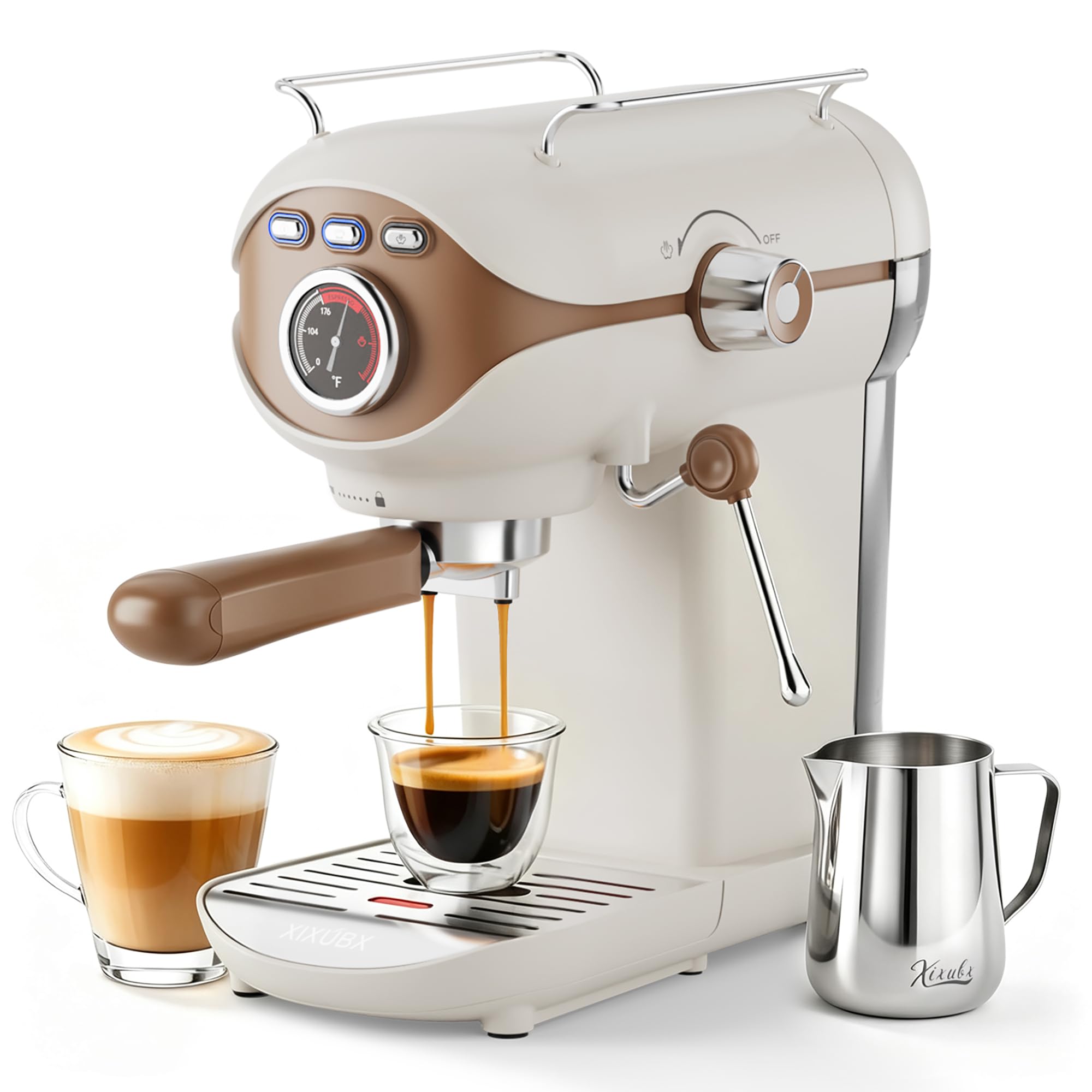
| XIXUBX Compact (White)★ Best Overall | First‑machine buyers wanting quality and quiet operation | 20 bar | 34 oz | 7 lb | Amazon |
| SHARDOR 60 ozTop Performer | Households that make multiple milk‑based drinks daily | 20 bar | 60 oz | — | Amazon |
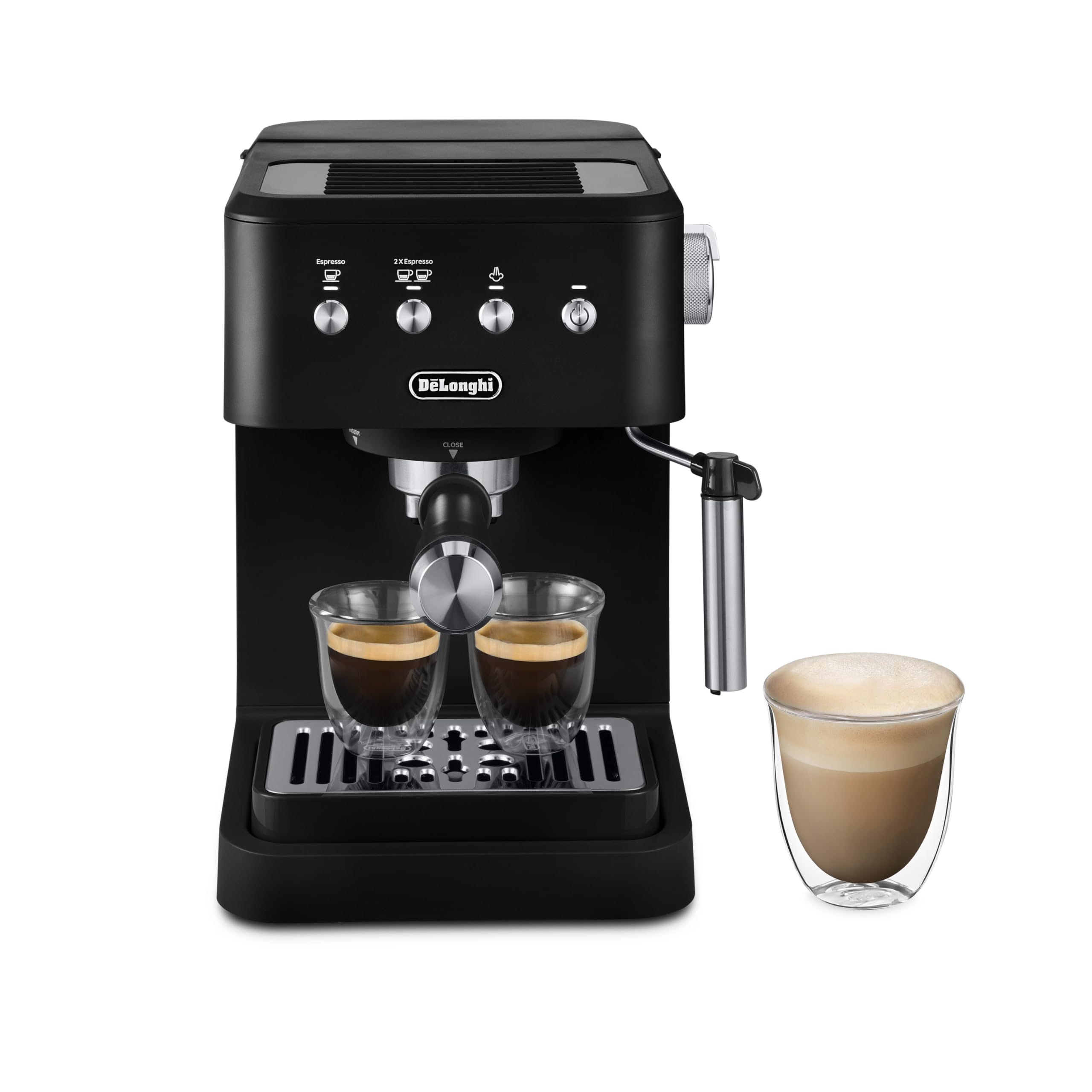
| De’Longhi ClassicPremium Pick | Traditionalists who want a proven brand and hands‑on steam wand | 9 bar | 57.48 oz | 9 lb | Amazon |
| beanglass Pod Machine | Capsule‑lovers who want small footprint and fast cleanup | 20 bar | 22 oz | 5.7 lb | Amazon |
| Chefman CraftBrew | Users who want programmable shot volume and a sleek stainless look | 15 bar | 1.5 L (50.7 oz) | 7.9 lb | Amazon |
| XIXUBX Stainless (Silver) | Budding home baristas who need a pressure gauge to dial in shots | 20 bar | 42 oz | 8.2 lb | Amazon |
| SHARDOR Touchscreen | Tech‑oriented users who want a touchscreen and NTC temp control | 20 bar | 45 oz | 8.5 lb | Amazon |
| AMZCHEF Touch | Those wanting an Italian pump and rapid 30‑second heat‑up | 20 bar (Italian pump) | 41 oz | 9 lb | Amazon |
| Nespresso Vertuo Pop+ | Pod‑system devotees who prize convenience and variety | — | 25.4 oz | 7.9 lb | Amazon |
In‑Depth Reviews
1. XIXUBX Compact Espresso Maker with Milk Frother (White)
The compact machine that packs a PID brain and a quiet vertical build for first-time baristas.
Owning a PID temperature controller at this price is the headline story. While cheaper machines let water temperature swing, producing burnt or sour shots, the PID here stabilizes the brewing temperature so every pull tastes balanced. The 20-bar pump pushes through the grounds with a gentle pre-infusion that soaks the puck before full pressure hits, which helps beginners get golden crema even before they master tamping technique.
The steam wand is not coffee-shop caliber, as owners note, but it whips up dense enough microfoam for at-home lattes and cappuccinos. The 22-to-30-second single-button brewing keeps busy mornings efficient, and the noise-reduction design makes it one of the quieter machines in this list. At 7 pounds and with a 34 oz tank, it is light enough to move to an RV or office desk without trouble.
What wins people over is the build quality — owners consistently praise the solid feel and the fact that it “saved me so much money” by eliminating daily café runs. The trade-off is the compact cup clearance: you have to slide the drip tray out to fit a taller mug, and the 51mm portafilter limits you to 1-2 oz per shot. But for a first espresso machine that does not force you to upgrade in six months, this XIXUBX sets the standard.
Daily‑driver depth: Quality is the most-praised aspect among owners — the consensus is that this machine punches above its price bracket in construction and shot consistency.
Honest fit note: You need to purge a little water through the steam wand before using it, and the cup space is shallow, but neither is a dealbreaker for the shot quality you get in return.
Reach for this if: you want the best blend of temperature control, noise level, and value in a beginner-friendly package, and you plan to use it daily.
Think twice if: you need to brew large volumes fast or absolutely require café-level steam power for latte art.
2. SHARDOR 60 oz Espresso Machine with Temp Display
The high‑capacity option that heats up in about 30 seconds and keeps a whole household caffeinated.
This SHARDOR is the machine you grab when you are making back-to-back lattes and cappuccinos for a family or a crowd of guests. Its 60 oz water reservoir dwarfs most competitors, letting you pull shot after shot without refilling. The 20-bar pump and 1350W thermoblock heating system combine to get you from cold start to brewing readiness in about half a minute — a speed that matters when you are groggy on a weekday morning.
An integrated cup-warming tray on top preheats your mugs so the espresso stays at the ideal temperature from first sip to last, a small luxury that improves the drinking experience noticeably. The steam wand is adjustable and produces smooth milk foam, and the LCD screen shows you the temperature (one owner measured a steady 198°F) and a shot timer, so you can dial in your recipe precisely.
Quality and ease of use are the top mentions from owners, who call it “the next best option” to expensive Italian makers. The minor caveat is that some find the coffee could be a few degrees hotter, though a quick microwave stir solves that. At 4.5 stars across a growing base of reviews, this is a strong premium-tier pick for households that drink a lot of milk-based espresso.
Volume‑pour credentials: The 60 oz tank is the largest on this list, and the rapid heat-up means you are never waiting between shots during a brunch session.
One real limitation: a small number of owners note that the coffee lands just a bit below scalding — the warming tray helps offset this, and it is a minor fix rather than a flaw.
Best for: multi-drink households and anyone who values a huge water tank, fast heat-up, and a clear LCD readout for dialing in their grind.
skip it if: you only make one espresso a day and prefer a smaller footprint on the counter.
3. De’Longhi Classic Matte Black Espresso Machine
The brand leader delivering a true 9‑bar extraction and an old‑school steam wand at a wallet‑friendly price.
De’Longhi is the number-one espresso machine maker worldwide, and this Classic model shows why. Rather than chasing a high pump rating, it uses a consistent 9-bar extraction pressure that matches professional standards. The Thermoblock heating technology brings water to the perfect temperature fast and holds it steady, so you get a balanced shot with noticeable crema every time.
The steam wand is a real manual wand, not a plastic panarello sleeve, which means you can actually learn to stretch milk into silky microfoam. Preset single and double espresso buttons take the guesswork out of dosing, and the 57.48 oz water tank handles several rounds of drinks before needing a refill. Owners describe it as “nearly perfect” for the price and praise the 1/2 inch of crema it produces with decent beans.
At 9 pounds and with a compact footprint, it is solid on the counter without dominating it. The catch that a few buyers mention is that the water temperature out of the group head can run lower than the ideal 195–205°F range, which may affect extraction clarity. Even so, coffee quality is the most-praised feature by a large margin, and the brand’s helpful YouTube tutorials make first-time setup painless.
What wins people over
- Authentic 9-bar extraction delivers real espresso crema
- Manual steam wand produces silky, barista-style microfoam
- Large 57.48 oz tank reduces refill frequency
- De’Longhi’s YouTube channel and warranty support are well-regarded
The honest trade-off
- Brew water temperature measured by some owners at 164–178°F, below the specialty-coffee range
- No PID temperature controller means heat drifts during multiple shots
Grab it for: the brand reputation, a real steam wand for learning latte art, and the consistent 9-bar extraction that makes traditional espresso purists happy.
Hold off if: precise temperature control is non-negotiable for your light-roast beans or if you need a faster heat-up than Thermoblock provides.
4. XIXUBX Stainless Espresso Machine with Pressure Gauge
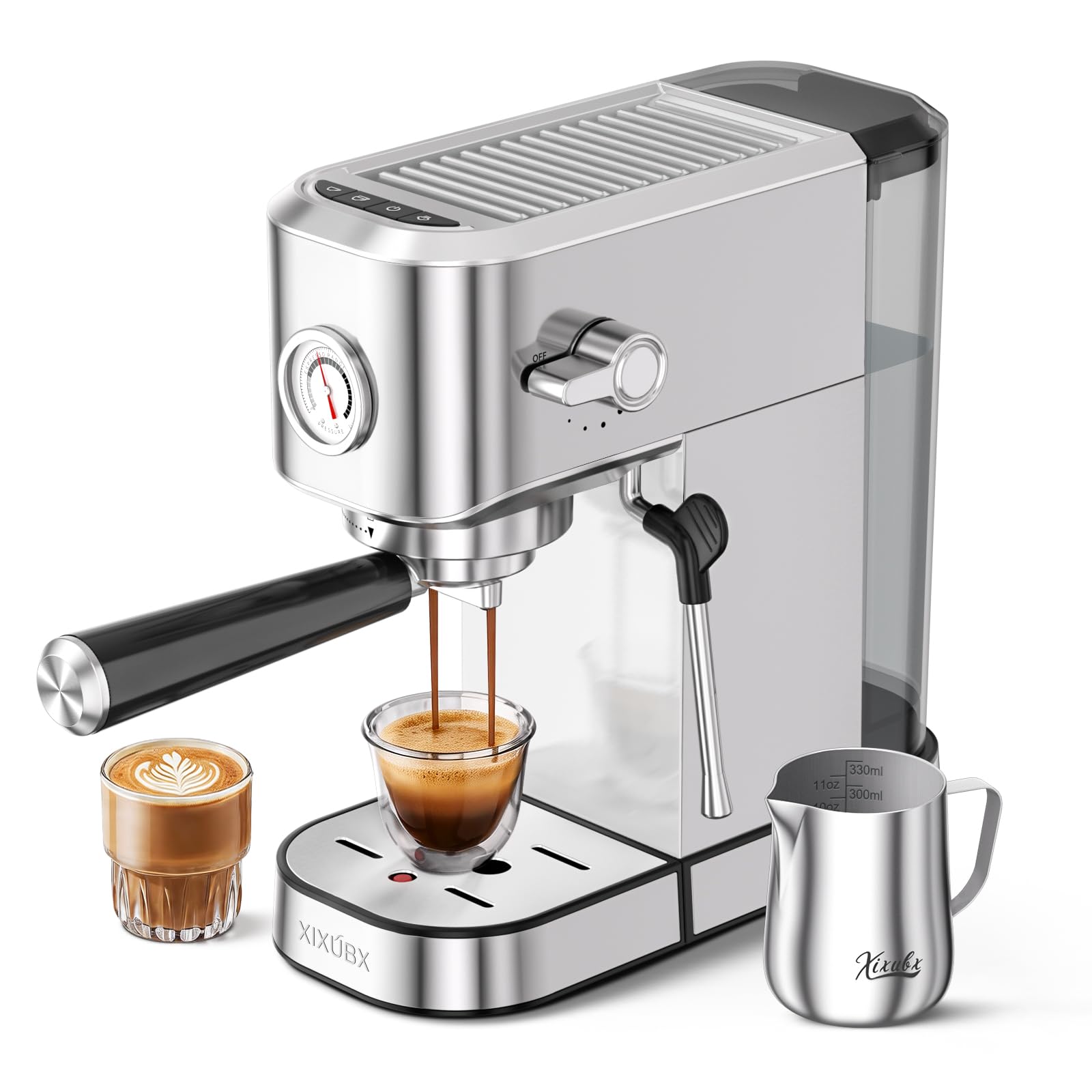
The stainless‑steel machine that puts a pressure gauge on the front so you can chase the perfect 9‑bar pull.
This XIXUBX variant shares the same 20-bar pump family as the compact white version, but it adds two things that home baristas love: a visible pressure gauge and a 42 oz removable water tank. The gauge lets you watch the needle climb and adjust your grind or tamp in real time to land near the ideal 9-bar extraction zone — a feedback loop that accelerates your learning curve fast.
The 360-degree rotating steam wand is detachable for easy cleaning, and the included stainless steel milk frothing pitcher means you are ready for latte art from the start. Owners say the espresso quality “rivals 4x costlier machines” and that the steam wand is superior to what they expected at this price. The fast heating system keeps brew and steam temperatures stable across consecutive drinks, so you can pull two doubles without a cooling wait.
The main honest note is that while the portafilter is stainless steel, the piece underneath it is plastic — a detail that matters if you are avoiding plastic in high-heat areas. But buyers overwhelmingly keep it and call the espresso “amazing” and “a bargain,” especially given the 1-year warranty and the helpful video tutorials from the XIXUBX store.
Why it stands out
- Built-in pressure gauge helps beginners learn proper extraction technique
- 42 oz tank brews 10+ cups per fill, ideal for gatherings
- Detachable steam wand simplifies cleaning and maintenance
- Included milk frothing pitcher saves an extra purchase
One thing to know
- The internal structure below the portafilter is plastic, so if you are strict about metal-only contact with hot water, you may want to check the build photos
Choose this for: the educational pressure gauge that helps you dial in better shots, and the large tank that keeps you brewing through a weekend brunch.
Pass on it if: an all-metal brew path is a requirement for you, or if you need the smallest possible footprint (the white XIXUBX is narrower).
5. SHARDOR 20 Bar Espresso Machine with Touchscreen
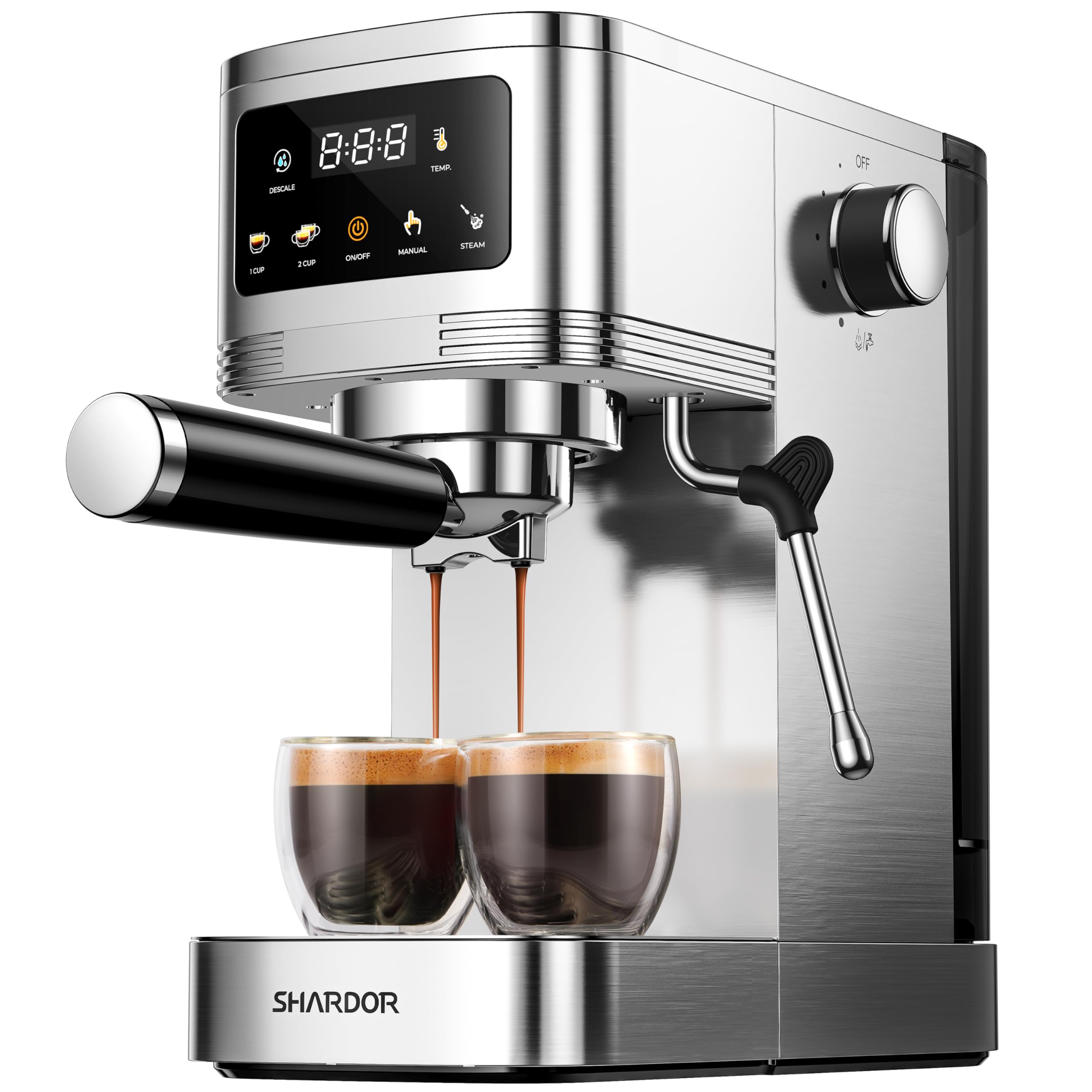
The touchscreen‑driven machine that gives you NTC temperature precision and a 45‑oz tank in a brushed-metal shell.
SHARDOR is building a reputation for packing digital features into affordable packages, and this model is the clearest example. Instead of basic switches, you get an LED touchscreen with options for single, double, or manual shots, a one-touch descaling cycle, and an auto shut-off after 15 minutes of idle time. The NTC precision temperature control (negative temperature coefficient thermistor) lets you pick from three extraction temperatures, so you can tune the heat to match your roast level — a feature usually reserved for machines costing twice as much.
The 20-bar pump and 1350W motor produce thick, lasting crema — buyers report the foam stays intact for 5 to 7 minutes on a well-pulled shot. The steam wand creates dense, whipped-cream-like foam that works beautifully for cappuccinos. Setup takes about 5 minutes and the machine heats up in under a minute, putting café-quality coffee in your cup fast.
What the review pages sum up is that this machine “can make a better cappuccino than most coffee shops” when paired with fresh beans. The honest caveat is that while the water basin and drip tray slide out easily, the plastic smell from the milk steamer can linger through the first few uses. Running a few steam-and-dump cycles before your first drink solves it, but it is worth knowing going in.
Digital‑age advantage: Three NTC temperature settings and a touchscreen make this the most customizable sub- machine for the tech-minded coffee lover.
The fine print: Some owners note a plastic odor from the steam system during initial use, but it dissipates after a few cleaning cycles.
Go with this if: you want touchscreen control, adjustable brew temperature, and a compact stainless steel look that fits a modern kitchen aesthetic.
Avoid it if: you are sensitive to initial plastic smells from new appliances or prefer the simplicity of mechanical buttons over a digital interface.
6. AMZCHEF 20 Bar Compact Espresso Machine with Touch Screen
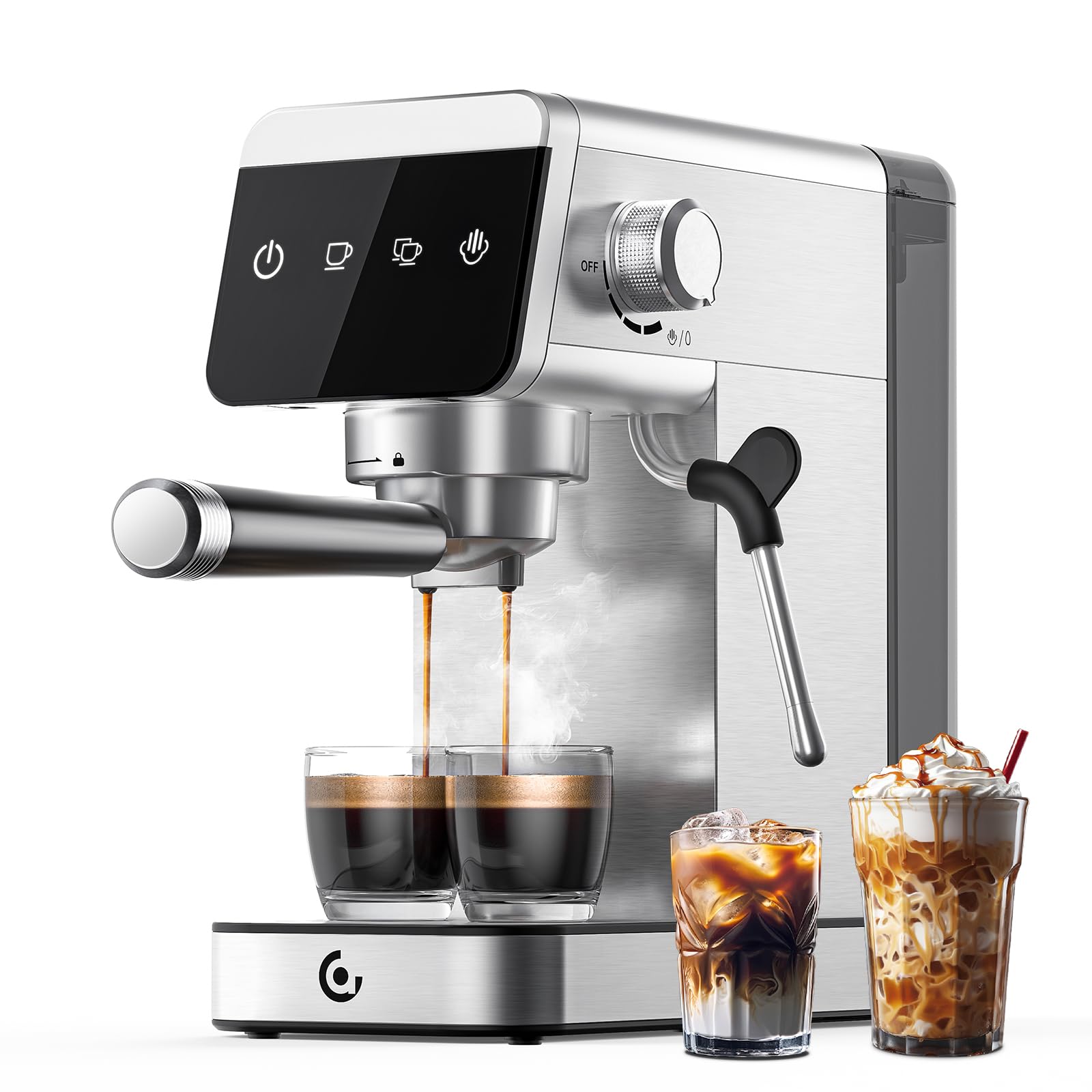
The Italian‑pumped compact that heats up in 30–40 seconds and fits small counters without sacrificing tank size.
AMZCHEF uses a 20-bar high-pressure pump made in Italy, which is a genuine differentiator in this price tier. An Italian pump usually delivers more consistent pressure over time compared to generic vibratory pumps. Combined with a 1350W fast preheating system that reaches brewing temperature in 30 to 40 seconds, this machine is one of the quickest from cold start to first shot on the list.
The LED touch screen lets you select single, double, or custom extraction (hold the icon for 5 seconds), and the 41 oz removable water tank is large enough for a small gathering. The 8mm one-piece steam wand is designed for easy cleaning and delivers dry, steamy performance that creates velvety microfoam. Owners say the espresso “produces rich, full-bodied coffee with thick crema” and that the machine replaced a De’Longhi — and they prefer the AMZCHEF.
Espresso quality is the most-praised aspect, followed closely by ease of use. A small number of owners note that attaching the portafilter requires a strong twist and that the machine can shake a bit during extraction, so you will want to hold the body steady. But the consensus is clear: for people moving from a dead pod machine or a failed premium brand, this compact delivers surprising value.
Pump pedigree: The Italian-made 20-bar pump and 30-40 second heat-up make this a standout for people who value build quality and speed.
Reality check: The portafilter attachment feels tight — it takes some muscle to lock in, and the machine may vibrate if you don’t brace it.
Pick it for: the genuine Italian pump, the fast heat-up, and the intuitive touchscreen that makes dialing in shots straightforward.
Pass on it if: you have limited hand strength for locking the portafilter or want a heavier, less vibration-prone body.
7. Nespresso Vertuo Pop+ with Milk Frother
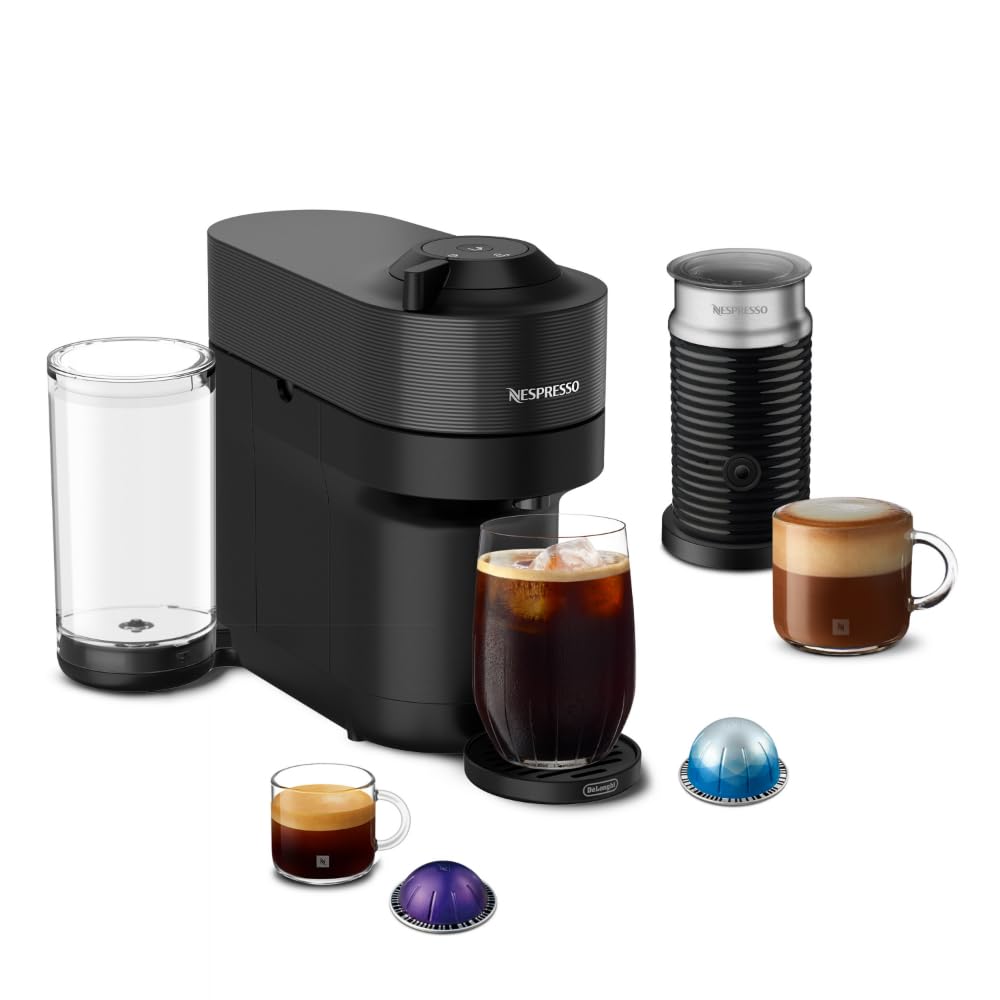
The Nespresso pod‑system that delivers hassle‑free espresso and coffee with a separate milk frother in the bundle.
If you value speed and simplicity above all else, the Vertuo Pop+ is the anti-burnt-shot solution. Instead of grinding, tamping, and timing, you drop in a Vertuo capsule, press a button, and the machine reads the barcode on the capsule to adjust brewing parameters automatically. The result is a consistent cup with the thick, foamy crema that Nespresso is known for, whether you pull an espresso or a 7 oz coffee.
The included Aeroccino3 milk frother whisks hot or cold foam in seconds, which means you can make lattes and cappuccinos without learning steam-wand technique. The machine is compact at 8.6 inches wide and weighs 7.9 pounds, so it slides into tight kitchen corners easily. Owners say the coffee is “more flavorful than K-cups” and that the bundle price beats buying the machine and frother separately from Nespresso’s website.
The trade-off is the locked-in capsule cost (roughly a dollar per pod) and the fact that the machine is on the louder side, as some owners mention. The capsule dispenser can occasionally jam, and the brewing options top out at 7 oz unless you buy the larger Vertuo capsules. But for the person who wants espresso without the ritual, this bundle is the easiest path in the price bracket.
Effort factor: Drop a pod, press a button, and walk away — no learning curve, no scales, no tamping, just crema-topped coffee in under a minute.
The subscription reality: Pods cost roughly a dollar each and are proprietary to Nespresso’s Vertuo line, which limits flexibility and long-term cost savings compared to ground-coffee machines.
Great for: anyone who wants a no-mess, no-learning-curve espresso experience and values the variety of Nespresso’s 30+ capsule blends.
Not for: budget-conscious buyers who want to use their own beans, or people sensitive to machine noise during brewing.
8. Chefman CraftBrew Digital Espresso Maker

The mid‑priced stainless‑steel machine with a programmable timer and a 1.5‑liter tank for batch brewing.
Chefman’s CraftBrew sits at the value end of the spectrum with a 15-bar pump and a 1.5-liter (50.7 oz) removable water tank, which is generous for the price. The touch control panel includes a built-in timer that lets you adjust shot volume for a lungo (more water, milder) or a ristretto (concentrated, bold). The machine’s descaling alert fires after 500 brewing cycles, so you are reminded to clean it before scale buildup affects taste.
Brew quality divides owners. Some call it “professional quality” and say it beats most coffee shops. But a handful point out that the mesh filter can produce fake crema (a thin, bubbly foam that looks like real crema but lacks its texture). The machine also tends to overheat during back-to-back pulls, so you may need to wait between shots. The steam wand works well for frothing once you get the hang of it, but you must disassemble it thoroughly to clean it properly.
The stainless steel exterior is sleek and easy to wipe down, and at 7.9 pounds with a 10.8-inch depth, it is compact enough for a dorm or a small apartment counter. Performance is the most-praised aspect, followed by value for money. The main honest accommodation is that this is an entry-level machine that rewards patience — if you learn its quirks, it can pay for itself within a few months of skipped café visits.
Why it works
- Programmable shot volume via built-in timer for customized brew strength
- Large 1.5 L removable tank is great for multiple drinks without refilling
- Descaling alert at 500 cycles helps maintain performance
- Stainless steel body cleans easily and looks more expensive than it is
The honest trade-offs
- Some owners mention the machine runs hot during successive pulls, slowing down brewing
- The frother must be disassembled for thorough cleaning, which is an extra step each day
Best for: budget-conscious beginners who want programmable shot sizes and a stainless look without spending over.
Reconsider if: you make multiple milk drinks in a row (the heat buildup can slow you down) or want a simpler, single-piece frother.
9. beanglass Espresso Pod Machine for NS Original Pods

The lightweight capsule machine that makes a competitive alternative to a Nespresso Original, with a much smaller price tag.
It uses a 20-bar pump to extract from NS Original pods and offers two programmable cup sizes — espresso (about 35 ml) and lungo (about 65 ml). The drip tray adjusts for cup height, and the energy-saving mode shuts the machine off after 30 minutes of idle time.
At 5.7 pounds and 4.5 inches wide, it is the lightest and slimmest machine in this roundup, so it is genuinely easy to tuck into a crowded counter or pack for a move. The 22 oz water tank and the used-pod bin that holds 9 to 11 capsules keep cleaning minimal. Buyers who are happy with it call it “easy to use, heats up quickly, and makes great espresso” at an excellent value for the price.
Durability is the honest trade-off. A meaningful number of customers note the machine failing after 5 months with symptoms like loud noise, no water output, or weak coffee overflow. The startup also requires a two-button process (warm-up then brew), which is less smooth than a Nespresso’s one-button approach. This machine is best viewed as a low-cost pod option for someone who is willing to take a chance on longevity in exchange for the lowest upfront cost in the pod category.
Space‑saving angle: At 13 inches deep by 4.5 inches wide, it is the slimmest machine here — it hardly takes up more counter space than a cereal bowl.
Longevity note: Reports of pump failure and weak output after a few months suggest this is a budget stopgap rather than a five-year partner.
Consider it for: the lowest entry price into NS Original pod brewing, with a compact footprint and two cup-size settings.
Look elsewhere if: you need reliable daily performance over multiple years or prefer a one-button brew cycle like the Nespresso’s.
Understanding the Specs
Bar Pressure — What It Really Means
The “bar” number on a pump refers to the pressure it can generate, measured in atmospheres. Espresso extraction ideally happens at around 9 bars inside the basket — any pressure above that is headroom the machine uses to overcome internal resistance. A 15-bar or 20-bar pump is standard for home machines; it does not automatically make better espresso than a well-tuned 9-bar system, but it gives you more forgiveness with inconsistent grinds. The real key is whether the pressure stays stable throughout the extraction, which is where a consistent pump and a good over-pressure valve matter more than the peak number.
PID Temperature Control — The Shot-Quality Secret
PID stands for proportional-integral-derivative, which is a type of electronic controller that holds water temperature within a tight range (often ±1°F). Without PID, cheaper machines let the temperature swing 10°F or more during a shot, which extracts bitter or sour compounds unevenly. A PID-controlled machine gives you repeatable results shot after shot, which is why espresso enthusiasts consider it the single most effective upgrade over a basic thermostat.
FAQ
Can I use pre-ground coffee in a pod machine like the beanglass or Nespresso?
What is the difference between a pressurized and a non‑pressurized portafilter basket?
How often should I descale an espresso machine?
Is a 15-bar pump enough for real espresso, or do I need 20 bars?
Can I make a single shot of espresso with these machines?
Which machine is easiest to clean daily?
Does a machine with a steam wand make better cappuccinos than one with a separate frother?
How much counter space do I need for these machines?
Final Thoughts: The Verdict
For the majority of shoppers, the espresso machine under 150 winner is the XIXUBX Compact because it delivers PID temperature control, a 20-bar pump, and quiet operation in a package that costs less than a month of daily café visits. If you want a huge water tank and a built-in pressure gauge to practice dialing in, grab the XIXUBX Stainless model. And for the pure convenience of pod brewing with a separate milk frother, the Nespresso Vertuo Pop+ bundle is the one to reach for. Each machine on this list earns its spot by doing one thing well at its price — pick the one whose strength matches your morning routine.
How We Picked
We do not accept paid placement. Every pick is matched to a real buyer and a real use-case; we do not hands-on test units.
Sources & Methodology
Specifications: manufacturer listings and product documentation. Review insights: verified customer reviews, as of July 2026. Pricing: not shown on this page (it changes often); check the current price via the retailer link.
As an Amazon Associate, WellFizz earns from qualifying purchases. This does not affect which products we feature.
Related Guides

Mo Maruf
I created WellFizz to bridge the gap between vague wellness advice and actionable solutions. My mission is simple: to decode the research and give you practical tools you can actually use.
Beyond the data, I am a passionate traveler. I believe that stepping away from the screen to explore new environments is essential for mental clarity and physical vitality.