Our readers keep the lights on and my smoothie glass nicely filled. As an Amazon Associate, I earn from qualifying purchases.
Specs are compiled from manufacturer listings and verified buyer reviews and can change over time — please confirm the key details on the product page before buying.
You want a black seed oil that is genuinely from Ethiopia, but shady labels and low potency make it a gamble. The real difference depends on two things: the active ingredient level and the bottle size that fits your routine. Here are the two standout contenders, compared head-to-head.
I’m Mohammad Maruf — the founder and writer behind WellFizz. This guide is built by comparing the manufacturers’ published specifications and the patterns across verified customer reviews, so you get each pick’s real strengths and trade-offs instead of marketing spin.
After looking at the potency, the bottle sizes, and what owners actually say, one Ethiopian black seed oil rises to the top while the other covers a different need — and we break down which is which. best ethiopian black seed oil is a shortlist that boils down to a pure high-thymoquinone oil versus a smaller versatile bottle, and knowing the difference saves you money.
Quick Picks
- Ethiopian Black Seed Oil – 3.43% Thymoquinone — Best Overall
- Herbal Organic Works Ethiopian Black Seed Oil — Best Entry Point
How To Choose The Best Ethiopian Black Seed Oil
Picking the right bottle means looking past the packaging and focusing on what is actually inside the bottle. The two most important factors are the thymoquinone content (the active compound that gives black seed oil its punch) and the freshness preservation from the glass bottle. You also need to decide if you want a large bottle for daily, long-term use or a smaller one to test the waters. A cold-pressed, unrefined oil retains the most natural characteristics, which is what serious buyers look for.
Thymoquinone Content — The Potency Number
This is the main active ingredient in black cumin seed oil. A higher percentage, like 3.43% thymoquinone, means a stronger oil. Buyers who want noticeable results often look for a verified thymoquinone level, as it indicates the oil has not been diluted or processed to death. A lower or unlisted percentage can mean a weaker product.
Glass Bottles vs. Plastic
A premium amber glass bottle protects the oil from light exposure, which can degrade the fatty acids and active components over time. Plastic bottles can sometimes leach chemicals into the oil, especially with something as potent as black seed oil. Glass is the standard for any high-quality, unrefined oil you plan to keep for a while.
Bottle Size — Daily Routine vs. Trial
A 16 oz bottle is a serious commitment and a great value for anyone who takes a teaspoon daily. A 4 oz bottle is perfect for first-timers who want to see if they can handle the taste or for people who use it sparingly for hair and skin. The size directly affects how long the oil stays fresh once opened.
Quick Comparison
In‑Depth Reviews
1. Ethiopian Black Seed Oil – 3.43% Thymoquinone Cold-Pressed Black Cumin 16 oz (Sweet Sunnah)

The heavy hitter for anyone serious about getting the most active ingredients in every spoonful.
This is the one that comes with a verified potency number: 3.43% thymoquinone — the active compound that makes black seed oil so sought after. It is cold-pressed and unrefined, meaning that chemical content stays intact. The bottle is a huge 16 oz (versus the 4 oz alternative), which makes it the clear value choice for daily, long-term users. It is housed in an eco-friendly amber glass bottle to protect the oil from light degradation, avoiding the plastic leaching that cheaper oils sometimes suffer.
The taste is undeniably strong — buyers report it is “peppery-spicy” and “overwhelming” taken straight. One owner shared a routine of taking a single teaspoon daily, diluted in the mouth, and found it helped with mouth germs and sleep. Another regular noted it helped loosen phlegm. The recurring wisdom from owners is to mix it into a small smoothie or eat something before taking it. This is not a casual supplement; it is for people who have already decided they want the full potency and are ready to dose accordingly, which is why the owner consensus calls it “the real deal.”
Compared to the smaller 4 oz bottle, this 16 oz bottle offers a massive size advantage — 16 oz versus 4 oz — making it the smarter buy per ounce for anyone who knows they will use it daily. The trade-off is that you are committing to a large volume of a very strong oil, so it is less of an entry point.
The Power Play
- Verified 3.43% thymoquinone
- 16 oz bottle is 16 oz versus the 4 oz alternative, offering the best value for daily users
- Cold-pressed and unrefined, preserving the natural fatty acids and antioxidants
- Amber glass bottle, not plastic, which keeps the oil fresh longer
The Taste Toll
- Extremely strong, spicy taste that most owners find overwhelming if taken straight
- Large bottle size may be intimidating for a first-time user unsure about the oil
Who this is for: Anyone who knows the value of a high-thymoquinone oil and is ready to take a teaspoon daily — the potency and 16 oz size make it the better long-term buy.
Think twice if: You want to sample the product first or have a very low tolerance for strong, peppery flavors — the smaller alternative is gentler to start with.
2. Herbal Organic Works Ethiopian Black Seed Oil 4oz – Cold Pressed Nigel
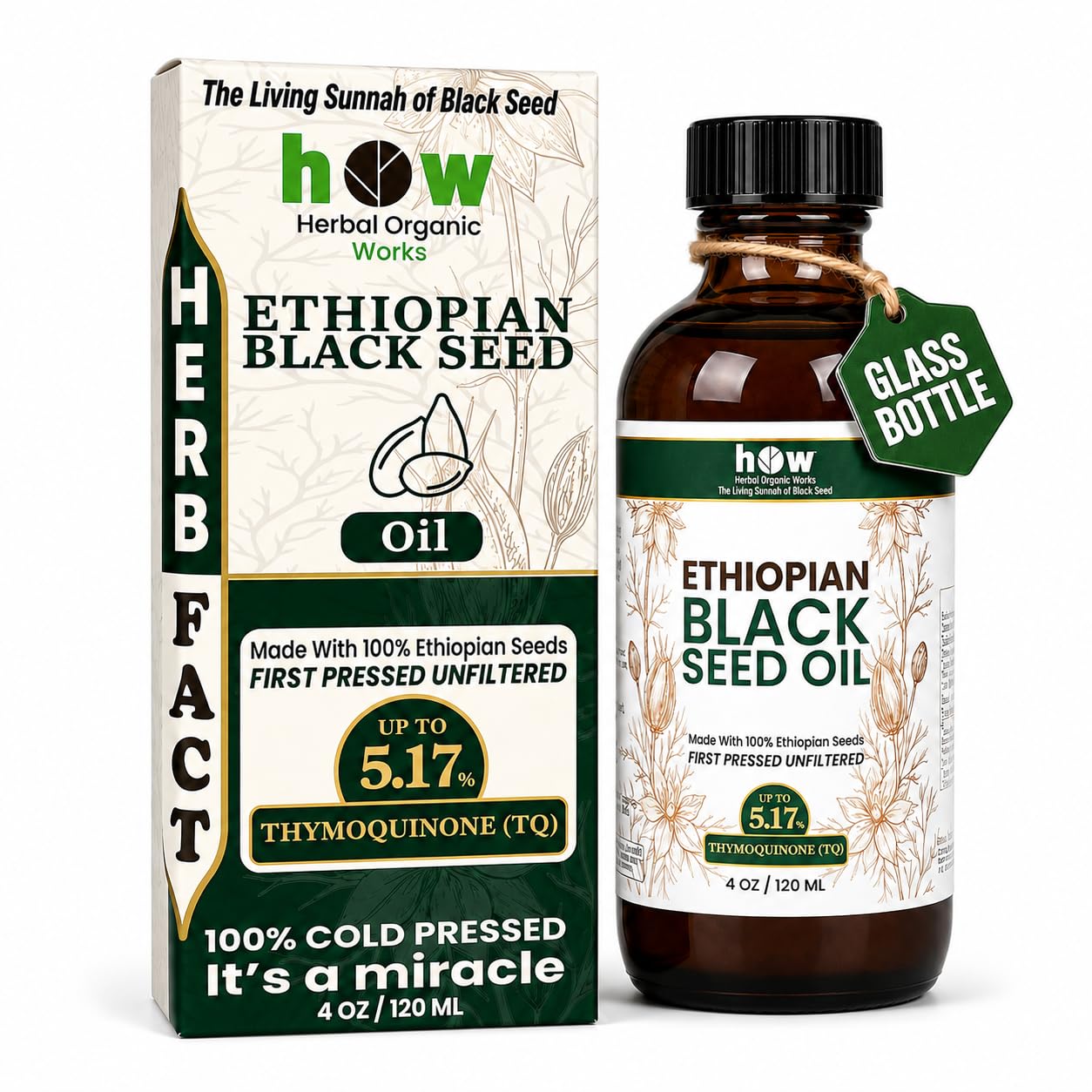
The smaller, smarter starter bottle for first-timers or multi-use routines like hair and skin.
This 4 oz bottle is the other side of the coin — half the size and focused on quality consistency rather than raw potency numbers. It is also cold-pressed, unrefined, and stored in an amber glass bottle to maintain freshness, just like the bigger pick. The key difference is the single-origin Ethiopian sourcing and the small-batch production, which owners praise for its top-grade quality — quality is the thing everyone raves about here (16 mentions), followed closely by its effectiveness (9 mentions).
Owners mention the taste is a tough hurdle — several even call it “the most horrible tasting thing” — but many find it worth it for the health results. One owner going through the Ethiopian Bible while taking it said, “Going to observe the effects for two months, journal the change,” indicating a thoughtful, long-term trial. Another reported it helped with bloating and digestion. The 4 oz size is practical for daily use without a giant bottle sitting around for months, or for someone who also uses it topically on skin and hair — a common use case mentioned by the maker.
The biggest consideration is the size: at 4 oz, it is one-quarter the volume of the Sweet Sunnah alternative, so per-ounce cost is higher. However, that makes it a perfect trial size for the person who is not sure a huge dose is right for them, or who wants to use it for multiple personal care routines. The taste is a universal challenge, but one owner put it simply: “Very good product just have to get use to the taste.”
Small batch, big reputation: The top positive aspect is quality (16 mentions), and buyers agree it is pure and single-origin. The 4 oz amber glass bottle fits easily in a medicine cabinet or gym bag.
The universal taste test: The most-discussed aspect is the taste (15 mentions), and it is a mixed bag — owners expect it to be strong, but some find it nearly unbearable. It is the realistic caveat for this otherwise highly-rated pick.
Best for the curious: A first-time buyer who wants to test Ethiopian-sourced, cold-pressed black seed oil without committing to a huge jug, or someone using it for both internal and topical routines.
Not ideal for: Anyone who needs a clear potency percentage on the label or wants the lowest cost per ounce for daily large-dose therapy — the 16 oz pick is the stronger and more economical choice.
Understanding the Specs
Thymoquinone Concentration
This is the specific active compound in black seed oil that most research focuses on. A higher percentage, such as 3.43%, generally indicates a more potent oil. Not every brand lists this number, but it is the clearest signal of quality and strength. If a bottle does not advertise a thymoquinone level, it may be a weaker oil.
Cold-Pressed and Unrefined
This process means the seeds are pressed without heat, which preserves the delicate fatty acids, vitamins, and antioxidants. Unrefined means the oil has not been filtered or deodorized, so it retains its natural dark-green color and strong peppery aroma. Refined oils lose many of the beneficial compounds and often taste bland.
Amber Glass Bottle
Light, especially UV light, can break down the beneficial compounds in black seed oil over time. An amber glass bottle blocks that damaging light while avoiding the chemical leaching risk of plastic. It is the standard packaging for any premium cold-pressed oil you plan to keep for more than a few weeks.
Bottle Size and Freshness
Once opened, black seed oil begins to slowly oxidize. A 4 oz bottle is ideal for a single person using a teaspoon daily or for a main ingredient in hair masks — it will be used up before it goes stale. A 16 oz bottle is more economical if you are committed to daily internal use, but it requires a longer storage commitment in a cool, dark cabinet.
FAQ
What does “Ethiopian” black seed oil mean compared to regular black seed oil?
How do I handle the strong, bitter taste of black seed oil?
Is a higher thymoquinone percentage always better?
Can I use Ethiopian black seed oil on my skin and hair?
How long does a 4 oz bottle last compared to a 16 oz bottle?
Should I store black seed oil in the refrigerator?
What does “cold-pressed” and “unrefined” mean for the taste?
Is there a difference between black seed oil and black cumin seed oil?
Final Thoughts: The Verdict
For most people, the best ethiopian black seed oil winner is the Sweet Sunnah 16 oz because its 3.43% thymoquinone (the active compound that gives black seed oil its health benefits) is a verified potency, and the 16 oz bottle (versus 4 oz) gives you 16 oz for daily use. If you are new to black seed oil and want a smaller, high-quality intro bottle, grab the Herbal Organic Works 4 oz. And for the buyer who knows they will use a teaspoon daily for months, the Sweet Sunnah is the one to reach for — it is the clear value and potency leader.
How We Picked
We do not accept paid placement. Every pick is matched to a real buyer and a real use-case; we do not hands-on test units.
Sources & Methodology
Specifications: manufacturer listings and product documentation. Review insights: verified customer reviews, as of July 2026. Pricing: not shown on this page (it changes often); check the current price via the retailer link.
As an Amazon Associate, WellFizz earns from qualifying purchases. This does not affect which products we feature.
Related Guides

Mo Maruf
I created WellFizz to bridge the gap between vague wellness advice and actionable solutions. My mission is simple: to decode the research and give you practical tools you can actually use.
Beyond the data, I am a passionate traveler. I believe that stepping away from the screen to explore new environments is essential for mental clarity and physical vitality.