Our readers keep the lights on and my smoothie glass nicely filled. As an Amazon Associate, I earn from qualifying purchases.
Specs are compiled from manufacturer listings and verified buyer reviews and can change over time — please confirm the key details on the product page before buying.
When your chest flutters or your pulse feels off, the last thing you want is to guess. An EKG monitor puts a medical-grade heart check in your pocket, letting you capture your actual rhythm in seconds and share it with your doctor. But not all home EKG devices are equal — some give you just one lead (a single electrical view of your heart), while others deliver six views, and a few even strap on for continuous monitoring. This guide sorts through the key differences so you land on the one that actually fits your health routine.
I’m Mohammad Maruf — the founder and writer behind WellFizz. This guide is built by comparing the manufacturers’ published specifications and the patterns across verified customer reviews, so you get each pick’s real strengths and trade-offs instead of marketing spin.
if you need a spot-check for confidence or a continuous watch to track symptoms, these picks represent the best ekg monitor options available today.
Our Picks at a Glance

How To Choose The Best EKG Monitor
A home EKG monitor is a medical tool, not a gadget. Picking the right one depends on understanding a few key specs that directly affect what you and your doctor can see.
How Many Leads Do You Actually Need?
A “lead” is essentially a specific angle or view of your heart’s electrical activity. A 1-lead EKG, like the KardiaMobile, shows one basic view — enough to detect AFib (atrial fibrillation) and common rhythm changes. A 6-lead device gives you six different views, which can reveal more complex arrhythmias (irregular heartbeats) and provide your doctor with richer data to analyze. If you already have a known rhythm issue or your doctor wants more detail, skip the single-lead and go for a 3-lead or 6-lead monitor.
FDA-Clearance and Home Use
FDA-clearance means the device has been reviewed by the U.S. Food and Drug Administration and is considered safe and effective for over-the-counter (OTC) home use. Every EKG monitor on this list is intended to help you track your heart between doctor visits — none of them are a replacement for a hospital-grade diagnostic ECG or a visit to the emergency room. Look for the FDA-cleared label, and always seek medical attention if you are experiencing concerning symptoms.
Subscription or No Subscription?
Some monitors, like the basic KardiaMobile, work entirely without a subscription — you get your rhythm reading free, every time. Others, like the KardiaMobile 6L Max, bundle a one-year membership that open up advanced arrhythmia detection and professional cardiologist reviews. Think about your budget and how deep you want the analysis to go. If you just want a quick “is it normal or AFib?” check, a no-subscription device is usually enough. If you want detailed reports and expert reviews, a subscription model might suit you better.
Quick Comparison
| Model | Best For | Leads | Reading Time | Requires App | Amazon |
|---|---|---|---|---|---|
| EMAY Portable ECG Monitor★ Best Overall | Best Overall | 1-Lead | 30 sec | Optional | Amazon |
| Beurer Cardio Companion ME75German Engineered | German‑Engineered 3‑Lead | 3‑Lead | Under 30 sec | Optional | Amazon |
| HaSoCare EKG Monitor | Budget Single‑Lead | 1‑Lead | 30 sec | Compatible | Amazon |
| KardiaMobile 1‑Lead | Proven 1‑Lead Workhorse | 1‑Lead | 30 sec | Required | Amazon |
| KardiaMobile 6‑Lead | Detailed 6‑Lead Data | 6‑Lead | 30 sec | Required | Amazon |
| Bioheart Continuous Monitor | 24/7 Wearable Monitoring | Chest Strap | Continuous | Required | Amazon |
In‑Depth Reviews
1. EMAY Portable ECG Monitor
Our pick — 4.5★ from 400+ verified ratings; the strongest balance of quality and price.
The pocketable metal monitor that lets you record an EKG without even pulling out your phone.
This is the device that strikes the cleanest balance between ease, portability, and standalone function. The EMAY weighs just 80 grams and measures 4 by 1.7 by 0.5 inches — smaller than a typical smartphone — yet it packs a 1.8-inch bright LCD screen that gives you your heart rate reading on the spot. You do not need a smartphone at all if you just want a quick check. The device records a Lead I ECG signal (a standard single-lead view) and displays your heart rate right there on the metal body. When you do want to share data, the built-in rechargeable lithium battery lets you connect via Bluetooth to your phone or via USB to your PC, so you can upload cases and review your history through the app. What wins people over here is the sheer ease of use — it is straightforward enough that you can hand it to a family member and they will get a reading immediately. As buyers put it: “The device is compact, well-designed, and convenient to carry wherever I go.”
Accuracy is the second most-discussed strength, and owners find it reliable enough to track bradycardia (a slow heart rate) and share clean PDF reports with their doctors. The device can record 30-second tracings, and its charge lasts for 2-3 hours of use — plenty for intermittent checks over weeks. A single minor friction point is the micro-USB port instead of USB-C, so you will want to keep that specific cable handy. For the price point, this device gives you everything you need for at-home spot-checking without locking you into any monthly fee.
Standalone Simplicity: Works as a self-contained device or paired with your phone — your choice.
Worth Noting: It uses micro-USB rather than USB-C, and it is not recommended for people with implanted pacemakers.
Reach for it if: You want the most portable, phone-free EKG option that does not require an app subscription.
Think twice if: You need the detail of a multi-lead device or have a pacemaker.
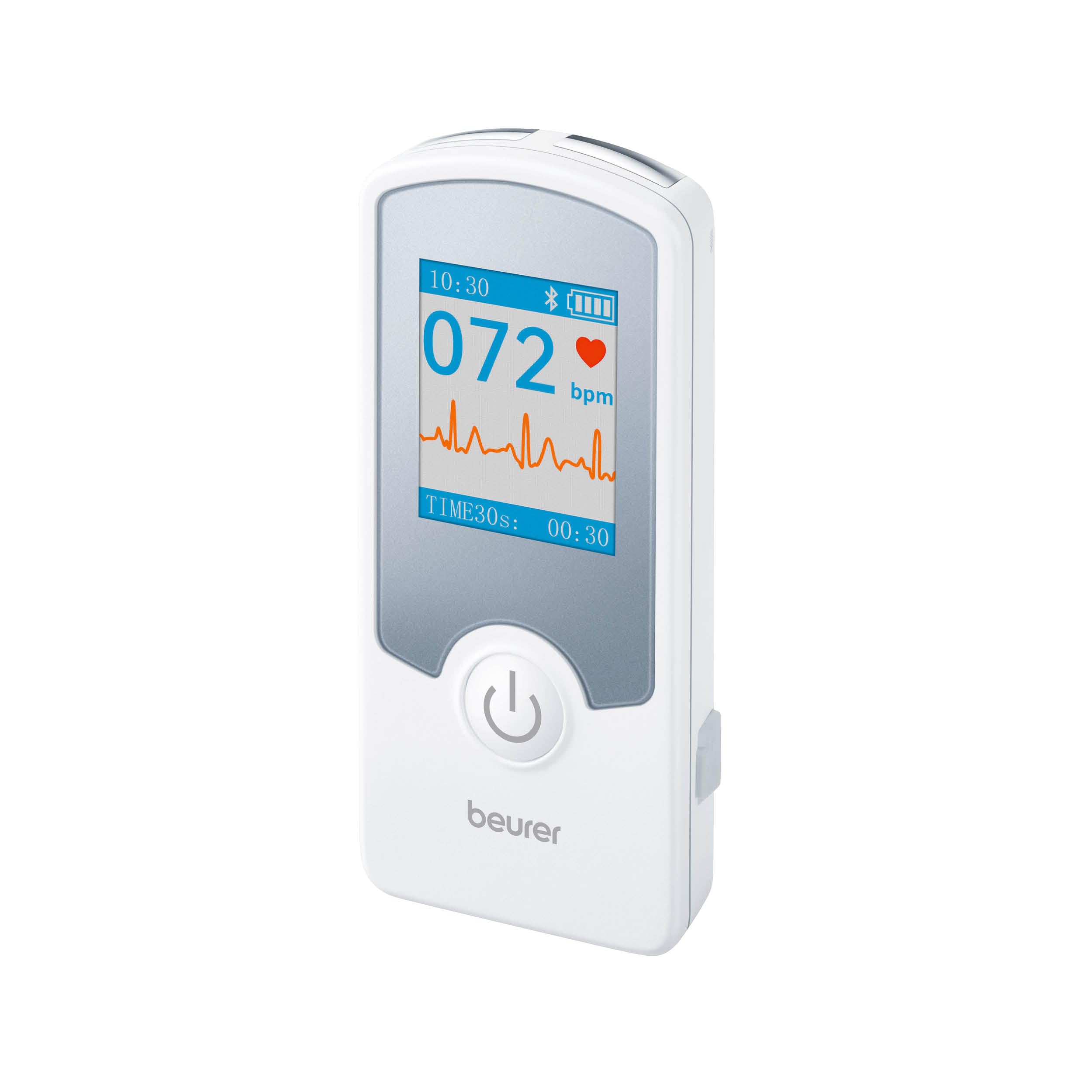
2. Beurer Cardio Companion EKG Monitor ME75
The 3-lead monitor that gives your doctor a fuller picture than any single-lead can.
While most home EKG devices stick to one lead, the Beurer ME75 steps up to a 3-lead configuration, which means your cardiologist gets three different electrical angles of your heart rhythm in each reading. This extra data makes a real difference when monitoring arrhythmias (irregular heartbeats) — the device can detect both bradycardia and tachycardia (heart rates that are too slow or too fast). The bright color display shows your results on the unit itself, and you can save up to 100 readings locally before you ever need to sync. The device offers four measurement methods: hand-to-hand is the simplest, but you can also measure hand-to-wrist, hand-to-leg, or hand-to-chest for more stable readings. At just 2.08 ounces and 3.85 by 1.75 by 0.6 inches, it slips into a small pocket easily.
Reliability is the top praised trait among owners — the German engineering earns consistent marks for consistent readings. The free app is optional, so you can keep your data entirely on the device if you prefer. A practical downside: the sensors sit at the two ends of the device, so you have to press them between both palms, which some people find a bit awkward to grip at first. Also, the device is not suitable for those with pacemakers or metal implants, and there is no way to delete individual EKG recordings — you either keep them all or wipe the memory entirely. Still, for a dedicated 3-lead device at this price, it is a smart upgrade from any single-lead.
Multi‑Lead Advantage: More data per reading, sharing is optional, and the color display is large enough to read without glasses.
A Minor Quirk: The sensors require both hands for every reading, and data management is all-or-nothing for deletions.
Reach for it if: Your doctor wants more than a single-lead view and you prefer a device that works independently of your phone.
Look elsewhere if: You need individual trace management or have a pacemaker.
3. HaSoCare EKG Monitor

A wallet-friendly single-lead that fits in a purse and gives a clear reading in thirty seconds.
The HaSoCare opts for the simplest possible formula: place your hands on the metal sensors, wait 30 seconds, and read the result on its built-in LCD screen. It weighs just 3.2 ounces and is smaller than a typical phone, so it slides easily into a bag or even a large pocket. The device offers multiple monitoring modes — hand-to-hand, hand-to-chest, and hand-to-leg — so you can pick the position that gives you the cleanest signal. It works with your computer via cable or with your phone over Bluetooth, and there is no subscription fee to worry about. The rechargeable battery has impressed owners, with one reporting it still held a charge after 14 days of daily use.
Ease of use is the trait most frequently called out by owners — the learning curve is minimal, and the clear screen makes the results legible even for older users. Quality does get mixed marks in the review data: some units work perfectly from day one, while a very small minority gave inconsistent readings, with one owner finding the readings varied between tests. This means you should test the device a few times when you first get it to understand its baseline with your body. For a budget-oriented single-lead, it is a functional choice that will cover the basics for most people, especially if you just need occasional reassurance.
Budget Buy with Basics Covered: Does the core job — 30-second reads, multiple contact modes, phone and PC sharing — at a low entry cost.
Mixed Reliability Signal: Quality has been a split topic in reviews; test it early and return if it does not settle into consistent reads.
Best for: Someone on a tight budget who needs a basic, portable spot-check device and is happy to test-drive it.
skip it if: You need guaranteed consistency for a known arrhythmia — a higher-rated single-lead or multi-lead device is safer.
4. KardiaMobile 1-Lead EKG Monitor
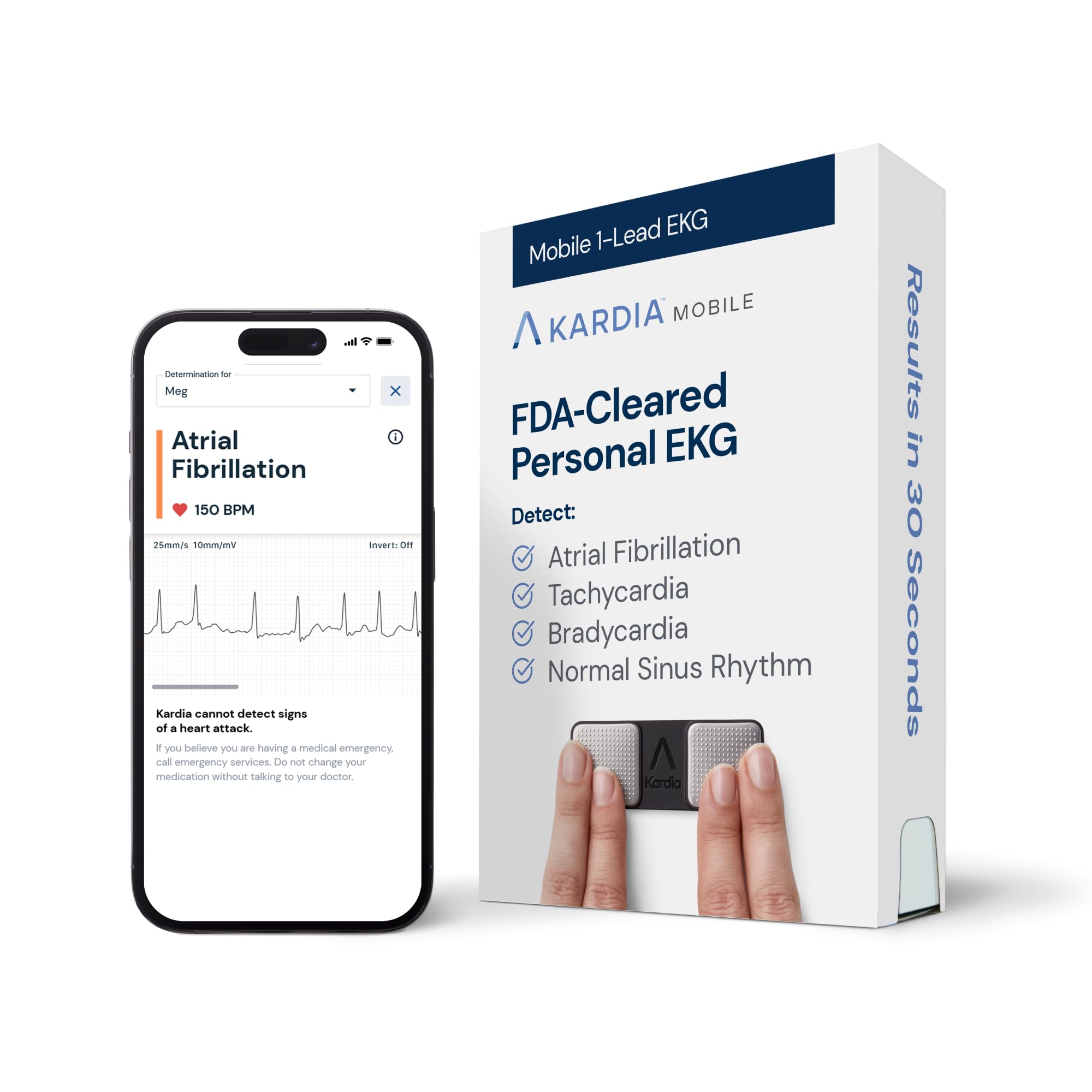
The KardiaMobile is the most widely trusted personal EKG for a reason — it is FDA-cleared, it is the #1 brand cardiologists recommend, and it just works. You place your fingers on the two silver sensors, hold still for 30 seconds, and the free Kardia app displays your heart rhythm along with a clear determination: Normal Sinus Rhythm, Atrial Fibrillation (AFib), Tachycardia (fast heart rate), or Bradycardia (slow heart rate). A single CR2016 battery lasts up to two years with regular daily use (2-3 EKGs per day), which means it is essentially maintenance-free. You can email the PDF report directly to your doctor from the app.
Functionality and ease of use are the two most-praised aspects, with thousands of owners describing it as both effective and simple. It is a pocket-sized check that gives real answers. The one trade-off familiar to regular users is that you need to practice your hand placement a little to get a clean, artifact-free trace — and the plastic build can feel a bit light or “chintzy” in hand, as some describe it. Value for money is a mixed topic: the device itself is reasonably priced, though some wish the app offered more without a KardiaCare subscription. But if you want a single-lead device with a proven track record and zero monthly cost, this is the standard setter.
The Gold Standard 1‑Lead: Instant results, no charging, no subscription, and doctors actually know this brand.
Watch the Grip: Placement takes a few tries for a perfect trace, and the sensors do require you to hold the device directly with both hands.
Reach for it if: You want the most established, cardiologist-recommended device that gives you a clear AFib check without any ongoing fees.
Think twice if: You want a multi-lead view or a device that works completely without a smartphone.
5. KardiaMobile 6-Lead Personal EKG Monitor
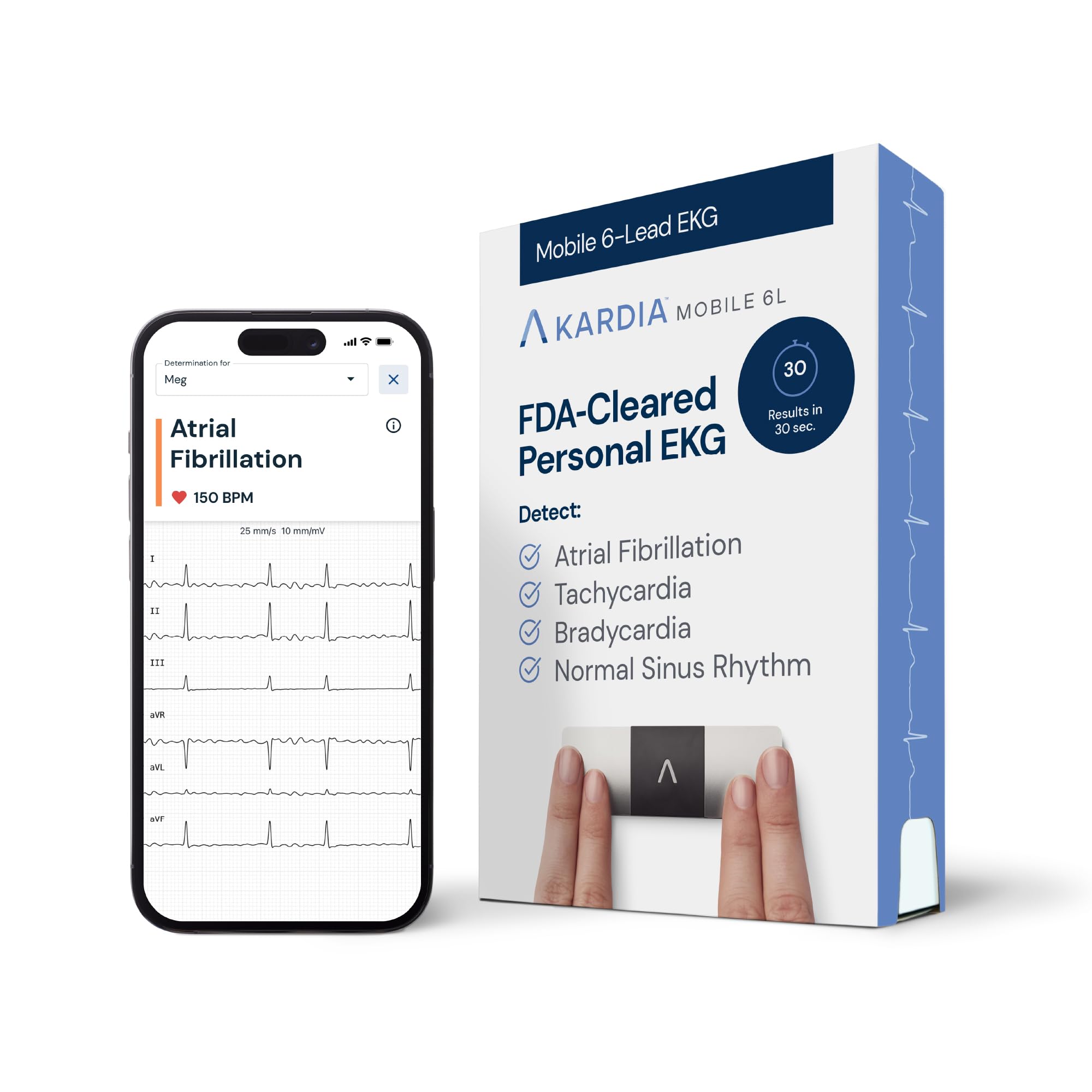
Six leads give you six EKG views simultaneously — and a far richer report for your cardiologist to read.
Instead of one lead, it records a medical-grade six-lead EKG, which gives your doctor multiple electrical perspectives of your heart. It detects the same four main rhythm types — Normal, AFib, Bradycardia, and Tachycardia — without any subscription needed, right from the start. The trade-off for all that extra data is a different physical routine: you place your thumbs on the top electrodes and rest the bottom sensor on your left leg or knee during the 30-second recording. Buyers report that it takes a few tries to get a clean 6-lead trace, but once you get the hang of it, the results are reliable enough to share directly with your cardiologist. The device weighs just 24 grams and measures 3.54 by 1.18 by 0.28 inches, so it is still incredibly portable.
Ease of use and device quality are the most frequently praised aspects, and owners consistently describe the readings as clinically useful — many have used the PDF reports to adjust medication under a doctor’s guidance. The 6L is notably more informative than the single-lead when you need to distinguish atrial vs. ventricular rates. A real-world catch: the free version of the app does not flag dangerous arrhythmias like SVT (supraventricular tachycardia) or AV block, so it is best used as a data-gathering tool under a physician’s oversight, not as an all-seeing diagnostic device. The app also nudges you to buy a subscription for extra algorithms, and you cannot easily delete individual saved ECGs. For the modest step up in price, this is the smarter choice if you want your doctor to have more data to work with.
Richer Data, Same Simplicity: More leads for a more complete heart picture, no subscription needed for the core detections.
The Learning Curve: You need to rest the device on your left leg or knee for a clean 6-lead trace, and the free analysis stops at four rhythm types.
Best for: Anyone whose cardiologist wants multi-lead data for monitoring a known condition, without paying a monthly fee.
pass on it if: You want the device to automatically detect dangerous arrhythmias beyond the basics — that requires the subscription.
6. Bioheart Continuous Heart Monitor
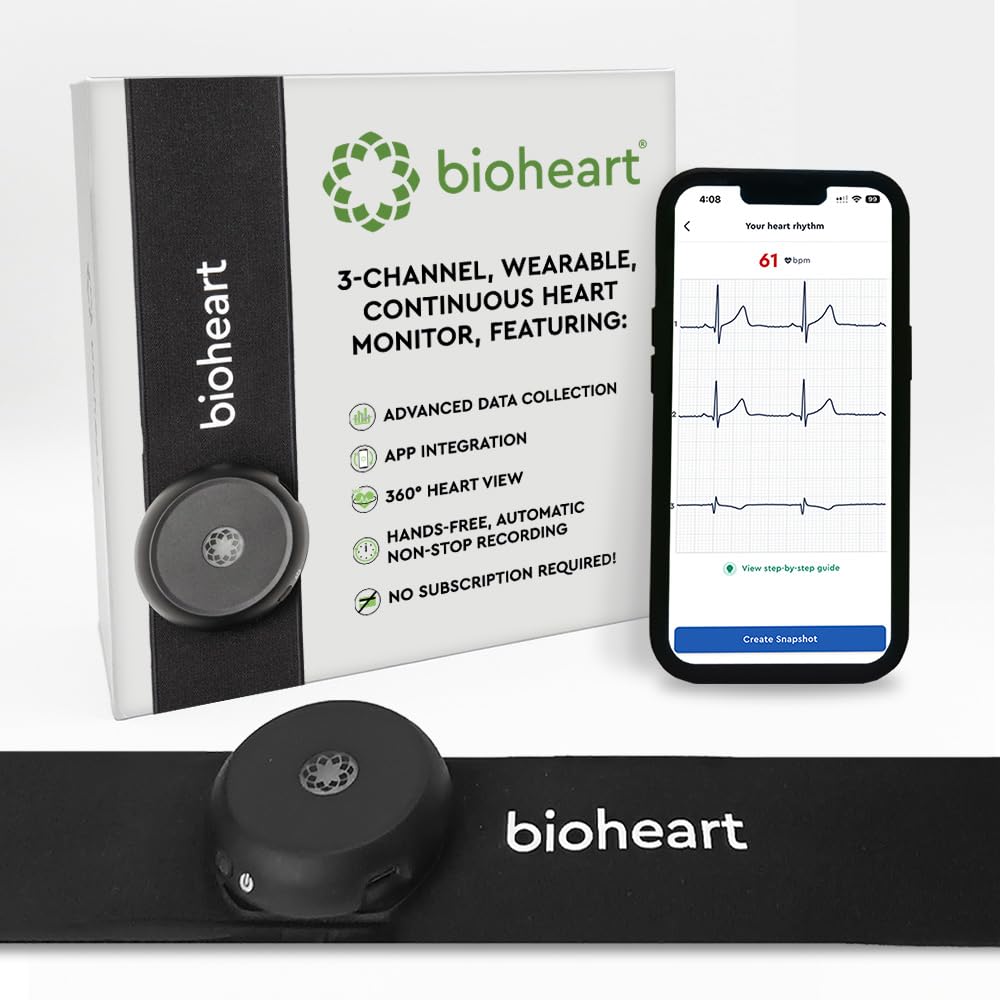
A wearable chest strap that captures every heartbeat, 24 hours a day, without a prescription.
Unlike every other monitor on this list, the Bioheart does not ask you to press your fingers on sensors. It straps around your chest with a breathable, washable fabric band and records your heart’s electrical activity continuously. It uses Bluetooth to sync to a smartphone app, giving you real-time data, trend reports, and the ability to share comprehensive PDF reports with your doctor. The device is FDA-cleared and is trusted by over 2,500 cardiologists for rhythm analysis, according to the manufacturer. It comes in three strap sizes — Small (25.5 to 35.5 inches), Medium (29.5 to 41.3), and Large (40.3 to 63.0) — so finding a snug fit is possible for most body types. The rechargeable battery lasts 48 hours, which is long enough for continuous monitoring through sleep and exercise. A one-month subscription is included, but using the service beyond that likely requires a monthly fee for full snapshot capability.
For owners who need round-the-clock tracking, the value is clear: the device records everything, so you catch irregularities a spot-check might miss. The build quality and comfort earn regular praise. The main tension is accuracy during movement — exercise creates significant artifact (noise in the signal that makes the reading less reliable), so it is really most useful during rest or sleep. The subscription model is also a point of friction: one owner noted the /month fee for more than 50 snapshots was not clearly disclosed upfront. This device is a specialist tool for anyone who genuinely needs continuous monitoring outside a hospital, rather than an occasional check.
True 24/7 Monitoring: Catches rhythms that intermittent checks completely miss — ideal for elusive symptoms.
The Reality Check: Exercise creates artifact, the subscription cost is a serious factor, and the chest strap may shift during active movement.
Best for: Someone whose doctor specifically recommended continuous Holter-style monitoring and who is comfortable with a monthly subscription cost.
Think twice if: You just need occasional spot-checks or find chest straps uncomfortable for extended wear.
Understanding the Specs
Leads: 1‑Lead vs 3‑Lead vs 6‑Lead
A lead is essentially one electrical viewpoint of your heart. A 1-lead monitor (like the KardiaMobile or EMAY) gives you a basic rhythm strip — enough to detect AFib and rate changes. A 3-lead device (like the Beurer ME75) adds two more perspectives, making it more useful for spotting certain arrhythmias. A 6-lead device (like the KardiaMobile 6L) gives you six simultaneous angles, which is closer to what you would get from a standard in-office ECG. More leads mean more data for your doctor, but they also require you to follow a specific body-contact setup (like resting the device on your leg) for a clean reading.
FDA‑Clearance and What It Means
FDA-clearance is a stamp that the device has been reviewed by the U.S. Food and Drug Administration as safe and effective for over-the-counter (OTC) home use. Every monitor on this list is cleared for home use, which means it is intended as a screening or tracking tool between doctor visits — never as a replacement for a hospital diagnostic ECG. When shopping, look for the FDA-cleared label, and always call emergency services if you are experiencing chest pain, shortness of breath, or other urgent symptoms. No personal EKG is designed to detect a heart attack in progress.
FAQ
Can an at-home EKG monitor detect a heart attack?
Can I use an EKG monitor if I have a pacemaker?
Does the KardiaMobile require a subscription to work?
What is the difference between 1-lead and 6-lead at home?
How often should I replace the battery in my KardiaMobile?
Is the Bioheart comfortable to wear all day?
Can I share my EKG readings with my doctor?
Does the Beurer ME75 work with my phone?
Which EKG monitor is best for checking AFib?
Will a home EKG work without Wi-Fi or Bluetooth?
Final Thoughts: The Verdict
For the majority of shoppers, the best ekg monitor winner is the EMAY Portable ECG Monitor because it gives you a standalone device, a bright built-in screen, and reliable single-lead readings without tying you to an app or a subscription. If you want the established standard that doctors most often recommend, grab the KardiaMobile 1-Lead. And for continuous overnight or full-day monitoring, the Bioheart straps on and tracks every beat.
How We Picked
We do not accept paid placement. Every pick is matched to a real buyer and a real use-case; we do not hands-on test units.
Sources & Methodology
Specifications: manufacturer listings and product documentation. Review insights: verified customer reviews, as of July 2026. Pricing: not shown on this page (it changes often); check the current price via the retailer link.
As an Amazon Associate, WellFizz earns from qualifying purchases. This does not affect which products we feature.
Related Guides

Mo Maruf
I created WellFizz to bridge the gap between vague wellness advice and actionable solutions. My mission is simple: to decode the research and give you practical tools you can actually use.
Beyond the data, I am a passionate traveler. I believe that stepping away from the screen to explore new environments is essential for mental clarity and physical vitality.