Our readers keep the lights on and my smoothie glass nicely filled. As an Amazon Associate, I earn from qualifying purchases.
Specs are compiled from manufacturer listings and verified buyer reviews and can change over time — please confirm the key details on the product page before buying.
The problem with most family game night picks is that they are either too simple for the adults or too complicated for the kids — a room full of people with nothing to do but watch one person read rules aloud. The best family board games of all time solve this by making everyone equally uncomfortable, equally competitive, and equally loud, regardless of whether you are eight or eighty. This list skips the duds and the dust-collectors, focusing on the titles that have proven they can hold the attention of three generations at once.
I’m Mohammad Maruf — the founder and writer behind WellFizz. This guide is built by comparing the manufacturers’ published specifications and the patterns across verified customer reviews, so you get each pick’s real strengths and trade-offs instead of marketing spin.
Whether you are shopping for a holiday crowd, a rainy Sunday, or a new weekly tradition, these are the nine titles that define best family board games of all time — picked for staying power, real replay value, and the kind of noise that makes neighbors wonder what is happening in your living room.
Our Picks at a Glance

How To Choose The Best Family Board Games Of All Time
Not every great game is a great family game. A title that kills at a party of adults might leave younger kids frustrated, and a kids’ game can bore the grown-ups within ten minutes. The trick is matching the game’s player count, age floor, and round time to your actual living room. Here is what to look for.
Age range and difficulty scaling
The best family games do not expect everyone to be at the same skill level. Some, like Outsmarted, adjust question difficulty per player based on their age. Others, like Codenames, rely on word association that even a clever younger player can contribute to. Always check the manufacturer’s minimum age in months — a game listed for 168 months (14 years) will likely frustrate a 8-year-old, while a 72-month game (6 years) might feel shallow for teens. Look for games with a wide effective range or built-in difficulty options if your group spans more than a few years.
Player count and flexibility
A game designed for 4 players can leave a family of 5 stuck. For larger gatherings, prioritize games that support 6 or more — Codenames shines with 6+ players, while Outsmarted handles up to 24. Also consider whether the game plays well at the minimum count: a 2-player game that only works with four is a trap. If your game nights vary wildly in size, a flexible game that works for 2 to 24 is a safer bet than a fixed-count title that sits unused when numbers are low.
Round time and attention span
Younger kids and non-gamers lose focus fast. A game that runs 5 minutes per round (like Dumpster Dice) allows quick repeats and lets restless players rotate in. Games with estimated playtimes of 30-60 minutes (Ticket to Ride, Harmonies) demand more patience but reward deeper strategy. The ideal family collection has one or two quick-fire games for warm-ups and one longer game for a dedicated game night. Avoid committing to a 60-minute game if your group has never played a board game together before.
Replayability and component quality
The best family board games of all time are the ones you reach for again and again. Replayability comes from randomized setups (Codenames’ card layouts, Ticket to Ride’s ticket draws) or skill-based depth that makes each game feel different (Harmonies’ tile placement). Component quality also matters — flimsy boards and cards that fray after a few shuffles kill the fun. Wooden tokens, sturdy tins, and thick card stock are good signs. A game that looks and feels premium will survive the kind of enthusiastic handling that defines family game night.
Quick Comparison
| Model | Best For | Players | Playtime | Age Range | Amazon |
|---|---|---|---|---|---|
| CGE Codenames (2nd Edition)★ Best Overall | Wordplay & team deduction | 4+ | 10-15 min | 14+ | Amazon |
| Asmodee HarmoniesTop Performer | Strategic tile-laying | 1-4 | 30 min | 10+ | Amazon |
| Asmodee Ticket to Ride (2025 Refresh)Classic Value | Route-building & geography | 2-5 | 30-60 min | 8+ | Amazon |
| Outsmarted App-Connected Quiz | Large-group trivia | 2-24 | ~30-60 min | 8+ | Amazon |
| Big Discoveries Dumpster Dice | Fast-paced chaos | 2-4 | 5-10 min | 6+ | Amazon |
| Spin Master Games Family Feud: Ultimate | TV-show party game | 3+ | 20 min | 8+ | Amazon |
| Spin Master Games Tetris: The Board Game | Physical Tetris strategy | 2-4 | 20 min | 8+ | Amazon |
| Runs in The Family | Conversation & memory | 2-5 | 15 min | 8+ | Amazon |
| Magnet Game, Magnetic Chess 40 Pieces | Simple magnet dexterity | 2-4 | 10 min | 6+ | Amazon |
In‑Depth Reviews
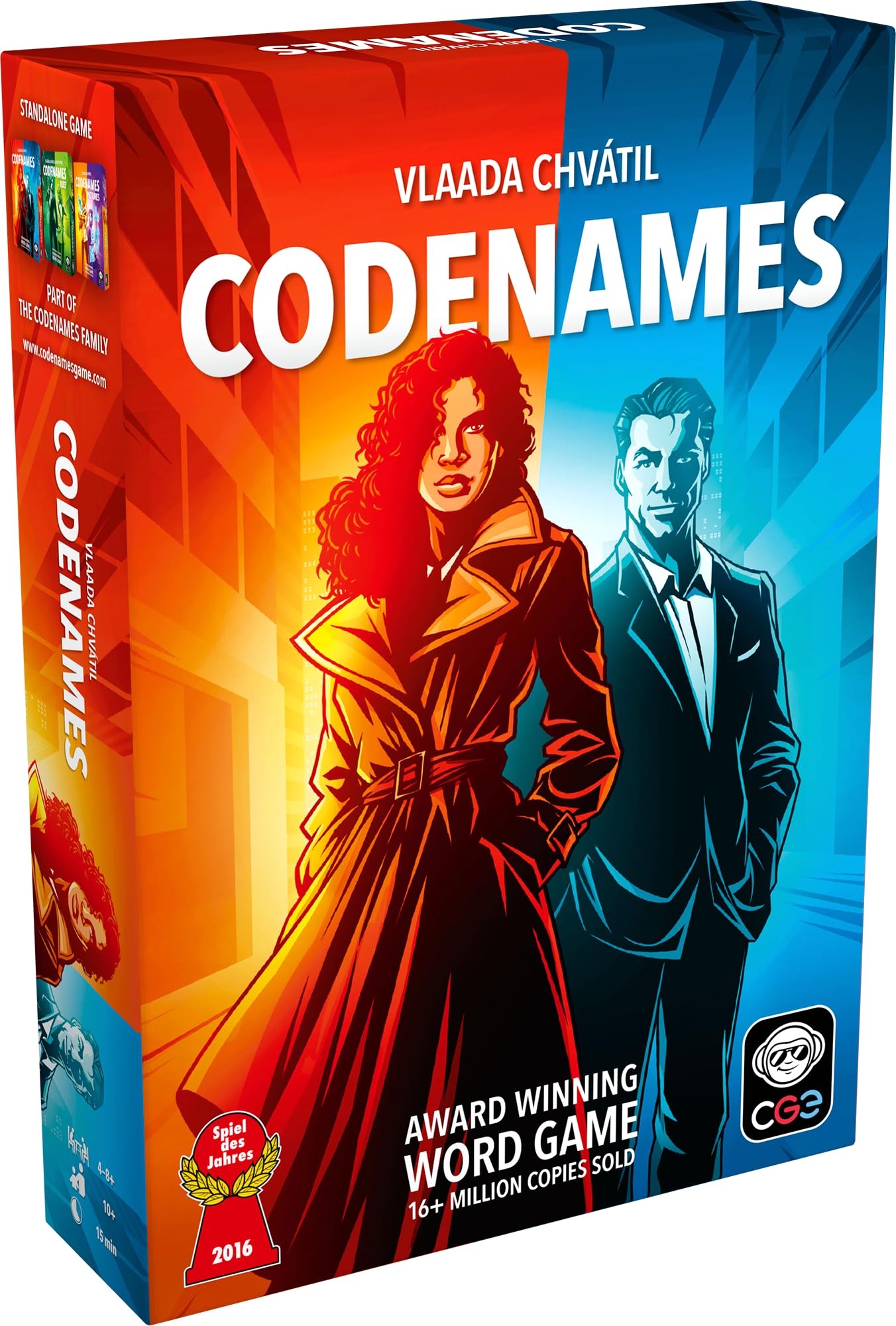
1. CGE Codenames Board Game (2nd Edition)
Our pick — over 4.5★ from 29,000+ verified ratings; the strongest balance of quality and price.
The word-association king that makes introverts and extroverts equally vital to the team.
Codenames is the rare game that gets more notable the more people you add. Two teams race to identify their agents from a 5×5 grid of words, guided only by a “spymaster” who knows each card’s secret identity. The spymaster gives a single-word clue and a number — one that links multiple cards at once. The teammates then guess, balancing the thrill of a correct hit against the instant loss of landing on the assassin tile.
The crowd favorite — nearly 30,000 owners — lands here because it plays just as well with gamers and non-gamers. The 2nd Edition includes revised words, refreshed art, a better insert, and a streamlined rulebook, making an already tight package even tighter. The review pages sum it up: “quick setup, easy rules, team-based word game with high replayability via random card layouts.” At 1.97 x 6.38 x 9.13 inches, the box is small enough to travel, yet it packs 200 cards with 400 codenames — enough variety for years of play. The one honest caveat is the downtime while spymasters think up their clues; players sitting on the guessing team can feel idle if the clue takes too long. This is a game that rewards creative thinking over speed, so it is best for families who enjoy a bit of deliberation over pure chaos.
Why it wins game night
- Gameplay is the number one praise by a huge margin — nearly 3,000 owners single it out
- Extremely high replayability from random card layouts — no two games play the same
- Works brilliantly for both small groups and large parties (best with 6+)
One thing to know
- Spymaster turns cause natural downtime; impatient players may lose focus between rounds
Reach for this if: your family loves clever wordplay and team-based deduction, and you want a game that scales from a quiet night to a full party.
The trade-off: it is best with 6+ players; smaller groups of 4 still work but lose some of the chaos that makes it great.
2. Asmodee Harmonies Board Game
A 3D landscape puzzle that turns the table into a tiny dream world you build together.
Harmonies is the most tactile and visually stunning entry here. You create landscapes by placing wooden tokens and animal cubes on your personal board, matching patterns to earn victory points. The game feels like a blend of Cascadia and Azul — simple enough to learn in one round, deep enough to reward repeat plays across three difficulty levels. The component list is generous: 120 wooden tokens, 79 animal cubes, and 32 Animal cards, all inside a pouch for easy storage.
The core appeal is the moment your pattern clicks and you place the final cube, completing a landscape that feels genuinely satisfying. Owners rave about the gameplay and the visuals — over 120 buyers single out the gameplay, 54 praise the art. The review pages describe it as “beautiful, thinky puzzle with 3D landscape building” that is “simple to learn but offers depth.” The catch is minimal player interaction; the game plays like multiplayer solitaire where you watch each other’s boards but rarely interfere. If your family thrives on direct competition and sabotage, this might feel too peaceful. It is a standout for its relaxing, creative energy — a calm alternative to the shouty party games.
Best solo or small group pick: the included solo version makes it one of the few family games you can play alone for a quiet evening, and the 1-4 player range means it works for a couple or a group of four without awkward gaps.
Who might want more: families who love take-that mechanics and direct conflict should look at a more competitive title; this one is about building, not breaking.
Best suited for: families who enjoy relaxing, thoughtful strategy with beautiful components and no pressure to rush.
Think twice if: your group feeds on direct competition and player interaction — Harmonies is mostly you-against-the-puzzle.
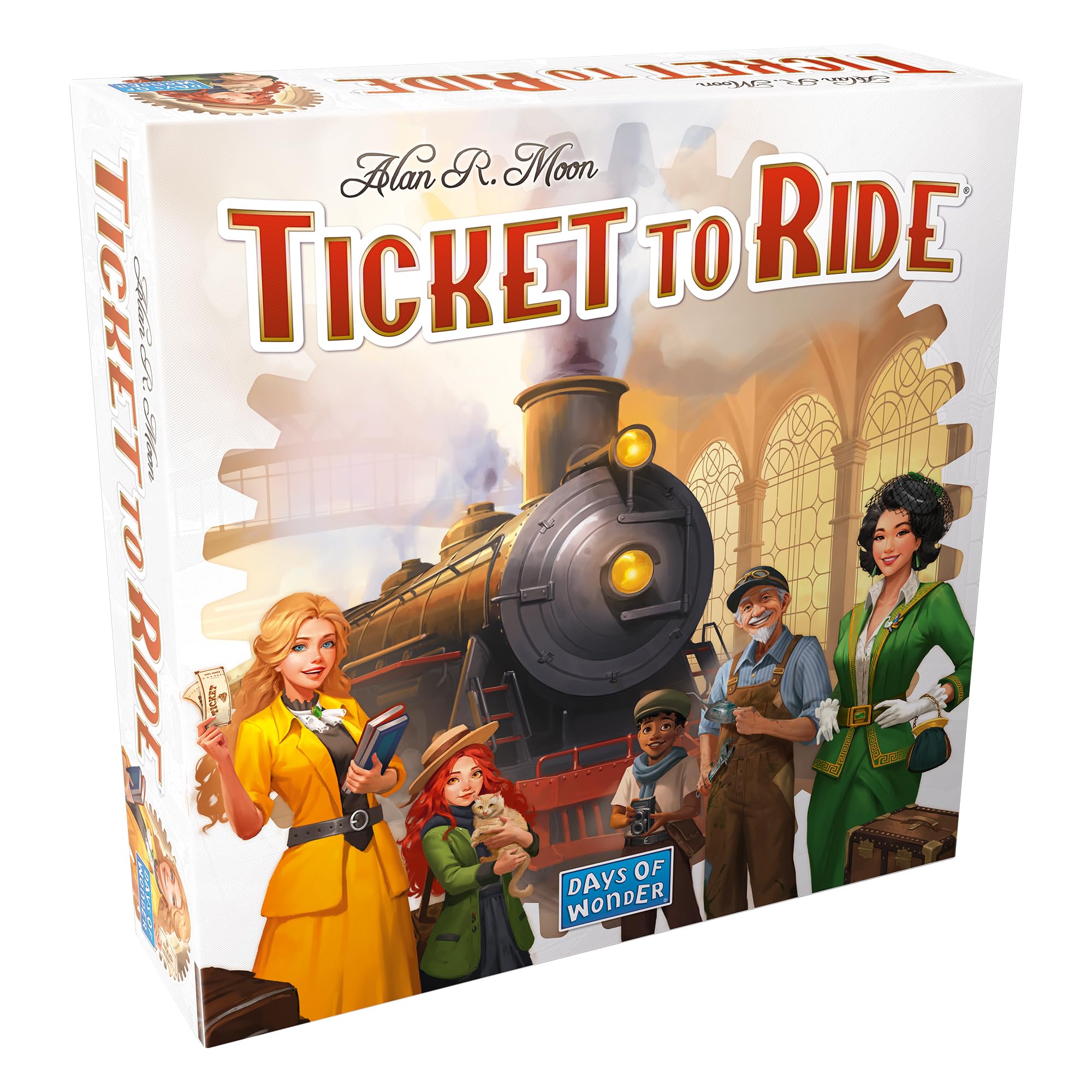
3. Asmodee Ticket to Ride Board Game (2025 Refresh)
The cross-country train game that taught a generation how to be strategic without being mean.
Ticket to Ride needs almost no introduction. You collect colored train cards and claim routes across a giant map of early 20th century North America, connecting cities to complete secret tickets. The 2025 Refresh keeps the classic formula intact. At 11.7 x 3 x 11.7 inches, the box is big and the map is bigger — the physical scale adds to the sense of adventure. The included components are 225 plastic trains in 5 colors, 110 train cards, 33 tickets, a longest path bonus card, and 5 wooden scoring markers.
The game is praised for its balance of accessibility and strategy. The review pages call it “easy to learn with deep strategy” and note that “games don’t drag.” It is among the most recommended gateway games for a reason: the rules fit on a single sheet, but the decision-making about which routes to prioritize and when to pivot keeps it fresh. The major praise across owners is gameplay and game quality — over 55 praise the gameplay and 41 praise the quality. The only consistent note is that younger players (under 10) may struggle with the strategic depth; it is best for ages 10 and up. Unlike the Codenames party chaos, Ticket to Ride is a slower, more deliberate experience — perfect for families who want something they can grow into over many sessions.
Why it is a classic
- Extremely high replayability — each game plays differently based on ticket draws and opponent strategies
- Easy setup and teach; the rulebook is pictures-based and takes minutes to explain
- Encourages geography learning naturally through gameplay
The learning curve
- Younger kids (under 10) may find route planning challenging; best with family members 10+
- Games can run up to 60 minutes, which may be long for very restless groups
Grab it for: families ready for a dedicated game night tradition — one that rewards strategic thinking and rewards repeated plays.
Skip if: you need something quick or are playing with very young children who cannot yet plan routes.
4. Outsmarted App-Connected Live Quiz Show Board Game
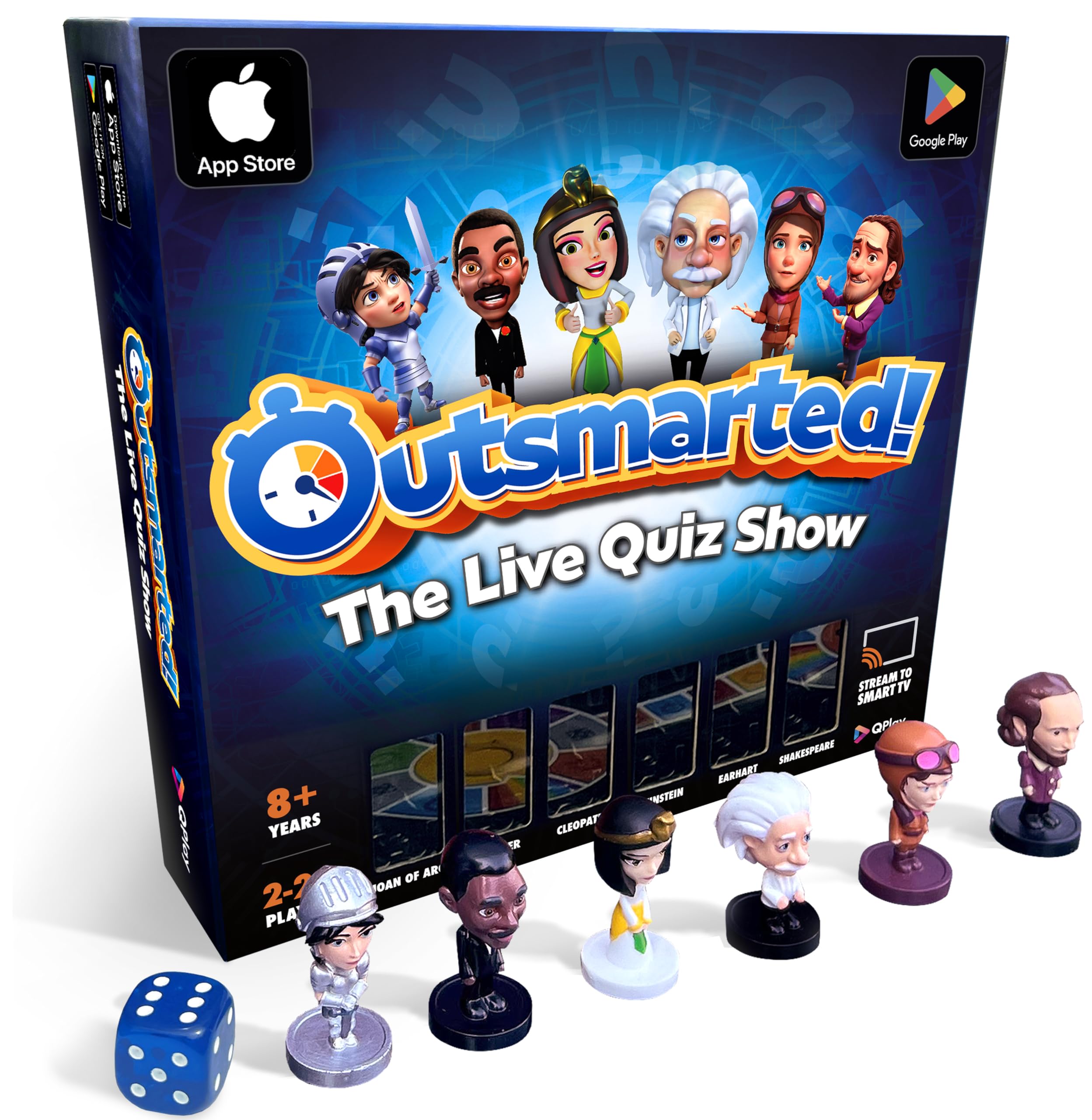
A TV quiz show in a box that makes a 9-year-old and a grandparent equally competitive.
Outsmarted turns family game night into a live quiz show with a free app acting as host. The app reads questions aloud, keeps score, and adjusts difficulty per player based on their age — so a 9-year-old gets questions on their level while a grandparent faces tougher ones. It supports 2 to 24 players and includes over 10,000 multimedia questions across ten categories, with a Breaking News category that refreshes weekly. The box includes a board, dice, six hand-painted 3D genius figurines, and a folding tablet stand.
The real innovation is the remote-play option, making this the first board game that lets distant family members join from another town via the app. The review pages say it is “the best family game I have played in years” and note that “questions spark family discussions” across generations. The age-adjustment feature is the standout — it solves the problem of the adults dominating and the kids losing interest. The catch is that it requires a smartphone or tablet to run the app, and some families report that the primary account is needed for hosting. It is also pricier than traditional board games, but the constant content updates and remote-play capability justify it for large, geographically spread families.
What makes it special
- Automatic age-based difficulty balancing — kids, teens, and adults all get fair fights
- Remote play via app connects family members in different locations around one virtual board
- 10,000+ questions with weekly updates mean it never gets stale
Practical note
- Requires a mobile device or tablet to run the app; not a pure analog game
- Extra question category packs require in-app purchases
Perfect for: large, multigenerational gatherings or families who live apart and want to play together over video chat.
Not ideal if: you prefer a device-free game night or are looking for something under the mid-range budget.
5. Spin Master Games Tetris: The Board Game
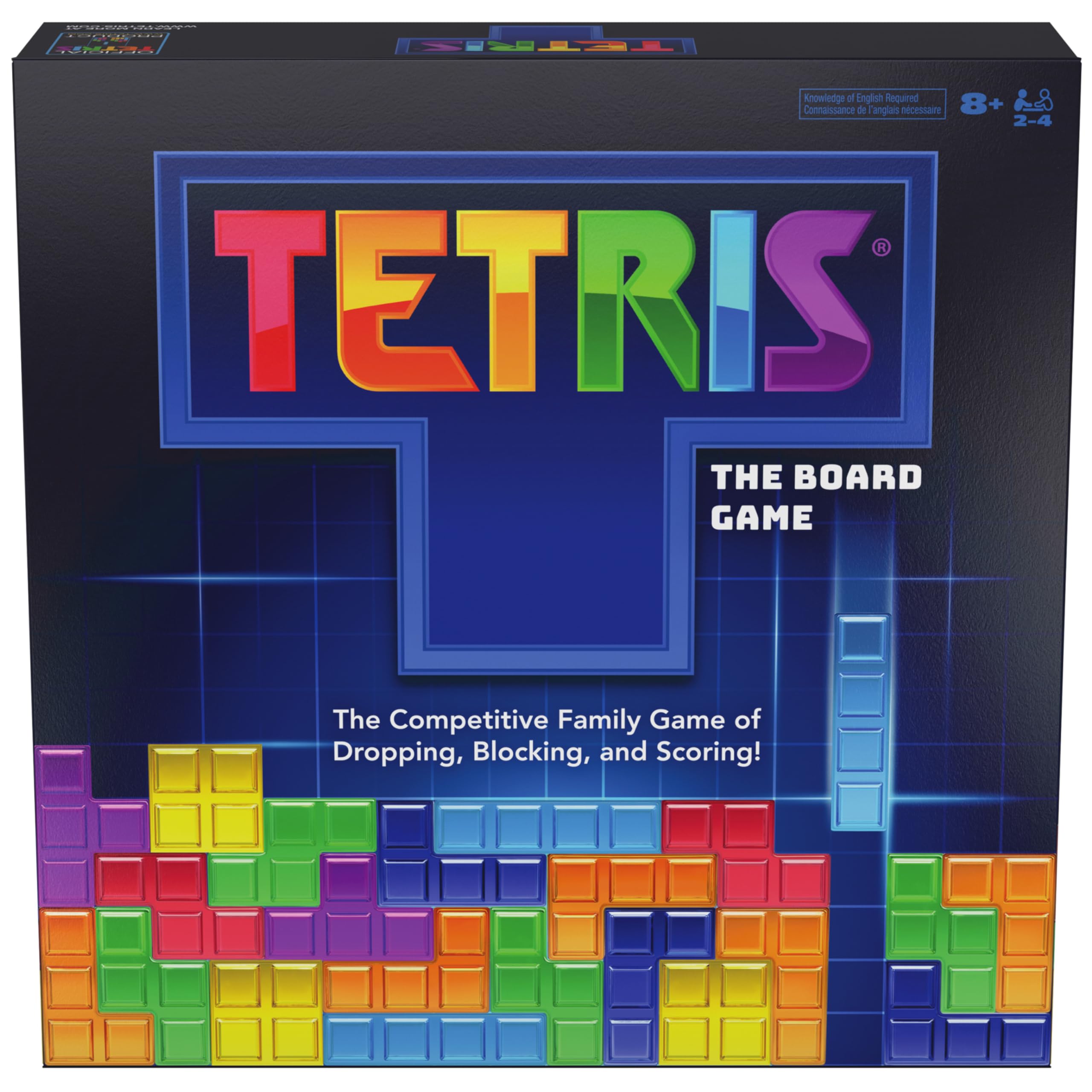
The iconic video game becomes a physical puzzle where blocking your opponent is as important as clearing your own lines.
Spinner Tetris brings the classic digital game to the tabletop with a competitive twist. You drop semi-translucent Tetrimino pieces into your own 4-grid board, rotating them to complete lines. The twist is the Garbage Drop mechanic: land a Tetrimino on a black Garbage Drop Icon in your grid and you add a piece to an opponent’s board, blocking their progress. The game includes 4 Tetris Grids, 4 Grid Bases, 4 Player Cards, 1 Gameboard, 24 Tetrimino Cards, 128 Tetriminos, and 8 Minos.
The review pages describe it as a “physical Tetris adaptation” with “balanced strategy/luck” that is “easy to learn, quick gameplay.” The gameplay is the most-praised aspect by a wide margin — over 50 owners highlight it. Families with Tetris fans of all ages will recognize the shapes and the satisfying snap of completing a line. The clear downside is the cleanup: with 128 Tetriminos spread across 4 grids, sorting and organizing the pieces after a game takes patience. The instructions also take a moment to parse — the Garbage Drop rule can confuse players on the first round. But once it clicks, the game delivers the same addictive loop as the original, now at a table with real people you can trash-talk.
The defining moment: landing a Tetrimino on a Garbage Drop Icon to send a blocking piece to your opponent’s grid — it shifts the game from solitaire to a direct duel.
One real-world note: owners mention the “lots of tiles” mean a longer cleanup than most board games, so plan for that if your family is impatient with putting things away.
Ideal for: families with Tetris nostalgia and kids who love the video game — it translates the screen experience into hands-on competition.
The practical trade-off: the setup and cleanup time is higher than other games of this size, so it is best for dedicated game nights rather than a quick after-dinner round.
6. Spin Master Games Family Feud: Ultimate Edition
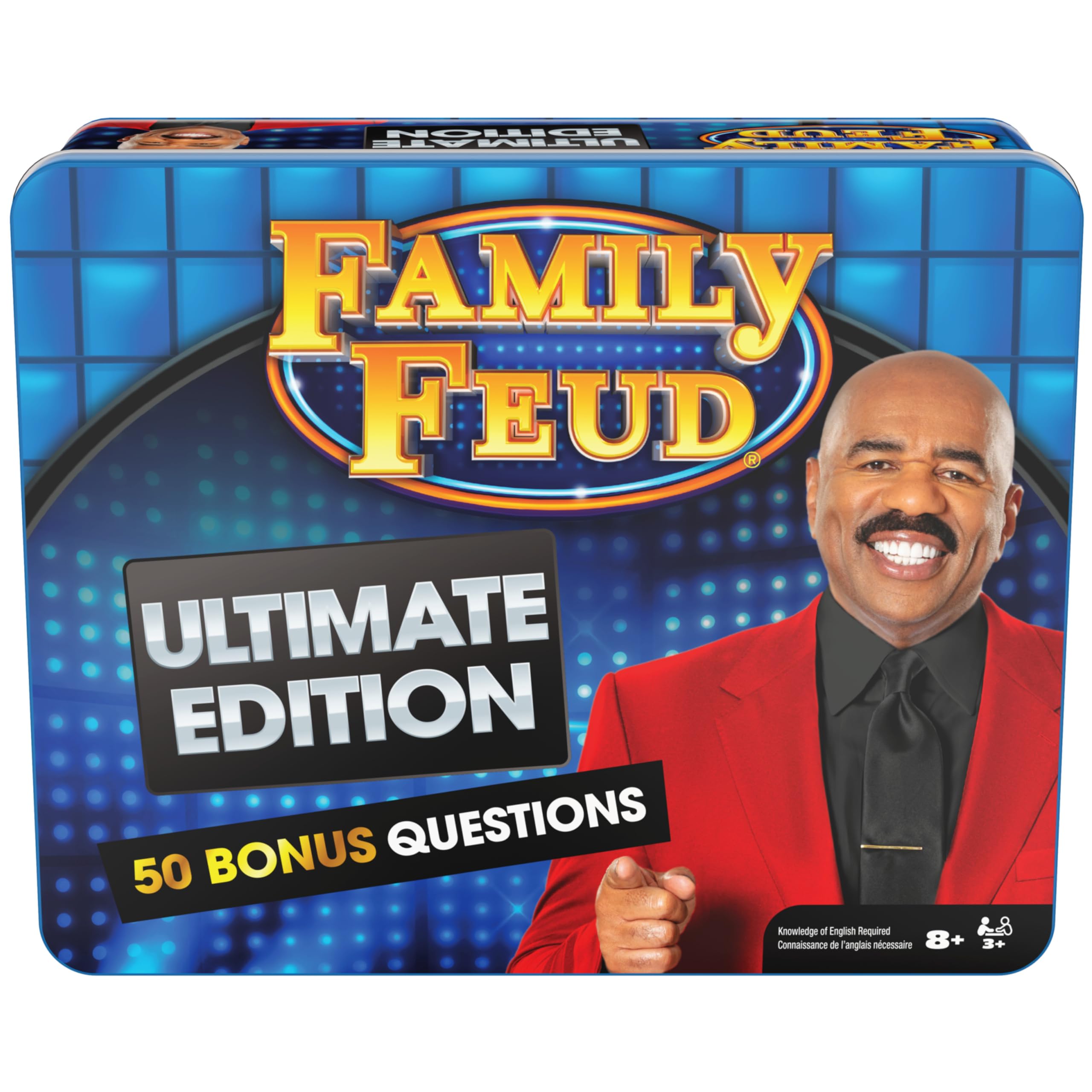
The TV show in a collectible tin that turns your dining table into a Steve Harvey-hosted showdown.
Family Feud: Ultimate Edition brings the classic survey-based game show home. Two teams face off, picking a host to play as Steve Harvey while trying to guess the most popular answers to survey questions. The Ultimate Edition includes 150 Face Off Question Cards, 50 Fast Money Cards, 1 Steve Harvey Card, 1 Dry Erase Scoreboard, and 1 Dry Erase Marker. The whole thing packs into a 9.57 x 2.52 x 7.76 inch collectible tin, making it more portable than most boxed games.
The review pages are consistent: “perfect game for our family game days” and “super fun game to play with family.” The game is fast-paced — estimated playtime is 20 minutes — and encourages interaction across all ages. The Fast Money Bonus Round adds a dramatic finish where one player from each team faces the buzzer. The tin packaging is a real plus for storage and travel, but owners note the instructions are initially unclear; the gameplay flows naturally once you start playing. It is a lighter, more casual pick than the strategy games on this list, ideal for families who want to laugh rather than think too hard.
Best for casual game nights: no complex rules to teach, no strategy to master — just read the question and guess what the survey said.
Not for deep strategists: if your family prefers games where skill determines the winner, the random survey answers can feel arbitrary.
Reach for it when: you have a mixed group of ages and attention spans and want a game that anyone can jump into without a teach.
One honest limitation: the replay value depends on how quickly your family memorizes the survey answers; the bonus questions help, but after several sessions it may feel same-y.
7. Big Discoveries Dumpster Dice Fast-Paced Family Dice Game
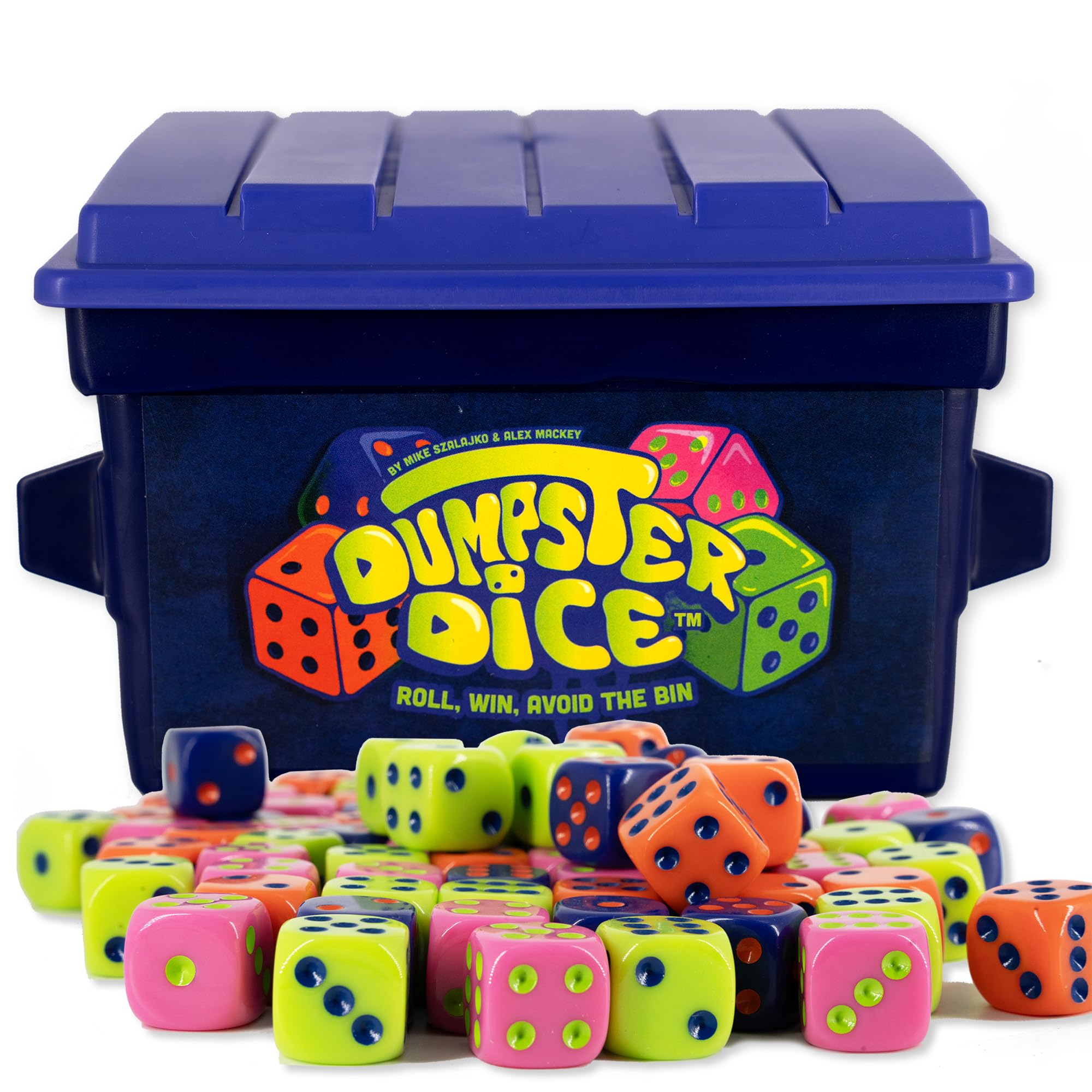
A dice-rolling battle that fits in a pocket and takes five minutes to produce total chaos.
Dumpster Dice is the shortest and most portable game in this list. You roll dice to complete a 1-6 set, collecting matching numbers while avoiding duplicates that send you back to the start. The game comes in a durable dumpster tin with a removable lid that doubles as the game board. Inside are 80 colorful dice in 4 colors (red, blue, green, pink), a graffiti sticker sheet, and an instruction sheet with 5 unique gameplay variations. At just 6 x 5 inches and weighing 0.53 kg, it is designed for travel — slip it in a bag for restaurants, camping trips, or waiting rooms.
The thing everyone raves about is the fun — over 140 owners call it out, making it the most-praised aspect. The review pages say it is “so easy to play” and “keeps my 9-year-old on their toes with how quick you can get through a game.” The compact size is a major plus, as the review notes: “love the actual dumpster as well! makes it easy to use on the go.” The catch is that it is light on strategy — this is a pure luck-and-speed game, so it works best as a warm-up or a filler between longer games. Families who prefer deep tactical play will find it shallow, but for pure giggles and fast-paced competition, it is tough to top. As owners put it: “the marbles all connect and you lose, can’t stop laughing.”
Why it is a crowd-pleaser
- Extremely fast rounds (5-10 minutes) allow non-stop action and quick rotations
- Durable dumpster tin doubles as game board and storage — highly portable
- Includes 5 variation modes for extra replayability
One limitation
- Purely luck-based; no skill or strategy involved, which may disappoint strategic players
Perfect for: families with young kids, travelers, or anyone who wants a quick, low-stakes game that delivers laughs in under 10 minutes.
Not for: families who prefer games where skill and planning determine the winner.
8. Runs in The Family

The game that asks how well you really know your own family — and the answers are hilarious.
Runs in the Family is a simple premise: draw a topic card, and everyone writes down their answer. When the answers are revealed, you score points by matching with other players. The twist is that the game is about syncing with your family — learning what they think, remembering shared experiences, and laughing at how different your perspectives can be. With over 200 topics and a quick 15-minute gameplay, it is designed for the family that loves talking more than competing. At 8.8 ounces and dimensions of 1.7 x 4.5 x 0.1 inches, it is travel-sized and lightweight.
The unanimous praise centers on fun — nearly 90 owners call it out. The review pages describe it as “engaging for all ages with basic writing skills” and note that “some questions don’t apply but spark memories and stories.” Families note they “play a round of it every night after we eat dinner.” The catch is value for money — some owners feel the price is steep for a box that is essentially a deck of cards and a score pad. The prompts can also be house-specific or feel silly, so families with a broad sense of humor will get more out of it. It is a conversation starter, not a strategy game, and it shines best when your family enjoys reminiscing as much as scoring.
The real magic: the game is less about winning and more about the stories that spill out when everyone realizes they all answered differently.
A practical heads-up: the questions are not all winners; some prompts feel lazy or irrelevant, but the “skip and move on” rule keeps the energy up.
Best for: families who value bonding and storytelling over competition, and who enjoy rotating through short rounds between other activities.
Think twice if: your family prefers games with clear winners, complex rules, or high replay value from different mechanics rather than different questions.
9. Magnet Game, Magnetic Game Chess 40 Pieces

A magnet dexterity game that turns a simple rule into dangerously addictive physics.
This is not chess. This is a magnet game where 40 magnetic stones are equally shared between players. You take turns placing one stone on the board. The first player to get rid of all their magnets wins. The twist: when stones jump together during one player’s turn, that player collects them — meaning the more aggressively you play, the more stones you might end up holding. The game comes with a game board and a storage bag for portability. At 10 x 10 x 0.1 inches, it is thin enough to slide into a backpack or glove compartment.
The review pages are full of the kind of praise that comes from genuine surprise: “the most fun and delightful game that puts a smile on everyone’s face.” The number one praised aspect is gameplay — nearly 100 owners highlight it. The magnetic pulling action creates unpredictable moments that make everyone laugh, especially when the magnets “all connect and you lose, can’t stop laughing.” The catch is durability: several buyers report the board arrived cracked, describing it as a “flimsy piece of pressed plastic.” The magnets themselves also get mixed feedback — some find them too powerful, causing stones to jump together when you touch the board. It is a budget-friendly entry point for families who want a quick, physical game, but you may want to handle the board gently.
What makes it fun
- Simple rules that a 4-year-old and an adult can learn in 30 seconds
- Magnetic chaos creates hilarious moments — stones jumping together is the core entertainment
- Portable with included storage bag
Known limitation
- Board durability is hit-or-miss; some units arrive with cracks or flimsy construction
- Magnets can be too strong, causing unexpected jumps that may frustrate younger players
Grab it for: families with very young children (ages 4-10) who want a physical, laugh-filled game that does not require reading or strategy.
Skip if: you need a durable board game that will survive frequent, enthusiastic play — this one demands care.
Understanding the Specs
Player Count and Scaling
The most overlooked spec in family board games is the number of players it actually supports well. A game that claims 2-4 players but is only fun at 4 will gather dust in a household of three. Look for games with a minimum player count your family meets at every session — 2-player capability is a must for couples or small households. For large gatherings, games that scale to 6+ players or even 24 (like Outsmarted) ensure no one is left out. Also check if the game plays well at its minimum count — some games require the full player count to generate the right energy or balance.
Estimated Playtime and Round Structure
Playtime is the single biggest predictor of whether a game gets finished or abandoned halfway. Games with 5-10 minute rounds (Dumpster Dice, Magnetic Chess) are perfect for restless kids, warm-ups, or playing multiple rounds in quick succession. Games with 30-60 minute playtimes (Ticket to Ride, Harmonies) work best for dedicated game nights where everyone has committed to sitting down for the duration. The healthiest family collection has at least one short game and one longer game so you can match the energy of the room. Pay attention to whether the playtime is per round or total — some games have quick rounds but can stretch over multiple, while others are one-and-done.
FAQ
What is the best family board game for large groups with mixed ages?
How do I know if a board game has high replayability?
What is the difference between a party game and a strategy game for families?
Can a 6-year-old play these games?
Which game works best for a family of 3?
Are app-based board games like Outsmarted worth the extra cost?
How long does a typical family board game session last?
What if my family does not like competitive games?
Which of these games travels best?
Is there a solo option in any of these games?
Final Thoughts: The Verdict
If you want one dependable pick, the best family board games of all time winner is the CGE Codenames (2nd Edition) because it combines deep replayability, team-based fun, and a box size that travels anywhere — and it is the undisputed crowd favorite with nearly 30,000 owners behind it. If your family prefers building landscapes over guessing words, grab the Asmodee Harmonies for its gorgeous components and relaxing solo option. And for large multigenerational gatherings where you want every age to compete on even ground, the Outsmarted is the one to reach for — its age-adjusted difficulty and remote-play feature make it the only game that lets a 9-year-old and a grandparent truly face off.
How We Picked
We do not accept paid placement. Every pick is matched to a real buyer and a real use-case; we do not hands-on test units.
Sources & Methodology
Specifications: manufacturer listings and product documentation. Review insights: verified customer reviews, as of July 2026. Pricing: not shown on this page (it changes often); check the current price via the retailer link.
As an Amazon Associate, WellFizz earns from qualifying purchases. This does not affect which products we feature.
Related Guides

Mo Maruf
I created WellFizz to bridge the gap between vague wellness advice and actionable solutions. My mission is simple: to decode the research and give you practical tools you can actually use.
Beyond the data, I am a passionate traveler. I believe that stepping away from the screen to explore new environments is essential for mental clarity and physical vitality.