Our readers keep the lights on and my smoothie glass nicely filled. As an Amazon Associate, I earn from qualifying purchases.
Specs are compiled from manufacturer listings and verified buyer reviews and can change over time — please confirm the key details on the product page before buying.
The moment the power goes out, a cheap radio with a dead battery is just a paperweight. The real test of an emergency hand crank radio isn’t the flashing lights — it’s whether you can still hear the weather alert on the third day without plugging anything into a wall. This guide breaks down the models that actually keep you informed and powered, from budget-friendly essentials to premium power stations you can rely on through a multi-day outage.
I’m Mohammad Maruf — the founder and writer behind WellFizz. This guide is built by comparing the manufacturers’ published specifications and the patterns across verified customer reviews, so you get each pick’s real strengths and trade-offs instead of marketing spin.
Whether you are preparing for hurricane season or building a go-bag for remote camping, you need a radio that combines reliable NOAA reception with enough onboard power to keep your phone alive. Here is exactly how to pick the right emergency hand crank radio for your situation, without wasting money on a unit that will let you down when you need it most.
Our Picks at a Glance
How To Choose The Best Emergency Hand Crank Radio
Choosing the right emergency radio depends on a handful of real-world factors that matter when the grid goes down. Ignoring any one of them can leave you with a unit that looks the part but fails the moment you need to hear a tornado warning or charge a dying phone.
Battery Capacity: The mAh Truth Test
The battery capacity, measured in milliampere-hours (mAh), tells you how much energy is stored inside. This is the most important spec. A higher number means you can run the radio, lights, and phone charging for much longer. Be wary of models that make unrealistic claims — a real 10000mAh battery can charge a typical smartphone from zero to full at least once, whereas a 2000mAh battery might only give a phone a partial boost. Your goal is to find a radio that can power itself and your essential devices for at least a full day of use.
Charging Options: Crank vs Solar vs USB-C
The best radios offer multiple ways to get power. A hand crank is your last-resort source when everything else is dead — you want a crank that feels smooth and generates power efficiently. A solar panel is great for topping off the battery during the day, but not all panels are equal. A large, high-efficiency monocrystalline panel will charge much faster than a tiny decorative one. USB-C charging lets you pre-charge the radio from a wall outlet or a car charger before a storm hits, so you start with a full battery.
NOAA Weather Reception and Alerts
A radio without reliable NOAA reception is missing its core purpose. Look for a model that can receive all seven NOAA weather band frequencies. The most critical feature is an automatic alert system that turns on the radio and broadcasts a warning when the National Weather Service issues a severe weather alert. A loud alarm that follows the alert ensures you wake up or hear the danger, even if the volume is down.
Build Quality and Portability
An emergency radio needs to survive a drop, a splash, and being tossed into a duffel bag. Look for an IPX6 or higher water resistance rating, meaning it can handle powerful water spray from a hose. A compact size that fits in a backpack or a glove compartment is a huge advantage. Large, tactile buttons and a sturdy knob make the radio easy to use in the dark or with cold, shaky hands.
Quick Comparison
| Model | Best For | Battery Capacity | Charging Methods | Lighting | Amazon |
|---|---|---|---|---|---|
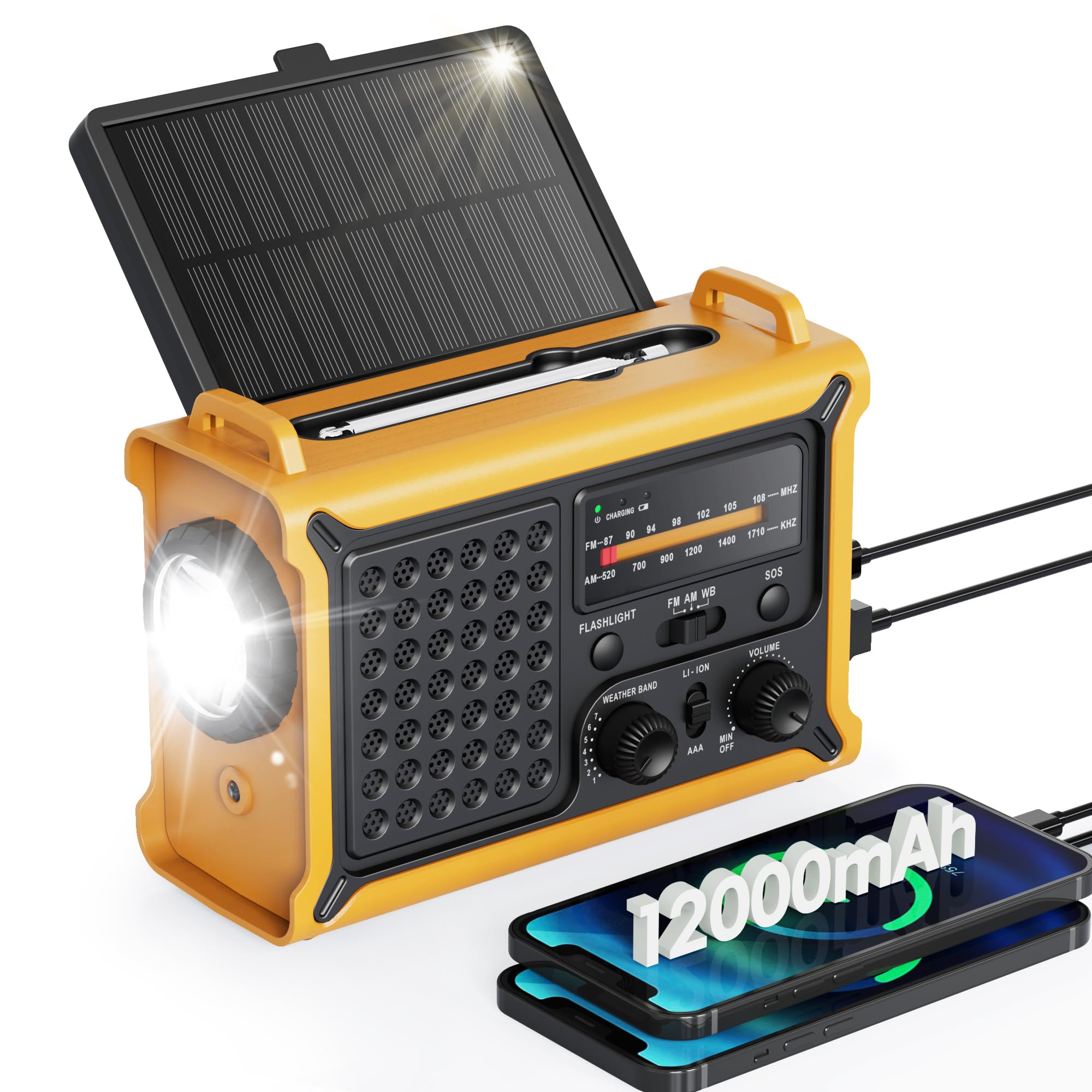
| Roxicosly CR1030★ Best Overall | Best Overall | 12000mAh | Solar / Crank / USB-C / AAA | 5W Flashlight + 12-LED Lamp | Amazon |
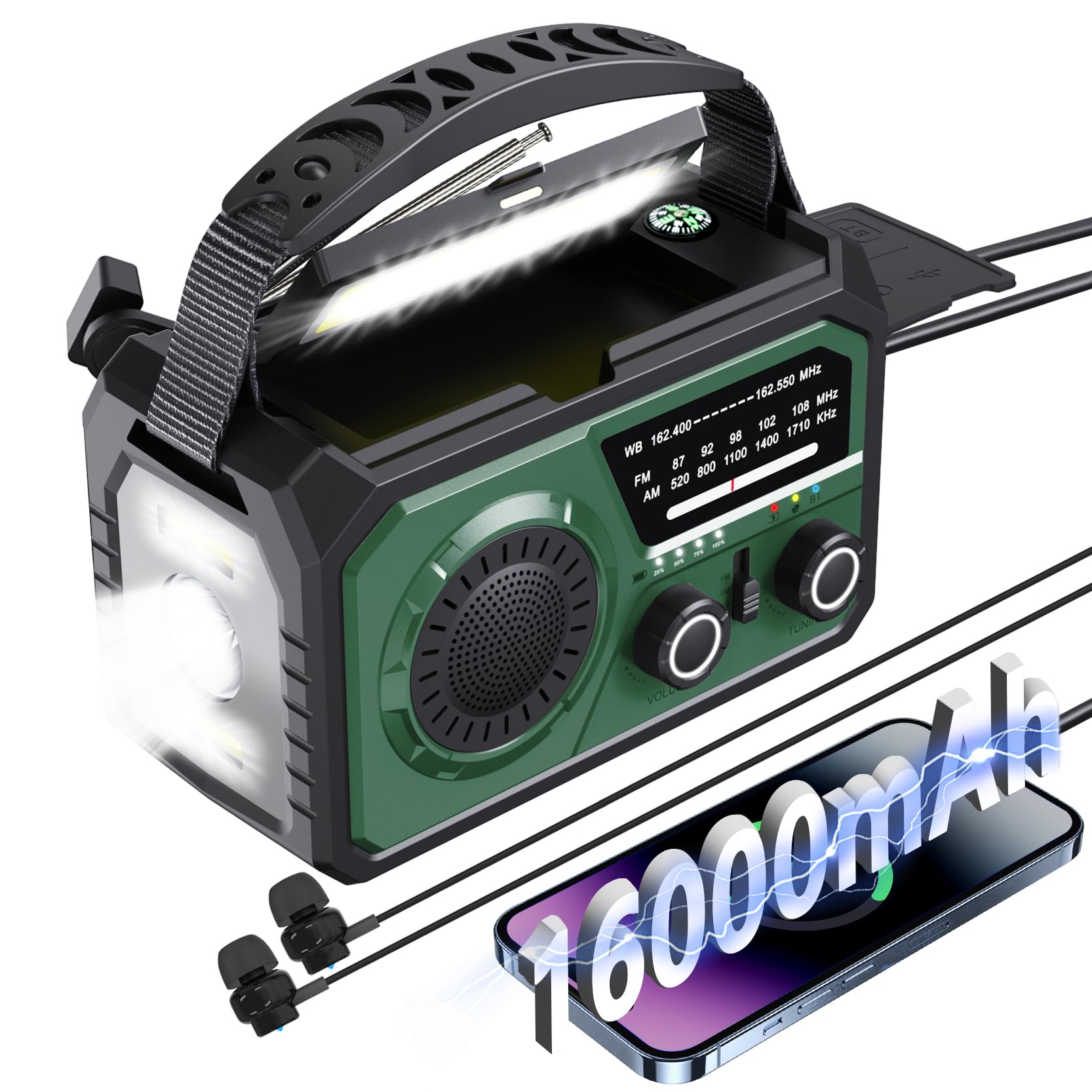
| FQBLXYUltra Capacity | Ultra High Capacity | 16000mAh | Dual Solar / Crank / USB-C | 3-Mode Flashlight + Reading Lamp | Amazon |
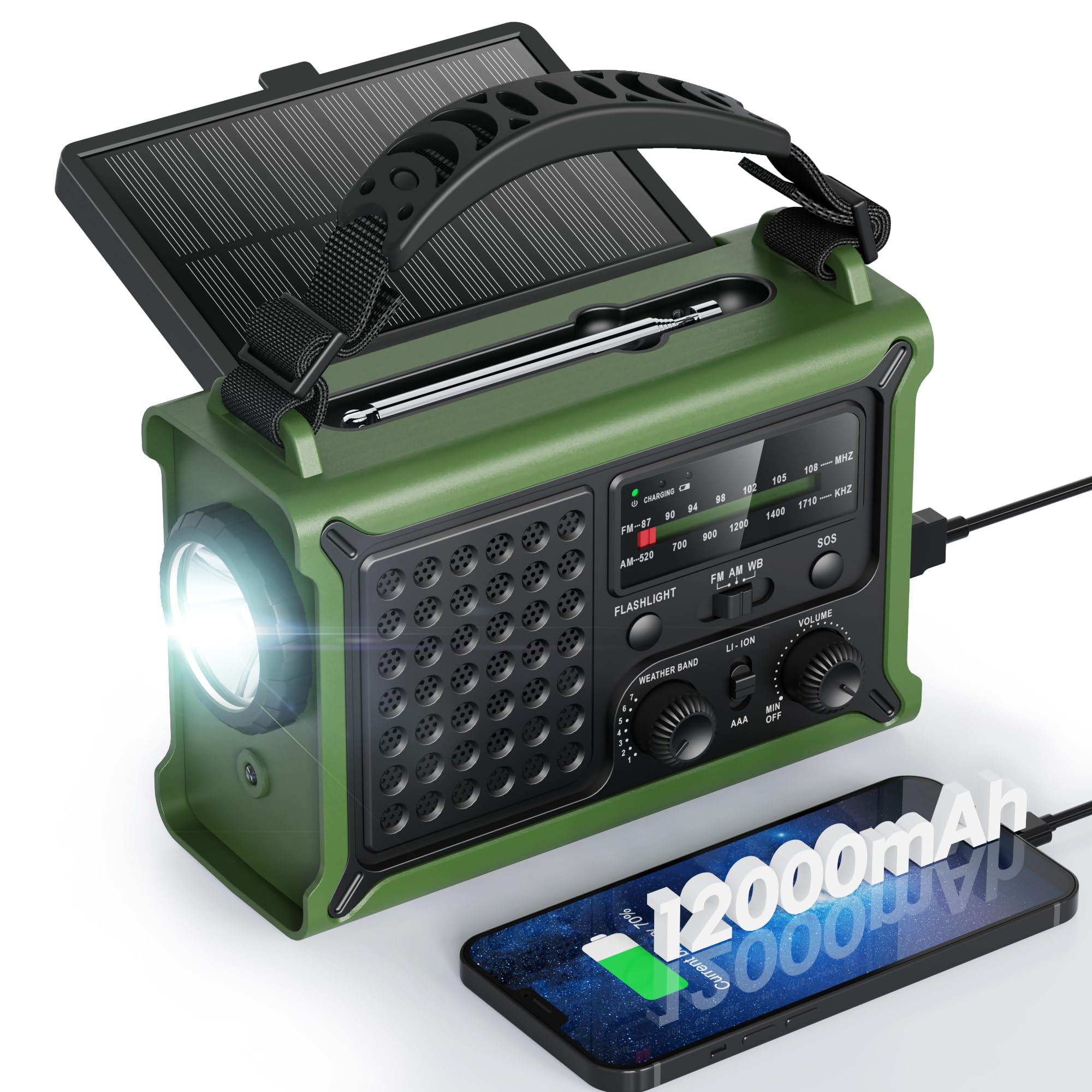
| Raynic 1030Premium Build | Premium Build | 12000mAh | Solar / Crank / USB / AAA | 5W Flashlight + Lamp | Amazon |
| Mesqool | Top Performer | 12000mAh | Solar / Crank / USB-C / AAA | 260ft Flashlight + Reading Lamp | Amazon |
| Rychi | Best Value | 10000mAh | Solar / Crank / USB-C / AAA | 3W Flashlight + Reading Lamp | Amazon |
| FosPower A1 | Compact & Durable | 7400mWh (2000mAh) | Solar / Crank / USB / AAA | 1W Flashlight + 4-LED Lamp | Amazon |
| RunningSnail MD-090P | Budget Champion | 14800mWh (4000mAh) | Solar / Crank / USB / AAA | 3-Mode Flashlight + Motion Sensor Lamp | Amazon |
| BAIJIALI Classic | Entry Level | 2600mAh / 9620mWh | Solar / Crank / USB-C | LED Flashlight | Amazon |
In‑Depth Reviews
1. Roxicosly Emergency Weather Radio (CR1030)
Our pick — over 4.5★ from 400+ verified ratings; the strongest balance of quality and price.
The Roxicosly CR1030 nails the balance of massive battery, fast charging, and real-world durability.
This radio starts with a real 12000mAh battery for powering your phone and keeping the lights on. The 8500mm² monocrystalline solar panel captures light much faster than typical models, which buyers confirm works even in indirect light. The hand crank is built around a high-efficiency dynamo (a generator that turns your crank motion into electricity) — just one minute of cranking gets you enough power for emergency calls or a news update. The crowd loves the sound quality, with well over 60 owners praising the clear audio and strong reception across AM (Amplitude Modulation for long-distance talk radio), FM (Frequency Modulation for local music and news), and all seven NOAA weather bands.
You get two lighting sources: a 5W adjustable-beam flashlight and a soft 12-LED reading lamp, both with multiple brightness levels. On the honest side, the rubber flap covering the charge port feels a bit loose and can pop open, so treat it gently. The storm warning siren itself has no separate volume control — it fires at full blast, which is jarring but effective.
crisp reception: In one test, an owner ran both lights and FM radio for 18 hours before the low-battery warning appeared.
Bulkier design: A few owners found the tuner less sensitive on very distant stations, though local and weather reception is strong.
For reliable alerts: You want a rugged, high-capacity radio that can charge your phone multiple times, receive clear NOAA alerts, and survive a rainstorm. It is the most complete package for serious emergency prep.
If space tight: You need a pocket-sized unit for ultralight backpacking — at 6.8 x 2.88 x 4.74 inches, it is built for home or car use, not a day hike.
2. FQBLXY 16000mAh Emergency Weather Radio
A 16000mAh battery with dual solar panels makes this the power king for extended off-grid scenarios.
This radio holds the largest battery capacity in the lineup — 16000mAh (milliampere-hours, the measure of how much energy the battery stores) — which is enough to keep a smartphone charged for several days of regular use. The dual solar panels offer better charging efficiency than a single panel setup, meaning you can top off the battery faster during daylight. Beyond the power, it is a full-featured emergency tool with AM/FM/NOAA reception, a 3-mode flashlight, a separate reading LED lamp, an SOS alarm (an emergency siren to signal for help), an earphone jack, and even a compass. The upgraded LCD display shows channel information and battery level so you always know your status.
Reviewers consistently call it well-made and compact for its capacity, praising the clear sound and easy-to-use controls. The main consideration is that the hand crank and solar are best for maintenance charging — you will still want to pre-charge via USB-C before a storm. It is the radio you grab when you cannot guarantee access to sun or crank time but need a huge energy reserve — it holds noticeably more power than the Roxicosly CR1030 for charging phones.
For long blackouts: Your primary concern is keeping multiple phones and devices charged during a multi-day outage, and you want the biggest battery reserve available.
If you need a lighter radio, skip it: the 16000mAh battery adds noticeable weight and size that might not suit a compact bug-out bag.
3. Raynic 12000mAh NOAA Weather Radio (1030)
A rock-solid build with a 5x larger solar panel and a 57mm speaker that sounds noticeably richer.
The Raynic 1030 differentiates itself with a focus on ergonomics and audio. Its 57mm full-range speaker delivers richer bass and clearer highs than most emergency radios, making it a pleasure to listen to during long power outages, not just a tinny soundtrack. The solar panel is notably larger than conventional panels, and buyers report it handles low-light charging well. The hand crank is smooth and extended for comfortable rotation. You get a 120dB SOS siren (a loud 120-decibel alarm for signaling rescue), a 5W flashlight and a reading lamp, and anti-slip knobs and a soft silicone strap for easy handling.
What sets this apart is its NOAA-certified design for automatic alerts — it receives real-time National Weather Service warnings for hurricanes, tornadoes, floods, and storms and triggers an alarm automatically. Owners frequently mention the excellent reception quality, which beats their other radios. It is noticeably solid and heavier, so it feels less like a cheap gadget and more like a piece of survival gear. The speaker is richer than the Rychi’s, making long listening sessions easier during an outage.
Audio-focused prepper: if you want a premium-feeling radio with exceptional audio quality, the fastest solar charging in its class, and NOAA alerts you can actually hear.
Not pocket carry: this is a 6.81 x 2.91 x 4.76 inch unit meant for a shelf, car, or emergency kit, not a pocket.
4. Mesqool Solar Radio Emergency Hand Crank
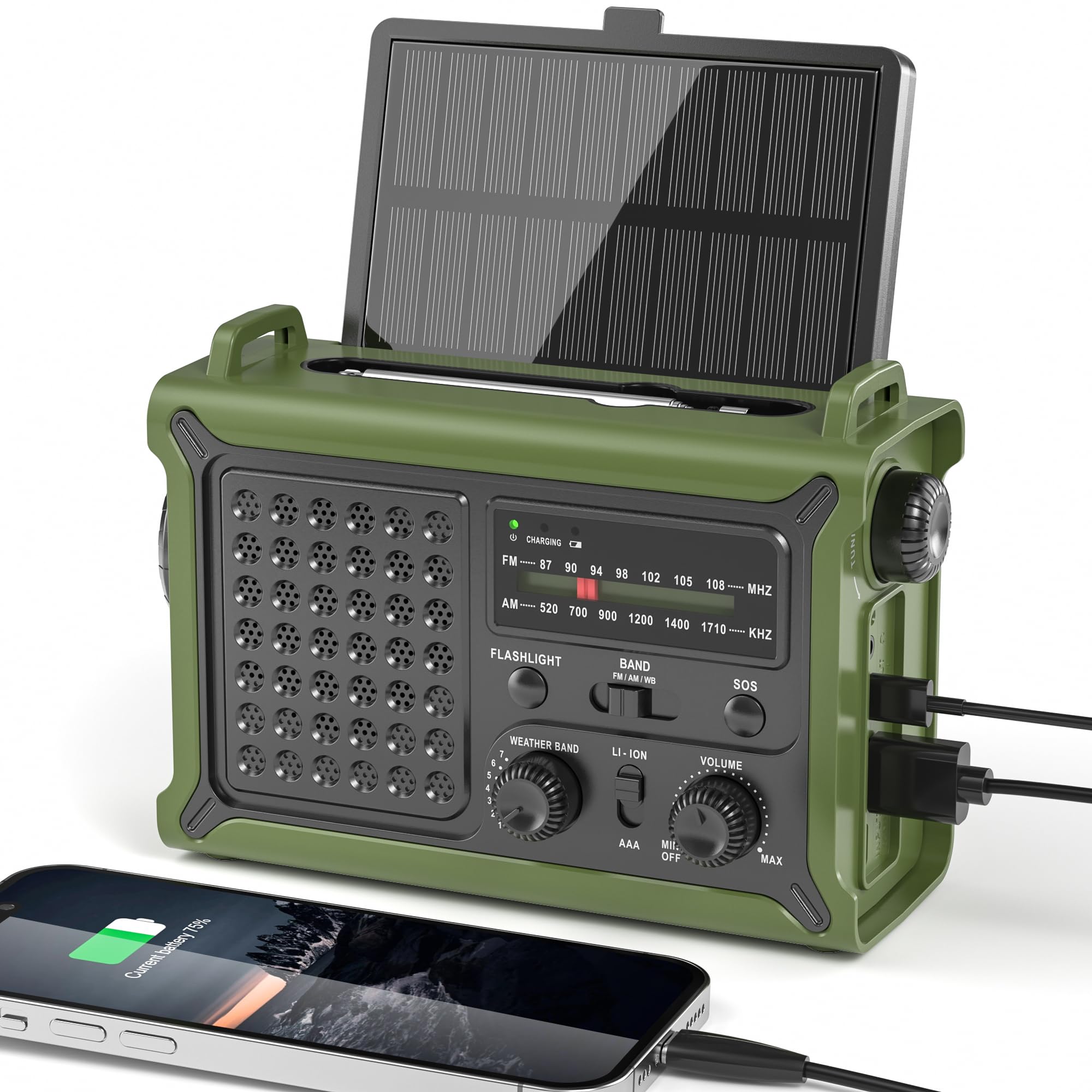
Massive solar panel, high-torque crank, and five power options make this the most versatile 12000mAh radio.
The Mesqool packs a true 12000mAh lithium battery and an 8500mm² monocrystalline solar panel that is 8500mm² versus the 2000mm² decorative panels found on budget radios. This means it actually charges noticeably faster in sunlight, even on cloudy days. The hand crank uses a high-torque generator with a larger copper coil — about 3 minutes of cranking provides enough power for a phone call or radio time. The reception is excellent across AM, FM, and NOAA, backed by a high-sensitivity signal chip and noise-reduction circuitry (electronics that clean up static for clearer audio) that owners say is the best of the three radios they tested.
It includes a powerful flashlight that reaches up to 260 feet (about the length of a football field), a frosted reading lamp, and two brightness levels for both lights. The ergonomic shape with large tuning knobs and a non-slip grip makes it easy to operate in the dark. One owner used the radio for 10 days on solar power alone during a camping trip, praising the clear sound and reliable weather band.
For outdoor use: You need a high-capacity radio with a genuinely useful solar panel and a crank that charges fast enough to be your primary power source in a pinch.
If you need a battery level indicator, reconsider: a few reviews note its absence on this model, so you will need to charge it periodically by habit.
5. Rychi 10000mAh Emergency Radio

A 10000mAh battery in a compact package with four charging methods and an excellent price-to-performance ratio.
The Rychi radio delivers a 10000mAh rechargeable battery that can run the radio for up to 25 hours at medium volume, the reading lamp for 30 hours, and the flashlight for 40 hours — this gives you enough stamina for a typical weekend outage without needing to crank at all. It supports four power sources: USB-C, hand crank, solar, and AAA batteries. The 7-section antenna pulls in AM, FM, and NOAA bands with solid clarity, and the bright LCD display makes tuning easy, even in low light. The 3W flashlight and LED reading lamp provide good coverage for a tent or a dark room.
What wins people over here is the sheer value — this radio costs less than many with half the battery capacity. The crank action is smooth, and the radio is light enough at 1.2 pounds that a child can carry it during an evacuation. One experienced user called it a “solid radio” with good reception, noting that the solar panel is too small for serious recharging but works for trickle maintenance. The solar panel is noticeably smaller than the Mesqool’s 8500mm² panel.
Power bank priority: You are looking for the best bang for your buck — a high-capacity radio that covers all the essential features without the premium markup.
Plan to pre-charge if you rely on solar: the panel is functional but small, so plan to pre-charge via USB-C or use the crank.
6. FosPower NOAA Emergency Weather Radio A1
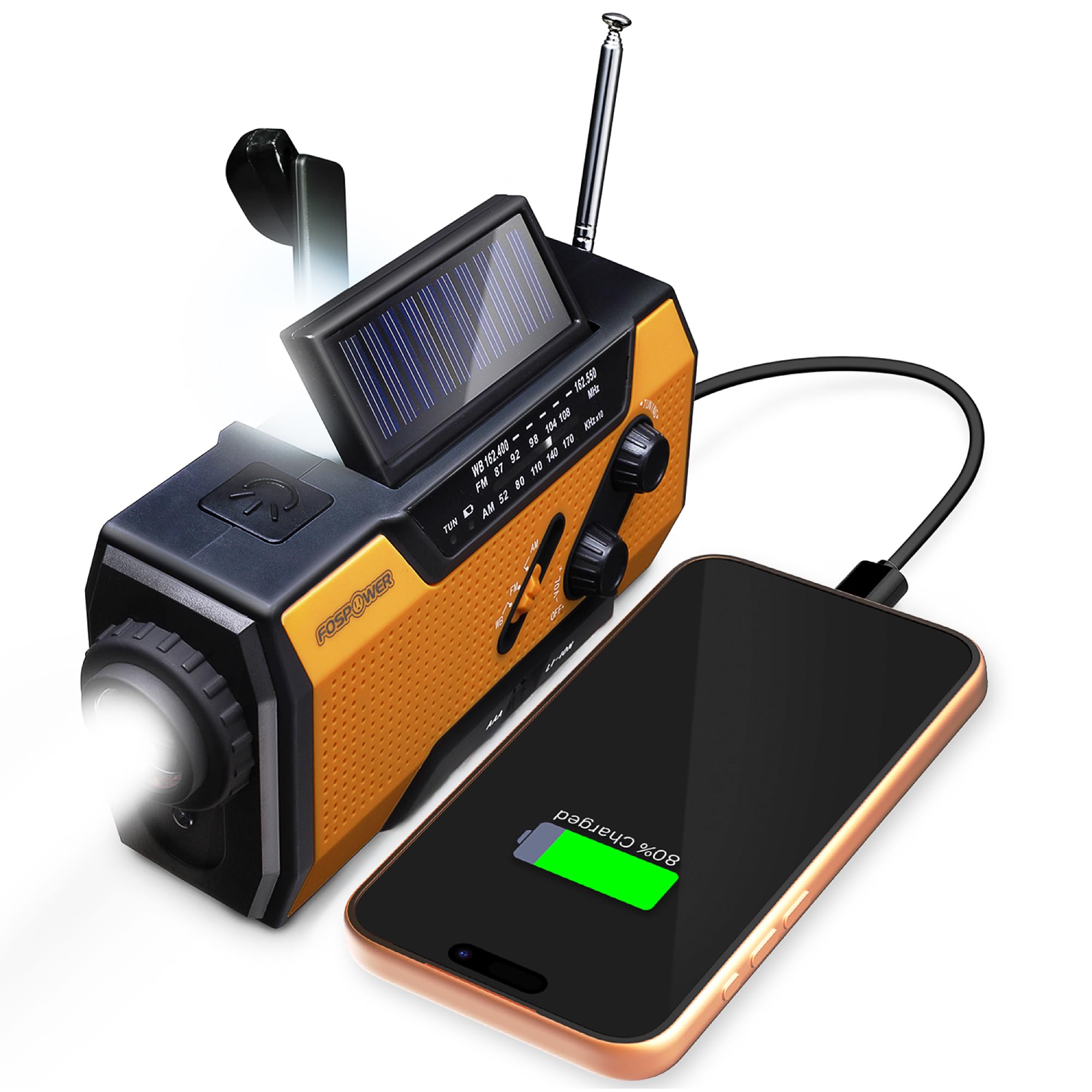
A time-tested, compact radio from a respected brand with a Limited Lifetime Warranty and a loyal following.
The FosPower A1 has been a favorite for years thanks to its proven reliability. It has a 7400mWh (2000mAh) power bank (milliwatt-hours and milliampere-hours both measure energy; this battery can give a small tablet or phone an emergency boost). The radio uses three power sources — crank, solar, and AAA batteries — so you always have a fallback, even if the internal battery is depleted. It features a 4-LED reading light and a 1W flashlight. The reception is dependable, pulling in NOAA and AM/FM broadcasts to keep you informed.
Thousands of owners (over 37,000 ratings) have bought this for hurricane and storm preparation, and the consensus is that it “works right from the start” with clear sound. The compact dimensions of 6.2 x 2.1 x 2.9 inches and a weight of 14.8 ounces make it easy to stash in a glove box or emergency kit. The Limited Lifetime Warranty adds confidence that you won’t get with most budget brands. On the charging front, reviews note it needs occasional charging to keep the battery topped up, and some would prefer a larger capacity for longer outages. It is far more packable than the 16000mAh FQBLXY but holds much less power.
For durability: You want a proven, compact radio from a well-known brand backed by a lifetime warranty, perfect for throwing into a car kit.
If you need a full phone charge, look at higher-capacity models: the 2000mAh battery is best for short bursts, not multiple phone recharges.
7. RunningSnail Emergency Crank Radio MD-090P
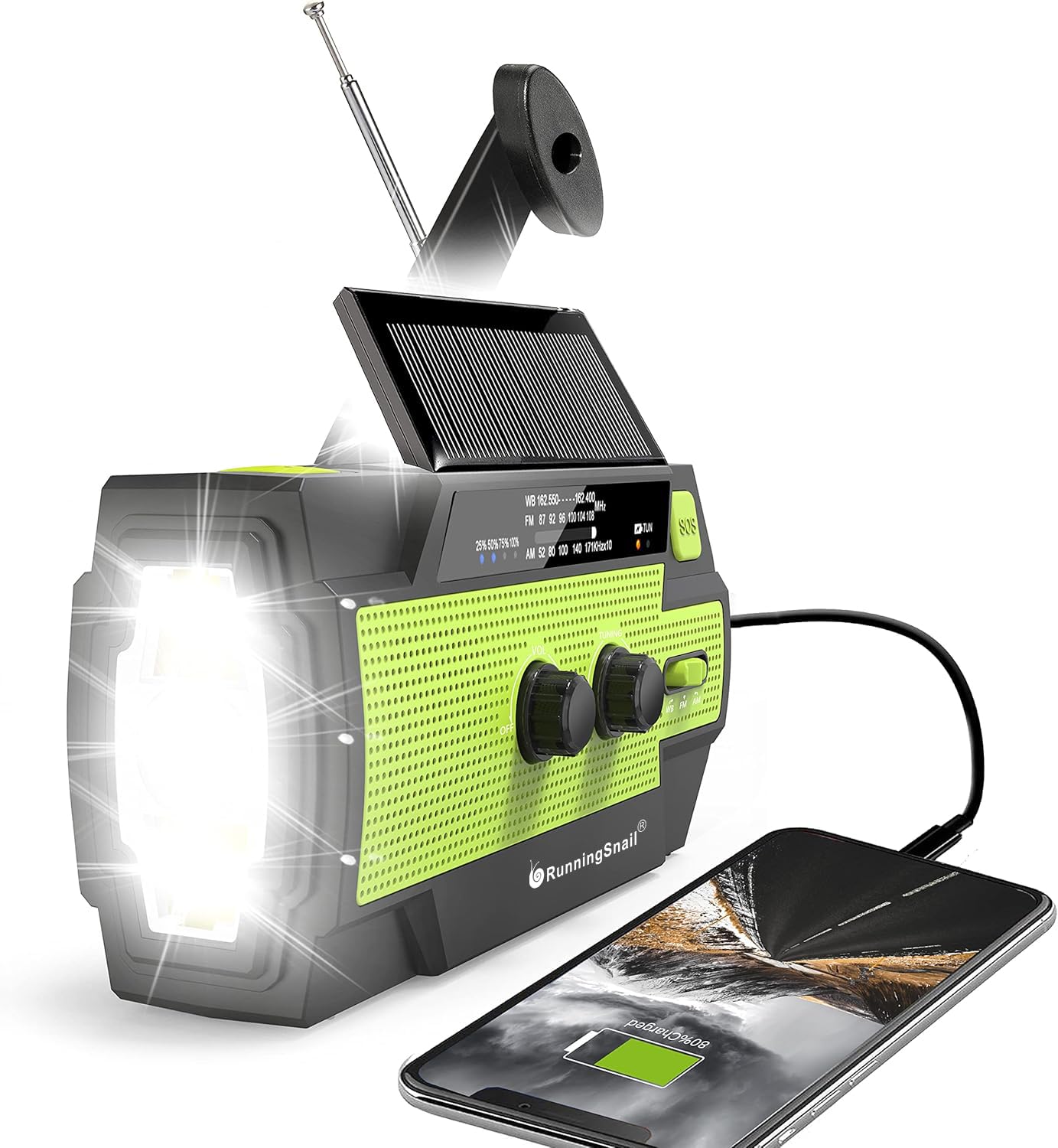
A budget-friendly radio that packs a 14800mWh battery, a motion-sensor reading lamp, and a surprisingly bright 3-mode flashlight.
The RunningSnail MD-090P is a very popular choice for cost-conscious preppers. Its 14800mWh (4000mAh) rechargeable battery can charge more than one smartphone, which is impressive at this price point. The radio itself is compact at 6.23 x 1.8 x 3.19 inches and light, making it among the most portable options. It features a super-bright 3-mode flashlight with a range exceeding 10 meters (about 33 feet), plus a motion sensor reading lamp that turns on automatically when you reach for it in the dark — a thoughtful touch for not waking your family. It covers AM, FM, and all 7 NOAA weather stations with a crisp speaker.
Owners love the value and ease of use, calling it “small, inexpensive, works well.” The hand crank works but recharges slowly, so plan for longer cranking sessions than with the Roxicosly. The flashlight is noticeably bright for its size. One note: it uses a micro-USB port for charging rather than the newer USB-C, so keep a compatible cable handy. The battery is a removable 18650 cell (a standard rechargeable lithium-ion battery you can swap), which is a nice bonus for those who like to keep spares.
Simple operation: You want a genuinely portable and affordable radio that still offers a decent battery and useful features like the motion sensor lamp.
If you want the fastest crank charging, expect to crank longer: it recharges slowly, so pre-charge via USB when possible.
8. BAIJIALI Hand Crank Emergency Weather Radio
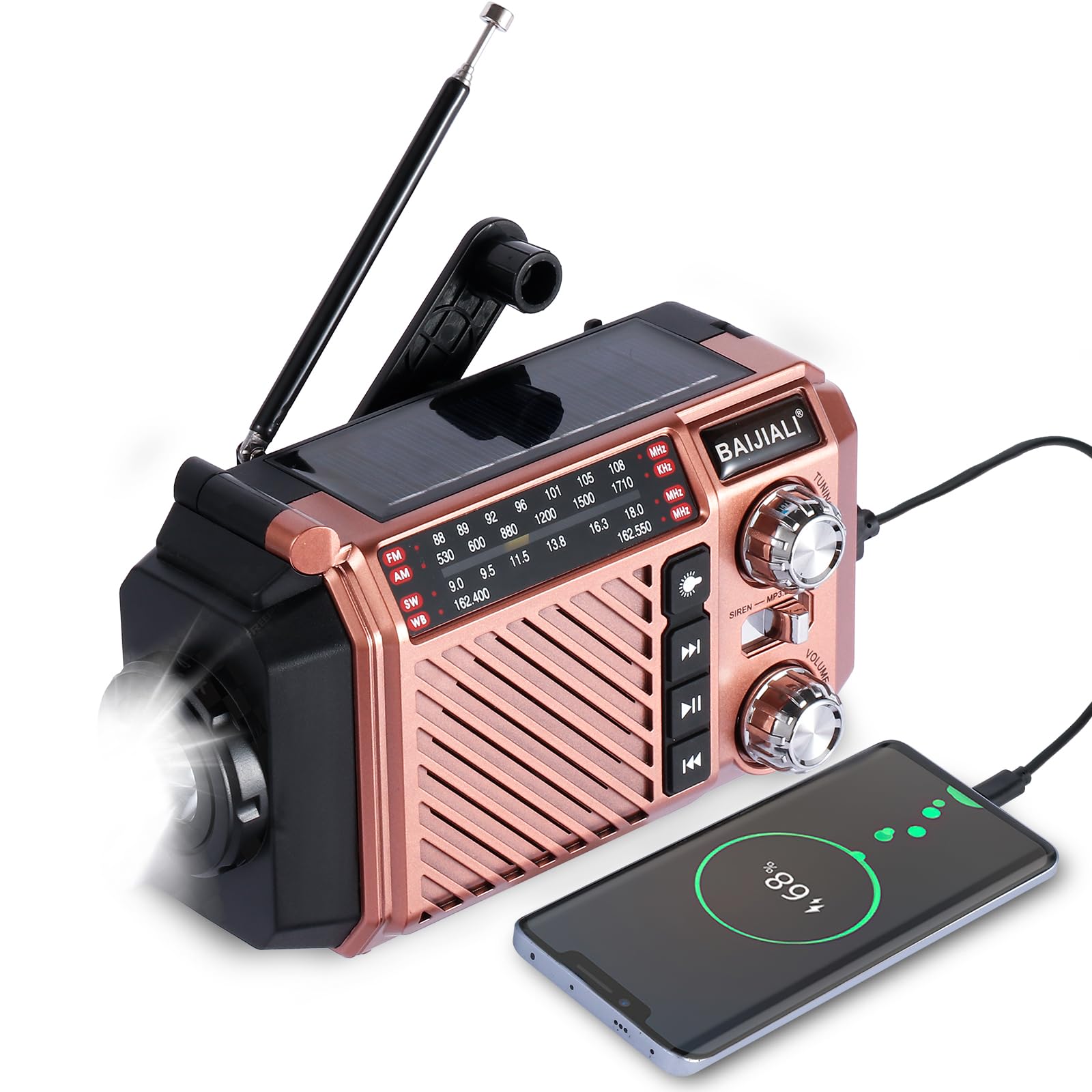
A classic-style, no-frills radio at a very low entry cost that still gets the job done for basic emergencies.
The BAIJIALI is a straightforward, no-nonsense radio for those who just want the essentials. It has a 2600mAh/9620mWh power bank that can give your phone a partial charge in a pinch. It receives AM, FM, and all 7 NOAA weather stations, plus shortwave bands (radio signals that travel long distances, giving you news from farther away) for broader news access. The radio is powered by a hand crank, a solar panel, or USB-C. It also includes a bright LED flashlight and a very loud SOS alarm that owners mention is genuinely startling — which is the whole point for signaling.
Reviews highlight its high build quality for the price and excellent AM/FM and weather band reception. One owner summed it up: “Works well, LOUD siren, power crank works well, all my stations come in, including weather.” A few notes mention that the audio quality is not the best for music and there is no headphone jack. The shortwave reception can also be tricky to tune. It is best thought of as a dependable emergency alert receiver and basic power source, not a multimedia device.
For tight budget: You need the most affordable way to get NOAA alerts and a hand-cranked backup power source into your emergency kit.
If you need to charge a phone fully or listen to music with decent fidelity, this is not the one: it is a pure emergency tool, not an entertainment radio.
Understanding the Specs
Battery Capacity: mAh vs mWh
You will see two numbers on battery spec sheets. Milliampere-hours (mAh) tells you the charge capacity at the battery’s voltage, while milliwatt-hours (mWh) accounts for the actual energy in watt-hours. A 10000mAh battery at 3.7V equals 37000mWh. For emergency radios, mAh is the more common and easier spec to compare — a higher number means more runtime for your phone and radio.
Solar Panel Quality
Not all solar panels are equal. A monocrystalline panel (made from single-crystal silicon) is more efficient than a polycrystalline one (made from multi-crystal silicon), meaning it charges faster in lower light. The panel area measured in mm² — a larger panel like 8500mm² captures significantly more sunlight than a tiny 2000mm² one. A large, efficient panel can trickle-charge the radio during a cloudy day, while a small low-quality panel is mostly decorative.
Hand Crank Efficiency
The hand crank is your last-resort power source. Look for a model with a high-efficiency dynamo (a small generator inside the radio that turns your arm motion into electricity) and a larger copper coil — these generate power faster with less effort. A good design will power the radio for several minutes after just one minute of cranking. The crank arm should be long enough for comfortable rotation and feel smooth, not gritty.
NOAA Weather Band
NOAA (the National Oceanic and Atmospheric Administration) broadcasts continuous weather information from local National Weather Service offices on seven specific frequencies between 162.400 and 162.550 MHz (megahertz, a measure of radio frequency). A radio with automatic alert capability will monitor these channels and sound an alarm when a warning is issued, even if the radio volume is off. This is a critical safety feature for severe weather events.
FAQ
Can an emergency hand crank radio charge my phone fully?
How long does a hand crank radio battery last in storage?
What does NOAA weather alert automatic mean?
Is solar charging on these radios actually useful?
What is the difference between AM, FM, and NOAA bands?
How much cranking is needed for a few minutes of radio?
Can I use regular AA or AAA batteries instead of the internal battery?
Is it safe to leave an emergency radio plugged into a wall outlet?
Final Thoughts: The Verdict
If you want one dependable pick, the emergency hand crank radio winner is the Roxicosly CR1030 because it combines a massive, verified 12000mAh battery, a fast-charging 8500mm² solar panel, and an IPX6 waterproof build in a package that owners consistently praise for sound quality and reliability. If you want the absolute highest battery capacity for multi-day phone charging, grab the FQBLXY 16000mAh. And for a proven, compact radio from a brand with a Limited Lifetime Warranty, the FosPower A1 is the one to reach for.
How We Picked
We do not accept paid placement. Every pick is matched to a real buyer and a real use-case; we do not hands-on test units.
Sources & Methodology
Specifications: manufacturer listings and product documentation. Review insights: verified customer reviews, as of July 2026. Pricing: not shown on this page (it changes often); check the current price via the retailer link.
As an Amazon Associate, WellFizz earns from qualifying purchases. This does not affect which products we feature.
Related Guides

Mo Maruf
I created WellFizz to bridge the gap between vague wellness advice and actionable solutions. My mission is simple: to decode the research and give you practical tools you can actually use.
Beyond the data, I am a passionate traveler. I believe that stepping away from the screen to explore new environments is essential for mental clarity and physical vitality.