Our readers keep the lights on and my smoothie glass nicely filled. As an Amazon Associate, I earn from qualifying purchases.
Specs are compiled from manufacturer listings and verified buyer reviews and can change over time — please confirm the key details on the product page before buying.
You want a tent that fits four people, but the real test comes when you set it up at dusk in gusty wind and someone is already asking about dinner. The best family tent for 4 balances three things that matter most: how fast you can pitch it, whether everyone stays dry in a midnight storm, and if the adults can stand up to change clothes. This guide cuts through marketing claims to find the tents that deliver on all three without the hassle.
I’m Mohammad Maruf — the founder and writer behind WellFizz. This guide is built by comparing the manufacturers’ published specifications and the patterns across verified customer reviews, so you get each pick’s real strengths and trade-offs instead of marketing spin.
After reviewing hundreds of owner experiences and comparing floor plans, pole designs, and weather protection, these are the ten tents worth your time — an honest breakdown of what works, what doesn’t, and which family tent for 4 fits your specific camping style.
Our Picks at a Glance


How To Choose The Best Family Tent For 4
A four-person tent sounds straightforward, but manufacturers measure “person capacity” in a way that can mislead you — it often means four sleeping bags packed side by side with no room for gear, bags, or moving around. The real choice depends on floor shape, peak height, and how you plan to use the tent: as a car-camping base camp or a weekend spot where you spend most of your time outside.
Floor Area and Shape Matter More Than The Rating
The square footage on the spec sheet tells you whether a queen-size air mattress fits with space to walk around it. A 56-square-foot floor works for two adults and two small kids without gear; a 90-square-foot floor lets you fit two queen mattresses side by side, which changes everything for a family of four. Nearly straight-wall cabin designs boost usable space compared to dome tents that slope inward at the edges.
Peak Height — Can You Actually Stand Up?
Center height is the difference between a tent you enjoy being in during a rainy afternoon and one that forces everyone to crawl. Look for at least 72 inches (six feet) if any adults are over 5’10”. Hub-style tents with straight walls often hit 78 to 84 inches, making changing clothes and moving around genuinely comfortable rather than a crouching chore.
Setup Speed and Style
Hub-style instant tents with pre-attached poles set up in under two minutes — you unfold, pull the hubs outward, and stake down. Traditional dome tents with separate poles and sleeves take 10 to 15 minutes but are often lighter and pack smaller. Your tolerance for setup time depends on whether you arrive at camp late, in the rain, or with tired kids in the car.
Quick Comparison
| Model | Best For | Floor Area | Center Height | Setup Time | Amazon |
|---|---|---|---|---|---|
| Gazelle Tents T4 Hub Tent★ Best Overall | Stand-up comfort & storm durability | 61 sq ft | 78 inches | ~90 seconds | Amazon |
| Coleman Sundome 4 PersonBudget Champion | Budget-friendly reliability | 63 sq ft | 4 ft 11 in | ~10 minutes | Amazon |
| HINSTANT 4/6/8/10 Person Instant TentLargest Floor | Massive floor space for the price | 90 sq ft | 73 inches | ~60 seconds | Amazon |
| EVER ADVANCED 4 Person Blackout Tent | Dark interior for late sleepers | 56 sq ft | 59 inches | ~60 seconds | Amazon |
| CORE 4 Person Tent | Stand-up cabin comfort at mid-range | 56 sq ft | 72 inches | ~10 minutes | Amazon |
| Coleman Skydome Tent With Vestibule | Extra dry storage & weather protection | — | — | ~5 minutes | Amazon |
| FanttikOutdoor Alpha C4 | Roomy instant hub with wind protection | 61 sq ft | 80 inches | ~60 seconds | Amazon |
| Naturehike Village Instant Tent | Blackout tech with vestibule & canopy | — | ~6 ft | ~60 seconds | Amazon |
| Kelty Wireless Freestanding Tent | Massive interior and dual vestibules | — | 84 inches | ~5-10 minutes | Amazon |
In‑Depth Reviews
1. Gazelle Tents T4 Hub Tent
Our pick — over 4.5★ from 850+ verified ratings; the strongest balance of quality and price.
The stand-up hub tent that shrugs off wind like its second nature.
The moment you unzip the carry bag, you see why this tent has a near-cult following among overlanders and serious family campers. The hub design means you pull the frame outward, and inside 90 seconds you are looking at a full size shelter with 78 inches of center height — a full six and a half feet of standing room. At 78 inches of center height versus the HINSTANT’s 73 inches, and it makes a real difference when you are changing clothes or helping a child into a sleeping bag.
Reviewers consistently highlight how the tent performs in nasty weather. As buyers report, it “withstood 40-50mph winds and 80mph gusts” when properly staked out, though the included stakes bend in hard ground — buy better stakes before your first trip. The six tight-weave mesh windows create cross-ventilation that keeps condensation low even when the rainfly is on. The beefy YKK zippers on two D-shaped doors are a notable upgrade from the cheaper zippers you find on most tents in this class, and Amazon’s summary confirms that zipper quality is a standout feature owners praise.
The trade-off is weight and packed size — this is a heavy, bulky tent designed for car camping, not backpacking. And while the floor area (61 square feet) is generous for two adults plus gear, it is noticeably tighter than the 90-square-foot HINSTANT for a full family of four.
What wins owners over
- Hub setup is genuinely 90 seconds — the fastest in this list for a full-size tent
- 78-inch peak height lets a 6’3″ adult stand fully upright
- YKK zippers and durable fabric hold up across dozens of trips
The honest drawbacks
- Included stakes are too weak for real wind; plan to replace them
- Heavy and bulky — strictly a car-camping tent
- 61 sq ft floor is snug for four people with gear
Reach for this if: you want a tent that goes up fast, stands up tall, and survives nasty weather without drama.
Look elsewhere if: you need to keep pack weight below 25 pounds or fit two queen air mattresses side by side.
2. Coleman Sundome Camping Tent with Rainfly
The no-surprise dome tent that has been keeping families dry for decades.
Coleman’s Sundome is the tent your dad probably owned, and it keeps selling for a reason. The 63-square-foot floor is actually slightly larger than the Gazelle T4, and it fits one queen-size air bed with room for gear bags along the sides. The WeatherTec system — a tub floor (a waterproof base that wraps up the sides) with inverted seams (stitches turned inward to block water) — has been tested in real storms for years. One owner notes it “survived downpour with no leaks when properly set up.” The frame is rated to withstand 35+ mph winds, so it handles most summer storm scenarios.
What people love most is simplicity. The pole-and-sleeve setup takes about ten minutes your first time, faster after that. The large windows and ground vent create airflow that reviewers praise for hot-weather camping — one owner says you can sleep under the stars by removing the rainfly entirely. The E-port lets you run an extension cord inside for lights or a fan without leaving the door unzipped. Durability gets mixed reviews, and the fiberglass poles are not as strong as aluminum, but at this price you can afford to replace the tent after a few seasons of heavy use.
The real constraint: 4-foot-11 center height means no adult stands upright. Fine for sleeping and sitting, frustrating for changing clothes or hanging out during a rainy afternoon. The straight-wall cabin tents below are better if headroom matters.
Ideal for: first-time family campers on a tight budget who camp mostly in fair weather and sleep inside the tent rather than living in it.
skip it if: anyone in your family is over 5’8″ or you camp in areas prone to steady rain.
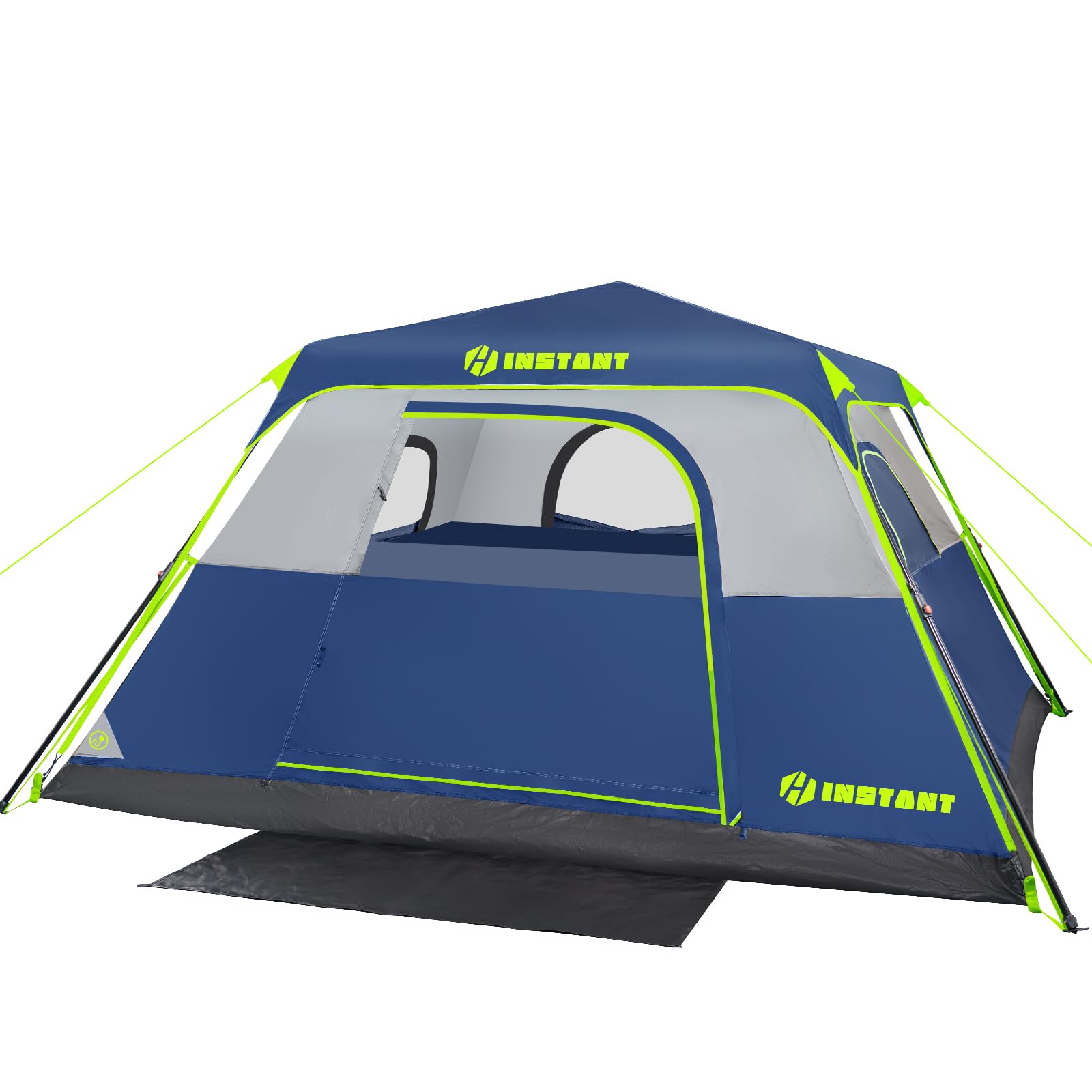
3. HINSTANT 4/6/8/10 Person Instant Tent
The budget cabin that offers a jaw-dropping 90 square feet of living space.
This is the tent that changes the math for a family of four. At 90 square feet, the floor area is 90 square feet, compared to 61 square feet for the Gazelle T4 — that is enough for two queen-size air mattresses side by side with a walking path between them. The 120-inch floor length and 108-inch width give you room to actually move around, not just crawl over each other. And at 73 inches of center height, most adults can stand comfortably near the center peak.
The pre-attached pole structure claims a 60-second setup, and owners confirm it goes up fast once you get the hang of it — though the first attempt can be stiff. The 190T polyester taffeta fabric with 2000mm PU waterproof coating and sealed rainfly seams provide solid weather protection, but there is a real split in owner experiences. Amazon’s summary flags water resistance and leakage as the most mentioned negatives, with several owners reporting seam leaks after extended rain. The included stakes and guylines are adequate for calm conditions but should be upgraded for windy sites.
The honest trade-off: You get massive space and fast setup for the money, but the waterproofing is inconsistent. Seal the seams yourself before the first trip, and consider adding a footprint. This tent is best for fair-weather family camping where space matters more than storm-proofing.
Best for: families who want the most floor space possible at a mid-range price and camp primarily in dry or mild conditions.
Not for: anyone who camps in heavy rain or expects the tent to perform reliably in a thunderstorm without extra seam sealing.
4. EVER ADVANCED 4 Person Blackout Camping Tent
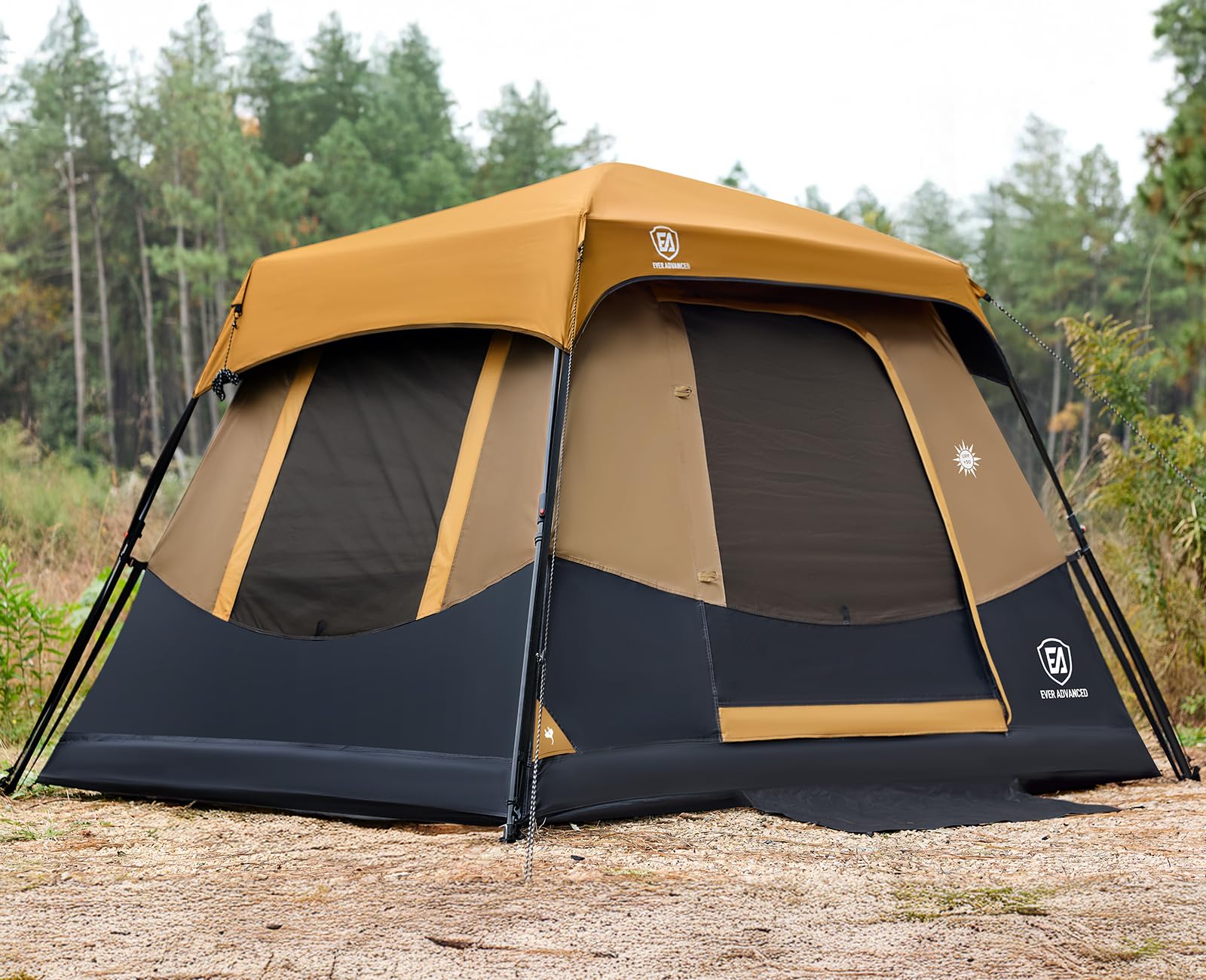
The dark-interior tent that lets the whole family sleep past sunrise.
If your kids wake up with the sun and you value an extra hour of sleep, this tent delivers. The specialized light-blocking fabric filters out most external light, creating a dark interior that owners describe as genuinely effective. The 4000mm water-resistant coating on the fly is significantly higher than most tents at this price — double the 2000mm standard — and the fully taped seams provide serious rain protection. Owners mention it stayed dry through thunderstorms in the Smoky Mountains.
The 56-square-foot floor and 59-inch center height are modest. This is a 4-person tent by the industry standard — it works for two adults and two small kids, but a queen-size mattress fills most of the floor. The 60-second pre-attached frame setup is genuine, with owners reporting 3-4 minutes on the first try. The blackout fabric does trap heat, so ventilation becomes a trade-off: the three mesh windows help, but on hot nights the interior warms up faster than a standard mesh tent.
The fine print: Packing it back into the carry bag is notably difficult — a common complaint. The 4000mm waterproof coating is excellent for its price class, but the blackout fabric’s heat retention means this tent shines in spring and fall more than peak summer.
Get it for: families who camp in sunny climates, have young kids who wake with the light, or want premium rain protection without a premium price.
pass on it if: you need standing headroom or camp primarily in hot, humid weather where airflow is critical.
5. CORE 4 Person Tent for Family Camping

A nearly straight-wall cabin that gives a 6’3″ adult room to stand.
Most 4-person dome tents force you to stoop. The CORE tent uses a nearly straight-wall design that delivers a full 72-inch center height — enough that a 6’3″ owner reports standing comfortably at the center. The 56-square-foot floor fits one queen air bed with space for gear along the sides, and the cabin shape means the walls don’t slope inward as aggressively as a dome, so that space is actually usable.
The H20 Block Technology with 1200mm fabric and fully taped rainfly has real-world proof: customers note staying dry through steady rain and 40-50 mph winds. The lower ground vents pull in cool air while the mesh ceiling releases hot air, creating convection that reviewers consistently praise. Setup takes about 10 minutes with color-coded poles. The included steel stakes are better than the flimsy wire stakes that come with most budget tents, though some owners still replace them. The main caveat is that the rainfly takes some practice to position correctly — it needs to be pre-placed before staking the tent.
What wears over time: After three years of regular use, some reviewers point out pole wear at the connection points. The tent uses fiberglass poles rather than aluminum, which is standard at this price but limits long-term durability if you camp 20+ nights a year.
Perfect for: tall campers who want cabin-like headroom without paying premium prices, and families who prioritize stand-up comfort over maximum floor width.
Not ideal if: you need to fit two queen mattresses or require a tent that will survive a decade of annual use.
6. Coleman Skydome Tent With Full-Fly Weather Vestibule
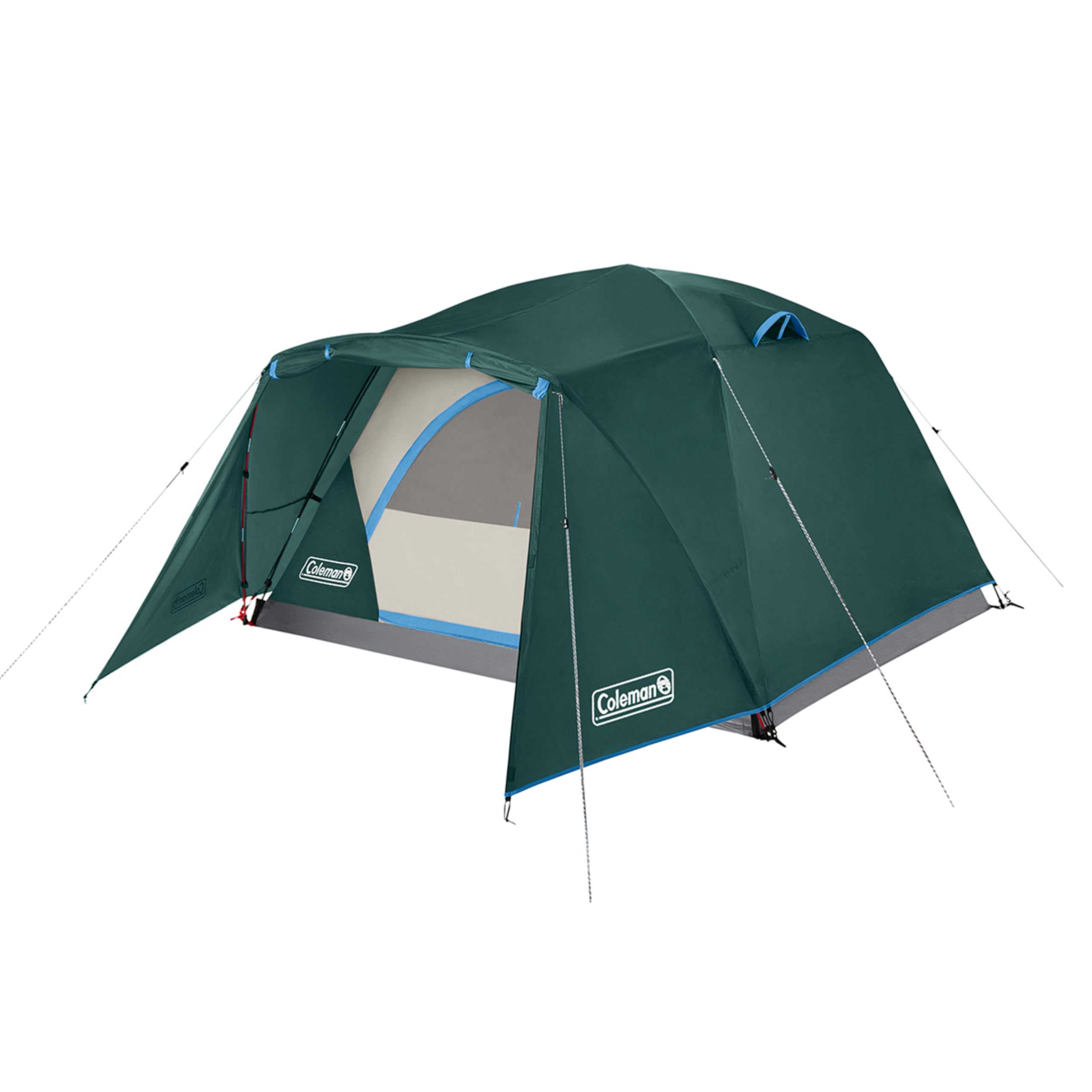
The same Skydome shell, but with a dedicated 13-foot vestibule for gear storage.
The defining feature here is the 13 by 3.5-foot full-fly vestibule — a covered entry area that keeps muddy boots, wet backpacks, and coolers outside the sleeping zone. For a family of four, that extra dry storage is the difference between a tent that feels spacious and one that feels like a closet full of bags. The pre-attached poles deliver the same five-minute setup as the other Skydome, and the WeatherTec system with welded corners and inverted seams provides the same rain protection.
The 20 percent more headroom over traditional Coleman domes is noticeable — the mesh back wall and roof vents create airflow that owners appreciate in mild weather. The wider door makes loading gear easier. The main catch is that the vestibule adds bulk and weight, making this strictly a car-camping tent. Durability gets the same mixed feedback as the standard Skydome: the frame handles 35 mph winds in testing, but some buyers report pole issues over time. No footprint is included, and the mesh-wall design means the tent relies heavily on the rainfly for privacy and rain protection.
The honest fit: This tent is for the family that camps in damp climates where keeping wet gear separate from sleeping space is a daily win — and who accept a little extra pack weight for that convenience.
Pick this if: you camp in rainy conditions and want a dedicated dry entry and gear storage area without buying two tents.
it’s not for you if: you pack gear lightly and prefer a single-wall tent that sets up faster with less bulk.
7. FanttikOutdoor Alpha C4 Ultra Camping Tent

The Gazelle competitor that offers 80 inches of headroom and a tougher floor.
The Alpha C4 is a direct alternative to the Gazelle T4 with a few notable differences. At 80 inches of center height, it offers 80 inches of standing room versus the Gazelle’s 78 inches — a small number that makes a real difference for very tall campers. The 300D bottom fabric is significantly more wear-resistant than standard tent floors, and owners confirm it handles rough campsite surfaces without damage. The pop-up X-frame hub design sets up in 60 seconds and packs down to a carry length of 57.8 inches, which is nearly 10 inches shorter than many hub tents.
The 94 x 94-inch floor (61 square feet) is identical to the Gazelle, but the double-paned windows on every side and the B3 mesh fabric (a fine mesh that blocks bugs while letting air flow) provide excellent ventilation and views — owners love stargazing from the bed. The PFAS-free fabric (made without certain synthetic chemicals) is a thoughtful touch for environmentally conscious buyers. The zipper quality gets the most mixed feedback, with some owners reporting the zippers catch on the fabric. And at roughly 30 pounds, this is not a tent you carry far from the car.
Compared to the Gazelle: The Alpha C4 matches the Gazelle on setup speed and floor size, beats it on headroom and floor toughness, but falls short on zipper refinement. The Gazelle’s YKK zippers are noticeably smoother.
Reach for this if: you are very tall (6’4″+), value a reinforced floor for rough sites, or want the Gazelle concept with PFAS-free materials.
Choose the Gazelle instead if: smooth zippers and proven long-term durability are non-negotiable, and you don’t need the extra two inches of height.
8. Naturehike Village Instant Tent

A premium instant tent with serious blackout fabric and a real canopy entry.
The Naturehike Village uses 150D Ti Black Technology fabric with a UPF rating over 12500 — that is extreme UV protection combined with blackout performance. The fabric blocks 99.9 percent of infrared radiation and visible light, creating an interior that stays noticeably cooler than standard blackout tents. The PU 2000mm+ waterproof coating on the rainfly provides solid storm protection, and the vestibule and canopy design create a shaded outdoor sitting area that is rare in 4-person tents.
Setup claims 60 seconds with the pre-attached automatic hub frame, though owners mention it is more like 5 to 10 minutes solo on the first try. The interior is genuinely spacious — customers note it fits 3-4 cots with gear, has enough room for a family of three plus two dogs, and provides enough height to sit up comfortably. The 31 glow-in-the-dark stakes and zipper pulls are thoughtful nighttime details. The included USB lighting kit is a nice bonus, though it requires a separate power bank. A small number of owners experienced rainfly leakage, but the manufacturer replaced those units under customer service that buyers describe as responsive.
The value equation: You are paying for premium fabric technology and design details that most budget tents skip. The heat-reflecting blackout fabric genuinely changes comfort on hot days, and the vestibule doubles your usable space when the weather is fine.
Ideal for: families who camp in hot, sunny climates, want a shaded canopy area outside the tent, and are willing to pay for advanced fabric performance.
Not for: budget-focused buyers or those who want a truly 60-second setup without any learning curve.
9. Kelty Wireless Freestanding Camping Tent
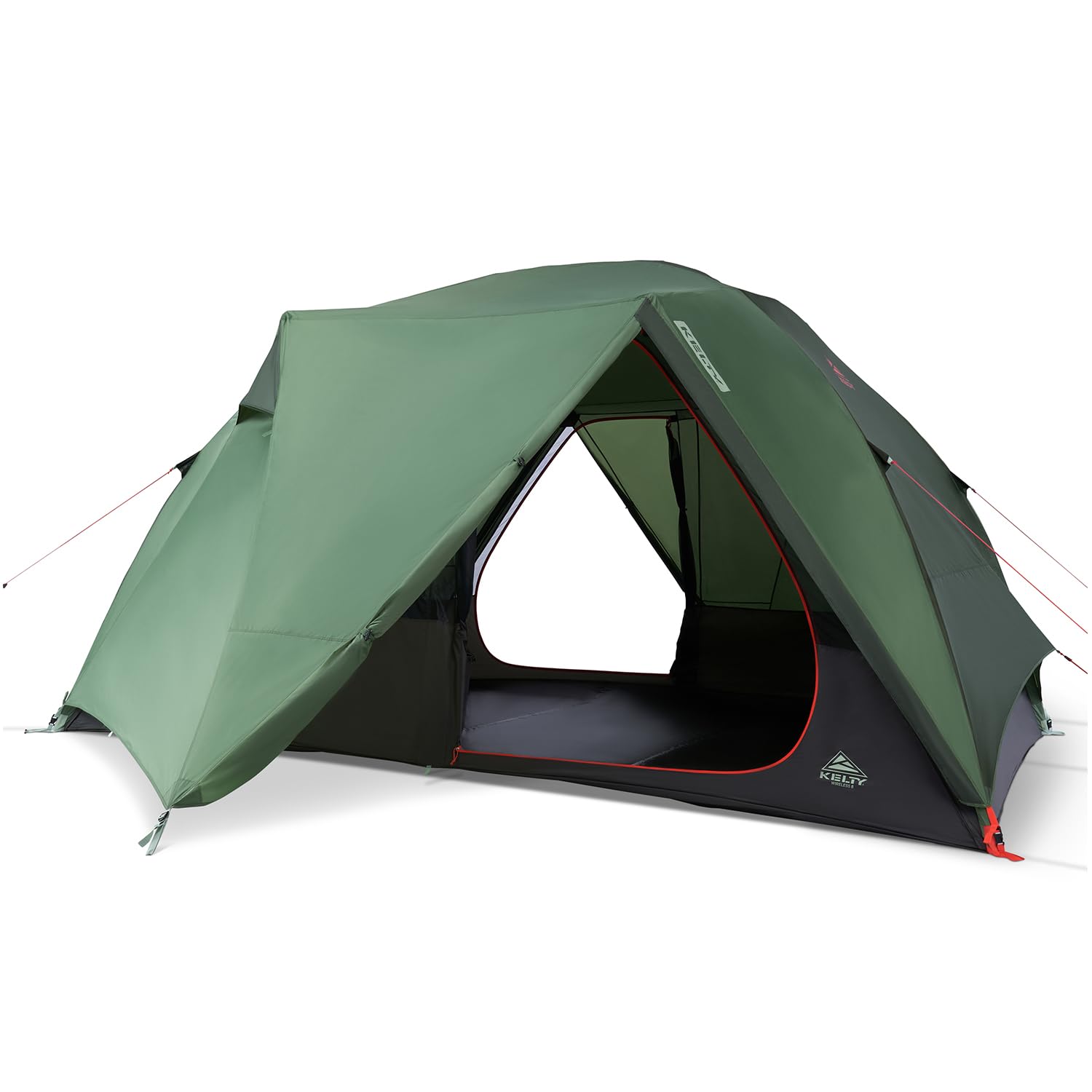
The freestanding cabin that gives you 84 inches of headroom and two separate entrances.
The Kelty Wireless is massive for a 4-person tent. The 155-inch floor length and 109-inch width create an interior that owners describe as genuinely roomy for two adults with gear — and comfortable for three to four. The 84-inch peak height means even a very tall adult stands fully upright without ducking. The two-vestibule construction with separate doors on each side means parents can enter and exit without climbing over sleeping kids, and each vestibule provides covered gear storage.
The freestanding design with color-coded quick corners makes setup intuitive — reviewers point out 5 to 10 minutes on the first try. The 1200mm HH treated fabric on the rainfly provides solid weather protection, and the hybrid frame handles wind well. The shark-mouth duffel bag is a thoughtful design that makes repacking significantly easier than the standard stuff sack. At 29.5 pounds, this is not a lightweight tent, but the combination of stand-up height, dual vestibules, and easy setup justifies the weight for car camping. The floor material is relatively thin, so most owners add a footprint for protection.
The durability question: Mixed feedback on long-term pole strength, with some owners reporting breaks after a season of use. The fiberglass frame is standard at this price, but the tent’s weight and size mean it is best suited to occasional use rather than full-season camping.
Best for: taller families who want the most headroom available, separate entrances for privacy, and a tent that feels more like a cabin than a shelter.
Not for: lightweight packers or anyone who needs a tent to survive 30+ nights per season without maintenance.
Understanding the Specs
Floor Area and Shape
The square footage of the tent floor (measured in square feet) tells you whether a queen-size air mattress fits with room to move around it. A 56-square-foot floor is the 4-person standard — it fits one queen mattress and a couple of duffel bags. A 90-square-foot floor can hold two queen mattresses, which changes the family camping experience entirely. Cabin-style tents with nearly straight walls give you more usable space than dome tents, whose sloping sides cut into headroom at the edges.
Center Height
Measured in inches from the floor to the highest point of the tent, center height determines whether you can stand up to change clothes or spend a rainy afternoon inside. For most adults, 72 inches (six feet) is the minimum for comfortable standing. Tents under 60 inches are crawl-in-only shelters where you sit or lie down. Hub-style tents often hit 78 to 84 inches, which feels like standing in a small room.
Setup Speed and Style
Setup time ranges from 60 seconds (hub-style instant tents with pre-attached poles that expand like an umbrella) to 15 minutes (traditional pole-and-sleeve designs where you thread fiberglass poles through fabric channels). Hub tents are faster but heavier and bulkier. Traditional tents pack smaller and are easier to repair in the field. Your choice depends on whether you arrive at camp at dusk with tired kids or have time for a relaxed setup.
Waterproofing and Coating
Measured in millimeters (mm) of hydrostatic head — the water pressure the fabric can withstand before leaking. A 2000mm coating is the minimum for reliable rain protection. Tents with 4000mm coatings offer significantly more margin in heavy storms. The rainfly design matters more than the number: a full-coverage rainfly that reaches near the ground keeps water out better than a half-fly that leaves mesh exposed. Sealed seams on the rainfly and floor are essential — without them, water seeps through stitch holes.
FAQ
Can a 4-person tent actually fit four people?
What is the difference between a hub tent and a dome tent?
How important is a rainfly on a family tent?
Should I buy a separate footprint for my tent?
What does “blackout” fabric actually do?
How long does a family tent typically last?
Can I use a 4-person tent for just two people?
What do the pole materials mean?
Is a 4-person tent suitable for winter camping?
What is the best way to dry a tent before storage?
Final Thoughts: The Verdict
For most families, the family tent for 4 that delivers the best all-around experience is the Gazelle Tents T4 Hub Tent — it combines rapid setup, genuine stand-up height, storm-ready construction, and the highest owner satisfaction in this group. If your priority is saving money without sacrificing reliability, the Coleman Sundome gives you a proven design that has sheltered families for decades. And if maximum floor space is everything — you want room for two queen mattresses and a walking path — the HINSTANT Instant Tent offers a staggering 90 square feet at a price that is hard to argue with, as long as you budget for aftermarket seam sealing (applying sealant to the stitched seams yourself).
How We Picked
We do not accept paid placement. Every pick is matched to a real buyer and a real use-case; we do not hands-on test units.
Sources & Methodology
Specifications: manufacturer listings and product documentation. Review insights: verified customer reviews, as of July 2026. Pricing: not shown on this page (it changes often); check the current price via the retailer link.
As an Amazon Associate, WellFizz earns from qualifying purchases. This does not affect which products we feature.
Related Guides

Mo Maruf
I created WellFizz to bridge the gap between vague wellness advice and actionable solutions. My mission is simple: to decode the research and give you practical tools you can actually use.
Beyond the data, I am a passionate traveler. I believe that stepping away from the screen to explore new environments is essential for mental clarity and physical vitality.