Our readers keep the lights on and my smoothie glass nicely filled. As an Amazon Associate, I earn from qualifying purchases.
Specs are compiled from manufacturer listings and verified buyer reviews and can change over time — please confirm the key details on the product page before buying.
You want to discover where your ancestors lived, find living relatives, and understand your heritage. The question is not just which best ethnicity dna test to buy — it is which one gives you clear, trustworthy answers without locking your data behind extra fees. The AncestryDNA kit wins for most people because its massive database finds the most relative matches, and its 3,600+ geographic regions (a region is a specific area like “southwest England”) give you a detailed ethnic breakdown.
I’m Mohammad Maruf — the founder and writer behind WellFizz. This guide is built by comparing the manufacturers’ published specifications and the patterns across verified customer reviews, so you get each pick’s real strengths and trade-offs instead of marketing spin.
The right kit delivers clear, personal answers whether you are confirming a family legend, finding a biological relative, or satisfying curiosity.
Our Picks at a Glance

How To Choose The Best Ethnicity DNA Test
Every DNA test begins with a saliva sample or cheek swab, then a wait for results. What you get back depends entirely on the size of the company’s reference database (how many people’s DNA they compare yours to), the number of geographic regions they can separate, and if you want health insights alongside your ancestry. Focus on database size, geographic regions, and health features to pick the right kit.
Database Size and Relative Matching
The single biggest factor in how many distant cousins (people who share your DNA) the test will find is the total number of people in the company’s database. A larger database means a higher chance of matching living relatives who have also tested. AncestryDNA leads here with millions of users, while smaller labs like FamilyTreeDNA offer specialized tools like Y-DNA testing (a test of the Y chromosome, passed from father to son) for deeper paternal-line research.
Geographic Precision and Regions Covered
The number of geographic regions a test covers determines how fine-grained your ethnicity estimate will be. A test that covers over 4,500 regions (like the 23andMe Ancestry Service) can sometimes pinpoint the specific valley or village your ancestors came from, while kits with a smaller region count provide a broader continental breakdown — for example, “Europe” instead of “southern Italy.”
Health, Traits, and Add-on Features
Some DNA tests stop at ancestry, while others bundle in reports on genetic traits (like cilantro aversion — the gene that makes cilantro taste like soap — or sleep duration) and health predispositions. If you are looking for FDA-authorized health risk reports (reports cleared by the U.S. Food and Drug Administration for medical use), the 23andMe Health + Ancestry Service is the clear leader. Stick with an ancestry-only kit if you want pure heritage data without the extra medical layer.
Quick Comparison
| Model | Best For | Database Reach | Geographic Regions | Extra Reports | Amazon |
|---|---|---|---|---|---|
| AncestryDNA (Product 1)★ Best Overall | Largest relative match pool | Millions (largest consumer database) | 3,600+ regions | SideView (parental side matching) | Amazon |
| Family Finder (Product 2)Serious Genealogy | Expert-processed Y-DNA upgrades | Moderate (niche focus) | myOrigins / ancientOrigins | Chromosome Browser, Y-DNA & mtDNA | Amazon |
| tellmeGen Starter (Product 3)Value+Health Mix | Over 90 trait & diet reports | Growing (GDPR-secure) | Ancestry + Neanderthal | Sports, Diet, Traits, DNA Connect | Amazon |
| 23andMe Ancestry (Product 4) | Most detailed geographic map | Large (strong network) | 4,500+ regions | Ancestry Timeline, Neanderthal, 30+ traits | Amazon |
| AncestryDNA + Traits (Product 5) | Ancestry with 75+ trait insights | Millions (same database) | 3,600+ regions | 75+ trait reports (appearance, sensory) | Amazon |
| AncestryDNA + 3-Month World Explorer (Product 6) | Deep family history research | Millions (same database) | 3,600+ regions | 3-month World Explorer membership | Amazon |
| 23andMe Health + Ancestry (Product 7) | FDA-authorized health reports | Large (strong network) | 4,500+ regions | Health predispositions, carrier status, 100+ reports | Amazon |
| 23andMe+ Premium (Product 8) | Exclusive health & advanced ancestry | Large (strong network) | 4,500+ regions | Pharmacogenetics, Health Action Plan, 1-year membership | Amazon |
In‑Depth Reviews
1. AncestryDNA Genetic Test Kit
Our pick — over 4.5★ from 91,000+ verified ratings; the strongest balance of quality and price.
The crowd favorite that pairs a gigantic database with a simple spit-in-a-tube process — and the most relative matches you will find anywhere.
This is the kit that has redefined what at-home ancestry testing means. It examines your origins across over 3,600 geographic regions — far more than most competitors — and its immense user database is what makes the relative-matching feature so powerful. The process is straightforward: activate the kit online, fill the tube with saliva, drop it in the prepaid package, and wait for your ethnicity estimate (the percentage breakdown of your ancestral origins) and DNA matches (living relatives who share your DNA) to appear in your online account. The kit weighs 2.4 ounces and measures 9.5 x 5.5 x 1.7 inches, a noticeable box compared to the tellmeGen’s 0.35-ounce package, which reflects the included packaging but not the complexity of the test itself.
The standout feature is SideView technology, which separates your genetic results by parental side — showing you which origins and matches came from your mother’s side versus your father’s side. The catch: some features require an Ancestry subscription to fully explore records and build out your family tree. The consensus among owners is that the turn-around is real — buyers report “results in 2 weeks without expedited shipping” — far faster than the estimated six weeks. The database produces an exceptional number of close relative matches. As owners put it, “I was able to find my half brother who had been put up for adoption. Ancestry totally exceeded my expectations.”
Ethnicity estimates are probabilistic and may shift with database updates. There is no health data here — this is pure ancestry. A 4.6-star rating from tens of thousands of owners makes it the most-trusted pick.
The Big Wins
- 3,600+ geographic regions provide deep origin detail
- Huge database yields many close relative matches
- SideView technology shows maternal vs paternal ancestry
- Results often arrive faster than the 6-week estimate
The Honest Limits
- No health or trait reports included
- Access to full family tree records requires a subscription
- Ethnicity estimates are probabilistic and may shift
Reach for this if: You want the largest possible pool of DNA relatives and the broadest geographic breakdown — the kit that matches the highest number of testers.
Think twice if: You need health risk reports alongside your ancestry, or you want to avoid any subscription-based features.
2. FamilyTreeDNA Family Finder Ancestry & DNA Test
The lab-coat option for genealogists who want chromosome-level data and ancient DNA analysis — sharper tools than AncestryDNA for deep lineage research.
FamilyTreeDNA takes a different road. Instead of the simple saliva spit tube used by Ancestry and 23andMe, this kit uses a cheek swab that many find easier for older relatives. The real draw is what happens after the basic ancestry report — you can upgrade to Y-DNA and mitochondrial DNA testing (mtDNA is DNA passed from mother to all children) without submitting a new sample, a huge advantage for deep paternal and maternal lineage research. The lab keeps your sample stored for up to 25 years, making future upgrades possible.
The myOrigins Chromosome Painter (a tool that colors each segment of your genome to show its geographic origin) shows you exactly where each segment of your genome comes from, and the ancientOrigins feature traces your autosomal DNA back to European groups like Neolithic Hunter-Gatherers, Early Farmers, and Bronze-age Metal Invaders. The kit measures 9 x 1.8 x 6.5 inches and weighs 1.06 ounces. While the matching database is smaller than Ancestry’s, the chromosome browser (a tool that lets you compare specific DNA segments with matches) allows you to compare shared DNA segments in a way no other consumer kit does. Accuracy is the most-discussed aspect — it is Amazon’s own “mixed” verdict, reflecting that some owners found the ethnicity results unusual due to reference population differences. The process took 16 days for one owner — straightforward but yielding a smaller relative match pool than the front-runners.
Hard-core tool: This is not the kit for a quick “what am I?” answer — it is for the person who wants to map specific DNA segments to ancestors and use advanced tools like the Chromosome Browser. The lack of subscription fees means your access to data never expires, but you trade that for a less polished website experience and fewer living relative matches.
Who it fits: Genealogy researchers who want Y-DNA testing, chromosome-level comparison, and a lab that stores samples for 25 years.
Who to skip it: Anyone wanting a large relative match database or a simple mobile-friendly user interface.
3. tellmeGen DNA Test Starter (Ancestry – Traits – Fitness and Diets)
Over 90 reports covering ancestry, sports, diet, and traits — all with no subscription fees, making it the best value in this list against AncestryDNA.
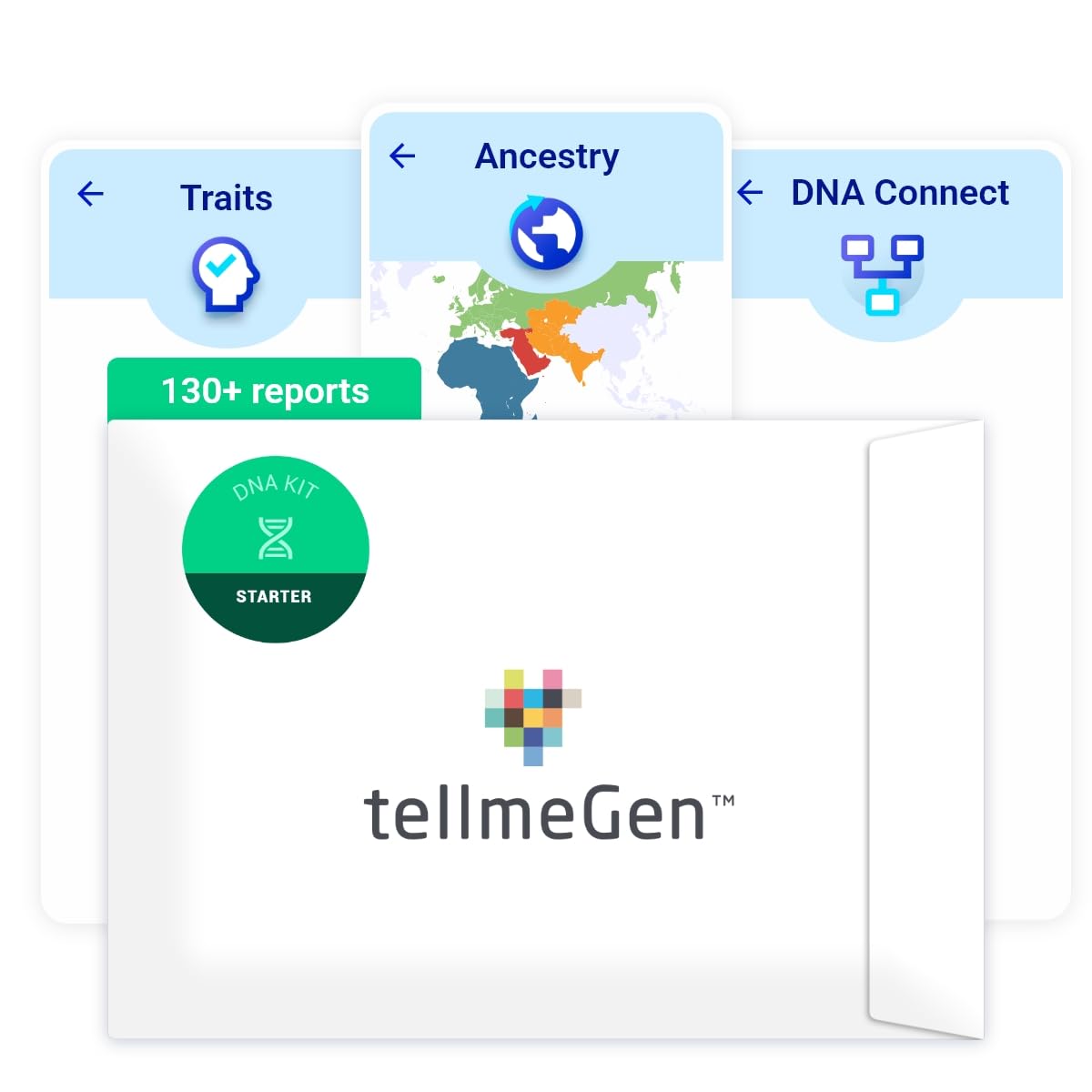
tellmeGen is the dark horse that bundles ancestry, sports performance, diet insights, and genetic traits into one kit — and then keeps updating those reports as science advances without charging you extra. The at-home test requires a saliva sample, which you print a prepaid label for and drop in the mail. The kit itself is remarkably compact, measuring 6.38 x 4.33 x 1.38 inches and weighing just 0.35 ounces (tiny next to AncestryDNA’s 2.4-ounce package). Results arrive in 4 to 6 weeks.
The DNA Connect Family Finder lets you build a family tree and discover relatives, while the reports dig into specifics like eye clarity, sleep duration, cognitive ability, the photic sneeze reflex (sneezing when you see bright light), and even your percentage of Neanderthal DNA. The data is secured with advanced encryption under GDPR protocols (General Data Protection Regulation, a strict European privacy law), which matters if privacy is a top concern. Some owners found the wealth of reports dense — the common caveat is that if you are not comfortable interpreting genetic data, the amount of raw information can feel overwhelming. One owner summed it up: “Took a bit of time to get the results through, but having spoken to the team, we had a really good outcome… The results themselves are incredibly comprehensive… Seems worth it!!”
No lock-in value: This is one of the few kits where the reports you get today update tomorrow, and you do not pay a subscription for the privilege. The trade-off is a smaller database for relative matching compared to AncestryDNA or 23andMe.
Best suited for: Someone who wants ancestry plus diet and fitness insights in one test, without paying ongoing fees.
Not for: Anyone expecting a huge relative-match network or a streamlined beginner-friendly interface.
4. 23andMe Ancestry Service – DNA Test Kit
The most detailed geographic breakdown on the market — down to the specific valley or village, and sharper than AncestryDNA’s 3,600 regions.
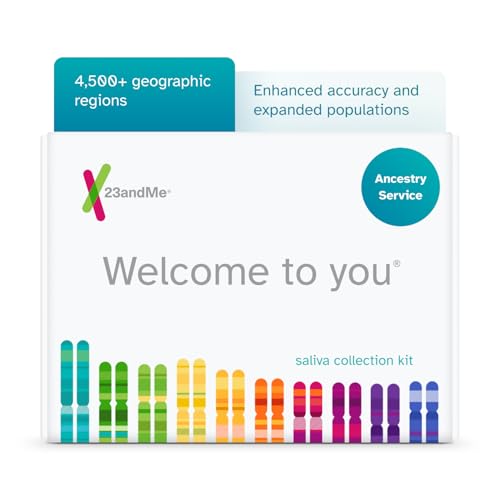
23andMe sets the bar for geographic resolution. It breaks down your ancestry across more than 4,500 regions, which is roughly 900 more than AncestryDNA’s 3,600+ regions. That matters if you want a result that says “your ancestors likely came from this specific valley in Scotland” rather than “the British Isles.” The test also includes an Ancestry Timeline (a tool that estimates when your most recent ancestors from each population lived) that shows when your most recent ancestors from each population lived, along with a Neanderthal ancestry percentage that people find genuinely entertaining.
The kit uses a saliva collection method, weighs 3.2 ounces, and measures 6.5 x 5 x 1.3 inches. It also includes over 30 personal trait reports — things like hair color, taste preferences (the cilantro aversion test is a fan favorite), perfect pitch, and mosquito bite risk. The DNA Relative Finder automatically connects you to people who share your DNA, and the auto-generated Family Tree makes those relationships easy to see. The customer consensus leans hard on the quality and ease of use — 463 owners praise ease of use as the top positive aspect, and 390 single out quality. Results typically land in 4 to 5 weeks, though some owners mention the wait stretched to two months. On the accuracy side, one owner found 23andMe’s estimate more precise than AncestryDNA’s for a confirmed Native American trace lineage.
Village-level detail: The 4,500+ region count means you get finer geographic resolution than any other ancestry-only kit. The trade-off is a smaller database than AncestryDNA for relative matching, and the trait reports are fun but should not be taken as definitive health insights.
Ideal for: Anyone who prioritizes geographic precision and wants trait reports as a bonus — this is the map-lover’s DNA test.
Think twice if: Your main goal is connecting with the largest possible number of living relatives.
5. AncestryDNA + Traits Genetic Test Kit
Everything from the top-selling ancestry test plus 75+ trait reports — one kit for origins and quirks, with the same massive relative database as the standard AncestryDNA.
This is the upgrade from the standard AncestryDNA kit that adds trait reports into the mix. You still get the same 3,600+ region analysis and the huge relative-match database, but now you also learn whether your freckles, cilantro hatred, or night-owl habits might have a genetic basis. The kit covers 75+ genetic traits spanning appearance, sensory abilities, performance, and nutrient processing. It uses the same saliva collection method and offers the same SideView technology that separates your results by parental side.
The kit weighs 2.4 ounces and measures 6.37 x 4.37 x 0.93 inches. Results generally arrive in roughly six weeks, though some customers note receiving them faster. The body of feedback around this kit is overwhelmingly positive, but there is a notable caveat about the traits section — long-time genealogy enthusiasts found the trait descriptions confusing, with one owner describing them as “poorly explained” and “using confusing descriptions and stock photos.” Treat the trait reports as fun additions, not rigorous medical data. The Ancestry side, with ThruLines and Common Ancestor Tools, is where the serious research power lies. One owner noted that during a December rush, results still arrived “fast.”
Best of both worlds: If you want the deepest relative-match database plus the fun of trait predictions, this is your one-stop kit. The trait reports are not perfect, but the ancestry engine is the same one that makes this the top-selling consumer DNA test.
Grab it for: The combination of the largest relative database and 75+ trait reports in a single test.
Skip if: You are only interested in the ancestry data — the standard AncestryDNA kit costs less for the same core results.
6. AncestryDNA Genetic Test Kit + 3-Month World Explorer Membership
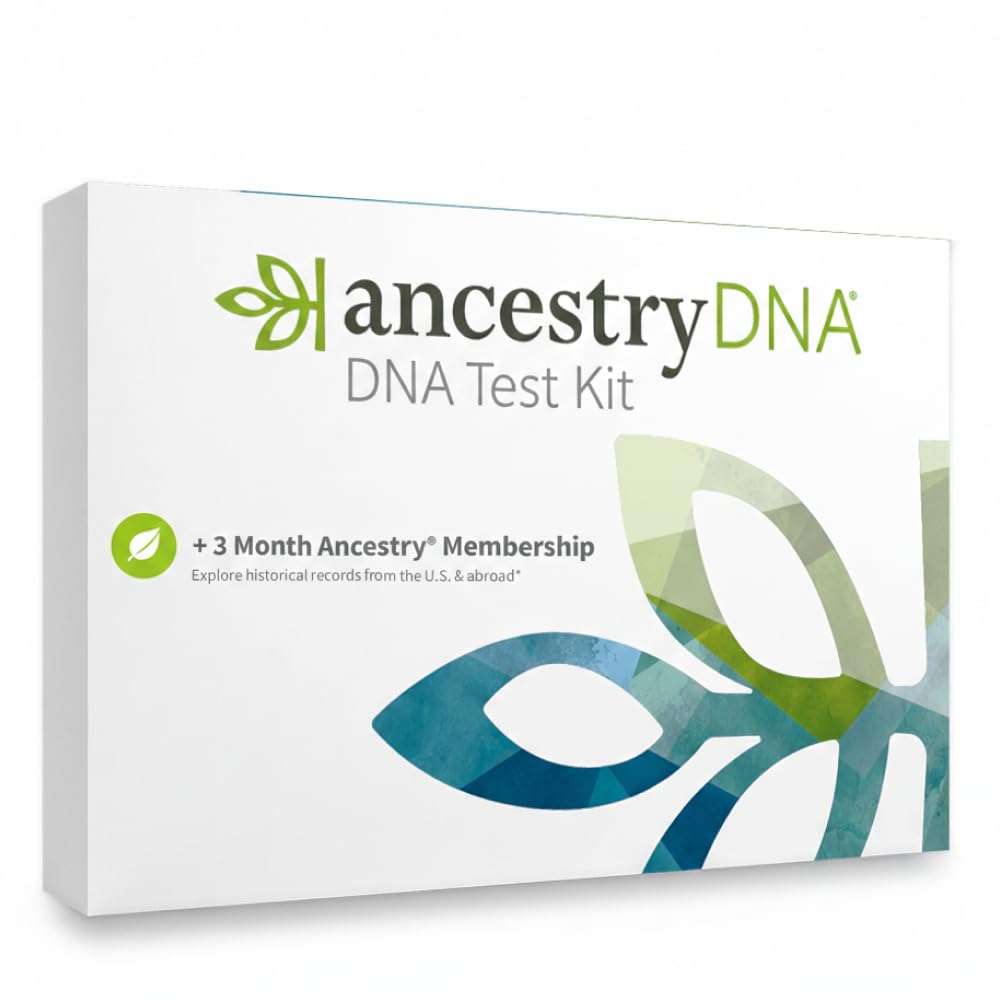
The same top-selling kit, now paired with three months of record access for building a real family tree — ideal for the serious researcher who wants more than just an ethnicity percentage.
This package bundles the standard AncestryDNA test with a 3-month World Explorer membership, which gives you access to billions of family history records. The membership is activated during the kit registration process and is intended for the person who wants to go beyond the ethnicity estimate and actually build out a family tree using census records (official population counts that list family members), immigration logs, and military documents. The DNA test itself is identical to the top-selling kit above — 3,600+ regions, SideView technology, and the same large database for relative matching.
The kit weighs just 0.32 ounces and measures 6.37 x 4.37 x 0.93 inches, the lightest Ancestry bundle. Reviewers point out results taking around six weeks, though one reviewer noted the “membership included is worth it, especially if you dont plan to go back on the app after your discovery.” The membership is a one-time benefit, not a subscription, unless you choose to convert it by entering billing information. The recurring assessment of this bundle is that the 3-month membership adds significant value for anyone serious about genealogical research. A few owners mentioned the kit felt small for the cost, but the depth of records available during the membership period is where the real value lies.
Research accelerator: The three months of World Explorer access is a genuine head start — you can build a multi-generation tree before the membership expires. Without it, you would pay separately for that record access.
Perfect for: Anyone ready to dive into family history research beyond just the ethnicity percentage.
Not needed if: You only want the DNA estimate and have no interest in building a family tree from historical records.
7. 23andMe Health + Ancestry Service
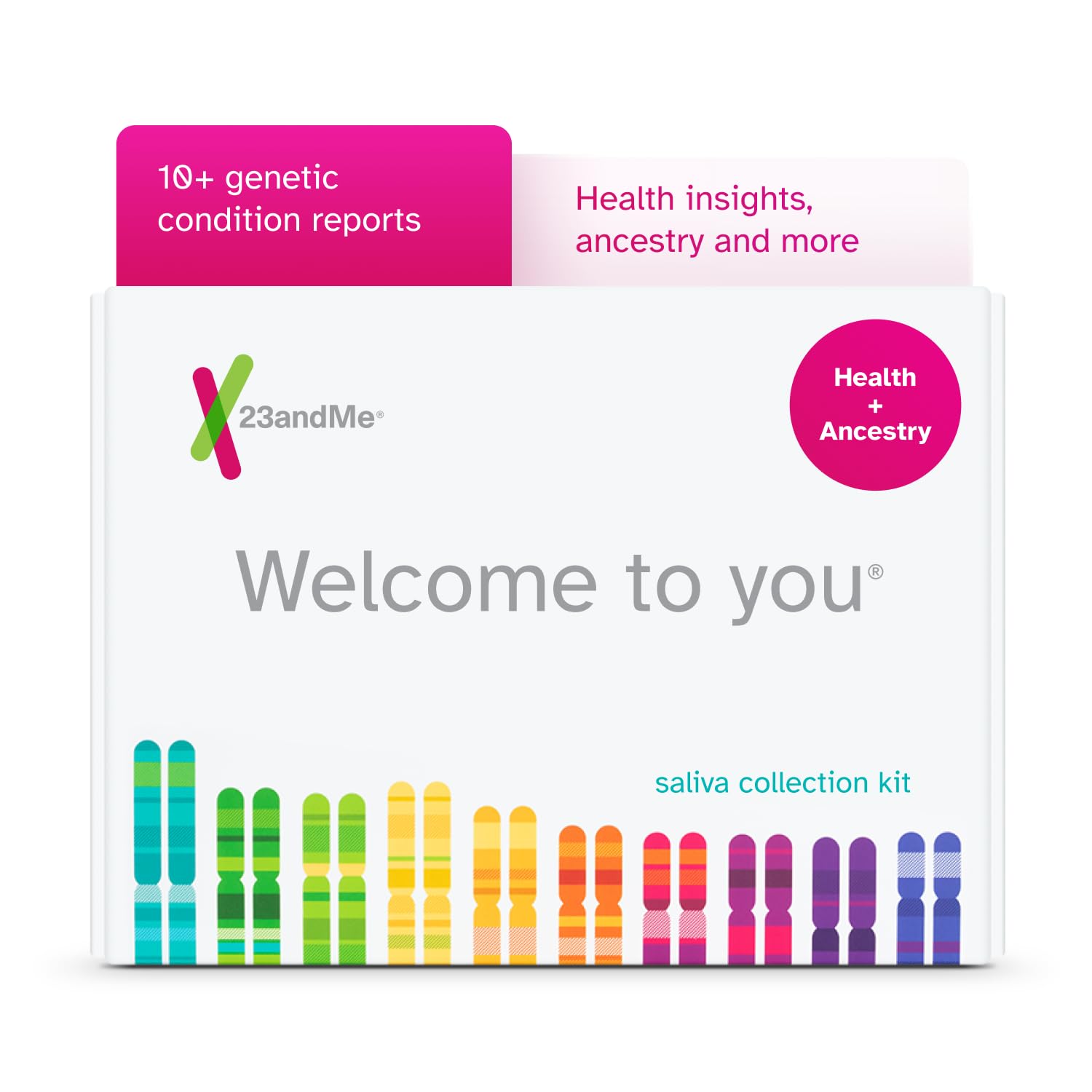
The only consumer DNA test that wraps FDA-authorized health risk reports around a top-tier ancestry map — the two-for-one you choose over AncestryDNA if health matters.
This is the pick for people who want more than ethnicity percentages. The 23andMe Health + Ancestry Service gives you everything the Ancestry Service offers — 4,500+ regions, Ancestry Timeline, Neanderthal ancestry — plus over 100 reports that include FDA-authorized health predisposition reports (reports on your genetic risk for certain health conditions, cleared by the U.S. Food and Drug Administration), carrier status for inherited conditions, and wellness insights for diet, exercise, and sleep. Your kit includes access to the full Ancestry Service at no extra cost, and you can upgrade to 23andMe+ Premium later if you want even deeper analysis.
The kit weighs 4.8 ounces and measures 6.5 x 5 x 1.3 inches, the heaviest in this list, reflecting the more detailed packaging. What wins people over is how informative the health reports are — 420 owners cite Informativeness as the top positive aspect, and 376 praise Ease of Use. Results typically arrive in 4 to 5 weeks. The consensus among savvy buyers is that 23andMe’s health reports are the clear advantage over Ancestry, which charges extra for database integration. One owner reported finding 1,175 DNA relatives through the service, with a surprise Ashkenazi Jewish ancestry that aligned with known family history. Some trait predictions can be off, and the ancestry portion is less effective for Native American trace ancestry than specialized tools.
Two-for-one power: This is the best choice if you want actionable health insights alongside your geographic breakdown. The FDA authorization distinguishes it from every other kit — no competitor has regulatory clearance for health risk reports.
Best for: Anyone who wants to know their carrier status and health predispositions along with their family origins.
Overkill if: You only want ethnicity data and have no interest in genetic health reports.
8. 23andMe+ Premium Advanced Ancestry & Health
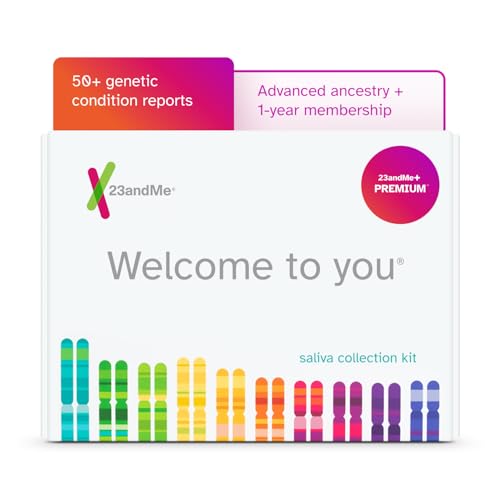
The most complete DNA package — pharmacogenetics, health action plan, and a year of exclusive reports, for the person who wants everything in one spit tube.
The 23andMe+ Premium is the flagship. It includes a one-year prepaid membership to access over 100 reports, plus features you cannot get on the standard kit: Pharmacogenetics (how your body processes certain medications), Health Tracks for preventive monitoring, and a personalized Health Action Plan. On the ancestry side, you get advanced filters, access to up to 5,000 DNA Relatives, and Historical Matches that link you to ancient figures. The core ancestry engine still covers 4,500+ regions, Haplogroups (deep ancestral lineages defined by Y-DNA or mtDNA), Neanderthal ancestry, and the Ancestry Timeline.
The kit weighs 3.84 ounces and measures 6.5 x 5 x 1.3 inches. This is the deepest dive available in a consumer kit, but it demands that you want all of it. Ancestry mapping matches known family history accurately, and health reports are the standout addition. One owner doing a direct comparison against AncestryDNA noted the 23andMe results split 77.1% Irish/UK and 17.7% French/German versus Ancestry’s 56% Irish/UK and 23% German — different reference populations yield different pictures. The caveat from a few owners is the cancellation process for the year membership requires attention, and the advanced features are most useful for someone who actively monitors their health data. A single owner found the health portion valuable enough to share with their doctor.
Everything in one box: If you want ancestry, health risk reports, and medication processing insights, this is the only kit that puts it all behind a single spit tube. The year of membership means no annual fee surprises.
Ideal for: The person who wants to combine deep family history research with preventive health monitoring and pharmacogenetic insights.
Too much for: Anyone who just wants a simple “where am I from” ethnicity estimate — the standard 23andMe Ancestry Service is simpler and costs less.
Understanding the Specs
Geographic Regions
The number of geographic regions a DNA test company can identify directly affects how fine-grained your ethnicity report will be. A test covering 4,500+ regions (like the 23andMe service) can sometimes trace your ancestry to a specific valley or village. A test with 3,600+ regions (like AncestryDNA) still provides a detailed continental and country-level breakdown, but may stop short of pinpointing a single location. More regions always mean more resolution, but the reference populations (the groups of people the company uses to define each region) also matter — two tests examining the same person can return slightly different percentage splits because they compare your DNA against different sets of reference groups.
Relative Matching Database
The size of the company’s customer database determines how many DNA relatives you will likely find. AncestryDNA has the largest consumer database by far, which translates into the most potential cousin matches. 23andMe has a strong but slightly smaller network, and labs like FamilyTreeDNA have a smaller pool but offer advanced tools like Y-DNA testing for deeper paternal-line research. If finding biological relatives is your primary goal, the database size is the single most important spec to look at — you want the test with the highest number of users in the regions your ancestors came from.
FAQ
How long does it take to get ethnicity DNA test results?
Can an ethnicity DNA test find my biological relatives?
What is the difference between a saliva sample and a cheek swab?
Will my privacy be protected with a DNA test kit?
Can a DNA test tell me my exact percentage of Neanderthal ancestry?
Which test has the most detailed geographic breakdown?
Do I need a subscription to use my DNA results?
Can I use the raw DNA data from one test with other services?
Final Thoughts: The Verdict
For the majority of shoppers, the best ethnicity dna test winner is the AncestryDNA Genetic Test Kit because it combines the largest consumer database for relative matching with 3,600+ regions and a simple, well-proven process. If you want the most detailed geographic map and a set of FDA-authorized health reports, grab the 23andMe Health + Ancestry Service. And for deep genealogical research with chromosome-level tools and no subscription fees, the FamilyTreeDNA Family Finder is the one to reach for.
How We Picked
We do not accept paid placement. Every pick is matched to a real buyer and a real use-case; we do not hands-on test units.
Sources & Methodology
Specifications: manufacturer listings and product documentation. Review insights: verified customer reviews, as of July 2026. Pricing: not shown on this page (it changes often); check the current price via the retailer link.
As an Amazon Associate, WellFizz earns from qualifying purchases. This does not affect which products we feature.
Related Guides

Mo Maruf
I created WellFizz to bridge the gap between vague wellness advice and actionable solutions. My mission is simple: to decode the research and give you practical tools you can actually use.
Beyond the data, I am a passionate traveler. I believe that stepping away from the screen to explore new environments is essential for mental clarity and physical vitality.