Our readers keep the lights on and my smoothie glass nicely filled. As an Amazon Associate, I earn from qualifying purchases.
Specs are compiled from manufacturer listings and verified buyer reviews and can change over time — please confirm the key details on the product page before buying.
In the TV world, the most energy-efficient models are often the most advanced, because saving power starts with efficient display technology. This is especially true for OLED and modern LED-LCD panels, where lower wattage often goes hand-in-hand with deeper blacks and more accurate color. The real question is which eco-friendly TV delivers the best picture while keeping energy use lean.
I’m Mohammad Maruf — the founder and writer behind WellFizz. This guide is built by comparing the manufacturers’ published specifications and the patterns across verified customer reviews, so you get each pick’s real strengths and trade-offs instead of marketing spin.
Whether you are outfitting a home theater or a cozy bedroom, we have focused on two Sony models that lead the way on efficiency without skimping on picture quality, making them natural front-runners in the conversation about eco-friendly smart tvs.
Quick Picks
- Sony 43 Inch BRAVIA 2 II LED 4K HDR Smart — Best Overall
- Sony 65 Inch BRAVIA 8 II QD OLED 4K HDR Smart — Premium Pick
How To Choose The Best Eco-Friendly Smart TVs
When you are shopping for a TV that is lighter on the grid, the first instinct is to just look for an Energy Star sticker. That is a good start, but the real story is in the panel type and the processor. A modern OLED can be incredibly efficient because it lights only the pixels that need it — a black screen uses almost no power at all. An LED-LCD set, on the other hand, uses a constant backlight, so its wattage depends more on brightness settings.
Annual Energy Consumption — The True Cost to Run
This spec cuts through the marketing. It is measured in watts per year and tells you exactly how much electricity the TV will draw under typical use. A model that consumes 95 watts annually is dramatically cheaper to run over a decade than one that pulls 397 watts — and the gap you see between these two Sonys is a perfect example of how different the lifetime cost can be.
Panel Type and Picture Quality Synergy
An efficient panel doesn’t mean a dim picture. The best eco-friendly TVs use their power budget smartly. Sony’s QD OLED, for instance, uses a Quantum Dot layer to boost color volume and brightness without needing a huge increase in wattage. The result is a screen that looks spectacular while still being far more efficient than older LCD-based TVs of the same size.
Quick Comparison
In‑Depth Reviews
1. Sony 43 Inch BRAVIA 2 II LED 4K HDR Smart Google TV (K-43S20M2)
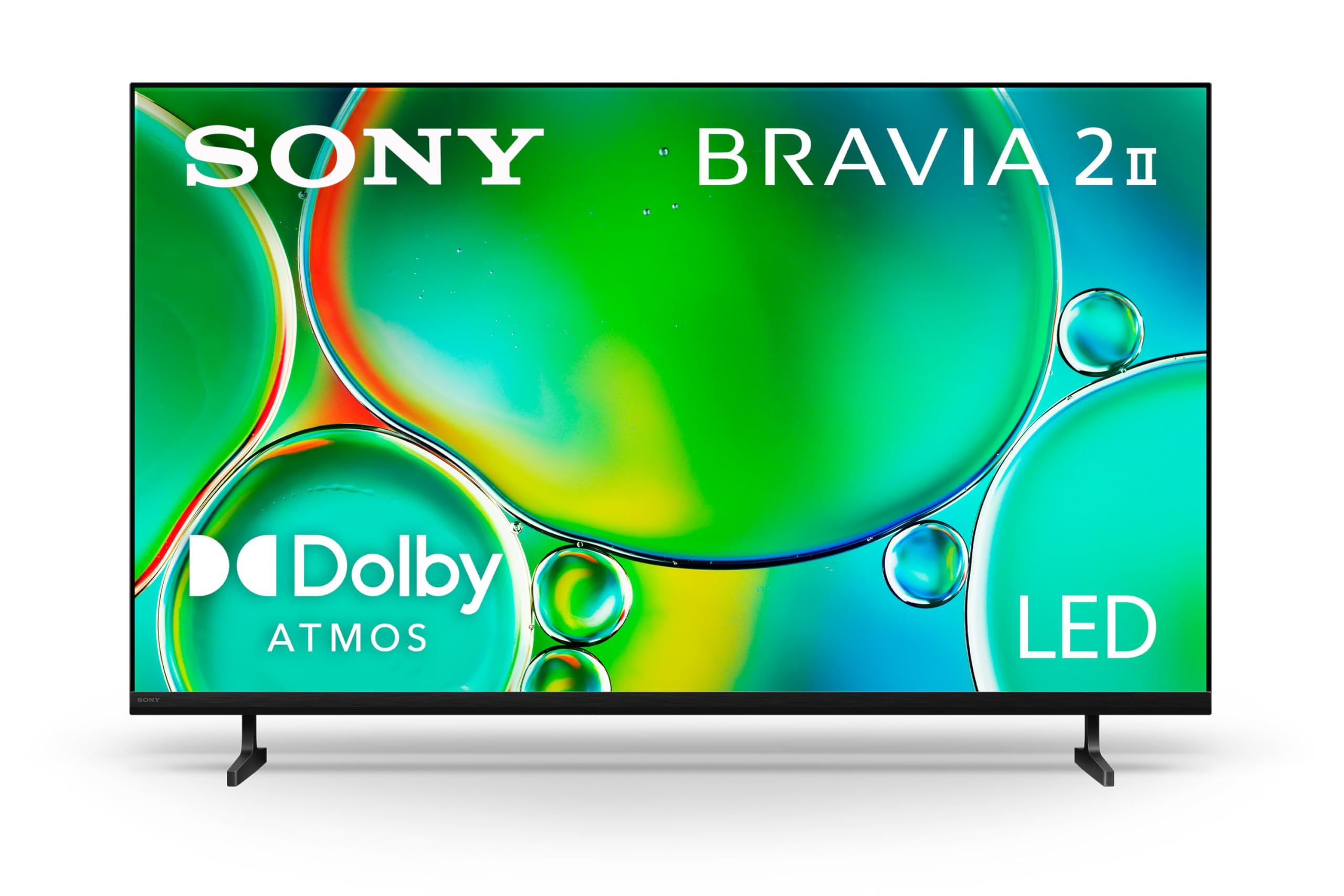
The smallest energy appetite in the lineup, perfect for a bedroom or a kid’s room.
This Sony model delivers trusted picture processing without the premium price tag or high wattage. Its annual energy consumption sits at just 95 watts, while the larger OLED model pulls 397 watts, which makes it the undisputed energy champion here. That low draw does not sacrifice the viewing experience, either. The 4K Processor X1 powers upscaling and color accuracy using 4K X-Reality PRO, so even standard HD streams look sharp and natural. The Triluminos Pro display brings a wide array of colors and dynamic contrast, and Motionflow XR keeps fast sports and action movies blur-free.
The smart side runs on Google TV, giving you access to all your streaming apps in one place with support for Apple AirPlay 2 and Google Cast. It also comes with movies included via the Sony Pictures Core app. For gamers, the exclusive features for PlayStation 5 — Auto HDR Tone Mapping and Auto Genre Picture Mode — mean the TV automatically tune picture quality when you switch between gaming and streaming. The Game Menu puts all your gaming settings in one spot. Buyers report great sound quality and find it a “good value compared to other places,” though you should be ready for a tech-savvy setup — as owners put it: “I had to get a friend who is 40 years younger to set up.”
One of the smartest features for eco-conscious buyers is the Eco Dashboard, which keeps all your energy efficiency settings in one easy menu. You can tweak brightness and power-saving modes without digging through sub-menus. The crowd gives this one high marks for picture quality, color reproduction, and sound, calling it a “great Sony picture that they’re known for.”
Why It Wins
- Annual energy use of just 95 watts — the most efficient pick by a wide margin
- Sony’s 4K Processor X1 with upscaling and Triluminos Pro color
- Exclusive PS5 features and Game Menu for console gamers
One Trade-Off to Know
- Setup can be confusing for less tech-friendly buyers — the smart interface demands patience
- A small number of owners mention occasional WiFi drops, though most stay connected without issue
Ideal for: Anyone who wants a genuinely efficient smart TV for a smaller room — bedroom, office, or kid’s den — without cutting corners on picture quality.
Think twice if: You want the absolute brightest, largest screen possible for a dedicated home theater. This is a 43-inch LED set, not a cinematic behemoth.
2. Sony 65 Inch BRAVIA 8 II QD OLED 4K HDR Smart Google TV (K-65XR80M2)

Sony’s brightest OLED with absolute blacks and AI-driven picture processing.
If the 43-inch model is the efficiency champ, this 65-inch QD OLED is the performance flagship that still keeps an eye on the planet. Yes, its annual energy consumption of 397 watts is higher — but consider that it is driving a much larger screen with over 8 million self-lit pixels that produce pure black by turning off entirely. That means a dark movie scene uses almost no power, while bright HDR content stays vibrant thanks to “our highest OLED brightness.” The XR Processor with AI technology intelligently adjusts color, contrast, and clarity in real-time, and the Quantum Dot panel with XR Triluminos Max delivers billions of accurate real-world colors.
Picture quality is the thing owners praise most — 29 buyers single it out. The crowd calls it “exceptionally good, spectacular visuals, extreme depth, rich colors.” It upscales HD content beautifully using XR Clear Image, and the studio-calibrated picture modes for Netflix, Prime Video, and Sony Pictures Core mean you see the content exactly as the creator intended, with support for Dolby Vision, Dolby Atmos, IMAX Enhanced, and DTS:X. One owner who upgraded from an older Sony A80J noted “higher brightness and color saturation, red tones improved, no yellow hue.” The internal speakers are decent, with rich dialogue and bass, though a separate soundbar is recommended for a truly cinematic experience.
The catch is the setup. It is a heavier TV that requires a two-person lift, and while some find it easy, others find it complicated. Buyers also mention that the value depends heavily on budget — one noted buying it during Black Friday for a specific price, suggesting the MSRP is more of a starting point. For eco-minded shoppers, the Eco Dashboard keeps all power-saving settings in one place, and the OLED technology itself is inherently efficient for the size. If you want the best picture Sony makes with the greenest OLED technology available, this is it.
The Big Reasons
- Quantum Dot OLED delivers the brightest picture Sony makes with pure blacks and perfect contrast
- AI-powered XR Processor upscales everything with exceptional clarity
- Studio-calibrated modes for major streaming services — Dolby Vision, Atmos, IMAX Enhanced
What to Watch For
- Setup is heavy and can be complicated — definitely a two-person, slow-and-steady job
- At 397 watts annual consumption, it is more than the smaller LED model; the eco virtue is in the OLED panel technology itself, not the total wattage
Best for: The home theater enthusiast who wants the most advanced OLED panel available and values picture accuracy and deep blacks over the absolute lowest wattage.
Less ideal for: A buyer on a tight budget or someone who wants the simplest possible setup straight from the start — plan for a careful, patient installation.
Understanding the Specs
Annual Energy Consumption (Watts)
This is the number that tells you the real cost of running the TV over a year. It is based on a standard usage model, so a lower number means a lower electricity bill and a smaller carbon footprint. The 95-watt Sony LED will cost less to run than the 397-watt OLED, but the OLED uses its extra power for dramatically better color and brightness per square inch of screen.
Panel Type: LED vs QD OLED
An LED panel uses a constant backlight behind the screen, so its power draw stays steady. A QD OLED panel lights each pixel individually — black pixels are off and use zero power. This makes OLEDs incredibly efficient for dark-room viewing, while LED sets are more consistent in bright rooms. Quantum Dot (QD) OLED adds a layer that boosts color volume, giving you richer reds and greens without bumping wattage sky-high.
FAQ
How much does it cost to run an eco-friendly smart TV annually?
Is OLED or LED more energy-efficient for a smart TV?
What is the Eco Dashboard on these Sony TVs?
Will a 65-inch OLED use more power than a 43-inch LED?
Can these Sony TVs work with my PlayStation 5 efficiently?
How does the 4K Processor X1 help with energy efficiency?
Are Sony’s BRAVIA TVs considered eco-friendly overall?
What is the difference between Triluminos Pro and Triluminos Max?
Do I need a soundbar with these eco-friendly smart TVs?
Which Sony model is easier to set up?
Final Thoughts: The Verdict
For most eco-conscious buyers, the top pick in eco-friendly smart tvs is the Sony 43 Inch BRAVIA 2 II LED because it delivers the lowest annual energy consumption (95 watts) alongside excellent picture quality and PS5 features, all at a budget-friendly tier. If you want the absolute best picture with Sony’s brightest OLED panel and you have a dedicated home theater space, grab the Sony 65 Inch BRAVIA 8 II QD OLED. And for anyone who values simplicity above all, the smaller LED model is the one to reach for — just be prepared to learn its smart interface.
How We Picked
We do not accept paid placement. Every pick is matched to a real buyer and a real use-case; we do not hands-on test units.
Sources & Methodology
Specifications: manufacturer listings and product documentation. Review insights: verified customer reviews, as of July 2026. Pricing: not shown on this page (it changes often); check the current price via the retailer link.
As an Amazon Associate, WellFizz earns from qualifying purchases. This does not affect which products we feature.
Related Guides

Mo Maruf
I created WellFizz to bridge the gap between vague wellness advice and actionable solutions. My mission is simple: to decode the research and give you practical tools you can actually use.
Beyond the data, I am a passionate traveler. I believe that stepping away from the screen to explore new environments is essential for mental clarity and physical vitality.