Our readers keep the lights on and my smoothie glass nicely filled. As an Amazon Associate, I earn from qualifying purchases.
Specs are compiled from manufacturer listings and verified buyer reviews and can change over time — please confirm the key details on the product page before buying.
Shooting the night sky is a different kind of challenge. Your camera needs to gather faint light for minutes at a time without adding noise or blurring a single star into a trail. A standard camera often fails here — too much noise at high ISO, not enough resolution to keep stars crisp, or autofocus that hunts in the dark. This guide cuts through the specs to the handful of bodies that genuinely deliver for astrophotography.
I’m Mohammad Maruf — the founder and writer behind WellFizz. This guide is built by comparing the manufacturers’ published specifications and the patterns across verified customer reviews, so you get each pick’s real strengths and trade-offs instead of marketing spin.
Here I have focused on the bodies with the largest sensors, the highest dynamic range, and the cleanest high-ISO performance for your money — the true candidates for the title of best dslr for astrophotography.
Our Picks at a Glance

How To Choose The Best DSLR For Astrophotography
When you shoot the night sky, a few specs make or break your photos. Here is what you need to know before you buy.
Sensor Size and Resolution
A full-frame sensor gathers more light per pixel than a smaller APS-C sensor. More light means less noise in long exposures and cleaner shadows when you stretch the histogram to reveal the milky way. Higher resolution (megapixels) gives you room to crop into a deep-sky object without the image falling apart.
Dynamic Range and Bit Depth
Dynamic range is the camera’s ability to capture bright stars and dark nebula in the same frame. A wider range lets you recover detail from shadows without the sky turning grainy. A 14-bit sensor records more subtle color transitions than a 12-bit one — real advantage when you are pulling faint hydrogen-alpha out of the data.
Low-Light Performance and ISO Handling
Astrophotography lives at ISO 1600, 3200, and beyond. A body that keeps noise low at those values produces images you can actually use. The best astro cameras are the ones where the high-ISO files still hold smooth tonal gradations and limited color blotching.
Quick Comparison
| Model | Best For | Sensor Resolution | Autofocus Points | Bit Depth | Amazon |
|---|---|---|---|---|---|
| Canon EOS 5D Mark IV★ Best Overall | Best Overall | 30.4 MP | 61 | 14 Bit | Amazon |
| Canon EOS Rebel T7 (2000D)Budget Starter | Budget Starter | 24.1 MP (APS-C) | 9 | 12 Bit | Amazon |
| Canon EOS Rebel T7 (Bundle)Beginner Bundle | Beginner Entry | 24.1 MP (APS-C) | 9 | 12 Bit | Amazon |
| Canon T7 Double Zoom Bundle | Value Kit | 24.1 MP (APS-C) | 9 | 14 Bit | Amazon |
| Nikon D7500 Bundle | Enthusiast All-in-One | 20.9 MP (APS-C) | 51 | 14 Bit | Amazon |
| Canon EOS Rebel T8i Bundle | Zoom Range Heavy | 24.1 MP (APS-C) | 45 | 24 Bit | Amazon |
| Nikon D780 | Pro Low-Light | 24.5 MP | 51 | 14 Bit | Amazon |
| Nikon D850 | Highest Resolution | 45.7 MP | 153 | 14 Bit | Amazon |
| Sony Alpha 7 IV | Best Mirrorless Hybrid | 33 MP | 693 | 14 Bit | Amazon |
| Canon EOS R5 | Ultimate Pro Kit | 45 MP | — | 10 Bit | Amazon |
In‑Depth Reviews
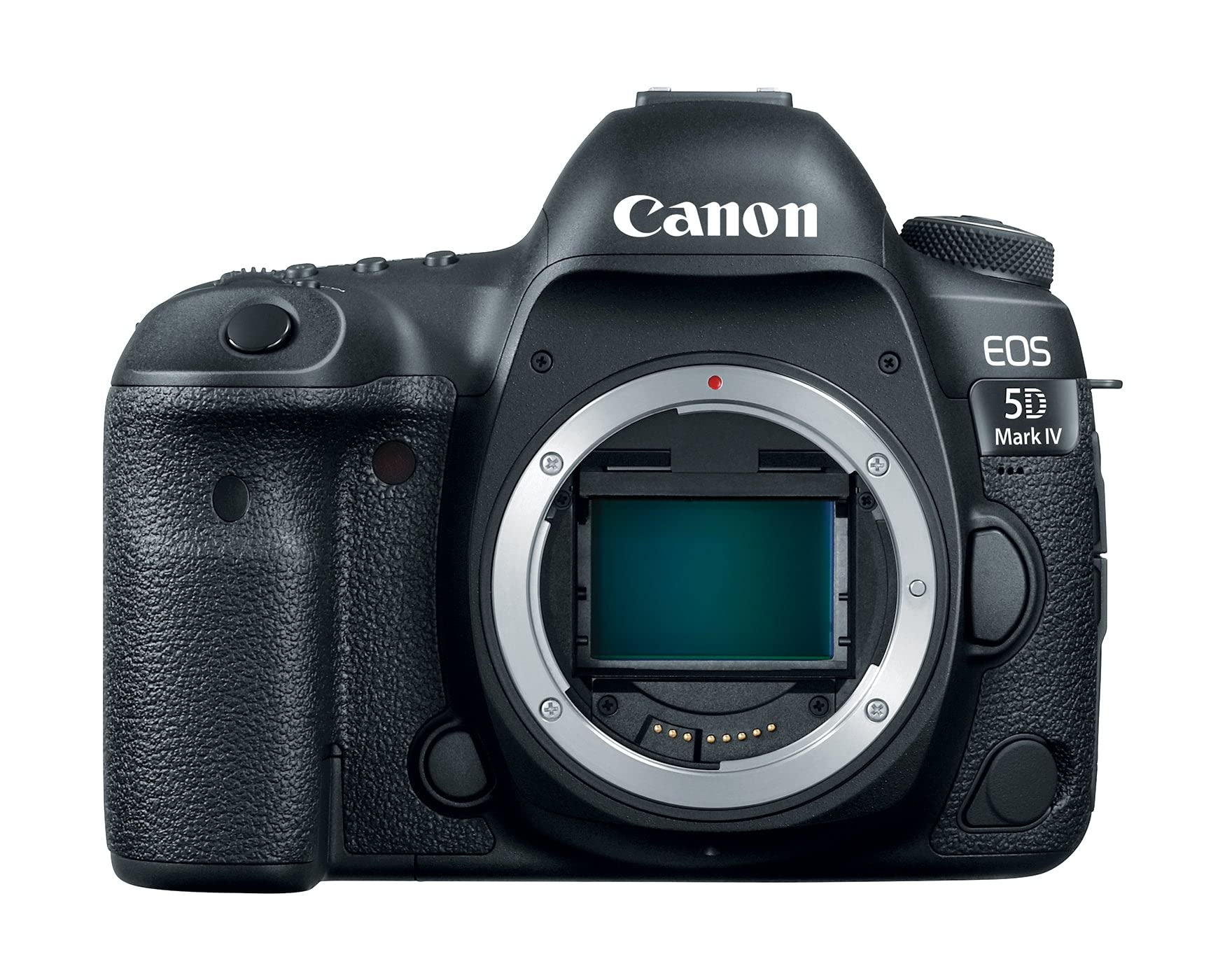
1. Canon EOS 5D Mark IV (Body Only)
Our pick — over 4.5★ from 850+ verified ratings; the strongest balance of quality and price.
The gold-standard full-frame workhorse that tames the night sky with 30.4 megapixels.
For astrophotography, dynamic range is king, and the 5D Mark IV delivers. The consensus among owners is that the dynamic range is excellent in low-light and high-ISO conditions — near Sony territory and behind only the Nikon D810, as buyers report. That means your long exposures retain detail in both the brightest star cores and the faintest interstellar dust. The 14-bit sensor captures smooth tonal transitions, so a gradient across the Milky Way band stays natural rather than blocky.
The 61-point autofocus system and DIGIC 6+ processor give you the tools for precision focusing on a bright star using Live View, but the real win here is ISO handling. With a native range from 100-32000 that expands to 102400, you can shoot at ISO 3200 or 6400 and still get files that hold up to stretching in post-processing. The crowd favorite rating backs this up — a 4.7-star average is top-tier for a serious camera body. Its one caveat is the fixed LCD screen; tilting screens are more convenient for low-angle tripod work, and a few owners wish this one flipped out.
Full-frame flagship
- 30.4MP full-frame sensor with excellent dynamic range
- 14-bit depth for smooth, noise-free tonal gradation
- Fast 61-point autofocus locks on in low light
- 4K video and 7 fps burst for dual-purpose use
Hefty price
- Fixed LCD screen — no tilt for low-angle compositions
- Premium-tier investment; budget buyers should look to the Rebel line
Pro choice: you want the definitive full-frame DSLR for long-exposure night work and have the budget to match its class.
Budget skip: your priority is a tilting screen for ground-level tripod shots; you will want the Nikon D850 for that.
2. Canon EOS 2000D / Rebel T7 DSLR Camera Bundle
The most affordable way to start shooting the stars without buying used gear.
This is the entry-level pick for a reason — it does the basics well enough to get passable astro shots while you learn. The APS-C sensor delivers 24.1 megapixels, albeit with a 12-bit depth, meaning tonal gradation is less refined than a 14-bit full-frame. The 9-point autofocus system is basic; for astro you will manually focus on a bright star via the optical viewfinder anyway, so that limitation is less of a problem in the dark.
What wins people over here is the value. The bundle includes the 18-55mm kit lens, a 32GB card, tripod, case, and wide-angle lenses — all for a fraction of the cost of a pro body. You can capture wide-field Milky Way shots and start stacking images in free software. The trade-off is that the 12-bit data will show banding in heavy stretches, and the max ISO is lower than premium options. But for the price, it is a workable classroom for the night sky.
Budget beginner: Best entry-level bundle with accessories, but the 12-bit sensor and 9 AF points cap its astro potential. Upgrade as your skills grow.
First DSLR: your budget is limited and you want a complete kit with everything to start learning astro basics.
Advanced needs: you need clean, stretchable data; save longer for a 14-bit full-frame sensor.
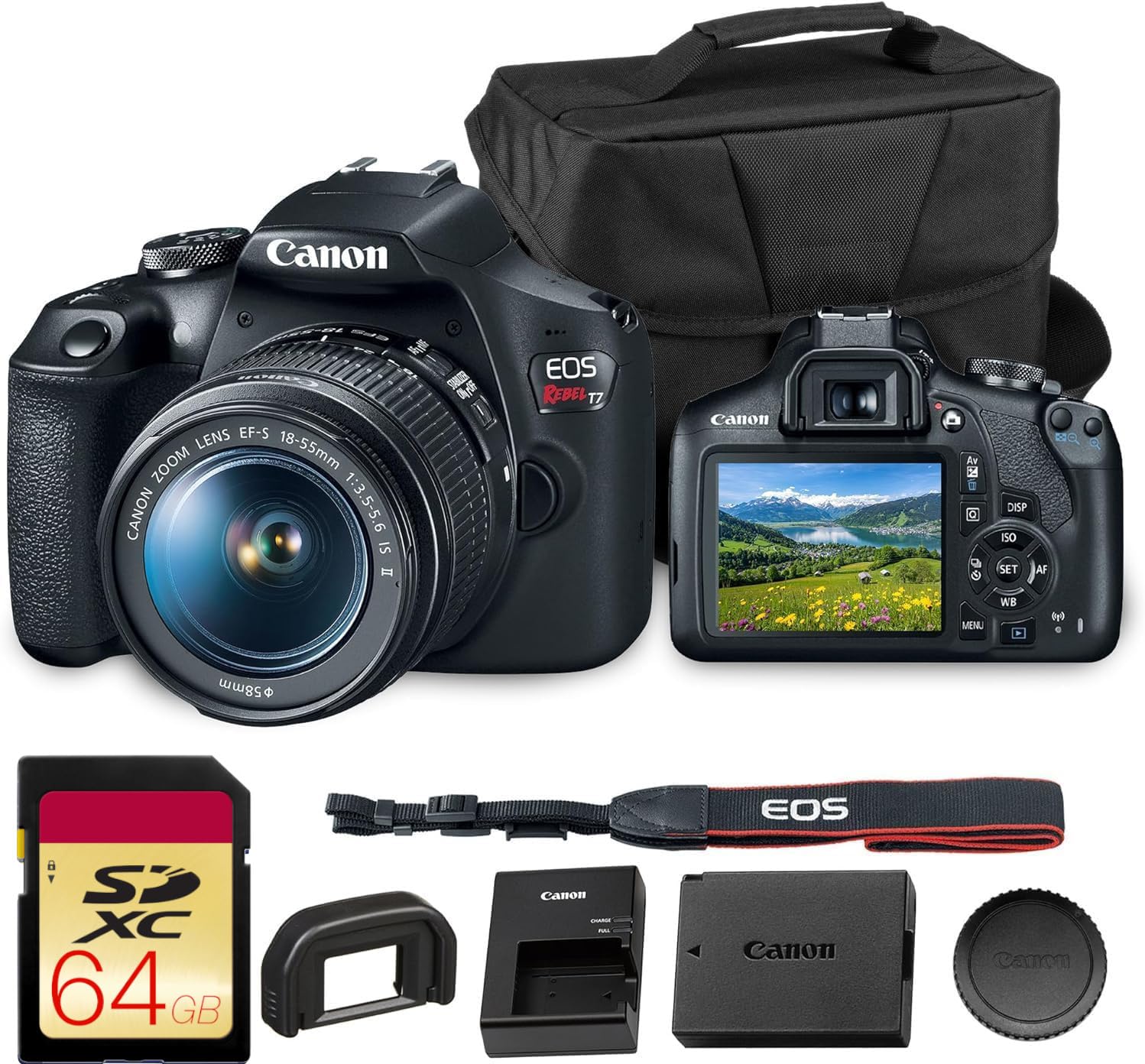
3. Canon EOS Rebel T7 DSLR Camera with 18-55mm Lens Bundle
A complete beginner kit that owners call “easy to use” for first-time DSLR owners.
This Rebel T7 bundle comes with the essentials — camera body, 18-55mm lens, 64GB memory card, and a bag. The 24.1MP APS-C sensor paired with a DIGIC 4+ processor gives decent detail for wide-field astro landscapes. The 9-point autofocus may seem sparse, but for night-sky work you will be using manual focus anyway, so the autofocus limitation is not the deal-breaker it appears.
The ease of use is the standout quality here — beginners praise the menu system and the lightweight body. Wi-Fi connectivity lets you transfer shots to your phone for quick review or sharing, a convenience the earlier bare-bones bundle lacks. The catch here is the 12-bit depth; it will limit how far you can pull detail from the shadows in post-processing. That said, you can still get very respectable wide-angle Milky Way shots under a dark sky — this is the camera that teaches you the craft before you invest in full-frame.
Complete kit: The 64GB card and bag are genuinely useful, saving you a separate purchase. The Wi-Fi sharing is a bonus the cheaper bundle misses.
Starter bundle: you want a turnkey beginner kit with Wi-Fi and a memory card included.
Better lenses: you already have basic gear or plan to do serious deep-sky editing; a 14-bit body gives you far more latitude.
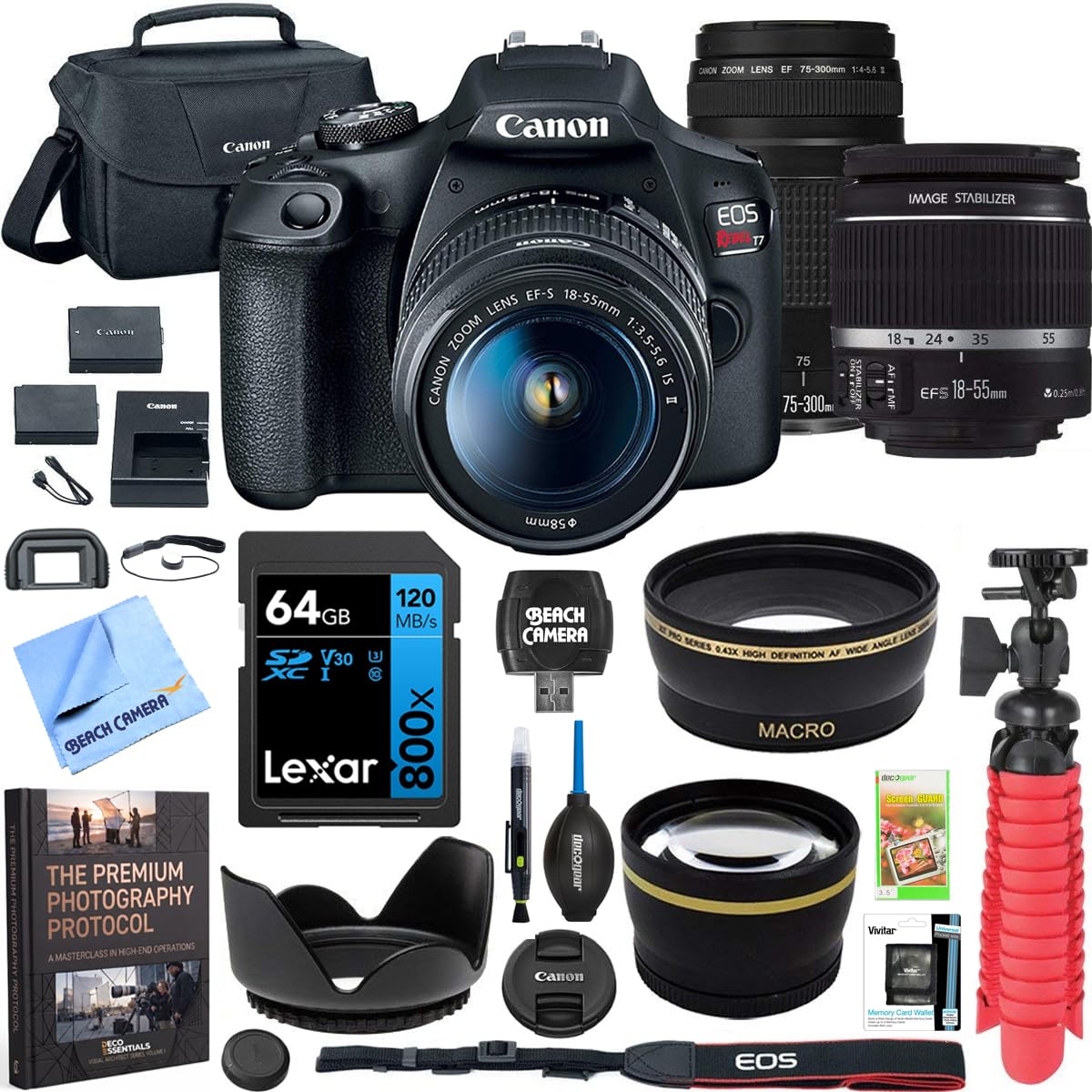
4. Canon T7 EOS Rebel DSLR with Double Zoom Bundle
The surprise astro value pick — a 14-bit sensor in an entry-level body.
Here is where the T7 platform gets interesting. This bundle packs the same 24.1MP APS-C sensor, but the core difference is the bit depth — 14-bit rather than 12-bit. That extra two bits of depth translates to noticeably smoother tonal transitions when you stretch your histogram on a nebula or a star field. It is the same body, but the data capture is more forgiving in post-processing, which matters for astrophotography.
You also get two zoom lenses (18-55mm and 75-300mm), a wide-angle adapter, a telephoto adapter, a tripod, a 64GB card, and a cleaning kit. The two-lens set covers everything from wide-field Milky Way landscapes to reach toward the moon or a brighter nebula. Owners mention the bundle is good value for the price, though some accessories are budget-tier. The 9-point autofocus is unchanged, but again you will be shooting manual for stars.
Two-lens set
- 14-bit sensor for smoother astro image processing
- Double zoom lenses and adapter set included
- Excellent value bundle — buyers highlight cost savings
Older model
- Entry-level autofocus (9-point) and burst speed (3 fps)
- Some bundled accessories are low-end, per owner feedback
Zoom variety: you want a budget-sensitive astro kit that still gives you 14-bits for editing room.
Newer tech: you need a higher burst rate or faster processing; the DIGIC 4+ is noticeably slower than newer chips.
5. Nikon D7500 DSLR Camera with 18-140mm VR Lens Bundle

Nikon’s enthusiast body with a 14-bit sensor and 8 fps burst for the active shooter.
The D7500 takes a different approach — a 20.9MP sensor versus the Canon 24.1MP, but with a 51-point autofocus system that is a significant step up for daytime use. For astro, the 14-bit depth gives you the necessary editing headroom. It shoots continuously at 8 frames per second, which is useful for capturing a meteor shower or the International Space Station transit.
This bundle adds a 420-800mm super-zoom lens, which is overkill for deep-sky but could be fun for lunar photography. The 18-140mm VR kit lens is more practical for astro — the VR helps keep things steady during live-view focusing, and the 140mm reach can grab a framed shot of the Andromeda Galaxy. The recurring owner experience is positive, with many praising the camera’s image quality and long battery life. The real-world trade-off is that this is an enthusiast body, meaning the menu system is dense for a true beginner.
Fast autofocus: Some owners reported the camera shutting off with heavy telephoto lenses attached. Stick to the included 18-140mm for astro.
Action shooter: you want Nikon’s fast burst speed and 51-point AF for both astro and daytime sports.
Full-frame need: you are a first-time shooter; the D7500’s deep menus can be overwhelming for pure astro beginners.
6. Canon EOS Rebel T8i DSLR Camera with 18-55mm & 75-300mm Lenses

A significant autofocus and video upgrade over the T7, now with 45-point coverage.
The T8i is the natural evolution from the T7 line, jumping from 9 to 45 autofocus points. That matters less for manual astro focusing but transforms the camera’s daytime versatility. The 24.1MP APS-C sensor now runs on the DIGIC 8 processor, which improves noise handling compared to the older DIGIC 4+. The 4K video at 24p opens up time-lapse capabilities for night-to-day transitions.
This bundle includes two zoom lenses (18-55mm and 75-300mm) plus a 420-800mm super-zoom lens, a 128GB card, tripod, and filter kit. The double-lens approach is practical — the 18-55mm for wide-field astro and the 75-300mm for lunar close-ups. What reviewers point out is that the camera body is excellent, but the bundled accessories are cheap. You are paying primarily for the camera and lenses, and the rest is filler. The T8i is a solid step up for astro use, especially if you also shoot daytime events.
Versatile zoom: The bit depth is listed as 24-bit in spec, which is unusually high and likely a listing error — check the manufacturer site for confirmed specs.
All-in-one: you want the processing improvements of DIGIC 8 and 45-point AF for dual-purpose shooting.
Lightweight: you are buying mainly for the extra accessories; many are cheap-quality add-ons.
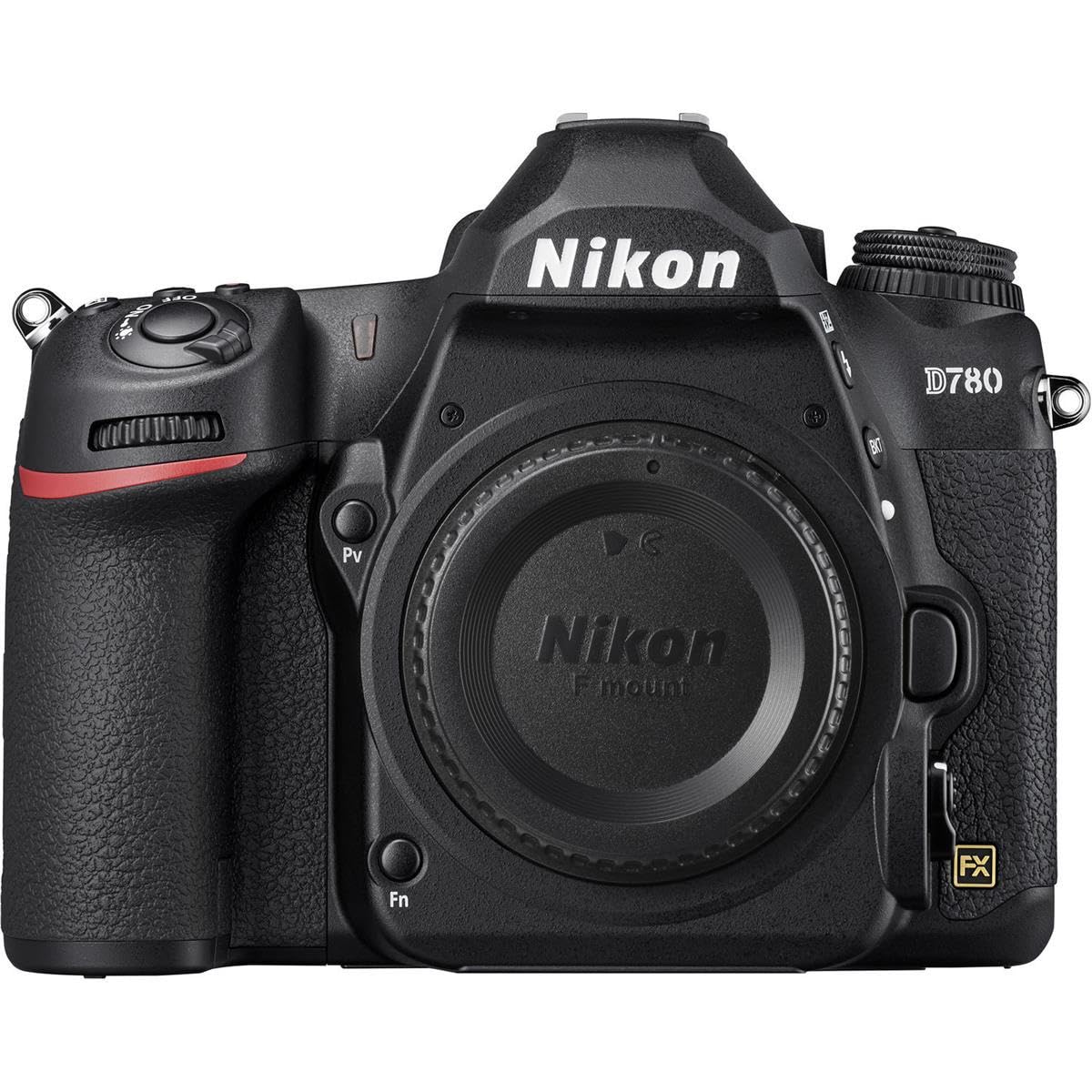
7. Nikon D780 (Body Only)
The low-light beast that owners call “the best DSLR Nikon has made” for high-ISO work.
The D780’s EXPEED 6 processor and 24.5MP full-frame sensor deliver virtually noise-free images at ISO 22000. That is a stunning claim, but owners confirm it — they report excellent low-light AF and clean files at very high ISOs. The 51-point autofocus system works in both phase-detection and contrast-detection modes for flexible near-dark focusing.
You get 4K UHD video, dual SD slots, and a tilting touchscreen that makes low-angle composition easy. The SnapBridge app for wireless connectivity is standard. Where the D780 shines is its combination of traditional DSLR reliability with modern on-sensor phase detection, which makes Live View focusing on stars faster than older DSLRs. The main feedback is that shutter reliability can be mixed — a small number of shoppers say the shutter getting stuck. Keep in mind that this is a body-only purchase; you will need to budget for a lens.
Pro video
- Excellent high-ISO performance — clean files at ISO 22000
- 51-point AF with phase and contrast detection
- Tilting touchscreen for tripod-level composition
Complex menus
- Shutter reliability flagged as mixed by some owners
- Body only — no kit lens included
Videographer: high-ISO performance is your top priority for shooting the Milky Way without a tracker.
Simple use: you want a bundled lens or need a proven shutter track record above all else.
8. Nikon D850 FX-Format Digital SLR Camera Body

The 45.7-megapixel sensor that defines studio-quality resolution for the night sky.
If you want to crop into a nebula and still see sharp detail, the Nikon D850 delivers. Its back-side illuminated (BSI) sensor (a design that lets more light reach each pixel) captures 45.7 megapixels with no optical low-pass filter (a filter that normally softens fine detail), so you can zoom in on deep-sky objects without losing clarity. The dynamic range (the camera’s ability to capture both bright stars and dark sky in one shot) is among the best you can get, which is why serious astrophotographers who stack multiple exposures and stretch the shadows favor it over the Canon EOS Ra for raw data quality.
The 153-point autofocus system is the most advanced on any DSLR here, though you will still focus manually on stars. The tilting touchscreen and focus shift shooting mode automate focus steps for stacking landscape astro frames. The 4K video and 8K time-lapse options add creative flexibility. Owners call it the best DSLR ever made, but note that massive file sizes require fast storage and a powerful computer. One owner sums it up: “the D850 sensor is near medium format quality.”
High resolution: At 45.7MP, file storage and processing demand are high. Plan for large CFexpress or XQD cards and a fast editing machine.
Landscape: you need the ultimate resolution for large prints or heavy cropping of distant nebulae.
Sports: you do not have the computer or storage to handle 45.7MP RAW files; the Nikon D780 offers a more manageable 24.5MP.
9. Sony Alpha 7 IV Full-frame Mirrorless

The mirrorless hybrid that brings 33 megapixels and beastly autofocus to the stars.
The Sony Alpha 7 IV is a mirrorless camera, not a DSLR, but its performance for astrophotography earns it a place on this list. The 33MP full-frame back-illuminated sensor paired with the BIONZ XR processor delivers exceptional image quality and low-light performance. Its 693-point phase detection autofocus is the most dense of any camera here, though for astro you will still rely on manual focus.
The standout feature for night work is its long battery life — buyers report 2000+ shots per charge, rare for a mirrorless. The in-body image stabilization (IBIS) is also a real advantage when composing on a tripod in the dark, keeping your live view steady. The body is weather-sealed, so dew on a damp night is less of a concern. Owners consistently praise the autofocus, image quality, and value for money. The learning curve for the menu system is the recurring trade-off; Sony menus are known to be dense.
Hybrid performer: With a fast manual lens, the focus peaking and magnification tools in the EVF make infinity focus on stars easier than an optical viewfinder.
Photo-video mix: you want a mirrorless full-frame camera that also works great for daytime shooting, with battery life that owners mention lasts through a full night of exposures and autofocus that locks on quickly for general use. skip it if you need a dedicated astro camera with a built-in hydrogen-alpha filter — the D850’s standard sensor won’t pull out as much red nebula detail as the Canon EOS Ra.
Large hands: you find dense menu systems frustrating; the main feedback is that it takes time to learn.
10. Canon EOS R5 Mirrorless Camera (Body Only)

The mirrorless that matches the D850’s resolution and adds 8K video to the arsenal.
The EOS R5 is Canon’s mirrorless flagship, packing a 45MP full-frame sensor with the DIGIC X processor. For astrophotography, that 45MP allows extreme cropping power. The 5-axis IBIS (in-body image stabilization) is a huge practical benefit — it keeps your live view feed steady on the rear screen while you compose and focus on a star, something a traditional DSLR mirror cannot do. The eye detection AF even works on birds at a distance, proof of its tracking power for daytime work.
Internal 8K RAW video and 4K up to 120 fps make this a potent tool for astro video and time-lapses. The high-speed shooting reaches 20 fps with the electronic shutter, which is incredible for catching a meteor burst. Owners consistently praise the image quality as stunning and the autofocus as blazing fast. The real-world feedback is that the battery life is shorter than a typical DSLR (around 650 shots), and overheating during extended 8K video use is a known concern, though it rarely affects stills use.
8K video
- 45MP full-frame sensor with IBIS for stable live-view focus
- Eye Detection AF for wildlife and portrait versatility
- 8K internal video and 20 fps bursts
Overheating risk
- Battery life ~650 shots — bring spares for all-night sessions
- Significant investment; the most expensive body on this list
Video pro: you demand the highest resolution, 8K capability, and IBIS in a single system.
Long recording: budget is a constraint or you prefer an optical viewfinder for star focusing; the R5’s EVF is excellent but is a mirrorless experience.
Understanding the Specs
Bit Depth and Dynamic Range
Bit depth determines how many colors and tonal steps your camera can record. A 14-bit sensor captures 16,384 tones per channel, while a 12-bit sensor captures 4,096. For astrophotography, where your final image is heavily stretched to reveal faint detail, those extra tones prevent banding and posterization. The higher the bit depth, the more editing room you have before noise appears in the shadows.
High ISO Performance
ISO is the camera’s sensitivity to light. Astrophotography often requires ISO 1600 or higher to capture the Milky Way in manageable exposure times. A camera that produces clean files at ISO 3200 or 6400 without heavy grain is a true asset. The goal is a sensor where the noise pattern is fine and monochromatic, not blotchy — that kind of noise is easier to reduce in software without destroying detail.
FAQ
Do I need a full-frame sensor for astrophotography?
What is the minimum bit depth I should look for in a DSLR for astro?
How many autofocus points do I need for shooting stars?
Can I use a mirrorless camera for astrophotography?
What is bulb mode and why do I need it?
Is 24 megapixels enough for astrophotography?
Should I buy a bundle with lenses or just a body?
Does the camera matter more than the lens for astrophotography?
Final Thoughts: The Verdict
For most people, the dslr for astrophotography winner is the Canon EOS 5D Mark IV because its 30.4MP full-frame sensor, 14-bit depth, and excellent low-light performance are proven by thousands of owners. If you want the highest resolution for cropping deep-sky shots, grab the Nikon D850 and its 45.7MP sensor. And for the best high-ISO performance on a tight budget, the Canon T7 Double Zoom Bundle is the one to reach for.
How We Picked
We do not accept paid placement. Every pick is matched to a real buyer and a real use-case; we do not hands-on test units.
Sources & Methodology
Specifications: manufacturer listings and product documentation. Review insights: verified customer reviews, as of July 2026. Pricing: not shown on this page (it changes often); check the current price via the retailer link.
As an Amazon Associate, WellFizz earns from qualifying purchases. This does not affect which products we feature.
Related Guides

Mo Maruf
I created WellFizz to bridge the gap between vague wellness advice and actionable solutions. My mission is simple: to decode the research and give you practical tools you can actually use.
Beyond the data, I am a passionate traveler. I believe that stepping away from the screen to explore new environments is essential for mental clarity and physical vitality.