Our readers keep the lights on and my smoothie glass nicely filled. As an Amazon Associate, I earn from qualifying purchases.
Specs are compiled from manufacturer listings and verified buyer reviews and can change over time — please confirm the key details on the product page before buying.
Every electrician knows the feeling — you are in a tight junction box, one hand holding the box, the other swinging a hammer that is too short, too heavy, or just wrong for the job. A miss means a dented box, a bent staple, or a bruised finger. The right electrician hammer changes all of that: it has a long neck to reach recessed staples, a straight claw to rip out old Romex without mangling the wire, and a weight that drives nails all day without wearing you out.
I’m Mohammad Maruf — the founder and writer behind WellFizz. This guide is built by comparing the manufacturers’ published specifications and the patterns across verified customer reviews, so you get each pick’s real strengths and trade-offs instead of marketing spin.
This roundup focuses solely on hammers designed for electrical work — tools with features like long polls, straight claws, and non-conductive handles that a framing hammer simply does not have. Whether you are roughing in a new build or trimming out a service panel, choosing the right electrician hammer depends on weight, reach, and the specific staple-removal trick that saves you minutes on every job.
Our Picks at a Glance


How To Choose The Best Electrician Hammer
An electrician hammer looks like a regular hammer, but every dimension is tweaked for wiring work. The head is often lighter — 18 to 22 ounces — because you are driving staples and small nails, not sinking 16-penny framing spikes. The neck is longer so you can swing inside a junction box or reach a staple sunk between studs. The claw is straight, not curved, and usually carries a V-notch that grabs the staple head without slicing the Romex sheathing. Many also include a handle hole for a tether, keeping the tool secure when you are working above drop ceilings or on a ladder.
Head Weight and Strike Face
An 18-ounce head is the standard for residential and light commercial electrical work — heavy enough to set staples in one or two hits but light enough to swing all day. A 22-ounce head gives more momentum for driving into dense wood or concrete in commercial rough-ins. Smooth faces reduce marring on outlet boxes and panel covers, while a milled face gives extra grip on the nail head in wet conditions.
Handle Material and Length
Fiberglass handles are non-conductive and absorb vibration well, making them the safest choice for electrical work. Steel handles are tougher but require a shock-reduction grip to avoid hand fatigue. The handle length typically runs from about 13.5 to 15 inches. A longer handle gives more reach inside deep boxes, while a shorter handle sits better in a standard 5-gallon bucket and swings more easily in tight attics or crawlspaces.
Claw Design and Staple Removal
A straight claw with a V-notch cutout is the defining feature of an electrician hammer. That notch fits around the head of a Romex staple so you can pry it out without touching the wire below. A tapered, narrow claw also gets between tight studs and staples. Some hammers add a full romex-staple remover built into the throat for more leverage. The claw shape is what separates this tool from a general-purpose framing hammer.
Quick Comparison
| Model | Best For | Head Weight | Handle Material | Claw Type | Amazon |
|---|---|---|---|---|---|
| Southwire Bmeh-18★ Best Overall | All-around electrical work | 18 oz | Drop Forged Steel | Straight with Staple Remover | Amazon |
| Klein Tools H80718Precision Pick | Precision in tight spots | 18 oz | Fiberglass | Straight with V-notch | Amazon |
| VAUGHAN E18FBucket Fit Champ | Bucket-friendly reach | 18 oz | Fiberglass | Straight Claw | Amazon |
| Klein Tools H80922SM | Heavy-duty rough-in | 22 oz | Stainless Steel | Straight Milled Face | Amazon |
| Estwing E3-40L | Lineman and utility work | 40 oz | Alloy Steel | Flat Smooth | Amazon |
| Greenlee 0156-11 | Tool-pouch carry | 18 oz | Fiberglass | Straight | Amazon |
| IDEAL 35-210 | Commercial rough-in | 28.5 oz | Alloy Steel | Straight Long Claw | Amazon |
| Wiha SB846300E | Compact carry and trim | 300 g (~10.6 oz) | Wood | Flat / Round | Amazon |
In‑Depth Reviews
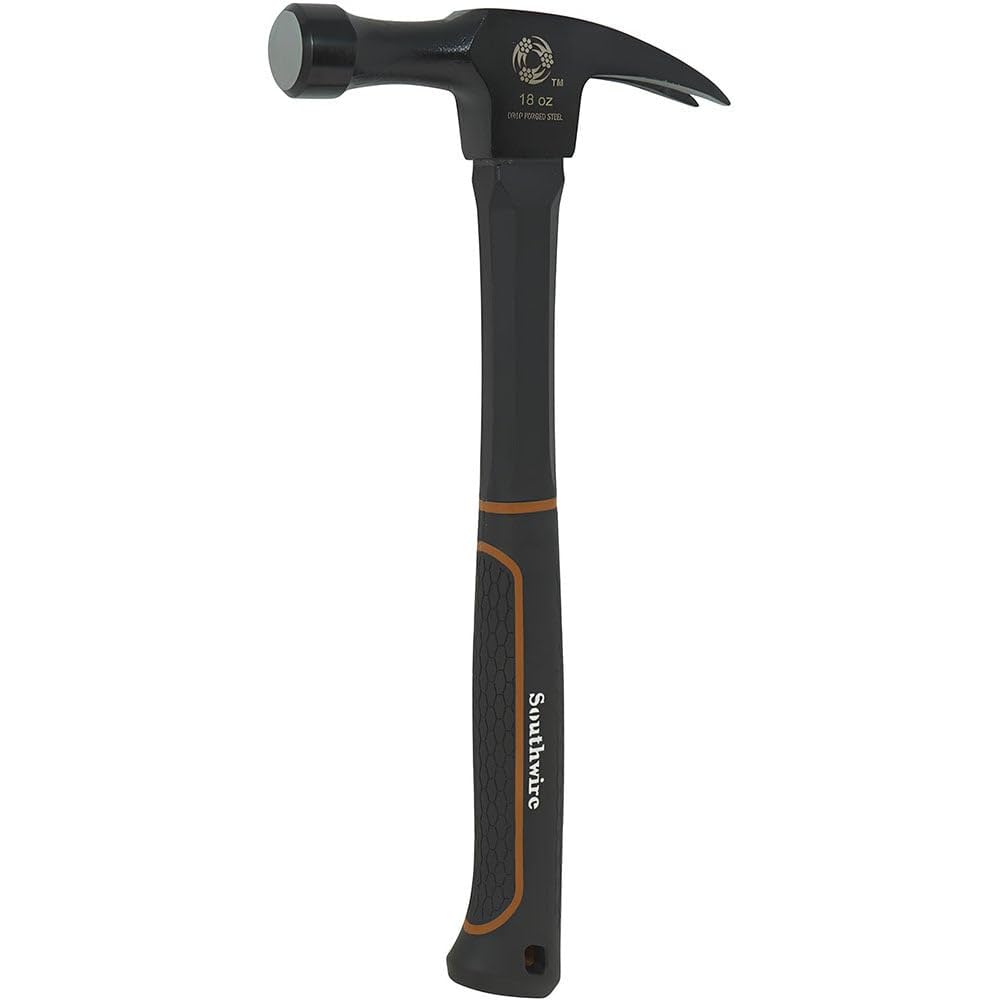
1. Southwire Bmeh-18 Heavy Duty Romex Electrician’s Hammer
Our pick — over 4.5★ from 750+ verified ratings; the strongest balance of quality and price.
The staple remover that electricians swear by for residential wiring.
What makes this the crowd favorite is the built-in Romex staple remover — a dedicated notch on the claw that pops NM staples without nicking the wire. At 18-ounces and 1.1 pounds, it is the lightest all-steel hammer in this roundup, which is exactly what you want for a full day of stapling and box work. The drop-forged steel head and extended neck let you reach deep into outlet boxes, and buyers confirm that after a year of daily use the tool “has held up great” and retains a nice, balanced feel.
The extra-long neck is also what makes this hammer special for sill plates — you can staple right on the foundation without hitting the concrete, as one working electrician put it. The straight claw is narrow, designed specifically to slide between staple legs and Romex, and the contoured grip prevents slipping. The handle also includes a tether hole for safety when working at height. Compared to the Klein H80718, the Southwire is about 0.8 pounds lighter (1.1 vs 1.9 pounds) and carries a dedicated staple-removal feature that many prefer over a standard V-notch.
Why it wins
- Built-in Romex staple remover avoids wire damage
- Extra-long neck reaches into boxes and onto sill plates
- At 1.1 pounds it is easy to swing all shift
- Limited lifetime warranty from Southwire
Reality check
- Durability draws mixed feedback — an occasional unit shows wear faster than expected
- Elongated striking face takes a short adjustment period for accuracy
Reach for this if: you are a residential electrician who removes Romex staples ten or more times a day — the dedicated remover saves you minutes per job.
Look elsewhere if: you need a heavier head for commercial concrete-bumping, where a 22-ounce model makes more sense.
2. Klein Tools H80718 Straight-Claw Hammer, 18-Ounce
The bright orange favorite for stapling in tight corners without smashing fingers.
The Klein H80718 pairs a high-strength fiberglass core that absorbs shock with a narrow head that slips into tight spaces a wider hammer can’t reach. At 18 ounces with a 15-inch handle, it is slightly heavier than the Southwire (1.9 vs 1.1 pounds) but still light enough for overhead work. Buyers report the straight claw with its V-notch pulls old NM staples easily, and for Romex nails, owners say it “works better than any hammer I’ve used.”
The longer neck is the standout here — it drives nails into junction boxes without the handle hitting the box rim, and the smooth-faced forged steel head reduces marring on boxes and panels. The bright orange rubber grip makes it hard to lose in a cluttered gang box, and the 15-inch length gives good leverage for prying. Where it beats the Southwire is the fiberglass handle — non-conductive, so one less thing to worry about in a live panel, and the shock-absorbing core keeps the sting out of hard hits.
What owners love
- Non-conductive fiberglass handle for panel work
- Narrow head and long neck reach inside boxes
- V-notch claw removes staples cleanly
- Priced far below typical Klein hammer retail
The trade-off
- Thick ergonomic handle feels oversized in smaller hands
- Some owners mention handle breakage within a year of heavy commercial use
Grab this for: residential rough-in and trim work where you need a precision swing inside crowded boxes — the narrow face and V-notch make it a surgical tool.
Think twice if: you need a one-piece steel body for the harshest commercial environments; the fiberglass handle is a wear item.
3. VAUGHAN Electricians Straight Claw Hammer E18F
Vaughan’s legendary balance in an 18-ounce package designed to fit your bucket.
Vaughan has been making hammers in the USA since 1869, and the E18F carries that tradition with an extra-long poll (the striking face) that reaches deep into electrical boxes for staple driving. The 14.13-inch handle is about one inch shorter than the Klein models, which means it sits neatly in a standard 5-gallon bucket and swings freely between 16-inch-on-center joists without snagging. At 1.8 pounds it balances beautifully — buyers who have owned multiple Vaughan hammers for decades say this one is “a must have tool for your bucket.”
This hammer uses American high-carbon steel, drop-forged and heat-treated, with a rust-resistant powder-coated finish. The straight claw is tapered for prying, and the textured rubber grip stays secure even with sweaty hands. It is the shortest and lightest-feeling 18-ounce hammer here, making it ideal for attic work and crawlspaces where every inch of handle clearance matters. As the review pages sum it up: “great quality and balance, made in USA. Longer neck provides extra reach for electrical work.”
Strong points
- Shorter handle fits bucket and tight framing spaces
- Extra-long poll reaches into junction boxes
- Assembled in the USA with American steel
- Rust-resistant powder-coated finish
Know before you buy
- Only 81 total ratings — tried by fewer owners than the picks above
- No dedicated staple-removal notch; the tapered claw does the work
Pick this if: you work mostly in tight attics or between joists and want a hammer that stores easily in your bucket without catching on trusses.
Pass on this if: you want a dedicated Romex staple remover in the claw — this one relies on the tapered straight claw.
4. Klein Tools H80922SM Milled Face Framing Hammer, 22-Ounce
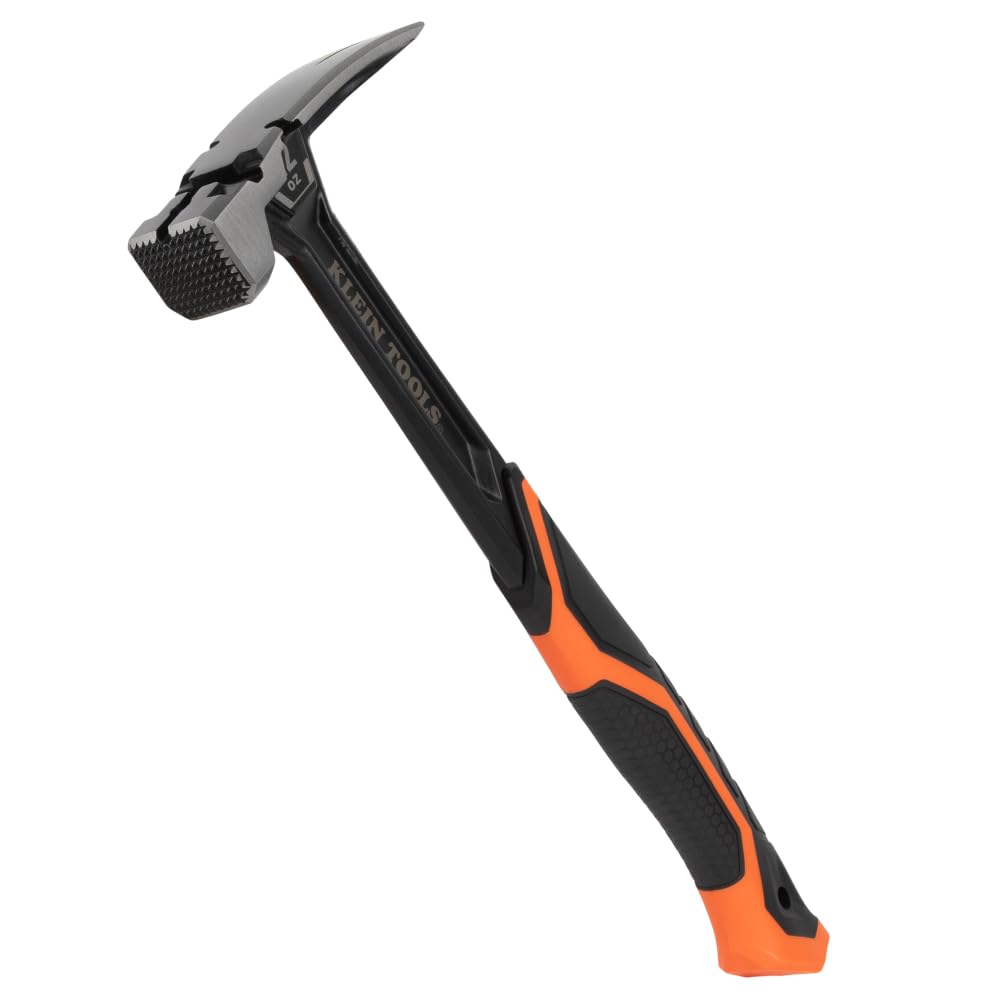
The 22-ounce beast with a magnetic starter and a milled face for wet-site grip.
At 2.3 pounds it is twice the heft of the Southwire, but the stainless steel handle and cushion grip keep the fatigue manageable. The extra-large squared strike face is milled, so it grips the nail head and reduces slipping in wet or humid conditions.
The magnetic nail starter is a time-saver: you hold the nail in the slot on the face, swing, and the magnet holds it steady until the first hit sets it. Dual side nail pullers on the claw increase leverage for extracting nails from tight spots, and the 15-inch handle gives plenty of reach. Buyers call it “a beast, tough and well built” and note the rubberized grip handles the impact well for all-day use. The 22-ounce head is 22% heavier than the 18-ounce H80718, so it hits harder but demands more arm endurance.
What it brings
- Milled face grips nail heads in wet wood
- Magnetic nail starter enables one-handed driving
- Dual side nail pullers for tight-space extraction
- Extra-large strike face reduces misses
The weight penalty
- At 2.3 pounds it is noticeably heavier than all 18 oz models
- Some users find it feels twice as heavy as a typical 22 oz round-head hammer
Choose this for: commercial rough-in, concrete form work, or any job where you are hitting dense material all day and need every ounce of momentum.
Skip it for: residential trim or panel work where the 22-ounce head and milled face can mar boxes and panels more than a smooth face.
5. Estwing Lineman’s Hammer E3-40L, 40 oz

The one-piece steel lineman’s hammer that feels nothing like what you expect at 40 ounces.
This is a different beast. At 40 ounces and 2.5 pounds, the Estwing E3-40L is purpose-built for linemen and utility workers who drive ground rods, set anchors, and pound copper staples into utility poles. The entire tool is forged from one piece of American steel — no separate head, no handle joint to ever loosen. The patented shock reduction grip claims to reduce impact vibration by 70%, and owners confirm the handle “does a good job mitigating hand stress” even during heavy swinging.
The smooth striking face won’t mar hardware as badly as a milled face, and the flat claw is more of a pry bar than a staple remover. This is not a hammer for trimming out panels or driving Romex staples in a ceiling gang box. It excels at the utility-class jobs where you need mass behind the blow — driving 5/8-inch ground rods, persuading stubborn knockouts, or setting concrete anchors. Customers note it “delivers a great deal of striking force” and that there is “barely a scratch on the striking face” after several uses. It is made in Rockford, Illinois.
The strengths
- One-piece forged steel will never separate
- Shock reduction grip lessens arm fatigue by a claimed 70%
- Made in the USA with American steel
- Smooth face protects hardware from marks
The limits
- At 40 ounces and 2.5 pounds it is overkill for most residential electrical work
- No straight claw or V-notch for Romex staple removal
Buy this for: utility, line, or farm work where you need a sledge-like impact in a one-hand swinging tool — it outperforms a 4-pound sledge in tight trenches.
Do not buy this for: daily residential electrical rough-in; the weight and claw design are wrong for Romex staples and outlet box work.
6. Greenlee 0156-11 Electrician’s Hammer, 18 oz

The 18-ounce hammer with the shorter handle that fits better in your tool bag.
Greenlee’s 0156-11 is built for the electrician who wants a hammer that rides in a tool pouch without digging into their side or snagging on every truss. The handle is shorter than the Klein H80718, which makes it easier to use in low-ceiling rough-in work and keeps the tool from protruding awkwardly when pouched. At 1.7 pounds with a fiberglass handle and a cushioned grip with a flared end, it reduces slipping and gives a comfortable hold even during repetitive stapling.
Buyers highlight the long neck as the key feature for “hammering in tighter quarters” and note that the head feels solid even when driving nails through hard oak or into junction boxes. The alloy steel head and straight claw handle standard electrical tasks well, and the shock-resistant fiberglass handle adds a layer of safety around panels. It does not carry a dedicated Romex staple remover in the claw — the straight claw does the prying work on its own. Some find the handle quite short, so if you have large hands or prefer a 15-inch reach, this may feel cramped.
Why it works
- Short handle fits tool pouches and tight crawlspaces
- Fiberglass handle is non-conductive
- Flared cushioned grip reduces slipping
- Long neck reaches junction boxes
The catch
- Handle length is notably shorter than competitors — some find it too short
- No V-notch or integrated staple remover in the claw
Reach for this if: you prefer a compact hammer that carries cleanly in your pouch and works well on the ground or kneeling — the shorter handle puts less leverage on your swing but more control in close quarters.
Pass on this if: you want a long 15-inch handle for maximum swing reach inside deep boxes.
7. IDEAL Electrical 35-210 Drop-Forged Hammer, 28.5 oz
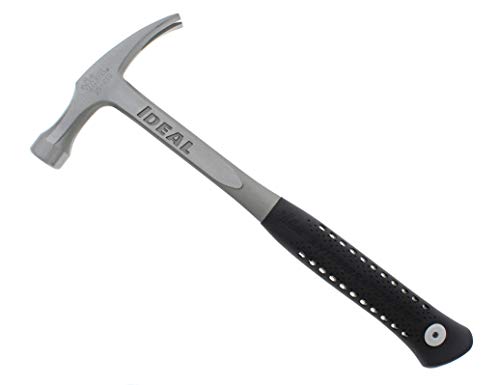
The one-piece steel hammer from IDEAL that says goodbye to torn-up handles in steel boxes.
IDEAL’s 35-210 sits between the standard 18-ounce electrician hammer and the 40-ounce lineman hammer at 28.5 ounces — a middle ground for industrial and commercial electricians who need more momentum than an 18-ounce delivers but less fatigue than a 40-ounce causes. The entire tool is one-piece drop-forged steel, which means the handle will never separate from the head, even when you are swinging into steel boxes that would destroy a fiberglass handle over time. The long, straight claw is designed specifically for removing electrical fixtures and staples.
The perforated anti-vibe grip improves comfort during hard swings, and the polished head and handle hold up in harsh environments. Owners note that the tool stands out visually from the “mainstream” options, which helps prevent it from walking off a job site. The trade-off is that at 28.5 ounces it is noticeably heavier than a standard electrician hammer — one buyer called it “somewhat of a bigger hammer” for electrical work where leverage is rarely needed. IDEAL backs it with a lifetime guarantee.
Built different
- One-piece forged steel — no handle to snap in steel boxes
- Anti-vibe perforated grip reduces hand sting
- Long straight claw for fixture and staple removal
- Lifetime guarantee from IDEAL
The weight question
- At 28.5 oz it is heavier than standard 18 oz electrician hammers
- A few buyers feel it is overpriced for the design
Choose this for: industrial maintenance and commercial rough-in where you hit steel boxes all day and need a tool that cannot break at the handle.
Skip it for: light residential trim work or overhead stapling where the extra weight will fatigue your arm faster than a lighter 18 oz hammer.
8. Wiha SB846300E Electrician’s Hammer, 300 g

The lightweight German hammer that fits perfectly into a Veto bag — under 11 ounces.
Wiha’s compact electrician hammer is in a class of its own. At only 300 grams (about 10.6 ounces) with an 11.14-inch handle, it is roughly half the weight of a standard 18-ounce hammer. The flat base on the handle back is a unique touch — you can press cables and dowels into place without damaging them, and the flat claws remove nail clips and nails cleanly. The head combines a square and a round shape, giving you a striking face that works in confined spaces and allows sideways swings against studs.
Buyers who love this hammer cite the “perfect 50/50 weight balance” and the ability to drive wire staples in cramped spaces that a full-size hammer cannot reach. It fits into a Veto Pro Pac tech bag without bulging, and the compact size makes it the ideal trim-out tool for panel covers and small boxes. The wood handle delivers a traditional feel that some electricians prefer, and the German engineering means excellent fit and finish. It is not a rough-in hammer — at this weight, it lacks the momentum for sinking staples into dense lumber in one hit.
The smart bits
- Under 11 ounces — easiest to carry and swing all day
- Flat handle base for damage-free cable placement
- 50/50 weight balance for precise control
- Compact design fits small tool bags and pouches
The limits
- Too light for driving staples into dense wood or concrete
- Price is high relative to its size and weight
Reach for this if: you are a residential service or trim electrician who works in tight cabinets and wants a hammer that lives in your bag without adding bulk — the cable-placing flat base is a genuine timesaver.
Pass on this if: you need a hammer for rough-in, new construction, or any job where you drive staples into solid lumber overhead.
Understanding the Specs
Head Weight and Striking Force
Head weight is the single most important spec because it determines how much force you deliver per swing. An 18-ounce head is the standard for residential electrical work — heavy enough to set a Romex staple in one or two hits, light enough to swing hundreds of times without fatigue. A 22-ounce head hits harder for commercial rough-in and dense lumber, but adds half a pound that your wrist feels by lunch. The 40-ounce Estwing is a lineman tool, not a daily-use electrician’s hammer; its mass is for driving ground rods and anchors, not staples. Pick the lightest head that still sets your fasteners in two strokes — that is the one you will reach for on every job.
Claw Design and Staple Removal
A straight claw with a V-notch cutout is the electrician’s signature feature. That notch hooks under the staple head and lets you pry straight up without twisting the wire. Some hammers, like the Southwire Bmeh-18, add a full Romex staple remover — a deeper slot with more leverage built into the claw throat. Without this feature, you are prying staples out with a standard curved claw that tends to gouge the sheathing. If you remove staples all day, the dedicated remover saves you time and wire damage. For the occasional staple, a tapered straight claw like the Vaughan E18F does the job fine.
FAQ
What makes a hammer specifically for electricians different from a regular framing hammer?
Which head weight is best for residential electrical work?
Can I use a regular hammer to remove Romex staples?
Is a fiberglass or steel handle better for electrical work?
How long should an electrician hammer’s handle be?
What is the V-notch in the claw for?
Is a milled face worth it for an electrician hammer?
Can an electrician hammer be used for demolition or prying?
Final Thoughts: The Verdict
If you want one dependable pick, the electrician hammer that checks every box is the Southwire Bmeh-18 because it combines the dedicated Romex staple remover that saves wire, an 18-ounce weight you can swing all day, and an extra-long neck for box work — all backed by the most positive consensus in the category. If you want a non-conductive fiberglass handle and a precision V-notch for staple pulling, grab the Klein Tools H80718. And for the electrician who works in tight attics and wants a bucket-friendly fit, the VAUGHAN E18F delivers the same reach in a more compact, USA-assembled package.
How We Picked
We do not accept paid placement. Every pick is matched to a real buyer and a real use-case; we do not hands-on test units.
Sources & Methodology
Specifications: manufacturer listings and product documentation. Review insights: verified customer reviews, as of July 2026. Pricing: not shown on this page (it changes often); check the current price via the retailer link.
As an Amazon Associate, WellFizz earns from qualifying purchases. This does not affect which products we feature.
Related Guides

Mo Maruf
I created WellFizz to bridge the gap between vague wellness advice and actionable solutions. My mission is simple: to decode the research and give you practical tools you can actually use.
Beyond the data, I am a passionate traveler. I believe that stepping away from the screen to explore new environments is essential for mental clarity and physical vitality.