Our readers keep the lights on and my smoothie glass nicely filled. As an Amazon Associate, I earn from qualifying purchases.
Specs are compiled from manufacturer listings and verified buyer reviews and can change over time — please confirm the key details on the product page before buying.
Picking the wrong exterior door stain means peeling, fading, and a weekend redo every spring. The good news is that the right one goes on easy, locks out rain and UV rays, and keeps your door looking fresh for years. This guide cuts through the buzzwords to find the nine best exterior door stains for real-world weather and wood.
I’m Mohammad Maruf — the founder and writer behind WellFizz. This guide is built by comparing the manufacturers’ published specifications and the patterns across verified customer reviews, so you get each pick’s real strengths and trade-offs instead of marketing spin.
You need an exterior door stain that survives rain, sun, and foot traffic without peeling after a season. The choice depends on the base (oil vs. water), the finish (clear vs. tinted), and the real-world durability that thousands of owners have already tested.
Our Picks at a Glance


How To Choose The Best Exterior Door Stain
An exterior door stain has to do more than just add color. It needs to flex with the wood through freeze-thaw cycles, block UV rays that fade pigment, and repel rainwater on a vertical surface. Here is what to check before you buy.
Base Type: Oil vs. Water
Oil-based stains (like the Ready Seal) penetrate deep into the wood fibers and create a flexible, long-lasting bond. They are forgiving to apply because they dry slowly and do not leave lap marks. Water-based stains, like the Thompson’s WaterSeal, dry faster and clean up with soap, but they can raise the wood grain and sometimes require more coats for the same waterproofing.
Finish: Solid vs. Semi-Transparent
A solid stain sits on top of the wood like a thin paint — it hides the grain and covers imperfections well. A semi-transparent finish lets the wood texture show through, but it typically needs a clean, bare surface to bond properly. For an exterior door, semi-transparent is the most popular choice because it keeps the natural look while adding protection.
Coverage and UV Protection
Coverage is listed in square feet per gallon. A typical door needs about 20 to 30 square feet per coat, so a single gallon can handle several doors. UV absorbers help prevent the wood from fading or turning gray over time, which is essential for any door that faces direct sun for part of the day.
Quick Comparison
| Model | Best For | Base | Coverage | Finish | Amazon |
|---|---|---|---|---|---|
| Ready Seal Natural Cedar★ Best Overall | Overall best | Oil-based | 125-150 sq. ft. | Semi-transparent | Amazon |
| Rustins Quick Dry Dark OakBest Value | Fast-drying projects | Water-based | Up to 15 m² | Satin | Amazon |
| Thompson’s WaterSeal ChestnutTop Performer | Proven waterproofing | Water-based | 150-400 sq. ft. | Semi-transparent | Amazon |
| Olympic WaterGuard Woodland Cedar | Scuff resistance | Water-based | 250-400 sq. ft. | Semi-transparent | Amazon |
| KILZ Cedar Naturaltone | Fence and siding | Acrylic | 250-600 sq. ft. | Satin | Amazon |
| General Finishes Exterior 450 Cedar | Vertical surfaces | Water-based | High coverage | Amazon | |
| TWP 1501 Cedartone | Long-term preservation | Oil-based | 350 sq. ft. | Matte | Amazon |
| Flood Solid Pro Cedar | Solid coverage | Acrylic | Up to 400 sq. ft. | Solid | Amazon |
| WOCA Denmark Walnut | Plant-based protection | Water-based oil | 325-400 sq. ft. | Penetrating oil | Amazon |
In‑Depth Reviews
1. Ready Seal Stain & Sealer for Wood, Natural Cedar
Our pick — over 4.5★ from 650+ verified ratings; the strongest balance of quality and price.
The self-leveling oil stain that laughs at lap marks even on a trickly 13-year-old mahogany door.
This is the stain that owners describe as the easiest they have ever worked with. The oil-based formula blends into itself, so you do not have to back-brush or worry about streaks. One buyer applied it to an old mahogany front door and got a professional finish with just a brush — no sprayer, no fuss. The secret is a self-leveling action that evens out as it dries, which is a huge advantage on a tall vertical surface like a door.
Coverage runs 125 to 150 square feet per gallon, and the protection is the real headline. As buyers report, the stain “has been on a year and shows no sign of wear even on the steps.” Rain beads up and rolls off, and the UV resistance keeps the Natural Cedar color from washing out in direct sunlight. The one trade-off is that the gallon price on Amazon can run higher than at local stores, though that convenience gap does not touch the product’s performance.
What owners praise most
- No back-brushing or priming — truly one-coat easy
- Streak-free, self-leveling finish on vertical wood
- Water beading holds up through a full year of weather
The fair caveat
- Amazon price can be higher than local hardware stores
- Wood undertones affect the final color, so test first
Reach for this if: you want a simple to use application that leaves a durable, weather-resistant seal on an exterior door.
Think twice if: you need a water-based formula for fast dry time or are on a very tight budget.
2. Rustins Quick Dry Outdoor Wood Stain, Dark Oak
A fast-drying satin stain that locks out puddled water on perfectly level furniture.
Rustins uses a water-based formula that dries quickly — a real time-saver when you want to recoat or move a door back into place the same day. The 500ml bottle covers up to 15 m², which is enough for a few doors or a set of outdoor furniture. The Dark Oak satin finish comes out rich, though some owners note it looks glossier than a typical satin, so check recent photos if you prefer a matte look.
One owner found that his bench set and table were so level that water would pool, but this stain “provides perfect protection for that.” He added that a delivery driver damaged the bottle, but the support team sent a replacement the same day. The thin liquid runs easily, so protect the ground underneath and work carefully on vertical surfaces.
Strong for small jobs: the quick-dry formula and 500ml size make this a great pick for a single door or a side table. On larger projects, you will need multiple bottles.
Watch for run-off: the thin consistency can drip on show faces. Use a drop cloth and work in thin coats.
Best for: a weekend project where fast drying and a rich satin walnut look are the priority.
skip it if: you need a full gallon for a large deck or prefer a matte oil finish.
3. Thompson’s WaterSeal Semi-Transparent, Chestnut Brown
A heritage formula that gives you excellent water beading after just two coats.
Thompson’s WaterSeal is a household name for a reason. The semi-transparent Chestnut Brown stain adds lightly tinted color while letting the wood texture show through. It is easy to apply with a brush, and the advanced polymers resist UV fading so the color stays consistent through the seasons. Coverage is broad — between 150 and 400 square feet per gallon — so a single jug covers a full set of doors and trim.
As owners mention, the stain delivers “excellent water repellency after two coats; water beads on surface.” Some owners note that the Chestnut has a noticeably reddish tint rather than a straight brown, so check the review photos before committing. This is a two-coat product for high-traffic doors — a single coat alone may not hold up on a hot, sunny surface.
Standout trait: the water repellency meets ASTM D-4446 standards, meaning it is lab-tested for real waterproofing, not just marketing claims.
Color note: Chestnut runs more red than brown. If you want a true brown, try the Naturaltone or a different shade.
Who it suits: anyone who wants a known brand with proven waterproofing and fade resistance, and does not mind doing two coats.
Not for: those who want a one-coat solution or need a strictly brown tone.
4. Olympic WaterGuard Woodland Cedar
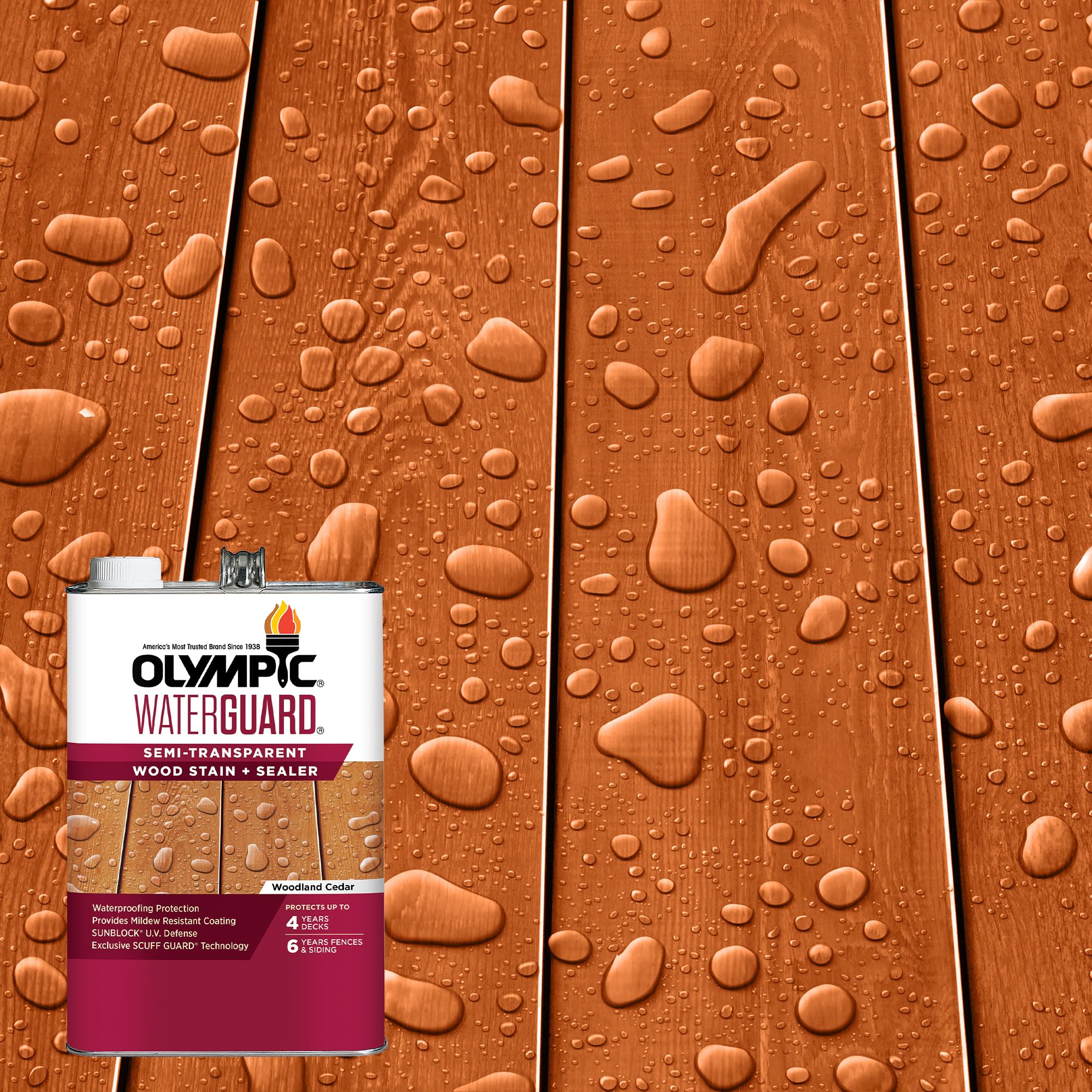
A water-based guard that handles foot traffic and still cleans up with soap.
Olympic’s WaterGuard uses a water-based formula with an exclusive Scuff Guard Technology that resists wear from foot traffic. It protects up to 3 years on decks and 4 years on fences and siding — useful numbers for a front door step that takes daily abuse. The Woodland Cedar semi-transparent finish gives a natural cedar tone, and coverage ranges from 250 to 400 square feet per gallon.
One reviewer noted it “penetrates deeply into wood fibers” and works beautifully on vertical surfaces and furniture. The fast dry time is a real plus, though a few owners mention that more than one coat is needed to achieve full waterproofing. Cleanup is just soap and water, which makes this a strong choice for DIYers who do not want to deal with mineral spirits.
Edge over others: the 4-year warranty on fences and siding beats many water-based competitors, and the soap-and-water cleanup is genuinely convenient.
Trade-off: multiple coats are the norm for complete protection, so plan your quantity accordingly.
Best for: a homeowner who wants a durable water-based stain that resists scuffs and cleans up easily.
Consider alternatives if: you want a one-coat oil finish or are working with very dry, porous wood.
5. KILZ Waterproofing Semi Transparent, Cedar Naturaltone

A 100% acrylic formula trusted by contractors for three-year deck warranties.
KILZ brings its reputation for high-build paint and stain quality to this exterior waterproofing stain. The 100% acrylic formula resists rain, snow, and UV damage, and the manufacturer warrants it up to 3 years on decks and 5 years on fences and siding.
Customers note that two coats restored a 12-year-old deck to look like new, and they appreciate the easy soap-and-water cleanup. The Cedar Naturaltone color covers water stains and grease well, and the satin finish gives a clean, smooth look. The durability feedback is genuinely mixed, though — one owner says it held up beautifully, while another claims it did not last a season, so prep work and weather conditions matter heavily here.
Why pros reach for it: KILZ has over 50 years in the paint industry, and the acrylic formulation resists moisture and fading better than many water-based alternatives.
Prep matters: this stain works best on properly cleaned, moderately weathered wood (0-10 years exposure). Skip prep at your own risk.
Reach for this if: you trust KILZ quality and want a stain that is warrantied for years on fences and siding.
Think twice if: you are working with heavily weathered wood that needs deep oil penetration before sealing.
6. General Finishes Exterior 450, Cedar
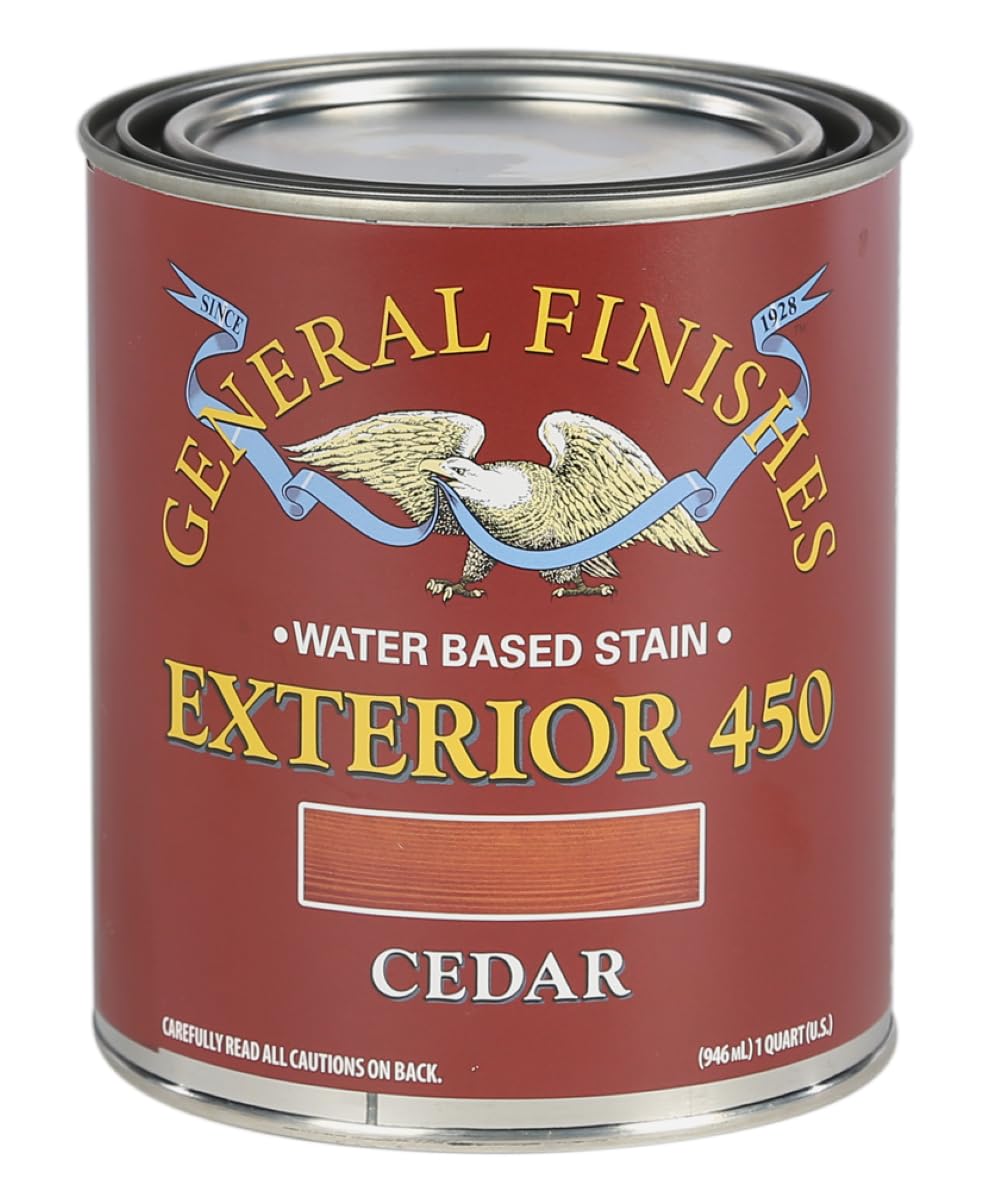
A water-based stain made in the USA for vertical surfaces like doors, fences, and shutters.
General Finishes Exterior 450 is designed specifically for vertical wood — entrance doors, garage doors, patio furniture, and outdoor kitchens. It contains UV absorbers that protect the film from sunlight (though the wood itself may still change color). Application is smooth with a brush, roller, or sprayer, and cleanup is simple soap and water.
The Cedar color earns the most praise, with 41 mentions from owners who love its non-yellowing, rich finish. One owner who makes outdoor furniture says “what a difference this quality stain makes” and calls the UV protection outstanding. The catch is that 3 coats may be needed to hide brush overlaps, and the price per quart is higher than gallon-sized competitors. Durability results are mixed, with some owners reporting excellent hold and others finding it expensive for the longevity.
Ideal match: perfect for a homeowner with a fiberglass or MDF door who wants a premium, low-VOC, plant-based stain in a wide color range.
Not for: large horizontal deck surfaces — the manufacturer explicitly does not recommend it for that use.
Best for: a front door or furniture project where you want a custom color, water-based cleanup, and a premium American-made product.
pass on it if: you need to cover many square feet on a budget or are applying to a deck.
7. TWP 1501 Cedartone Low VOC Wood Preservation Stain

An EPA-registered wood preservative that has kept log homes beautiful for 30 years.
TWP is a serious preservative stain made for extreme conditions. It is EPA-registered (number 51578-1) to prevent structural damage and wood decay, and the low VOC formula is compliant in all states. Coverage is a consistent 350 square feet per gallon, and the Cedartone color gives a rich, vibrant finish that owners describe as making wood look like new.
One owner restored his North Florida log home with the same TWP product after 30 years — “same product used 30 years ago provided long-lasting protection.” The stain absorbs deeply, dries in about 48 hours, and holds up well against sun and winter moisture. The oil-based formula does have a strong odor that can linger for up to 7 days, and the surface can feel sticky during the 4-day curing time. Some cans arrive with damaged lids and leaking hangers, so inspect the package on delivery.
What makes it special
- EPA-registered preservative, not just a stain
- Deep absorption into wood for a durable seal
- Exceptional track record on log homes and coastal decks
What to expect
- Strong odor that can last up to a week
- Remains sticky for several days while curing
- Packaging can leak; inspect the can at the door
Best for: a log home, heavy deck, or fence in a harsh climate where wood preservation matters more than convenience.
Not for: a quick weekend refresh or a project near windows where the odor would be an issue.
8. Flood 1 Gal. Cedar Solid Pro Exterior Wood Stain
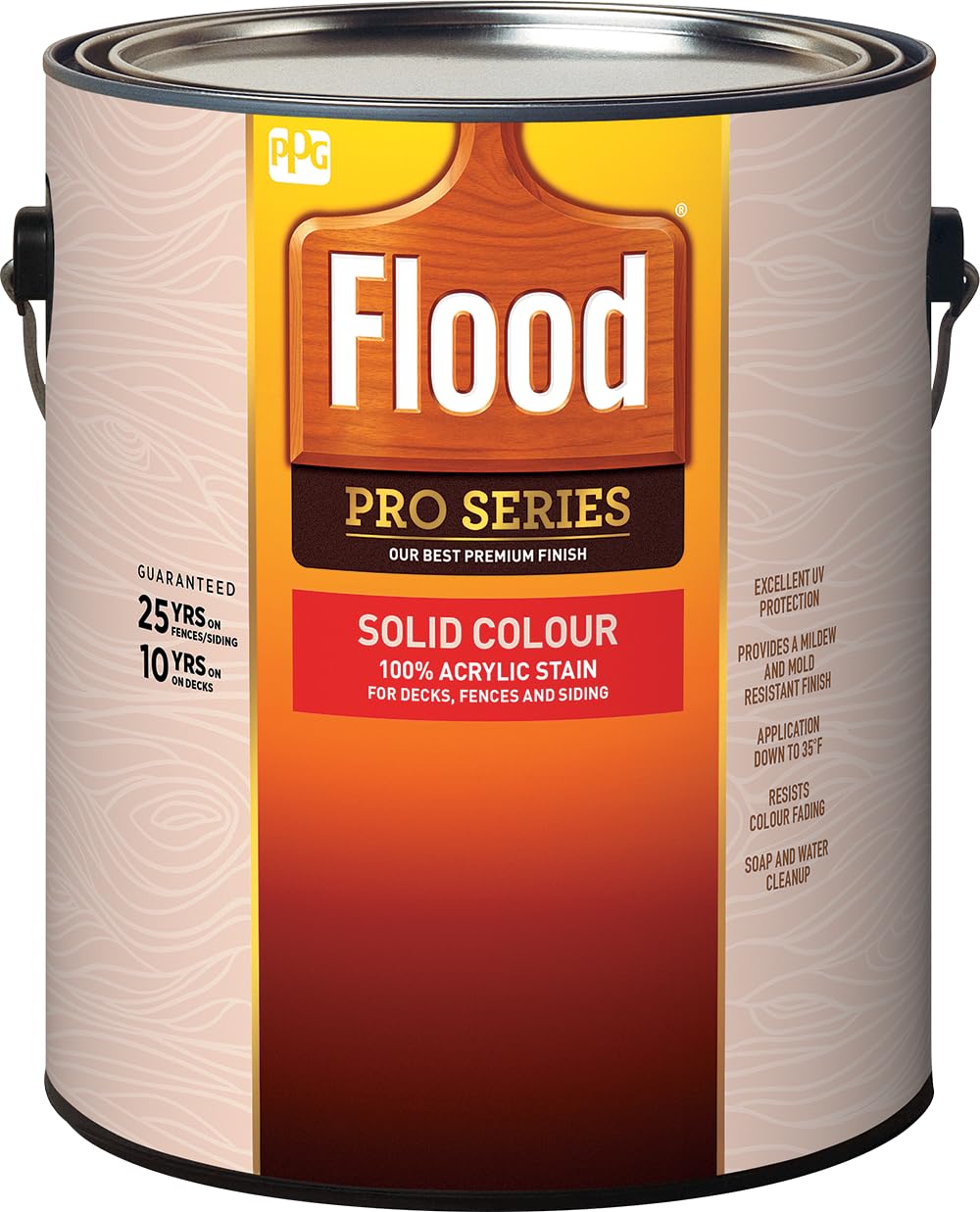
A solid, urethane-fortified acrylic stain that resists cracking and peeling on old wood.
Flood’s Solid Pro stain covers like a paint, hiding the wood grain while providing a thick protective layer. The 100% acrylic formula is urethane-fortified, which means it flexes with the wood rather than cracking and peeling as temperatures change. It works on decks, fences, siding, and outdoor furniture, and the application temperature range is notably wide — down to 35°F and up to 120°F.
Reviewers point out that it “goes on without much prep and stays on” and that it holds up well even in the Florida sun, requiring a pressure wash and re-treat every 2 years. Coverage is up to 400 square feet per gallon, and the rain-resistant finish sets within 12 hours. The negative feedback focuses on packaging: some cans arrive on their side with no protection, leading to leaks.
The solid advantage: because it hides the grain, this stain works well on older, weathered doors that have dents or stains a semi-transparent would reveal.
Prep note: it goes on easy with a Graco sprayer and cleans up with soap and water, but the can packaging is unreliable in transit.
Who it suits: someone with an older door that needs heavy camouflage and long-lasting solid coverage.
Who should skip: anyone who wants to preserve the natural wood grain appearance.
9. WOCA Denmark Exterior Wood Oil, Walnut
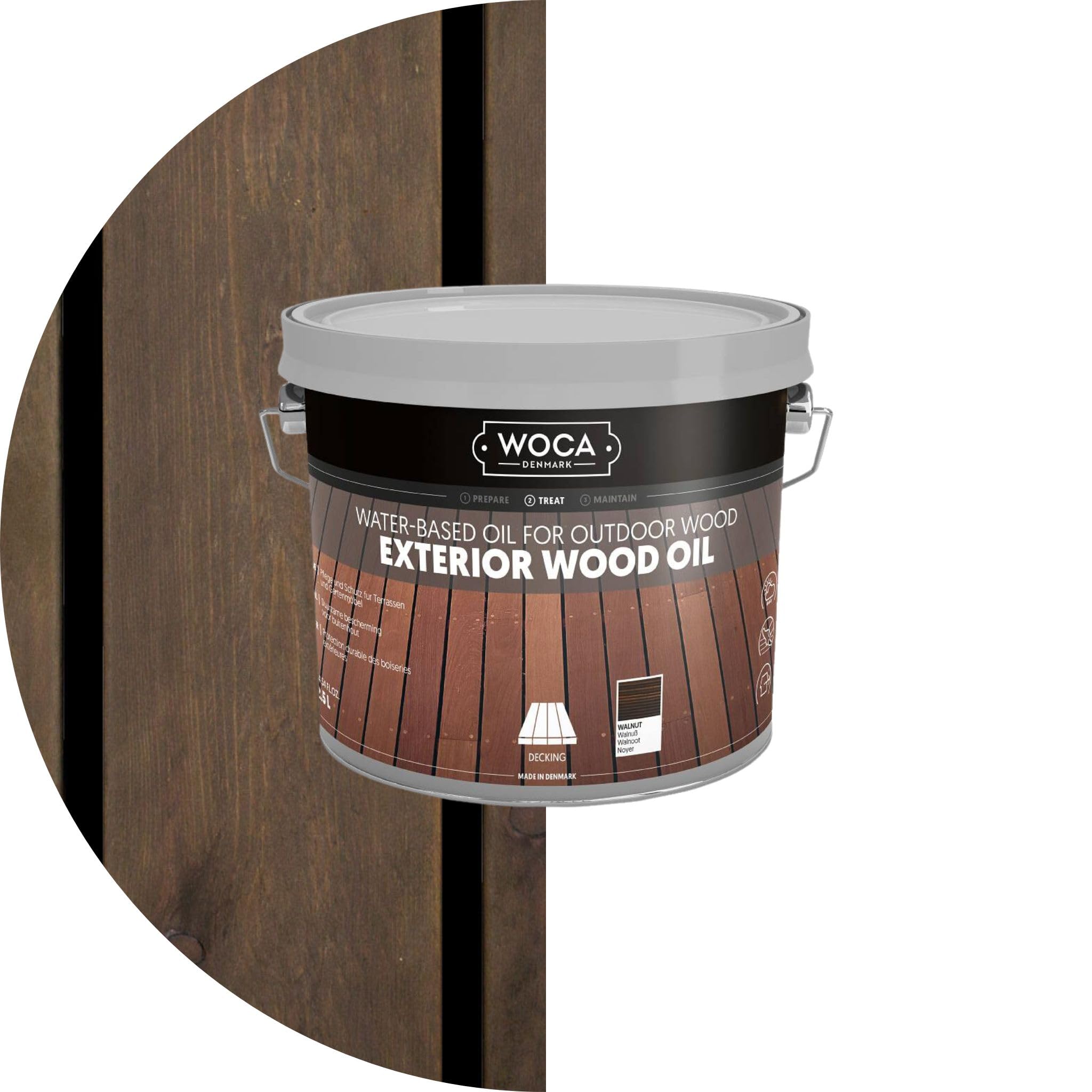
A plant-based oil that penetrates deep into the wood, sealing from the inside out.
WOCA Denmark takes a different approach to wood protection. Rather than forming a film on top of the wood, this plant-based oil penetrates deep into the fibers, creating a waterproof barrier from the inside. This means no peeling or chipping over time — the wood simply absorbs more oil when it needs refreshing. Coverage is approximately 325 to 400 square feet per 2.5-liter bottle, and the Walnut color gives a rich, natural tone.
One owner describes it as “a real stain unlike these average outdoor stains that are really just thin paint” and reports deep penetration and a nano-tech feel. Another used it on a teak table in extreme heat and winter exposure, saying the color held up nicely for 9 months with an expected 2-year lifespan. The downsides are the premium price — this is the most expensive option per gallon — and the metric sizing that can feel small for the cost.
Why it stands out: the plant-based, low VOC formula is a genuine eco-friendly alternative that does not sacrifice protection. It also works on exotic woods like Ipe, Teak, and Cumaru.
The price reality: this is a premium product for a premium purpose. If you have a high-value wood door, the long-term protection justifies the cost.
Best for: a high-end wood door (teak, mahogany, Ipe) where you want a non-film, deep-penetrating oil that will not peel or chip.
Not for: budget-minded projects or anyone who needs a thick, paint-like solid finish.
Understanding the Specs
Oil-Based vs. Water-Based
Oil-based stains (like Ready Seal and TWP) sink deep into wood pores, creating a flexible, long-lasting bond that resists peeling. They level out on their own, so you get fewer brush marks. Water-based stains dry faster, clean up with soap, and have lower odor, but they can raise the wood grain and often need extra coats for the same waterproofing.
Coverage in Square Feet per Gallon
This number tells you how much stain you get for the money. A standard exterior door covers about 20 to 30 square feet per side, so a gallon with 150-400 sq. ft. coverage can handle several doors or a full set of trim. The lower the coverage number, the thicker the stain deposits — which is not necessarily better for a door, where thin, even coats work best.
UV Resistance and Fade Protection
UV absorbers in the stain formula protect the color pigment from breaking down under sunlight. Without them, wood turns gray and the stain fades within a season. Stains that list “fade-resistant” or “UV absorbing” are worth the premium if your door faces direct afternoon sun.
Finish: Semi-Transparent vs. Solid vs. Oil
Semi-transparent stains let the wood grain show through while adding color — best for newer or well-maintained wood. Solid stains cover like a thin paint, hiding imperfections but hiding the grain too. Pure penetrating oils like WOCA soak in without forming a surface film; they need more frequent reapplication but never peel or crack.
FAQ
Can I use a deck stain on an exterior door?
How long should an exterior door stain last before needing reapplication?
Should I use oil-based or water-based stain for my front door?
What is the difference between semi-transparent and solid stain?
How many coats of stain do I need on an exterior door?
Can I apply a new stain over old stain on a door?
What does “self-leveling” mean in a stain?
Is low VOC stain less durable than regular stain?
Can I use a plant-based oil stain on exotic hardwood doors?
How do I clean brushes after using an exterior door stain?
Final Thoughts: The Verdict
For most people, the exterior door stain winner is the Ready Seal Stain & Sealer because it combines a simple to use self-leveling application with oil-based durability that owners confirm holds up through a full year of weather without fading. If you want fast drying and a rich satin tone for a small project, grab the Rustins Quick Dry. And for a high-end exotic wood door where peeling is not an option, the WOCA Denmark plant-based oil is the one to reach for.
How We Picked
We do not accept paid placement. Every pick is matched to a real buyer and a real use-case; we do not hands-on test units.
Sources & Methodology
Specifications: manufacturer listings and product documentation. Review insights: verified customer reviews, as of July 2026. Pricing: not shown on this page (it changes often); check the current price via the retailer link.
As an Amazon Associate, WellFizz earns from qualifying purchases. This does not affect which products we feature.
Related Guides

Mo Maruf
I created WellFizz to bridge the gap between vague wellness advice and actionable solutions. My mission is simple: to decode the research and give you practical tools you can actually use.
Beyond the data, I am a passionate traveler. I believe that stepping away from the screen to explore new environments is essential for mental clarity and physical vitality.