Our readers keep the lights on and my smoothie glass nicely filled. As an Amazon Associate, I earn from qualifying purchases.
Specs are compiled from manufacturer listings and verified buyer reviews and can change over time — please confirm the key details on the product page before buying.
Protecting your vision as you go about your day is about more than just wearing sunglasses. Your eyes work constantly, exposed to blue light from screens and environmental stress, and the nutrients you take in play a direct role in how well they hold up over time. The right eye supplement delivers a concentrated dose of macular carotenoids — lutein and zeaxanthin — that your body cannot make on its own, helping to filter harmful light and guard against oxidative damage where it matters most.
I’m Mohammad Maruf — the founder and writer behind WellFizz. This guide is built by comparing the manufacturers’ published specifications and the patterns across verified customer reviews, so you get each pick’s real strengths and trade-offs instead of marketing spin.
Here is the honest breakdown of the best eye supplements for preventative eye health, covering potency, purity, research backing, and what owners actually experience so you can choose with confidence.
Our Picks at a Glance
How To Choose The Best Eye Supplements For Preventative Eye Health
You want eye supplements that actually protect your vision, not just fill a bottle with expensive ingredients. The key is knowing which nutrients matter and in what amounts — here is what separates a real daily boost from a placebo.
Lutein and Zeaxanthin Dosage
These two carotenoids concentrate in the macula, the part of your retina responsible for sharp central vision. Your body does not produce them, so you rely entirely on diet and supplements. A preventative dose typically falls between 10 mg and 40 mg of lutein, paired with zeaxanthin at a ratio close to 5:1. The AREDS 2 study, which guides many formulations, uses 10 mg of lutein and 2 mg of zeaxanthin daily.
AREDS 2 Formula vs. Standalone Lutein
The AREDS 2 formula includes lutein, zeaxanthin, vitamin C, vitamin E, zinc, and copper. It was clinically studied for slowing the progression of age-related macular degeneration (AMD). If you are simply maintaining healthy eyes without a diagnosed condition, a targeted lutein-and-zeaxanthin-only supplement may be enough — and it avoids the extra minerals you may not need.
Third-Party Testing and Purity
Quick Comparison
| Model | Best For | Lutein per Dose | Zeaxanthin per Dose | Servings per Bottle | Amazon |
|---|---|---|---|---|---|
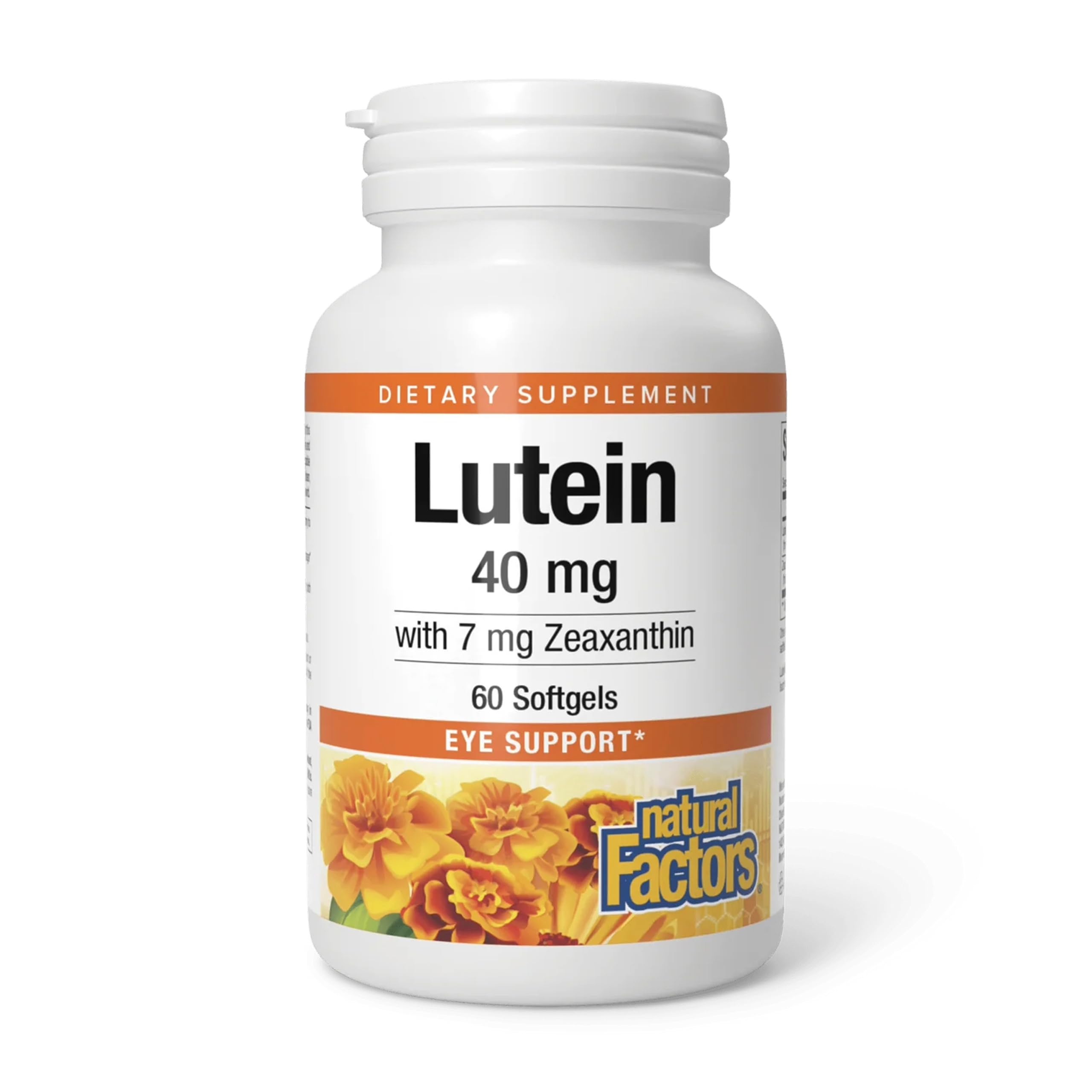
| Natural Factors Lutein 40 mg★ Best Overall | High-dose preventative | 40 mg | — | 60 | Amazon |
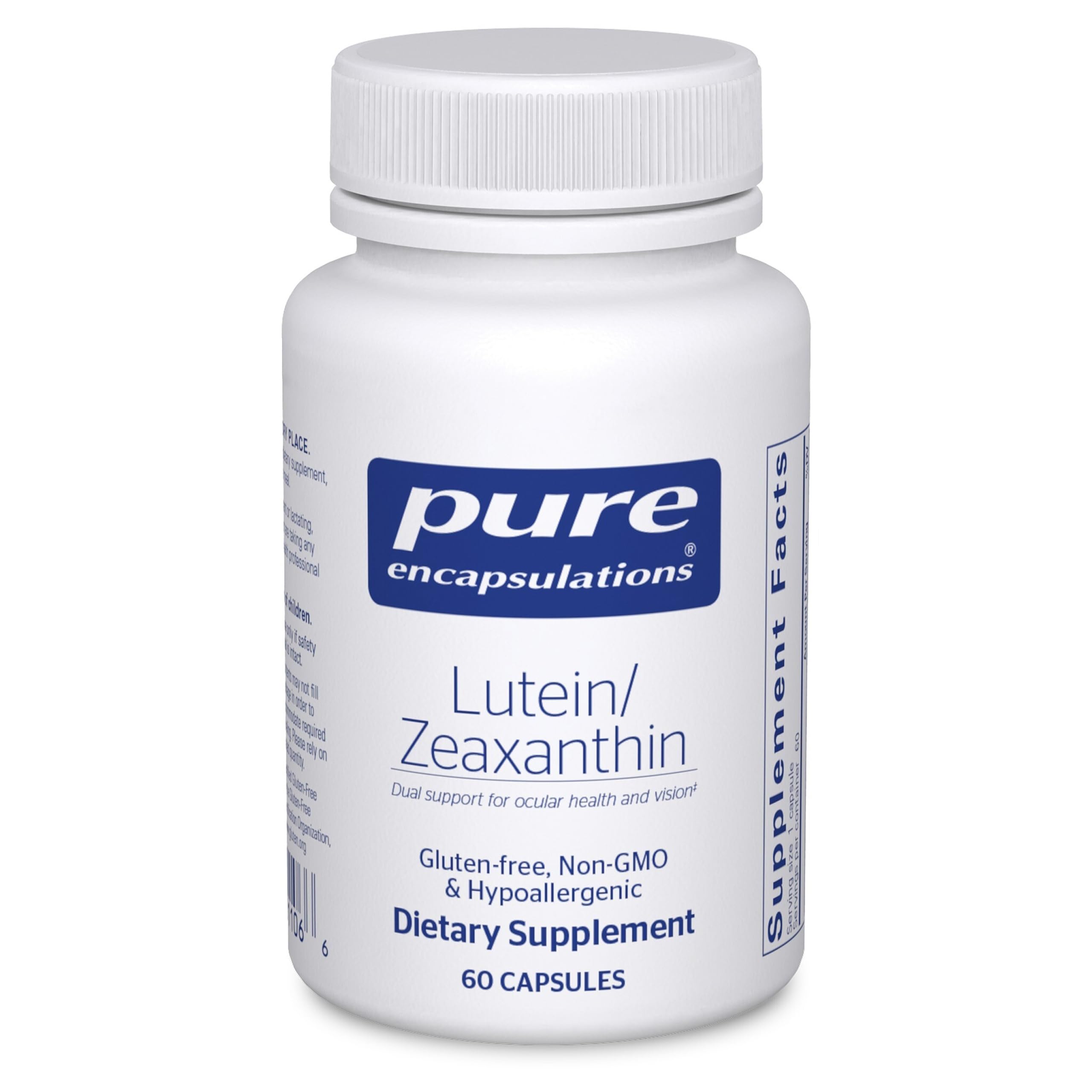
| Pure Encapsulations Lutein & ZeaxanthinPremium Pick | Allergen-free formula | 10 mg | 2 mg | 60 | Amazon |
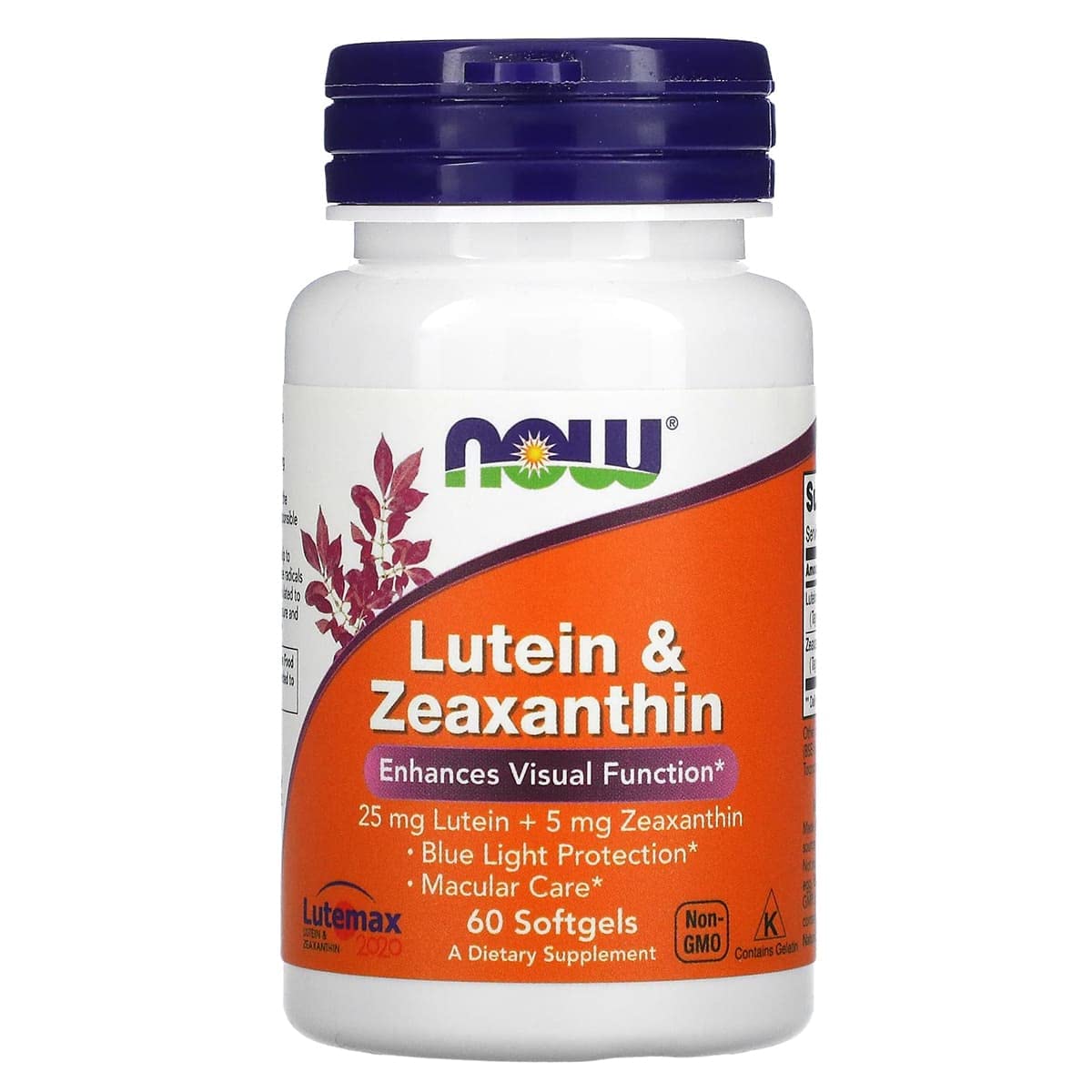
| Now Foods Lutein & ZeaxanthinMost Versatile | Trusted brand consistency | 25 mg | 5 mg | 60 | Amazon |
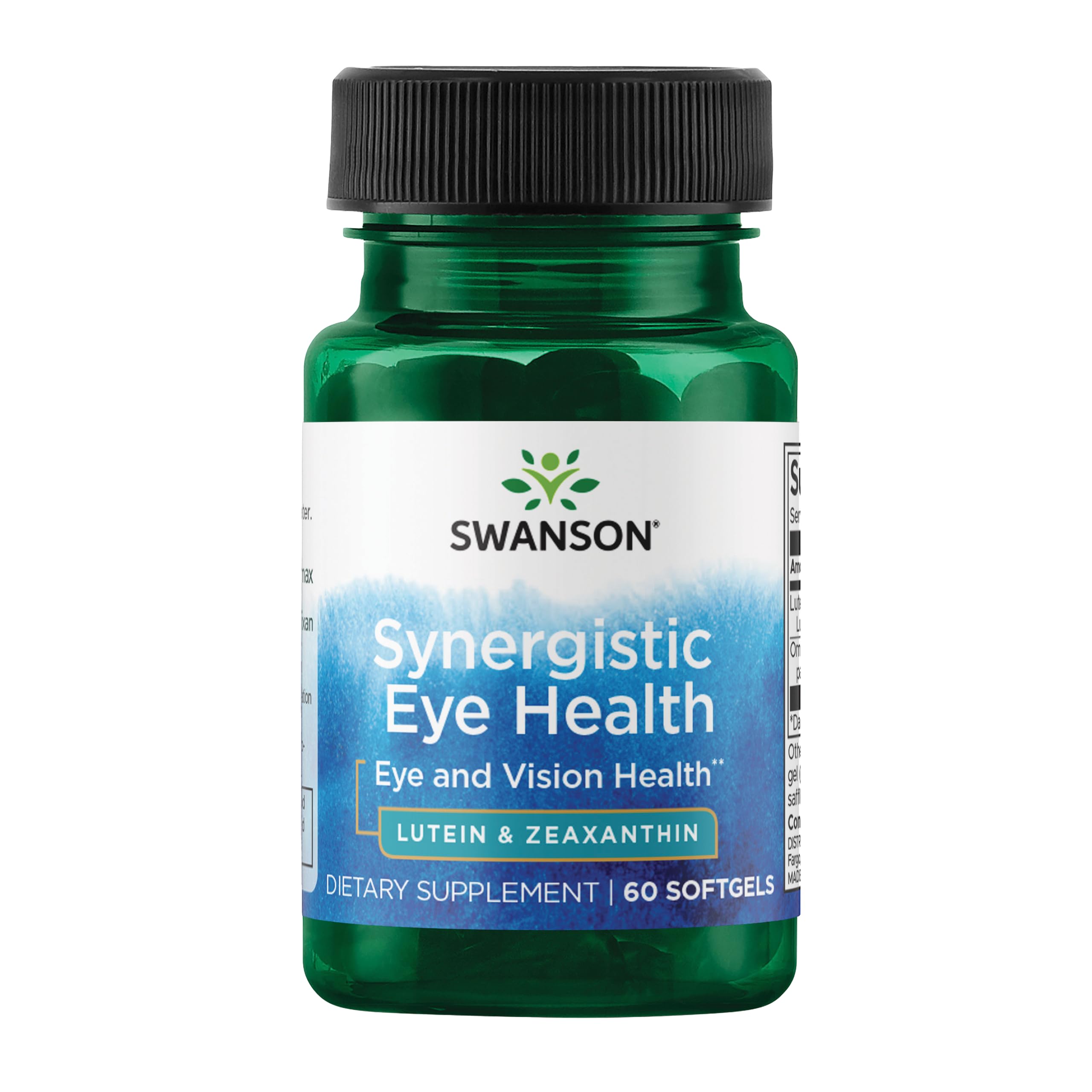
| Swanson Synergistic Eye Health | Blue-light protection | 20 mg | 2 mg | 60 | Amazon |
| Amazon Basics AREDS 2 | Budget AREDS 2 | 10 mg | 2 mg | 120 | Amazon |
| Vision Protection AREDS 2 | Clinical AREDS 2 | 10 mg | 2 mg | 120 | Amazon |
| Vitamatic Lutein 40mg | Highest lutein + zeaxanthin | 40 mg | 10 mg | 240 | Amazon |
| PreserVision AREDS 2 | — | 10 mg | 2 mg | 120 | Amazon |
| MacuHealth VitreousHealth | Floater-focused support | — | — | 90 | Amazon |
In‑Depth Reviews
1. Natural Factors Lutein 40 mg
Our pick — over 4.5★ from 450+ verified ratings; the strongest balance of quality and price.
The crowd-favorite high-dose lutein that owners say actually helps dry eyes feel better.
This is the supplement that keeps appearing in conversations about noticeable eye relief. At 40 mg of lutein per softgel, it delivers compared to the 10 mg in standard AREDS 2 formulas, making it a strong pick for anyone who wants concentrated antioxidant support without taking multiple capsules. The lutein and zeaxanthin are sourced from marigold petals, and the entire batch goes through third-party testing for over 700 contaminants using mass spectrometry (a lab technique that detects impurities at very low levels). It is also free from dairy, gluten, artificial colors, preservatives, and sweeteners.
What wins people over is the real-world effect on dry, tired eyes. Buyers report this formula “seems to help my dry eye condition,” and the consensus across reviews is that vision clarity slowly improves over time. The single daily softgel keeps the routine simple — one capsule, one dose, no remembering a second pill later in the day. The bottle provides a 60-day supply, so a two-month commitment fits in one purchase.
The trade-off here is that this is a standalone lutein supplement, not a full AREDS 2 blend. It lacks the zinc, copper, and vitamin C and E that the clinical formula includes. If your doctor has specifically recommended the AREDS 2 protocol, you will want a product that matches that exact nutrient profile instead.
trusted brand
- 40 mg lutein per dose delivers the highest preventative potency on this list — compared to the 10 mg in standard AREDS 2 supplements
- Third-party tested for GMOs and over 700 contaminants via mass spectrometry for genuine purity assurance
- Single daily softgel is easy to swallow and fits into any morning routine
single ingredient
- Not a complete AREDS 2 formula — it omits zinc, copper, and vitamins C and E, which some eye doctors recommend
- Zeaxanthin level is not specified on the label, so you may want more targeted zeaxanthin support
- Some owners note the softgels can be larger than mini-tablets from other brands
reach for this if: you want the highest preventative lutein dose available and prefer a simple one-pill daily routine over a multi-mineral formula.
look elsewhere if: your eye doctor has specifically prescribed an AREDS 2 protocol that includes zinc and copper — this does not contain those minerals.
2. Pure Encapsulations Lutein & Zeaxanthin
The clean-label specialist that replaces the standard AREDS 2 formulation for anyone who cannot tolerate zinc.
This is the supplement for people who have had digestive trouble with other eye vitamins. The key difference is the absence of zinc — the mineral that causes stomach upset in a notable number of users. Pure Encapsulations provides 10 mg of lutein and 2 mg of zeaxanthin per capsule, matching the core carotenoid levels of the AREDS 2 study, but without the full mineral profile. It is vegan-friendly and free from common allergens, GMOs, and artificial ingredients, which makes it a safe bet for sensitive systems.
What owners highlight consistently is the ingredient quality. The customers-say summary notes that the formula does not contain soy or added fillers, and the brand’s reputation for clean manufacturing is the reason many choose it over mass-market options. Eye health — particularly reducing strain and maintaining macular pigment — is the most-praised benefit, with 36 owners singling it out. Buyers with zinc intolerance have described it as a direct replacement for prescribed AREDS 2 supplements, with no digestive pain.
The honest caveat is that it delivers a lower lutein dose than standalone options — 10 mg compared to the 40 mg found in the Natural Factors pick — and at a higher per-capsule cost. The bottle provides a 60-day supply, but the price point reflects the premium sourcing and allergen-free commitment.
best fit for: anyone with a zinc intolerance or food sensitivities who still wants the evidence-backed lutein and zeaxanthin ratio from the AREDS 2 study.
not ideal if: you want the highest possible lutein dose — this caps at 10 mg per capsule, which is a preventative level, not a high-potency option.
3. Now Supplements Lutein & Zeaxanthin
A mid-range 25 mg dose from a brand with decades of manufacturing history and GMP certification.
Now Foods has been making supplements since 1968, and this 2-pack of 60 softgels each offers a middle ground between the 10 mg preventative level and the 40 mg high-dose option. With 25 mg of lutein and 5 mg of zeaxanthin — a 5:1 ratio — it specifically targets blue-light protection and oxidative stress in the retina. The brand carries NPA A-rated GMP certification, which means every step from raw material testing to final potency is independently reviewed.
The real-world feedback is strong: owners mention reduced eye fatigue and tearing, with some noting improved tolerance to sunlight within days. The softgels are described as small enough to swallow easily with no aftertaste. The 2-pack means you get 120 softgels total, stretching the supply to four months at one per day.
The recurring gripe is that softgels can sometimes arrive stuck together, especially if the bottle has been exposed to heat during shipping. Most owners say a quick refund or replacement resolves it, and the issue is not universal, but it is worth storing the bottle in a cool, dark place right away.
grab this for: a well-priced daily dose that splits the difference between basic prevention and high-potency — 25 mg is a thoughtful middle ground for screen-heavy lifestyles.
watch for: occasional heat-related softgel clumping; keep the bottle out of direct sun and warm shipping conditions.
4. Swanson Synergistic Eye Health
The research-backed choice that owners say beats more expensive brands on both quality and cost.
Swanson uses branded ingredients — Lutemax lutein and OmniXan zeaxanthin — which are standardized extracts with published studies behind them. Each softgel delivers 20 mg of lutein and 2 mg of zeaxanthin, targeting blue-light protection from digital screens and environmental exposure. The formula is designed specifically for the retina, the layer of nerve cells at the back of your eye that converts light into signals for your brain.
Buyers describe this as the supplement they landed on after “a bunch of research regarding eye vitamins and supplements” because it came out on top for quality and price. The eye-health category is the most-discussed aspect, with 30 owners praising its effects, followed closely by 27 who cite the overall quality. The softgels are easy to take, and the small bottle size — just 1.45 ounces — makes it much more compact than the Natural Factors bottle. It is also noticeably lighter than the Amazon Basics bottle (1.45 oz vs. 4.66 oz), so it travels easily.
The honest limitation is that Swanson product availability can be inconsistent. Some owners mention occasional backorders or discontinuations, so if you find a good price, stocking up on a couple of bottles is a practical move. The 20 mg lutein dose is effective for preventative care but falls short of the 40 mg high-dose options for those who want maximum potency.
choose this if: you want a well-researched, compact supplement that owners consistently call the best blend of quality and price after doing their own homework.
skip it if: you need a high 40 mg lutein dose — the 20 mg here is a solid preventative level but not the strongest on the market.
5. Amazon Basics Eye Vitamin AREDS 2
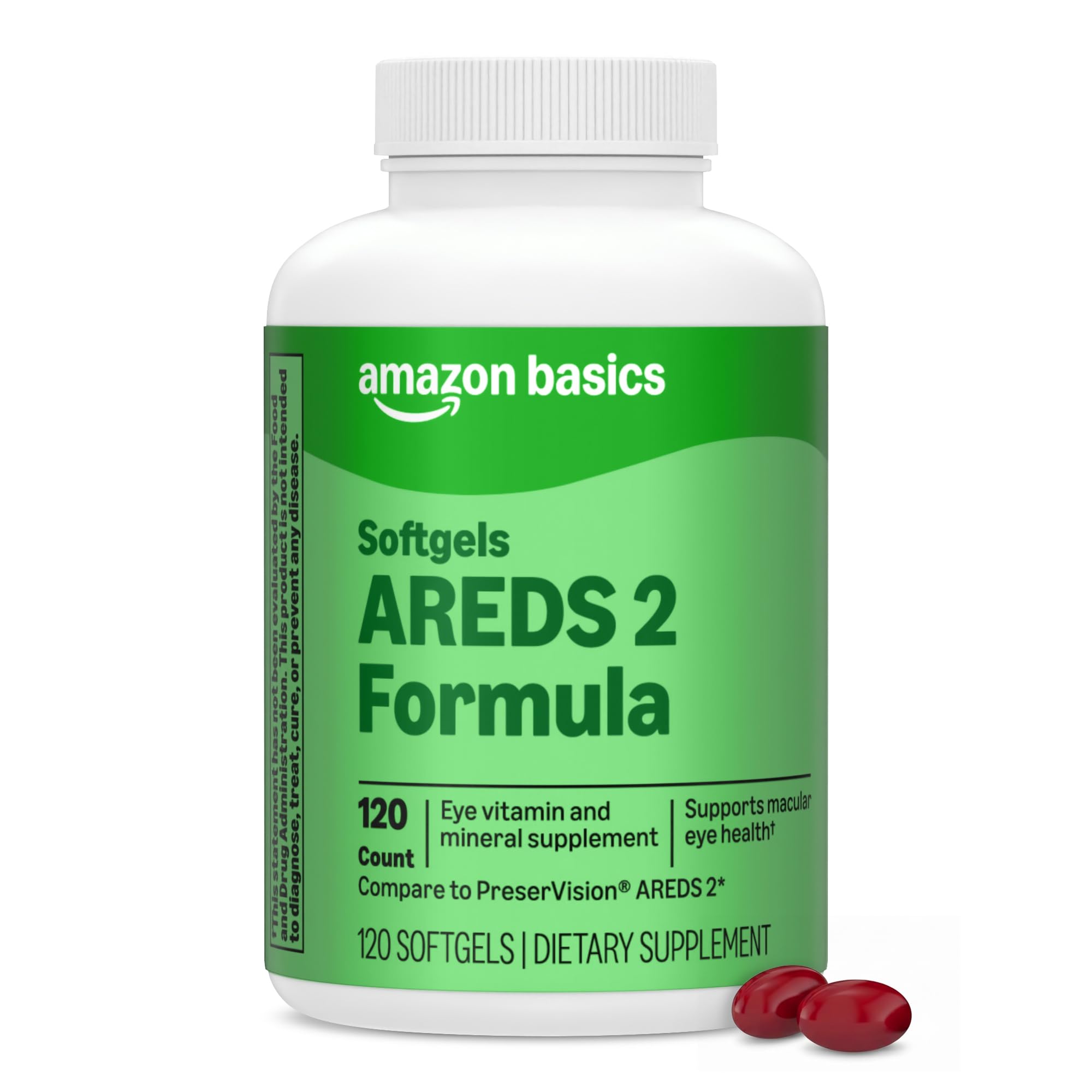
The budget-friendly AREDS 2 that matches the clinical formula at a fraction of the name-brand cost.
This is the supplement to reach for if your doctor has recommended the full AREDS 2 protocol. It contains 10 mg lutein, 2 mg zeaxanthin, zinc, copper, vitamin C, and vitamin E — the exact nutrient profile from the National Eye Institute’s landmark study. The mini softgels are noticeably smaller than standard capsules, which makes them easy to swallow. You take one softgel twice daily with a meal to get the full 60-day supply from the 120-count bottle.
The real-world feedback centers on two things: value for money and dry-eye relief. Owners note that these are “identical looks/ingredients” to expensive name brands but cost less. “It has helped my dry eyes so much,” one report puts it. The value-for-money aspect is the most-mentioned positive, with 22 owners singling it out. At 4.66 ounces, the bottle is heavier than the Swanson or Pure Encapsulations options, but that is because it holds 120 softgels — compared to 60 in many competitors.
The catch is the twice-daily dosing. Unlike single-softgel options, you need to remember a morning and evening dose. The bottle is also wider than compact options — 2.8 x 2.8 x 5.25 inches versus the Swanson bottle at 1.97 x 1.97 x 4.72 inches. If cabinet space is tight, this takes up more room.
best for: anyone who needs the full AREDS 2 mineral profile and wants the lowest cost per serving without cutting corners on ingredients.
not for: those who prefer a once-daily dose — this requires two softgels per day with meals.
6. Vision Protection AREDS 2

An evidence-based AREDS 2 alternative with a loyal following among those managing dry macular degeneration.
This supplement follows the formulation guidelines from the Age-Related Eye Study 2, packing 10 mg lutein, 2 mg zeaxanthin, vitamin C, vitamin E, zinc, and copper into each two-capsule daily dose. The bottle holds a 60-day supply of 120 capsules, and the recommended schedule is one capsule in the morning and one in the evening with food. The manufacturing takes place in registered facilities in California with testing for purity and potency.
Buyers consistently report this supplement works just like the pricier name-brand AREDS 2 products — reviewers call it “a good substitute for the name brand version.” The capsules are easy to swallow, and a monthly subscription means you never have to remember to reorder.
The practical downside is that the capsules can become sticky when stored in a weekly pill organizer. A few owners note this nuisance, describing how the capsule surface softens and adheres to other pills in the same compartment. It is worth storing the bottle in a cool, dry place and not pre-sorting too many days ahead.
reach for this if: your optometrist has recommended an AREDS 2 formula and you want the same nutrient profile as the leading brand without the premium price.
keep in mind: the capsules may soften in humid conditions or weekly pill cases — store them in the original bottle in a cool spot.
7. Vitamatic Lutein 40mg with Zeaxanthin 10mg
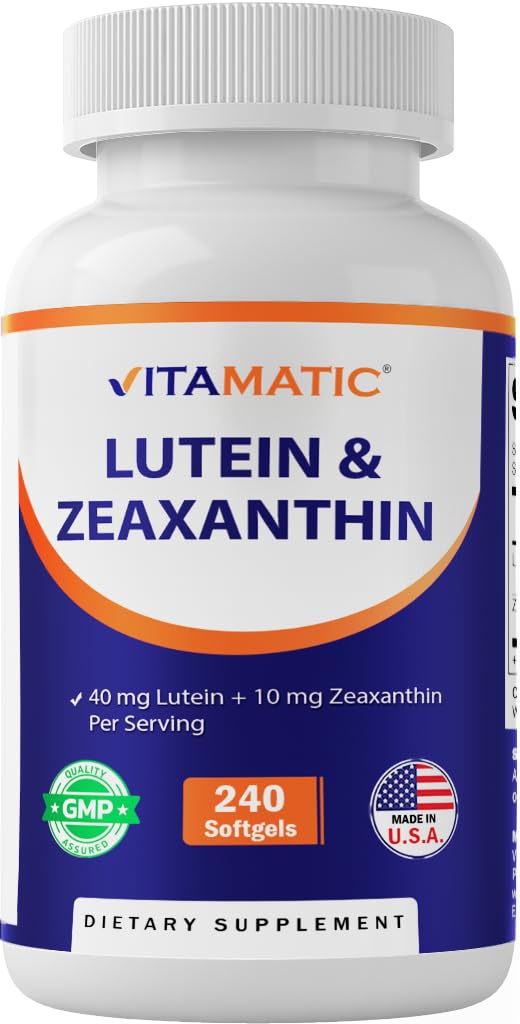
The highest combined dose of lutein and zeaxanthin on this list — 40 mg and 10 mg respectively — in a massive 240-count bottle.
If you want the most carotenoid firepower per capsule, this is it. Vitamatic delivers 40 mg of lutein and 10 mg of zeaxanthin in a single softgel, which is double the zeaxanthin of most other high-dose options. The 240-softgel bottle is the largest count here, providing an eight-month supply at one capsule per day. It is manufactured in the USA following strict GMP guidelines, which is the standard for pharmaceutical-grade production practices.
Quality and eye health are the two most-praised aspects, with 33 and 29 owners respectively calling them out. Buyers describe the softgels as a “small easy coated capsule to swallow” and notice reduced dryness after use. The value-for-money score is equally strong at 29 mentions, which makes sense given the eight-month supply per bottle. At this count, you are not reordering every two months.
The ingredient list draws mixed reactions. While most owners are satisfied, a subset flags the presence of seed oils (soybean oil is a common softgel base) as a concern. If you avoid soy or seed oils in your supplements, check the label carefully before buying. The mixed reviews on ingredients (6 mentions) and side effects (6 mentions) suggest this is a love-it-or-leave-it formula for some.
perfect for: anyone who wants the maximum available lutein and zeaxanthin combination and prefers to buy a single bottle that lasts the better part of a year.
check before buying: the softgel base contains seed oils — if that is a deal-breaker for your diet, look at a different formulation.
8. PreserVision AREDS 2 by Bausch + Lomb

Owner feedback centers on effective eye health support, particularly for those managing macular degeneration. The customers-say summary notes that one buyer found it helpful for night vision. The most-cited positive aspects are eye health (26 mentions) and effectiveness (21 mentions). Many buyers describe it as doctor-approved — “Great dr approved,” one report puts it simply. The flip-top cap design makes daily access convenient, and the vegan soft-gel format is a recent update from older gelatin versions.
The downsides are minimal but real. Some customers note mixed reactions to side effects — a small number of mentions (5) flag this, though the vast majority have no issues. The price sits in the premium range, and the 120 softgels last 60 days, which is similar to the Vision Protection and Amazon Basics alternatives but at a higher cost. If the brand name and clinical research history matter to you, the premium is worth it.
choose this if: your eye doctor specifically recommended PreserVision and you want the brand with the most clinical research behind it — over 20 years of studies.
skip if: you are looking for the lowest-cost AREDS 2 formula; the Amazon Basics version has the same nutrients for less.
9. MacuHealth VitreousHealth
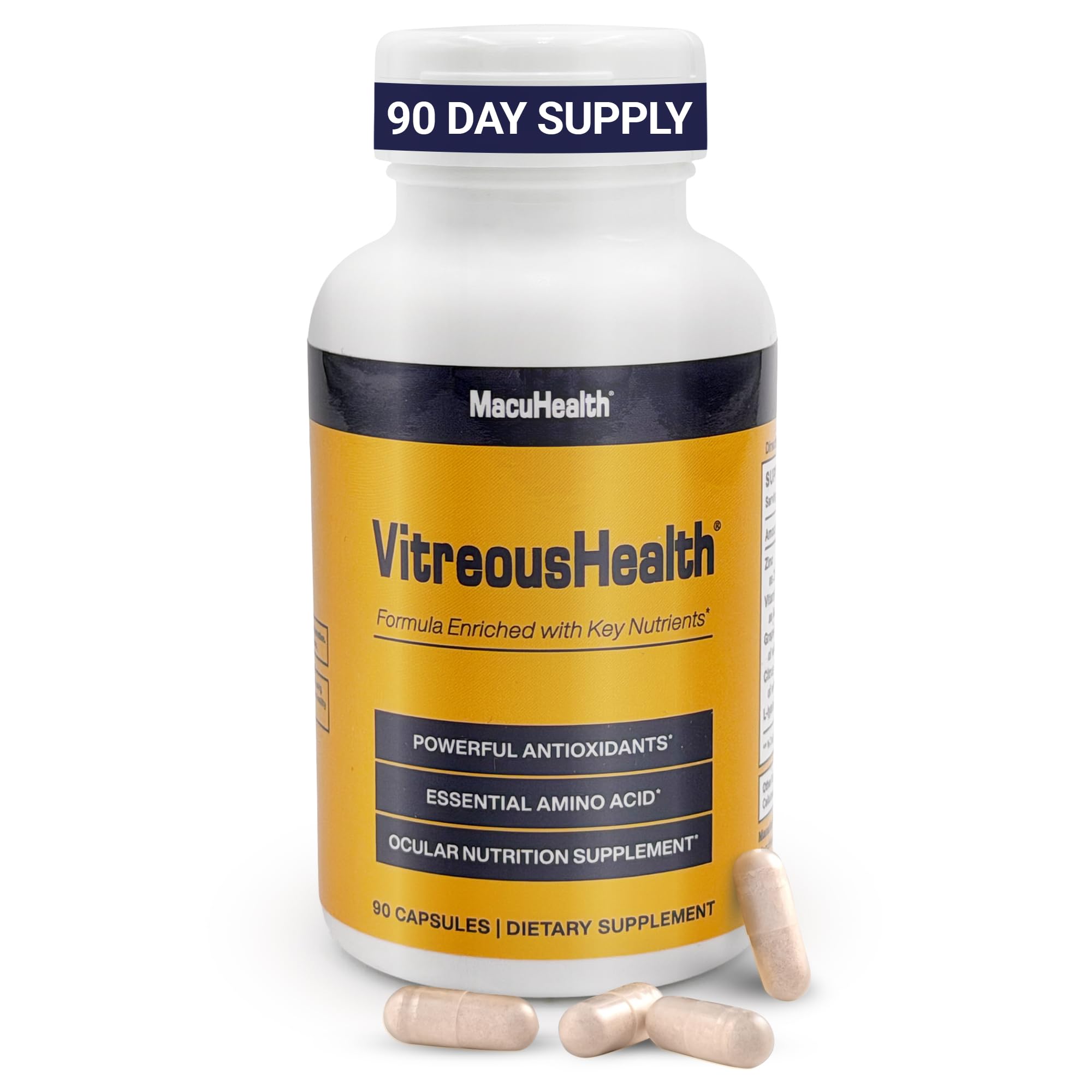
A targeted formula focused on vitreous health and floaters, backed by published research in Translational Vision Science and Technology.
This is the one supplement on the list that is not about the macula. MacuHealth VitreousHealth is designed for the vitreous humor — the gel-like substance that fills your eye — and specifically for managing floaters. The blend includes grape seed extract, vitamin C, hesperidin (a citrus compound), L-lysine, and zinc. It is free from gluten, soy, dairy, and artificial additives, fitting a wide range of dietary needs. The dose is one capsule per day, and the bottle holds 90 capsules for a three-month supply.
The owner experiences here are the most detailed of any product on this list. Buyers describe gradual improvement over long timelines — at 45 days, a “blob diminished”; at 350 days, “vast improvement over a year.” Owners who had optometrist-recommended usage report “remarkable improvement in image” during annual eye exams. One optometrist is said to have told a patient it works in about 70% of users with consistent daily use over six months.
The honest picture includes a minority who had the opposite experience. One report describes floaters getting “much worse” while using the product, though an eye exam found no retinal damage. At this price point, it is the most expensive supplement per bottle on the list, and some owners simply find it not cost-effective for what it does. It is a specialty product — not for general preventative eye health, but for those specifically targeting vitreous floaters.
best for: anyone whose main eye concern is floaters and who has discussed this supplement with their optometrist — the research backing is real but slow-acting.
not for: general preventative eye health — this is a targeted formula for the vitreous, not the macula, and it is priced accordingly.
Understanding the Specs
Lutein and Zeaxanthin Ratio
Your macula (the central part of your retina that handles sharp vision) naturally contains these two carotenoids in roughly a 5:1 ratio. A supplement that mirrors this ratio — 10 mg lutein to 2 mg zeaxanthin, or 25 mg to 5 mg — is generally considered optimal for absorption. Some high-dose formulas boost lutein to 40 mg while keeping zeaxanthin at 2–10 mg, which may offer extra antioxidant protection for people with high screen exposure or a family history of macular issues.
AREDS 2 vs. Standalone Lutein
The AREDS 2 formula is a specific combination of nutrients — lutein, zeaxanthin, vitamin C, vitamin E, zinc, and copper — that was tested in a major National Eye Institute study for slowing age-related macular degeneration. A standalone lutein supplement skips the extra minerals and vitamins, which can be useful if you already get enough zinc and vitamin C from your diet or a multivitamin. For basic preventative eye health in people with no diagnosed condition, a focused lutein-and-zeaxanthin supplement is often sufficient and avoids over-supplementing minerals.
FAQ
Is it safe to take 40 mg of lutein daily?
What is the difference between lutein and zeaxanthin?
Can eye supplements improve vision or just prevent damage?
How long does it take for lutein supplements to work?
Should I take lutein with food?
Can I take an AREDS 2 supplement if I do not have macular degeneration?
Do I need a prescription for these eye supplements?
Can eye supplements cause side effects?
Final Thoughts: The Verdict
For the majority of shoppers, the eye supplements for preventative eye health winner is the Natural Factors Lutein 40 mg because it delivers the highest preventative lutein dose with third-party purity testing and a simple once-daily routine. If you want the complete AREDS 2 mineral profile without the brand-name markup, the Amazon Basics Eye Vitamin AREDS 2 is the smart budget choice. And for those managing floaters rather than general prevention, the MacuHealth VitreousHealth is the targeted option backed by published clinical research.
How We Picked
We do not accept paid placement. Every pick is matched to a real buyer and a real use-case; we do not hands-on test units.
Sources & Methodology
Specifications: manufacturer listings and product documentation. Review insights: verified customer reviews, as of July 2026. Pricing: not shown on this page (it changes often); check the current price via the retailer link.
As an Amazon Associate, WellFizz earns from qualifying purchases. This does not affect which products we feature.
Related Guides

Mo Maruf
I created WellFizz to bridge the gap between vague wellness advice and actionable solutions. My mission is simple: to decode the research and give you practical tools you can actually use.
Beyond the data, I am a passionate traveler. I believe that stepping away from the screen to explore new environments is essential for mental clarity and physical vitality.