Our readers keep the lights on and my smoothie glass nicely filled. As an Amazon Associate, I earn from qualifying purchases.
Specs are compiled from manufacturer listings and verified buyer reviews and can change over time — please confirm the key details on the product page before buying.
Painting vinyl siding is a little different from painting wood or brick. The surface is slick, it expands and contracts with temperature shifts, and the wrong paint can peel off in sheets before the season is over. You need a flexible latex that bonds to slick vinyl without trapping moisture. All three picks are labeled for weathered vinyl, so you can skip the guesswork.
I’m Mohammad Maruf — the founder and writer behind WellFizz. This guide is built by comparing the manufacturers’ published specifications and the patterns across verified customer reviews, so you get each pick’s real strengths and trade-offs instead of marketing spin.
Whether you are refreshing a faded house or covering a dark color with a lighter one, picking the right exterior paint for vinyl siding depends on how it bonds, how many coats it needs, and how quickly it fully cures (hardens into its final durable film) so you can move on with your day.
Our Picks at a Glance
How To Choose The Best Exterior Paint For Vinyl Siding
Vinyl siding moves more than you think. On a hot summer day, the panels can expand and contract noticeably, so a rigid paint film will crack. The ideal paint for this job is a flexible latex that bonds to slick surfaces and resists peeling. Every product in this guide lists weathered vinyl as an approved substrate (the surface you paint on), which is the first thing you should confirm before buying any can.
Finish: Satin vs. Semi-Gloss
Finish choice affects how the siding looks and how much dirt it shows. Satin has a subtle sheen — enough to repel grime but soft enough to hide minor imperfections. Semi-gloss is shinier and easier to wipe clean, but it will highlight every bump and brush mark. For large siding panels, satin is usually the safer bet because it does not exaggerate texture.
Full Cure Time vs. Dry Time
Dry-to-touch means you can walk past without leaving a mark. Full cure means the paint has hardened into its final durable film — and that is the number that matters for recoating or cleaning. If you paint a second coat before full cure, you risk pulling up the first layer. The paints here range from 4 to 6 hours for full cure, so plan your project day accordingly, especially when working in cooler weather around 35 degrees Fahrenheit.
Quick Comparison
| Model | Best For | Coverage | Finish Type | Full Cure Time | Amazon |
|---|---|---|---|---|---|
| Glidden Total Exterior Paint & Primer, Fudge, Satin★ Best Overall | 1-coat color transitions | 400 sq. ft. | Satin | 4 hours | Amazon |
| Glidden Total Exterior Paint with Primer, Seriously Sand, Semi-Gloss | Budget value on small projects | 400 sq. ft. | Semi-Gloss | 4 hours | Amazon |
| RECOLOR Eco-Friendly Exterior Latex Paint, White, Eggshell | Eco-friendly bright-white refresh | 400 sq. ft. | Eggshell | 6 hours | Amazon |
In‑Depth Reviews
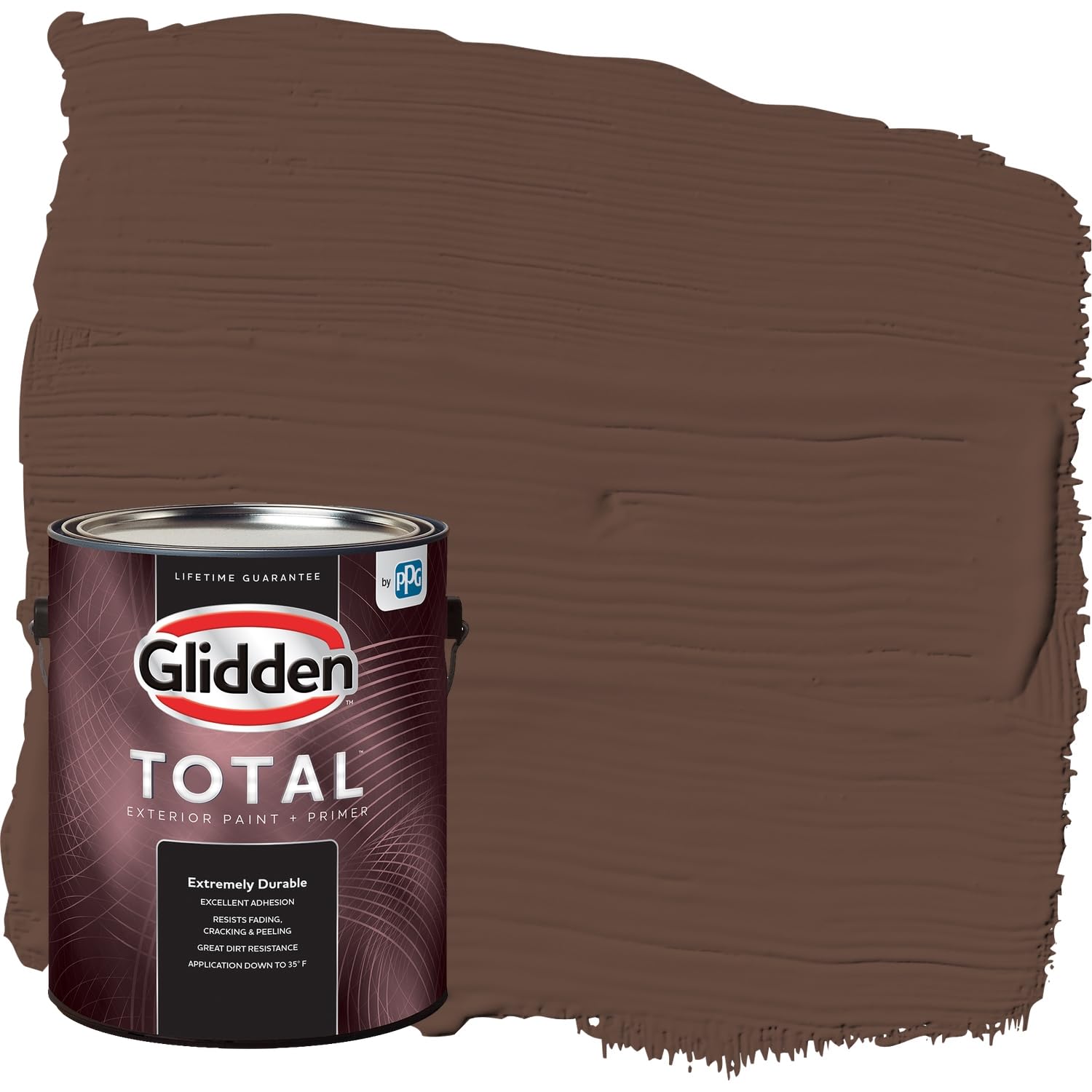
1. Glidden Total Exterior Paint & Primer All-in-One, Fudge/Brown, Satin, 1 Gallon
Our pick — over 4★ from 200+ verified ratings; the strongest balance of quality and price.
One-coat coverage that turns a weekend project into a single afternoon.
You get reliable coverage in one pass — reviewers consistently report covering dark siding with a lighter Fudge brown in a single coat, which saves time, paint, and ladder trips. The finish is satin, so it has a soft sheen that resists dirt without looking glossy. It also works down to 35 degrees Fahrenheit, giving you a wider temperature window for fall painting than most competitors. The full cure time (when the paint hardens completely) is 4 hours, which is quicker than the RECOLOR’s 6 hours — that matters if you want to apply two coats in one day or if rain is forecast. The formula is designed to resist fading, cracking, and peeling, which protects your siding when the summer sun beats down. The paint earns a 4.3-star average across over 200 owners on Amazon, and while the color gets mixed feedback in reviews (some find it slightly different from the swatch), the consensus on performance is nearly universal.
A few cans have arrived with spilled paint under the lid due to poor packaging during shipping — buyers suggest ordering a couple of weeks ahead and buying an extra gallon to have on hand. The clear call from owners is: if you need reliable delivery, buy in person, but the paint itself is “absolutely incredible,” as one review put it.
What Wins People Over
- One-coat hide on color changes — saves a full day of work.
- 4-hour full cure is the fastest of the three picks here.
- Works on vinyl, wood, brick, masonry, and primed metal — one can for multiple surfaces.
Heads-Up
- Color match can be off — order a sample if you’re uncertain.
- Packaging in transit is inconsistent; not all cans arrive clean.
Best for: Anyone refreshing their home’s color with a dark-to-light or similar-hue transition.
Think twice if: You need a precise designer color — the shade can vary slightly from the expected result.
2. Glidden Total 1 gal. Seriously Sand/Beige Semi-Gloss Exterior Paint with Primer

Same Glidden formula at a lower price for smaller budgets.
This is essentially the same base formula as the Best Overall pick — it covers up to 400 square feet, resists fading and peeling, and can be applied down to 35 degrees Fahrenheit — but in a semi-gloss finish and a lighter Seriously Sand color. Owners call it thick, durable, and easy to work with, and several mention that it covers minor blemishes in one coat. The full cure time is also 4 hours, so you can move quickly on a small project like a shed or a single side of the house. The semi-gloss surface is shinier and easier to clean with a garden hose, but it will reveal every lap mark and imperfection in the siding surface more than the satin-finished Fudge pick would. Some owners note the color reads almost as a “dark yellow” or “mustard tan” rather than a true beige — it has a warmer, richer tone that works well with cream trim but could clash if you expected a neutral tan. For a budget-conscious buyer who values thick coverage and fast cure, this is a solid option for accent sections or smaller structures.
Between the two Glidden options, this one trails the Fudge/Brown on paint quality and coverage counts in the data, but it is still rated highly. The main real-world decision is finish preference: semi-gloss if you like the shine and easy cleaning, satin if you want a subtle look that hides more flaws.
Thick & Dependable: One owner summed it up as “good paint, nice color with good coverage” — accurate and undramatic. For the price, it delivers the same core protection as the higher-priced sibling.
Reach for this if: You are painting a small project or an area where dirt resistance matters more than subtle looks.
Look elsewhere if: You need a precise neutral beige — the color leans warm and can surprise you.
3. RECOLOR Eco-Friendly Exterior Latex Paint, Eggshell Finish, 1 Gallon, White

Bright white refresh that keeps leftover paint out of landfills.
This is the only recycled-content paint in the group — RECOLOR collects leftover virgin paint, screens it, and reprocesses it into a product that covers 400 square feet per gallon just like the Glidden options. Owners praise the bright white color; one painted a gray vinyl cottage with a single gallon and called the transformation “good coverage and a true bright white.” The quality and color match are the two most-discussed positives, and the eggshell finish (a low-sheen look between satin and matte) is soft and forgiving on siding texture. The trade-off is time and smell. Full cure takes 6 hours, compared to the Glidden paints’ 4-hour full cure — that matters if you are racing a forecast or trying to finish in one day. Also, several owners flag the strong odor as a con, making it unsuitable for spraying near windows or enclosed areas. On the plus side, cleanup is easy with soap and water, and because the paint is low in volatile organic compounds (VOCs, chemical solvents that evaporate into the air), those fumes are reduced compared to conventional paints.
RECOLOR is a women-owned company based in Massachusetts, so if supporting a small business and reducing waste matters to you, this is the stand-out choice. Just plan for a longer project timeline — and keep the area ventilated.
The Strengths
- Bright white one-coat coverage over dark surfaces.
- Recycled content — keeps paint out of landfills.
- Low-VOC; fewer chemical fumes during painting.
The Catch
- 6-hour full cure — 2 hours longer than Glidden.
- Strong smell during application and curing.
- Color can vary slightly by batch; mix gallons together before painting.
Best for: Environmentally-conscious homeowners giving old siding a bright white update with a single coat.
skip it if: You need a fast turnaround or are sensitive to paint odor during application.
Understanding the Specs
Full Cure Time vs Dry Time
Dry-to-touch means the paint surface is set — you can walk by without a mark. Full cure means the entire paint film has hardened to its maximum durability. For vinyl siding, which flexes and absorbs heat, full cure is the number that matters. Painting a second coat before full cure can lift the first layer. The range here is 4 to 6 hours, so check the can before you plan your second coat.
Satin vs. Semi-Gloss vs. Eggshell
All three are sheen levels (how much light the paint reflects), but they behave differently on large vinyl panels. Satin has a low-luster shine that hides brush strokes and imperfections — a safe choice for full-house jobs. Semi-gloss is shinier and easier to wipe clean but shows every texture. Eggshell sits below satin — it looks almost flat from a distance but still repels some moisture. For vinyl siding, satin or eggshell tends to look more natural because they do not exaggerate the surface texture of the siding.
FAQ
Can you paint directly over old vinyl siding without primer?
How long does exterior paint last on vinyl siding?
What is the difference between satin and eggshell finish on siding?
Do I need to prime bare vinyl siding before painting?
Can I spray paint vinyl siding instead of brushing?
Will dark paint make vinyl siding warp?
How many square feet does a gallon cover on vinyl siding?
Can recycled paint be as good as virgin paint?
Final Thoughts: The Verdict
If you want one dependable pick, the best exterior paint for vinyl siding is the Glidden Total Exterior Paint & Primer in Fudge, Satin because it delivers reliable one-coat coverage, a fast 4-hour full cure, and a satin finish that hides imperfections on large siding panels. If you want the same formula at a lower entry point for a small project, grab the Glidden Seriously Sand in semi-gloss. And for an eco-friendly bright-white refresh that keeps paint out of the landfill, the RECOLOR recycled latex is the smart choice — just plan for the longer cure time and ventilate well.
How We Picked
We do not accept paid placement. Every pick is matched to a real buyer and a real use-case; we do not hands-on test units.
Sources & Methodology
Specifications: manufacturer listings and product documentation. Review insights: verified customer reviews, as of July 2026. Pricing: not shown on this page (it changes often); check the current price via the retailer link.
As an Amazon Associate, WellFizz earns from qualifying purchases. This does not affect which products we feature.
Related Guides

Mo Maruf
I created WellFizz to bridge the gap between vague wellness advice and actionable solutions. My mission is simple: to decode the research and give you practical tools you can actually use.
Beyond the data, I am a passionate traveler. I believe that stepping away from the screen to explore new environments is essential for mental clarity and physical vitality.