Our readers keep the lights on and my smoothie glass nicely filled. As an Amazon Associate, I earn from qualifying purchases.
Specs are compiled from manufacturer listings and verified buyer reviews and can change over time — please confirm the key details on the product page before buying.
Engineer boots were built over a century ago to shield railroad workers from hot cinders and heavy equipment — tall, tough, and unyielding. Today you see them on motorcyclists, in workshop bays, and on streets as a heritage style statement. The problem? The market is stuffed with cheap lookalikes that cut corners on the full-grain leather, the sole construction, and the hardware. A bad pair can leave you blistered after one walk or falling apart after one season.
You get the same spec sheet as boots that cost twice as much, for a much lower price — that is the core argument for the Milwaukee Leather MBM9063 (our best overall pick). It uses a thick 2.2mm full-grain cowhide upper, welted construction (sewn, so a cobbler can replace the sole later), and a distressed finish that hides scuffs. The catch: it runs large, so you need to order a full size down.
If you want a genuine Goodyear welt (the most durable resoleable construction, where a strip of rubber is stitched to the upper and the outsole is then stitched to that strip) with soft leather that requires almost no break-in, the AdTec 11″ Harness Motorcycle Boot is the best value of the entire list. And if you want heirloom-quality American-made boots that will last decades, the Frye Harness 12R is the one to reach for — but be prepared to buy aftermarket insoles and deal with inconsistent sizing.
Our Picks at a Glance


How To Choose The Best Engineer Boots
Picking the right engineer boot depends on a few clear decisions about how you plan to use them. The core elements — leather quality, sole construction, and shaft height — are non-negotiable if you want a pair that lasts beyond a single season. Here is what to look for.
Leather Quality and Thickness
The leather is the single most important part of an engineer boot. Full-grain cowhide is the standard for quality. It is the strongest and most durable type of leather, and a thickness of 2.2mm is a common benchmark in this category. Thicker leather means better protection and longer life, but it also means a longer break-in period. Avoid boots that use corrected-grain or bonded leather — they will not develop the same patina and they are far more likely to crack.
Sole Construction: Welted vs Cemented
A Goodyear welt construction is a hallmark of a high-quality boot. This method stitches a strip of rubber (the welt) to the upper leather and then stitches the outsole to that welt. The benefit is that a cobbler can replace the outsole when it wears out, extending the life of the boot dramatically. Cement construction, where the sole is glued on, is cheaper but essentially disposable — once the sole wears down, the whole boot is trash. Almost every serious engineer boot on this list uses welted construction.
Shaft Height and Fit
Engineer boots typically come in 11-inch or 16-inch shaft heights. The taller 16-inch shaft is designed to tuck into heavier riding pants and offers more protection for the shin, but it can be difficult to fit if you have larger calves. The 11-inch shaft is more versatile for everyday wear and fits more easily under jeans. Because of the tall, stiff shaft, getting the calf circumference right is just as important as getting the foot size right — a few owners note that certain models have a narrow shaft that will not zip up over larger calves.
Quick Comparison
| Model | Best For | Leather | Shaft Height | Construction | Amazon |
|---|---|---|---|---|---|
| Milwaukee Leather MBM9063 | Vintage style on a budget | 2.2mm Full-Grain Cowhide | Calf High | Welted | Amazon |
| Ad Tec 16″ Engineer Biker Boot | Maximum shin coverage | Full-Grain Leather | 16 Inches | Goodyear Welt | Amazon |
| Milwaukee Leather MBM131 | Classic square toe harness | 2.2mm Cowhide | 11 Inches | Welted | Amazon |
| AdTec 11″ Harness Motorcycle Boot | Premium build at a mid-range price | Full-Grain Leather | 13 Inches | Goodyear Welt | Amazon |
| Harley-Davidson Jason St Engineer | Cruiser comfort and brand pedigree | — | — | — | Amazon |
| Frye Harness 12R | American-made heirloom quality | Oiled Leather | 12 Inches | Full-length leather midsole | Amazon |
In‑Depth Reviews
1. Milwaukee Leather MBM9063 Men’s Classic Distressed Brown Leather Motorcycle Engineer Riding Biker Boots
The distressed brown workhorse that looks like it has already lived a full life on a train.
You get the same 2.2mm thick full-grain cowhide you find on boots costing twice as much, but with a pre-distressed finish that hides scuffs and develops character over time. The oil- and acid-resistant outsole with non-skid tread keeps you planted on slick workshop floors or wet pavement. An inside zipper with a flap makes the calf-high shaft easy to get into. The Smart Mask climate control insole and welted construction (sewn, so a cobbler can replace the sole later) are the foundation. Buyers consistently report zero break-in period — rare for boots this stiff — and use them comfortably on day one. The one catch: “sizes run large” appears repeatedly. One owner ordered a 14, found it too big, and dropped to a 13 for a perfect fit. Overall, the value-to-quality ratio here is among the strongest in the category, but only if you order a full size down. Compared to the Frye Harness 12R (which costs significantly more), the MBM9063 delivers the same leather thickness with an easier break-in.
What owners rave about
- Thick 2.2mm full-grain leather feels substantial and durable from day one
- Zero break-in period — ready for walking and riding immediately
- Distressed finish masks wear and develops a natural vintage patina
The one real trade-off
- Runs large — plan to order a full size down for a proper fit
- Not designed for heavy work like logging; best for riding and casual daily wear
The verdict: This is the boot to buy first if you want the classic engineer aesthetic with thick, durable leather. Order a full size down, and you get a boot that outpunches its price.
skip it if you have narrow feet or need a very precise fit for a high-instep foot — the loose sizing tolerance may frustrate you even after sizing down.
2. Milwaukee Leather Men’s Black Leather Lace-Up Engineer Motorcycle Boots w/Buckles and Side Zipper MBM101-12
The towering 16-inch shaft that offers serious shin protection for riders who tuck in.
You get full 16-inch shaft height — one of the few boots on the market that goes that tall — for maximum shin coverage when you tuck pants in. The full-grain leather upper is heavy-duty, and the Goodyear welt construction (sewn, so a cobbler can replace the sole) signals this is built to handle abuse. The split shaft with two adjustable buckle straps lets you dial in the calf fit. One owner describes them as “durable after 1.5 months daily wear.” The boot is designed with a deliberately loose fit through the calf and foot to accommodate thick pants. Owners caution that you need thick socks to prevent heel slip and blisters during break-in. The leather is noted to scratch relatively easily — common for softer full-grain leathers. At 2.5 pounds, these are remarkably light compared to the 6.8 pounds of the Milwaukee Leather MBM101 (a 2.7x difference you feel immediately).
Why riders choose these
- Full 16-inch shaft provides maximum coverage for shin protection
- Goodyear welt construction allows future resoling
- Very lightweight at 2.5 pounds — easy to wear all day
What to watch for
- Loose fit requires thick socks to prevent heel slip and blisters
- Leather scratches easily — not a boot for pristine condition fans
- Some buyers report the foot opening is too narrow to get into
Reach for this if: you need the extra shaft height for riding with tall pants or you want a lightweight engineer boot for cosplay or costuming.
Think twice if: you have large calves — the shaft may be too narrow to zip or buckle comfortably. And if you want a precise athletic fit, the intentionally loose construction may frustrate you.
3. Milwaukee Leather MBM131 Men’s Black 11-Inch Classic Square Toe Harness Boots
The classic square-toe harness boot that borrows its lineage from biker and logger styles.
At 11 inches, this is one of the shorter shafts, so it is more wearable under regular jeans and easier to break in for daily use. The 2.2mm cowhide leather, welt construction, and YKK zippers (YKK is the gold standard for zipper durability) are the same solid foundation you find on other Milwaukee Leather products. The square toe gives your toes more room to spread. One owner who put 600 miles on a bike reports they are “comfortable, durable, looks great, easy on/off.” The catch is sizing: owners mention it runs large — one wears a 9.5 and found the 9.5 “way too large,” while another who wears a 12 found an 11.5 fits perfectly. The insole is warm and soft, great in cooler weather but not ideal for sweaty feet in summer. A few owners also note the velcro over the zipper can detach after heavy use. With almost 460 ratings, the overall sentiment is strongly positive, but the mixed fit feedback is the single trade-off.
Great value, imperfect fit: This boot offers the strongest bang for the buck in the harness-style category, but the sizing inconsistency means you should plan to try them on with the expectation of exchanging for a different size. The large crowd — almost 460 ratings — shows strongly positive sentiment, but the mixed fit feedback defines this pick.
Best if you: want a classic square-toe harness boot for casual wear and riding, and you are willing to deal with sizing exchanges to get the right fit.
Not ideal if: you have wide feet or a high instep — the fit inconsistency is most pronounced for those foot shapes. The boot also runs warm, so it is not a summer pick.
4. AdTec Men’s 11″ Harness Motorcycle Boot

The boot that punches well above its weight class with genuine Goodyear welt construction.
You get the same fundamental build as the taller AdTec option but in a more accessible 13-inch shaft (the listing says 11-inch, but specs and reviewers consistently call it 13-inch). The full-grain leather is “soft and supple” and 2mm thick — slightly thinner than the Milwaukee Leather’s 2.2mm but still squarely in the quality tier. The O-ring ankle harness strap gives the classic look. The Goodyear welt means a cobbler can swap the sole when it wears out — the single most important durability feature. The owner consensus is that these fit true to size with virtually no break-in. One long-term owner says “these boot are made to last” and wishes they could find a place to add a new heel. The one recurring note: the color can bleed onto socks when new (typical for unlined or minimally lined leather boots). A few owners also note they run slightly long. At 2 pounds, they are very lightweight for a harness boot.
What makes it stand out
- Goodyear welt construction for future resoling — a true long-term investment
- Soft, supple 2mm full-grain leather that requires almost no break-in
- Very lightweight at just 2 pounds for a harness boot
The minor quirks
- Color can bleed onto socks when new — wear dark socks for the first few wears
- Runs slightly long; half-size down recommended for a snug fit
- Labeled “Machine Washable” by manufacturer — do not machine wash leather boots
Best value-for-money pick: You get genuine Goodyear welt construction and soft, comfortable leather without spending more. This is the boot to buy if you plan to resole and keep a pair for 5-10 years.
it’s not for you if: you prefer a stiffer, thicker leather that will hold its shape more rigidly — the supple 2mm leather here is comfortable but less structural than a 2.2mm hide.
5. HARLEY-DAVIDSON FOOTWEAR Men’s Jason St Engineer
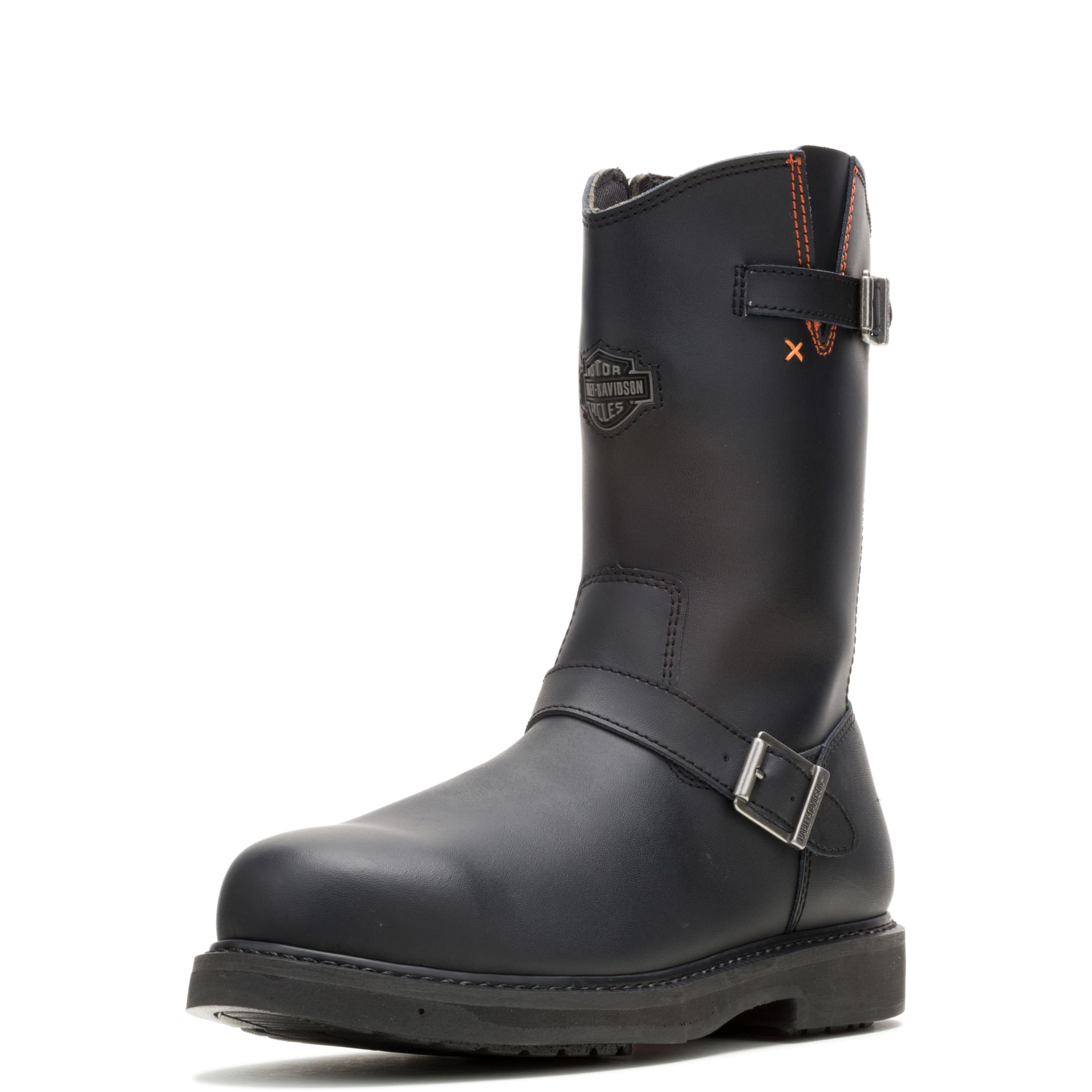
The brand-name engineer boot that focuses on all-day walking comfort over pure toughness.
You get a steel-toe boot (adding safety for riders and workshop users) with a noticeably lighter build than the full 2.2mm cowhide options — the uppers use synthetic leather with a breathable liner, keeping weight at 4.21 pounds (lighter than the 6-pound Milwaukee options). The heavy-duty zipper and soft sole are standout features. The phrase “from the start, great fit and comfort” and “very comfortable — I’m on my feet all day” are consistent themes. The sizing runs large — one owner notes a size 9 in Adidas corresponds to a 7.5 in these boots. Multiple customers note that even the wide-width versions use standard-width steel toe caps, which means the toe box may pinch if you have wider feet. The zippers hold up well over time, and the soles show good durability. This is not a boot for heavy work — the materials are not in the same league as the 2.2mm full-grain options.
Why owners love them
- Very comfortable steel-toe design — among the most walkable safety boots on the list
- Heavy-duty zippers make on-and-off easy
- Light weight at 4.21 pounds reduces fatigue over a full day
The real limitations
- Steel toe caps in wide sizes are not actually wider — on wide feet they pinch
- Synthetic leather is not as durable as full-grain cowhide for heavy work
- Not ideal for daily work use; best for casual riding and walking
Reach for this if: you want a very comfortable, light steel-toe boot for casual riding and standing all day, and the Harley-Davidson aesthetic matters to you.
Think twice if: you need a boot for heavy work, logging, or extreme durability. The materials are not in the same league as the full-grain 2.2mm options above. Also skip if you have wide feet — the steel toe caps may not accommodate you.
6. Frye Harness 12R Boots for Men
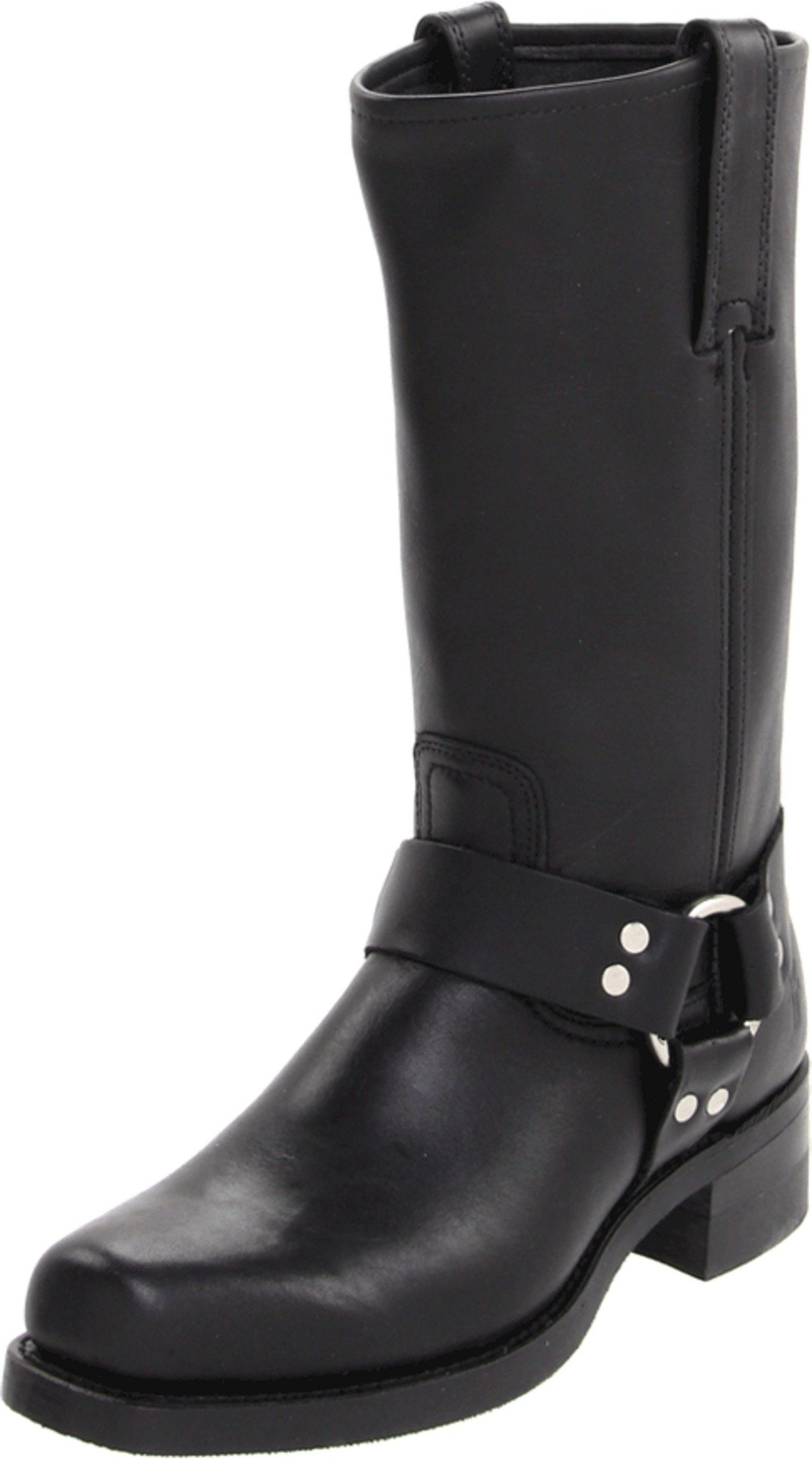
The American-made icon that soldiered with Teddy Roosevelt and the Rough Riders.
Frye has been making shoes since 1863, and the Harness 12R — inspired by Civil War cavalry boots — is the boot that defines the category. The oiled leather upper is unlined, so it will mold to your foot and develop a rich patina over decades of wear. The neoprene oil-resistant soles with a full-length leather midsole create a foundation that is as comfortable as it is durable. The brushed metal hardware, decorative ankle harness with buckle and O-ring detailing, and 15-inch calf circumference are all classic. Made in the USA. The owner consensus is overwhelmingly positive on quality — nearly 200 owners single it out. The leather is “soft tough leather” that holds up well for motorcycle riding and field use. The most common complaint is the fit — 172 owners flag it as mixed. Many find the boot runs narrow and recommend sizing up significantly. The boots ship with cardboard inserts rather than proper insoles; owners universally recommend replacing them. The shaft is also wide — “comically large” by one account — making it hard to tuck pants over the boot. At 2.2 pounds, they are light and comfortable once properly sized.
The legacy build
- Made in the USA with oiled leather that develops a rich patina over years of wear
- Full-length leather midsole and neoprene outsole are comfortable and durable
- Quality is universally praised — the most-cited positive trait across all reviews
The honest trade-offs
- Sizing is notoriously inconsistent — expect to try half to a full size up from your normal shoe size
- Boots ship without proper insoles; plan to buy aftermarket inserts for comfort
- The shaft is very wide, making it hard to wear pants over the boot
The heirloom pick: If you get the sizing right, the Frye Harness 12R will last for decades. It is the boot that defined the engineer style, with a century and a half of pedigree. But the need to buy aftermarket insoles at this price feels like an oversight — budget for that extra cost.
look elsewhere if: you want a precise, athletic fit from the start, or if you prefer a narrower shaft.
Understanding the Specs
Full-Grain Leather Thickness
The thickness of the leather is measured in millimeters, and it directly determines how long the boot will last and how much protection it offers. A 2.2mm full-grain cowhide is the standard you want in a serious engineer boot. Thicker leather resists abrasion better and holds its shape, but it also takes longer to break in. Cheaper boots use thinner “genuine leather” (a lower grade) or bonded leather, which will crease badly, crack, and wear through faster. If a listing does not specify the leather thickness in millimeters, assume it is thinner than 2mm.
Goodyear Welt vs Cemented Soles
This is the difference between a boot you can own for twenty years and a boot you throw away after two. Goodyear welt construction sews a strip of rubber or leather to the upper, and then sews the outsole to that welt. When the sole wears down, a cobbler can cut off the old sole and stitch on a new one. Cemented construction uses glue to attach the sole — once it wears down, the bond is compromised and the boot cannot be resoled. Every boot on this list with a milled-leather outsole or a visible welt stitch is using Goodyear or welted construction. If you see “cement construction” in the specs, treat the boot as disposable.
YKK Zippers and Hardware
Engineer boots use heavy zippers for the side entry, and the zipper is often the first thing to fail on cheaper pairs. YKK is the Japanese zipper manufacturer that is the global standard for quality. If a boot uses genuine YKK zippers, the track and slider are far less likely to jam, split, or break. The same logic applies to the buckles and D-rings — solid brass or steel hardware that is riveted through the leather is stronger than cast pot metal that is just clipped on.
Shaft Height and Circumference
Shaft height is measured from the heel base to the top of the boot. Common heights are 11-inch (fits under most jeans), 13-inch (classic engineer), and 16-inch (for tucking into riding pants). Shaft circumference (around the top of the calf) is just as important. If a boot has a 14-inch calf circumference and your calf measures 15 inches, the zipper will not close. Always measure your calf at the point where the boot top will hit before you order a tall shaft.
FAQ
Should I size up or down in engineer boots?
How long does it take to break in engineer boots?
Can I wear engineer boots every day?
How do I clean and maintain engineer boots?
What is the difference between engineer boots and harness boots?
Can I ride a motorcycle in engineer boots?
Why do some engineer boots have a square toe?
How do I fix heel slip in engineer boots?
Are engineer boots good for wide feet?
Can I resole engineer boots?
Final Thoughts: The Verdict
For most buyers, the best engineer boots pick is the Milwaukee Leather MBM9063 because it delivers thick 2.2mm full-grain leather and comfortable out-of-box wear at a price that
Related Guides

Mo Maruf
I created WellFizz to bridge the gap between vague wellness advice and actionable solutions. My mission is simple: to decode the research and give you practical tools you can actually use.
Beyond the data, I am a passionate traveler. I believe that stepping away from the screen to explore new environments is essential for mental clarity and physical vitality.