Our readers keep the lights on and my smoothie glass nicely filled. As an Amazon Associate, I earn from qualifying purchases.
Specs are compiled from manufacturer listings and verified buyer reviews and can change over time — please confirm the key details on the product page before buying.
Your evergreens are alive, but are they thriving? Brown tips, sparse needles, and slow growth after a long winter are usually signs of poor soil, not a lost cause. This guide cuts through the chemical confusion and lines up the top performers for every yard size and feeding style — from classic granules to low-maintenance spikes that feed roots directly.
I’m Mohammad Maruf — the founder and writer behind WellFizz. This guide is built by comparing the manufacturers’ published specifications and the patterns across verified customer reviews, so you get each pick’s real strengths and trade-offs instead of marketing spin.
Here you’ll find the only fertilizer for evergreen trees that earns the highest rating across thousands of owners, plus several focused alternatives for different soil types, budgets, and tree species.
Our Picks at a Glance
How To Choose The Best Fertilizer For Evergreen Trees
Evergreens need a specific nutrient balance to keep their needles green, their roots strong, and their growth steady. You want a formula that feeds without forcing a burst of weak growth, which is vulnerable to frost. The key is matching the NPK numbers to your soil.
The NPK ratio
That three-number code — like 4-3-4 or 12-3-3 — stands for nitrogen, phosphorus, and potassium. Evergreens need a higher first number (nitrogen) to maintain deep green needles. Phosphorus supports root development and blooms in acid-loving shrubs, while potassium builds general disease resistance and winter hardiness.
Slow-release is safer for roots
Granular and spike formulas release nutrients slowly as the soil warms. They avoid the root burn that can happen with a full-strength liquid dose, especially on young or stressed trees. Spikes are pre-measured, so you cannot over-feed. Liquids work fast and are useful for sick trees that need a quick green-up.
Quick Comparison
| Model | Best For | NPK Ratio | Form | Coverage Weight | Amazon |
|---|---|---|---|---|---|
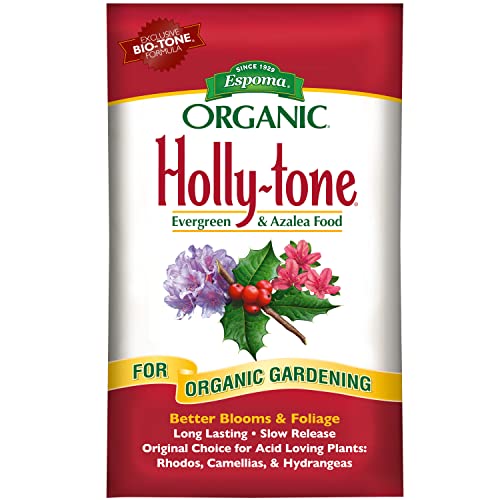
| Espoma Organic Holly-Tone 36lb★ Best Overall | Large acid-loving gardens | 4-3-4 | Granules | 36 lb | Amazon |
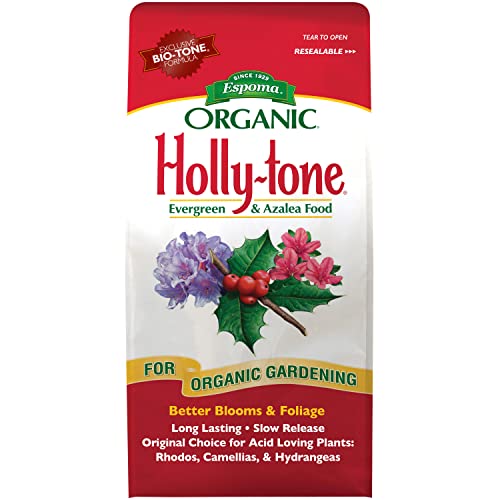
| Espoma Holly-Tone Twin Pack 8lbSmart Multi-Pack | Multiple smaller plantings | 4-3-4 | Granules | 4 lb (x2) | Amazon |
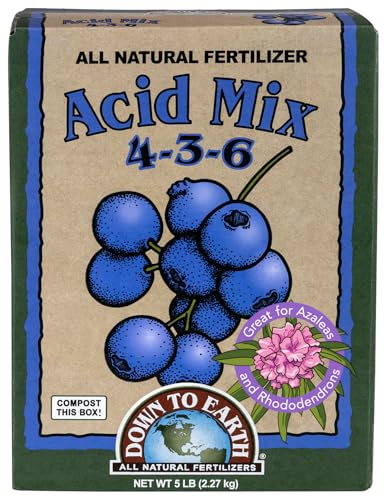
| Down To Earth Acid Mix 5lbBerry & Bloom Specialist | Blueberries, shrubs, organic gardens | 4-3-6 | Granules | 5 lb | Amazon |
| SimplyGro Spikes 12pk | Set-and-forget home care | 12-3-3 | Spikes | 3 lb | Amazon |
| Nelson NutriStar 21-6-8 4lb | Quick green-up, boxwoods, heavy feeders | 21-6-8 | Granules | 4 lb | Amazon |
| Power Spike 10pk | Budget feeding for young trees | N/A | Spikes | 3.2 lb | Amazon |
| TPS Liquid Evergreen 32oz | Liquid spot-treatment for needles | N/A | Liquid | 32 fl oz | Amazon |
| TPS Pine Tree Liquid 32oz | Pines, cypress, wind resistance | N/A | Liquid | 32 fl oz | Amazon |
| Jobe’s Spikes 160ct | Large properties, bulk planting | 11-3-4 | Spikes | 38.9 lb | Amazon |
In‑Depth Reviews
1. Espoma Organic Holly-Tone 4-3-4 (36 lb)
Our pick — over 4.5★ from 950+ verified ratings; the strongest balance of quality and price.
The 36-pound organic granule that has kept acid-loving trees thriving since 1929.
This is the pick that owners keep coming back to every spring and fall. The 4-3-4 ratio with added sulfur provides the acidity hollies, azaleas, rhododendrons, and every kind of evergreen need. The granules break down in the soil and create a long-lasting reservoir of nutrients, so you do not need to reapply every few weeks. Buyers report incredible results on their trees, with one summarizing it plainly: “the growth of my trees has been incredible as well after using it.”
The 36-pound bag is heavy — but that single bag handles spring and fall feedings across a sizable yard. The product is approved for organic gardening, meaning no synthetic chemicals or toxic ingredients reach your soil. The odor is the one thing mentioned as unpleasant right after application, though it fades once watered in.
Why owners keep buying it
- Effectiveness is praised by dozens of owners — trees put on visible growth and heavy blooms
- Quality ingredients with Bio-Tone Plus and zero sludge or toxic fillers
- One bag covers two full feeding seasons for many yards
The honest trade-off
- 36-pound bag is heavy to carry from the garage to the far side of the yard
- Odor can be strong for a few days after application if not watered in quickly
Your best bet if: you have a large yard with a mix of evergreens, azaleas, hydrangeas, or blueberries and you want a single organic product that does it all.
Look elsewhere if: you need a quick spot-treatment for a single sick tree — a liquid or spike might be more targeted.
2. Espoma Organic Holly-Tone Pack of 2 (4 lb Each)
Same trusted formula in a lighter two-bag set that is easier to carry.
This is the identical Holly-Tone formula in the twin-pack, just split into two 4-pound bags. You get the same 4-3-4 analysis with 5% sulfur for acidifying the root zone, the same Bio-Tone organic blend, and the same no-mixing application. The difference is portability — each bag is a manageable weight, so you can grab one for the front yard and the other for the back without lugging a massive sack.
The thing owners praise most are the plant benefits they see: better foliage color, bigger blooms on hydrangeas, and healthier arborvitae. The value-for-money verdict is mixed among buyers — some consider these twin bags a great price for the dual-portability, while a few feel the per-pound cost is higher than the 36-pound version. The bags are also good for spot-treating a few specimen trees without committing to a huge open bag that can pick up moisture.
Best for small gardens: if your planting area is limited to a handful of evergreens and acid-loving shrubs, this twin set gives you two seasons of feedings in a lightweight format. The honest catch is that value-conscious owners who need to feed a lot of trees should buy the 36-pound bag instead for the lower per-pound cost.
Reach for these if: you have a few targeted trees and want to avoid storing a 36-pound open bag.
Skip them if: you have a big yard with dozens of trees — the larger bag is the better economical move.
3. Down To Earth All Natural Organic Acid Mix 4-3-6 (5 lb)
The organic powder that revives blueberries and keeps evergreens lush with a 4-3-6 NPK.
What sets this 4-3-6 formula apart is the higher potassium number, which supports root strength and winter hardiness — exactly what evergreens need to survive a rough freeze. Made from organic, sustainably sourced ingredients, the granules release their nutrients slowly, giving your trees a steady supply of food over many weeks instead of a one-shot blast. The 5-pound box is compact and easy to store, and the scoop-style box with an inner plastic bag keeps the powder dry.
The crowd is emphatic about this one for blueberries — owners mention reviving their blueberry shrubs and seeing red leaves turn green again. One owner summed it up by saying it worked on their “reviving my blueberry shrubs.” For evergreens, it is just as effective: the acidifying mix suits pines, firs, spruces, and acid-loving ornamentals. The scent is noticeable only up close, but one buyer’s dogs tore open the box for its smell — so store it securely.
Excellent for mixed gardens: if you grow blueberries or raspberries alongside your evergreens, this is the most versatile single bag. The slow-release nature means fewer applications, but the 5-pound size only covers a small to medium planting area.
Grab this if: you want an organic, slow-release acid mix that handles both your evergreens and your berry bushes.
Think twice if: you have a large number of mature, spaced-out trees — you will need multiple boxes for full coverage.
4. Nelson NutriStar 21-6-8 (4 lb)
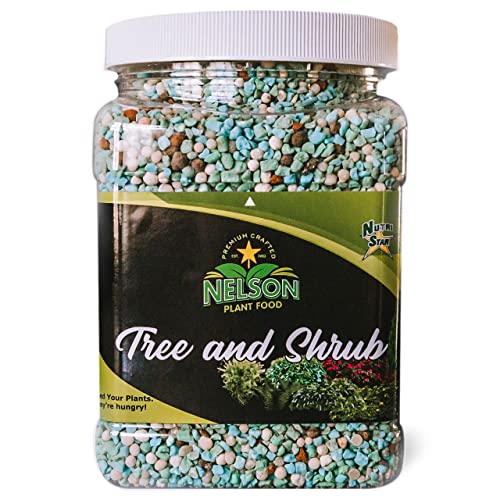
The high-nitrogen 21-6-8 granule that turns yellow plants glossy green in two weeks.
This is a different feeding philosophy. Instead of a moderate organic release, the 21-6-8 ratio provides a high-nitrogen, fast-acting dose that includes five different nitrogen sources — each one releasing on a different timeline so the plant gets a steady feed even from a single application. It is a granular product designed for in-ground trees, shrubs, and evergreens including oaks, maples, pines, boxwoods, hollies, and more.
The results are dramatic. One owner reported that anemic yellow plants turned into “thriving, bright green, shiny shrubbery” within two weeks. Another described it as near-instant: “visible greening within minutes of application.” It works especially well on boxwoods and other evergreens that show nitrogen deficiency. The granular form is easy to scatter around the drip line, and it feeds for about 30 days, meaning you apply monthly during the growing season.
What makes it effective
- Fast visible green-up — owners see results in days, not weeks
- Multiple nitrogen sources prevent the feast-or-famine pattern
- Works for in-ground and container-grown trees, shrubs, and evergreens
The trade-offs
- Not organic — a synthetic formula, so not suitable for organic gardening
- Requires monthly reapplication during the growing season, unlike a slow-release spike or organic granule
Your pick if: you have trees that look yellow, stressed, or nitrogen-deficient and you want a fast, visible recovery.
skip it if: you are committed to fully organic gardening or you want a once-a-season product you can set and forget.
5. SimplyGro Fertilizer Spikes for Evergreen Trees 12-3-3 (12 Count)
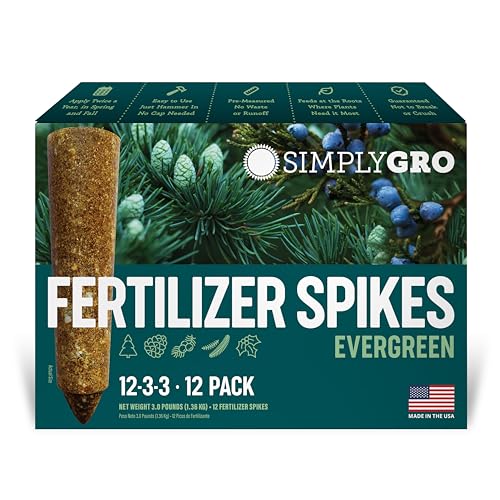
Hammer in the 12-3-3 spike and let it feed evergreens for three full months.
The 12-3-3 ratio is specifically tailored for evergreens, pines, firs, and conifers. Each 5-inch spike delivers a continuous supply of nutrients right to the root zone, where the tree can use them. The biggest advantage here is ease of use: no mixing, no measuring, no hauling heavy bags across the yard. You drive the spike into the soil around the drip line of the tree, and the patented TruSpike design means it will not break, crush, or smash during installation.
Customers note dramatic improvements — one saved two large trees that were “not doing very well” and after using the spikes the trees “perked up.” Another user in sandy soil found the time-release nitrogen held up for 4-5 months even with dozens of waterings, whereas compost and manure leached out quickly. The recommended schedule is twice a year: spring feeding to support new growth, and fall feeding to help the tree store energy for winter.
Perfect for the “low-maintenance” crowd: if you have a handful of trees you want to feed without a monthly chore, these are the easiest path. Each spike works for one trunk diameter increment, so large trees need a ring of spikes.
Reach for these if: you want precise, slow-release feeding with zero mixing and no hauling of bags.
Pass on them if: you need to cover a large number of closely spaced young trees — granules might be faster to broadcast.
6. Power Spike Fertilizer Spikes for Evergreens (10 Count)
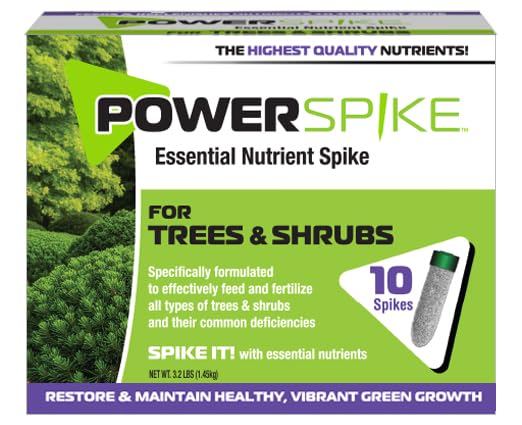
Ten spikes for a budget-friendly entry into root-zone feeding.
At 3.2 pounds for a 10-pack, these spikes are a lightweight, affordable way to get essential nutrients and micronutrients directly to the root zone. They deliver a balanced moderate feed — not a hard jolt — which makes them a good fit for young evergreens that might be burned by a stronger dose. The spikes come with a pounding cap and the instruction to pre-drill or water the soil first for easier insertion.
Buyers call them “great for my new evergreen trees” and note they are easy to install. One owner used two boxes around a 20-foot ailing pine tree, placing the spikes 6-7 feet from the trunk and 3 feet apart, and reported new growth that saved the tree. The spikes are made with binders that prevent a rapid dump of nutrients, so the feed lasts through the season. A small gotcha: the spikes can be hard to drive into dry, compacted soil, and some may break if pounded directly without a pilot hole.
A sensible budget entry: if you have a few young or newly planted evergreens and want targeted root feeding without the commitment of a big bag, this 10-pack is a low-risk start. For established large trees, you will need multiple boxes to create an effective feeding ring.
Best for: a handful of small to medium evergreens, especially if you want an easy spring/fall ritual.
Not ideal for: a single very large tree that would need many spikes to get enough coverage — granules might be more economical there.
7. TPS Nutrients Liquid Evergreen Tree Fertilizer (32 oz)
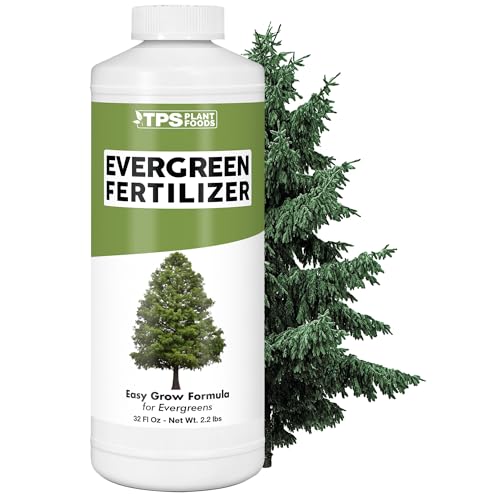
Concentrated liquid that gives a blue spruce a refreshed, healthy look within days.
This is a liquid formulation made specifically for evergreen and conifer trees. You mix 1 teaspoon per quart of water and apply it around the root zone or as a foliar spray. The liquid delivers nutrients directly and quickly, which is useful for giving an established tree a mid-season pick-me-up or for treating a specific tree that looks stressed while the rest of the yard is fine.
Reviewers point out positive results on blue spruce, junipers, and evergreen hedges. One noted their blue spruce “looks refreshed and healthy” after treatment. The formula is made in the USA and is designed to support needle health, root strength, and steady year-round growth. The caution here is dosing — one owner reported chemical burn on small trees (2.5-7 feet) when they followed the recommended full dose, suggesting half-strength for younger or smaller evergreens. The bottle does not go as far as some would like; multiple bottles are needed for a yard with many tall trees.
A quick fix for spot-treatment: if you have one or two trees that need help and you do not want to broadcast granules across the whole yard, this liquid is a targeted tool. Be conservative with the dose on young trees — start at half-strength.
Use this for: a single stressed tree, a newly planted specimen, or a container-grown evergreen that needs a gentle boost.
Choose something else for: routine feeding of a dozen large trees — you will go through many bottles and the cost adds up.
8. TPS Nutrients Pine Tree Fertilizer (32 oz)
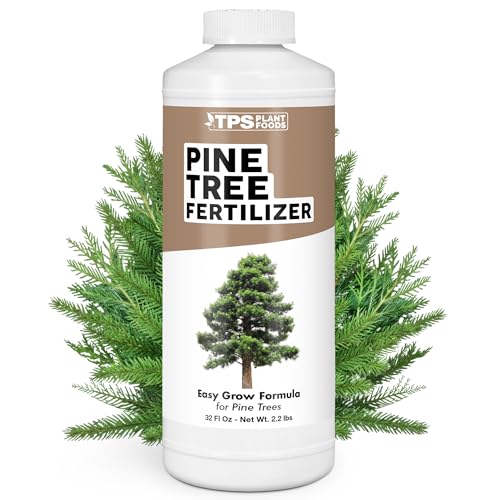
A liquid formula tuned for pines, Leyland cypress, and root strength against wind.
This liquid is similar to the TPS evergreen formula above but with a different nutrient profile aimed at pushing rapid root growth and wind-resistant structure. It is formulated to support healthy needles and steady tree development in pines, spruces, firs, and landscape conifers. Like the evergreen version, you mix it with water and apply around the base or as a soil drench.
Buyers have strong loyalty to this one — several are repeat purchasers who noticed less browning on needles and major growth on smaller trees. One owner said it “works wonders” and came back to buy the full gallon after starting with the quart. Another noted that their pine trees responded with clear new growth. The 32-ounce bottle is a concentrate, so a little goes a long way for small trees, but a yard with many large pines will use it up fast. As with the other TPS liquid, careful dosing is important for young or small trees.
If your yard is mainly pines and cypress: this targeted formula beats a generic all-purpose liquid. It is a quick-acting, efficient tool for a focused feeding session twice a year. The drawback is that it is a single-season product for anything beyond a small planting, and the concentrate does not have the slow-release staying power of granules or spikes.
Ideal for: pine lovers who have a few specimen trees and want to see faster recovery from winter stress.
Avoid if: you are feeding a large grove of trees and want a set-and-forget routine — spikes or granules will be more economical and convenient.
9. Jobe’s Slow Release Evergreen Fertilizer Spikes 11-3-4 (160 Count)

A bulk box of 160 spikes for feeding an entire acre of evergreens at the lowest per-spike cost.
This is the heavy artillery for large properties. The bulk 160-count box contains Jobe’s 11-3-4 NPK spikes, which are formulated to feed a wide range of evergreens including cypress, arborvitae, pine, and cedar. The spikes are pre-measured to avoid over-fertilizing and deliver nutrients directly to the active root zone below the surface, with zero runoff, mess, or smell. You apply them twice a year — once in early spring and once in late fall.
Owners of large properties love the value. One owner installed 26 spikes in rocky clay soil using the included chisel, cap, and rubber mallet and found the process straightforward. Another fertilized 15-20 evergreens and saw “impressive growth” plus greening-up of struggling Italian cypress. The 38.9-pound box is a heavy unit, but the per-spike cost is much lower than buying small packs. The spikes arrive loose in the box, and some shoppers say that a few arrive broken — they are still usable but drive in shallower. The spike quality gets a mixed verdict from buyers because of this packing issue.
The big-property advantage
- 160 spikes cover a large number of trees — one owner installed 60 in about 15 minutes using a drill auger
- Pre-measured, so there is zero risk of overfeeding or burning your trees
- Zero smell, zero runoff, zero mixing — the cleanest feeding method available
The honest complaint
- Spikes are tossed loosely in the box without padding, so some arrive cracked or broken
- The 38.9-pound box is heavy to maneuver for carrying around a large yard
Perfect for: anyone with a significant number of trees (10, 20, or more) who wants the lowest per-spike cost and the convenience of a single box that lasts the whole year.
Not for: someone with just two or three trees — the smaller retail packs are handier and cheaper upfront.
Understanding the Specs
NPK Ratio
The three numbers on every fertilizer bag (nitrogen-phosphorus-potassium) are the backbone of plant nutrition. Nitrogen fuels that deep green needle color and leafy growth. Phosphorus supports root establishment and flowers on any flowering evergreens. Potassium builds overall plant toughness — disease resistance, winter hardiness, and strong cell walls. For evergreens, the first number should be the highest, often between 4 and 12. A ratio like 12-3-3 tells you it is a nitrogen-heavy formula for needled trees.
Slow Release vs. Liquid
A slow-release formula — whether a coated granule or a physical spike — meters out food over weeks or months. This prevents the “flush and burn” pattern where a fast liquid dose triggers weak growth that frost can kill. Liquids act in days, making them ideal for rescuing a yellowing tree mid-season. Spikes are the most hands-off: you hammer them in and the roots draw exactly what they need. Granules let you cover a wide area fast. Pick based on your preferred schedule, not just the bag size.
FAQ
When should I fertilize my evergreen trees?
Can I use a general all-purpose lawn fertilizer on my evergreens?
How many fertilizer spikes do I need per tree?
What is the difference between granular and liquid evergreen fertilizer?
Is organic fertilizer better for evergreens?
How do I know if my evergreen tree needs fertilizer?
Can I overfeed my evergreens with fertilizer spikes?
Do I need to water the spikes in after installation?
How long do granular fertilizers last in the soil?
Final Thoughts: The Verdict
For most yards, the top pick for fertilizer for evergreen trees is the Espoma Organic Holly-Tone 36-pound bag because of its unbeatable combination of high rating, massive coverage, organic certification, and proven results across thousands of owners. If you value total convenience and a hands-off feeding schedule, grab the SimplyGro 12-pack spikes. And for a fast rescue of a struggling tree, the TPS Liquid Evergreen 32 oz is the one to reach for. Your trees will thank you with deeper green needles and stronger growth from the first application.
How We Picked
We do not accept paid placement. Every pick is matched to a real buyer and a real use-case; we do not hands-on test units.
Sources & Methodology
Specifications: manufacturer listings and product documentation. Review insights: verified customer reviews, as of July 2026. Pricing: not shown on this page (it changes often); check the current price via the retailer link.
As an Amazon Associate, WellFizz earns from qualifying purchases. This does not affect which products we feature.
Related Guides

Mo Maruf
I created WellFizz to bridge the gap between vague wellness advice and actionable solutions. My mission is simple: to decode the research and give you practical tools you can actually use.
Beyond the data, I am a passionate traveler. I believe that stepping away from the screen to explore new environments is essential for mental clarity and physical vitality.