Our readers keep the lights on and my smoothie glass nicely filled. As an Amazon Associate, I earn from qualifying purchases.
Specs are compiled from manufacturer listings and verified buyer reviews and can change over time — please confirm the key details on the product page before buying.
A drywall tool belt that digs into your hip, spills screws, and makes you hunt for a tape measure will frustrate you within hours. The right belt keeps every tool within reach, distributes weight to reduce back strain, and withstands daily abuse from steel studs and ladder rungs.
I’m Mohammad Maruf — the founder and writer behind WellFizz. This guide is built by comparing the manufacturers’ published specifications and the patterns across verified customer reviews, so you get each pick’s real strengths and trade-offs instead of marketing spin.
Whether you hang board all day, frame walls, or tackle your own renovation, these nine contenders represent the current best options for a drywall tool belt that actually works with your body instead of against it.
Our Picks at a Glance

How To Choose The Best Drywall Tool Belt
A good drywall belt carries your essential tools—screw gun, tape, knives, fasteners, pencil, square—without sagging your pants. The specs that matter are pocket count and layout, material, belt width, and whether the pouch is fixed or interchangeable.
Pocket Count vs. Usable Capacity
A belt with 25 pockets sounds great until you realize only six are within easy reach. Look for a layout that separates your go-to tools (screw gun, knife, tape) in wide-mouth, structured pockets that stay open. Deeper pockets hold more but sometimes require a thigh-bump to reach the bottom. Shallow pockets keep small parts visible.
Leather vs. Nylon vs. Hybrid
Full-grain or top-grain leather is stiff at first but moulds to your body over time and lasts years. Nylon or ballistic poly fabric is lighter from day one and won’t absorb moisture as easily. Hybrid belts—nylon bodies with leather reinforcements at wear points—offer a middle ground. The catch: leather is heavier and needs breaking in; nylon can fray at seams if the stitching isn’t double-reinforced.
Belt Width and Padding
A wider padded belt (5–5.5 inches) distributes the load across more of your waist and reduces hip soreness by the end of a framing day. Skinnier belts concentrate pressure. A foam-padded or suede-lined interior helps if you are carrying more than 15 pounds of tools.
Quick Comparison
| Model | Best For | Pockets | Material | Weight | Amazon |
|---|---|---|---|---|---|
| DEWALT 25-Pocket (DWST540602)★ Best Overall | All-round organization | 25 | 1680D Nylon | 1.36 kg | Amazon |
| Ox Pro Full Grain LeatherCompact Carry | Pro drywalling | 12 | Oil-tanned Leather | 1.1 lb | Amazon |
| Ox Pro 22-Pocket Drywall BeltPro-Grade Leather | All-day pro comfort | 22 | Oil-tanned Leather | 3.5 lb | Amazon |
| Graintex DS2360 Suede Leather | Shallow-pocket framing | 11 | Suede Leather | 1.16 kg | Amazon |
| DEWALT Leather (DWST550112) | Beginner to intermediate | 11 | Nubuck Leather | 2.6 lb | Amazon |
| TRUTUCH Grain Leather | Heavy-duty value | 18 | Grain Leather | — | Amazon |
| NUTUCH Nylon/Leather Hybrid | Abrasion-heavy sites | 22 | Nylon + Top-Grain Leather | — | Amazon |
| CLC Custom Leathercraft 5605 | Framing versatility | 18 | Ballistic Poly Fabric | 3.5 lb | Amazon |
| Occidental Leather FatLip Fastener Bag | Fastener-heavy drywall/framing | 10 | Leather + Industrial Nylon | 1.7 lb | Amazon |
In‑Depth Reviews
1. DEWALT Professional Tool Belt Organizer With Suspenders and 25 Pockets (DWST540602)
Our pick — over 4.5★ from 950+ verified ratings; the strongest balance of quality and price.
The crowd favorite holds every hand tool you own and keeps your phone secure.
Twenty-five pockets is a staggering number — 2.3 times the capacity of the Graintex leather belt — and the real trick is that almost all of them are structured with wide-open mouths so your hand finds each tool without looking. The 1680-denier fabric (a thick, tightly-woven nylon used in heavy-duty luggage) shrugs off abrasion, and the yellow internal lining is a small but smart detail: you see the dark screwdriver against the bright background instead of hunting around a black hole.
What wins people over is the all-day comfort. The padded belt is 5.5 inches wide, spreading the load of a fully-loaded rig across your waist instead of digging into one spot. The included suspenders have a phone pocket and metal carabiners, which take the weight off your hips entirely. That weight, at 1.36 kg, is noticeably heavier than the 1.16 kg Graintex suede belt — an honest 17% more mass you feel when you first put it on, though the extra padding more than compensates by hour four.
The recurring practical gripes are the Velcro on the suspenders — “failing after three months,” buyers report — and the phone pocket being too narrow for a modern oversize phone. The belt also feels bulky to some around a 34-inch waist, though most find the adjustability fine. For the person who wants to carry a full drywall setup, plus extras, and have it all stay organized, this belt earns its top spot on crowd praise alone.
Why it stands out
- 25 pockets — 2.1x more compartments than the Ox Pro leather pouch — give room for screw guns, tape, knives, fasteners, and a phone
- Padded 5.5-inch belt and included suspenders spread the load, reducing hip fatigue
- Yellow internal lining makes tools visible instantly
The honest trade-offs
- Suspenders Velcro durability is a known weak point; some units show wear within months
- Phone pocket is too slim for many large phones
- Feels bulky if you prefer a minimalist pouch
Best suited for: Anyone who wants one belt to cover every drywall task — hanging, finishing, fastening — and prefers carrying everything at once over swapping pouches.
Consider alternatives if: You want a leather belt that molds to your body, or you carry only a handful of tools and hate the feel of bulk around your midsection.
2. Ox Pro Full Grain Leather Tool Pouches (OX-P263801)
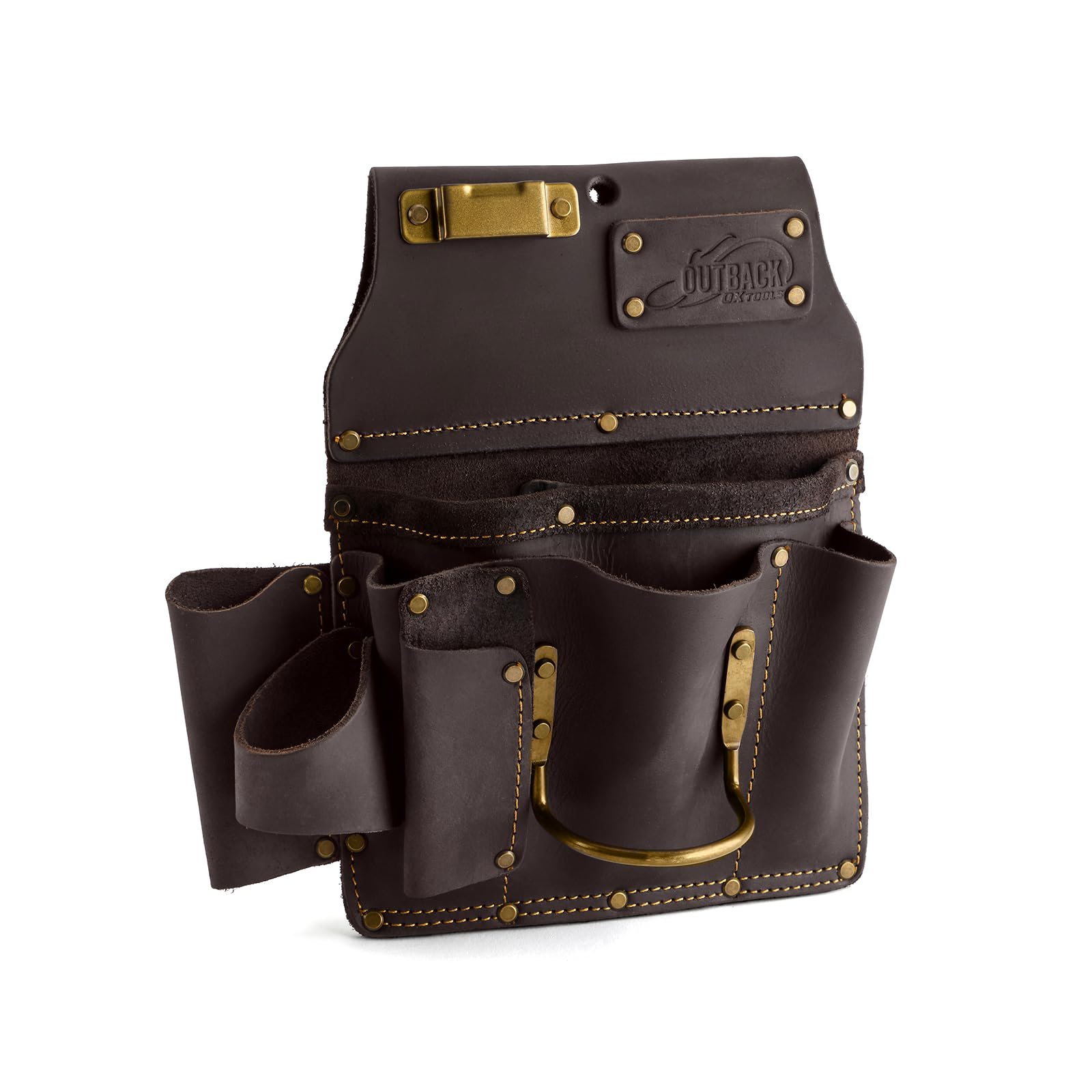
This drywall-specific pouch fits 27 hand tools on one side with room to spare.
Just 12 pockets, but the layout is what makes this stand out. The pockets are configured specifically for drywall work — wide enough for jab saws, deep enough for screwdrivers, with metal rivets at every stress point. Commercial drywallers report fitting 27 tools in the right pouch alone and still having room left, which is remarkable for a pouch that weighs only 1.1 pounds. The 2.0 mm thick oil-tanned leather hits a balance: thick enough to hold its shape without a liner, but with a “broken-in feel right from the start” that spares you the usual two-week leather break-in.
The downside versus the DEWALT belt above is capacity — 12 compartments versus 25 means you prioritise your tool loadout rather than dumping everything in. The middle compartment is tight for two clamps until the leather softens fully, and the snip slot isn’t perfectly designed (some owners cut the bottom to make it deeper). Durability gets mixed feedback: the main leather holds up well, but the hammer sling can break from over-bending on a heavy framing day.
Real-world verdict: If you are a commercial drywaller who wants a no-nonsense leather pouch that rides tight and carries exactly what you hang board with — and you are willing to replace a hammer sling after heavy abuse — this is the one the pros on the job site reach for.
Reach for this if: You do drywall, framing, and act ceilings daily and want a compact, well-configured pouch that holds an astonishing number of tools in a small footprint.
Look elsewhere if: You need a full belt system with suspenders, or you prefer a larger rig that holds fasteners and a full screw gun along with your hand tools.
3. Ox Pro 22-Pocket Drywall Belt (OX-P263804)
A heavy-duty rig for pros who need every tool within two seconds’ reach all day.
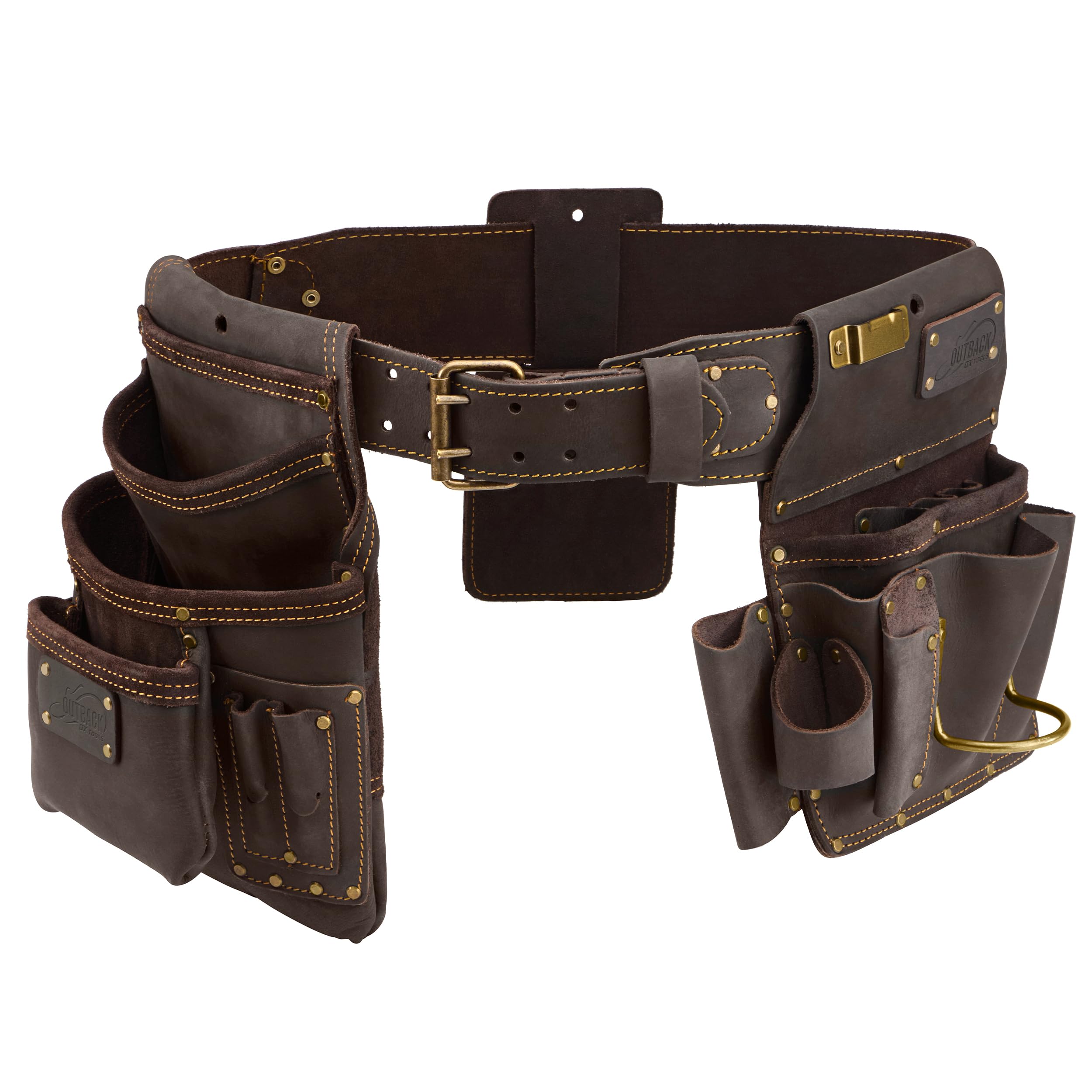
This is the full-belt version of the Ox pouch above, stepping up to 22 pockets in a complete rig that includes a 3-inch wide leather belt. The oil-tanned leather is reinforced with steel rivets and double-stitching — the kind of construction that survives a daily beating over two years without losing shape, as owners mention. The pocket layout is explicitly designed for drywall: left side carries a square, chalk line, pencils, and nails; right side holds pencils, knife, tape, puller, and snips; the hammer rides at the back.
The trade-off is weight. At 3.5 pounds empty, this belt is significantly heavier than the 1.1-pound Ox Pro pouch, and owners note that hip soreness sets in without suspenders. If you are on a full-day production cycle (hanging 40+ boards), the 3-inch belt width does a decent job distributing the load, but the rig shines brightest when paired with suspenders. Some pros argue that for this price point you should push up to an Occidental leather build — a fair point if you plan to keep the belt for a decade.
Built to last
- 22 oil-tanned leather pockets with steel rivets and double-stitching for pro-grade durability
- Strategic pocket layout means your hand knows where each tool lives without fumbling
- Survives daily commercial use for two years and beyond, per owner experience
The main catch
- Heavy at 3.5 pounds — hip fatigue is real without suspenders
- Not your favorite if you prefer modular, interchangeable pouches over a fixed rig
Ideal for: The professional drywall contractor who wants a purpose-built, durable rig and is willing to add suspenders for all-day comfort.
Not ideal for: The budget-buyer or weekend warrior — the leather investment pays off only with frequent, heavy use.
4. DEWALT Leather Tool Belt, 11 Pocket (DWST550112)
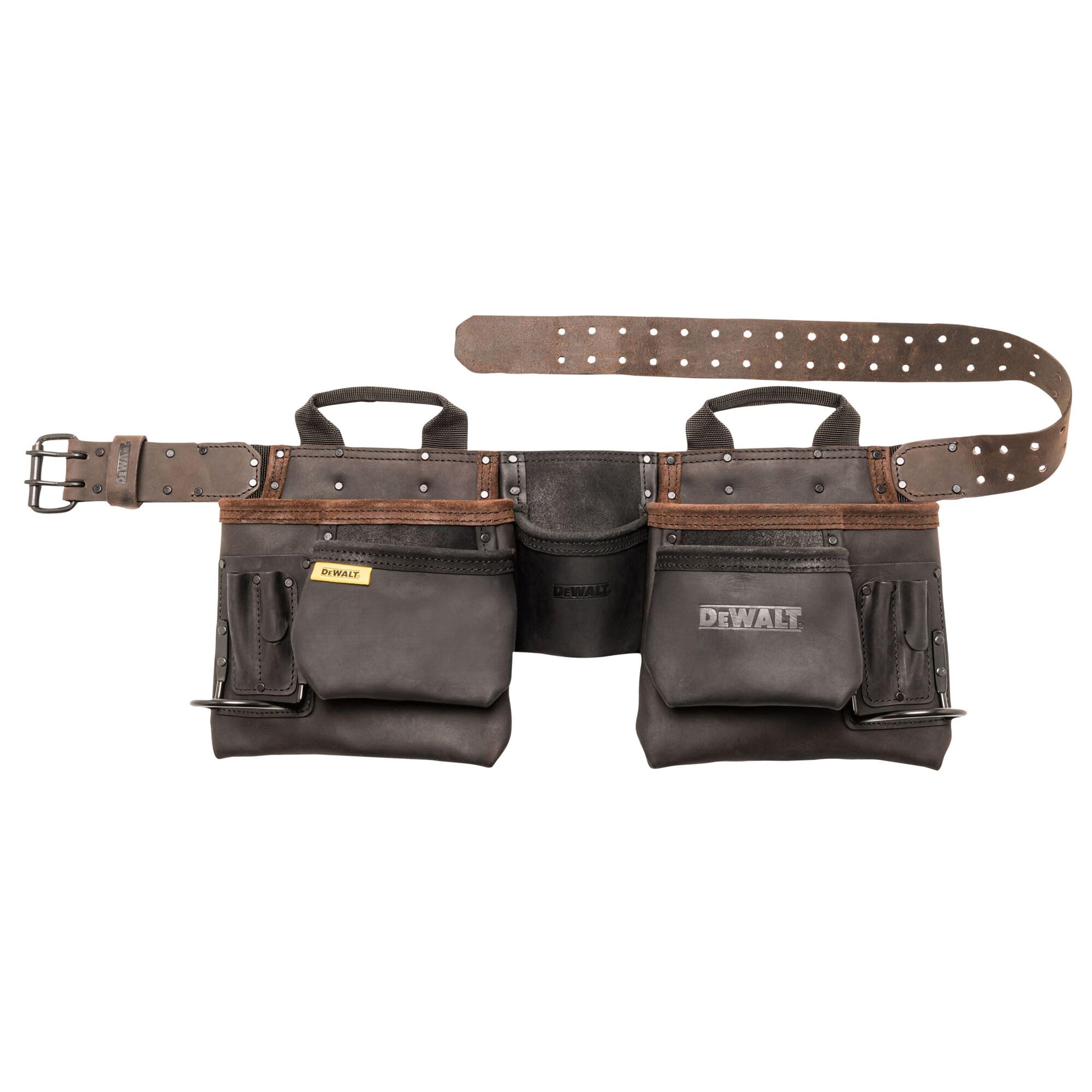
A thick, tough leather belt offering DEWALT quality at an affordable price.
With 11 pockets in a fixed, non-interchangeable layout, this belt is for the person starting out in drywall or framing who wants a solid leather platform at a reasonable entry point. The nubuck top-grain leather, combined with double stitching and reinforced rivets, takes a beating — owners say it holds up to whatever they throw at it, with the leather described as soft but tough. The belt carries a maximum waist measurement of 55 inches, making it one of the more accommodating options for larger frames.
The biggest limitation is that the pouches are stitched on and cannot be moved or swapped. That is completely fine if your toolset stays consistent, but it rules out the modular customization that some pros want. The belts is also heavier than the nylon DEWALT above — 2.6 pounds vs 1.36 kg — which you feel on a long day. True to its entry-level positioning, it holds beginner tools comfortably but lacks the capacity for a full production drywall loadout.
What owners say: The real story is that almost every owner praises the quality and durability. The belt has taken a beating and held up — exactly what you want from a mid-range leather belt. The trade-off is the fixed pouch layout, which means you commit to a specific tool arrangement from day one.
Perfect for: The budget-conscious beginner or DIYer who wants a tough, well-built leather belt and doesn’t need to rearrange pouches every week.
Not for: The pro who carries a different tool set on Monday vs. Thursday and needs modular flexibility.
5. TRUTUCH Grain Leather Tool Belt (Maroon)

The thick, padded leather rig that owners compare favorably to belts costing four times as much.
The standout here is the material spec: 100% genuine grain leather at 2.50 mm thickness, which is noticeably beefier than many leather belts in its price tier. Eighteen pockets are divided across two large-capacity pouches, including a double-pocket pouch on one side, plus two metal hammer holders and a foam-padded belt that measures an impressive 3.75 mm thick. Customers note the padding is “super thick, so it doesn’t dig into you,” fixing the classic leather-belt hip pain issue.
Where this belt stumbles is fit consistency. The waist adjusts from 30 to 47 inches, but a few owners find the slots too small for their specific tools — needle nose pliers and screwdrivers fit well, but larger multi-tools or specialty drivers can feel cramped. The belt is also heavy; one owner deducted a star specifically for the weight. For the price, the quality-to-dollar ratio is exceptional, with multiple owners claiming it rivals + professional rigs in build.
Why owners love it
- 2.50 mm thick grain leather with double stitching — tough enough for daily commercial use
- 3.75 mm foam-padded belt prevents digging into hips, even when loaded
- 18 pockets plus two hammer holders for a complete tool setup
Watch for these
- Fit can be inconsistent — some pockets are tight for larger tools
- Heavier than nylon alternatives; the weight adds up over a full shift
Grab this if: You want a premium-feeling, thickly padded leather belt that punches way above its price tier and you do not mind a little extra heft for the sake of comfort.
skip it if: You need a lightweight, quick-sling rig or you carry oversized specialty tools that won’t fit the dedicated slots.
6. NUTUCH Nylon and Leather Tool Belt (Green)

An abrasion-fighting hybrid that uses nylon’s toughness and leather touches where they matter most.
This belt blends extremely abrasion-resistant industrial nylon with top-grain leather inserts at the high-wear points — a smart approach if your job site is heavy on concrete, rebar, or steel studs that eat through pure fabric. Twenty-two pockets give you room for a deep drywall setup, and the foam-padded belt is 4–4.50 mm thick (adjustable from 30 to 47 inches), making it one of the thicker padded belts. Leather reinforcement at the corners and tool holders helps with the tear-and-wear that kills a nylon-only belt.
The durability feedback is sharply divided. While some owners call it heavy but well-made, others report the hammer loop developing a hole after just two days of concrete work, and the pouches arrive very stiff and need a break-in period. The mixed durability rating (only 5 mentions, with a mixed verdict) means this belt may be a safe choice for lighter use but a gamble for full-time concrete framers.
Bottom line: A promising hybrid design at a competitive pocket count, but the durability inconsistencies mean it suits the carpenter who works mostly wood-framing and wants the nylon+leather combo, rather than the guy hitting rebar and concrete daily.
Good for: The journeyman who wants the weight savings of nylon paired with the strength of leather at stress points.
Consider something else if: You push belts to the limit on abrasive concrete or steel-heavy sites — the durability variance is too wide to count on.
7. CLC Custom Leathercraft 5605 Pro Carpenters Combo Tool Belt

The modular ballistic-nylon rig that a framing team’s favorite go-to for its deep pockets and adjustable fit.
This belt swaps leather for rugged ballistic poly fabric — the same material used in heavy-duty luggage — which makes it significantly lighter than a leather belt while still surviving daily abuse. All parts are removable and interchangeable, so you can slide pouches to exactly where your body works best. The 5-inch wide padded comfort belt with a double-tongue steel roller buckle does an excellent job of staying put through a day of bending, lifting, and ladder climbing. Quality is the most-cited aspect (45 mentions), followed closely by durability (25 mentions).
The mixed feedback lands on fit — the belt adjusts from 29 to 46 inches, but some owners with smaller waists find it doesn’t cinch down tight enough. The pockets also get mixed notices: deep enough for strip nails and a speed square, but the tape measure holder can block access to pencil and punch slots, which is an annoyance when you are in a production rhythm.
The up side
- All pouches are fully removable and interchangeable for custom positioning
- 5-inch padded belt distributes weight comfortably across the waist
- Deep pockets hold strip nails, speed squares, and plenty of fasteners
The down side
- Tape measure holder blocks pencil/punch slots on one layout
- Fit can be loose for waists under 30 inches
Made for: The framer or carpenter who likes to rearrange their pouch layout day to day and wants the light weight of ballistic nylon over leather.
Not for: The smallest-waisted crew member — the 29-inch minimum may still ride loose on a 28-inch frame.
8. Occidental Leather FatLip Fastener Bag (8581)
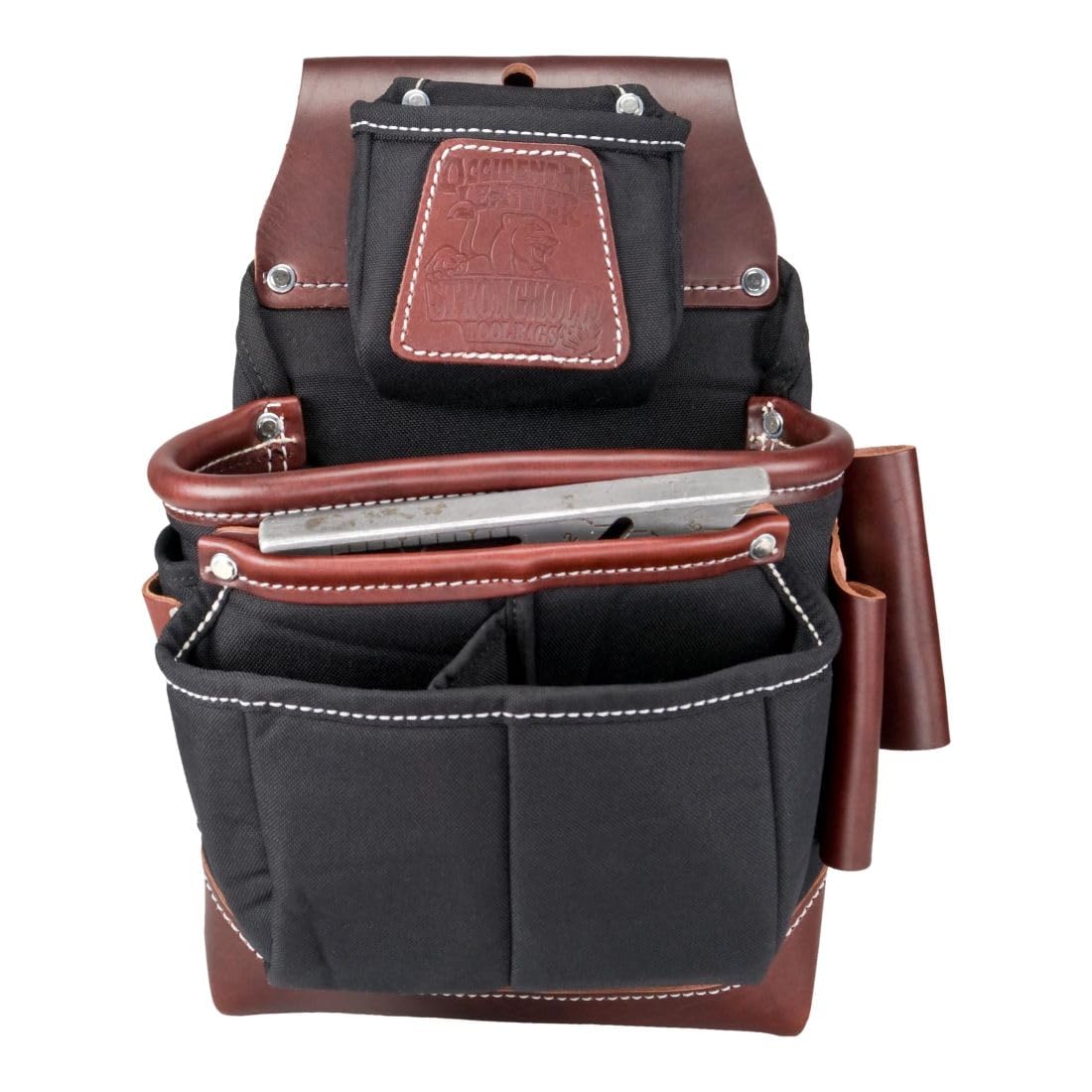
The 10-inch-deep fastener bag that holds 20 pounds of nails without losing its shape.
This is not a full belt — it is a dedicated fastener bag that clips onto your existing belt and carries the bulk of your screws, nails, and strip-fasteners. The patented 2-in-1 outer bag integrates a built-in angle square holster so you don’t need an extra loop, and the FatLip leather-reinforced mouth keeps the bag open and structured even when you are digging to the bottom. At 1.7 pounds and 10 pockets, it is a focused addition rather than a standalone system. The main compartment is 10 inches deep and, as owners confirm, holds about 75 racks of gun nails easily.
The durability feedback is mixed: some reviewers point out the bag lasting 8 years or more, while others say the material wears through faster than expected with daily rebar contact. The deep main compartment requires a thigh-bump to reach the bottom, which is the trade-off for having the capacity. This is the kind of piece you add to a CLC or DEWALT belt for the heavy day, not the only thing you wear.
Where it fits: If you already have a tool belt and want a second dedicated fastener pouch that holds 20 pounds of collated nails and does not flop closed, this Occidental bag is the professional’s add-on — built in the USA since 1980, with the road-tested reputation to back it.
Add this to your rig if: You are a production framer or drywaller who goes through hundreds of fasteners per day and needs a deep, structured bag that lives on your belt without getting in the way.
Not a standalone belt: This is a pouch, not a full tool belt. You need a separate belt and pouch setup to attach it to.
9. Graintex DS2360 11 Pocket Professional Suede Leather Tool Belt (Hunter Green)
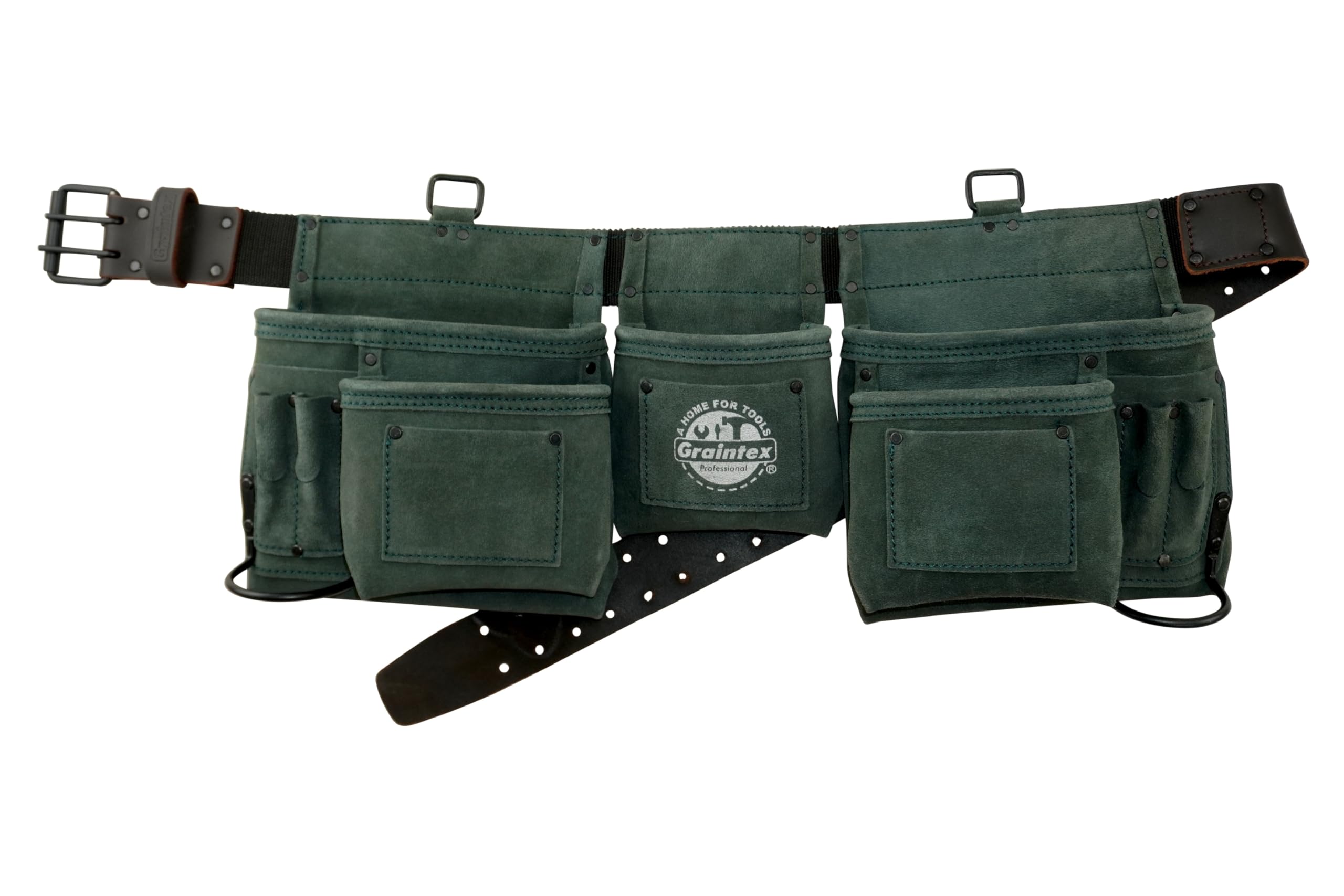
The suede leather belt with shallow pockets that roofing and framing crews love for staying above the knee.
This belt’s defining feature is shallow pockets that sit above the knee — a deliberate design that roofing and framing contractors praise because it keeps tools accessible without the bag slapping your leg on every ladder step. Eleven pockets total: two large main pouches, three medium front pockets, and six small ones. The 2-inch leather-and-webbing belt adjusts from 28 to 50 inches, accommodating an unusually wide range of waist sizes including smaller frames that larger belts don’t fit well.
The suede leather construction looks distinctive in Hunter Green, and quality earns the most positive mentions. Durability gets mixed feedback — some owners find the suede and double-stitching plenty tough for daily work, while others report wear at stress points faster than with full-grain leather. At 1.16 kg, it is 17% lighter than the DEWALT 25-pocket rig, making it a solid choice if you value mobility over sheer carrying capacity.
Praised most
- Shallow pockets stay above the knee, perfect for roofing and framing where mobility is king
- Fits a wide waist range (28 to 50 inches), including smaller frames often left out
- Quality leather construction with double stitching at stress points
The main concerns
- Suede leather may wear faster than full-grain for heavy commercial use
- Only 11 pockets — limits what you can carry compared to 18+ pocket rigs
Best for: The roofer, framer, or drywaller who works on ladders and slopes and needs a compact, snag-free belt that does not swing around while climbing.
Not ideal for: The drywall finisher or carpenter who needs deep pockets for bulk screws, nails, and a full fastener loadout.
Understanding the Specs
Pocket Count & Layout
The number of pockets tells you the maximum tool capacity, but layout matters more. Structured, wide-mouth pockets keep the opening from collapsing, so your hand finds the tool without looking. Deep pockets hold more fasteners but require a thigh-bump to reach the bottom. Shallow pockets are quicker but limit how many nails you can load. Count pockets, but read how they are arranged — the best belt has dedicated spots for your screw gun, knife, tape, and hammer within a natural hand arc.
Leather vs. Fabric vs. Hybrid
Leather (full-grain, top-grain, or suede) is stiff initially but molds to your body, lasts years, and protects against abrasion. Nylon or ballistic poly fabric is lighter, cheaper, and dries fast, but can fray at seams if the stitching is poor. Hybrid belts pair a nylon body with leather at wear points (hammer loops, pocket rims) to balance weight and durability. Your choice depends on: do you want the break-in period for a lasting mold, or light weight from day one?
FAQ
What waist size do most drywall tool belts fit?
Is a leather drywall belt better than nylon?
How many pockets do I really need for drywall work?
Do I need suspenders for my drywall tool belt?
Can I switch pouches between different tool belts?
How long does a leather drywall belt last?
Will a tool belt fit my drywall screw gun holster?
Are drywall tool belts waterproof?
What is the difference between a drywall belt and a framing belt?
How do I break in a stiff leather tool belt?
Final Thoughts: The Verdict
For most people, the drywall tool belt that strikes the best balance of capacity, comfort, and price is the
Related Guides

Mo Maruf
I created WellFizz to bridge the gap between vague wellness advice and actionable solutions. My mission is simple: to decode the research and give you practical tools you can actually use.
Beyond the data, I am a passionate traveler. I believe that stepping away from the screen to explore new environments is essential for mental clarity and physical vitality.