Our readers keep the lights on and my smoothie glass nicely filled. As an Amazon Associate, I earn from qualifying purchases.
Specs are compiled from manufacturer listings and verified buyer reviews and can change over time — please confirm the key details on the product page before buying.
That spongy brake pedal that sinks to the floor when you stab it — the one that makes your pulse spike at every red light — is almost always a vacuum problem. If you have a big cam, a supercharger, or an older engine that simply cannot pull enough inches of mercury (inHg) for the power booster, no master cylinder swap or bleeding trick will fix it. The fix is an electric vacuum pump: a dedicated 12-volt pump that creates the vacuum your engine cannot, so your brake booster gets the signal it needs and your pedal stays tall and firm.
I’m Mohammad Maruf — the founder and writer behind WellFizz. This guide is built by comparing the manufacturers’ published specifications and the patterns across verified customer reviews, so you get each pick’s real strengths and trade-offs instead of marketing spin.
Whether you are chasing a hot-rod build, replacing a failed factory pump on a modern Ford, or converting a vehicle to electric, the right electric vacuum pump for brakes lives on a short list of proven systems — and this guide steers you straight to the one that matches your vacuum needs and your installation skill level.
Our Picks at a Glance


How To Choose The Best Electric Vacuum Pump For Brakes
An electric vacuum pump is a simple device — a 12-volt motor spinning a rotor inside a housing to pull air out of the brake booster line. But choosing the wrong one leaves you with a noisy, short-lived unit that either makes no vacuum or burns out early. Here is what separates a keeper from a headache.
Vacuum level — the single non-negotiable number
Your brake booster needs a minimum of 18″ inHg (inches of mercury) to work properly. Many stock engines idle around 18-22″ inHg, but a big cam or blown motor can drop to 10″ or less. The pump you pick must produce at least the vacuum your booster demands. Most quality electric pumps list a peak vacuum (18″ to 25″ inHg). If your rig only needs 18″, a pump that hits 22″ is a good buffer. If you are building a race car that idles at 8″, you need a pump that pulls to 25″.
Pump type — reed vs rotary vane vs piston
Piston-style pumps are the cheapest, but they rattle and shake. Rotary vane pumps (often used by TMaster and Hella) run much smoother and are typically 60% quieter. Reed pumps (used by Leed Brakes) are also exceptionally quiet. If you plan to mount the pump inside the cabin or under the hood near the firewall, a vane or reed pump is worth the premium over a vibrating piston design. A noisy pump gets old fast.
Vacuum switch — the brain that controls cycling
Some kits include a vacuum switch that turns the pump on when vacuum drops below a set point (like 18″ inHg) and off when it climbs above another (like 22″ inHg). This is critical — without it, the pump runs continuously and burns up. If the kit does not include a switch, you must buy one separately and wire it in. Look for a pre-wired, pre-set switch in the package unless you enjoy wiring relays and finding an ignition source.
Installation complexity — plug-and-play vs build-your-own
Some pumps arrive as a complete kit: pump, wiring harness with a relay, vacuum hose, fittings, mounting bracket, and a pre-set switch. Others are a bare pump that requires you to source a switch, check valve, relay, and hoses. If you are not confident running 12-volt wires and threading NPT (National Pipe Thread) fittings, a true “plug-and-play” kit is the better route.
Quick Comparison
| Model | Best For | Vacuum | Pump Type | Weight | Amazon |
|---|---|---|---|---|---|
| Leed Brakes Black Bandit★ Best Overall | Big-cam muscle cars | 25″ inHg | Reed (quiet) | 10.19 lb | Amazon |
| TMaster 28146 ProPremium Pick | Quiet rotary-vane kit | 25″ inHg | Rotary vane | 5.3 lb | Amazon |
| GM Genuine 20804130Truck Savvy | GM direct-fit / EV swap | 17″ inHg | Vane (quiet) | ~3 lb | Amazon |
| Leed Brakes VP001C Chrome | Show-car build | 22″+ inHg | Reed (quiet) | 10.3 lb | Amazon |
| HELLA 009428081 | Volvo direct replacement | 25″ inHg | Vane | 16 oz | Amazon |
| Dracarys 28146 Kit | Budget big-cam fix | ~20″ inHg | Piston (noisy) | 7.94 lb | Amazon |
| maXpeedingrods DU76 | Budget replacement | 22″ inHg | Piston | 7.94 lb | Amazon |
| AULINK 904-858 | OEM Ford Ecoboost | OEM match | Vane | 2.48 lb | Amazon |
| UVYMZY 904-214 | Ford Super Duty diesel | OEM match | Plastic vane | 2.48 lb | Amazon |
In‑Depth Reviews
1. Leed Brakes Electric Vacuum Pump Kit – Black Bandit Series (VP001B)
Our pick — over 4★ from 200+ verified ratings; the strongest balance of quality and price.
The ultra-quiet reed pump that restores a brake pedal on a 400-horse big-cam build without waking the neighbors.
The defining character of this pump is its noise level — or lack of it. The Black Bandit uses a reed-style pump that owners consistently call “QUIET” (a term you do not hear often next to vacuum pumps). The consensus among the hundreds of owners is that the installation is straightforward, the quality is evident, and the braking improvement is immediate. The pump pulls down to 25″ inHg, well above the 18″ most boosters need, so it easily handles high-lift cams that drop idle vacuum to single digits.
The catch, if you want to call it one, is size and weight. At 10.19 pounds and roughly 12 x 8 x 10 inches, this is not a dainty unit that hides behind a fender liner. It demands a solid mounting spot. And the “Functionality” aspect — the single most-discussed feature across the reviews — gets a Mixed tag from Amazon, which usually means that while it works superbly, some owners find the included wiring or switch takes a little thought to integrate. Plan for an hour or so of careful routing.
Pedal confidence: Owners of everything from a 1974 Monte Carlo with a 400-hp high-lift cam to a 440 Chrysler with a lumpy idle report that the pump restores a firm, confident pedal and even brings back cruise control. The reviews pages sum it up: “The reed pump is QUIET and works quickly to bring brakes to vacuum level -25lbs.”
Reach for it if: You have a big cam, a muscle car, or any gasoline engine that cannot pull 18″ inHg at idle — and you refuse to tolerate a noisy pump under the hood.
Think twice if: You need a lightweight, compact unit for a tight engine bay, or you prefer a pump that includes a pre-set vacuum switch in the box (the Bandit kit works, but the switch integration is the aspect owners engage with most).
2. TMaster 12V Brake Booster Vacuum Pump Kit – 28146 Pro
A rotary-vane design that delivers 25″ of vacuum and is 60% quieter than the rumbling piston pumps.
Where the Leed Brakes pump wins on absolute quiet and proven muscle-car history, the TMaster 28146 Pro wins on being a true “plug-and-play” package with a pre-set vacuum switch (cut in at 18″, cut out at 25″). The rotary vane style is inherently smooth, and the maker claims it is 60% quieter than piston-style pumps. Owner reports back that up: “It’s really quiet too” and “More brakes than ever — even before the hot cam.”
The most-discussed aspect by a wide margin is Reliability, which is Positive — owners trust it after a year on a show-car 57 Chevy. But the trade-off is a small but real defect pattern: some units arrive with a faulty vacuum switch that causes the pump to cycle on and off continuously (6-7 seconds on, 0.5 seconds off). The exchange process is straightforward but frustrating. This is a product to inspect immediately upon arrival, not stash in the garage for months.
What wins people over
- Pre-wired, pre-set vacuum switch — install and go
- Rotary vane is genuinely quiet (several owners call it silent inside the cabin)
- Improved stopping power by 50%, per a long-term owner report
The honest caveat
- Occasional defective switch — test immediately on arrival
- No internal check valve; you may need to add one for a reservoir
- Heavy at 5.3 lb (2.39 kg) for its size; needs solid mounting
Best for: A builder who wants one box with everything — pump, harness, relay, switch, tubing — and a vacuum range that covers most big-cam and supercharged applications.
skip it if: You have had a bad experience with a defective switch on a previous kit and prefer a simpler, more industrial bare-pump approach where you source each component yourself.
3. GM Genuine Parts 20804130 Power Brake Booster Auxiliary Pump Assembly
GM-spec engineering that swaps onto Fords and muscle cars with quiet, fast vacuum output.
Technically a brake booster auxiliary pump from GM’s own parts bin, this unit is compact, smooth, and surprisingly versatile. It is built to factory GM specifications (aluminum body, quiet vane-style pump) but owners have successfully adapted it to Ford F150s, 1977 Corvettes with 383 strokers, and 72 GMC K1500s with large cams. The consensus is that it is very quiet and produces vacuum quickly. One owner used it as a cheap replacement on a 2011 Ford F150, calling it “silent” and noting it pumps faster than the OEM Ford unit at a fraction of the cost.
The catch — and it is an important one — is that this pump has no internal non-return valve. If you install it without adding a check valve in the vacuum line, the booster will lose vacuum back through the pump when it is off. Owners who understand this are thrilled. Owners who do not can be frustrated. Also, it only produces about 17″ inHg, which is on the edge for some brake boosters; it is best paired with a vacuum reservoir (canister) to maintain a steady supply.
Fast, quiet, adaptable: Quality (6) and Vacuum output (6) are both Positive aspects reported by owners, reinforcing that this pump delivers where it counts. Just remember to order a check valve — it does not come with one.
Reach for it if: You are a GM owner needing a direct factory replacement, or a hot-rodder comfortable wiring a vacuum switch, relay, and check valve into a circuit.
Think twice if: You need a complete plug-and-play kit with a pre-set switch and a check valve included — this is a bare pump that expects you to bring the supporting parts.
4. Leed Brakes VP001C Vacuum Pump, Chrome Bandit
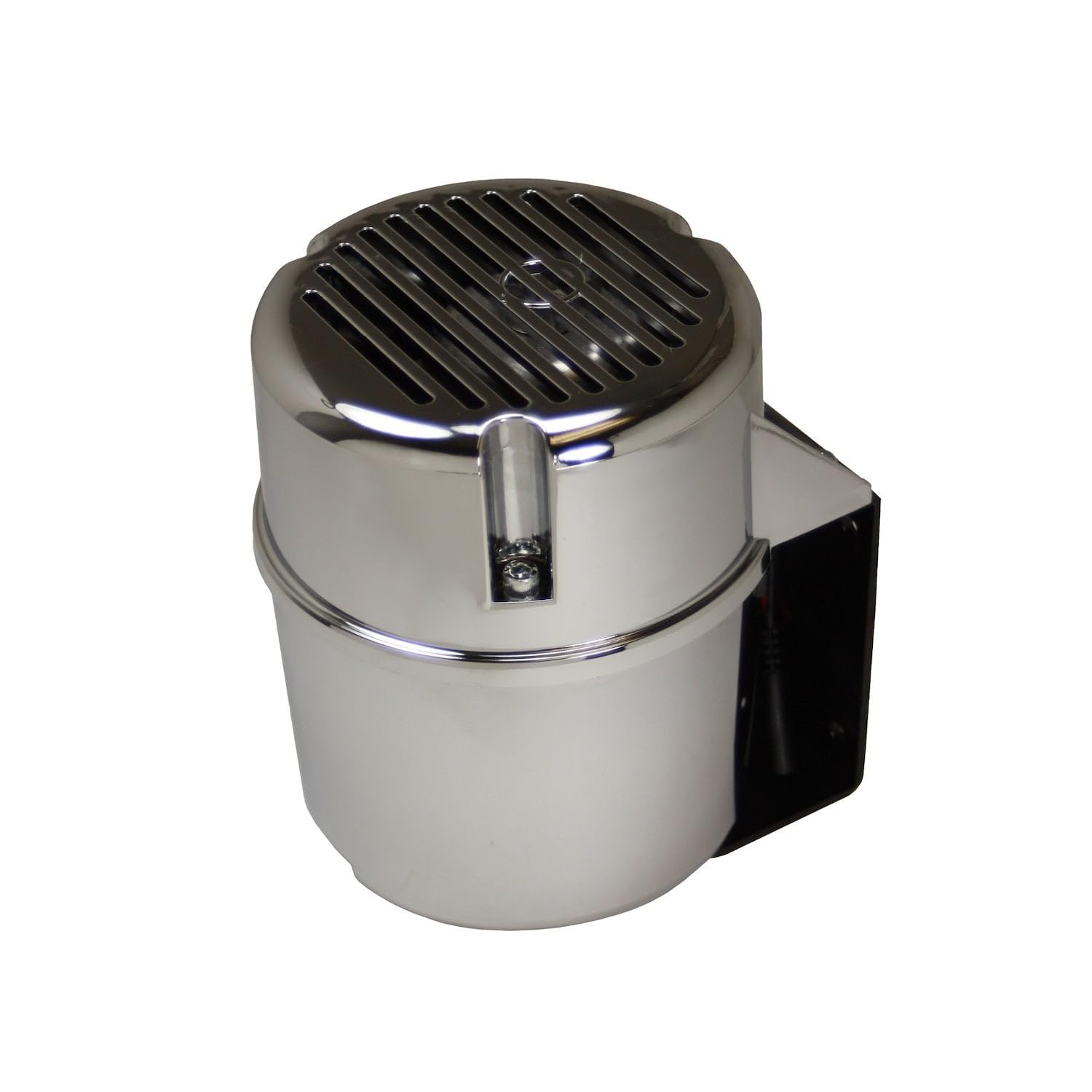
The same exceptional quiet of the Black Bandit, wrapped in chrome for the show crowd.
This is the twin of the Best Overall pick in a chrome housing. The reed pump itself is identical — 60% quieter than piston-style pumps, pre-wired, tested on the assembly line. Owners with high-horsepower LS engines (550 hp, 10″ of idle vacuum) report it restored a firm brake pedal and is “extremely quiet.” The extra cost buys you the chrome finish, which matters if your pump is visible at a car show or in an open engine bay.
The trade-off is the same as the Black Bandit: size and weight. At 10.3 pounds, the Chrome Bandit is a beast. Owners say it is “big and heavy” but add they would buy it again. The most-discussed aspect is Noise level (10 Positive mentions) — confirming that quiet operation is the defining feature of the Leed Brakes line. If you are not building a show car and the pump sits under a fender, save the money and grab the Black Bandit.
The shine factor
- Chrome finish that stands out under the hood
- Extremely quiet reed pump — produces 22″+ inHg
- Pre-wired and tested; easy hook-up
The honest weight
- 10.3 pounds is heavy; needs a sturdy mounting location
- Big physical footprint (11.8 x 7.9 x 9.8 inches)
- Higher cost than the black version for only cosmetic difference
Best for: A show-quality build where the pump is on display and quiet operation is non-negotiable.
pass on it if: The pump will be hidden away — the Black Bandit delivers the exact same performance for less.
5. HELLA 009428081 12V Universal Brake Boost Vacuum Pump
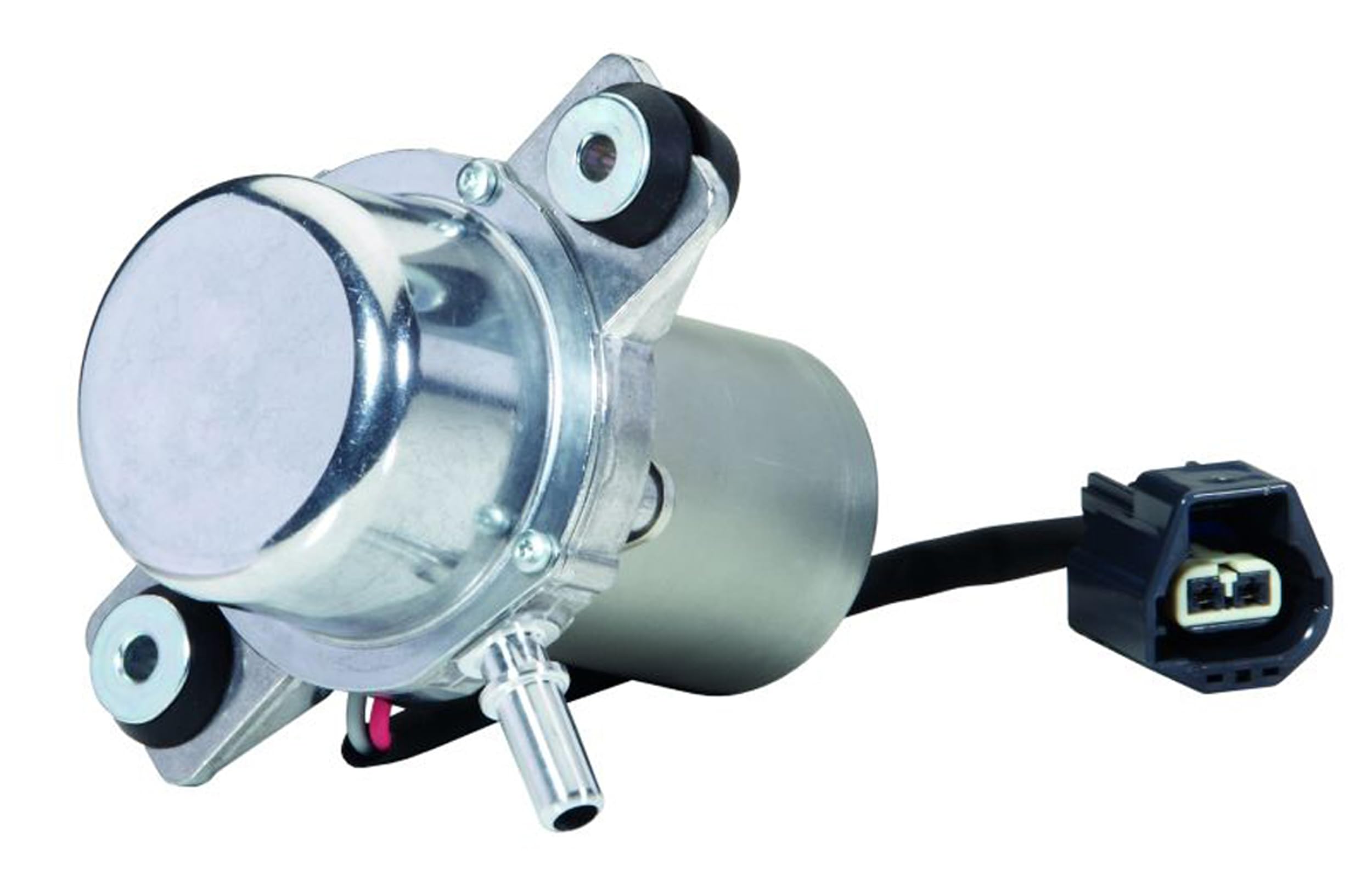
A featherweight 16-ounce pump from an OE giant that pulls 25″ without effort.
HELLA is the original equipment manufacturer for many European cars, and this pump is the same unit that goes under Volvo C30, C70, S40, S60, S80, V40, V50, V70, XC70, and XC90 models. At only 16 ounces (1 pound), it is dramatically lighter than every other pump on this list — compare it to the Leed Brakes units that weigh over 10 pounds. Buyers report it “pulled down to 25″ without effort.” The consensus is that it is a reliable, quality piece that provides good value for the money.
Now for the honesty: this pump is “simple on-off” and does not include any internal switch. You must provide your own on-off control (a vacuum switch). It is also not designed for continuous duty — it runs on demand. And while some owners find it “relatively quiet,” others say it can be “a little noisy” depending on mounting. The price puts it in the premium tier, but you still need to add a switch, relay, and hoses. For a Volvo owner needing a direct replacement, it is perfect. For a hot-rodder, it is a great foundation but not a complete kit.
Light and proven: Reliability (14) and Quality (7) are both top Positive aspects — this is a pump you buy once and trust. But remember: the noise level is Mixed across reviews, so mount it with care.
Reach for it if: You own a Volvo that matches the fitment list or you want a lightweight, OE-quality pump for a custom build and you are comfortable wiring your own control system.
Think twice if: You want a complete plug-and-play solution with a switch and wiring in the box — this is a bare pump that requires additional parts.
6. Dracarys 28146 Electric Vacuum Pump Kit
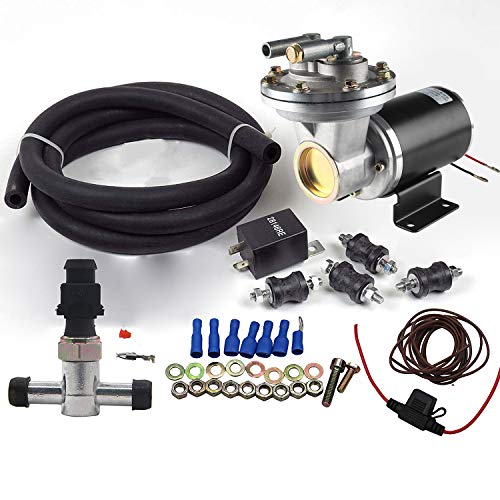
A complete kit that fixes a big-cam hard pedal — if the vacuum switch plays along.
The Dracarys kit covers everything: pump, relay switch, distributor (vacuum switch), and an outlet muffler to keep noise down. For a 1970 Dodge Charger with a built 440, it restored power brakes that had been killed by a big cam. The owner called it “a lot quieter than another brand.” That is the happy path. The less happy path shows up in the aspect data: Reliability (23 mentions) and Quality (11) are both Mixed. The switch is the weak link — some owners find it cuts in at only 6″ inHg, which is insufficient for a brake booster, and the pump itself can vibrate badly.
The consensus is that when it works, it works well. But the price for that reliability is sweating the switch. If you are good at diagnosing a vacuum switch and replacing a sensor, you can make this kit sing. If you want to bolt it on and forget it, the switch lottery might frustrate you.
What works
- Complete kit with muffler — less noise than older piston pumps
- Installation is straightforward, per owner reports
- Budget-friendly price for a full system
The switch concern
- Vacuum switch can be unreliable (cuts at 6″ inHg or varies 8-12″)
- Vibration is a real issue for some mountings
- Reliability is the most-discussed but Mixed aspect
Best for: A budget-conscious builder with a big-cam classic car who can troubleshoot a faulty vacuum switch and replace it if needed.
it’s not for you if: You need absolute reliability from the box — this kit has a higher defect rate on the switch than the premium options.
7. maXpeedingrods 28146 12V Electric Vacuum Pump Kit (DU76)

A self-adjusting switch cycles the pump between 18″ and 22″, but the noise is a dealbreaker for some.
The maXpeedingrods kit features a self-adjusting inline vacuum switch — meaning it should turn the pump on at 18″ inHg and off at 22″ inHg without you touching a thing. The maker recommends it for cars with 15″ of vacuum or less at idle. The most-discussed aspect is Functionality (11 Positive mentions), and some owners say it is well worth the money: “Works exactly as advertised. Great brakes. Easy hook up.”
The flip side is the noise level. The Negative tag on this aspect (5 mentions) tells a consistent story: owners describe the pump as “very noisy” and “so loud” that one owner joked it could be used “to vibrate concrete in forms.” The pump is clearly a piston style, and it does not hide it. If you have a loud exhaust, you might not mind. If you value a quiet cabin, this one will annoy you. Also, one owner reported a failed relay after 5 months (the maker sent a replacement for the shipping fee), so backup support exists but is not instant.
Budget power, audible presence: The pump delivers the vacuum it promises, but the consensus on the noise is real — buy it knowing it will be heard.
Best for: A project truck or loud muscle car where engine noise already drowns everything out, and you want a working pump on a moderate budget.
Think twice if: You plan to mount the pump near the cabin or under the hood of a daily driver — the noise and vibration will wear on you.
8. AULINK 904-858 Brake Vacuum Pump for Ford Ecoboost

A direct-fit drop-in for Ford 3.5L Ecoboost engines that costs a fraction of the dealer part.
This pump is not for hot-rodders — it is for anyone with a 2013-2018 Ford F-150, 2015-2017 Expedition, 2015-2022 Transit, or 2015-2017 Lincoln Navigator who needs a working brake pump and does not want to pay the dealer. The AULINK pump replaces OEM part numbers 904-858, DL3Z2A451A, and BRPV23, and is manufactured in TS16949-certified facilities. Every unit is 100% function and leakage tested before shipping.
A former Ford technician installed one on a 2014 F150 Ecoboost with 200,000 miles and reported that after 300 miles, it still held vacuum with no leaks. The owner noted you can buy 10 of these for the price of one genuine Ford part. The honest trade-off from some owners is that the O-ring on the oil tube is a bit thin and can pull out easily, and one buyer with a 2013 F150 found the center pin head diameter slightly too large, leading to a premature leak. Fitment is generally good, but check the forum for your exact model year before pulling the trigger.
Why owners buy it
- Direct OE fit — “same as stock” per owners
- 90% cheaper than a dealer pump
- 100% tested before shipping
The real-world gotcha
- Oil tube O-ring can be weak — handle it gently during install
- Very occasional fitment issue on early 2013 models
- No sealant included, though many owners wish it were
Best for: An Ecoboost owner tired of spending hundreds at the dealership for a part that costs this much.
look elsewhere if: You need a universal big-cam fix — this is strictly for the Ford 3.5L engine family.
9. UVYMZY Vacuum Pump 904-214 for Ford Super Duty & Dodge
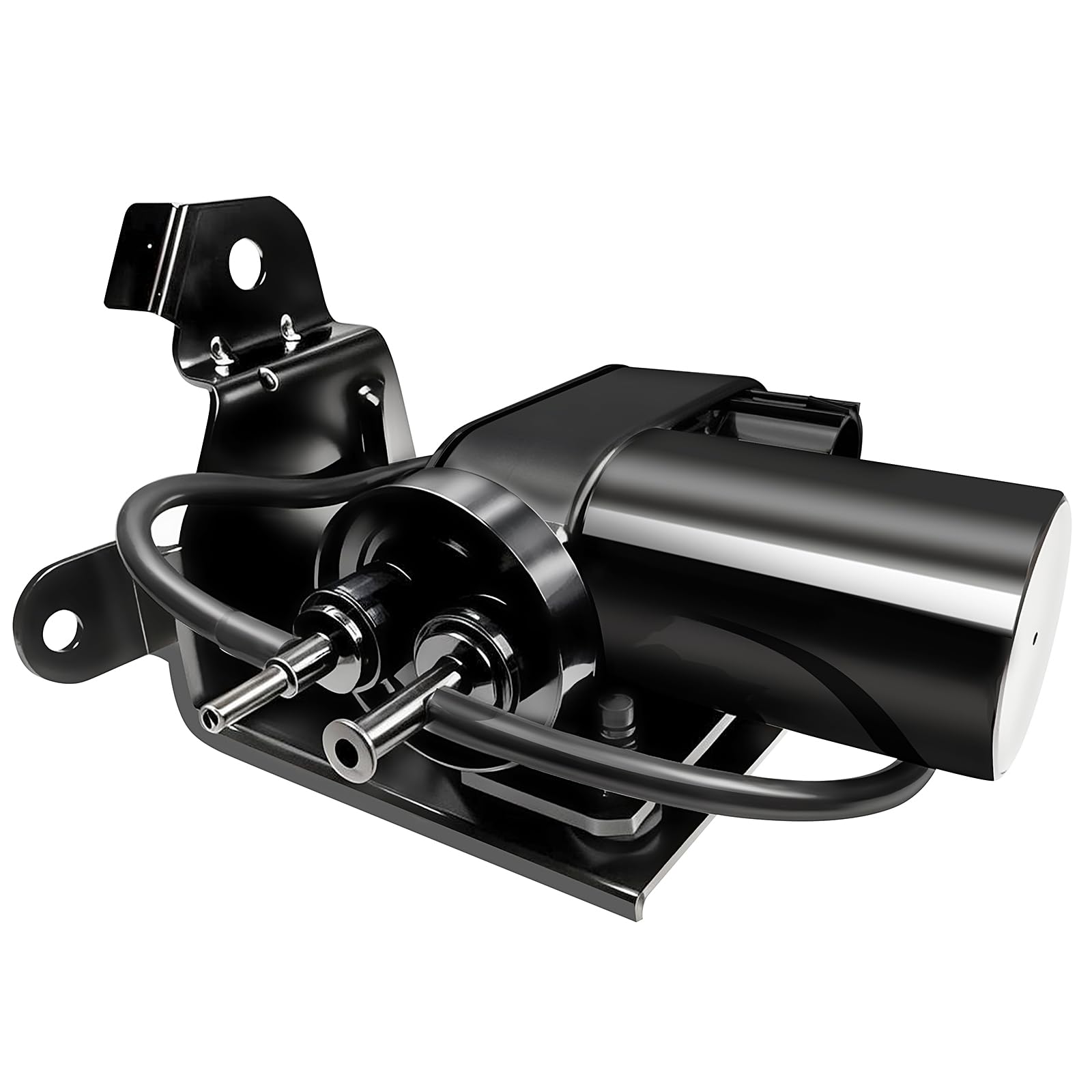
A budget-friendly plastic-body pump for Ford Super Duty diesel trucks — but durability is a gamble.
This pump is designed for the 1999-2010 Ford F-250/F-350/F-450 Super Duty and 1999-2007 Dodge Ram 2500/3500 diesel trucks. It replaces a raft of OEM numbers (6C3Z2A451A, 904-214, 4C3Z2A451BA, etc.) and also powers the AC and 4WD hubs on those trucks. The maker touts a 1-year warranty and says they meet or exceed OEM standards. Some owners love it: “It worked right away,” one said after installing on an F350, calling it a perfect fit.
The flip side is stark. The most-discussed aspect is Reliability (12), which is Positive, but Quality (7) is Mixed. The most honest signal is in the reviews: one owner reported the pump “only lasted 2 months,” and another called it “complete junk” that lasted just past the warranty period. These are minority voices, but they are loud. This is a budget option where you are trading long-term certainty for short-term savings. If your truck is a secondary vehicle or a project, it might be fine. If it is your daily driver, the premium on the GM Genuine or a known brand is probably worth it.
Cheap insurance or quick fix? The price tag is tempting for an aging Super Duty, but the Mixed Quality rating means some units fail early. Buy it knowing it may be a temporary fix rather than a 10-year solution.
Best for: A farm truck or secondary diesel that needs a working pump now and you are comfortable replacing it in a year if necessary.
Think twice if: You need a pump you can install and forget for years — the failure rate on this budget unit is higher than the premium options.
Understanding the Specs
Inches of Mercury (inHg)
This is the unit used to measure vacuum — how much air the pump can pull out of the brake booster line. A typical brake booster needs at least 18″ inHg to give you a firm pedal. Some engines produce this naturally at idle; big cams and blowers do not. A pump that delivers 22″ to 25″ inHg gives you a solid margin. If the pump spec says “18” to 22″,” that means it cycles on at 18″ and off at 22″, keeping your booster in the safe zone.
Reed Pump vs Rotary Vane vs Piston
The reed pump uses flexible reed valves and has essentially zero moving contact inside the head — it is extremely quiet, as the Leed Brakes units prove. A rotary vane pump spins a slotted rotor with vanes that slide outward to trap and move air; it is also quiet and is used by TMaster and Hella. The piston pump works like a tiny engine cylinder — it is the cheapest and most common design, but it is noisy and vibrates. If cabin comfort matters, avoid piston pumps.
FAQ
What vacuum level does my brake booster need?
Can I use a vacuum pump from a different engine family on my car?
How do I know if a vacuum pump is quiet enough for my build?
Do I need a vacuum switch and relay, or does the pump come with them?
How long does an electric vacuum pump last?
Can I install a vacuum pump on a modern Ford F-150 Ecoboost?
What is the difference between a universal vacuum pump kit and an OEM-specific pump?
Why does my pump cycle on and off every few seconds?
Final Thoughts: The Verdict
If you want one dependable pick, the electric vacuum pump for brakes winner is the Leed Brakes Black Bandit (VP001B) because it delivers a proven 25″ of vacuum from an ultra-quiet reed pump that owners trust on everything from a 1974 Monte Carlo to a 440 Chrysler. If you want a true plug-and-play kit with a pre-set switch, grab the TMaster 28146 Pro. And for a direct factory replacement on a Ford Ecoboost or a GM vehicle, the AULINK 904-858 and GM Genuine 20804130 are the ones to reach for.
How We Picked
We do not accept paid placement. Every pick is matched to a real buyer and a real use-case; we do not hands-on test units.
Sources & Methodology
Specifications: manufacturer listings and product documentation. Review insights: verified customer reviews, as of July 2026. Pricing: not shown on this page (it changes often); check the current price via the retailer link.
As an Amazon Associate, WellFizz earns from qualifying purchases. This does not affect which products we feature.
Related Guides

Mo Maruf
I created WellFizz to bridge the gap between vague wellness advice and actionable solutions. My mission is simple: to decode the research and give you practical tools you can actually use.
Beyond the data, I am a passionate traveler. I believe that stepping away from the screen to explore new environments is essential for mental clarity and physical vitality.