Our readers keep the lights on and my smoothie glass nicely filled. As an Amazon Associate, I earn from qualifying purchases.
Specs are compiled from manufacturer listings and verified buyer reviews and can change over time — please confirm the key details on the product page before buying.
Sticking a pair of oversized earbuds under a helmet is a recipe for crushed ears, lost sound, and annoyance every time you pull the lid on. You need something that disappears into the helmet’s padding, delivers crisp audio over wind noise, and survives a few hours of sweat or rain. That is a narrow brief, and most Bluetooth audio gear fails it.
I’m Mohammad Maruf — the founder and writer behind WellFizz. This guide is built by comparing the manufacturers’ published specifications and the patterns across verified customer reviews, so you get each pick’s real strengths and trade-offs instead of marketing spin.
The right earbuds fit flush, stay put, and cut through the roar of the road or trail. These picks are the best earbuds for helmet use, balancing low-profile design, battery stamina, and the kind of real-world performance that owners actually vouch for.
Our Picks at a Glance

How To Choose The Best Earbuds For Helmet
Fitting a speaker or earbud into a helmet is a game of millimeters. The wrong choice means painful pressure points or audio that is too quiet to hear at speed. Here is what you need to check before you buy.
Profile Thickness vs. Ear Pocket Depth
The single biggest factor is how thick the speaker or earbud is. Standard earbuds stick out and press against the helmet’s hard shell. Look for a speaker depth of around 0.35 inches or less, or a completely flush in-ear design that sits inside your ear canal without protruding. Check your helmet’s ear pockets — some are deep, others only have shallow padding.
Battery Life That Matches Your Day
A quick 30-minute commute needs less stamina than a full day of skiing or touring. Many helmet speakers claim 80 to 90 hours of playback, but that is often at low volume. Real-world use at higher volume cuts that down significantly. Look for at least 6–10 hours of real listening time if you plan to ride all day without recharging.
Water and Dust Resistance
You will sweat, ride in light rain, or hit a snowy slope. An IPX5 rating (resists water jets and sweat) handles sweat and splashes. An IP67 rating (found on a couple of picks here) means the speaker can survive a full submersion in shallow water — overkill for most, but great confidence for all-weather riders.
Controls You Can Use With Gloves
Fumbling with tiny touch controls while wearing thick winter gloves is frustrating and unsafe. Look for large, raised physical buttons or a remote control that you can operate without removing your hand from the handlebars or ski poles.
Quick Comparison
| Model | Best For | Profile / Type | Battery Life | Water Rating | Amazon |
|---|---|---|---|---|---|
| Origem SnowTune★ Best Overall | Drop-In Simplicity | TWS Drop-In Pads | 40 Hours Total | — | Amazon |
| JESIMAIK R18 LiteAlso Great | Communication & Sound Quality | 7mm Ultra-Thin Speakers | 30 Hours Music | IP67 | Amazon |
| JZAQ BT40Long Haul Champion | Ultra-Long Playtime | 0.35in Ultra-Thin Speakers | 90 Hours Talk | IP67 | Amazon |
| JZAQ Sports Headset | Long Range & Value | 0.35in Ultra-Thin Speakers | 60 Hours | IPX7 | Amazon |
| Doohoeek T10 | Ski Helmet Convenience | Ultra-Slim Speaker Pads | 50 Hours Total | IPX5 | Amazon |
| eleror Z1 | Tiny Ears & Sleep | 2.3g Semi-In-Ear | 6 Hours | IPX5 | Amazon |
| OBEST TWS Headset | True Wireless Convenience | TWS Earphones + Remote | 5.5 Hours Talk | — | Amazon |
| Artevive Moto Earbuds | Low-Profile In-Ear Comfort | In-Ear Silicone | 6 Hours | — | Amazon |
In‑Depth Reviews
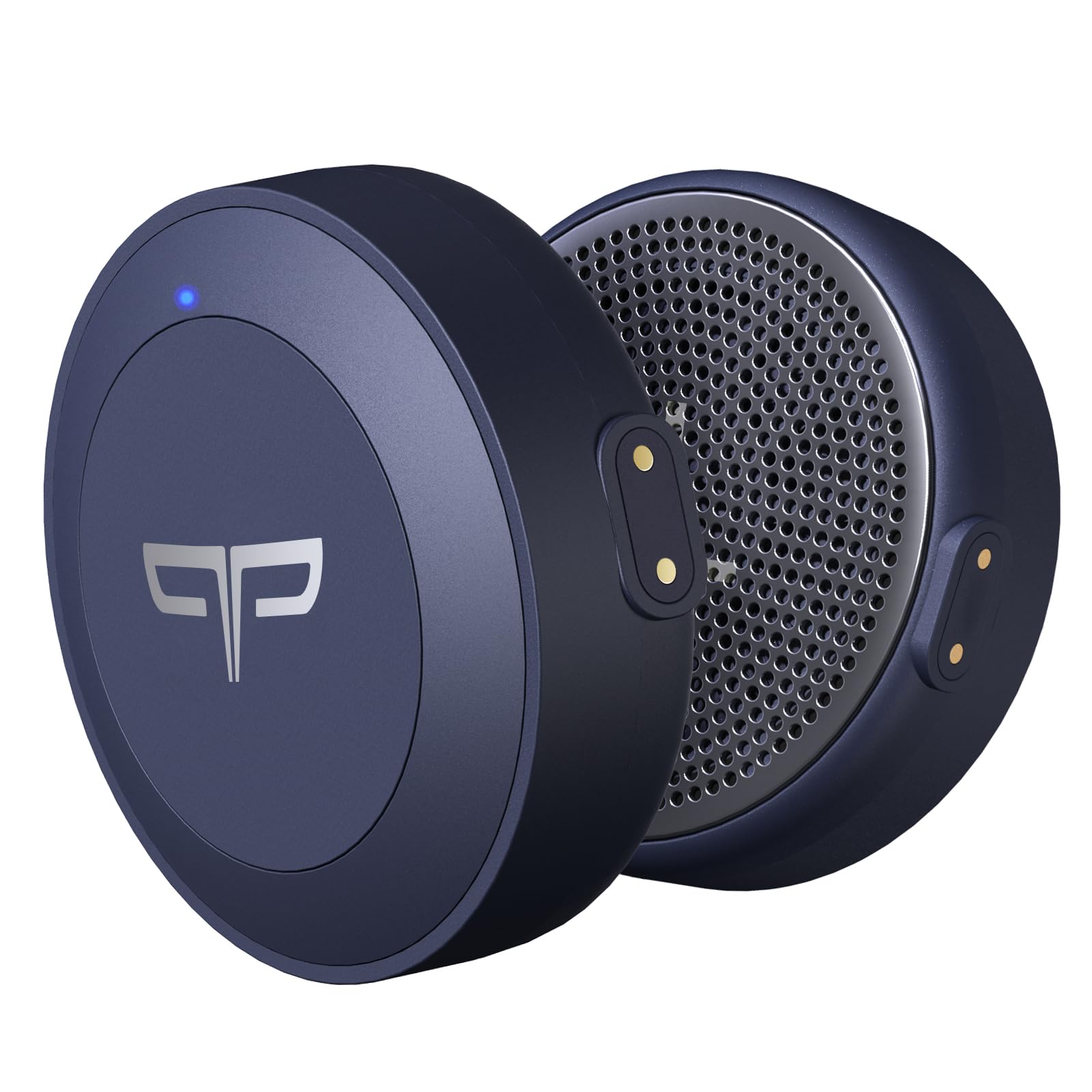
1. Origem SnowTune Ski Helmet Speakers
Our pick — over 4★ from 100+ verified ratings; the strongest balance of quality and price.
True wireless earbuds that drop into your helmet like a pair of AirPods for the slopes.
Instead of velcro-on speaker pads, these are true wireless stereo (TWS) earphones that sit in the helmet’s ear pockets. The charging case provides a total of 40 hours of operation (10 hours per charge for the buds themselves plus case recharges). Buyers report “multiple full days without having to recharge,” making this a strong choice for extended ski trips.
The sound quality earns high marks for the price — feedback describes the sound as “good volume” and “great value.” The buttons are easy to operate with bulky gloves, a major plus on cold mountains. However, there is no built-in volume control on the earbuds themselves; you have to pull out your phone to adjust loudness. And for some specific helmets (like the Sedici Strada 3 medium), the speakers are “slightly too large” and can slip out of the ear pockets. The mic is also muffled for phone calls, so use this primarily for music.
At 1.23 ounces, they are featherlight. The battery is excellent, but the fit is not universal — check your helmet’s ear pocket depth before buying.
Why It Works
- True wireless design means no wires to route or hide inside the helmet.
- 10 hours per charge plus the case means multiple full days of skiing.
- Large buttons work well with thick winter gloves on.
The Fit Issue
- No on-bud volume control — you must dig out your phone to adjust levels.
- May be too large for shallow or smaller helmet ear pockets; check dimensions first.
Pick these if: you want the convenience of TWS earbuds in your helmet for multi-day trips and have deep ear pockets.
Skip them if: you need on-bud volume controls or have a helmet with very tight/shallow ear spaces.
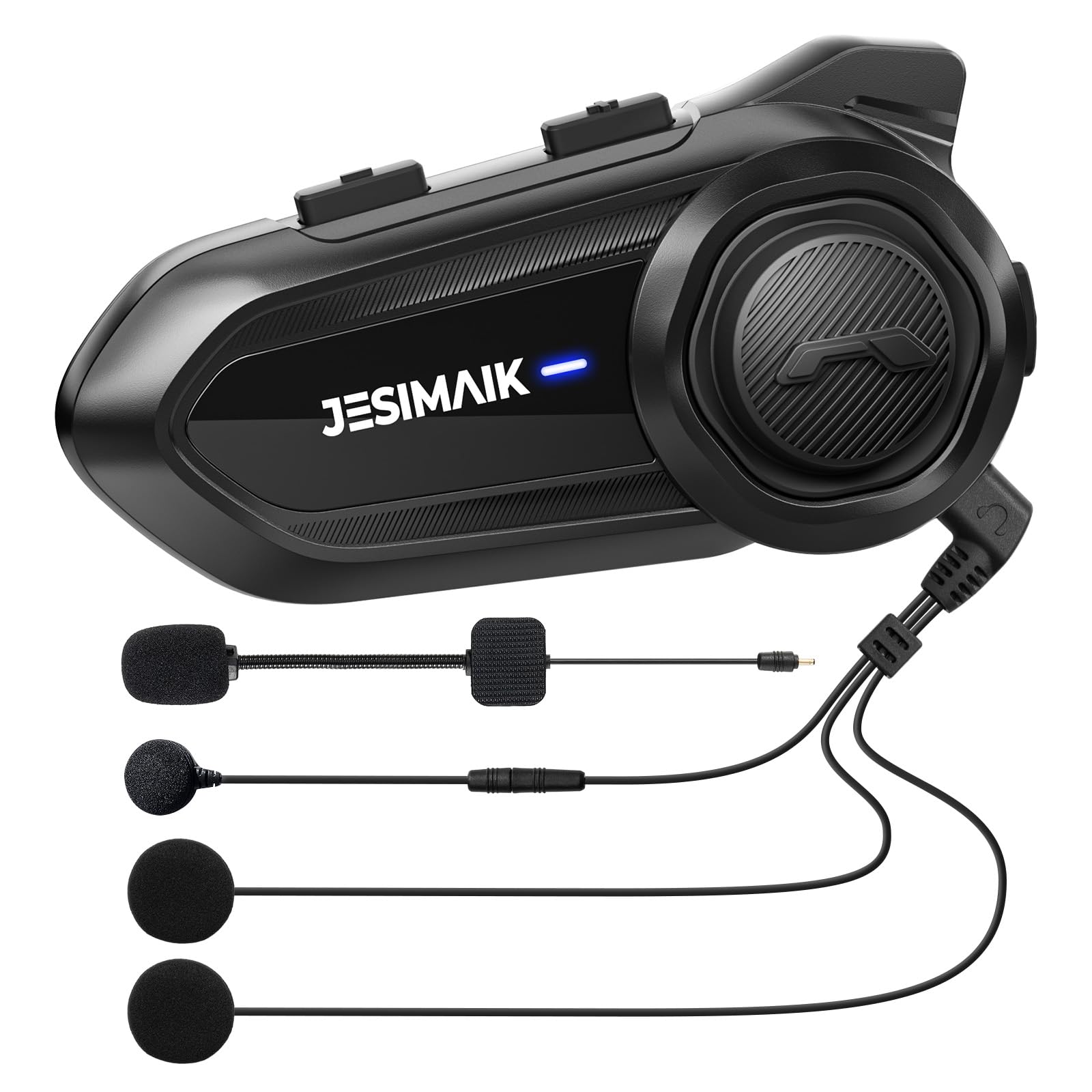
2. JESIMAIK R18 Lite Motorcycle Bluetooth Headset
The rider’s communicator that doubles as a serious audio upgrade under the helmet.
You do not just get speakers here — you get a full communication system. The JESIMAIK R18 Lite uses a Qualcomm Bluetooth 5.1 chip (the wireless standard that keeps a stable connection) for a stable connection and pairs with up to 6 devices for group riding. The 7mm ultra-thin speakers use a 40mm dynamic driver (the part that moves air to create sound), delivering balanced sound with deep bass and smooth treble. Compared to the JZAQ models that use smaller 0.35-inch pads, the 40mm driver here produces a noticeably fuller, more rich sound for music and calls.
The battery averages 30 hours of music playback on a single charge, and the USB-C fast charging refills it in 1.5 hours. The IP67 waterproof rating means you can ride through heavy rain without a second thought, and the noise cancellation (using ENC2.0, DSP, and CVC8.0) cuts wind roar so you hear the music clearly, not the gale.
One trade-off is that sound clarity drops at highway speeds — the wind still wins eventually. But for the value, the loud, clear audio and easy connection make this the top pick for riders who want great sound plus real intercom features.
Why It Carries The Day
- 40mm dynamic drivers produce much better bass and detail than typical 0.35-inch helmet speakers.
- 2-way intercom with a 1500m range is rare at this price — great for riding in pairs.
- 5-layer noise cancellation, including CVC8.0, keeps wind and engine roar from overwhelming your audio.
The Real-World Catch
- Sound volume still drops at higher speeds, as wind noise dominates.
- Intercom and music cannot run simultaneously — you pick one at a time.
Your best bet if: you want a full-featured system with great audio quality, intercom, and weatherproofing for group or solo rides.
Think twice if: you need speakers that stay crisp at 70+ mph, or you only want bare-bones music.
3. JZAQ BT40 Motorcycle Helmet Bluetooth Headset
The marathon-runner that just keeps playing, ride after ride.
At 0.35 inches thick, these speakers are designed to slide into your helmet’s ear pockets without creating painful pressure points. The built-in 600mAh battery is rated for 90 hours of talk time or playback, blowing past most competitors. By comparison, the JESIMAIK above manages 30 hours of music — while the BT40 gives you 90 hours of talk time, making it the option for multi-day trips where charging is scarce.
The Bluetooth 5.0 connection has a range of 10 meters (about 33 feet). The JZAQ Sports Headset below has a range of 20 meters. But for most riders, keeping the phone in a jacket pocket or tank bag is well within that bubble. The IP67 deep waterproof technology handles rain and snow without worry, and the DSP noise cancelling keeps the audio clear despite wind.
Owners consistently praise the sound quality as excellent for the price, calling it a “great product for personal use” and a solid value at this entry-level cost. The catch? The Bluetooth range is just 10 meters — half that of the Sports Headset — so your phone needs to stay close.
Stamina pick: If you ride all weekend without stopping, the 90-hour battery is the difference between charging mid-trip and never thinking about it.
Reach for this if: battery longevity is your top priority and you ride with your phone within arm’s reach.
Look elsewhere if: you need longer 20-meter Bluetooth range for a phone mounted far away on the bars.
4. JZAQ Motorcycle Helmet Bluetooth 5.0 Sports Headset

The thin, cheap speaker that delivers more than its price tag suggests.
At just 0.35 inches thick, this pair fits into almost any helmet without digging into your ears. The 600mAh battery delivers 60 hours of playback. The Bluetooth 5.0 connection stretches up to 20 meters, while the BT40’s range is 10 meters, giving you more freedom to keep your phone in a backpack or handlebar mount. The IPX7 waterproof rating (Nano coating) protects against rain and snow immersion, so a sudden downpour won’t kill your ride music.
The most-discussed feature is value for money — buyers consistently say the sound quality is good for non-audiophiles, with a clear stereo output. The DSP noise cancelling helps cut wind noise, though owners note it works mainly for calls. Bass is present but not deep, and the microphone sticks out in a way that can interfere with helmet cutouts. The micro-USB charging port is an outdated annoyance (the BT40 uses a newer connector, but the Sports Headset is cheaper).
If you accept that the mic placement is tricky and bass isn’t punchy, this is the best pure price-to-performance helmet speaker on the list.
What Makes It A Steal
- 20-meter Bluetooth range — double the BT40 — so your phone stays connected from farther away.
- IPX7 waterproof rating means it survives a full dunking, not just splashes.
- 60-hour playback from a 600mAh battery covers a week of daily commuting.
The Honest Gripes
- Micro-USB charging is outdated and slower than USB-C.
- The fixed microphone tab can interfere with helmet ear-pocket placement.
Grab it when: you want the best bang for your buck, need long Bluetooth range, and can live with micro-USB.
skip it if: you need a flush mic placement or strong bass for music.
5. Doohoeek 2025 T10 Ski Helmet Speaker
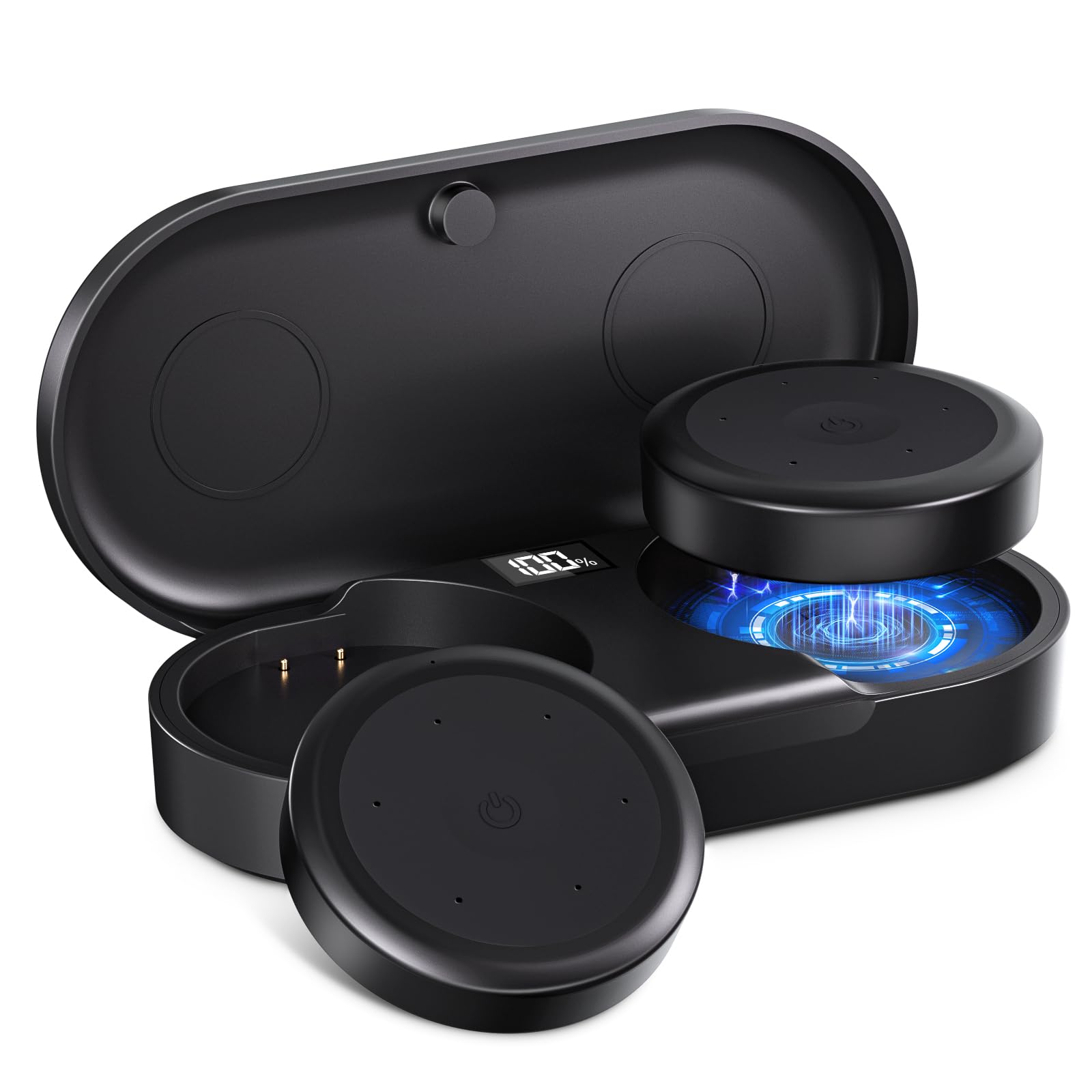
A modern ski companion with a charging case that tells you exactly what you have left.
This is the only dedicated ski/snowboard helmet speaker here, and it shows. The ultra-slim speaker pads fit into most audio-ready helmets without adding bulk, and the Bluetooth 5.3 connection is faster and more stable than the 5.0 versions found on the JZAQ models. The charging case has a built-in LED display so you know the exact battery level — a small detail that owners find genuinely useful. Total battery life hits 50 hours (case + speakers), though the speakers themselves last for a full day of skiing without recharging.
The IPX5 water-resistant rating handles snow and splashes, but is not for submersion — less rugged than the IPX7 or IP67 found on the JZAQ picks, but fine for the slopes. Sound quality earns mixed feedback; highs and mids are clear, but the bass is thin and muddy. You also need to turn the volume near maximum to hear it clearly over wind.
The glove-friendly button is large enough to operate with thick mittens, though some owners find the controls (double-press, triple-press) unintuitive. One rider noted “not loud enough to even drown out a TV,” so expect to crank it. For the price, it matches the experience of much more expensive competition.
Slope-ready design: The ultra-slim pads and dedicated charging case with battery display make this the most polished option for skiers and snowboarders.
Best for: skiers who want a drop-in solution with a visible battery gauge and modern Bluetooth.
Not for: riders who need thumping bass or maximum volume to overpower a loud motorcycle engine.
6. eleror Z1 Ultra-Small Wireless Earbuds
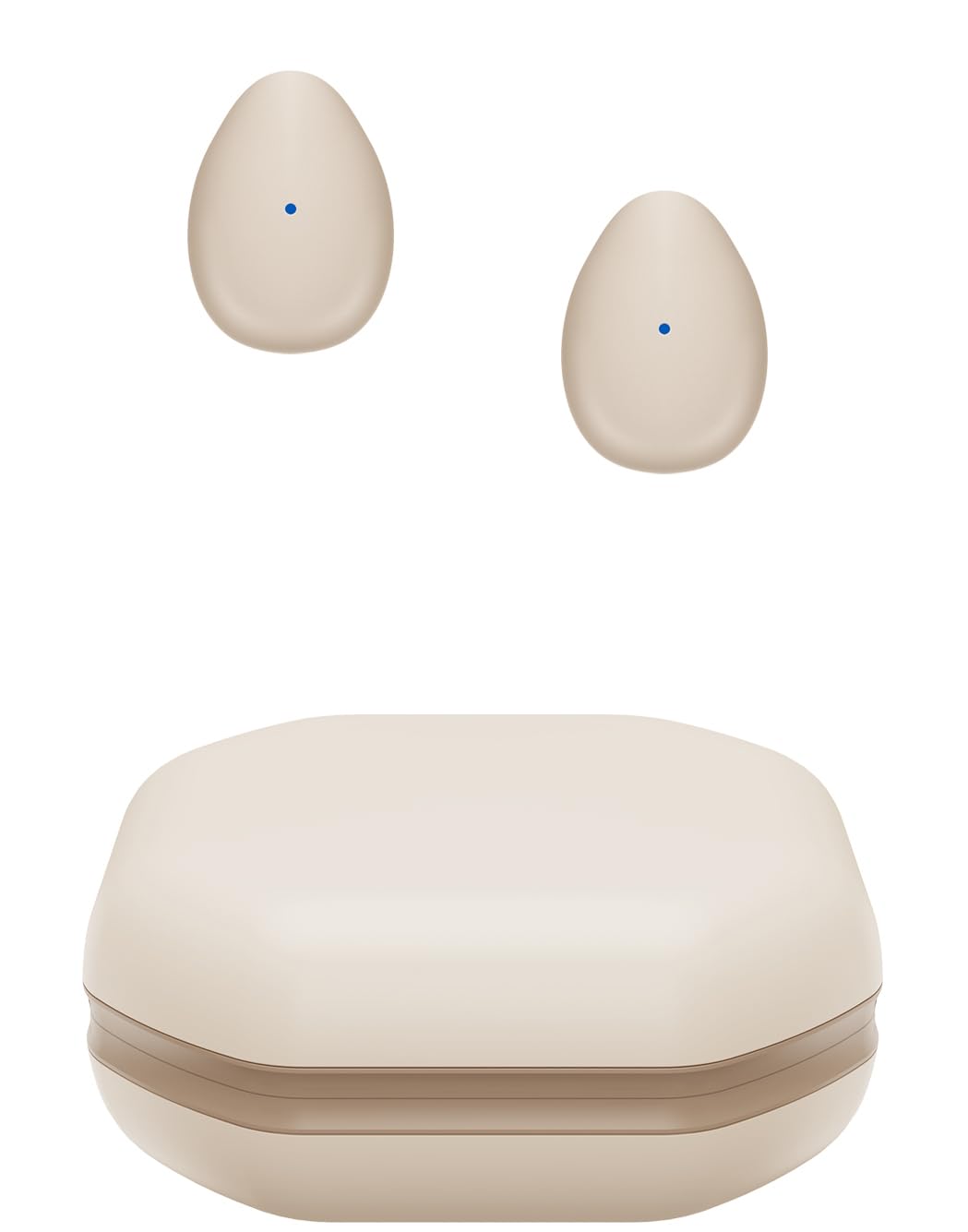
The featherlight bud that vanishes inside your ear and under your helmet.
Weighing just 2.3 grams each, these are the smallest semi-in-ear earbuds on the list. They have a flush, no-stem design that sits completely inside your ear, so there is nothing protruding to push against the helmet padding. This makes them ideal for cycling, skating, or any helmeted activity where pressure points cause pain. The build is described as the “world’s smallest semi-in-ear earbuds” and owners confirm they hide well — they’ve worn them for a month at work without anyone noticing.
The sound quality focuses on clarity and balance rather than heavy bass. The semi-open design lets ambient sound in, keeping you aware of traffic and surroundings — safer for street cycling. But the battery life is a serious weakness. At just 6 hours per charge, and with a case that holds only 15 extra hours, this is not for all-day rides. Owners also report reliability issues, with some earbuds dying after a month, and frequent Bluetooth disconnects. One review notes “the battery under 2 hours” in practice, which is far short of the spec.
The IPX5 sweat resistance is fine for sweaty workouts, but the trade-off for the tiny size is low stamina and mixed durability. This is a comfort-first pick for short commutes, not endurance trips.
Best for short trips: The 2.3g weight and no-stem design are perfect for 30-minute commutes or gym sessions, but the 6-hour battery and reliability concerns rule out long rides.
Choose this when: you need earbuds that are virtually invisible under a helmet and you ride short distances only.
Avoid it if: you need all-day battery or consistent daily performance without risk of failure.
7. OBEST Motorcycle Helmet Bluetooth Headset

True wireless earbuds with a remote control so you keep your hands on the bars.
Unlike the wired speaker pads used by most helmet headsets, the OBEST uses true wireless earbuds (TWS) that you place independently inside the helmet. The 1900mAh charging case gives you multiple recharges, though each earbud only lasts 5.5 hours of talk time. The wireless remote control is a standout feature — you clip it to your handlebars or jacket, so you can adjust volume and skip tracks without fumbling for a phone.
The Bluetooth 5.3 chip (the latest wireless standard for fast pairing and stable signal) delivers fast pairing and a stable signal, and the ANC (active noise cancellation) noise reduction technology minimizes wind noise for clear calls. Sound quality, however, is the most divisive element. While some owners call it “clear” and “good up to 65 mph,” others say it is “not loud enough for freeway” and “has no bass.” At max volume, many find the audio too quiet to hear over highway wind inside a helmet. The 5.5-hour battery per charge also falls well short of the JZAQ models’ 80+ hours, and the Velcro adhesive can be weak, requiring replacement.
This is a true wireless convenience play — if you love the idea of dropping buds into place with a remote, it works. But the sound volume is a real limitation for fast or noisy riding.
what separates it
- True wireless earbuds with no wires to route — drop them into the helmet and go.
- Wireless remote control means safe, glove-friendly operation without touching the phone.
- 1900mAh charging case handles multiple recharges during a long trip.
The Volume Problem
- Max volume is often not loud enough to hear on the freeway, even inside a helmet.
- 5.5-hour battery per charge is low compared to 80-90 hour helmet speakers.
- Weak Velcro may need replacement for a secure fit.
Best for: riders on slower city streets who prioritize the convenience of TWS earbuds and a handlebar remote.
pass on it if: you ride at highway speeds and need loud, clear audio to compete with wind noise.
8. Artevive Low Profile Motorcycle Moto Earbuds
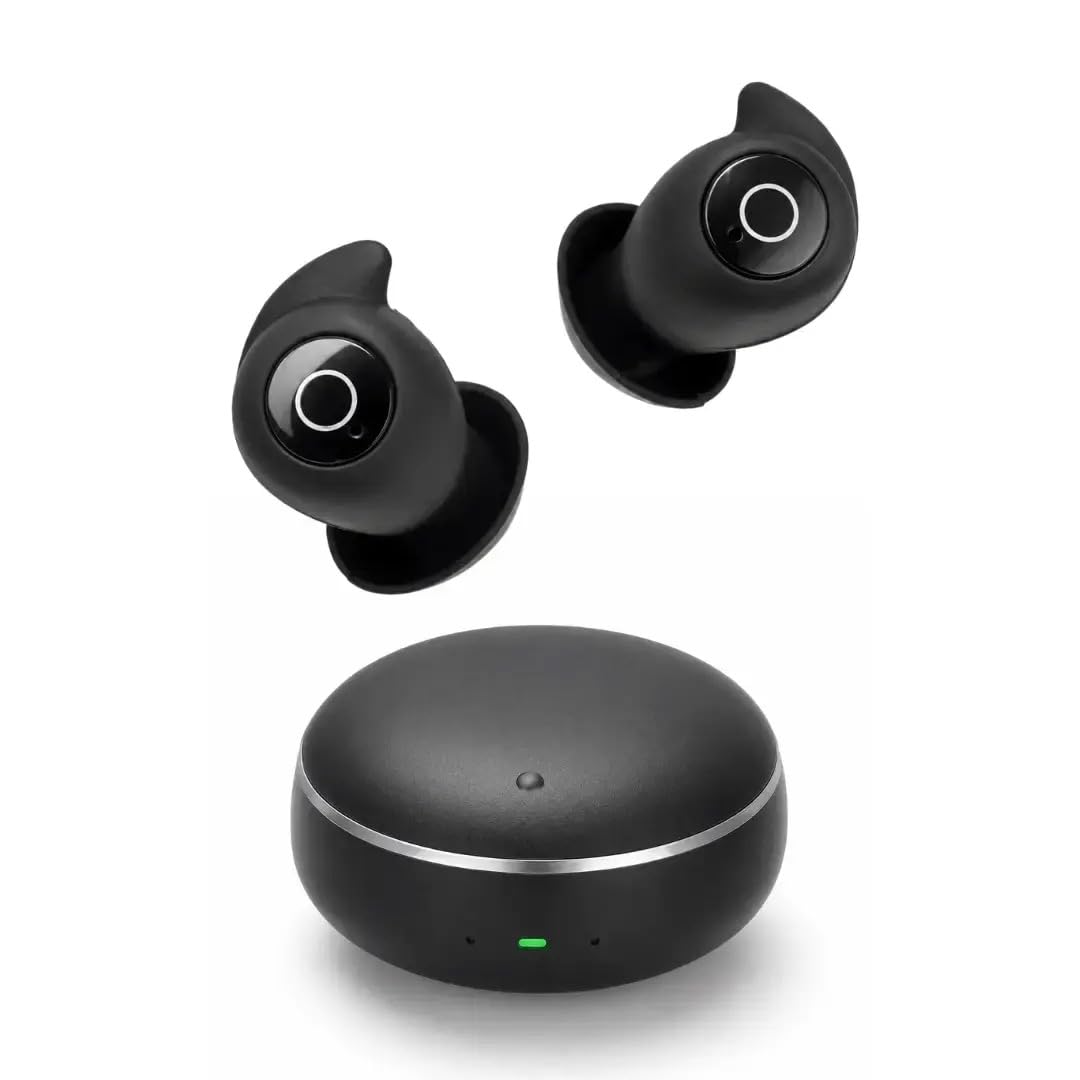
Silicone earbuds designed specifically to sit flush and stay put under a helmet.
These are not speaker pads — they are full in-ear earbuds with a low-profile silicone shell that sits completely inside your ear canal. The design eliminates the pressure points that make traditional earbuds painful under a helmet, and the flexible silicone adapts to your ear shape so they do not shift when you pull the helmet on. Two sizes of ear tips are included for a custom fit.
Bluetooth pairs instantly with your phone for music and GPS navigation, and the battery delivers up to 6 hours per charge with 2-3 full recharges from the case. The compact case is easy to pocket. The design reduces wind noise and allows you to still hear your bike’s engine for shifting, which some riders find safer than completely isolating earbuds. However, the sound quality is rated as mediocre — adequate for GPS and podcasts but not rich for critical music listening. Several owners mention that the volume is “extremely low” and even at maximum on an iPhone 15 Pro, it is “inaudible on a loud Harley.” One reviewer called it “overpriced at ” for the performance.
This is a comfort-first, quiet-ride product. If you ride a loud bike at speed, look for speakers with louder output.
Good for quiet rides: The comfort fit under a helmet is excellent, but the low volume output makes it a poor match for loud motorcycle engines or highway speeds.
Reach for these if: you ride a quiet bike or scooter at lower speeds and prioritize under-helmet comfort over loudness.
Leave them if: you ride a loud motorcycle, need muscle for highway music, or expect premium sound quality for the price.
Understanding the Specs
Speaker Thickness vs. Helmet Fit
The single most important measurement is the thickness of the speaker or earbud. A speaker that is 0.35 inches (about 9mm) thick is considered ultra-thin and fits most helmet ear pockets. Anything thicker risks pressing painfully against your ear or creating a bulge that makes the helmet feel tight. For in-ear earbuds, look for a profile that sits completely flush with your ear so nothing sticks out.
Waterproofing IP Ratings Explained
IPX5 (resists water jets and sweat) means the device resists water jets and sweat — enough for rain and active sports. IPX7 (survives submersion in up to 1 meter of water for 30 minutes) means it can survive being submerged in up to 1 meter of water for 30 minutes. IP67 (full dust protection plus submersion) adds full dust protection to that submersion capability. For helmet use, IPX5 is enough for most riders, but IP67 gives you total confidence in a downpour.
Bluetooth Range and Version
Bluetooth 5.0 offers a solid connection up to 10 meters (about 33 feet). Bluetooth 5.1, 5.2, and 5.3 improve stability, pairing speed, and power efficiency, but the actual range can vary. A longer range (20 meters as found on some models) means your phone stays connected even if it is in a backpack or handlebar mount, not just your pocket.
Battery Life Claims vs. Reality
Manufacturers often quote battery life at 50% volume in ideal conditions. Real life at max volume (which you need to hear over wind) cuts that figure by 30-50%. Pay attention to the battery capacity in mAh. A 600mAh battery typically delivers 80-90 hours of low-volume playback. A smaller 50-60mAh earbud battery delivers 5-6 hours. Always expect less than the label says.
FAQ
Will any earbuds fit under a motorcycle helmet?
How do I know if a helmet speaker is compatible with my helmet?
Are dedicated helmet speakers better than in-ear earbuds for riding?
How loud do helmet speakers need to be for highway riding?
Can I use these for skiing and snowboarding?
What is the difference between IPX5, IPX7, and IP67 waterproof ratings?
Why do some helmet earbuds have a remote control?
How long should the battery last for a full day of riding?
Will a helmet Bluetooth headset interfere with my phone’s GPS?
Final Thoughts: The Verdict
For the majority of shoppers, the earbuds for helmet winner is the JESIMAIK R18 Lite because it delivers the best combination of 40mm driver sound quality, 2-way intercom, and sturdy IP67 protection at a mid-range price. If you want marathon battery life that lasts through multiple days without charging, grab the JZAQ BT40. And for the best pure budget value with long 20-meter Bluetooth range (the wireless distance it stays connected), the JZAQ Sports Headset is the one to reach for.
How We Picked
We do not accept paid placement. Every pick is matched to a real buyer and a real use-case; we do not hands-on test units.
Sources & Methodology
Specifications: manufacturer listings and product documentation. Review insights: verified customer reviews, as of July 2026. Pricing: not shown on this page (it changes often); check the current price via the retailer link.
As an Amazon Associate, WellFizz earns from qualifying purchases. This does not affect which products we feature.
Related Guides

Mo Maruf
I created WellFizz to bridge the gap between vague wellness advice and actionable solutions. My mission is simple: to decode the research and give you practical tools you can actually use.
Beyond the data, I am a passionate traveler. I believe that stepping away from the screen to explore new environments is essential for mental clarity and physical vitality.