Our readers keep the lights on and my smoothie glass nicely filled. As an Amazon Associate, I earn from qualifying purchases.
Specs are compiled from manufacturer listings and verified buyer reviews and can change over time — please confirm the key details on the product page before buying.
You want earphones that actually sound amazing — the kind where you hear a guitar string vibrate, a breath between vocals, or a bass line that feels punchy and tight, not muddy. The problem is marketing noise: every listing promises “Hi-Fi” and “studio-grade,” but real audio quality depends on a few concrete specs that most buyers skip. This guide strips away the jargon and gives you the nine wired earphones that serious listeners and audiophiles actually use, ranked by real-world performance and what owners genuinely experience.
I’m Mohammad Maruf — the founder and writer behind WellFizz. This guide is built by comparing the manufacturers’ published specifications and the patterns across verified customer reviews, so you get each pick’s real strengths and trade-offs instead of marketing spin.
The single most important thing you can do is ignore the brand and focus on the driver configuration and tuning signature. These nine picks represent the cream of the crop for the earphones with best sound quality, from budget multi-driver monsters to refined single-driver classics — each one chosen because it genuinely delivers exceptional clarity, balance, and detail at its price point.
Our Picks at a Glance


How To Choose The Best Earphones With Best Sound Quality
Picking the right pair depends on understanding the type of driver inside the earpiece and how it’s tuned. You don’t need to be an engineer, but knowing the difference between a balanced armature and a dynamic driver — and if you want a neutral, bass-forward, or V-shaped sound signature — will save you from buying something that sounds thin or harsh no matter how expensive it is.
Driver Types: The Engine of the Sound
A dynamic driver (a single moving coil and diaphragm) typically delivers warmer, punchier bass and a smoother overall sound. Balanced armature drivers (a tiny electromagnetic armature that pivots at high speed) are smaller, more efficient, and excel at producing detailed highs and mids, which is why high-end earphones often use multiple balanced armature drivers — one for low frequencies, one for mids, one for highs. A hybrid configuration combines a dynamic driver for the low end with balanced armature drivers for mids and highs, aiming to get the best of both worlds: thumping bass with crisp, defined treble.
Tuning Signature: The Flavor Profile
You will hear terms like “neutral,” “V-shaped,” “balanced,” or “reference.” Neutral means the earphones try to reproduce the audio as flat and accurate as possible, without boosting any frequency range — great for studio monitoring and critical listening. V-shaped means the bass and treble are boosted relative to the mids, which sounds notable and lively for pop, EDM, and gaming, but can make vocals sound slightly pushed back. Balanced tuning aims for a natural, evenly weighted sound across the spectrum, which suits most listeners across all genres. Know which profile you prefer before you buy.
Build and Cable Quality
A detachable cable is a must at any serious price point — it means a broken wire does not kill the whole earphone, and you can upgrade to a better cable later. The connector type (most common is the 0.75mm or 0.78mm two-pin, sometimes MMCX) determines compatibility. The shell material matters too: metal and CNC-machined aluminum generally offer better durability and feel than cheaper resin, though 3D-printed resin shells can be very comfortable if the design is good. Check whether the cable is prone to tangling or transmits noise from rubbing against your shirt (called microphonics).
Quick Comparison
| Model | Best For | Driver Config | Impedance | Cable Type | Amazon |
|---|---|---|---|---|---|
| KZ AS10★ Best Overall | Detail-focused listening | 5-Balanced Armature | — | Detachable 2-Pin | Amazon |
| KZ ZS10 PROBest Value | Budget hi-fi / gaming | 4BA + 1DD Hybrid | — | Detachable 2-Pin | Amazon |
| KZ ZS10 PRO 2Most Versatile | Customizable tuning | 1DD + 4BA Hybrid | — | Detachable Silver-Plated | Amazon |
| Fosi Audio IM4 | Natural, open sound | 10mm Single Dynamic | — | Detachable 0.78mm 2-Pin | Amazon |
| SIMGOT EM6L | Competitive gaming audio | 1DD + 4BA Hybrid | — | Detachable Silver-Plated OFC | Amazon |
| Sennheiser IE 200 | Neutral reference sound | 7mm Single Dynamic | — | Detachable MMCX | Amazon |
| MEZE AUDIO ALBA | Premium everyday listening | 10.8mm Single Dynamic | — | Detachable 2-Pin Braided | Amazon |
| Etymotic ER4SR | Ultimate sound accuracy | Single Balanced Armature | — | Detachable MMCX | Amazon |
| Kiwi Ears Astral | Professional studio monitoring | 1DD + 6BA Hybrid | — | Detachable 2-Pin | Amazon |
In‑Depth Reviews
1. KZ AS10 IEM Headphone, 5 Balanced Armature Driver
Our pick — over 4.5★ from 900+ verified ratings; the strongest balance of quality and price.
Five balanced armature drivers crammed into one shell, delivering studio-level separation without the studio price tag.
The KZ AS10 packs five entirely separate balanced armature drivers (a big one for low frequencies, one for mids, two for highs, and one hybrid mid-high driver) to handle each part of the frequency range independently. This is why the soundstage feels so wide — individual instruments lock into their own space in the mix, and the bass hits with a clean, controlled punch that rivals traditional dynamic drivers. The tuning leans slightly V-shaped (detailed highs and warm mids), but the clarity across the board is what keeps owners coming back: as buyers report, these are genuinely “hidden gems” that outperform earphones costing several times more.
The build is solid, with a lightweight shell and a braided detachable cable (120 cm) with memory wire and a gold-plated 3.5 mm jack. One caveat from the review consensus is that the stock ear gels can slip off after a while — many owners swap in foam tips for a more secure seal and even better bass response. The cable is also on the shorter side, so if your computer tower lives under a desk, plan for an extension.
What wins people over: The detail retrieval is the standout — you hear layers in recordings you probably missed before, and the separation across the five drivers makes complex tracks feel spacious rather than congested.
The honest downside: The slightly recessed mids can make vocals seem a step back versus the bass and treble, and the ear gel slippage is a recurring annoyance that almost everyone mentions. Foam tips fix it, but that is an extra purchase.
Perfect for: Listeners who want to hear every instrument clearly and have the patience to dial in the fit with aftermarket tips.
Not for you if: You want a warm, vocal-forward sound or dislike fiddling with ear tips to get a good seal.
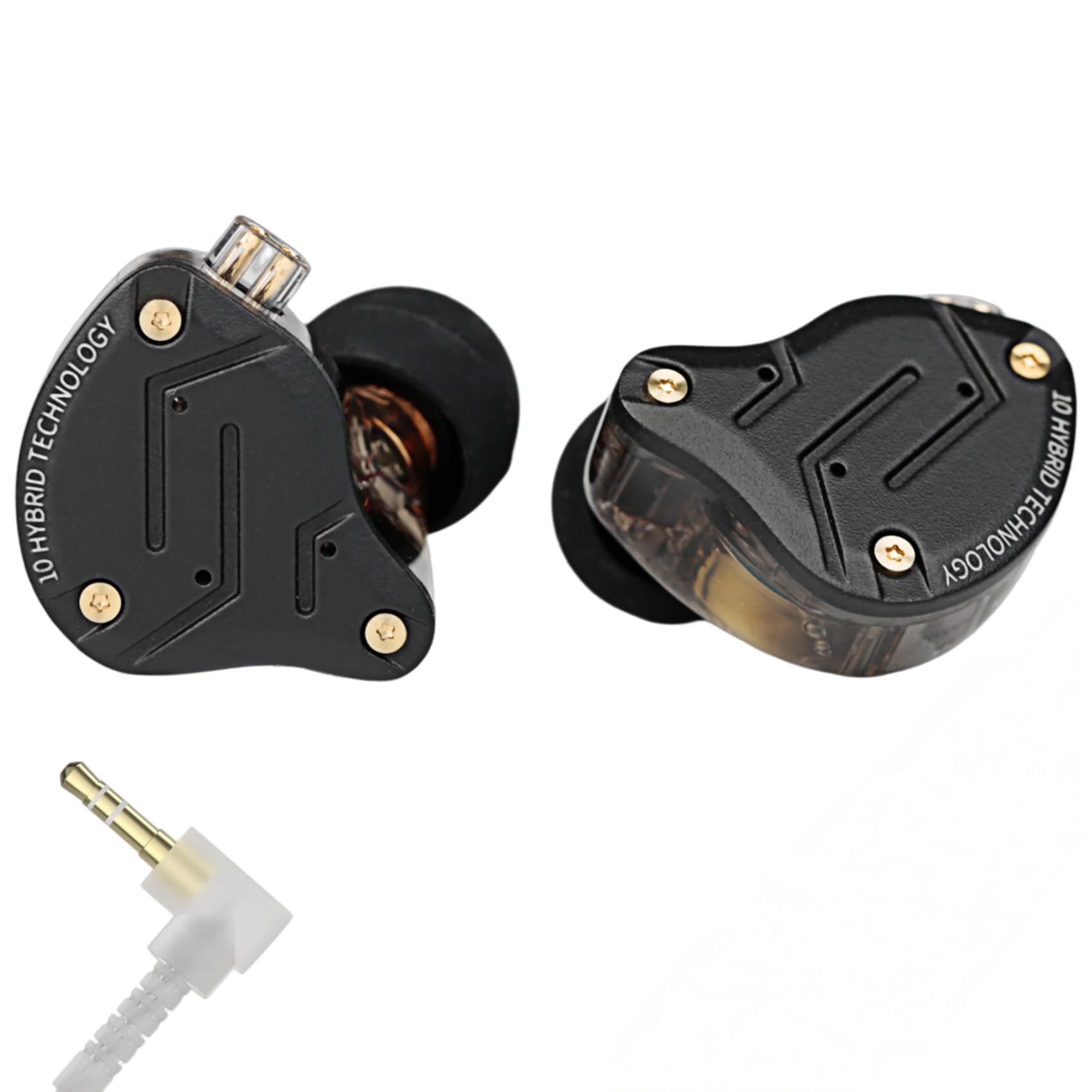
2. KZ ZS10 PRO in Ear Monitor Headphones, 4BA+1DD Hybrid
The hybrid setup that punches so far above its weight that many owners call it a no-brainer.
The ZS10 PRO combines four balanced armature drivers with one magnetic dynamic driver, giving you the bass weight of a dynamic driver alongside the crisp, articulate treble of multiple balanced armature drivers. The result is a sound signature that is balanced overall with a slight emphasis on bass and treble — punchy, tight low-end and clear high frequencies — making it a fantastic all-rounder for music, gaming, and monitoring. Owners consistently mention that isolation is excellent, with the earphones blocking 26 dB of outside noise when properly worn, so you hear the details even in a noisy environment.
What really lifts this pick is the build quality. The cover is made of high-quality aluminum alloy with a stainless steel faceplate, and the cavity uses imported resin. The upgraded cable includes a slot-protection design to prevent pin breakage, extending the life of the earphones. Sound quality is the most-discussed aspect by a wide margin, and value for money is the second most-praised feature. The honest trade-off is that fit gets mixed feedback — some find them comfortable for hours, while others report that they start to cause ear pain after about an hour of use.
What stands out
- Sound quality that some owners compare favorably to IEMs
- Excellent 26 dB passive noise isolation for a quiet listening space
- Sturdy aluminum alloy and resin shell with a metal faceplate
- Cable has slot-protection to prevent pin breakage
The fit note
- Comfort is mixed — some owners mention ear pain after an hour of wear
- The orientation of the earpieces is not keyed, so you may need to test both sides
Grab these if: You want the best sound-to-dollar ratio in this entire list, especially for gaming and bass-forward music.
Look elsewhere if: You plan to wear them for marathon listening sessions — the comfort is a gamble for some ear shapes.
3. KZ ZS10 PRO 2, 1DD+4BA Hybrid with 4-Level Tuning Switch
A 4-level tuning switch on the earpiece itself lets you customize the sound signature in seconds, no app required.
The ZS10 PRO 2 is the successor to the already-popular ZS10 PRO, and it brings a meaningful upgrade: a built-in 4-level tuning switch that adjusts the sound profile to your preference. Do you want crisp vocals, deep resonant bass, or a fully balanced sound? Flip the switch. Under the hood, it uses a 10mm super-linear internal magnetic dynamic driver paired with dual 31736 balanced armature drivers, plus a three-way electronic crossover circuit that smoothly manages how each driver interacts. Owners praise the hybrid driver setup for delivering big bass with clean details and lively highs.
The detachable cable is silver-plated, which helps with signal conductivity and reduces noise. Build quality is consistently praised, and the value-for-money score is high. The main points of mixed feedback involve comfort and durability — the deep insertion required for a good seal can be uncomfortable for some, and a few reports mention durability concerns, specifically around the tuning switch or cord quality. The stock ear tips are also a common complaint, with many owners swapping them out for memory foam alternatives.
Headline feature: The tuning switch genuinely changes the sound — it is not a gimmick. It makes this one pair of earphones that can sound either analytical or warm depending on your mood.
Worth noting: The cord is slightly short, so you may need an extension if your source is far away. And the stock tips are a weak point — budget for foam replacements right away.
Best for: People who like to experiment with sound signatures and want one earphone that adapts to different genres or listening environments.
Consider skipping if: You have small ear canals — the deeper insertion required might be uncomfortable over time.
4. Fosi Audio IM4 Open-Back IEM, 10mm Single Dynamic Driver
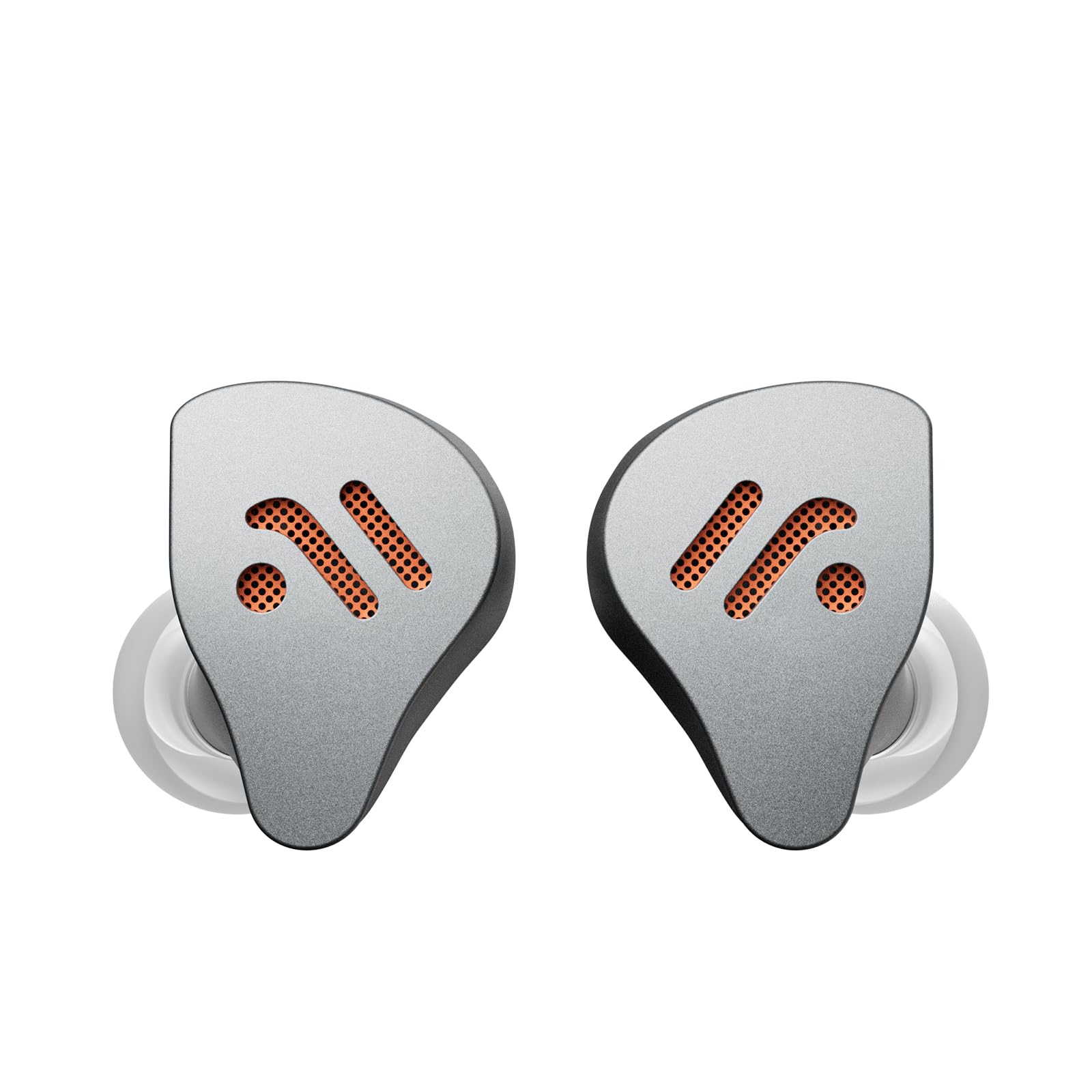
An open-back IEM that breathes — the soundstage feels like the music is coming from a room, not a tiny earpiece.
The Fosi Audio IM4 is a rarity at this price: an open-back in-ear monitor that uses a single 10mm beryllium-coated diaphragm dynamic driver. The open-back design means air moves freely, creating a spacious, natural soundstage where instruments spread out and vocals never feel boxed in. Unlike multi-driver hybrids, the single driver delivers a smooth transition between lows, mids, and highs — no crossover artifacts. It only weighs 7 grams per bud, making it barely noticeable during long listening sessions. Owners consistently mention the build quality as a high point: the shell is precision CNC-machined aluminum alloy with a detailed metal sand-blasted finish.
Customization is built in. You get three sets of ear tips (balanced, bass, and deep-bass) in three sizes, plus two types of removable nozzles (brass and aluminum alloy) to fine-tune the tonal balance. The detachable 0.78mm two-pin cable is included. The most-discussed positive is sound quality, and many owners note that the bass, while clean and detailed rather than thunderous, outperforms some multi-driver competitors in clarity and texture. The straightforward trade-off is that the open-back design provides less passive noise isolation than closed-back or deeply inserted IEMs, so you will hear ambient noise and people nearby will hear some leakage from your music.
Why it shines
- Open-back design delivers airy, fatigue-free sound with a wide soundstage
- Beryllium-coated diaphragm for high resolution and natural tonality
- Customizable sound via three different tip types and two nozzle materials
- Metal shell at just 7 grams per bud — extremely comfortable for all-day use
The catch
- Open-back means poor noise isolation; not ideal for noisy commutes or public spaces
- Bass is clean and detailed but not deep or booming — not for bass-heads looking for rumble
Perfect for: Home listeners, studio engineers, and gamers who value soundstage and comfort over noise isolation.
Not the best choice if: You need to block out background noise at the gym or on a bus — these are for quiet environments.
5. Linsoul SIMGOT EM6L, 1DD + 4BA Hybrid Driver

Tuned to the H-2019 target curve for pinpoint directional audio that gives you an advantage in competitive shooters.
The SIMGOT EM6L is engineered around the H-2019 target curve, which is a scientifically derived frequency response that aims for three-frequency balance and accurate soundstage reproduction. In practice, this means the earphones deliver exceptional imaging — you can pinpoint footsteps and environmental cues with precision, making them a favorite among competitive CS2 players. The driver configuration pairs an 8mm custom high-polymer diaphragm dynamic driver for mids and lows with dual balanced armature drivers for mids-to-highs and another set for highs, all managed through carefully set crossover points for smooth blending.
The shell uses 3D-printed resin with a CNC-processed faceplate to reduce standing waves inside the cavity, helping clarity. The cable is a silver-plated OFC (oxygen-free copper) type that keeps signal loss low. Sound quality is the top praise by a large margin, and the directional audio capability gets consistent shout-outs from gamers. The most significant red flag is build quality and durability — a notable number of customers note the earpieces separating or the back cover falling off within weeks, and some units fail entirely within a year. This is not universal, but it is the most commonly mentioned negative aspect by a significant margin.
Competitive edge: The imaging is genuinely top-tier for the price — owners say the directional audio in games like Counter-Strike 2 is “amazing” and provides a real edge.
The serious trade-off: Build quality is the single biggest concern here. A recurring pattern of covers detaching and units failing after a few months means you may want to budget for a backup or treat these as a delicate tool rather than a daily beater.
Reach for these if: Gaming audio is your primary concern, especially competitive FPS titles where soundstage and positioning matter most.
Think twice if: You need a rugged, durable daily driver that you can toss into a bag — the durability reports are too frequent to ignore.
6. Sennheiser IE 200 In-Ear Audiophile Headphones

Sennheiser’s entry-level audiophile earphone uses a single 7mm TrueResponse transducer for a neutral, natural sound that reveals every recording flaw.
The IE 200 is built around a single 7mm dynamic driver called the TrueResponse transducer, which is precision-manufactured to minimize unit-to-unit variation — meaning the pair you buy sounds the same as the pair your friend buys. The tuning is natural and balanced, with expressive mids and smooth treble, but the bass is controlled and can feel lacking to listeners used to boosted low-end. A clever dual-position ear tip mounting lets you adjust the bass response: one position gives tighter, more controlled bass, the other delivers a fuller, warmer presentation. Owners confirm that the fit is exceptionally comfortable once you find the right tips from the included silicone and memory foam sets, and the over-ear cable stays secure all day.
The cable uses gold-plated MMCX connectors and a 3.5mm plug, and it is braided to reduce handling noise. The biggest point of debate is the stock cable quality: many owners describe it as “junky,” with noticeable noise from shirt rubbing (microphonics) and a tendency to tangle. The good news is the MMCX connector allows you to upgrade the cable. Sound quality gets mixed feedback in the sense that it is not immediately notable — it requires a good source and often benefits from EQ software (like Equalizer APO) to sound its best. Without that, some find it thin or lackluster compared to more aggressively tuned competitors.
What makes it special
- Neutral, reference-level sound that reveals recording details without coloration
- Dual-position ear tips allow you to switch between controlled and warm bass
- Exceptional comfort and secure fit — the over-ear design stays put for hours
- MMCX connector lets you upgrade the cable easily
Where it trips up
- Stock cable feels cheap, is microphonic, and tangles easily — plan to upgrade it
- Sound signature is flat and may seem boring without EQ tuning; not for bass lovers
- Requires a DAC for use with modern smartphones without headphone jacks
Who should buy: Purists who want a transparent, uncolored sound for critical studio monitoring or lossless audio playback.
Who should skip: Casual listeners who want a fun, bass-forward sound right from the start without EQ tweaking.
7. MEZE AUDIO ALBA Wired In-Ear Monitor Headphones

Meze Audio brings its famously natural and musical tuning to a compact metal chassis that disappears into your ear.
The ALBA uses a 10.8mm dynamic driver tuned for a natural, balanced sound with an added touch of richness in the lower tones — high notes stay crisp and clean without becoming harsh. The driver is housed in a zinc alloy and anodized aluminum body that feels genuinely premium in the hand, with a lustrous pearl-like iridescent finish. It comes with a custom 3.5mm to USB-C adapter that has a built-in DAC/amp, meaning you can plug directly into a modern phone or laptop without losing audio quality. The 1.2 meter braided SPC (silver-plated copper) cable uses 2-pin connectors with gold-plated 3.5mm termination.
Owners overwhelmingly praise the sound quality — especially the textured bass and overall musicality — and note that it is a clear step up from similarly priced options like the Sennheiser IE 200 in terms of build quality and tonal richness. Comfort is excellent for most, though the fit has mixed feedback: some find it snug and secure, others report the earpieces tend to fall out. The most commonly mentioned negatives are a tangle-prone thin cable and a slightly loose 2-pin connector on some units, which can cause the left earpiece to detach accidentally. Many owners recommend a thicker third-party cable as a functional upgrade.
The defining quality: The sound is “very musical, natural, and balanced” — owners say it sounds like twice its price, with a maturity that cheaper multi-driver earphones often lack.
The practical downside: The stock cable is too thin and tangles easily, and the 2-pin connection can be loose on the left earpiece. Plan to replace the cable for low-maintenance daily use.
Best suited for: Listeners who prioritize build quality and refined, natural tonality over raw bass impact or driver count.
Not the right fit if: You need a sturdy, tangle-free cable from the start or prefer an aggressive, V-shaped sound signature for genres like EDM and hip-hop.
8. Etymotic ER4SR Studio Reference Earphone
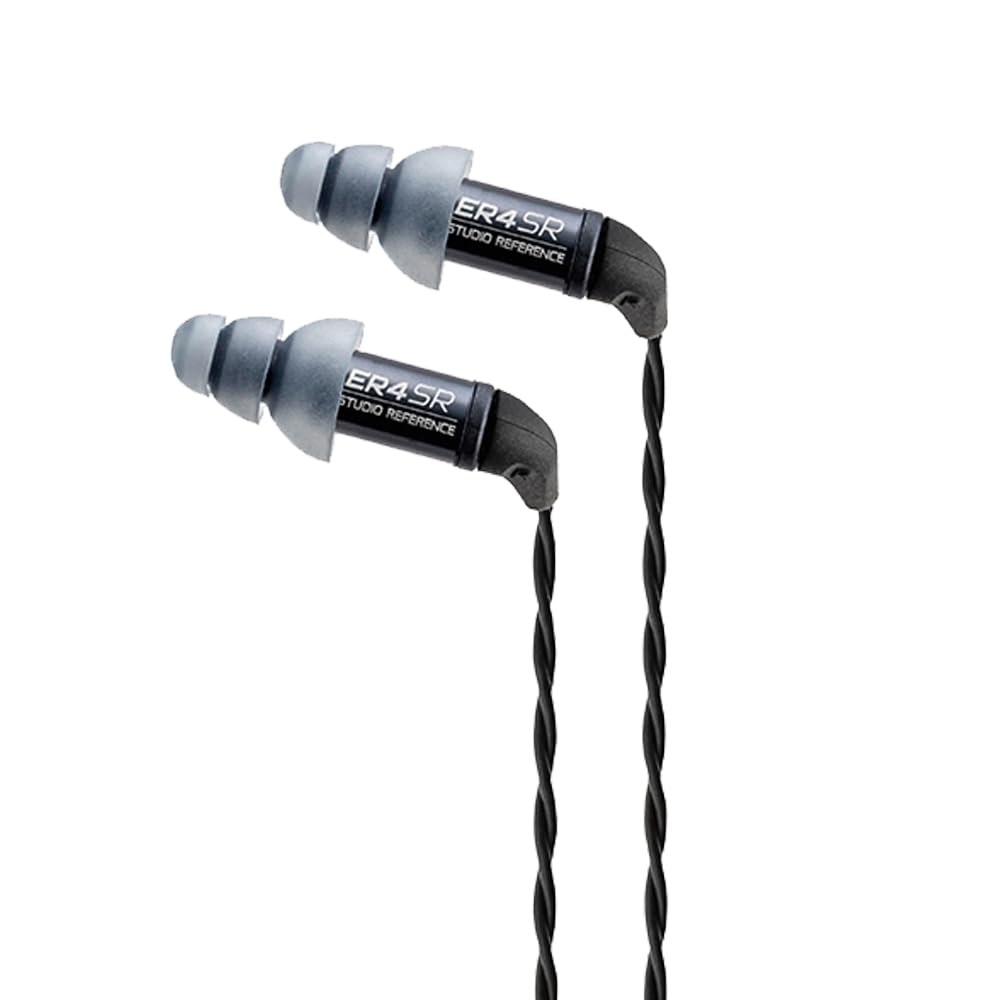
The studio reference standard: a single balanced armature driver precision-matched to within 1 dB unit-to-unit for the purest signal path possible.
The ER4SR is designed for one thing: accuracy. It uses a single high-performance balanced armature driver that is precision matched to within 1 dB of the reference spec, so your left and right channels are virtually identical — something that is rare even at much higher prices. The tuning is completely neutral: it does not color the sound or boost any frequency. As buyers put it, these earphones “provide an accurate response” and are “definitely not for bass-heads.” The noise isolation is extraordinary — 35 to 42 dB of passive attenuation, which is more than many active noise-canceling headphones. The body is CNC-machined from aluminum alloy with a sleek anodized finish and laser etching.
The cable is a braided, reinforced 5-foot MMCX detachable cable with a gold-plated 3.5mm jack. The package includes an assortment of ear tips (dual-flange in S, M, L, XL, triple-flange in standard and large, plus foam pairs), a shirt clip, a zippered storage case, and a filter removal tool. Sound quality is the most-praised aspect by a massive margin, followed by noise isolation. The major trade-off is comfort: the deep-insertion design (you push the tip far into the ear canal) provides the isolation and seal needed for the bass to work, but many find it uncomfortable or take significant time to get used to. Durability also gets some negative feedback, with a few owners reporting driver failure after extended use.
The unshakable strengths
- Extreme noise isolation — 35-42 dB — blocks almost all external sound
- Completely neutral, accurate tuning; ideal for studio monitoring and critical listening
- Precision-matched drivers to within 1 dB for consistent left-right balance
- Includes a comprehensive tip kit, shirt clip, and hard storage case
The upfront challenge
- Deep-insertion fit is uncomfortable for many; requires patience to adjust to
- The 5-foot cable is long and microphonic (transmits rubbing noise to the ears)
- Some durability concerns — a few owners experienced driver failure over time
Essential for: Recording engineers, musicians, and anyone who needs a completely uncolored reference to hear exactly what is in the mix.
Not for you if: You dislike deep ear canal insertion, want a “fun” sound signature, or need an all-day comfortable pair without a break-in period.
9. Linsoul Kiwi Ears Astral 1DD+6BA Hybrid In-Ear Monitor

A 1DD plus 6BA hybrid with a 10mm bioceramic subwoofer and custom tweeters — built for professional music engineers who cannot afford any coloration.
The Kiwi Ears Astral is a professional-grade in-ear monitor that uses a 10mm bioceramic diaphragm dynamic driver as a subwoofer for the low frequencies, two custom midrange balanced armature drivers for a neutral midrange, and dual ultra-high frequency balanced armature tweeters for the treble. The tuning follows a specific curve: a 9 dB sub-bass shelf that smoothly rolls off into the low-midrange at 300 Hz, and a perfect 2.8 kHz peak that slowly rolls off until 15 kHz, matching the tonal signature of top-tier stage monitors. The frequency range is 10 Hz to 22 kHz. The result is a sound that owners describe as “exceptional bass articulation, linearity, speed, and definition” combined with revealing but non-fatiguing micro-detail.
The shell is 3D-printed resin with a black gold-sprinkled faceplate — stylish and lightweight. The cable is a premium 2-pin design with modular 3.5mm and 4.4mm adaptors for use with high-end DACs and audio interfaces. Sound quality is the most praised aspect, followed by overall quality and value. The most significant issue is comfort: the shells are massive, and the 6mm nozzle can cause fit problems for people with smaller ear canals. Some reviewers point out ear burning or itching regardless of which ear tip size they try. If you have average or larger ears, the fit is likely fine; if your ear canals are on the smaller side, these may be a non-starter.
What makes it a standout: The bass articulation and definition are exceptional — the bioceramic driver handles sub-bass with a texture and speed that few IEMs at any price match. And the treble extension is smooth, not harsh.
The one real barrier: The shell size is large. Multiple owners explicitly mention that comfort is disappointing despite the otherwise premium experience. If you have small ears, try before you buy.
Designed for: Professional engineers, serious audiophiles, and anyone with average-to-large ears who wants reference-level accuracy without spending four figures.
Not recommended for: Listeners with small ear canals or those who prioritize a tiny, low-profile shell above all else.
Understanding the Specs
Driver Configuration
The “driver” is the tiny speaker inside the earpiece that produces sound. A single dynamic driver (a coil, magnet, and diaphragm) is the traditional design and tends to sound warm and cohesive. Balanced armature drivers (small, efficient electromagnetic components) are better at producing detailed mids and highs. Hybrid designs combine both: a dynamic driver for bass and balanced armature drivers for mids and highs. More drivers do not automatically mean better sound — the tuning, crossover design, and how well the drivers integrate matters far more than the raw count.
Soundstage and Imaging
Soundstage refers to how “wide” or “spacious” the music sounds — whether it feels like the band is inside your head or spread out in front of you. Imaging is the ability to pinpoint exactly where each instrument or sound is located in that space. Open-back IEMs (like the Fosi Audio IM4) tend to have a more airy, natural soundstage but leak sound and offer less isolation. Closed-back IEMs isolate better but often have a more “in-head” presentation. For gaming, good imaging is more important than raw soundstage width.
FAQ
What does balanced armature mean in earphones?
Should I buy a hybrid driver earphone or a single driver?
Do I need a DAC or amplifier for these earphones?
What is the H-2019 target curve and should I care?
How important is the cable on wired IEMs?
What does “V-shaped” sound mean?
Can I use these earphones for monitoring vocals or instruments while recording?
What is the difference between MMCX and 2-pin connectors?
How do I choose the right ear tips for the best sound?
Are these earphones good for watching movies or TV?
Final Thoughts: The Verdict
If you want one dependable pick, the earphones with best sound quality winner is the KZ AS10 because its five balanced armature drivers deliver a wide soundstage and exceptional detail retrieval that outclasses nearly everything in its price bracket. If you want a hybrid that balances bass impact with clear treble and offers the flexibility of a four-level tuning switch, grab the KZ ZS10 PRO 2. And for those who need a neutral, uncolored reference for studio work or critical listening, the Etymotic ER4SR remains the benchmark for accuracy, though it demands patience with the deep-insertion fit. No matter which you choose, all nine of these picks are genuine performers — the real trade-off is which tuning and fit best match your ears and your music.
How We Picked
We do not accept paid placement. Every pick is matched to a real buyer and a real use-case; we do not hands-on test units.
Sources & Methodology
Specifications: manufacturer listings and product documentation. Review insights: verified customer reviews, as of July 2026. Pricing: not shown on this page (it changes often); check the current price via the retailer link.
As an Amazon Associate, WellFizz earns from qualifying purchases. This does not affect which products we feature.
Related Guides

Mo Maruf
I created WellFizz to bridge the gap between vague wellness advice and actionable solutions. My mission is simple: to decode the research and give you practical tools you can actually use.
Beyond the data, I am a passionate traveler. I believe that stepping away from the screen to explore new environments is essential for mental clarity and physical vitality.