Our readers keep the lights on and my smoothie glass nicely filled. As an Amazon Associate, I earn from qualifying purchases.
Specs are compiled from manufacturer listings and verified buyer reviews and can change over time — please confirm the key details on the product page before buying.
Choosing the right decking for New Zealand’s sun, rain, and salt air can feel like a gamble. You want the timber look without the constant staining, sealing, and warping that real wood demands. That is where composite decking steps in — a blend of wood fibres and plastic that gives you the warmth of timber with a fraction of the upkeep. This guide breaks down the top-rated interlocking deck tiles on the market right now, so you can pick the set that suits your patio, balcony, or poolside project.
I’m Mohammad Maruf — the founder and writer behind WellFizz. This guide is built by comparing the manufacturers’ published specifications and the patterns across verified customer reviews, so you get each pick’s real strengths and trade-offs instead of marketing spin.
For homeowners wanting a durable, great-looking surface that handles moisture and heavy foot traffic, this roundup of the best composite decking nz buyers are choosing focuses on four proven interlocking systems that range from budget-friendly sets to premium wide-plank options.
Our Picks at a Glance
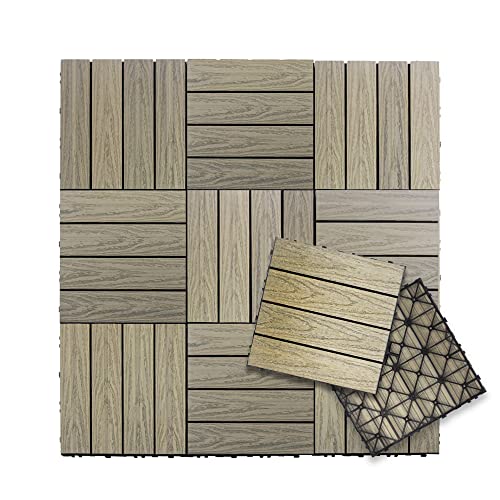
How To Choose The Best Composite Decking NZ
The secret to a deck that still looks good three years in is in the material make-up and the thickness of the board. You want a composite that resists fading, handles standing water, and feels solid underfoot without extra maintenance.
Material Blend and Core
Composite decking mixes wood fibres with plastic. A higher ratio of high-density polyethylene — a type of durable plastic — means better water resistance and less chance of the board absorbing moisture that leads to swelling. Some tiles add a polymer coating, a thin plastic wrap around each board that blocks UV rays and stains from penetrating the surface.
Thickness and Weight
A thicker tile feels much more solid when you walk on it and is less likely to flex over an uneven subfloor. Lighter tiles are easier to carry up stairs to a balcony, but a heavier tile (around 25 pounds per square foot or more) generally signals a denser, more durable core that will not warp in the sun.
Interlocking System
Look for a four-way interlocking grid that snaps together without tools. The locking mechanism should hold the tiles tight so no gaps open up between them as the temperature changes. This matters most for New Zealand environments where the deck sees direct summer sun followed by cool, wet winters.
Quick Comparison
| Model | Best For | Material | Tiles per Box | Tile Thickness | Amazon |
|---|---|---|---|---|---|
| NewTechWood UltraShield Naturale (1×1)★ Best Overall | Budget-friendly premium feel | Composite with polymer coating | 10 | 0.88 inches | Amazon |
| ShunHong Polymer Interlocking (9-Pack) | Entry-level value deck | WPC (HDPE + wood fibre) | 9 | — | Amazon |
| IDZO Wood Plastic Composite (10-Pack) | FSC-certified budget buy | Composite surface, plastic base | 10 | 1 inches | Amazon |
| NewTechWood UltraShield Naturale (1×3) | Premium wide-plank look | Composite | 1 | — | Amazon |
In‑Depth Reviews
1. NewTechWood UltraShield Naturale 1 ft. x 1 ft. Composite Deck Tiles
Our pick — 4.5★ from 200+ verified ratings; the strongest balance of quality and price.
A tough, fade-resistant tile that buyers report holds its colour for years without the maintenance of wood.
The first thing you notice is the solid heft — at 25 pounds per box for a set of 10 tiles, these are the heavyweights of the list. That weight comes from a composite core of high-density polyethylene plastic and wood fibres, wrapped in a protective polymer coating that blocks water and UV rays. Owners consistently say the tiles snap together in minutes using the four-way interlocking system with no tools required. The raised base underneath lets rainwater drain away freely, so you are not left with puddles that cause slips or surface wear.
What really sets this pick apart is the real-world colour retention. As owners mention: “Rainbow colours remain vibrant after 4 years (2022-2026).” That kind of longevity directly addresses the worry everyone has with composite — that the colour will fade to a dull grey after one summer. The tiles are also easy to cut with a jigsaw for those awkward corners around posts or railings. Against the 10-pack IDZO tiles down the list, these carry a commercial-grade rating and a much higher density, which translates to a noticeably sturdier surface underfoot.
The catch is the subfloor requirement. These perform best on a solid, flat base like concrete or plywood — they are not designed to span gaps or sit on soft ground. Some owners note the price feels steep compared to basic grid tiles, but the general consensus is that you get what you pay for in terms of build quality and long-term looks.
What wins people over
- Polymer coating delivers proven colour vibrancy years later
- Tool-free snap assembly, easy to cut with a jigsaw
- Raised base drains water instantly, keeping surface dry
The honest trade-off
- Needs a firm, flat subfloor (concrete or plywood) — not for soil or grass
- Heavier than budget options, harder to transport upstairs
Reach for it if: you want the most fade-resistant, low-maintenance deck surface that feels solid underfoot and still looks new after several summers.
Think twice if: your project covers a large area on a tight budget; this is a premium pick that costs more per square foot than entry-level WPC tiles.
2. Polymer Interlocking Composite Deck Tiles Outdoor(9Pcs,Coffee)

An affordable 9-tile set that delivers a solid, slip-resistant surface for small patios and pool surrounds.
This ShunHong set uses a wood plastic composite (WPC) blend — high-density polyethylene bonded with recycled wood fibres — so it handles moisture without swelling and resists cracking in changing weather. The tiles are thicker than some other entry-level options, and the embossed wood-grain surface adds friction that makes it a safe choice for wet areas around pools or outdoor showers. Assembly is the standard interlocking design: line up the edges and press down to snap them together; no hammer, glue, or screws needed.
Owners have been quick to reorder, often describing the tiles as “awesome” and noting how easy the installation is. The dark brown colour is rich and deep, and the 9 detachable pieces per pack mean you can mix up the layout pattern as you go. Compared to the heavier NewTechWood squares above, this tile is lighter and more manageable to carry up to a second-storey balcony, though the lack of a polymer coating means you should expect slightly faster colour change in direct UV over a couple of seasons. Still, for a weekend project covering a small area without spending a lot, this is the smart budget-friendly pick.
Who it fits: anyone tackling a small balcony, poolside corner, or patio nook on a budget who wants a quick DIY install and slip protection. Not ideal for a full-sized main deck where you plan to keep the surface for a decade.
Grab it for: a fast, low-cost refresh of a small outdoor area with decent water and slip resistance.
Pass on it if: you need the highest fade resistance and longest warranty; the polymer-coated NewTechWood above is a better long-term investment.
3. IDZO Wood Plastic Composite Deck Tiles Set of 10

A responsibly sourced composite tile that is a full inch thick, making it among the most substantial-feeling budget options.
At 1 inch thick, this IDZO tile is thicker than the NewTechWood 1×1 tile at 0.88 inches. That extra thickness gives the surface a dense, stable feel that does not flex or bounce when you walk across it. The material is a wood plastic composite with FSC certification, meaning the wood fibres come from responsibly managed forests. The four-sided self-draining grid on the underside keeps rainwater from pooling, and the interlocking edges snap together by hand — owners specifically mention how easy it is to cut these tiles with a jigsaw for a custom fit around obstacles.
The appearance is the most praised feature. The grey colour and two available patterns give a clean, modern look that customers note complements patios and balconies well. However, quality and durability ratings are more mixed than on any other pick here. The tile is lightweight, which is a bonus for carrying up stairs but suggests a less dense core that may not hold up as well in consistently wet or high-UV environments. This is a good entry-level tile for a covered balcony or a shower floor; for full-sun main decks the NewTechWoods are a safer bet.
The highlights
- Full 1-inch thickness provides a firm, solid surface
- FSC certification for sustainably sourced materials
- Very lightweight at 2.6 pounds per tile
The note of caution
- Mixed durability feedback — some tiles faded and stained fast
- Less dense core; feels hollow compared to polymer-coated options
Choose it for: a covered patio or balcony project where light weight and easy cutting matter, and you want an eco-friendly material source.
skip it if: your deck gets full hot sun and rain year-round; the mixed durability reports suggest you will get longer service from a polymer-coated tile.
4. NewTechWood UltraShield Naturale 1 ft. x 3 ft. Quick Deck Outdoor Composite Deck Tile in Brazilian Ipe
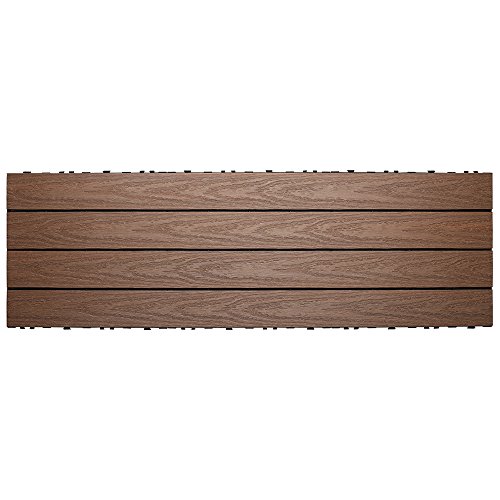
A long-format composite plank that covers 15 square feet per box and mimics the look of real Brazilian Ipe hardwood.
While the 1×1 tiles in position 1 give you a classic square grid, this 1×3 rectangular plank from the same NewTechWood family changes the whole visual rhythm of a deck. The longer boards run in one direction, creating a more traditional timber-deck appearance that many owners prefer for larger patios and farmhouse-style porches. The material is the same high-grade composite as the squares, made from recycled plastic and wood fibres, and it snaps together using the same interlocking system. You cut it with a table saw or skillsaw fitted with a composite blade, and owners who installed 10 boxes report finishing the job in about 5 hours.
Quality and installation are the two most-discussed strengths among buyers. The tiles feel sturdy and heavy-duty, and the Brazilian Ipe colour gives a rich, dark wood tone that owners say makes the whole space look “like a million bucks.” A few owners note that the surface can be a bit slippery when wet, which is worth considering for poolside or outdoor shower installations. Like its smaller sibling, this tile is designed to sit on a solid base — concrete or plywood — and will not work over bare soil or gravel. It is also the priciest option by a noticeable margin per square foot, but if your priority is a wide-plank, upscale finish that stays low-maintenance for years, this is the one to budget for.
Best for: a large patio or porch where you want the classic long-plank deck look without the yearly oiling and staining that real Ipe demands. The quality scores highest here (12 out of 12 positive mentions) and installation is almost universally praised. Just factor in a little extra care around wet feet.
Invest in this if: you are building a main living deck and want the most authentic timber aesthetic with minimal upkeep.
Consider the 1×1 squares instead if: your area involves complex angles or a tight budget, since the square tiles are cheaper and easier to cut for small spaces.
Understanding the Specs
Tile Thickness
Thicker tiles (1 inch or more) feel more solid underfoot and resist flexing when the subfloor is not perfectly level. A tile that is under 0.9 inches is still strong enough for concrete slabs, but you may feel a slight bounce if the ground underneath has depressions. Thicker boards also hold fasteners better if you ever decide to screw them down permanently.
Interlocking Grid
The plastic grid underneath each tile is what snaps the pieces together. A good grid has connectors on all four sides so the whole deck moves as a single, stable sheet. A poorer grid leaves gaps that catch heels or accumulate dirt over time. Look for a system that clicks audibly and holds tight without needing a rubber mallet to force the joints shut.
FAQ
Can composite deck tiles be laid directly on grass or soil?
How do I cut composite deck tiles to fit around posts or corners?
Will the colour fade in strong sunlight over time?
Are these tiles slippery when wet?
How many tiles do I need for a standard balcony or patio?
Can I install composite deck tiles over existing wooden deck boards?
Do I need to seal or paint composite deck tiles?
How long do interlocking composite deck tiles typically last?
Will the tiles expand and warp in the heat?
Do I need to remove the old wood decking before installing composite tiles?
Final Thoughts: The Verdict
If you want one dependable pick, the composite decking nz winner is the NewTechWood UltraShield Naturale 1×1 tiles because the polymer coating delivers proven colour retention and a solid feel that nothing else here matches. If you want a fast, budget-friendly refresh for a small area, grab the ShunHong 9-Pack. And for the most authentic wide-plank timber aesthetic with the lowest maintenance possible, the NewTechWood 1×3 planks in Brazilian Ipe are the one to reach for.
How We Picked
We do not accept paid placement. Every pick is matched to a real buyer and a real use-case; we do not hands-on test units.
Sources & Methodology
Specifications: manufacturer listings and product documentation. Review insights: verified customer reviews, as of July 2026. Pricing: not shown on this page (it changes often); check the current price via the retailer link.
As an Amazon Associate, WellFizz earns from qualifying purchases. This does not affect which products we feature.
Related Guides

Mo Maruf
I created WellFizz to bridge the gap between vague wellness advice and actionable solutions. My mission is simple: to decode the research and give you practical tools you can actually use.
Beyond the data, I am a passionate traveler. I believe that stepping away from the screen to explore new environments is essential for mental clarity and physical vitality.