Our readers keep the lights on and my smoothie glass nicely filled. As an Amazon Associate, I earn from qualifying purchases.
Specs are compiled from manufacturer listings and verified buyer reviews and can change over time — please confirm the key details on the product page before buying.
Shopping for fancy olive oil usually means staring down a shelf of identical-looking green bottles, each promising something about sun-drenched groves and artisanal care. But the real difference — the one you can actually taste — depends on the numbers you cannot see: the polyphenol content, the acidity level, the harvest date. This guide cuts through the label poetry and lands on the nine bottles that genuinely deserve the “fancy” tag, from everyday splurges to single-estate medals.
I’m Mohammad Maruf — the founder and writer behind WellFizz. This guide is built by comparing the manufacturers’ published specifications and the patterns across verified customer reviews, so you get each pick’s real strengths and trade-offs instead of marketing spin.
Whether you are looking for an everyday upgrade or a gift-worthy bottle, these are the strongest contenders for anyone hunting for the best fancy olive oil that actually delivers on flavor, purity, and provenance.
Our Picks at a Glance
How To Choose The Best Fancy Olive Oil
Picking a fancy olive oil depends on three things that the label often hides behind beautiful typography. Here is what actually separates a pantry staple from a true kitchen treasure.
Polyphenol Content: The Marker of Quality and Health Impact
Polyphenols are natural antioxidants that give EVOO its peppery bite and bitter finish, with higher levels indicating better quality. A standard olive oil might contain 100–200 mg/kg. A truly fancy one pushes past 400 mg/kg, and the best in this list hit 900 mg/kg or more. That throat-tingling sensation is not a flaw — it is the signature of a fresh, well-made oil. The higher the polyphenol count, the more sturdy the flavor and the longer the shelf life.
Acidity Level: The Technical Proof of Purity
Acidity, measured as a percentage of oleic acid, is the most objective quality indicator for olive oil. To legally carry the “extra virgin” label, an oil must have an acidity of 0.8% or less. Most fancy oils sit well below that — 0.3% or even 0.2%. Lower acidity means the olives were harvested at peak ripeness and processed quickly with minimal damage. It is the closest thing to a purity guarantee you can find on a nutrition panel.
Harvest Date and Origin: Freshness Over Everything
Unlike wine, olive oil does not improve with age—freshness is everything. A harvest date on the bottle (look for a specific month and year, not just “best before”) proves you are getting oil from a single season’s crop. Oils from a single origin — a specific estate, region, or even a single grove — offer a consistent flavor profile. Blends can be excellent, but they also make it harder to know exactly what is inside the bottle.
Quick Comparison
| Model | Best For | Volume | Acidity | Polyphenols | Amazon |
|---|---|---|---|---|---|
| Pompeian Smooth EVOO★ Best Overall | Everyday cooking | 68 fl oz | — | Naturally occurring | Amazon |
| Bragg Organic EVOOBest Value | Organic daily use | 16 fl oz | — | High (polyphenols) | Amazon |
| García de la Cruz PremiumBest Balanced Flavor | Balanced finishing oil | 16.89 fl oz | — | Polyphenol rich | Amazon |
| Barbera Lorenzo N° 1 | Sicilian PDO authenticity | 16.9 fl oz | — | — | Amazon |
| Zahara EVOO | Gift-worthy splurge | 16.9 fl oz | Less than 0.2% | 400 mg/kg avg | Amazon |
| Garisar High Polyphenol | High-polyphenol daily shot | 16.9 fl oz | Max 0.2% | 600+ ppm | Amazon |
| Mythology Greek EVOO | Large-volume value | 101 fl oz | 0.5% | High | Amazon |
| P.J. Kabos Phenolic Shot | Maximum polyphenol intake | 16.9 fl oz | Very low | 900+ mg/kg | Amazon |
| Entimio Intenso Organic | Ultra-premium finishing | 16.9 fl oz | Less than 0.25% | 1,000+ mg/kg | Amazon |
In‑Depth Reviews
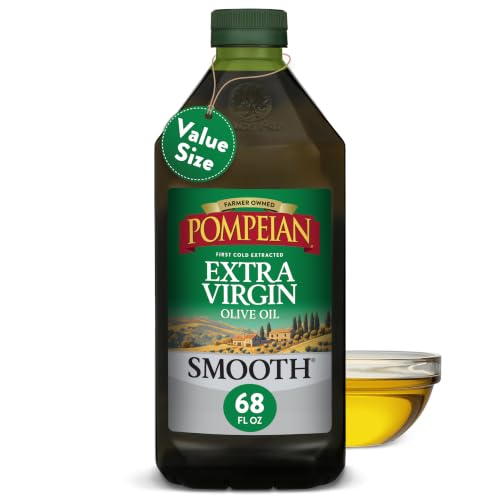
1. Pompeian Smooth Extra Virgin Olive Oil – 68 fl oz (2 L)
Our pick — over 4.5★ from 40,500+ verified ratings; the strongest balance of quality and price.
The value-sized workhorse that four in five owners call their go-to kitchen oil.
At 68 fl oz versus the García de la Cruz premium oil at 16.89 fl oz, making it the clear volume king of this list. It weighs 4.21 pounds — which tells you this is a buy-once-and-forget-it size for heavy daily use. The smooth, delicate taste means it works for sautéing, stir-frying, roasting, baking, and drizzling without ever overpowering the dish.
Quality is what wins people over here — 749 owners single it out, with 645 more praising the flavor. The consensus is that this oil adds depth without being aggressive. The crowd favorite — a massive following of owners — loves that it is first cold pressed, non-GMO, and certified for authenticity by the North American Olive Oil Association. Buyers report it is “great olive oil” that “adds flavor but doesn’t overpower,” which is exactly what you want from a daily cooking oil.
The trade-off is straightforward: this is not a single-estate, high-polyphenol finishing oil. The polyphenol content is listed only as “naturally occurring” with no specific number, so it will not give you the peppery kick that polyphenol-chasers look for. And at 68 fl oz, the bottle is 10.75 inches tall — it takes up real pantry space, especially compared to the slender 11.2-inch bottle of the García de la Cruz at 2.36 inches wide.
What Owners Rave About
- Massive 68 fl oz bottle means fewer refills and a lower per-serving cost
- Smooth, mild taste that works across cooking, salads, and marinades
- Non-GMO and Kosher certified with an authenticity seal from the NAOOA
Who Should Think Twice
- No specific polyphenol number — not for those chasing a high-antioxidant oil
- Large footprint at 4.42 x 4.31 x 10.75 inches demands pantry space
- Designed for versatility, not for the bold, peppery finish of premium estate oils
The Kitchen Anchor: This is the oil you reach for every single day — for frying eggs, roasting vegetables, making vinaigrette, and sautéing onions. It disappears into the background and lets the food shine.
Not the One For: Anyone seeking a high-polyphenol finishing oil with a specific chemical profile. This is a kitchen workhorse, not a tasting-room centerpiece.
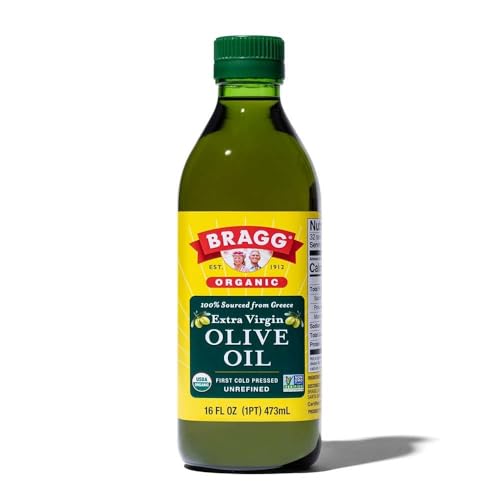
2. Bragg Olive Oil, Organic Extra Virgin, 16 fl oz
The trusted organic label that delivers solid quality without the steep price.
Bragg brings its well-known reputation for purity into the olive oil aisle. This 16 fl oz bottle is USDA Organic, Non-GMO Project Verified, Kosher, and gluten-free — all for a price that sits within reach of the Pompeian giant above. The oil is rich in heart-healthy monounsaturated fat and natural antioxidants, and it meets the International Olive Oil Council’s quality standards. At 2.8 x 2.7 x 7.4 inches, it is compact enough for a small cabinet.
Quality (52 mentions) and flavor (34 mentions) lead the owner feedback. There is a detail that keeps surfacing: this oil is sourced from Greece using only Greek olives, from the Sparta, Corinth, and Crete regions. Owners note it is “high in polyphenols” and has a “high quality taste.” Bragg also lands a practical versatility win — owners use it for salads, vegetables, pastas, pestos, sauces, sautéing, and even popcorn.
That said, this is not a single-estate or early-harvest oil. The value-for-money sentiment is mixed — some find it a great deal, others call it overpriced for what you get, especially compared to the volume of the Pompeian. The 16 fl oz size runs out faster if you cook with olive oil daily, and the smaller bottle means you will be reordering more often than with a bulk option.
Solid Organic Staple: For the buyer who wants certified organic, verified purity, and a known brand name in a manageable bottle, Bragg delivers. The flavor is good enough for finishing — just understand you are paying for the organic certification and the brand trust, not for single-origin rarity.
The Catch: The per-ounce cost is higher than a bulk oil, and if you cook heavily with olive oil, the 16 fl oz bottle will vanish faster than you expect.
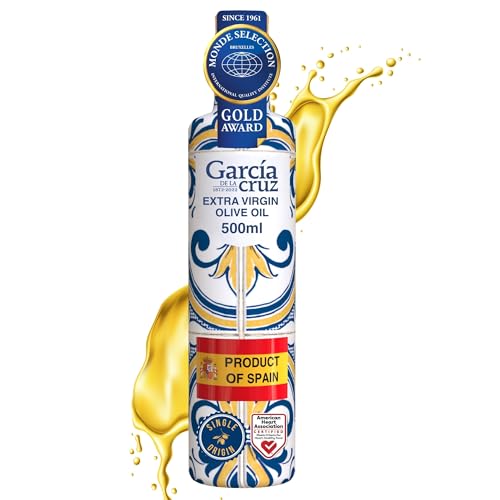
3. GARCÍA DE LA CRUZ – Organic Extra Virgin Olive Oil, Master Miller Premium
A fifth-generation Spanish estate oil that balances affordability with single-origin prestige.
García de la Cruz comes from a 5th generation family farm in La Mancha, Spain, and the bottle itself is part of the story: the 1872 replica dark glass keeps light and heat out while the easy-pour spout makes daily use practical. The oil is cold-pressed from single-origin olives, and the flavor profile owner reviews describe as almond and tomato tones with a smooth body and a peppery bite. It is 16.89 fl oz in a slender 2.36 x 2.36 x 11.2 inch bottle that stands tall without taking up much counter space — 2.36 inches wide versus the Pompeian at 4.42 inches wide.
The thing everyone raves about is the flavor — 75 owners call it out, with 58 more praising the overall quality. The oil is described as “not too peppery” with “good viscosity,” making it equally suitable for drizzling over salads or using in dressings. It is also an award-winner: Gold medals at Los Angeles International, Olive Japan, and New York International competitions. The sustainability angle is real — the olive groves are recognized as a national bird sanctuary, and the pits are reused as fuel.
The main reservation is value: the sentiment is mixed, with some calling it a great deal for a single-origin organic oil and others finding it pricey for the 16.89 fl oz volume. Compared to the 68 fl oz Pompeian (which is 4.2x the volume), the per-ounce cost is notably higher. And while the flavor is balanced, it does not reach the polyphenol levels of the premium entries below.
The Everyday Gourmet: If you want a single-origin, organic Spanish EVOO that you can use daily without feeling like you are wasting a rare bottle, this is the balance. The dark glass bottle and pour spout make it a pleasure to use.
Consider Carefully If: You cook in large volume — the 16.89 fl oz size goes fast, and the cost per ounce is significantly higher than the bulk Pompeian.
4. Barbera Lorenzo N° 1 Organic Extra Virgin Olive Oil PDO Valli Trapanesi, 16.9 fl oz
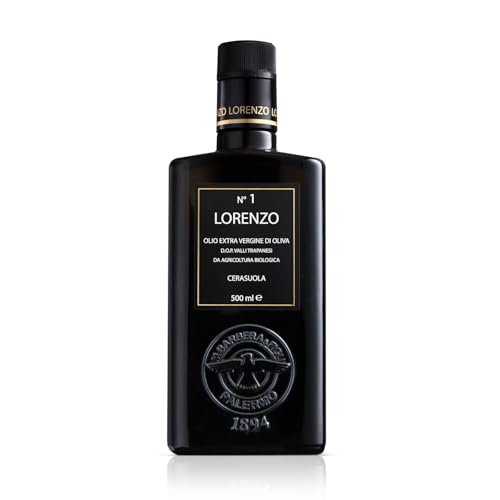
A certified Sicilian PDO oil from Cerasuola olives that tastes exactly like its origin.
This is the only oil in this list carrying the PDO (Protected Designation of Origin) certification for Valli Trapanesi, which means every drop in this 16.9 fl oz bottle comes from a specific region in Sicily and meets strict production standards. It is made exclusively from organic Cerasuola olives, a variety known for bold, fruity character. The flavor profile runs deep: notes of fresh herbs, green tomato, and almond, with a peppery finish that owners describe as “a little in your face on the end” but not overwhelming in moderation.
Flavor and quality each earn 20 mentions from owners, tying as the top praised aspects. The oil has a loyal following — some owners were buying it directly from Italy in six-packs before shipping costs rose. It is used both for finishing (drizzled over bread, salads, pasta) and for Mediterranean-style cooking. One owner sums it up: this is “beautiful olive oil from Sicily” that works great as a gift.
The main complaints are about the bottle — the glass quality “leaves something to be desired” — and the price, which draws mixed value sentiment. At this price point, you are paying for the PDO certification and the single-varietal Cerasuola fruit, not for bulk volume. The 1.06-pound bottle is the same weight as the García de la Cruz but costs more.
The Terroir Seeker: This is for the buyer who wants to taste a specific place — Sicily’s Trapani valley — in a bottle. The PDO label guarantees you are getting exactly that, and the Cerasuola olive fruitiness is distinct from anything else here.
Think Twice If: You need an everyday cooking oil or you are on a tight budget. This is a finishing oil and a conversation piece, not a pantry workhorse.
5. Zahara Extra Virgin Olive Oil from Italy | Sicilian Pure EVOO

An award-winning Sicilian oil in an elegant gift box that rivals a nice bottle of wine.
Zahara is produced by Oleificio Guccione, a family estate in the Iblei Mountains of southeastern Sicily that has been making oil since 1966. The olives are the Tonda Iblea variety — a heritage strain unique to this territory — hand-picked from secular trees and cold-pressed within hours of harvest. The result is an oil with polyphenol levels averaging 400 mg/kg, acidity below 0.2%, and a flavor profile of tomato leaf, Mediterranean herbs, thistle, nettle, and white pepper. It has won the prestigious Gambero Rosso “3 leaves” award for four consecutive years.
Taste leads the owner feedback at 97 mentions, with quality close behind at 87. Owners describe it as “rich, slightly grassy” with a “pleasant peppery finish.” The gift box packaging is a big draw — the bottle design won food packaging awards, and many owners buy it specifically as a host gift, saying it replaces a bottle of wine. The oil is also versatile: owners use it for salads, bread dipping, and finishing cooked dishes.
The one catch is that this is not a cooking oil — at this price point and flavor intensity, it is meant for finishing. Owners also note the value is mixed: it is expensive for its 16.9 fl oz volume, and some say it is “not suitable for cooking” because the delicate flavor is lost when heated.
The Statement Bottle: If you are bringing a gift to a dinner party or want to improve a simple caprese salad into a moment, this is the one. The box, the bottle, and the backstory all deliver.
skip it if: You are looking for a daily cooking oil. The flavor is too nuanced and the price too high to justify heating it in a pan.
6. Garisar High In Polyphenol Premium Extra Virgin Olive Oil (600+ ppm)
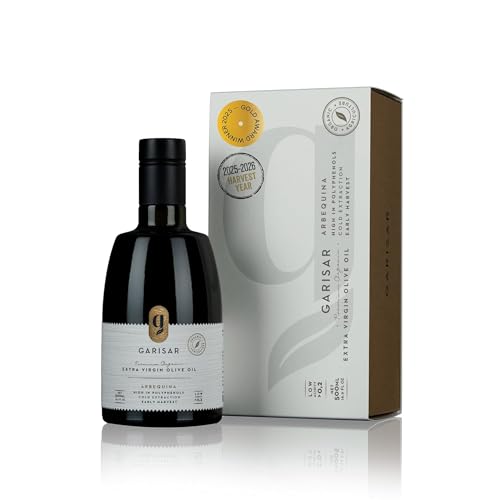
A 600+ ppm polyphenol count that pushes this into daily health-shot territory.
Garisar takes the early-harvest Arbequina olive and pushes it to a polyphenol level of more than 600 ppm (parts per million) — well above the 250 mg/kg threshold that is considered “high polyphenol.” The acidity is capped at 0.2%, one of the lowest on this list. The oil is organic, hand-picked, cold-pressed, and won a NYIOOC 2025 Gold Medal. The shelf life is a notable 720 days, which is generous for an early-harvest oil.
Taste (80 mentions) and quality (68 mentions) dominate the feedback. Owners describe a smooth, mild, rich, fruity flavor with a peppery spice. The aroma earns 16 mentions, and the polyphenol content gets 13. Many owners are taking it as a daily tablespoon — a “shot a day” approach — and report positive experiences. The packaging gets specific praise: “much thought and care was taken with the packaging.”
The biggest hurdle is the cost. Value for money draws mixed sentiment, and one owner gave it 4 stars solely for the price, saying they would “not repurchase due to cost.” Another noted it caused “some intestinal discomfort” when taken straight by the tablespoon, which is not uncommon with very high-polyphenol oils. This is an oil you use sparingly, not for frying.
The Daily Dose: If you want a measurable, high-polyphenol oil for daily consumption — drizzled, in salads, or as a morning teaspoon — this delivers a verified 600+ ppm count with a pleasant flavor profile that makes the routine enjoyable.
The Reality Check: The cost per ounce is high, and using this for cooking would be an expensive mistake. Treat it as a finishing oil or a functional food.
7. Mythology Greek Olive Oil From Greece, Cold Pressed Extra Virgin, PDO Kolymvari Chania Crete, 3 Liter

A 101 fl oz tin of PDO Crete oil that delivers peppery authenticity at a volume that lasts.
Mythology comes from the Kolymvari region of Crete, where olives are hand-picked from trees that can be up to 3,000 years old — the koroneiki variety that has been harvested on this island for centuries. The oil is first cold-pressed at temperatures up to 27°C, giving it an acidity of 0.5% and a golden-green hue. At 101 fl oz, this is the second-largest bottle on the list (only the 68 fl oz Pompeian is smaller? No — 101 fl oz is actually larger than Pompeian’s 68 fl oz). It comes in a beautiful tin can.
Flavor leads at 84 mentions, quality at 80. Owners consistently praise the “authentic peppery bite” and “grassy fresh flavor.” Many note it has no bitter aftertaste and works well for dressings, sautéing, and even popcorn. The value-for-money sentiment is positive — 29 owners mention it specifically. The oil is versatile enough for everyday cooking, which is rare at this quality tier. Owners also appreciate the origin story: single-origin real olive oil from Crete’s ancient groves.
The recurring downside is a packaging issue: 9 owners mention leakage from the tin. This is the most common complaint and seems to be a seal or handling problem. The tin can also means you cannot see the oil level without opening it, which some find inconvenient. And at 0.5% acidity, it is higher than the premium entries (which sit around 0.2%), though still well within extra virgin standards.
What Wins Owners Over
- Massive 101 fl oz volume — the largest in this guide — for high-volume households
- PDO certification from Crete’s Kolymvari region guarantees origin and quality
- Smooth, rich flavor with a peppery finish that works for both cooking and finishing
What to Watch For
- Leakage from the tin can is a noted problem — treat the packaging carefully during shipping and storage
- Acidity at 0.5% is higher than the 0.2% of premium competitors like Garisar or Entimio
- The tin does not reseal as tightly as a glass bottle with a pour top
The Bulk Connoisseur’s Choice: If you go through olive oil fast and want PDO-quality Greek oil without the per-ounce cost of a small glass bottle, this tin delivers. The flavor is good enough for finishing but affordable enough for sautéing.
Pass On It If: Leaky packaging is a dealbreaker for you, or if you prefer the zero-light protection of a dark glass bottle.
8. P.J. KABOS 2025/26 Fresh Harvest, Extremely High Phenolic (900+ mg/kg)
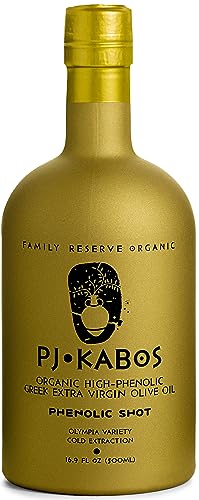
A 900+ mg/kg phenolic count that makes this the most potent oil in the lineup by a wide margin.
P.J. Kabos is not messing around. The phenolic content is measured at 900+ mg/kg via HPLC and 1400+ mg/kg via NMR — numbers that the maker claims are “probably the highest phenolic content for a TRUE Extra Virgin Olive Oil on the market today.” The oil comes from the Ancient Olympia vicinity of Greece (north of Kalamata), made from the Olympia tree variety. It is USDA Organic, Kosher, cold-extracted, and harvested in September/October 2025 with a best-before of December 2027. The level of specificity here — harvest month, chemical testing method, exact phenolic range — is unusual and speaks to a producer who takes transparency seriously.
The flavor is polarizing by design. Taste leads at 110 mentions, quality at 104. The polysaccharide content produces what owners describe as a “highly bitter and pungent taste” — which is exactly what you want if you are chasing polyphenols. The health benefits get 38 mentions, with owners noting reduced inflammation and improved digestion. One owner describes a 2-tablespoon daily routine that helped with pain.
The catch is that this oil is hard to enjoy as a simple dressing. The bitterness is intense — “be prepared,” the product description warns — and many owners recommend using a chaser if taking it as a morning shot. Value for money is mixed (49 mentions), and the digestibility is also mixed (12 mentions). If you are not used to high-polyphenol oils, this can be a shock to the palate and the stomach.
The Functional Health Oil: If your goal is the highest measurable polyphenol intake from a verified source, this is the bottle. The transparency around testing methods and harvest dates is class-leading.
Definitely Not For: Anyone who wants a pleasant, easy-drinking finishing oil for bread dipping or salad dressing. The bitterness here is a feature, not a flaw — but it is an acquired taste.
9. Entimio Intenso Organic Italian Extra Virgin Olive Oil (1,000+ mg/kg)
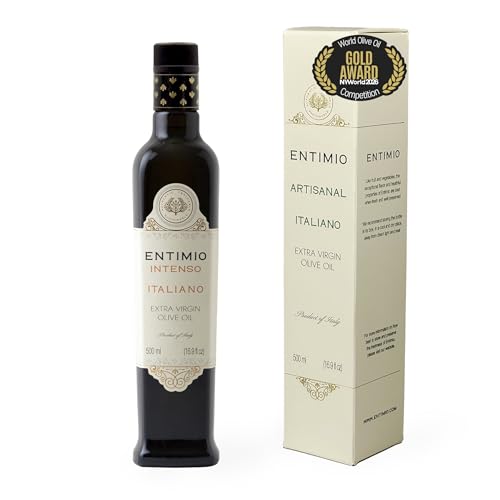
An Italian early-harvest oil with 1,000+ mg/kg polyphenols and a throat-tingling finish that oil lovers chase.
Entimio Intenso is the polyphenol king on paper: 1,000+ mg/kg, which is even higher than the already-impressive P.J. Kabos. It comes from Puglia, Italy, from an Apulian family estate, and is made from early-harvest green olives. The flavor is built around notes of green almond, artichoke, and tomato, with a “balanced peppery-bitter mix” from the high antioxidant content. It is USDA Certified Organic, won a 2026 NYIOOC Gold Award, and has a smoke point above 470°F — unusually high for a polyphenol-rich oil. The harvest is October 2025 with a best-before of January 2028.
Quality leads at 47 mentions, flavor at 41. Owners are enthusiastic about the “strong, fresh aroma” and the “distinct peppery, slightly bitter throat kick” that signals high-quality EVOO. The packaging is praised: “perfect packaging for glass; no leaks.” Some owners are using it as a daily teaspoon and report improved digestion. The product comes with a leaflet on food pairings and a satisfaction guarantee — the maker offers a refund for any reason within six months.
The downsides are familiar in this tier: value for money is mixed (21 mentions), and the flavor is intense enough that some owners say they would not use it for cooking, as the aroma is lost when heated. It sits in an expensive per-ounce bracket, and the 2.5 x 2.5 x 12 inch bottle is taller and slimmer than most, which can be awkward to store.
What Makes It Special
- 1,000+ mg/kg polyphenol content — the highest verified number in this lineup
- High smoke point (470°F+) is unusual for a polyphenol-rich oil — searing is an option
- Six-month satisfaction guarantee removes the risk from the high price tag
Where It Stumbles
- The intense peppery kick can overwhelm delicate dishes — it is a finisher, not a pantry all-rounder
- High cost per ounce compared to every other entry here
- Tall 12-inch bottle may not fit under standard upper cabinets
The Crown Jewel: If you want the single highest polyphenol count in a verified Italian estate oil, this is the bottle. It works as a health shot, a bread-dipper, and — thanks to that 470°F+ smoke point — a finishing sear oil.
Think Long And Hard If: You need something for daily cooking and drizzling. The intensity is a feature, but it is not a versatile oil. And neither is the price tag.
Understanding the Specs
Polyphenol Content (mg/kg or ppm)
This is the most important number for anyone buying fancy olive oil for health or flavor depth. Polyphenols are natural antioxidants that give EVOO its peppery bite and bitter finish. A standard grocery-store EVOO might have 100–200 mg/kg. The oils in this guide range from “naturally occurring” (Pompeian) all the way to 1,000+ mg/kg (Entimio). Higher numbers mean more antioxidants, a longer shelf life, and a more assertive flavor. If you see “ppm” (parts per million) on a label, it means the same thing as mg/kg — the two units are identical.
Acidity — Why Lower Is Better
Acidity is the percentage of free fatty acids in the oil, measured as oleic acid. It is the single most objective quality metric for olive oil. To be called “extra virgin,” an oil must have an acidity of 0.8% or less. The best fancy oils in this list drop to 0.2% (Garisar, Zahara) or even below (Entimio at less than 0.25%). A lower number means the olives were harvested at peak ripeness, handled gently, and pressed quickly. High acidity — even within the 0.8% limit — can indicate damaged fruit or delayed processing.
First Cold Pressed vs. Cold Extracted
Both terms mean the oil was extracted from olives without heat (typically below 27–30°C), which preserves the polyphenols, vitamins, and flavor compounds that degrade under high temperatures. “First cold pressed” means the olives were pressed only once, yielding the purest oil. “Cold extracted” uses a centrifugal process instead of a press but achieves the same goal of keeping temperatures low. Any oil labeled “extra virgin” must use one of these methods — if it does not say either, it is likely a refined product.
PDO and Single-Origin Labels
PDO (Protected Designation of Origin) is a European certification that requires every stage of production — from olive grove to bottling — to occur in a specific region defined by strict rules. The Barbera Lorenzo N° 1 (PDO Valli Trapanesi) and Mythology (PDO Kolymvari Chania Crete) carry this label, meaning their provenance is legally guaranteed. “Single origin” is a less regulated but still meaningful term — it means the olives come from one farm or region, not a blend of multiple sources. Single-origin oils offer a consistent, traceable flavor profile from batch to batch.
FAQ
What makes an olive oil “fancy” compared to regular olive oil?
Should I cook with fancy olive oil or only use it for finishing?
How do I read the harvest date and best-before date?
What is a polyphenol and why should I care about the number?
Does the color of the olive oil indicate quality?
What is the difference between extra virgin, virgin, and pure olive oil?
How should I store olive oil to keep it fresh?
Is P.K. Kabos or Entimio better for high polyphenols?
Can I use high-polyphenol olive oil in baking?
What do I do if my olive oil arrives with a leaky bottle or tin?
Final Thoughts: The Verdict
The best fancy olive oil depends entirely on how you plan to use it. For everyday cooking across the largest volume, the Pompeian Smooth is the crowd favorite — its quality and flavor scores (749 and 645) are class-leading at this price point, and the 68 fl oz bottle keeps you stocked for months. For a single-origin daily driver that splits the difference between value and prestige, the García de la Cruz gives you a fifth-generation Spanish estate oil with a flavor profile (almond and tomato tones, smooth body) that owners rave about. And for maximum polyphenol intake — whether for health reasons or the purest flavor experience — the P.J. Kabos (900+ mg/kg) and the Entimio Intenso (1,000+ mg/kg) are the two most potent bottles on the market, each with a loyal following that swears by the results.
How We Picked
We do not accept paid placement. Every pick is matched to a real buyer and a real use-case; we do not hands-on test units.
Sources & Methodology
Specifications: manufacturer listings and product documentation. Review insights: verified customer reviews, as of July 2026. Pricing: not shown on this page (it changes often); check the current price via the retailer link.
As an Amazon Associate, WellFizz earns from qualifying purchases. This does not affect which products we feature.
Related Guides

Mo Maruf
I created WellFizz to bridge the gap between vague wellness advice and actionable solutions. My mission is simple: to decode the research and give you practical tools you can actually use.
Beyond the data, I am a passionate traveler. I believe that stepping away from the screen to explore new environments is essential for mental clarity and physical vitality.