Our readers keep the lights on and my smoothie glass nicely filled. As an Amazon Associate, I earn from qualifying purchases.
Specs are compiled from manufacturer listings and verified buyer reviews and can change over time — please confirm the key details on the product page before buying.
A bad camping inflatable mattress turns a mountain sunrise into a misery. You lie on cold, uneven ground, wake up stiff, and spend the day dragging. The right pad lifts you off the dirt, blocks ground chill, and packs small enough for easy transport. This guide cuts through R-values and foam types to recommend pads that deliver a good night’s sleep.
I’m Mohammad Maruf — the founder and writer behind WellFizz. This guide is built by comparing the manufacturers’ published specifications and the patterns across verified customer reviews, so you get each pick’s real strengths and trade-offs instead of marketing spin.
You want a camping mattress that performs reliably on the trail and at the campsite. Here is the straight truth on the current best camping inflatable mattress options that actually earn their spot in your pack.
Our Picks at a Glance

How To Choose The Best Camping Inflatable Mattress
Match the pad to your camping style. A lightweight backpacker needs a different pad than a family car camper. Focus on three things: the R-value for warmth, the thickness for comfort, and the packed size for your gear.
R-Value: Your Shield Against the Cold Ground
The ground sucks heat out of you fast. An R-value tells you how well a pad blocks that cold. For summer camping, an R-value of 2 or 3 is fine. For three-season use, aim for 4 to 6. If you plan to camp in winter or very cold conditions, you want an R-value of 7 or higher. A higher number means a warmer sleep.
Thickness and Comfort
Thicker pads keep your hips and shoulders off the hard ground. Side sleepers especially need at least 3 inches to avoid feeling the dirt. The trade-off is that thicker pads often weigh more and pack larger. Self-inflating foam pads are usually thicker and more comfortable, while pure air pads can be lighter but may feel less stable.
Inflation Method
Nobody wants to spend 15 minutes inflating a pad by mouth after a long hike. Built-in foot pumps are fast and require no extra gear, adding maybe half a pound. A pump sack is lighter but takes a bit more work. Electric pumps are the easiest but need battery power and add weight. Choose based on how much time and effort you want to invest in setup.
Quick Comparison
| Model | Best For | R-Value | Thickness | Weight | Amazon |
|---|---|---|---|---|---|
| Big Agnes Rapide SL★ Best Overall | All-Season Backpacking | 4.8 | 4.25″ | 1 lb 6 oz | Amazon |
| VALEHOWL UltralightBest Value | Budget Backpacking | 3.0 | 2.7″ | 1.8 lb | Amazon |
| Pretyw DoubleBest for Couples | Couples Car Camping | — | 4″ | 3 lb | Amazon |
| Wevelel Memory Foam | Car Camping & Guests | 9.5 | 3.1″ | 6.59 lb | Amazon |
| TREKOLOGY UL R7 | 3-Season Backpacking | 7.2 | 4″ | 2 lb | Amazon |
| NYECHTO Self Inflating | Car Camping & Comfort | 9.5 | 3.14″ | 5.95 lb | Amazon |
| Acacia 4″ | Side Sleepers & Car Camping | 6 | 4.3″ | — | Amazon |
| Hikenture Double | 4-Season Car Camping | 9.5 | 4″ | — | Amazon |
| Exped MegaMat | Premium Car Camping & RTT | 8.1 | 4″ | 4.6 lb | Amazon |
In‑Depth Reviews
1. Big Agnes Rapide SL – Insulated Sleeping Pad, Regular (20X72)
Our pick — over 4.5★ from 300+ verified ratings; the strongest balance of quality and price.
The ultralight all-rounder that keeps side sleepers off the cold dirt.
A pad that disappears into your pack yet still cradles you at night is rare. The Big Agnes Rapide SL is exactly that. It uses two layers of heat-reflective film to achieve an R-value of 4.8 — enough for three-season camping and even light winter trips. The quilted top and offset I-Beam construction create a stable 4.25-inch bed that feels more like a real mattress than a wobbly air tube. The larger outer chambers stop you from rolling off, a huge win for restless sleepers.
You inflate this pad using the included Pumphouse sack (a dry bag that you roll to force air in), which owners say fills it in about two minutes without introducing moisture. The whole setup weighs just 1 lb 6 oz with the pump and stuff sack, making it a genuine backpacking candidate. It packs slightly larger than some minimalist pads, but the comfort-to-weight ratio is tough to top. The crowd favorite here is clear: nearly 60 owners call out comfort as the pad’s defining strength, and the positive consensus on weight and warmth backs it up.
The honest trade-off is that air retention gets mixed feedback — a few units need a top-up overnight. Also, the 20-inch width is narrow for broad-shouldered sleepers. If you want more room, the 25-inch wide version solves it. This is the pick for anyone who values a quiet night’s sleep and a pad they can actually carry to the far campsite.
What Wins People Over
- Excellent 4.25″ thickness with stable edge chambers keep you centered.
- Ultralight at 1 lb 6 oz with pump sack — true backpacking weight.
- Pump sack inflates in roughly two minutes and is moisture-free.
- Impressive 4.8 R-value for cold nights and three-season use.
Who Might Think Twice
- Standard 20″ width feels narrow for bigger frames.
- Air retention is a minor recurring theme; some need a midnight puff.
Who It Fits: The backpacker who needs one pad for spring, fall, and light winter — no compromises on warmth or pack size.
The One Caveat: If you are a 6-foot-plus side sleeper, spring for the 25-inch wide version; the standard model feels snug.
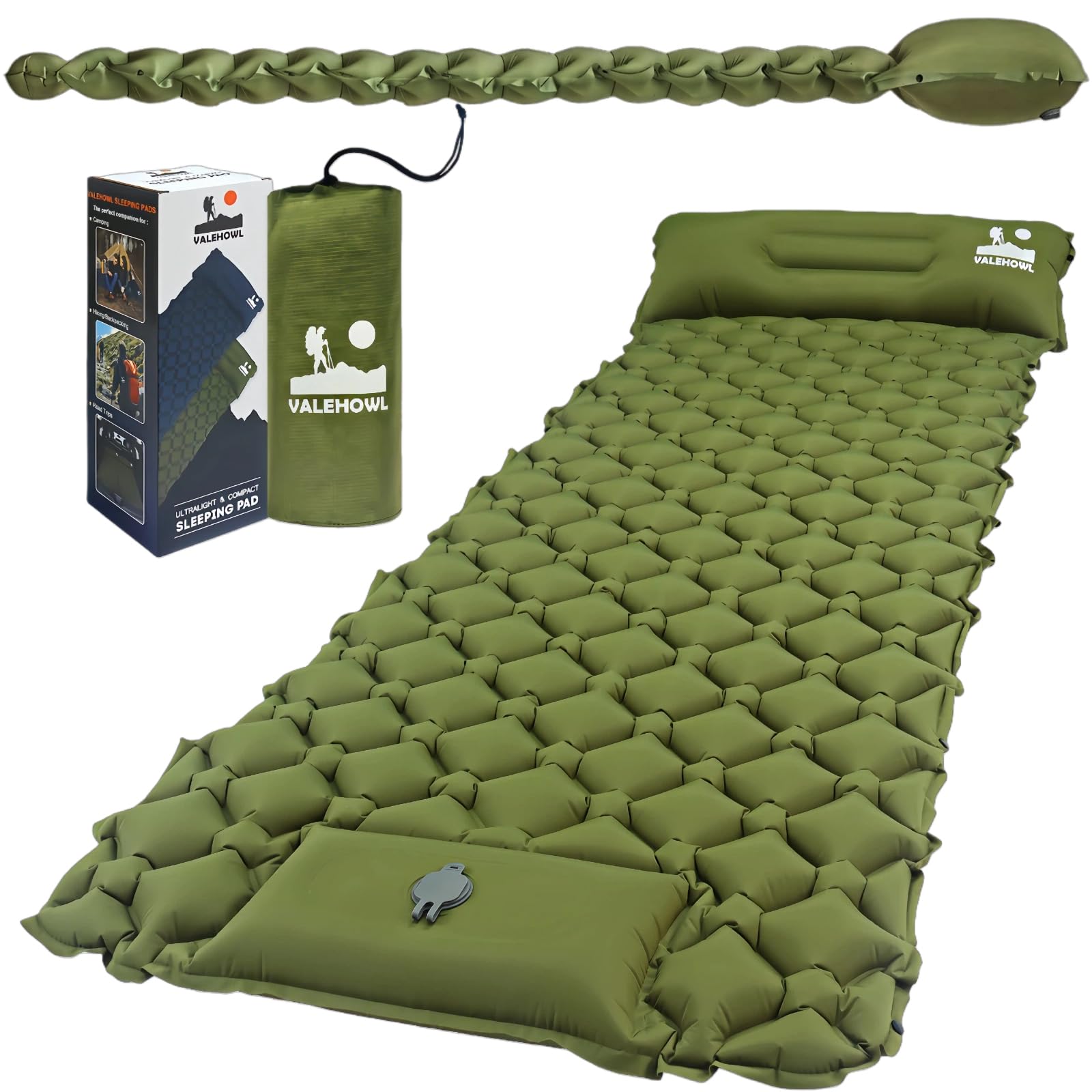
2. VALEHOWL 1.8 Pounds Ultralight Camping Sleeping Pad
A 40-second foot pump and an integrated pillow at a price that surprises.
Not every camper wants to carry a pump sack or spend money on a premium pad. The VALEHOWL hits a balance. Its built-in foot pump inflates the mattress in just 40 seconds with simple pedaling — no puffing, no extra gear. At 1.8 pounds and packing down to about 10 by 5 inches, it tucks into a backpack side pocket easily. The honeycomb air chamber design meets a 400-pound capacity, which is unusual at this level.
The 2.7-inch thickness and built-in pillow offer decent ground separation for back and stomach sleepers, though side sleepers may wish for another inch. Comfort is the most-mentioned positive, but the real story here is the integrated pump and weight combination. The included repair patch and carry bag add confidence for the trail. It also has side snap buttons to connect two pads into a double, a thoughtful touch for couples on a budget.
The biggest honest caveat is air retention. The data shows this as the most-discussed negative point. Buyers report that the valves need a firm push to seal properly — if you don’t clamp them shut, the pad slowly leaks. It’s a learnable quirk, but worth knowing. Quality also gets mixed feedback, so inspect the unit right away. This pad is a genuine budget champion for the solo hiker who prioritizes light weight and fast setup.
The Defining Trade-Off: You get incredible portability and an easy pump, but you have to be meticulous about sealing the valves. The 2.7-inch thickness works for many, but hard-core side sleepers should look at thicker options.
The Right Buyer: The budget-conscious backpacker or casual hiker who wants a self-contained, ultra-light system.
The Wrong Buyer: Anyone who tosses and turns all night and needs a thick, bombproof pad — the valve discipline and lower R-value (3.0) are real limits.
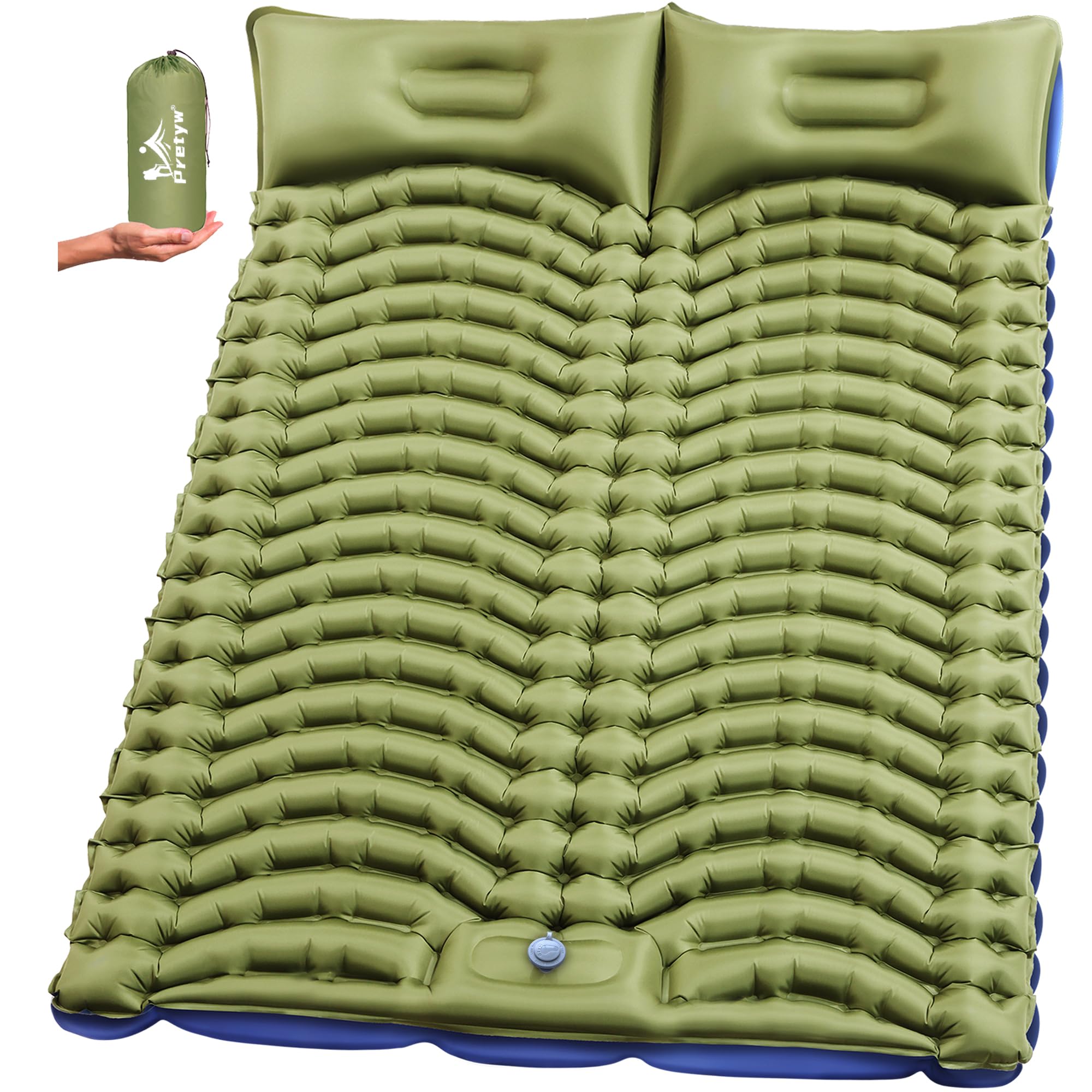
3. Pretyw Double Sleeping Pad for Camping
A 4-inch thick double pad that inflates with a few stomps — no pump needed.
Sharing a tent often means sharing a single, saggy pad. The Pretyw solves that with a generous 78 by 54 inches of surface and a built-in foot pump that fills it in 1 to 3 minutes. At 4 inches thick, it keeps two people off the ground with solid support, helped by the ergonomic pressure-relief wave pattern. The attached pillows are a nice bonus, removing one more item from your packing list.
The use of ultra-thick 40D nylon with a multi-layer TPU coating makes this pad tough against rough terrain. Owners rave about the comfort — it is the most-discussed positive by a wide margin, with over 140 mentions. Portability is a close second, and the fact it packs to 10 by 5.9 inches at just 3 pounds is impressive for a double. Setup is genuinely fast: step on the pump, watch it rise, and you are done.
The only real limit is that this is strictly a car-camping or basecamp pad. At 3 pounds and a double size, it is not for backpacking. Also, the 4-inch thickness is generous, but the foam inside is air-only, so it lacks the plushness of a memory foam hybrid. If you and a partner want a simple, quick-inflating shared bed that handles rough campsites, this is the one.
Why It Wins for Duos: The double size, built-in pillows, and foot pump make it the easiest two-person option. Comfort and portability are the top praises from owners.
The Fine Print: It is a pure air pad with no insulation foam, so ground cold can seep through on chilly nights. Pair it with a blanket or a high-R sleeping bag for cool weather.
Grab It If: You car camp with a partner and value fast setup, durability, and enough room to stretch out.
Look Elsewhere If: You need a single pad for backpacking or you camp in near-freezing temperatures — this one lacks the R-value for deep cold.
4. Wevelel Memory Sleeping Pad, 3.1″ Ultra-Thick Foam

A memory foam slab that turns a tent floor into a five-star sleep.
If warmth and plush comfort are non-negotiable, this Wevelel pad is the answer. Its 50D high-density memory foam (50D versus the 19D density of standard pads) delivers an R-value of 9.5 — the highest in this lineup. That number means you can sleep on snow and still stay warm. The 3.1-inch thickness and 800-pound capacity make it feel like a real mattress, not a compromise. The 50D stretch knit fabric is skin-friendly and silent, so no crinkling as you shift.
The self-inflation process is simple: open the three valves, let it expand for 10 seconds, then step on the front valve for 20 seconds to finish. The updated two-layer valve is a clever design that allows one-way deflation, making packing easier. Owners describe the comfort as transformative, with hip and back pain disappearing. It is wide at 26.98 inches, giving broad shoulders room to rest.
The trade-off is weight and bulk. At 6.59 pounds, this is a car-camping, RV, or guest-bed pad — not a backpacking option. The built-in pillow is also on the low side, which some owners note. If you are driving to camp and want the warmest, most forgiving sleep surface available, the Wevelel earns its spot. It is also an excellent choice for a ground pad inside a roof-top tent.
The Warmth King
- Exceptional 9.5 R-value blocks extreme ground cold.
- High-density memory foam (50D) cradles hips and shoulders without sinking.
- Support up to 800 lbs — built for power couples or restless sleepers.
- Quiet, noiseless fabric surface.
The Real-World Limit
- Weighs 6.59 lbs — strictly for car camping or basecamp use.
- Built-in pillow is lower than some prefer; may need a separate pillow.
Who Needs This: The cold-weather car camper, overlander, or anyone who uses a roof-top tent and wants bed-level comfort.
Who Does Not: Backpackers or anyone counting ounces. This pad stays in the car, not in the pack.
5. TREKOLOGY Sleeping Pad UL R7
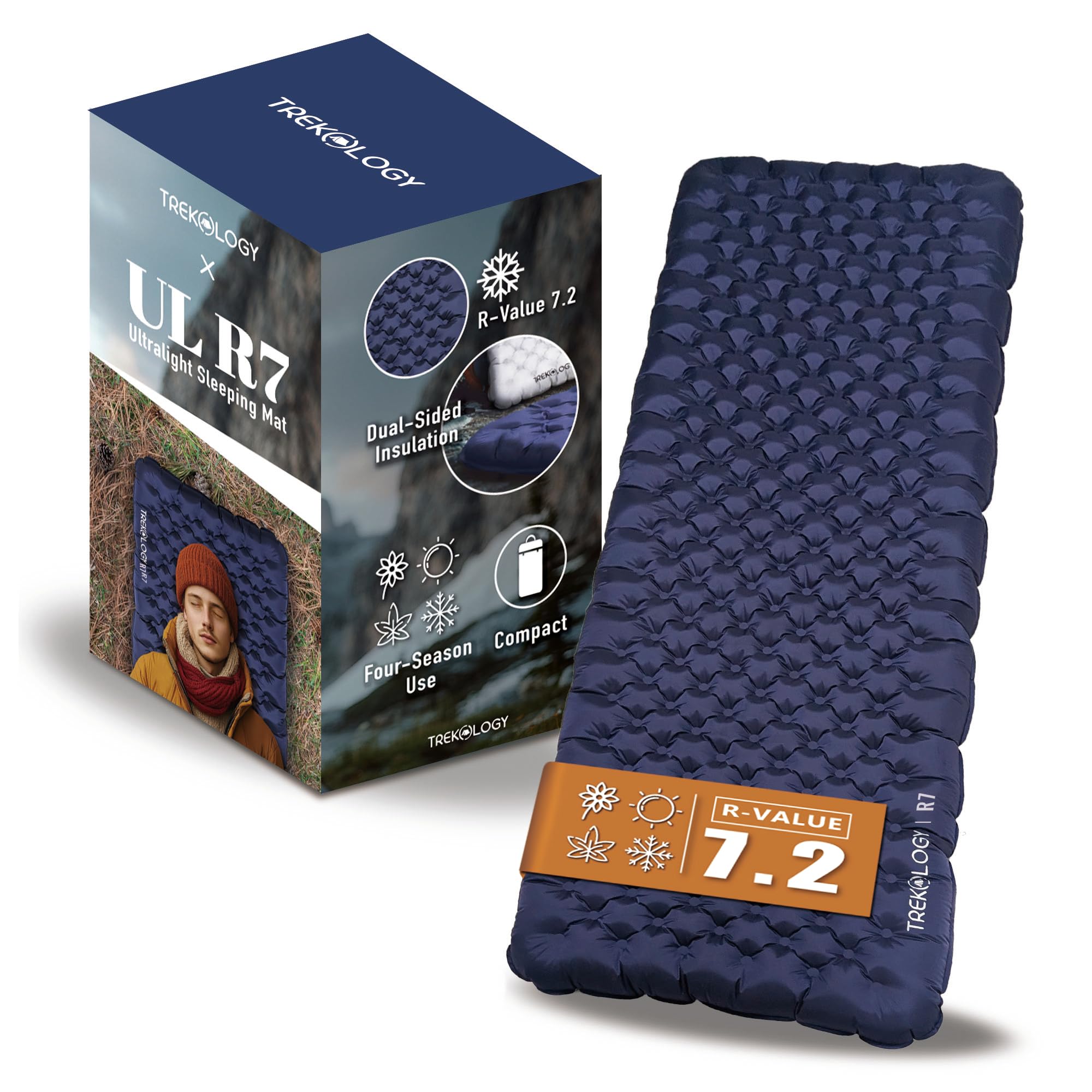
A 4-inch thick, 2-pound pad with an R-value high enough for snow.
The TREKOLOGY UL R7 threads a hard needle: genuine cold-weather insulation without the heavy weight. Its SGS-certified 7.2 R-value is backed by a 4-inch thickness that keeps your body off the ground completely. At just 2 pounds and packing down to water-bottle size, it is a strong contender for deep backcountry trips where ounces matter. The 40D ripstop nylon with TPU coating gives it a tough skin against rocks and roots.
Warmth is the standout here — owners consistently note it keeps them comfortable in temps down to 22°F with the right bag. The advanced insulating air chambers distribute weight evenly, which guards against the cold ground leaking through. It supports up to 330 lbs, and the anti-leak valve is designed to prevent air loss. For the hiker who needs a single pad for spring, fall, and even mild winter treks, this is a top pick.
The honest squeeze is that inflation is a point of mixed feedback. There is no built-in pump; you need a separate pump sack (sold separately) or your lungs. Some owners also report moisture inside the pad after extended use, so drying it before storage is wise. The surface can be a bit slippery on a sloped tent floor. If you can tolerate the extra step of using a pump sack, the warmth-to-weight ratio here is market-leading.
The Verdict: The UL R7 is a serious tool for the three-season backpacker who pushes into shoulder seasons. It delivers insulation that rivals much heavier pads, but plan on buying a pump sack.
Best For: Hikers and backpackers who want the highest possible R-value without carrying a car-camping behemoth.
skip it if: You want a built-in pump or you camp in extreme winter conditions below 15°F — the R7 seems to perform better in the low 20s than in single digits.
6. NYECHTO Self Inflating Sleeping Pad with Electric Pump

Press a button and walk away — this pad inflates itself in under a minute.
The NYECHTO removes every ounce of effort from setup. Its built-in, rechargeable intelligent pump inflates the 3.14-inch thick memory foam pad at the push of a button. The detachable pump uses two 1200mAh batteries and charges via USB-C, good for about seven inflations on a full charge. You get a self-inflating foam core (28D density) that holds up to 665 pounds, plus a one-touch deflation feature that compresses the pad to just 0.7 inches for storage.
Comfort is the top praise from owners, with over 70 mentions. The foam-and-air hybrid feels more like a gel mattress than a traditional camping pad. The 50D stretch knit fabric (a durable, stretchy textile) is breathable and noiseless. The 9.5 R-value (a measure of insulation against ground cold) is identical to the Wevelel, meaning this pad is also built for four-season use. At 5.95 pounds, it is not a backpacking piece, but for car camping, RVs, or guest beds, the convenience is class-leading.
The catch is the pump’s reliability. A small number of owners mention issues with the pump failing after several trips. Air retention also gets mixed notes, similar to most foam-air hybrids. Make sure the valve is fully closed after inflation. This is the pad for the camper who values speed and comfort above all else and drives to the site.
The Convenience Factor
- One-touch electric pump inflates and deflates automatically.
- USB-C rechargeable, good for roughly 7 cycles per charge.
- Combines 28D memory foam with air for hotel-bed comfort.
- 9.5 R-value blocks winter ground chill.
The Realities
- Weighs 5.95 lbs — strictly for car camping, not backpacking.
- Pump reliability is an occasional owner complaint; pack a backup plan.
Reach for This If: You car camp or overland and want a real bed with zero setup work. The built-in electric pump inflates the pad in under a minute, ideal for family car camping.
Look Elsewhere If: You are a backpacker or you sleep in remote spots where charging the pump is impractical.
7. Acacia 4″ Thick Self Inflating Sleeping Pad with Foam

A Y-shaped foam core that packs 60% smaller than traditional foam pads.
The Acacia pad solves the classic foam dilemma: great comfort, terrible pack size. Its innovative Y-shaped telescopic foam structure compresses the volume by up to 60% after deflation, making it far more portable than comparable self-inflating pads. At 4.3 inches thick and supporting up to 440 pounds, it is one of the plushest options here. The soft, noiseless polyester surface and 6 R-value make it suitable for three-season use.
Side sleepers are the core audience here. The 4.3-inch thickness prevents the classic hip-bone digging into ground problem. Owners are emphatic about comfort — it is the most-praised feature, with nearly 120 mentions. The 2-way valve handles most inflation and deflation automatically, and you can use the included carry bag as a pump sack to fine-tune firmness. Side buckles let you connect multiple pads for a larger sleep surface.
The honest note is that air retention receives mixed feedback. Some customers note the pad losing air over several hours, often linked to temperature changes or valve issues. The company’s customer service is repeatedly praised for handling replacement quickly. This is a fantastic pad for car camping and overlanding, especially for side sleepers, but be ready to check the seal each night.
The Defining Feature: The Y-shaped telescopic foam that packs down 60% smaller than standard foam pads is a legitimate innovation. Comfort and ease of use are the headline positives.
The Recurring Point: Valve air retention is the most common mixed point; check it, but know that customer support is responsive if you get a dud.
Grab It If: You are a side sleeper who hates waking up with a sore hip and needs a pad that packs smaller than the bulk of foam pads.
Pass If: You need absolute reliability on multi-night trips without any chance of a leak — the valve history suggests a minor risk.
8. Hikenture Extra Thick Double Self Inflating Sleeping Pad

A 4-inch thick, high-R double pad for couples who camp in the cold.
If you and a partner share a tent year-round, the Hikenture is built for you. This pad combines memory foam with a 9.5 R-value, making it one of the warmest double pads available. At 80 by 52 inches, it gives two people room to stretch without touching the cold tent floor. The 4-inch thickness and plush surface mean hips and shoulders are well-supported. The soft polyester fabric is silent, a real boon for light sleepers.
The patented 2-way valve simplifies inflation. Just open it, let the pad self-inflate for a few minutes, then use the included pump sack to top it off. Deflation is also easy: flip the valve to expel air without it sucking back in. Owners consistently rate comfort and quality as top features, and the pad holds air well over several nights. It is durable enough to handle family car camping and even light use as a guest bed at home.
The main limitation is weight and size. It is bulky, and not a candidate for backpacking. The pump sack works, but some owners note that the valve can be a bit finicky to get a perfect seal on the first try. Also, the 9.5 R-value is tested, but the pad is heavy enough that it is best for vehicle-based trips. For a couple who car camps in all seasons and wants to share a warm, quiet, thick bed, this is the standout.
The Couples’ Verdict: Exceptional warmth (9.5 R-value) and generous dimensions (80×52 inches) make this the best winter double pad. The self-inflating design and included pump sack mean setup is pleasant, not a chore.
The Fine Print: It is heavy and bulky, so it lives in the car. The valve needs a moment of attention to seal correctly each time.
Best For: Couples or families who car camp in all seasons and need a thick, warm, quiet double pad.
Consider Something Else If: You need a single pad for solo backpacking, or you camp primarily in hot summer weather where the high R-value is overkill.
9. Exped MegaMat Sleeping Pad, Medium Wide
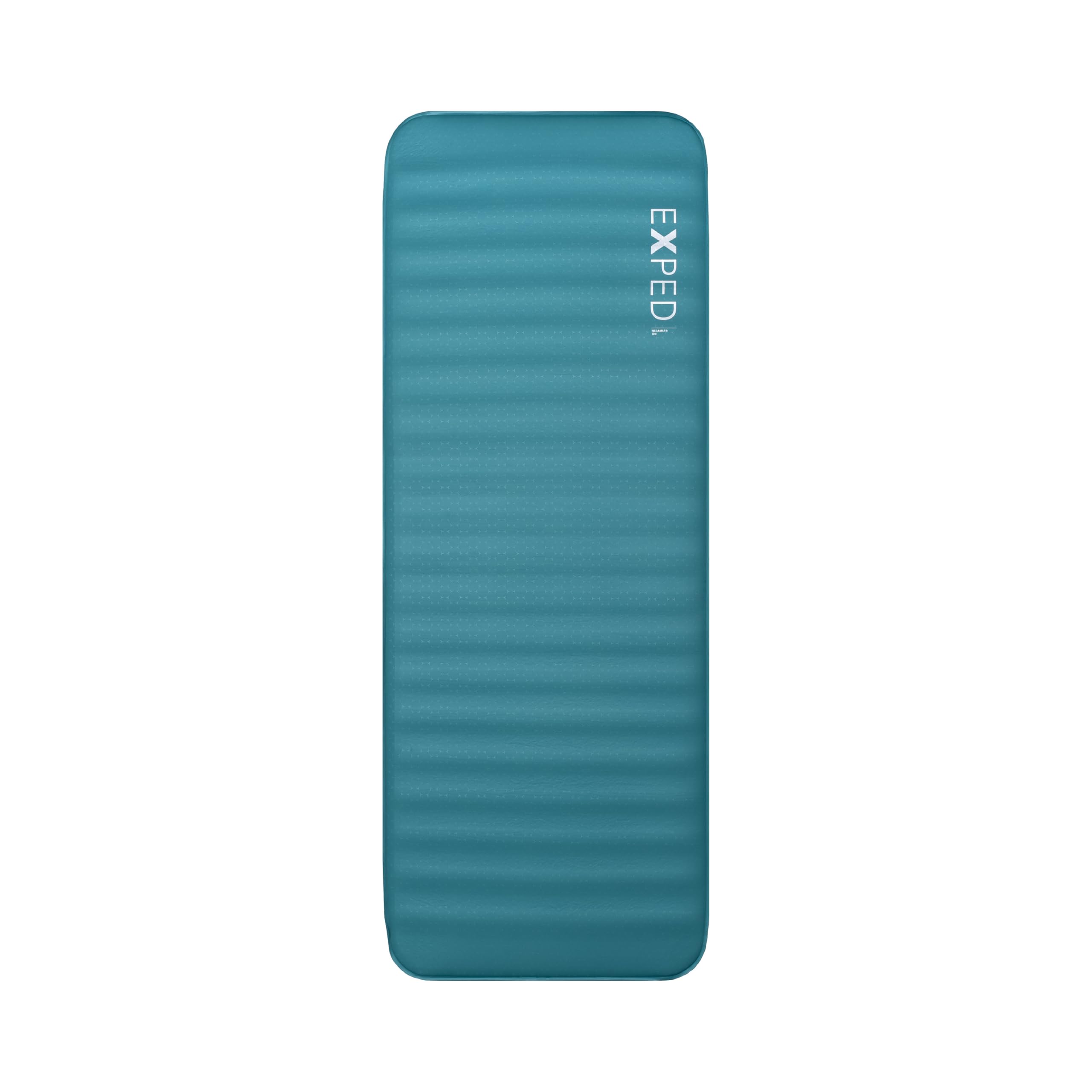
The gold standard of car-camping foam pads, now with a mini pump included.
The Exped MegaMat is the pad that other pads want to be. It uses 4 inches of open-cell foam with air-core-channeled insulation and 3D vertical sidewalls that prevent the dreaded bottoming out. The result is a surface that feels genuinely like a home mattress. The 8.1 R-value handles all but the most extreme winter conditions, and the 25.6-inch width gives generous room for a single sleeper. The 100% recycled 4-way stretch tricot polyester fabric is soft, quiet, and durable.
The included Top-Up Pump lets you dial in your ideal firmness from plush to firm. The self-inflation feature handles most of the work, and the pump finishes the job quickly. Owners praise the comfort and ease of use, with many noting it fits perfectly inside a roof-top tent. It holds its shape and firmness even when two people share it, though it is technically a single pad. The oversized carry bag makes packing it back up a realistic task.
The price is the main barrier. It is the most expensive pad here by a good margin. Value for money gets mixed feedback, as some owners feel the price is steep despite the quality. Inflation also has mixed notes, with some saying the first inflation takes patience. If you can stomach the cost and you sleep in a vehicle, RTT, or large tent, the MegaMat is the most bed-like experience you can pack.
The Comfort Benchmark
- 4 inches of open-cell foam with 3D sidewalls prevents bottoming out.
- Soft, quiet recycled tricot fabric feels like a real sheet.
- Adjustable firmness via included Top-Up Pump.
- 8.1 R-value handles cold nights and 4-season car camping.
The Honest Trade-Offs
- Premium price that earns mixed value-for-money feedback from owners.
- First inflation takes longer than advertised; patience is required.
- At 4.6 lb, strictly for car camping and roof-top tents.
The Right Buyer: The dedicated car camper or overlander who wants a true mattress experience and is willing to pay for it. Excellent for roof-top tents.
The One to Skip: Backpackers, budget-focused campers, or anyone who needs a quick, throw-it-down setup without reading a manual.
Understanding the Specs
R-Value (Thermal Insulation)
This number measures how well the pad blocks cold from the ground. The higher the number, the warmer you sleep. A pad rated at R-Value 4.8, like the Big Agnes Rapide SL, is great for three-season camping. A pad with an R-Value of 9.5, like the Wevelel or NYECHTO, is designed for winter camping. If you camp mainly in summer, a lower R-value (2 to 3) is enough.
Thickness and Comfort
Thickness is measured in inches. A 4-inch thick pad gives your hips and shoulders plenty of ground clearance, which is vital for side sleepers. Thicker pads are more comfortable but tend to be heavier and larger when packed. A 2.7-inch pad like the VALEHOWL is lighter and packs smaller, but side sleepers may feel the hard ground through it.
FAQ
How do I know if a camping inflatable mattress will fit in my tent?
What does R-value mean for a sleeping pad?
Should I get a self-inflating foam pad or a pure air pad?
How do I prevent my camping mattress from deflating at night?
Can I use a camping inflatable mattress as a guest bed at home?
How do I pack a self-inflating foam pad back into its bag?
What is the difference between a built-in foot pump and a pump sack?
How much weight can these camping mattresses hold?
Is a thicker sleeping pad always more comfortable?
Can I use a double sleeping pad for a roof-top tent?
Final Thoughts: The Verdict
Across the board, the best camping inflatable mattress winner is the Big Agnes Rapide SL because it balances ultralight backpacking weight with legit 4.25-inch comfort and a 4.8 R-value. If you car camp and want pure luxury, the Exped MegaMat is the gold standard for foam support. For a budget-friendly solo trek, the VALEHOWL Ultralight is the one to reach for — just remember to clamp those valves.
How We Picked
We do not accept paid placement. Every pick is matched to a real buyer and a real use-case; we do not hands-on test units.
Sources & Methodology
Specifications: manufacturer listings and product documentation. Review insights: verified customer reviews, as of July 2026. Pricing: not shown on this page (it changes often); check the current price via the retailer link.
As an Amazon Associate, WellFizz earns from qualifying purchases. This does not affect which products we feature.
Related Guides

Mo Maruf
I created WellFizz to bridge the gap between vague wellness advice and actionable solutions. My mission is simple: to decode the research and give you practical tools you can actually use.
Beyond the data, I am a passionate traveler. I believe that stepping away from the screen to explore new environments is essential for mental clarity and physical vitality.