Our readers keep the lights on and my smoothie glass nicely filled. As an Amazon Associate, I earn from qualifying purchases.
Specs are compiled from manufacturer listings and verified buyer reviews and can change over time — please confirm the key details on the product page before buying.
You know that sinking feeling when you snap a photo indoors or at dusk and it turns out muddy and grainy? That is the moment a cheap camera reveals its limits. But you do not need to spend a fortune to get clean shots in dim light. The trick is picking a camera with the right sensor (the chip that captures light) and a lens that opens wide enough to soak up what little light is there. This guide compares three real options — a beginner-friendly 5K hybrid and two classic DSLRs (Digital Single-Lens Reflex cameras) — that handle low light well while staying affordable.
This guide is based on published specs from the manufacturers and patterns from verified customer reviews. The best budget low light camera for you depends on if you want a modern point-and-shoot with a built-in fill light (a small LED on the camera that shines extra light on your subject) or a refurbished DSLR with a larger sensor. Each is matched to the shooter who will actually enjoy using it.
Our Picks at a Glance
How To Choose The Best Budget Low Light Camera
A budget label does not mean you have to accept blurry night shots or noisy indoor photos. The real separation between a decent budget camera and a dud in dim light depends on just a few specs you can check before you click “buy.”
Look at the Sensor Size, Not Just the Megapixel Count
A 24.2-megapixel APS-C sensor (the kind inside a real DSLR) will capture way more light than a small point-and-shoot sensor, even if both cameras claim a high MP figure. Larger physical pixels mean less grain at higher ISO settings — and that grain is what makes low-light shots look terrible.
Check the Lens Aperture at the Wide End
The aperture number (f/2.8 vs f/5.6) tells you how wide the lens opens to let light hit the sensor. A lens that opens to f/2.8 or f/3.5 versus f/5.6, which translates directly to faster shutter speeds and cleaner results when the sun goes down.
Count the Autofocus Points
More autofocus points give the camera more places to lock onto your subject in dim lighting. A camera with just 9 points (like the Canon Rebel T7) will hunt for focus more than one with 11 points (like the Nikon D3200), especially when you are shooting moving subjects after dark.
Quick Comparison
| Model | Best For | Sensor / Resolution | Lens Aperture | Autofocus Points | Amazon |
|---|---|---|---|---|---|
| 5K Digital Camera 64MP★ Best Overall | Beginner vloggers & travel | 64MP digital sensor | — | — | Amazon |
| Nikon D3200 | Entry-level DSLR learners | 24.2 MP APS-C CMOS | f/3.5–f/5.6 | 11 | Amazon |
| Canon EOS 2000D / Rebel T7 | Beginners wanting a full kit | 24.1 MP APS-C CMOS | f/2.8–f/5.6 | 9 | Amazon |
In‑Depth Reviews
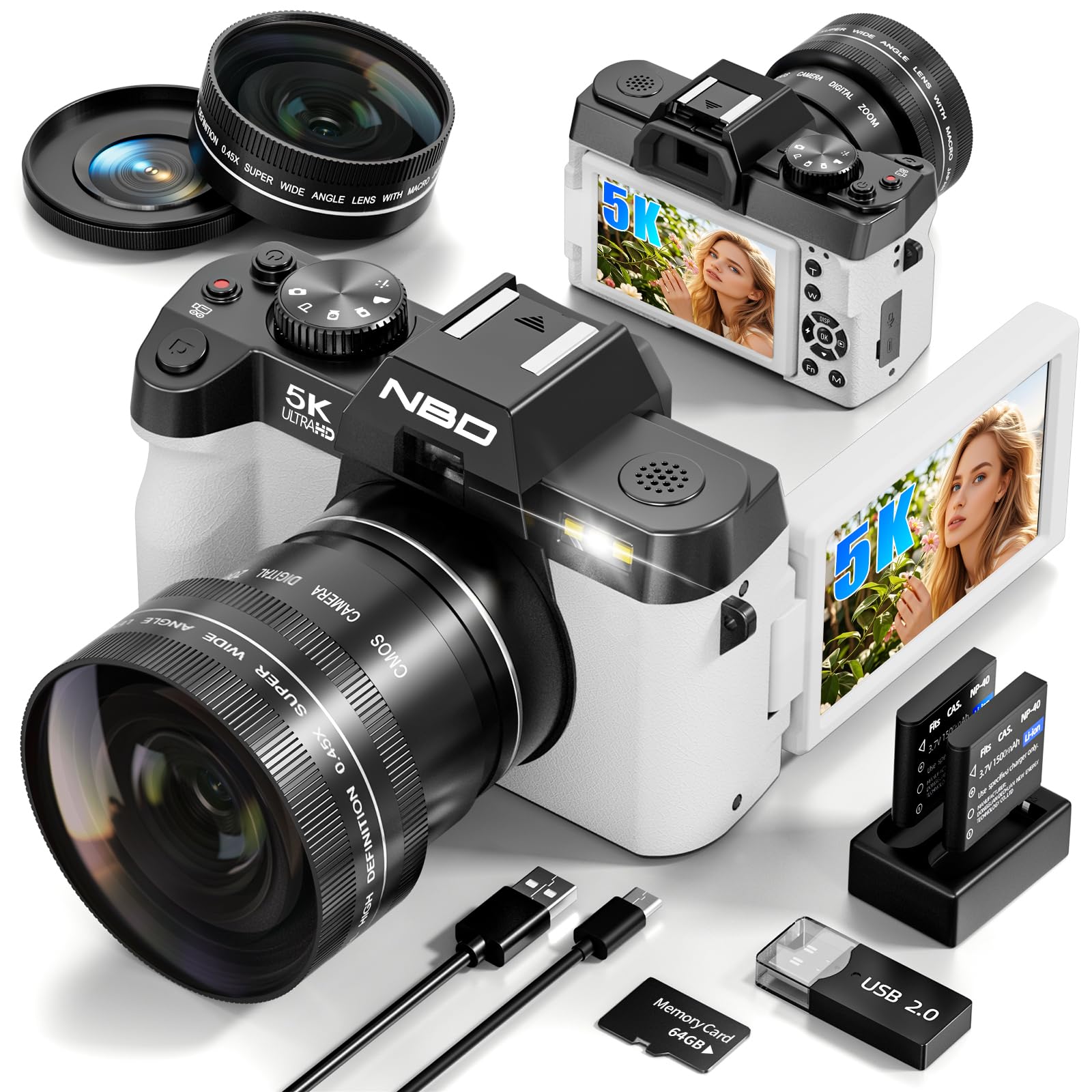
1. 5K Digital Camera 64MP — 16X Zoom, WiFi, with 64GB TF Card
The all-in-one starter that brings its own light for dim rooms and late evenings.
This camera solves the biggest frustration of cheap low-light cameras — it includes a built-in fill light right on the body, so you do not need to rig an external flash or hope for a bright window. At 5K video recording with 64MP stills, it delivers more resolution than any traditional budget DSLR at this level. The 16X digital zoom, controlled through a physical ring on the lens, gives you reach you can feel without digging into menus.
What wins owners over is the sheer completeness of the package: a 52mm wide-angle lens, a macro lens for close-ups, a 180-degree flip screen for self-shooting, and a 64GB TF card plus two batteries right in the box. Reviewers describe it as easy to use from the start, with quick autofocus and a lightweight body that makes it natural to carry for travel or vlogging. Battery life is strong enough that the two included packs cover a full day of casual shooting.
Owners consistently note how clear and bright the photos and videos come out, even for someone just picking up a camera for the first time. One parent summed it up by saying his son “loves this camera” as a first step into photography. The crowd favorite is a perfect 5.0-star average, though with a leaner count than the DSLR options — meaning early buyers are thrilled.
Why it wins beginners over
- Built-in fill light saves indoor and dusk shots without extra gear
- 5K video and 64MP stills out-resolve traditional DSLR kit lenses
- Includes two batteries, 64GB card, wide-angle & macro lenses, all ready to shoot
Honest trade-offs
- Digital zoom (16X) crops into the sensor, reducing image quality at max reach
- Sensor is small compared to an APS-C DSLR — real low-light depth still favors a larger sensor
- Relatively new on the market with a small review base so far
Who this fits: Total beginners, vloggers, and travelers who want one box with everything they need to start shooting in less-than-perfect light immediately, no second purchase required.
The one catch: If your priority is pure low-light quality with shallow depth of field for portraits or indoor action, the larger sensor on the Nikon D3200 will deliver a cleaner image when the lights are really low.
2. Nikon D3200 24.2 MP DSLR with 18-55mm f/3.5-5.6 AF-S DX Lens (Renewed)
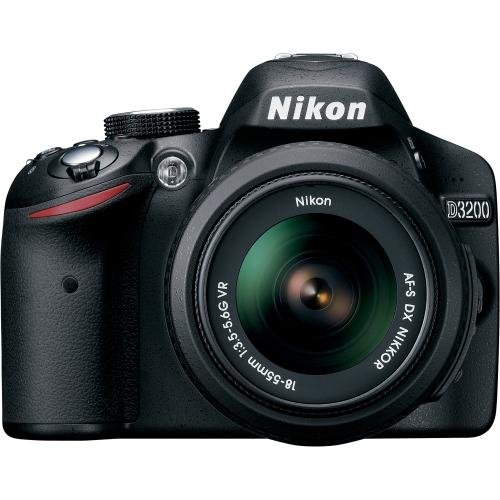
The refurbished DSLR that punches above its price with real low-light sensor performance.
Here is the honest DSLR choice for anyone who cares more about image quality in dim conditions than about having the newest touchscreen. The 24.2-megapixel APS-C CMOS sensor is physically much larger than the sensor in the 5K camera above, which means each pixel captures more light and delivers noticeably less grain at higher ISO settings (the measure of the sensor’s sensitivity to light). The included 18-55mm f/3.5-5.6 kit lens, while not a fast prime, pairs with that big sensor to handle low light decently — as owners put it, the lens is sharp and the camera handles dim interiors well.
With 11 autofocus points (spots in the viewfinder where the camera can lock focus) using contrast detection, it offers more than the 9-point system in the Canon T7, giving you an extra two focus zones to help lock onto your subject when light is scarce. The EXPEED III image processor also helps the camera manage noise at higher ISOs, so your evening candids stay usable rather than noisy. The battery is a standout here — buyers report that it lasts roughly 500 shots across 3-4 hours, enough for a full day of shooting without hunting for an outlet.
Reviewers across the board call this a perfect beginner’s SLR, noting that the refurbished units look nearly new and function perfectly. One owner described the D3200 as “genuinely my best friend” for how reliably it delivers high-quality photos. The consensus among owners is that it is excellent value for the money, with easy auto and semi-manual settings that help you learn without frustration.
The one feature it lacks is built-in WiFi, which a few owners flag — you will need a separate wireless adapter to transfer photos to your phone. The bundle may also include an off-brand battery and original strap, and it typically does not come with an SD card or printed manual. The 18-55mm lens has a maximum aperture of f/3.5 at the wide end, which means you will still need a faster prime lens (like a 35mm f/1.8) to truly excel in very low night conditions.
What keeps owners coming back
- APS-C sensor (24.2 MP) delivers cleaner low-light images than any point-and-shoot at this price
- 11 autofocus points give better subject lock in dark scenes than the 9-point Canon T7
- Battery lasts roughly 500 shots in 3-4 hours — covers a full day out
Limits to know
- No built-in WiFi — you need a separate adapter to share photos wirelessly
- Kit lens (f/3.5-5.6) is decent for low light but a faster prime will open up its real night potential
- Refurbished units may show minor cosmetic wear (faded button icons, dirt on grip) as noted by some owners
Reach for this if: You want real DSLR image quality in low light without the high price tag, and you are okay learning the basics on a refurbished body that performs like new.
Look elsewhere if: You need instant wireless sharing from the start — in that case, the Canon T7 below includes built-in WiFi for direct phone transfers.
3. Canon EOS 2000D / Rebel T7 DSLR with 18-55mm Lens + Accessory Bundle (Renewed)

The Canon starter bundle that gives you everything to begin shooting immediately, including wireless transfers.
This is the camera for the beginner who wants the reassurance of a major brand, an included accessory kit that covers the basics, and the convenience of built-in WiFi to get photos onto a phone instantly. The 2000D (also sold as the Rebel T7) uses a 24.1-megapixel APS-C sensor and an EF-S lens mount — the same sensor size class as the Nikon D3200 above, which means similar benefits in low light versus a tiny point-and-shoot sensor. The aperture range runs from f/2.8 to f/5.6 depending on the lens in the bundle, which includes a telephoto and a wide-angle lens alongside the standard 18-55mm zoom.
Where this kit pulls ahead for the first-time buyer is the sheer completeness of the 20-piece bundle: you get the camera body and lenses, a SanDisk 32GB memory card, a tripod, a carrying case, and extra accessories — enough that you can open the box and start shooting the same afternoon without buying anything else. The WiFi and NFC features let you pair the camera with a smartphone or tablet using the Canon Camera Connect app for wireless remote control and instant sharing to social media.
One thing several owners mention is that the camera lacks an external microphone input, so the built-in audio is fine for casual clips but not ideal if you plan to shoot serious vlogs with clear sound. But the 3:2 aspect ratio (the shape of the frame) still delivers the classic DSLR frame, and the optical viewfinder gives you a real, lag-free preview of your scene.
The bundle’s value is the headline here: newcomers describe it as a great starter setup that is simple to use and easy to understand, and owners note that the picture quality is wonderful for the price point. One new owner called it “amazing” and “light weight,” praising how easy it is to handle. The trade-off is that as your skills grow, the kit lenses will eventually limit you — especially in truly dark scenes where a faster prime lens makes the biggest difference.
Standout strengths: Built-in WiFi and NFC for direct phone sharing, a complete 20-piece bundle that removes the need for any extra purchase, and the trusted Canon ecosystem with a large support community.
The honest gap: Only 9 autofocus points versus 11 on the Nikon D3200, and no external mic jack — so it trails slightly in low-light focus acquisition and serious video audio.
Best for: The absolute beginner who wants a single box with everything — camera, case, tripod, card — and values easy WiFi sharing above having an extra two autofocus points.
Think twice if: Low-light focus speed is your top priority; the Nikon D3200 above has 11 autofocus points compared to this Canon’s 9, giving it an edge when light drops.
Understanding the Specs
Sensor Size & Resolution
The sensor is the part of the camera that actually captures light. A larger sensor means each pixel can gather more light, which gives you cleaner photos in dim conditions with less of that speckled “grain” (called noise). The Nikon D3200 and Canon T7 both use APS-C sensors — roughly the size of a fingernail on your thumb — while the 5K digital camera uses a much smaller sensor. Megapixels (MP) tell you how many total pixels the image has, but bigger pixels at a lower MP count often beat smaller pixels at a high MP count when the lights go down.
Lens Aperture (f-stop)
The aperture is the hole inside the lens that lets light reach the sensor. A lower f-number (like f/2.8) means a wider opening that lets in more light, which allows you to use a faster shutter speed and a lower ISO for a cleaner image. A higher f-number (like f/5.6) lets in less light. For a budget low light camera, a kit lens with f/3.5 at the wide end is decent, but upgrading to a lens with f/1.8 or f/2.0 is the single biggest improvement you can make for night and indoor shooting.
Autofocus Points
Autofocus points are spots in the viewfinder where the camera can lock focus. More points help the camera grab focus faster and more accurately in dark rooms. The Nikon D3200 has 11 autofocus points, while the Canon T7 has 9 — a meaningful gap when you are trying to track a moving child or pet under dim indoor light.
Built-in Fill Light vs External Flash
A built-in fill light is a small LED on the camera body that shines extra light onto your subject — useful for close-up indoor shots and selfies when you need to fill in harsh shadows. An external hot-shoe flash is more powerful and can be bounced off ceilings for softer light, but it costs extra and adds bulk. The 5K digital camera includes its fill light built right in, while the two DSLRs rely on their pop-up flash units unless you buy a separate external flash.
FAQ
Can a budget low light camera take good indoor photos without a flash?
Should I buy a new budget camera or a refurbished DSLR?
What does the f-number on the lens mean for low light?
Does more megapixels mean better low-light photos?
Can I use the Canon T7 for live streaming or as a webcam?
What is the real battery life difference between these cameras?
Does the Canon T7 bundle have everything I need to start?
Why does the 5K digital camera have a perfect 5.0 rating but few reviews?
Is digital zoom worth anything for low-light photography?
Which camera is best for a complete beginner who has never used a DSLR?
Final Thoughts: The Verdict
For most people, the best budget low light camera winner is the 5K Digital Camera 64MP because it combines a built-in fill light, 5K video, and a complete accessory kit in one box that a beginner can use immediately with zero extra spending. If you want real DSLR image quality with a larger APS-C sensor and 11 autofocus points for better low-light focus, grab the Nikon D3200. And for a complete starter bundle with built-in WiFi and a trusted brand name, the Canon EOS 2000D / Rebel T7 is the one to reach for.
How We Picked
We do not accept paid placement. Every pick is matched to a real buyer and a real use-case; we do not hands-on test units.
Sources & Methodology
Specifications: manufacturer listings and product documentation. Review insights: verified customer reviews, as of July 2026. Pricing: not shown on this page (it changes often); check the current price via the retailer link.
As an Amazon Associate, WellFizz earns from qualifying purchases. This does not affect which products we feature.
Related Guides

Mo Maruf
I created WellFizz to bridge the gap between vague wellness advice and actionable solutions. My mission is simple: to decode the research and give you practical tools you can actually use.
Beyond the data, I am a passionate traveler. I believe that stepping away from the screen to explore new environments is essential for mental clarity and physical vitality.