Our readers keep the lights on and my smoothie glass nicely filled. As an Amazon Associate, I earn from qualifying purchases.
Specs are compiled from manufacturer listings and verified buyer reviews and can change over time — please confirm the key details on the product page before buying.
Picking a central air conditioner for your whole home is a big deal. Get it wrong, and you will have hot rooms, high electric bills, or a system that breaks down too soon. This guide compares five real whole-house systems side by side to cut through the technical noise. You will see which specs actually matter — tonnage, SEER2 ratings (Seasonal Energy Efficiency Ratio 2 — a measure of how much cooling you get per unit of electricity), and BTU (British Thermal Units — the amount of heat removed per hour) — and what buyers report after installation.
I’m Mohammad Maruf — the founder and writer behind WellFizz. This guide is built by comparing the manufacturers’ published specifications and the patterns across verified customer reviews, so you get each pick’s real strengths and trade-offs instead of marketing spin.
The best whole-home systems balance cooling power with energy efficiency and long-term reliability. These five models all deliver that balance. We sorted through the specs and owner feedback to give you a clear look at the top contenders for your air conditioner for whole house.
Our Picks at a Glance

How To Choose The Best Air Conditioner For Whole House
Buying a central AC means matching the system to your home’s size, ductwork, and climate. The most expensive unit is not automatically the best fit. Focus on these three factors first.
Start with the right tonnage
Tonnage is the cooling capacity of the system. A unit that is too small runs constantly and never catches up on hot days. A unit that is too large short-cycles, which wastes energy and wears out parts faster. A typical 2,000-square-foot home needs a 3-ton or 4-ton system, but a professional load calculation (Manual J — a standard method to size HVAC equipment) is the only way to get it exactly right.
Understand SEER2 efficiency ratings
SEER2 stands for Seasonal Energy Efficiency Ratio 2. It measures how much cooling a system delivers per unit of electricity over a typical cooling season. A higher SEER2 number means lower operating costs. Entry-level units start around 13.4 SEER2, while mid-range units hit 14.5 or 15 SEER2. The upfront cost difference between tiers is often recouped in a few years of lower electric bills, especially in hot climates.
Pick the right system type for your home
A packaged unit puts everything — condenser, compressor, evaporator — in one outdoor cabinet. It connects to your existing ductwork horizontally and is simpler to install, making it a common choice for manufactured homes. A split system has an outdoor condenser and an indoor air handler, which gives you more flexibility to match ductwork and can be more efficient. Your existing duct configuration and available indoor space usually decide which type works best.
Quick Comparison
| Model | Best For | Tonnage | SEER2 | Cooling Capacity (BTU) | Amazon |
|---|---|---|---|---|---|
| Goodman 3 Ton 13.4 SEER2 Packaged Unit★ Best Overall | Easy installation & manufactured homes | 3 Ton | 13.4 | 36,000 | Amazon |
| Senville 2 Ton 24k BTU Heat PumpSmart Value | Smaller homes & year-round heat | 2 Ton | High Efficiency | 24,000 | Amazon |
| Goodman 3 Ton 14.5 SEER2 Split System | Efficient cooling for 2,000+ sq ft homes | 3 Ton | 14.5 | 36,000 | Amazon |
| Senville 4 Ton 48k BTU Heat Pump | Large homes & powerful heating | 4 Ton | Cold Climate Energy Star | 48,000 | Amazon |
| Goodman 3 Ton 15 SEER2 Heat Pump System | Highest efficiency & year-round comfort | 3 Ton | 15 | 36,000 | Amazon |
In‑Depth Reviews
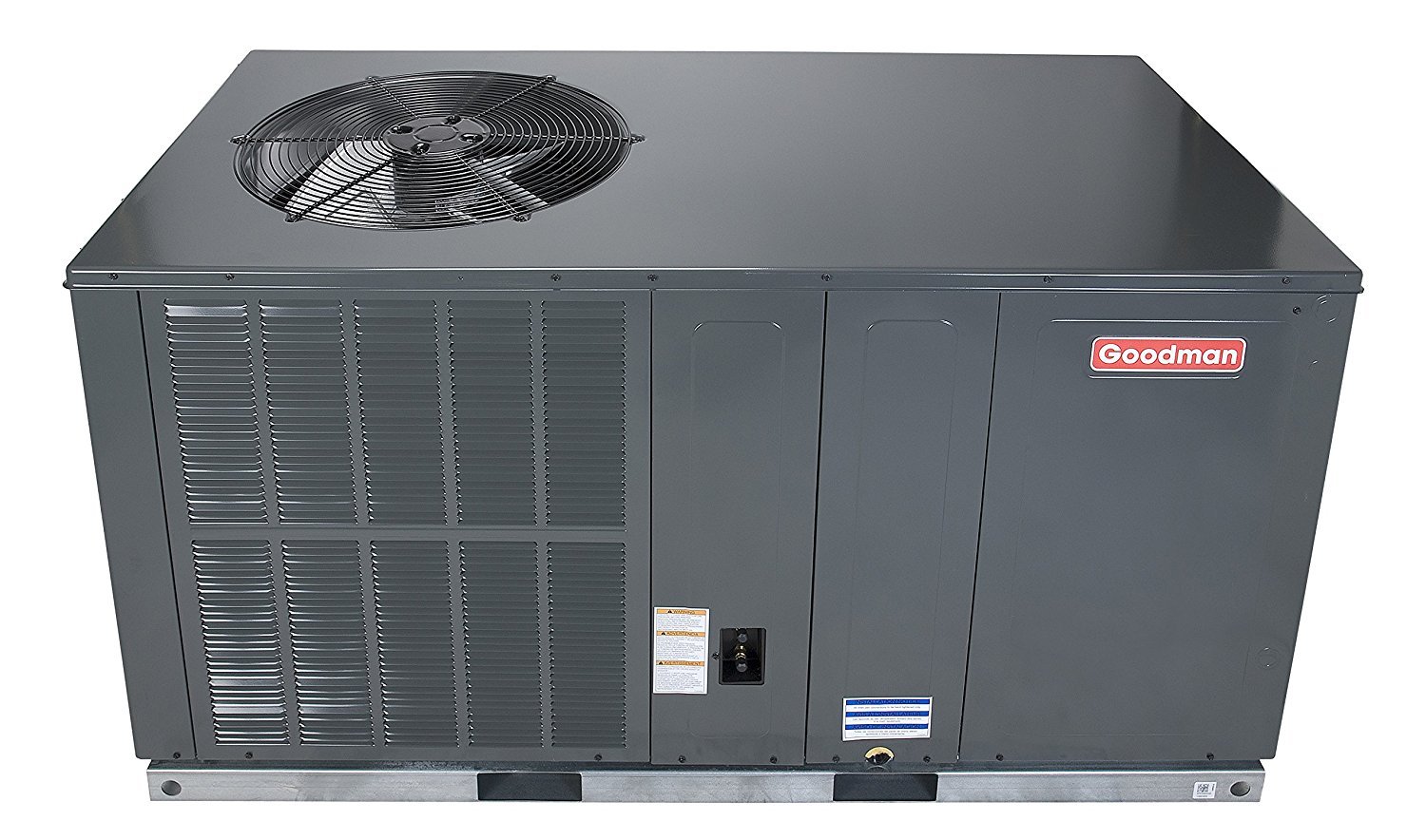
1. Goodman 3 Ton 13.4 SEER2 Packaged Unit (GPCH33631)
Our pick — over 4.5★ from 100+ verified ratings; the strongest balance of quality and price.
You get reliable whole-home cooling at 36,000 BTU without a complex installation — everything lives in one outdoor cabinet, so there is no indoor air handler to fit.
This Goodman is the most popular choice for buyers who want simplicity. All components — compressor, evaporator coil, and blower — sit in a single steel cabinet finished in architectural gray. That arrangement means no indoor air handler takes up closet space, which matters if your home is tight on interior room. The scroll compressor and multi-speed ECM blower motor (Electronically Commutated Motor — an energy-efficient motor that adjusts its speed) are pre-charged at the factory with R-32 refrigerant, so a pro installer can usually set it up faster than a split system. It delivers 36,000 BTU of cooling, which is exactly the 3-ton output. Owners mention it “cools my house down quickly” and call it “energy efficient,” even in demanding climates like Florida. Compared to the Goodman 3 Ton 14.5 SEER2 Split System, this packaged unit is easier to install — owners confirm “no brazing, flushing, or running copper” — but the 13.4 SEER2 rating means it uses more electricity per cooling hour than that higher-rated model.
The downside is that this unit does not provide heat on its own. You must purchase a field-installed heat kit separately if you need warmth, and Goodman notes that kit is intended for occasional or emergency use, not regular winter heating. That makes this purely a cooling machine. The 13.4 SEER2 rating is entry-level efficiency, so if you live somewhere with a long, hot season, the slightly higher upfront cost of a 14.5 or 15 SEER2 unit might pay for itself in lower electric bills within a couple of years.
Easy installation payoff: The simplicity of a factory-charged, no-brazing packaged unit saves labor cost at install time — owners confirm “no brazing, flushing, or running copper” makes it a relatively straightforward job. The trade-off is the lower efficiency tier, which means it uses more electricity per cooling hour than higher-SEER2 models.
Best for: Homeowners who want a simpler, less expensive installation and prioritize upfront cost over long-term energy savings — especially for manufactured or mobile homes where horizontal-discharge packaged units are the standard fit.
Think twice if: You need a single system that heats your home in winter, or you plan to keep the house for more than 5-7 years and could benefit from the energy savings of a higher-SEER2 unit.
2. Senville 2 Ton Central Air Heat Pump (24,000 BTU)
You get a 2-ton, 24,000 BTU heat pump that cools up to 1,250 square feet and heats down to -22°F — all from one system, no separate furnace needed.
This Senville uses inverter-driven variable speed technology (a compressor that adjusts its speed to match demand instead of running full blast then shutting off). That means the system ramps up and down based on actual cooling or heating needs. It runs more quietly and keeps temperatures steadier than a traditional single-stage unit. The heating side is a real difference-maker: the inverter heat pump still provides warmth when outdoor temperatures drop as low as -22°F / -30°C. A 5kW auxiliary heat strip backs it up for the coldest extremes. Since this is a split system, it includes both the outdoor condenser and an indoor air handler with a remote control and 5kW AUX heat kit. Customers note it “runs very quiet” and that it successfully “heats 1,250 sq ft downstairs comfortably at 5°F outside.”
The main catch is the 2-ton capacity. At 24,000 BTU and a rated floor area of 1,250 square feet, this system is appropriate for smaller homes or dedicated zones. It delivers 24,000 BTU versus a typical 3-ton unit’s 36,000 BTU. If your house is 2,000 square feet, this unit will struggle on the hottest days. The efficiency rating is listed as “High Efficiency” but not given as a specific SEER2 number, and a few owners flagged that the factory thermostat uses a proprietary 2-wire RS485 communication protocol (a digital signal that is not compatible with standard 24V thermostat wiring), which may require a different thermostat to enable full smart-home integration. Installation requires medium-to-advanced skills and is recommended for professionals only.
Year-round versatility: Unlike a straight-cool unit that needs a separate furnace, this heat pump handles both cooling and reliable heating in a single system. The variable-speed inverter is quieter and more efficient than a traditional single-stage compressor, and the 5kW auxiliary heat covers you in the worst winter weather.
Reach for this if: You have a smaller home or a dedicated zone under 1,250 square feet and you want a single system that cools efficiently in summer and heats reliably through cold winters without a separate furnace.
Look elsewhere if: Your home is larger than 1,500 square feet or you need a system that is compatible with standard off-the-shelf thermostats without custom wiring.
3. Goodman 3 Ton 14.5 SEER2 Split System with Air Handler
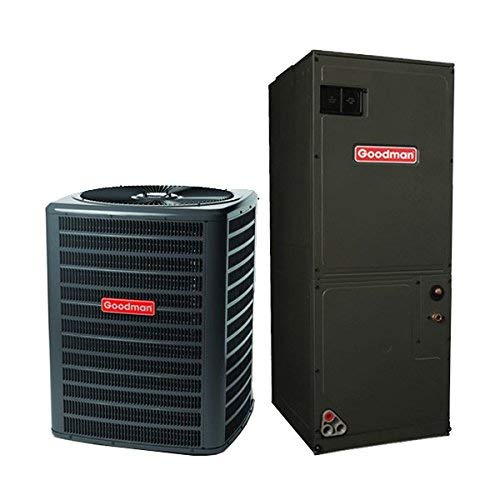
You get 36,000 BTU of cooling for up to 2,100 square feet, with 14.5 SEER2 efficiency and a free thermostat — this is the proven mid-range workhorse.
This is Goodman’s mid-range split-system combo — the GLXS4BA3610 condenser paired with the AMST36CU1300 multi-positional air handler. The condenser uses a scroll compressor and is pre-charged for 15 feet of line set with R-32 refrigerant. The air handler features a 9-speed ECM blower motor and grooved aluminum tubing for better heat transfer. It is certified under AHRI certificate number 214859638 (Air-Conditioning, Heating, and Refrigeration Institute — the standard verification for matched system performance). What stands out in the owner feedback is how well it handles extreme heat. One buyer in south Louisiana with a 2,000-square-foot, two-story home says it “cools it with ease” through oppressive summers. Another reports the system is “super quiet” compared to a previous unit that made banging noises. The package includes a thermostat, which is a small but welcome addition that some competing kits leave out. The 10-year parts warranty (when registered within 60 days by a qualified installer) adds confidence.
This system does not provide heat. It is a “straight cool” unit, meaning you must add an HKTS series heat kit for any heating function. The 14.5 SEER2 rating is a solid 8% improvement over the 13.4 SEER2 unit in position 1, which translates to lower electricity consumption per cooling hour. The air handler supports upflow, horizontal right, and horizontal left configurations, but not downflow from the start — you would need a separate downflow kit. A small number of reviewers point out issues with refrigerant leaks in the indoor coil, but this is an occasional complaint relative to the large number of positive experiences.
What cools the house
- 14.5 SEER2 efficiency cuts electric use compared to 13.4 SEER2 entry-level models
- Rated for up to 2,100 square feet — genuine whole-house capacity
- 9-speed ECM blower motor adjusts airflow for comfort and efficiency
- 10-year parts warranty included when registered by a qualified installer
What to know going in
- No heating function — you must buy a separate heat kit for warmth
- Downflow configuration requires a purchased accessory kit
- Pre-charged for only 15 feet of line set; longer runs need additional refrigerant
Your move: If you need cooling-only for a home around 2,000 square feet and the 14.5 SEER2 efficiency is your minimum for energy savings, this Goodman split system is the proven mid-range pick with quiet operation and strong owner approval.
Not for you if: You need a single system that heats as well as cools — you would be better served by a heat pump model like the 15 SEER2 Goodman system at position 5.
4. Senville 4 Ton Central Air Heat Pump (48,000 BTU)
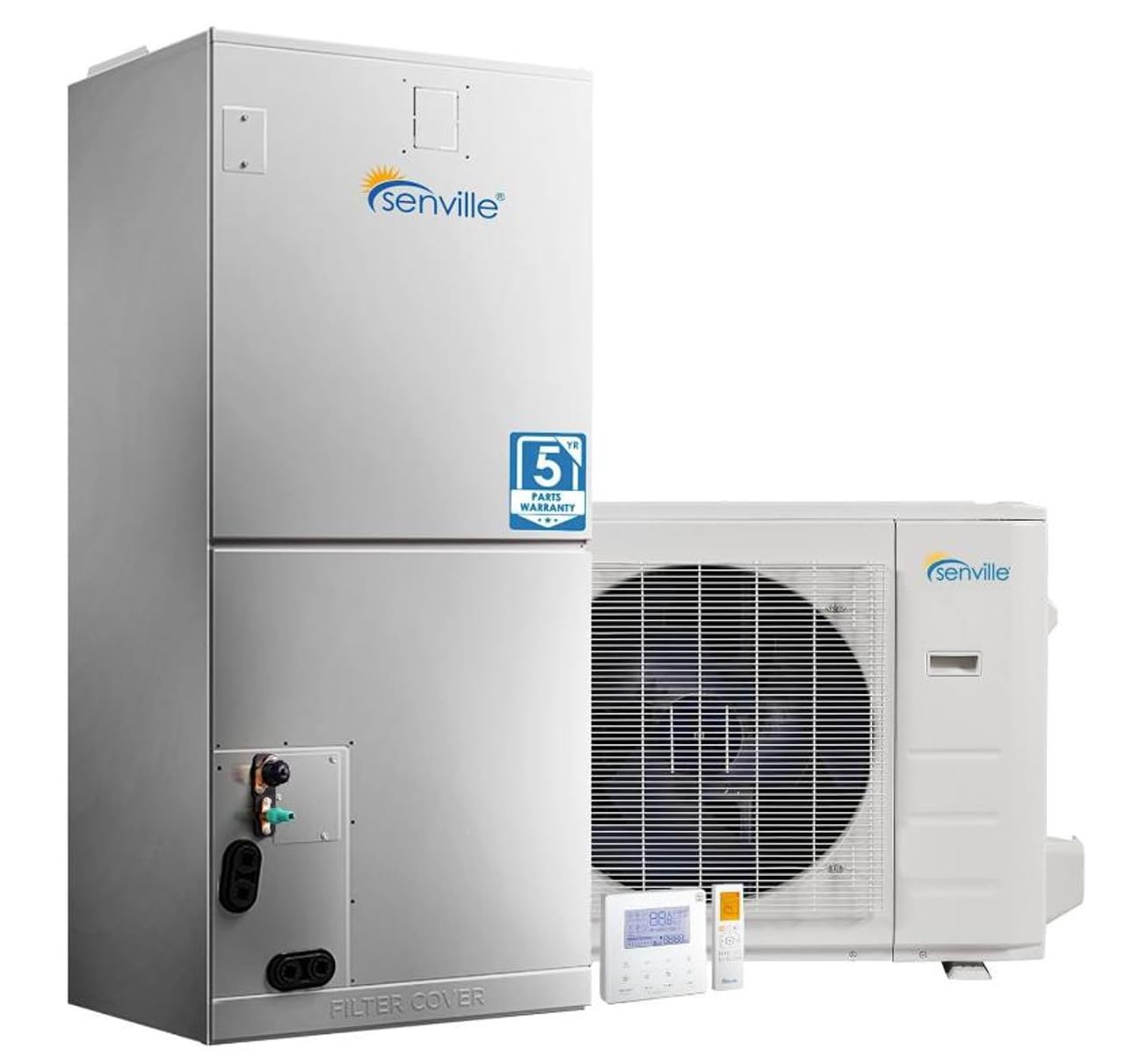
You get 48,000 BTU of cooling for up to 2,000 square feet — that is 50% more capacity than a 3-ton system — plus inverter heat pump warmth down to -22°F.
This is the larger sibling to the 2-ton Senville, and it brings noticeably more cooling capacity — 48,000 BTU vs 24,000 BTU. The system includes the outdoor condenser, indoor air handler, a 10kW auxiliary heater, a thermostat, and a 16-foot installation kit in the box. The variable-speed inverter compressor is the same core technology: it modulates its output to match the cooling or heating load instead of cycling on and off. That means quieter operation and more stable temperatures. The heating performance reaches down to -22°F / -30°C, backed by a 10kW auxiliary heat strip for serious cold snaps. Buyers in Texas confirm it “works great” in summer heat, and multiple owners highlight the whisper-quiet operation. The 10-year compressor warranty and 5-year parts warranty offer the same long-term coverage as the smaller unit.
The 4-ton, 48,000 BTU rating delivers 48,000 BTU, compared to a 3-ton system’s 36,000 BTU, which makes this a strong choice for larger homes or open floor plans that need more airflow. The annual energy consumption is listed at 5,173 kWh (kilowatt-hours — a unit of electricity usage), which is significantly higher than smaller units — that is the trade-off for the extra cooling power. Some buyers found the installation manuals confusing and noted that the included controller communicates over a 2-wire RS485 protocol, not standard 24V thermostat wiring. A few owners had to bypass that with a 24V thermostat and 18/7 thermostat wire. The air handler also has an odd duct sizing and the filter compartment may need reinforcement. These are installation nuances that a knowledgeable HVAC pro can navigate, but they are worth knowing before you commit.
Big power, big space: The 48,000 BTU output covers up to 2,000 square feet with room to spare, and the inverter heat pump with 10kW auxiliary heat handles both deep cooling and reliable winter warmth. The trade-off is higher annual energy consumption and installation details that demand an experienced professional.
Reach for this if: You have a larger home around 2,000 square feet and want a single heat pump system that cools powerfully, heats reliably in sub-zero weather, and operates more quietly than a traditional central AC.
Think twice if: You want a simple, standard thermostat setup or you prefer a system with dedicated installation support and clearer documentation.
5. Goodman 3 Ton 15 SEER2 Heat Pump System (GLZS4BA3610 + AMST36CU1300)
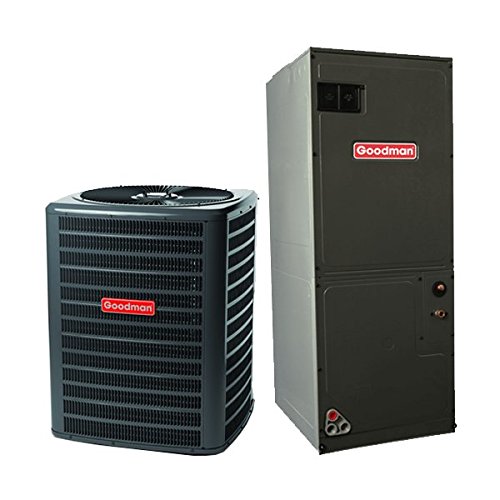
You get the highest efficiency in this lineup at 15 SEER2, plus 36,000 BTU of cooling and year-round heating — all from one system.
This Goodman system matches the same 3-ton, 36,000 BTU cooling capacity as the units at positions 1 and 3, but it is the only one in this list to combine that output with a 15 SEER2 efficiency rating and heat pump functionality. The GLZS4BA3610 heat pump uses a scroll compressor and pairs with the AMST36CU1300 air handler, which features the same 9-speed ECM blower motor and grooved aluminum coil as the air handler in position 3. Since it is a heat pump, it provides heating in addition to cooling, which makes it a true all-in-one solution for climates that need both. The 10-year parts warranty is included, just like the other Goodman units. The system uses the HKSC/HKSX series of heat kits — it is important to know that it does not work with the HKR series if you need additional emergency heat.
The 15 SEER2 rating is the highest in this comparison, at 15 SEER2 versus 14.5 SEER2 and 13.4 SEER2. Over a full cooling season, that means lower electricity consumption. The heat pump provides both cooling and heating, eliminating the need for a separate furnace for most mild-to-moderate winter climates. The multi-position air handler supports upflow, horizontal right, and horizontal left configurations. A small number of owners found the service valve take-offs on the condenser to be small, which makes brazing the line set more difficult, and a few reported delays with tech support when the unit did not work on arrival. These are not universal problems, but they are worth factoring in — a knowledgeable installer is essential.
What makes this the efficiency winner
- Highest SEER2 rating in this lineup — 15 SEER2 — for lower ongoing electricity costs
- Heat pump design delivers both cooling and heating in one system
- 36,000 BTU capacity matches typical 3-ton whole-house needs
- One owner reports saving per month on their electric bill after upgrading
Installation details to know
- Small valve take-offs on the condenser make brazing the line set more challenging
- Accessories like line sets and thermostats sold separately
- Uses HKSC/HKSX series heat kits only — not compatible with HKR series
Your best move: If energy efficiency and year-round heating and cooling from a single system are your top priorities, this 15 SEER2 Goodman heat pump is the most capable choice in the lineup — especially for homes around 2,000 square feet in moderate-to-hot climates.
Better to skip if: Your budget is tight and paying more upfront for a slightly higher SEER2 rating does not match your payback timeline, or if your installer prefers the larger valve take-offs found on some competing condensers.
Understanding the Specs
Tonnage and BTU
Tonnage is the standard way to measure an air conditioner’s cooling capacity. One ton equals 12,000 British Thermal Units (BTU) per hour — the amount of heat the system can remove from your home in an hour. A 3-ton unit delivers 36,000 BTU, a 4-ton unit delivers 48,000 BTU. Getting the right tonnage is critical: an undersized unit runs non-stop and never satisfies the thermostat, while an oversized unit short-cycles, wears out faster, and struggles to remove humidity. A professional load calculation is the only way to know exactly what your home needs.
SEER2 Rating
SEER2 stands for Seasonal Energy Efficiency Ratio 2. It measures the total cooling output during a typical cooling season divided by the total electric energy input. A higher number means the system uses less electricity to produce the same amount of cooling. Entry-level units like the 13.4 SEER2 Goodman are the most affordable upfront but cost more to run. Mid-range 14.5 SEER2 and premium 15 SEER2 models cost more initially but typically reduce monthly electric bills — the savings can offset the higher purchase price within a few years, especially in regions with long, hot summers.
Packaged Unit vs Split System
A packaged unit houses all components — compressor, condenser, evaporator, and blower — in a single outdoor cabinet. It connects directly to your ductwork through horizontal ducts and is simpler to install because there is no indoor air handler to mount. This is the typical setup for manufactured and mobile homes. A split system has an outdoor condenser unit and a separate indoor air handler that sits in a closet, attic, or basement. Split systems offer more flexibility in matching components and are common in site-built homes. Your existing ductwork and available indoor space usually determine which type fits best.
Heat Pump vs Straight Cool
A straight cool system provides only air conditioning. It relies on a separate furnace or heat kit for winter heating. A heat pump reverses the refrigeration cycle in winter to extract heat from outdoor air and move it inside. Modern inverter heat pumps can extract useful heat even at outdoor temperatures as low as -22°F / -30°C. A heat pump replaces both a central air conditioner and a furnace in moderate climates, which can simplify your HVAC system and reduce equipment costs. In very cold regions, a backup heat strip or gas furnace is still needed for the coldest days.
FAQ
What size air conditioner do I need for a 2,000 square foot house?
Can I install a central AC myself?
What is the difference between SEER and SEER2?
How long does a central air conditioner last?
Is a heat pump better than a straight cool AC?
What does a 10-year warranty on the compressor actually cover?
Do I need a permit to install a central AC?
What refrigerant does a modern central AC use?
What is an inverter compressor in a central AC?
Final Thoughts: The Verdict
For most homeowners, the air conditioner for whole house winner is the Goodman 3 Ton 14.5 SEER2 Split System — it delivers proven 36,000 BTU cooling with mid-range efficiency and a quiet, well-liked installation experience that buyers recommend. If you want year-round heating and cooling in a single efficient package, choose the Goodman 3 Ton 15 SEER2 Heat Pump System, the highest-efficiency pick here. For a straightforward, budget-conscious swap on a manufactured home, the Goodman 3 Ton 13.4 SEER2 Packaged Unit is the simplest path to reliable whole-house cooling.
How We Picked
We do not accept paid placement. Every pick is matched to a real buyer and a real use-case; we do not hands-on test units.
Sources & Methodology
Specifications: manufacturer listings and product documentation. Review insights: verified customer reviews, as of July 2026. Pricing: not shown on this page (it changes often); check the current price via the retailer link.
As an Amazon Associate, WellFizz earns from qualifying purchases. This does not affect which products we feature.
Related Guides

Mo Maruf
I created WellFizz to bridge the gap between vague wellness advice and actionable solutions. My mission is simple: to decode the research and give you practical tools you can actually use.
Beyond the data, I am a passionate traveler. I believe that stepping away from the screen to explore new environments is essential for mental clarity and physical vitality.